

Are your stakeholders demanding clear, auditable environmental disclosures? Navigating overlapping standards like GRI, CSRD, and ISSB can feel overwhelming, but a structured approach makes disclosures compliant, transparent, and actionable. Here is how to plan, build, and publish an effective corporate sustainability report.
Selecting the Right Standards and Frameworks
Building an effective corporate sustainability report requires selecting a disclosure framework that aligns with your regulatory duties and stakeholder expectations. International reporting standards are designed to interoperate, allowing a single baseline dataset to support multiple disclosure formats across global markets.
Global Reporting Initiative (GRI)
The GRI Standards focus on impact materiality – how your operations affect the economy, environment, and society. Designed to inform broad stakeholder groups including employees, local communities, and supply chain partners, GRI provides specific topic standards covering emissions, resource consumption, and waste management.
IFRS Sustainability Disclosure Standards (ISSB)
Issued by the International Sustainability Standards Board, IFRS S1 (general requirements) and IFRS S2 (climate disclosures) focus on financial materiality. They provide investors and capital providers with decision-useful information regarding sustainability-related risks and opportunities that directly affect enterprise value. IFRS S2 explicitly adopts the four structural pillars of the Task Force on Climate-related Financial Disclosures: governance, strategy, risk management, and metrics and targets.
European Sustainability Reporting Standards (ESRS)
Under the EU Corporate Sustainability Reporting Directive (CSRD), large companies and listed entities operating within European markets must report against the ESRS. This framework enforces double materiality, requiring disclosures on both how sustainability issues affect financial performance (outside-in) and how corporate activities impact broader ecosystems and society (inside-out). Joint guidance confirms high interoperability between ESRS, ISSB, and GRI standards, reducing redundant data collection for cross-border operations.
Greenhouse Gas (GHG) Protocol
The GHG Protocol serves as the foundational accounting engine across nearly all disclosure frameworks. When compiling carbon inventories, organizations apply the GHG Protocol Corporate Standard to account for direct emissions (Scope 1) and indirect emissions from purchased energy (Scope 2), while leveraging supplementary standards to measure upstream and downstream value chain impacts (Scope 3).
Regional regulatory considerations: While European organizations prioritize CSRD and ESRS compliance, North American entities navigate overlapping SEC materiality expectations, sectoral EPA reporting, and state-level laws such as California’s SB 253 and SB 261. Establishing global baseline tools like the GHG Protocol and GRI allows multi-regional organizations to satisfy varying jurisdiction requirements from a single data architecture.
Conducting a Double Materiality Assessment
Before writing your report, you must determine which environmental, social, and governance topics warrant formal disclosure. Aligning with GRI 3 guidelines and ESRS double materiality mandates involves a structured four-step assessment:
- Understand organizational context: Map activities, supply chain dependencies, operational boundaries, and primary stakeholder groups across all active markets.
- Identify actual and potential impacts: Evaluate where business operations generate positive or negative impacts on climate systems, resource streams, human rights, and financial stability.
- Assess impact significance: Analyze the severity, scale, irremediable character, and likelihood of environmental impacts alongside financial risks and opportunities.
- Prioritize material topics: Set clear materiality thresholds. Validate your selection by testing topic lists against applicable GRI Sector Standards, consulting industry experts and affected stakeholders, and securing formal approval from your highest governance body or executive board.
Structuring Your Sustainability Report
A clear narrative structure ensures your report remains transparent, comparable, and easy for stakeholders to digest. Standardizing report sections enables analysts, investors, and regulatory bodies to locate key disclosures efficiently.
| Report Section | Key Elements to Disclose |
|---|---|
| 1. Executive Summary & Leadership Letter | A statement from executive leadership outlining strategic priorities, key performance highlights, and commitment to long-term targets. |
| 2. Organizational Boundary & Governance | Business model, operational reach, GHG consolidation approach (e.g., operational control), and sustainability oversight structures. |
| 3. Materiality & Stakeholder Engagement | The methodology used to determine material topics, stakeholder engagement inputs, and the updated double materiality matrix. |
| 4. Strategy & Target Alignment | Progress toward SMART targets, net-zero roadmaps, transition plans, and risk management integrations. |
| 5. Environmental Performance Data | Quantitative metrics covering Scope 1–3 emissions, operational resource inputs, water use, and waste diversion. |
| 6. Qualitative Commentary & Case Studies | Contextual analysis of quantitative data, explaining operational challenges, corrective actions, and upcoming milestones. |
| 7. Appendices & Framework Indices | Mapping tables (GRI Content Index, ESRS disclosure alignment, IFRS mapping) and third-party audit assurance statements. |
Establishing Data Governance and Core Operational Metrics
Your sustainability report is only as credible as the internal controls behind your non-financial data. Under CSRD mandates and GRI quality principles, sustainability disclosures must exhibit relevance, faithful representation, comparability, verifiability, and accuracy.
Building a repeatable data governance pipeline requires collecting primary operational data, applying standardized calculation methodologies, maintaining robust internal controls, and preparing records for external verification.
Managing waste and resource flows provides a clear blueprint for establishing auditable ESG data pipelines:
- Establish operational baselines: Conduct a physical office waste audit across a representative period (typically 1 to 7 days) to weigh and categorize discard streams across facility zones.
- Track standardized ESG metrics: Calculate key workplace indicators – such as total waste generation, diversion rates, and recovery operations – in direct alignment with ESG reporting waste management standards.
- Quantify value chain impacts: Use primary weighbridge receipts, service provider notes, and volume logs to track Scope 3 Category 5 emissions (Scope 3 emissions and waste) accurately rather than relying on industry averages. For detailed step-by-step methodologies, follow our guide on how to track and report workplace recycling rates.
Drafting, Verification, and Preparing for Assurance
Transparency requires disclosing both performance milestones and areas where your organization fell short of stated goals. Balanced, unbiased reporting builds long-term trust with investors, regulators, and employees.
Preparing for Mandatory Assurance
Under regulatory frameworks like the EU CSRD, corporate sustainability disclosures must undergo mandatory third-party external assurance, beginning with limited assurance and transitioning toward reasonable assurance.
To prepare your organization for independent audit:
- Disclose all emission factors, system boundaries, calculation methodologies, and underlying assumptions.
- Centralize primary data sources – such as utility bills, waste transfer notes, and meter records – within an auditable data management platform.
- Document data limitations, reliance on industry proxies, or historical baseline adjustments resulting from corporate acquisitions or restructuring.
Aligning Disclosures with On-the-Ground Operations
A credible sustainability report reflects tangible operational processes within your facilities. Strategic corporate commitments must translate directly into daily workplace practices and physical management infrastructure.
Organizations operationalizing their sustainability targets should align disclosures across established frameworks:
- Embed reporting mechanisms into a certified ISO 14001 environmental management system to maintain continuous operational oversight.
- Implement a long-term circular economy model for business focused on waste prevention, resource reuse, and closed-loop material recovery.
- Advance your broader net-zero office strategy by specifying facility equipment crafted from low-embodied carbon materials.
- Deploy modular, high-visibility multi-stream recycling bins across corporate facilities to increase source separation, reduce material contamination, and generate accurate baseline data for annual reporting.
-
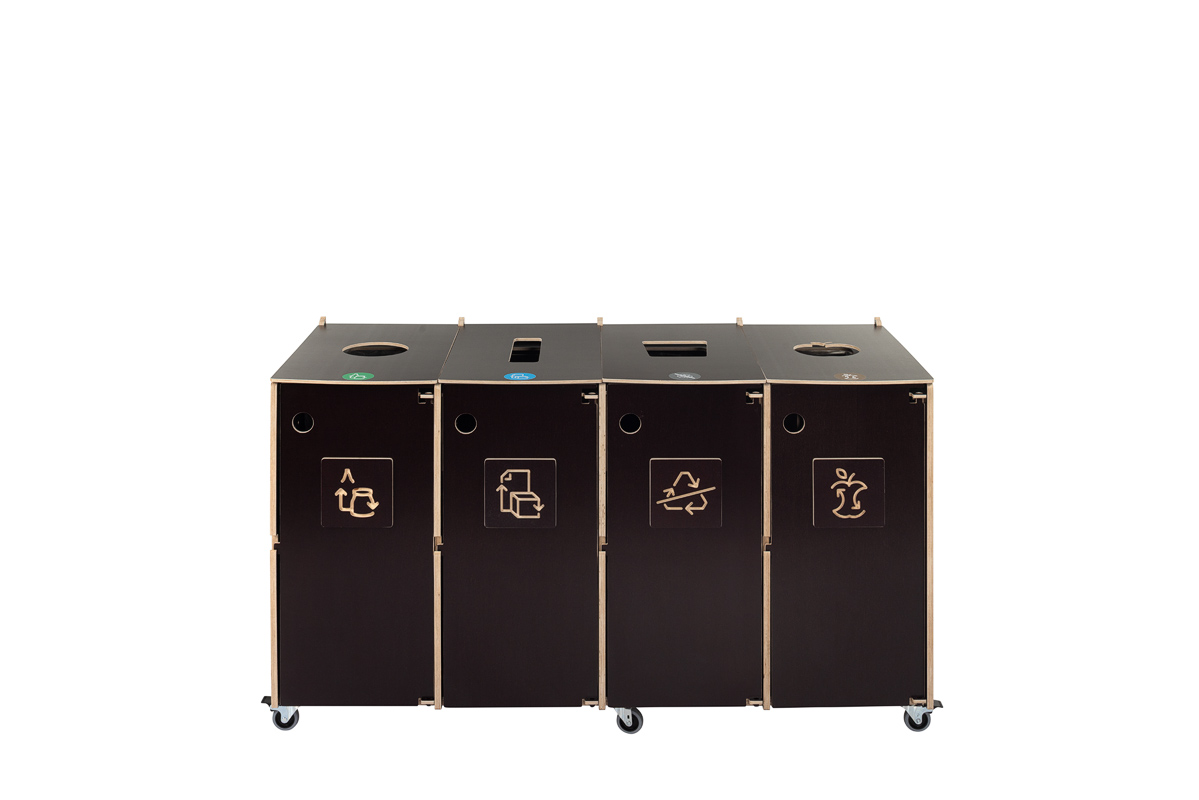
Recycling Bin Ecolong 4 × 60 l brown
4 types of waste 4 x 60 l1 872,40 € (incl. 24% VAT)1 510 € (excl. VAT) -
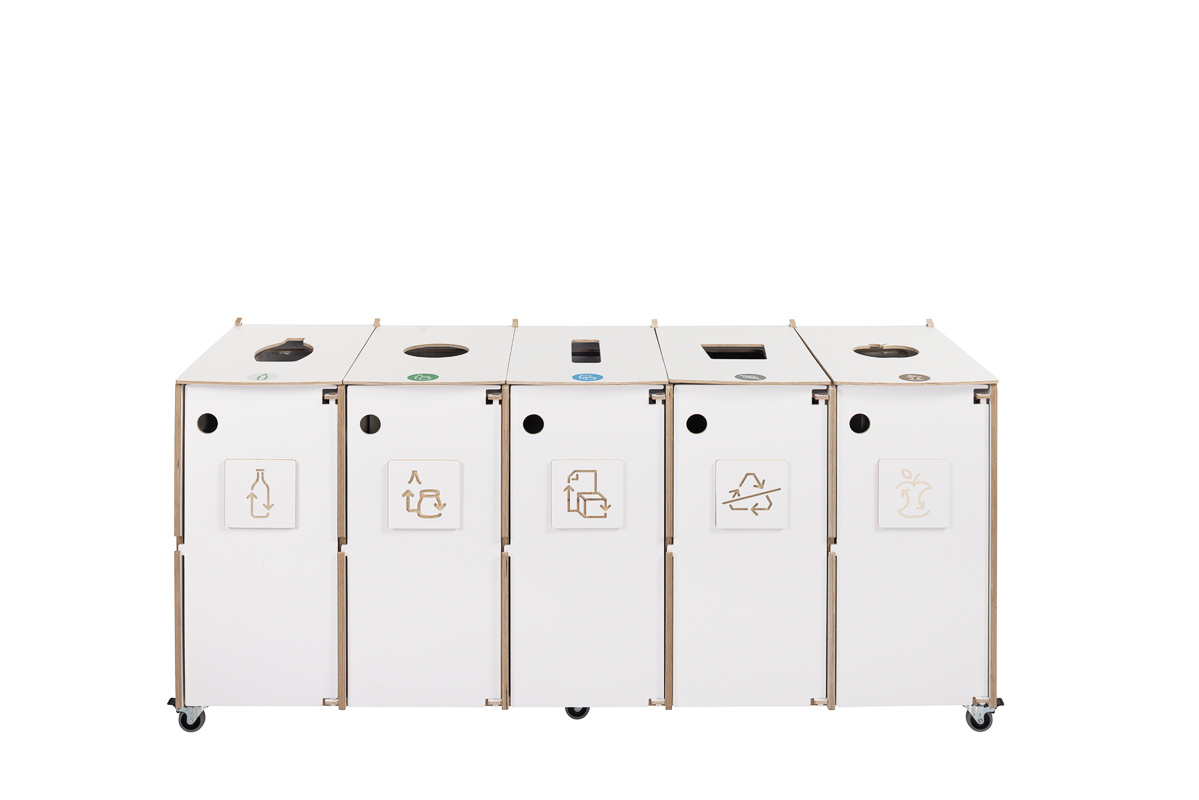
Recycling Bin Ecolong 5 × 60 l white
5 types of waste 5 x 60 l2 269,20 € (incl. 24% VAT)1 830 € (excl. VAT) -

Recycling Bin Sorter 4 × 20 l white
4 types of waste 4 x 20 l607,60 € (incl. 24% VAT)490 € (excl. VAT)
Installing specialized sorting hubs – such as the high-capacity Ecolong series for communal corridors or the customizable Sorter series for office environments – improves workplace participation and yields verifiable performance metrics. Building these physical operational controls helps support building standards like LEED certification waste management while generating clean data for annual sustainability reports. Learn more about implementing operational sustainability programs in our detailed guide on how to become a sustainable business.

-
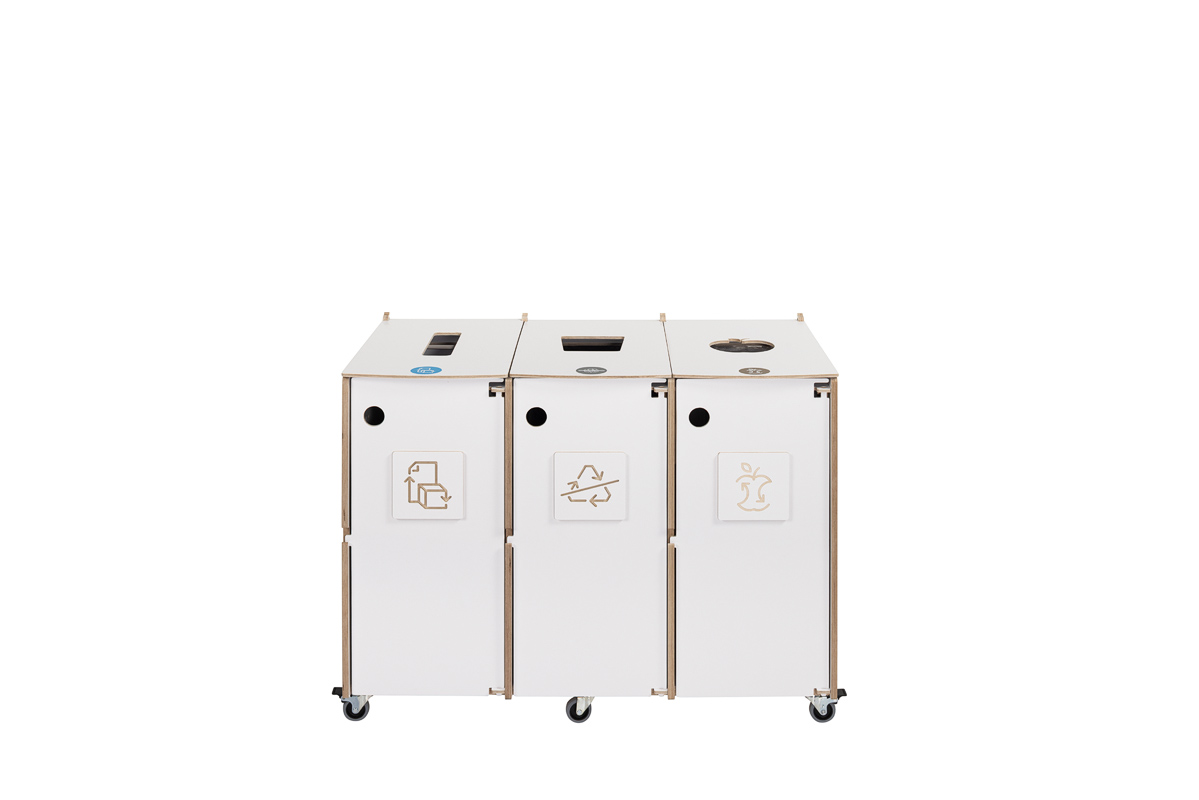
Recycling Bin Ecolong 3 × 60 l white
3 types of waste 3 x 60 l1 475,60 € (incl. 24% VAT)1 190 € (excl. VAT) -
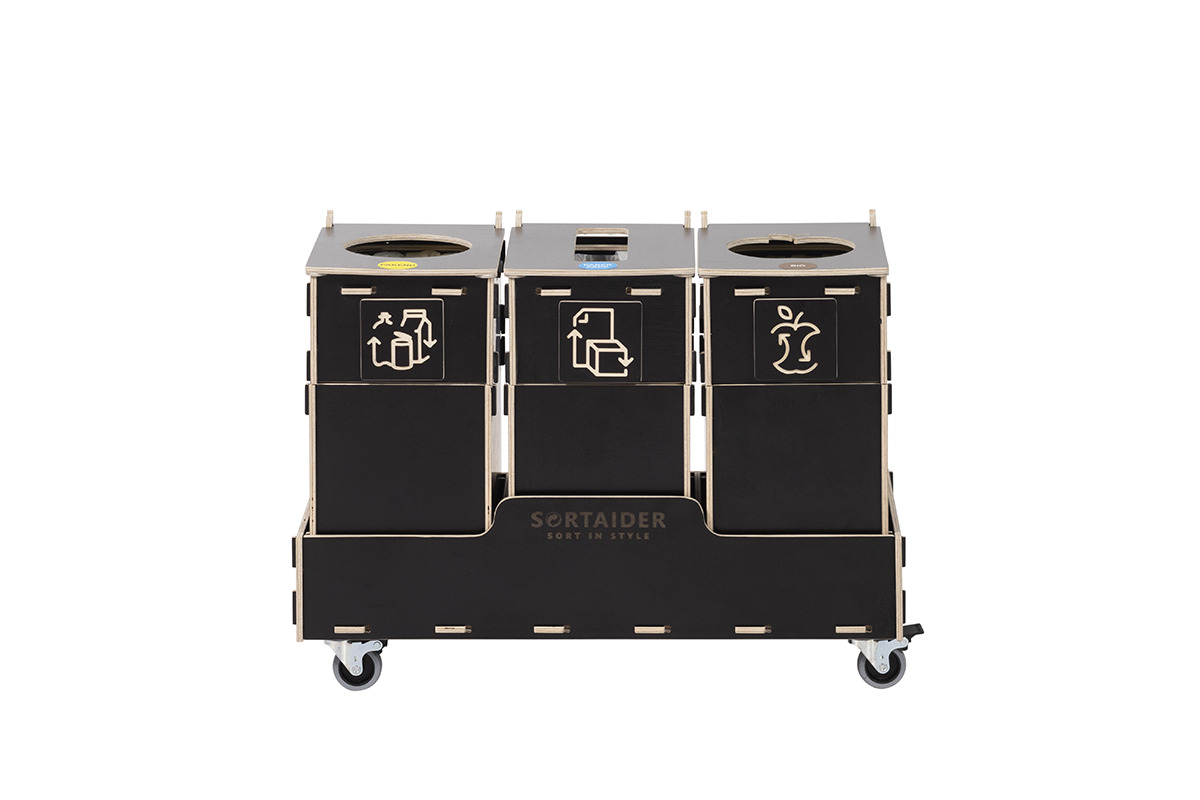
Recycling Bin Sorter 3 × 10 l brown
3 types of waste 3 x 10 l297,60 € (incl. 24% VAT)240 € (excl. VAT) -

Recycling Bin Sorter 3 × 30 l brown
3 types of waste 3 x 30 l731,60 € (incl. 24% VAT)590 € (excl. VAT)
Building Compliant and Verifiable Disclosures
Writing an effective corporate sustainability report requires pairing recognized reporting frameworks with double materiality assessments, auditable data governance, and practical operational controls. By formalizing data collection mechanisms and deploying compliant waste management infrastructure today, your organization can meet strict regulatory requirements while driving measurable environmental progress.
Begin your reporting journey by reviewing your current operational baselines, auditing facility waste streams, and establishing repeatable data controls across all site operations.