Did you know the average European office worker generates 2 kg of waste daily? Transitioning to a circular economy isn’t just an environmental initiative – it is a strategic shift from the traditional “take-make-waste” model to a system where materials never become waste and nature is regenerated. For organizations today, this approach transforms waste management from a logistical burden into a driver of operational efficiency and brand value.
The Three Pillars of Circularity
The circular economy represents a systemic approach to economic development designed to benefit businesses, society, and the environment. This model is built on three design-led principles that shift how we perceive resources:
- Eliminate waste and pollution: This involves designing products and processes so that waste does not occur in the first place, rather than managing it after it is created.
- Circulate products and materials: The goal is to keep materials in use at their highest value, whether through reuse, repair, or high-quality recycling.
- Regenerate nature: Moving beyond “doing less harm” to actively improving the environment by returning nutrients to the soil and supporting biodiversity.
For a facility manager, this means viewing a building not as a site of consumption, but as a resource hub. Instead of managing “trash,” you are managing a supply chain of secondary raw materials that can be reintegrated into the economy.
Why Circularity is a Business Imperative
Adopting a circular business model provides a professional framework to turn a robust ISO 14001 environmental management system into a competitive advantage. The benefits extend across financial, legal, and environmental metrics:
- Cost Optimization: Implementing structured audits and modular sorting can reduce disposal costs by up to 50% by lowering collection frequency and reducing general waste volume.
- Regulatory Compliance: Most workplace recycling rules across Europe are rooted in the EU Waste Framework Directive, which mandates the separate collection of paper, metal, plastic, and glass at the source wherever technically feasible.
- Carbon Footprint Reduction: To reach net-zero goals, organizations must address Scope 3 emissions originating from their supply chain. Choosing fixtures made from renewable materials like birch plywood can result in 2 to 4 times lower CO₂ emissions over the product’s lifecycle compared to metal or plastic.

The European Regulatory Landscape
Navigating the transition requires understanding the regional rules that govern waste and material recovery. While the EU provides the baseline, individual member states often apply stricter requirements that businesses must navigate:
- Sweden: Separate food waste collection became a mandatory requirement for all businesses in 2024, with stricter municipal collection rules expected by 2027.
- Denmark: Facilities producing more than one ton of waste annually must secure specific permits and utilize digital tracking systems for every waste shipment leaving the premises.
- Estonia: Separate collection is mandatory for paper, plastic, metal, glass, and bio-waste, particularly if a site generates more than 10 kg of bio-waste per day.
- Lithuania: The APVIS platform allows regulators to monitor real-time waste activity and ensure that hazardous materials do not enter general streams.
Understanding these workplace recycling regulations is the first step toward avoiding contamination fines and ensuring your organization meets international commercial waste recycling requirements.
Practical Steps to Implement Circularity
Moving from theory to action requires a comprehensive office waste management plan that prioritizes data and user behavior.
Conduct a Waste Audit
You cannot manage what you do not measure. A waste audit for offices identifies exactly what materials are being discarded and where your sorting process is breaking down. This helps establish an accurate baseline for setting SMART goals for becoming a sustainable business.
Prioritize Source Separation
The “Pizza Box” rule illustrates why source separation is vital: a single greasy cardboard box can ruin a large batch of clean paper. When setting up recycling at work, separating materials at the point of disposal can boost waste diversion rates by up to 40% while maintaining the quality of recyclables.
Optimize Infrastructure Placement
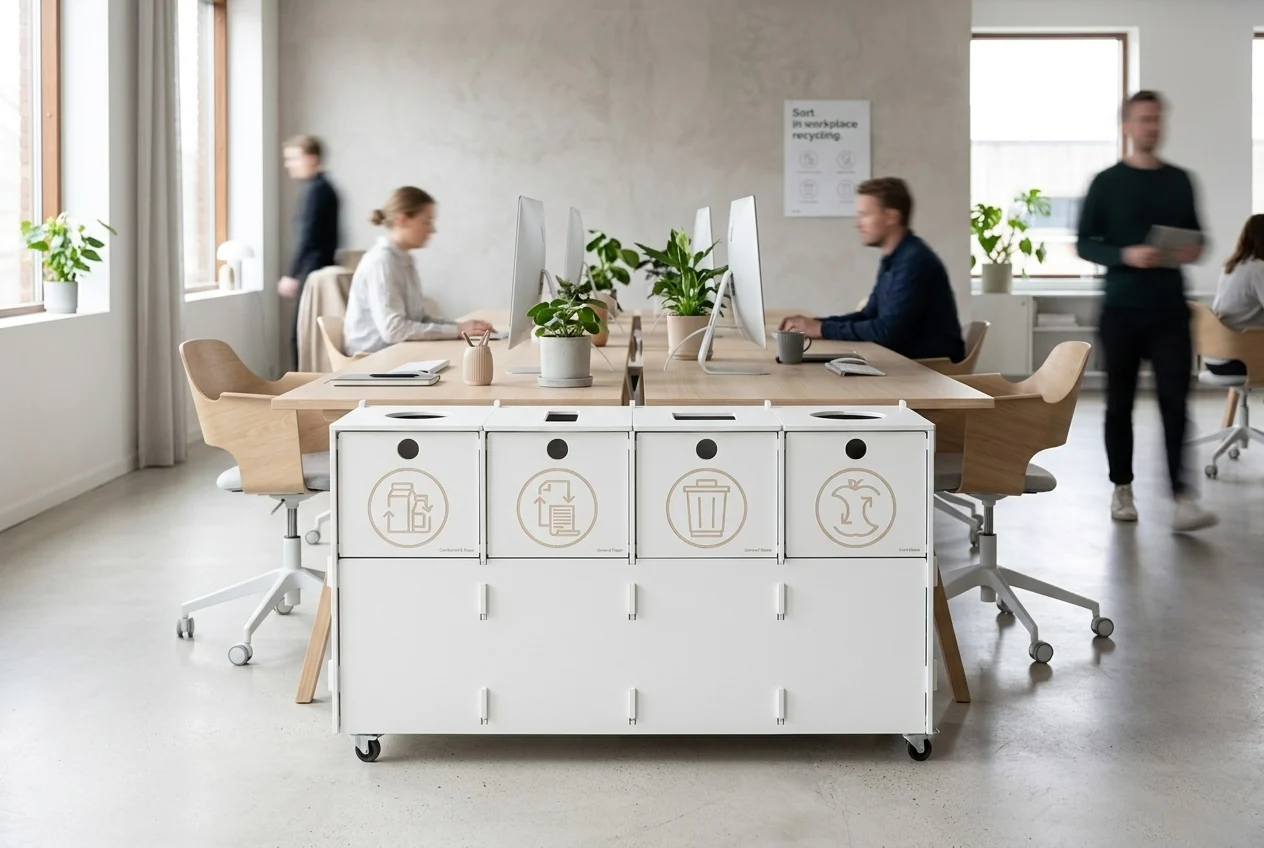
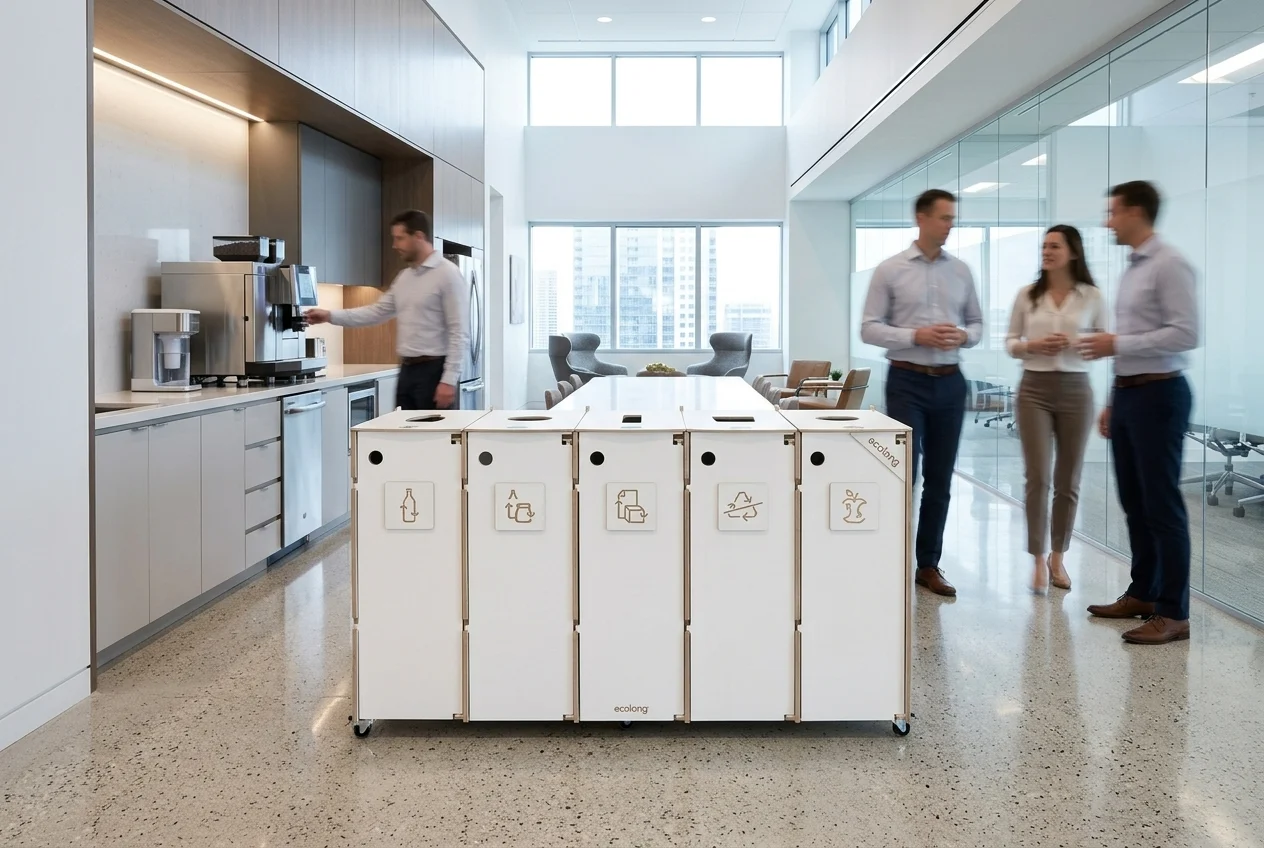
Proximity is the strongest driver of success in workplace recycling. Research shows that replacing individual deskside bins with centralized recycling bins in high-traffic areas like kitchenettes, printer rooms, and main hallways increases participation by 30% to 50%.
-
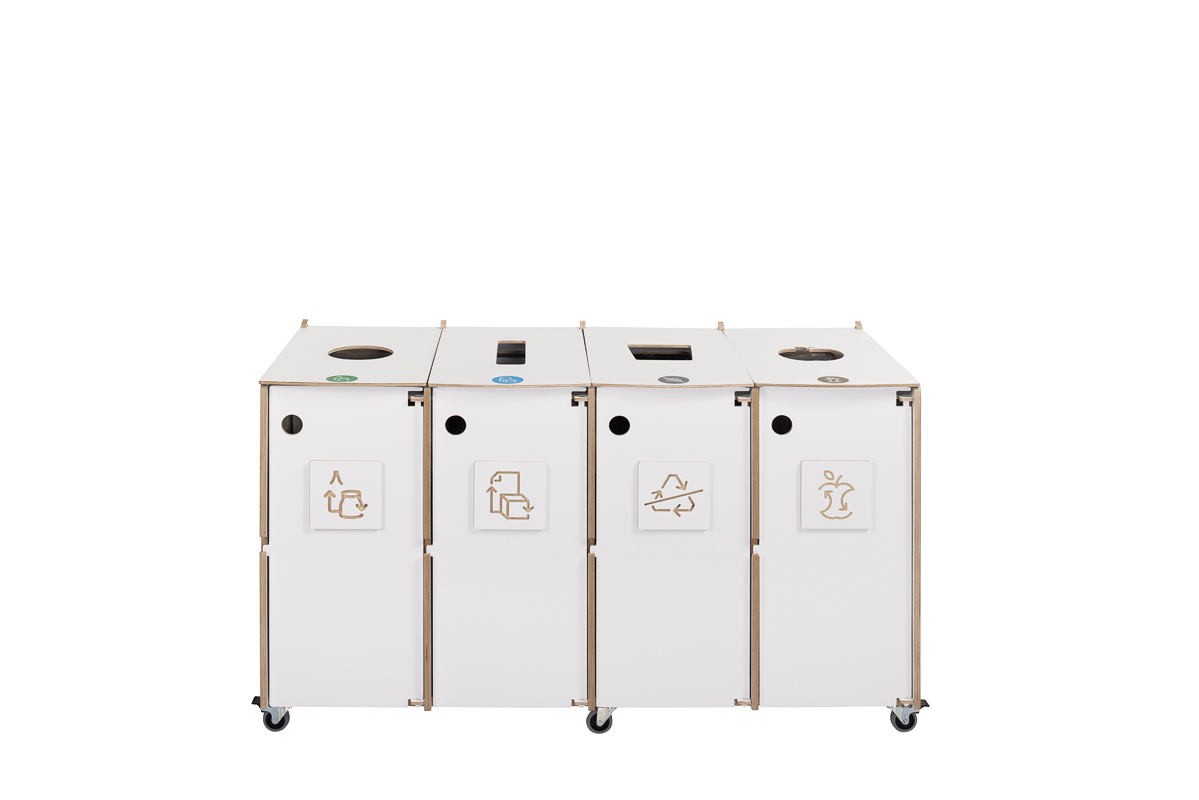
Recycling Bin Ecolong 4 × 60 l white
4 types of waste 4 x 60 l1 872,40 € (incl. 24% VAT)1 510 € (excl. VAT) -
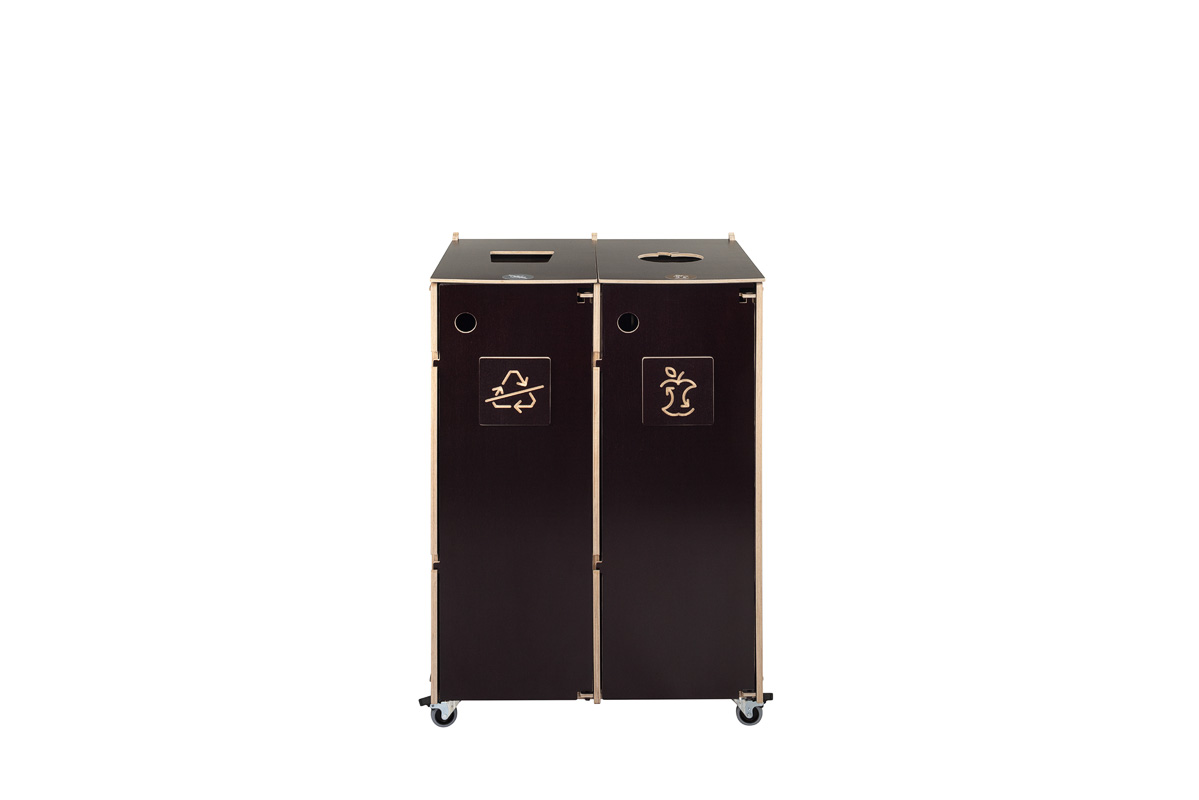
Recycling Bin Ecolong 2 × 90 l brown
2 types of waste 2 x 90 l1 339,20 € (incl. 24% VAT)1 080 € (excl. VAT) -
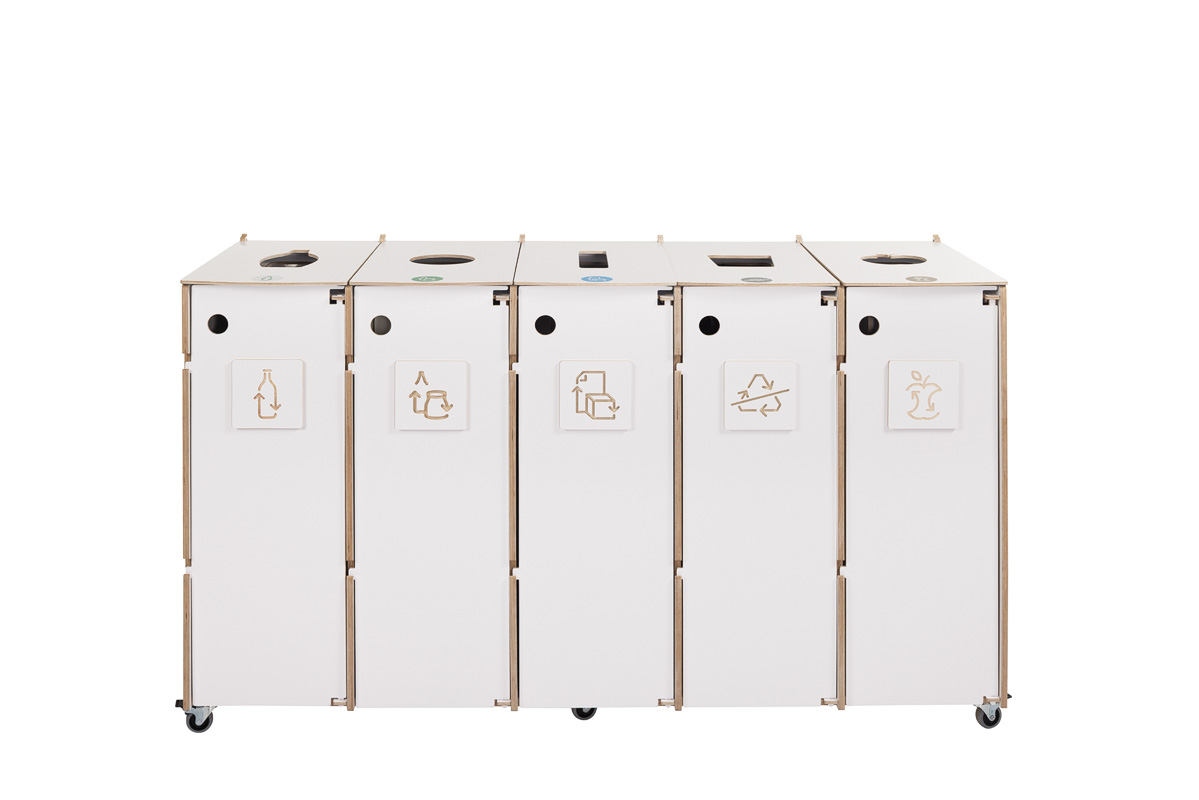
Recycling Bin Ecolong 5 × 90 l white
5 types of waste 5 x 90 l2 926,40 € (incl. 24% VAT)2 360 € (excl. VAT)
Choose Sustainable Procurement
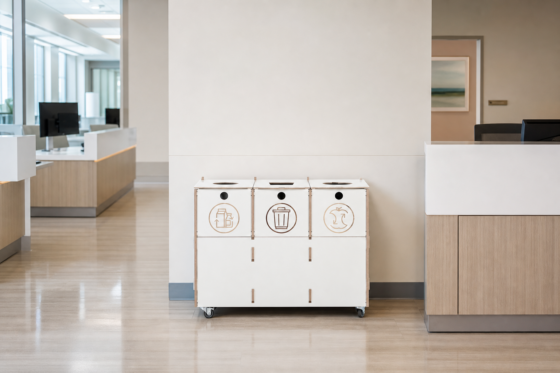
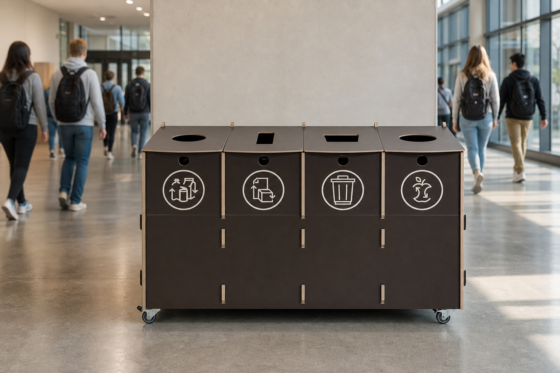
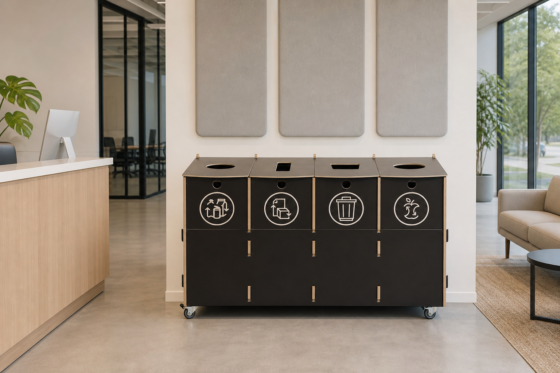
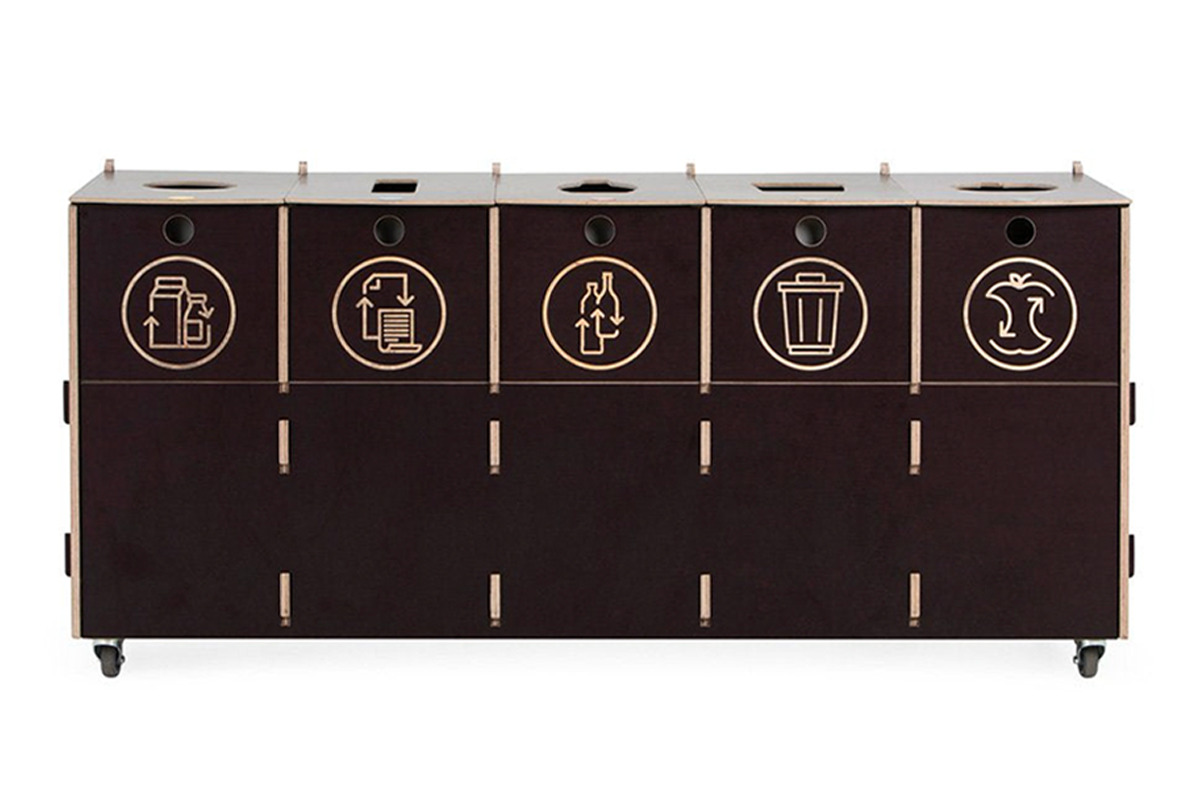
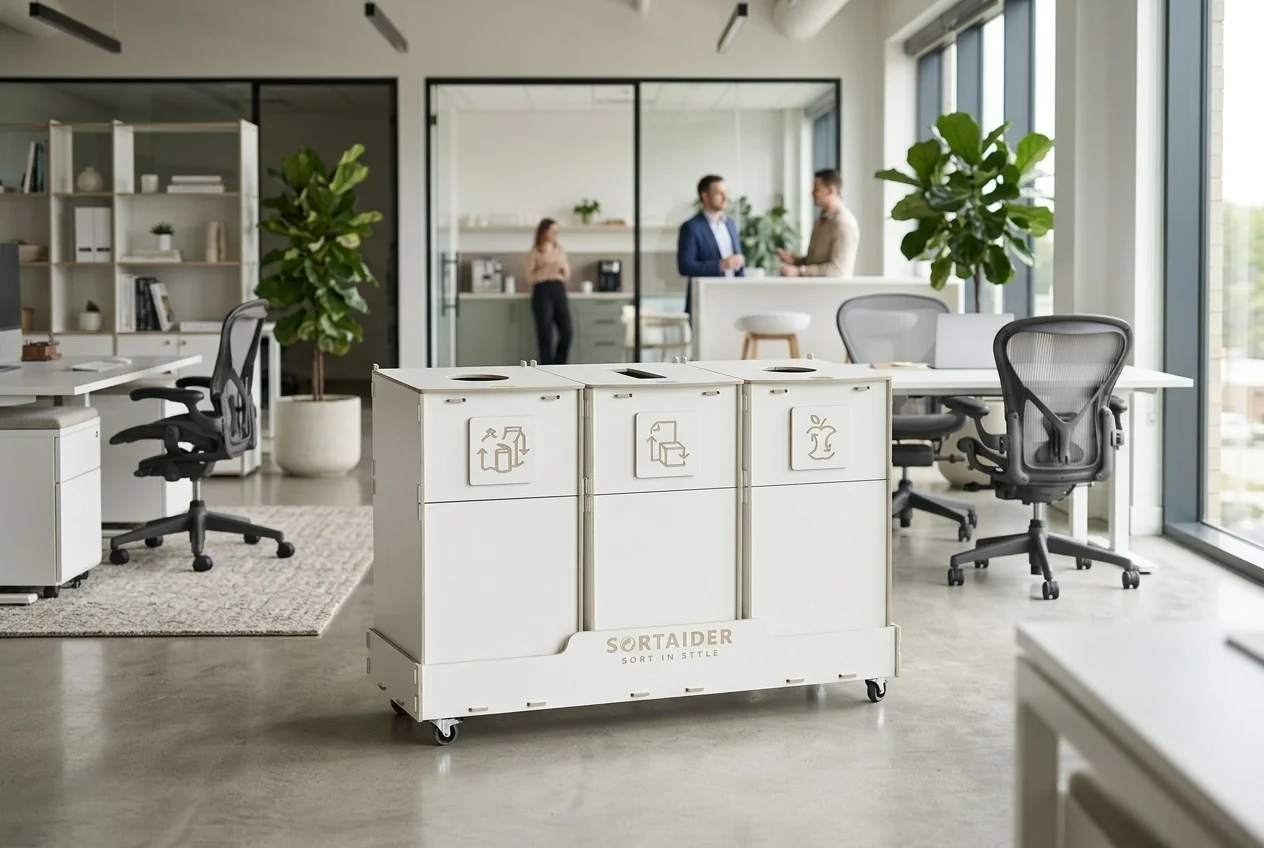
Circularity begins at the point of purchase. Opt for modular systems that can grow with your needs and are made from low-embodied carbon materials. Systems like the Ecolong series allow for flexible waste stream configurations, ensuring your infrastructure doesn’t become obsolete as regulations change or your facility expands.
-
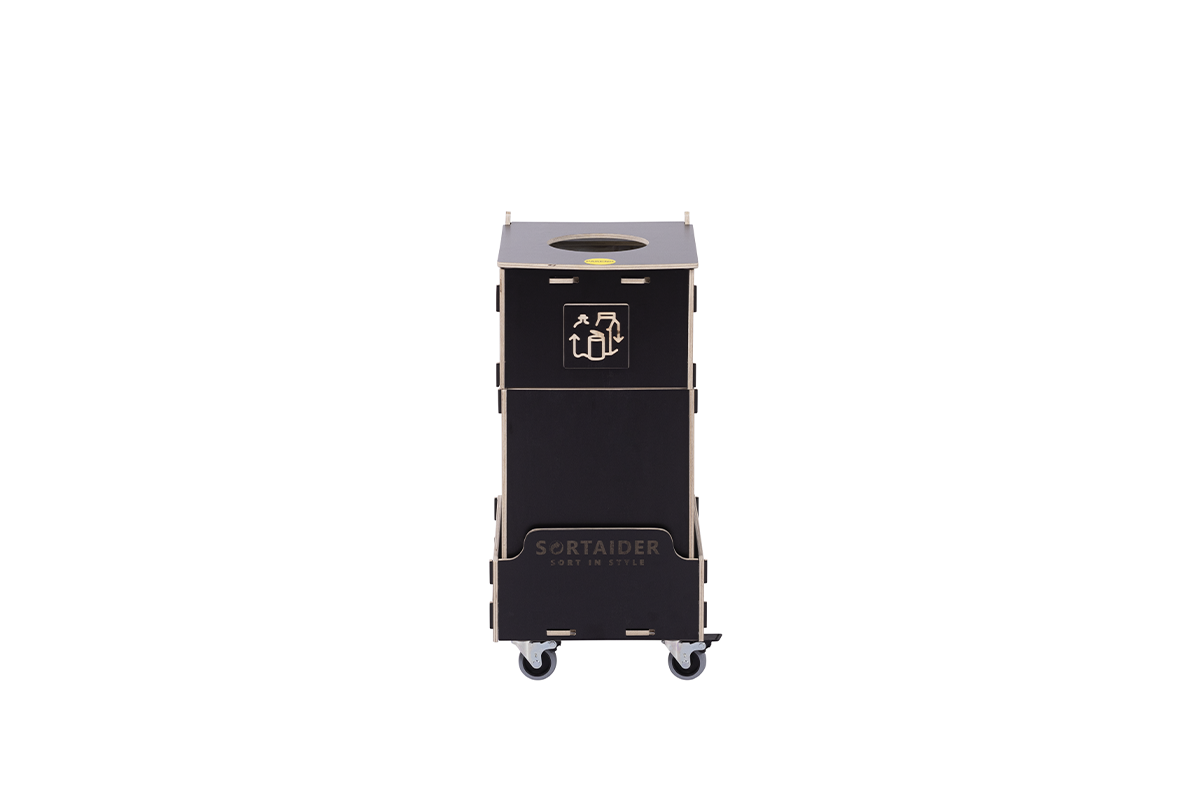
Recycling Bin Sorter 1 × 10 l brown
1 type of waste 1 x 10 l173,60 € (incl. 24% VAT)140 € (excl. VAT) -
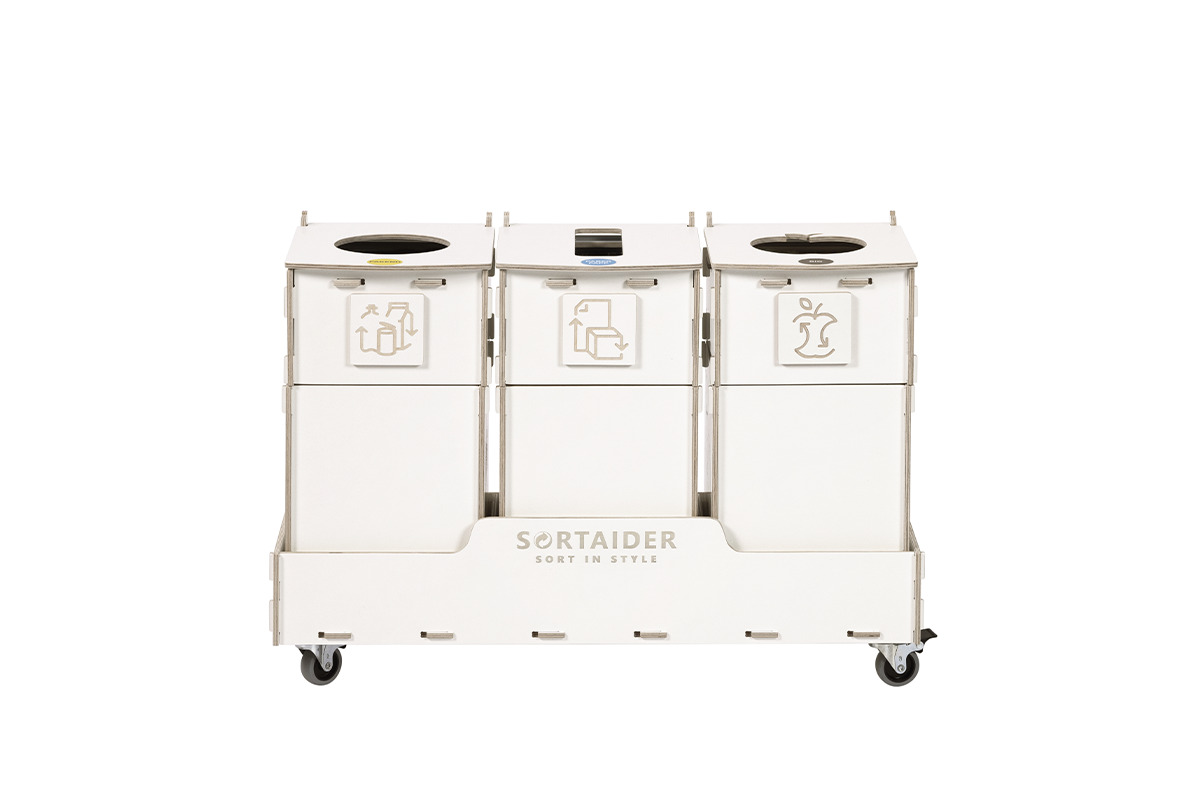
Recycling Bin Sorter 3 × 20 l white
3 types of waste 3 x 20 l471,20 € (incl. 24% VAT)380 € (excl. VAT) -
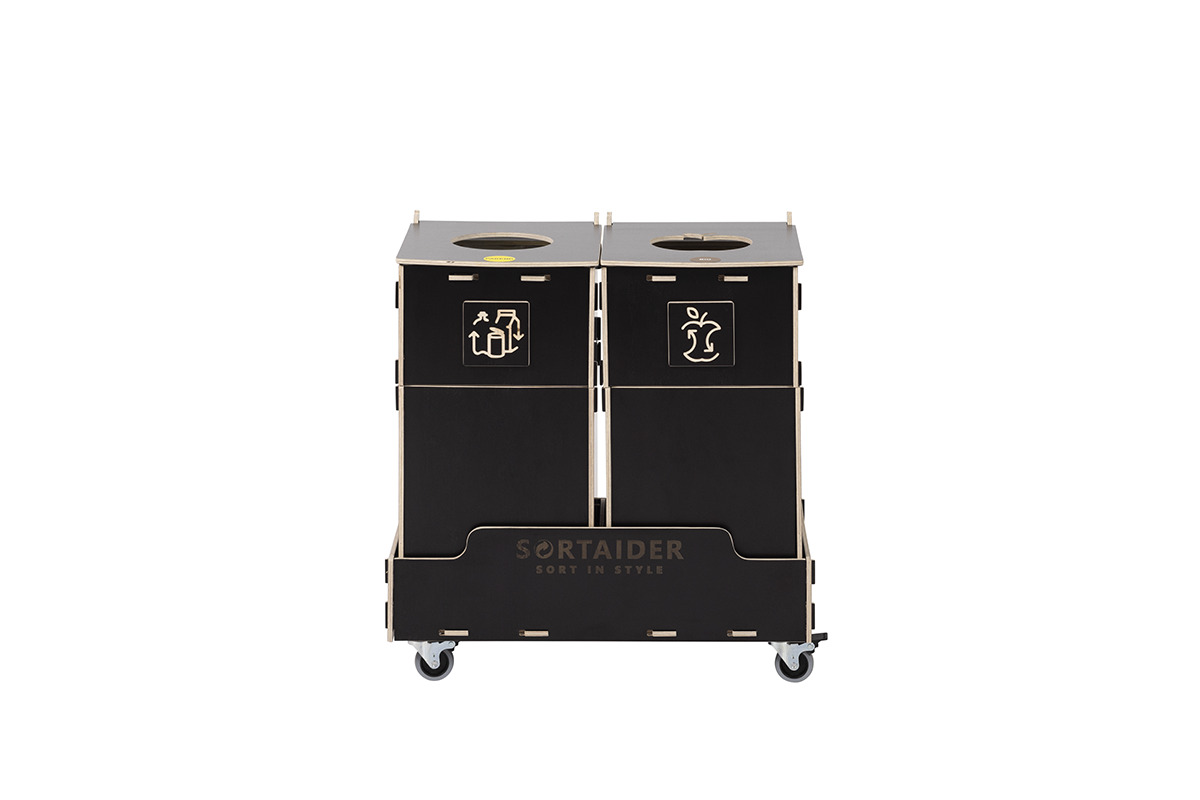
Recycling Bin Sorter 2 × 30 l brown
2 types of waste 2 x 30 l508,40 € (incl. 24% VAT)410 € (excl. VAT) -
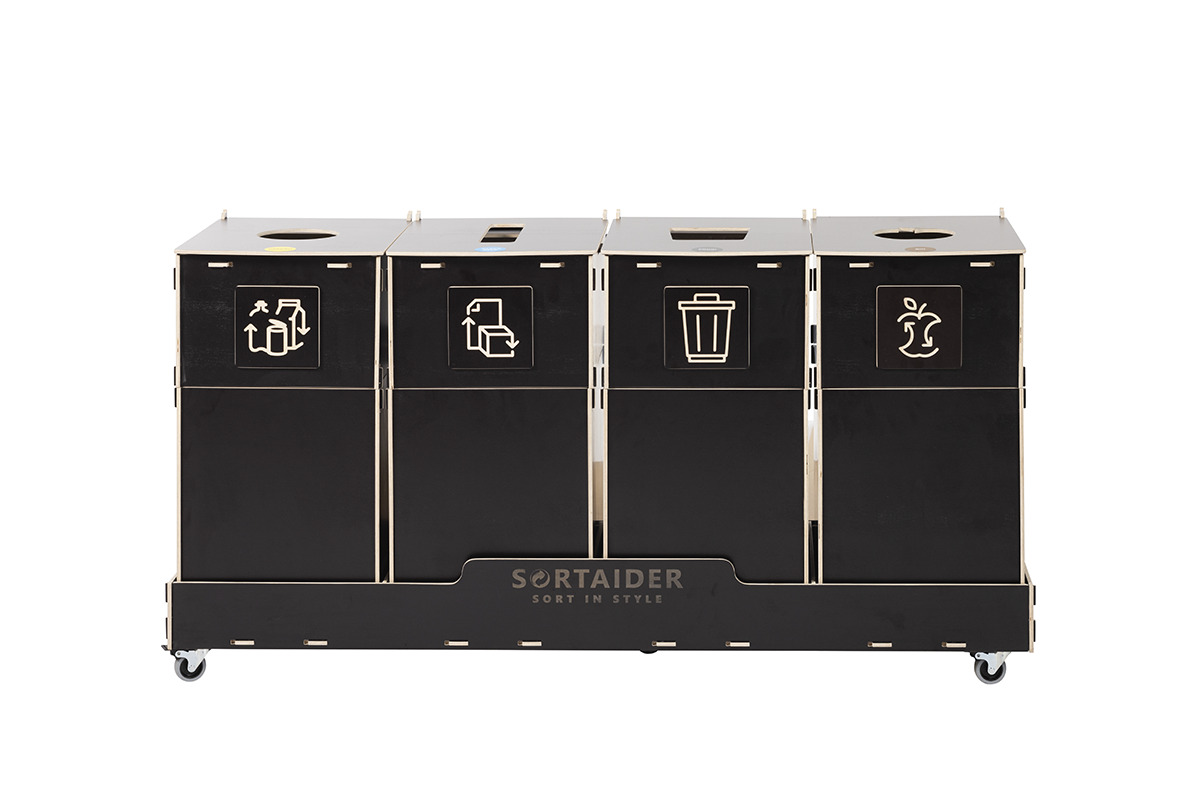
Recycling Bin Sorter 4 × 60 l brown
4 types of waste 4 x 60 l1 500,40 € (incl. 24% VAT)1 210 € (excl. VAT) -
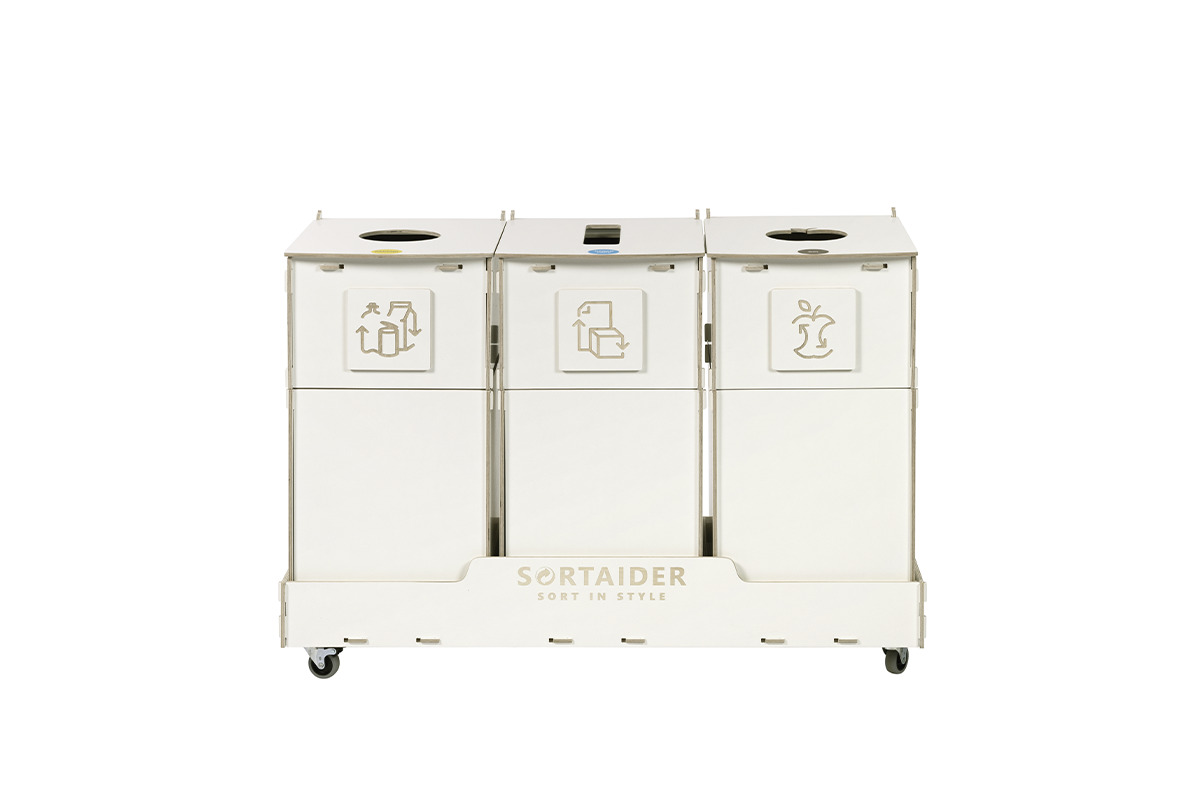
Recycling Bin Sorter 3 × 60 l white
3 types of waste 3 x 60 l1 140,80 € (incl. 24% VAT)920 € (excl. VAT)
Scaling Your Impact
Achieving a circular office is a journey of continuous improvement. By tracking and reporting recycling rates, you can prove progress to stakeholders, satisfy documentation requirements like Waste Transfer Notes, and refine your strategy over time. Whether you are pursuing a green office certification or simply aiming to reduce your office carbon footprint, the circular economy provides the most robust roadmap for long-term operational resilience.
Ready to transform your facility’s waste management into a circular resource system? Explore our range of modular recycling bin sorters or contact our team to help design a custom sorting solution for your workplace.