How do you eliminate waste across dozens of university buildings without inflating labor costs? Managing high-volume waste across academic halls, dining hubs, and residences requires balancing operational efficiency, regulatory compliance, and behavioral design.
Establishing Campus Baselines: Waste and “Pre-Waste” Audits
You cannot improve what you do not measure. A successful campus-wide strategy begins by gathering physical waste stream data and evaluating purchasing practices before materials ever enter campus grounds.
Quantifying the Stream
Universities tracking performance through sustainability frameworks like AASHE STARS evaluate non-hazardous waste generation per person (normalized by full-time equivalent students and employees) and per square meter of gross floor area. Establishing reliable data points allows facility managers to benchmark progress over time and identify priority collection zones across campus.
To collect accurate baseline data across campus facilities:
- Conduct physical waste audits: Sample waste from distinct functional zones – residence halls, administrative offices, lecture halls, and dining centers – over 1 to 7 days to account for routine usage variations.
- Determine diversion rates: Calculate your baseline by dividing total diverted weight (recyclables and compost) by total waste generated. You can adapt structured methodology from office waste audits to standardize your process and establish clear protocols to track recycling rates.
- Identify top contaminants: Weigh inbound recyclables to measure weight-based percentage contamination (weight of unacceptable material divided by total sample weight). In institutional recycling, keeping contamination below 3–5% prevents entire loads from being rejected by Material Recovery Facilities (MRFs).
Implementing Sustainable Procurement (“Pre-Waste”)
Preventing waste before it arrives is the most cost-effective reduction strategy. Conducting “pre-waste” audits in direct collaboration with procurement and campus catering teams helps identify unnecessary single-use items before purchasing commitments are made.
By integrating strict sustainability criteria into vendor contracts – such as mandating reusable or compostable service ware and bulk packaging – you eliminate disposal costs at the source. Aligning purchasing policies across university departments ensures that material streams brought onto campus fit existing downstream recovery systems.
Infrastructure Strategy: Centralization and Strategic Bin Placement
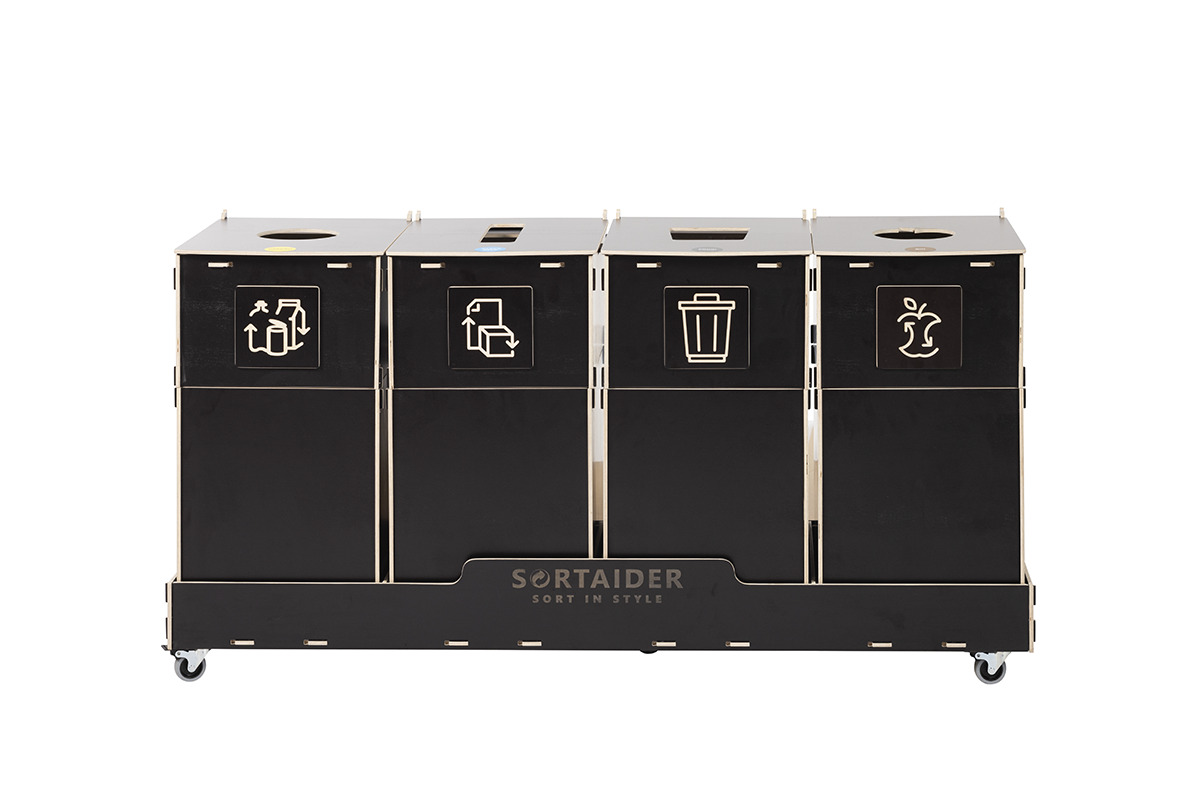
Infrastructure directly dictates human behavior. One of the most widespread causes of low diversion rates is relying on scattered, standalone trash cans that encourage unthinking disposal.
Centralized Recycling Hubs
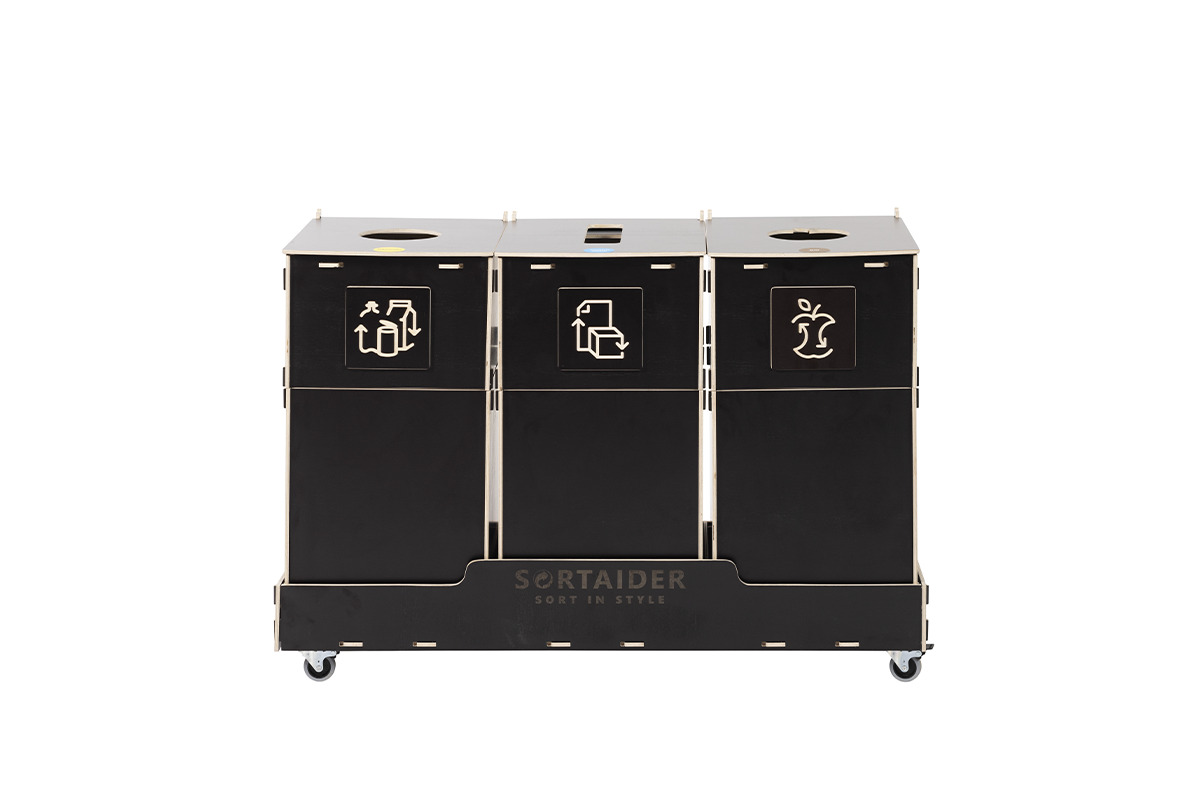
Transitioning from individual office or classroom deskside bins to centralized multi-compartment recycling hubs can boost waste diversion rates by up to 40%. Centralized stations force users to make a conscious sorting decision while significantly lowering custodial collection times and labor costs across large campus facilities.
The Principle of “Twinning”
Never place a general waste bin in isolation. Unpaired trash cans consistently collect recyclable materials, while isolated recycling bins suffer from high contamination because users drop trash in the nearest available container. Maintaining a strict 1:1 ratio (“twinning”) between general waste and recycling streams ensures that choosing to recycle is always as convenient as choosing landfill disposal.
Placement Rules
- Corridors and Entrances: Position high-capacity sorting stations at high-traffic circulation choke points and building access routes.
- Proximity Limits: Keep collection points within natural walking routes; if students or visitors must walk more than 15 meters to reach a bin, littering and mis-sorting rise sharply.
- Accessibility: Ensure operable bin parts comply with clear floor space standards (at least 91 by 122 cm for a forward approach) and can be operated with one hand.
Review specific layout principles in our recycling bin placement guide and our strategy for outdoor waste bin placement.
Standardizing Visual Design to Lower Contamination
Inconsistent bin styles, vague labels, and confusing color schemes create cognitive friction, leading to high contamination rates – especially in multilingual campus environments.
Standardized Color-Coding and Apertures
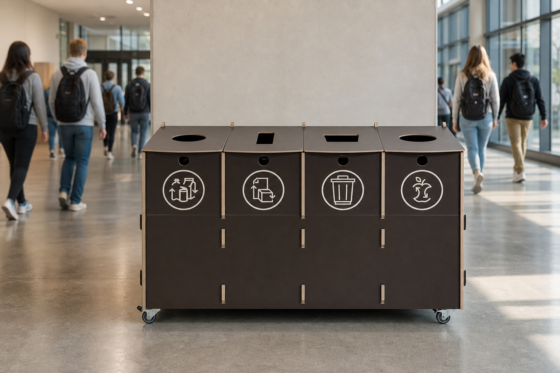
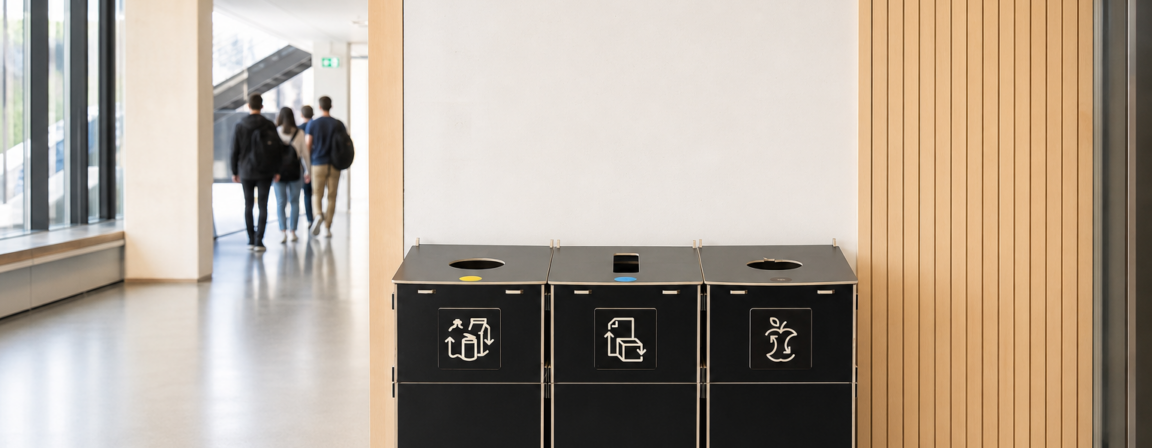
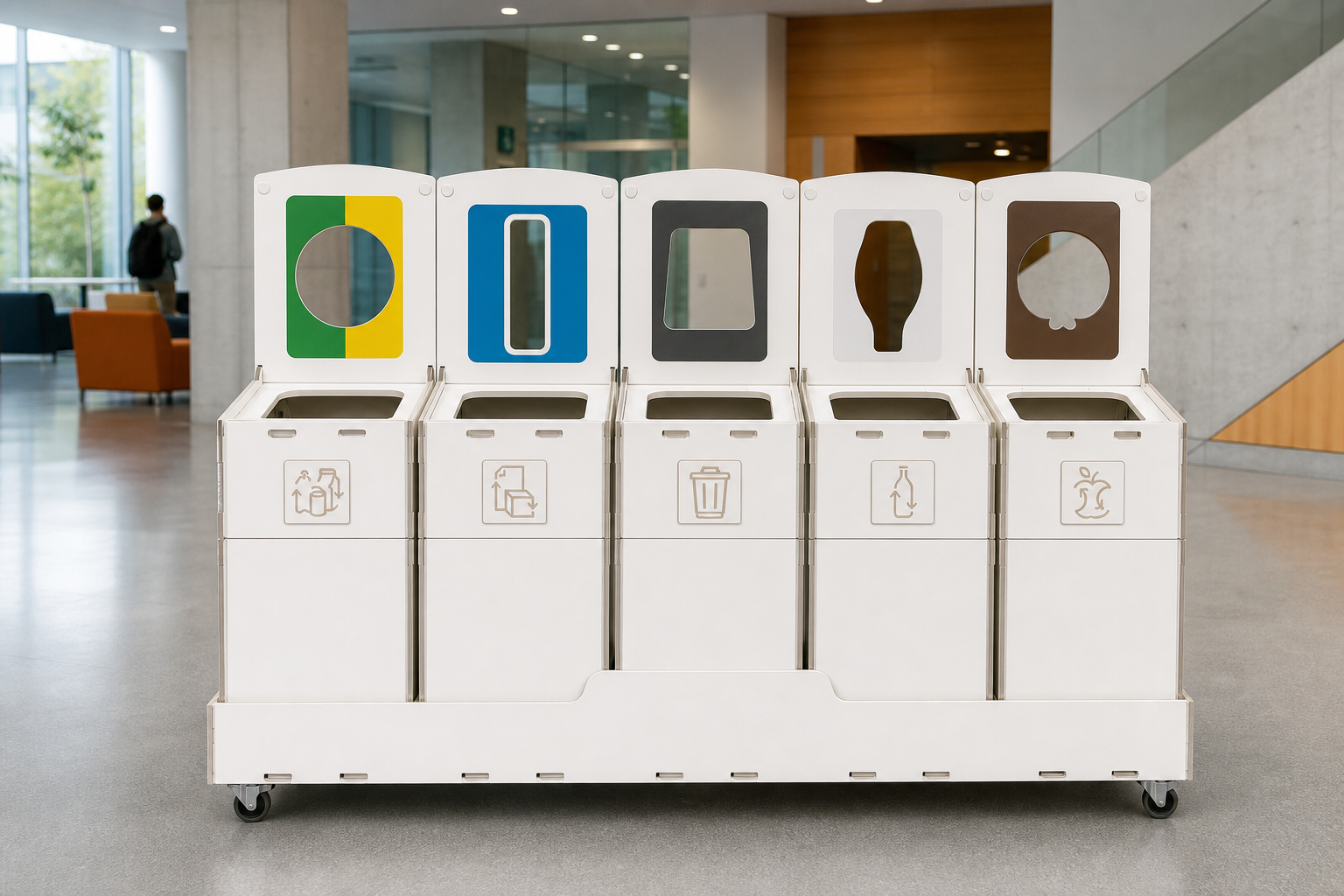
Aligning campus infrastructure with technical standards like EN 14092 or regional color guidelines (such as blue for paper, yellow for packaging, and green for bio-waste) simplifies recognition for students and staff. Incorporating functional lid apertures provides an immediate physical prompt that guides correct sorting:
- Narrow slits for paper and flat cardboard.
- Small round openings for plastic beverage bottles and cans.
- Open tops or drop lids for general waste or organic streams.
Visual Nudges and Pictograms
High-contrast visual icons and explicit item lists overcome language barriers and speed up decision-making. Research indicates that signs listing acceptable items and reinforcing recycling as a campus norm reduce recyclables placed in general waste by 20–22% while cutting overall sorting errors by 18–25%.
To refine your visual communication strategy, consult our recycling bin color-coding guide and review our breakdown of what goes in each recycling bin. To drive long-term engagement among students and faculty, explore practical techniques for encouraging employee recycling behavior change.
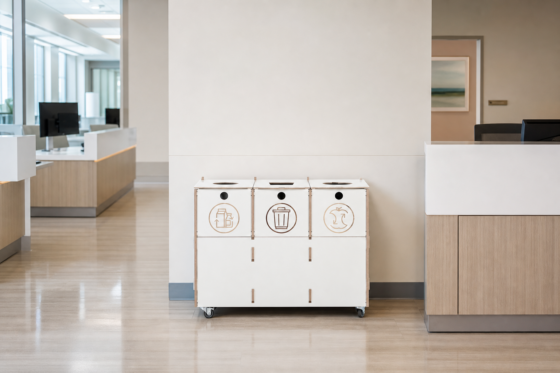
Explore our full range of customizable modular recycling bins and institutional indoor recycling stations.
-
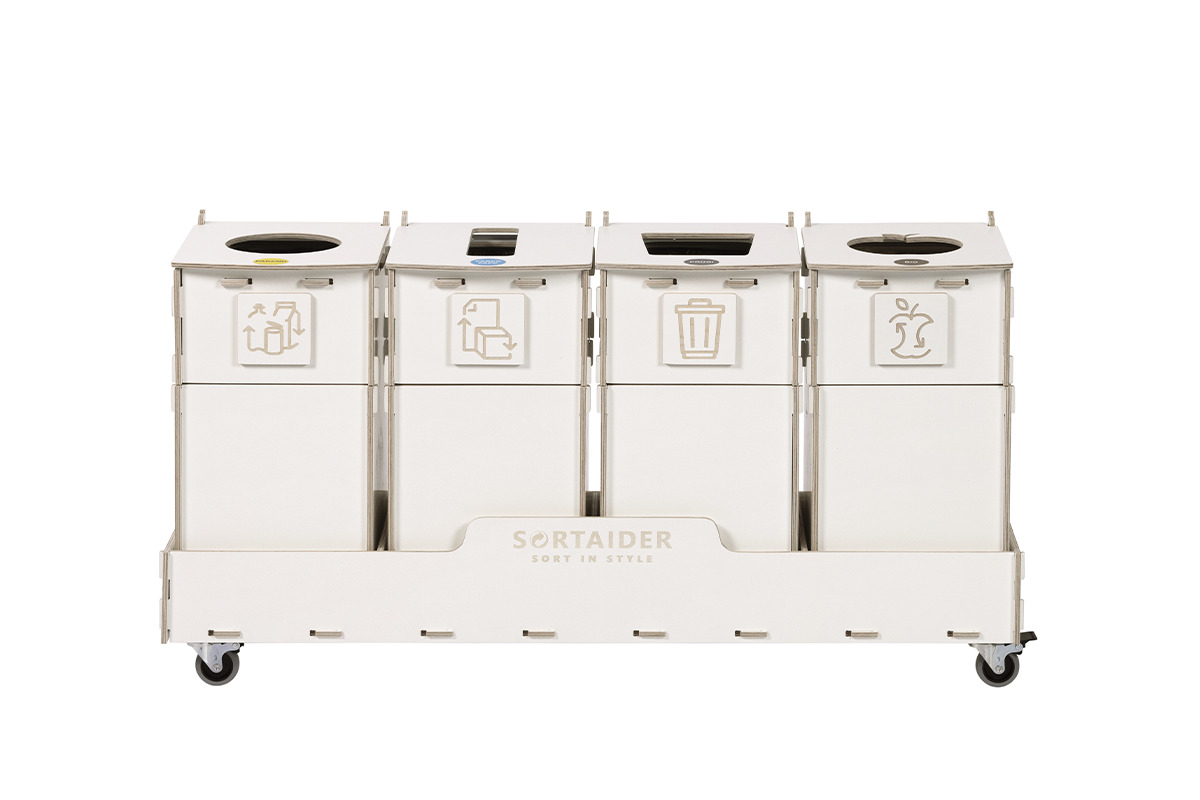
Recycling Bin Sorter 4 × 20 l white
4 types of waste 4 x 20 l607,60 € (incl. 24% VAT)490 € (excl. VAT) -
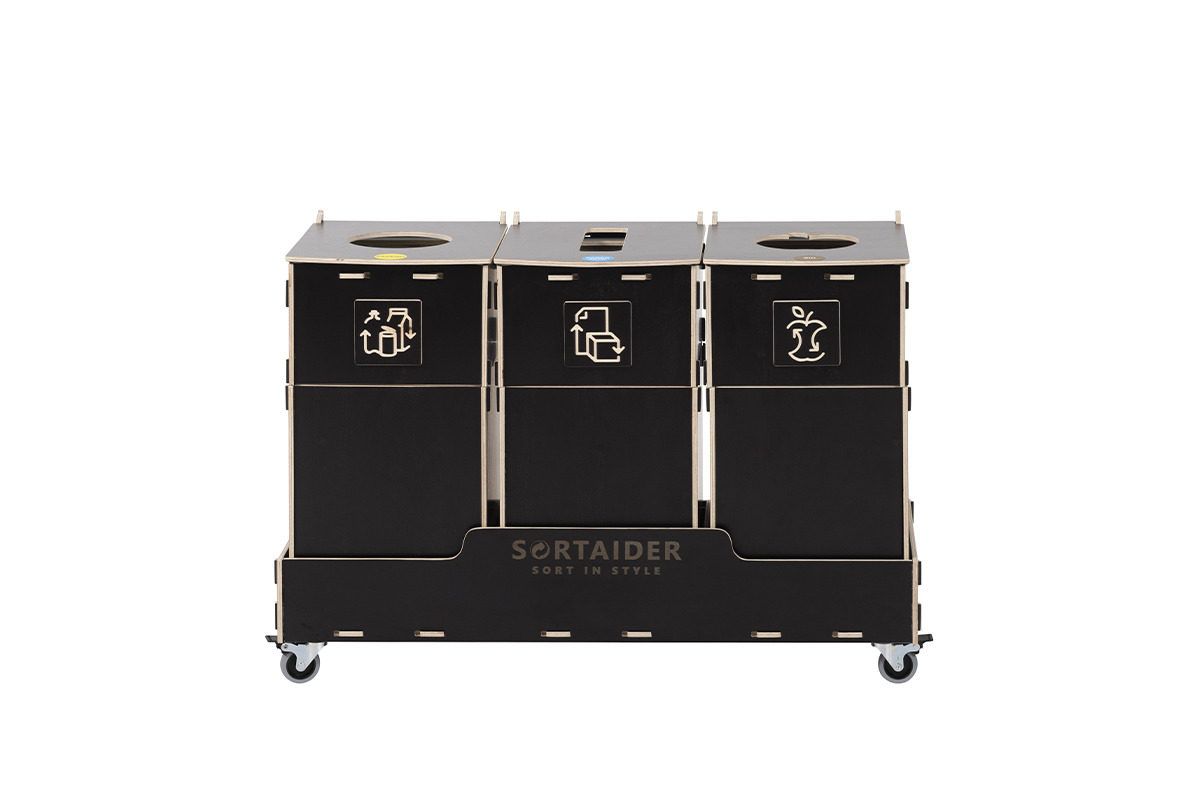
Recycling Bin Sorter 3 × 30 l brown
3 types of waste 3 x 30 l731,60 € (incl. 24% VAT)590 € (excl. VAT) -
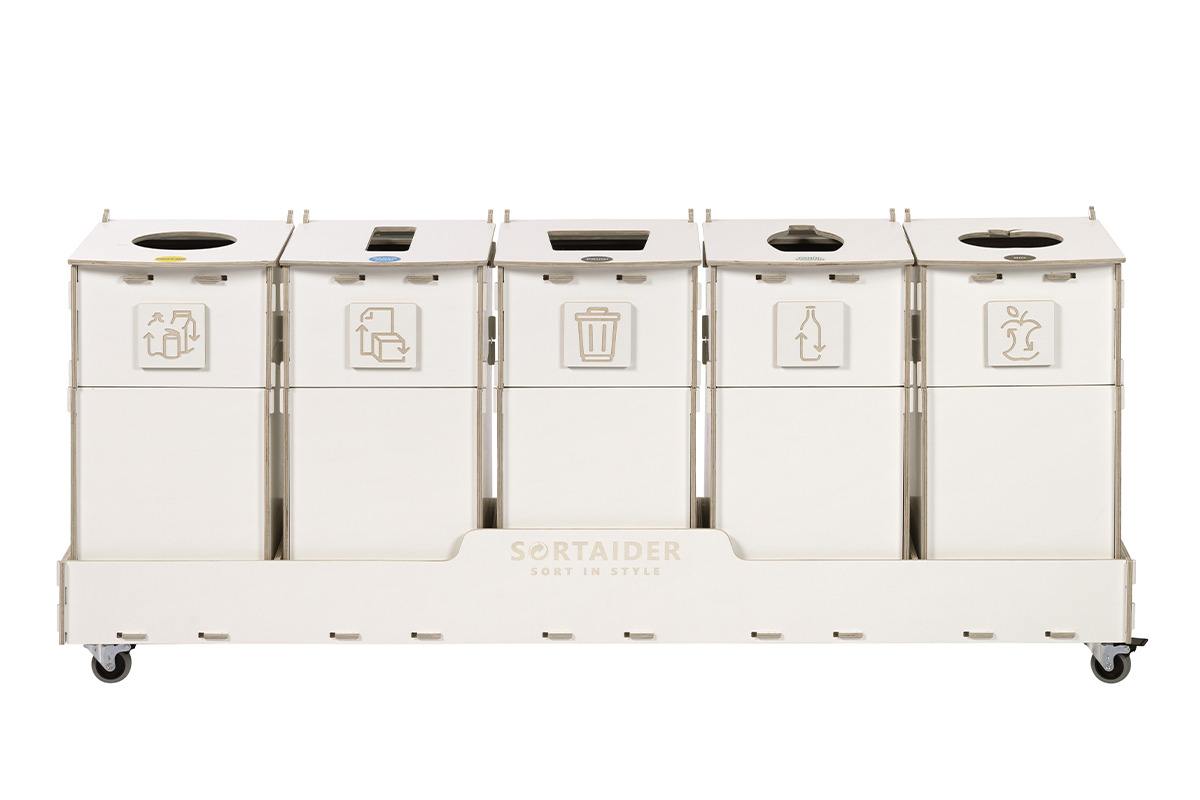
Recycling Bin Sorter 5 × 30 l white
5 types of waste 5 x 30 l1 165,60 € (incl. 24% VAT)940 € (excl. VAT)
Managing Specialized Streams: Organics, Move-Outs, and Hazardous Waste
University campuses generate complex waste streams that require dedicated operational frameworks outside standard dry recycling.
Dining and Organic Waste Management
Food waste frequently accounts for 32% to 55% of total school waste streams. Under Article 22 of the EU Waste Framework Directive, Member States must ensure bio-waste is either recycled at the source or collected separately – a legal obligation enforced through national regulations across Europe, such as mandatory bio-waste sorting rules in Sweden and Denmark.
To address dining waste effectively, implement these targeted strategies:
- Back-of-House Reduction: Reduce batch preparation sizes, shift to cook-to-order models, enforce First In, First Out (FIFO) inventory rotation, and establish surplus food donation pipelines for unserved meals.
- Front-of-House Collection: Pair clear compost bins with dedicated sorting stations near tray return areas and dish-washing stations.
- Residence Hall Composting: Programs offering residence hall rooms countertop compost caddies have successfully diverted hundreds of tons of organic matter annually (e.g., Ohio State’s residence hall program diverted 600 tons of organic waste in a single academic year).
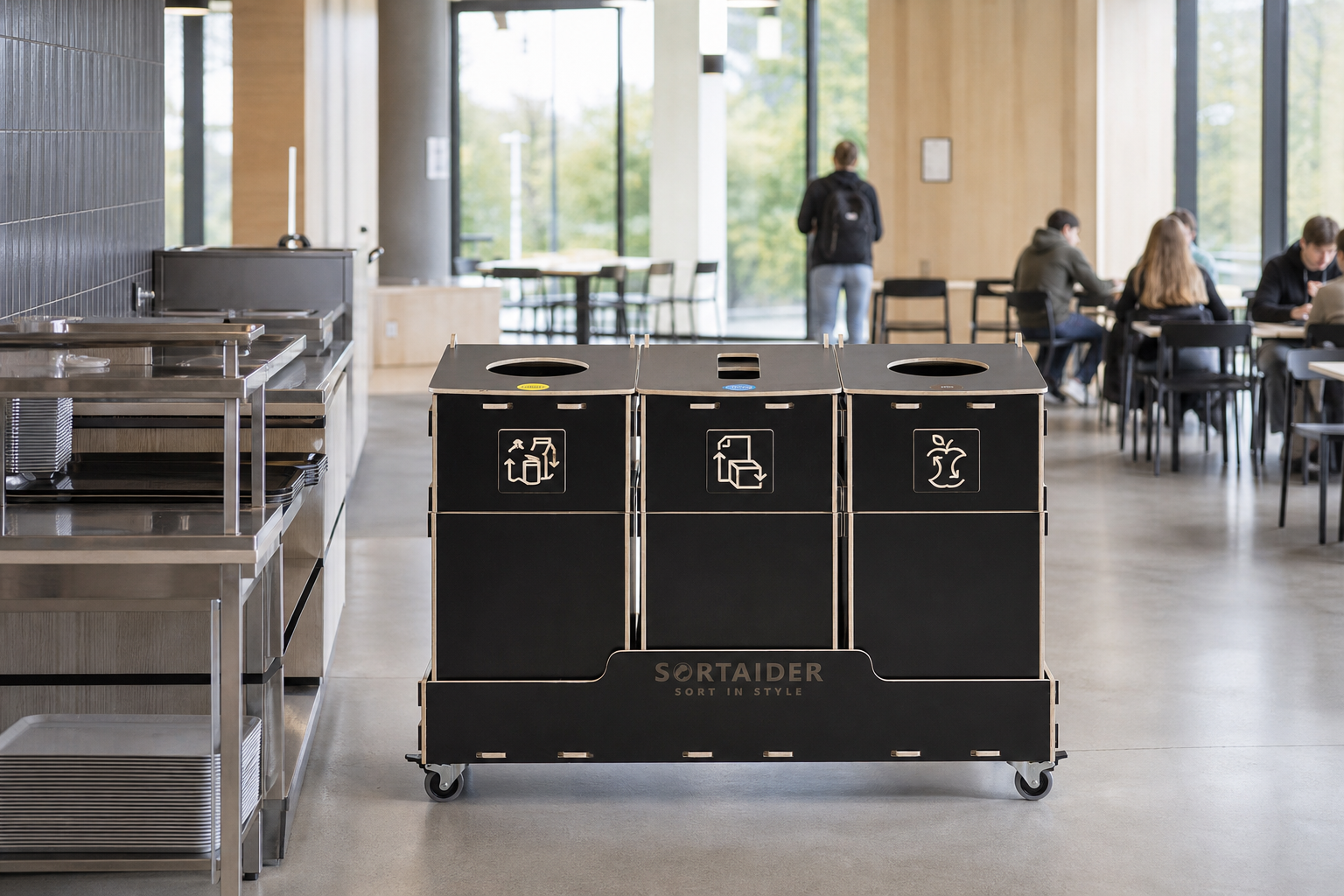
Maintain high operational hygiene by establishing routine janitorial washing protocols, detailed in our guide to cleaning and sanitising recycling bins and our overview of food waste recycling at work.
Move-Out Collections and Circular Asset Reuse
Student move-out at the end of academic terms generates massive surges of reusable goods and non-perishable food. Organizing targeted collection drives in residence halls captures clothing, electronics, and food items that would otherwise end up in compactors. Establishing campus circular platforms – such as MIT’s “Choose to Reuse” monthly events – re-homes hundreds of small items monthly and keeps functional assets in circulation.
Hazardous and Universal Waste Compliance
Universities operating research laboratories and maintenance facilities must maintain strict regulatory compliance across non-standard waste streams:
- Hazardous Waste: Laboratory chemicals must be strictly identified and stored according to applicable legal standards (such as US EPA RCRA Title 40 CFR Part 262 or equivalent national environmental authority frameworks in Europe), governing on-site accumulation time limits and licensed disposal handling.
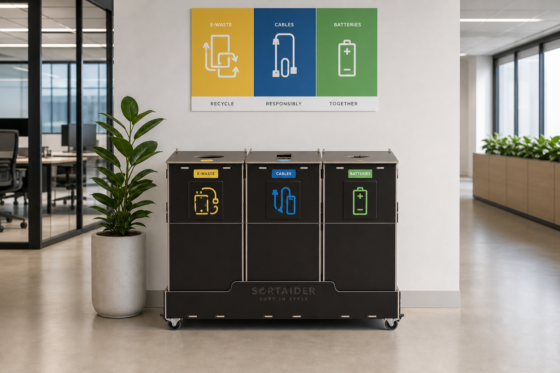
- Universal Waste: Streamlined rules apply to widespread hazardous items, including batteries, mercury-containing equipment, fluorescent lamps, and aerosol cans (e.g., under 40 CFR Part 273). Ensure dedicated, clearly labeled collection points exist within facilities management hubs to prevent environmental contamination.
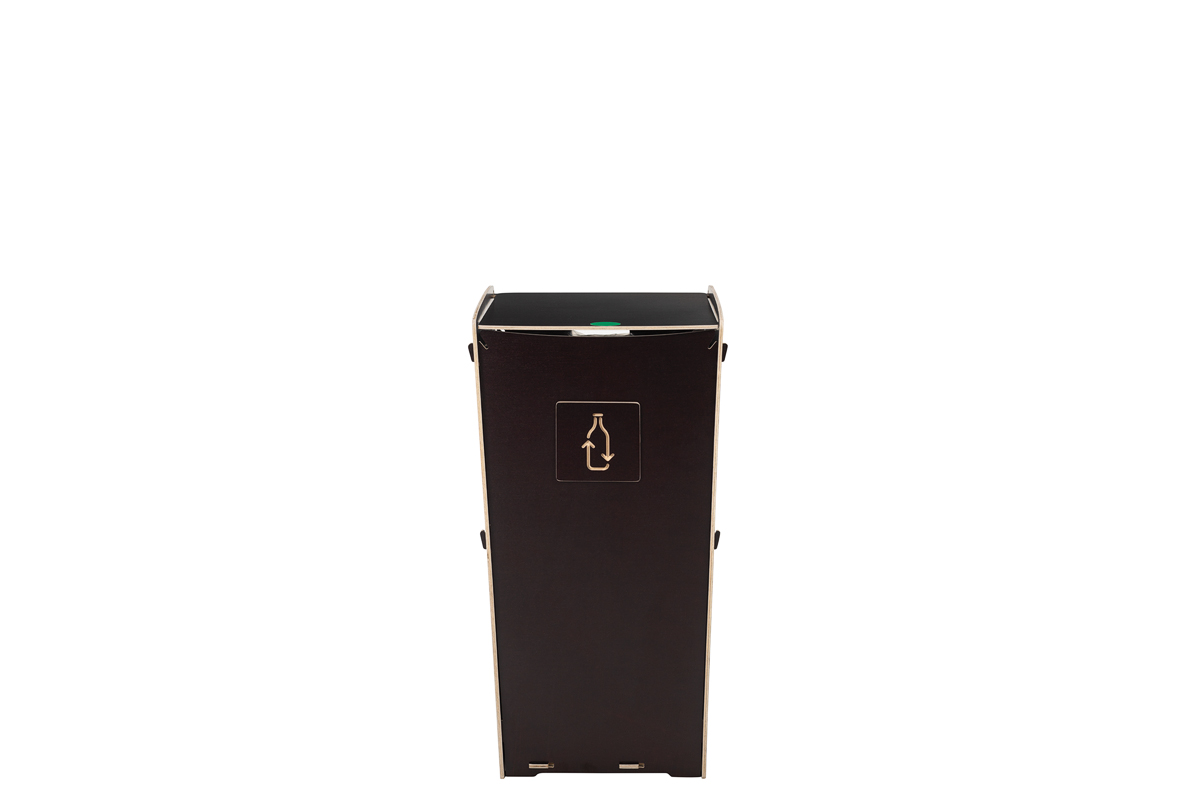
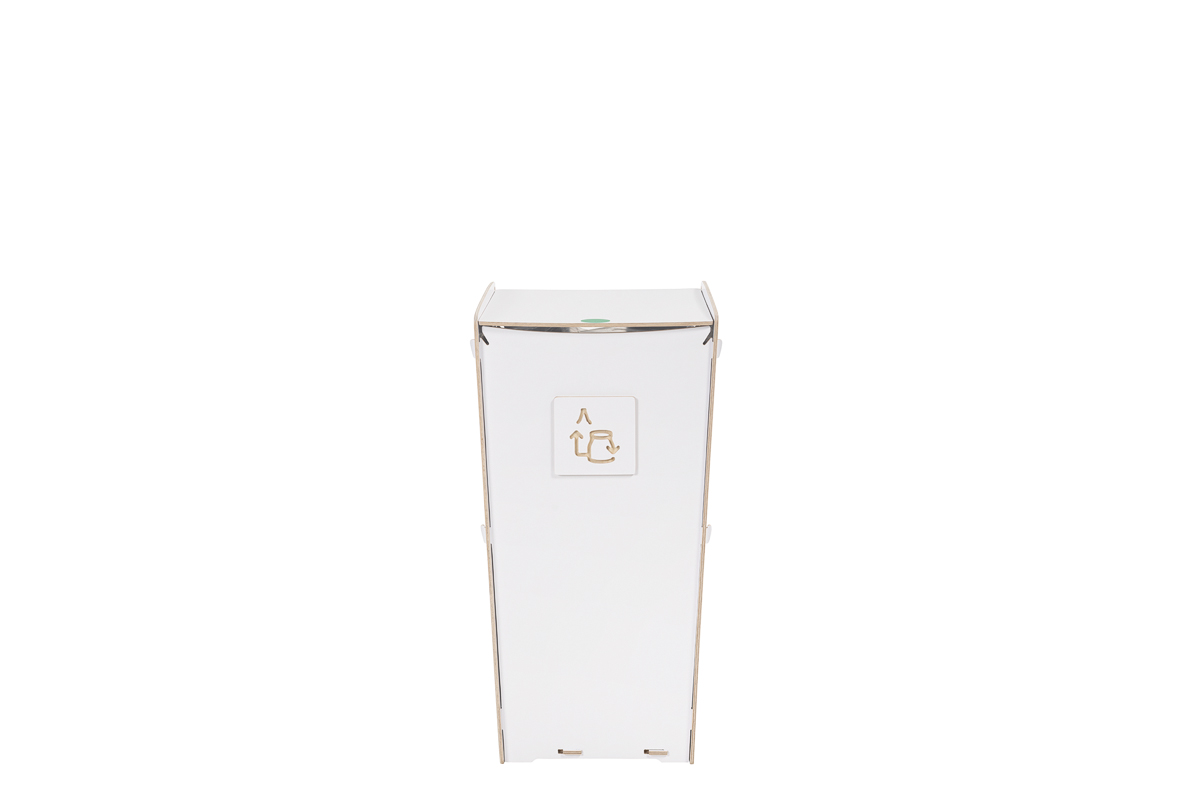
Browse our selection of moisture-resistant durable waste bins designed for demanding facility operations.
Continuous Improvement and Institutional Certification
To ensure long-term viability and secure administrative backing, integrate your campus waste operations into a broader Environmental Management System (EMS).
ISO 14001 Framework
Structuring your waste management system around the ISO 14001 Plan-Do-Check-Act (PDCA) cycle establishes continuous operational control:
- Plan: Conduct baseline audits, map compliance obligations, and set measurable diversion targets.
- Do: Deploy standardized multi-compartment sorting stations, train custodial teams, and publish clear campus guidance.
- Check: Perform routine stream audits, monitor vendor weight receipts, and track contamination metrics.
- Act: Relocate underperforming bins, adjust collection schedules to lower haulage costs, and update signage based on audit findings.
Learn more about aligning your operations with the ISO 14001 environmental management system.
TRUE Zero Waste Certification
For campus facilities pursuing zero-waste recognition, the TRUE Zero Waste certification offers an internationally recognized standard. To qualify, a certified facility must achieve an average 90% or greater overall waste diversion rate from landfills, incinerators, and the environment over 12 consecutive months. Additionally, the facility must maintain strict quality controls ensuring contamination does not exceed 10% for any diverted stream.
For broader organizational context, explore our strategies for setting up workplace recycling and comprehensive waste management strategies for schools.
Transforming Your Campus Waste Infrastructure
Achieving institutional sustainability goals requires durable, intuitive, and aesthetically integrated sorting systems that encourage daily student participation while streamlining custodial workflows.
Sortaider manufactures award-winning plywood recycling stations engineered specifically for educational and institutional environments, combining Nordic design with sustainable construction that generates up to 4x lower lifecycle CO₂ emissions than traditional metal or plastic bins.
Contact our team today to request a tailored consultation, customize your waste stream configurations, or discuss institutional volume pricing for your campus.