Did you know that strategic bin placement can boost recycling participation by 30% to 50%? For facility managers, the difference between a high-performing sustainability program and a contaminated waste stream often comes down to where a station stands and how effortlessly it integrates into daily routines.
The Golden Rule of Proximity: The 1:1 Ratio
The most common cause of recycling failure is the “lone trash can.” Research into workplace habits shows that when employees have a general waste bin at their feet but must walk across the room to recycle, they are significantly more likely to toss everything into a single stream. Proximity is the primary driver of success in office waste management because users are far more likely to sort correctly when the station is intuitive and accessible.
To improve recycling rates in the workplace, you should follow the 1:1 ratio: never place a general waste bin without a corresponding recycling stream next to it. By replacing individual deskside bins with centralized recycling hubs, you can increase waste diversion rates by up to 40% while reducing the labor required for collection.
-
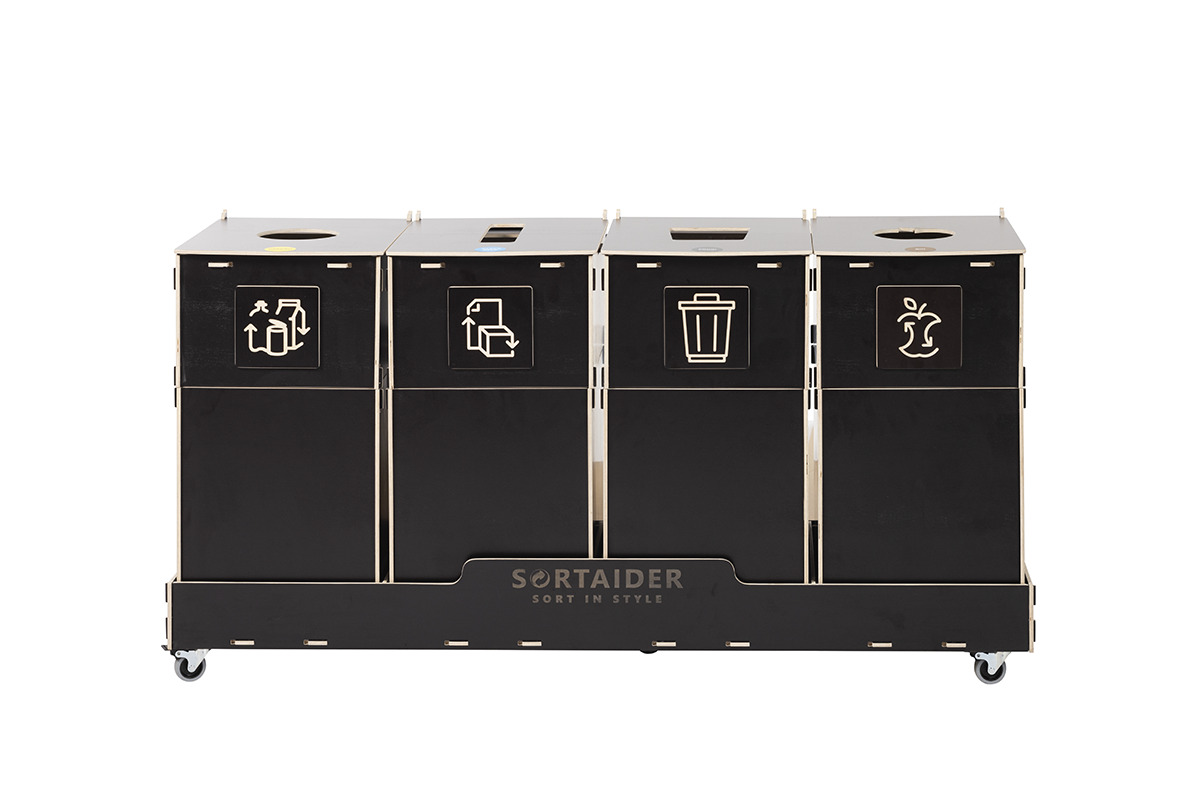
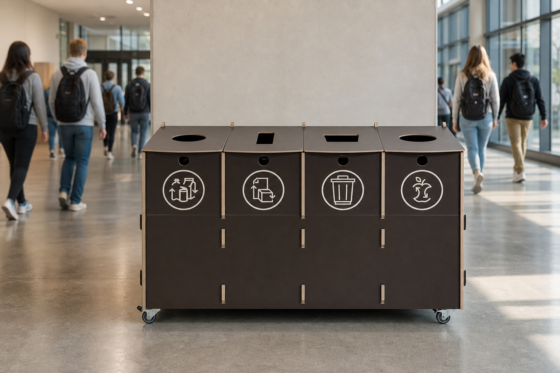
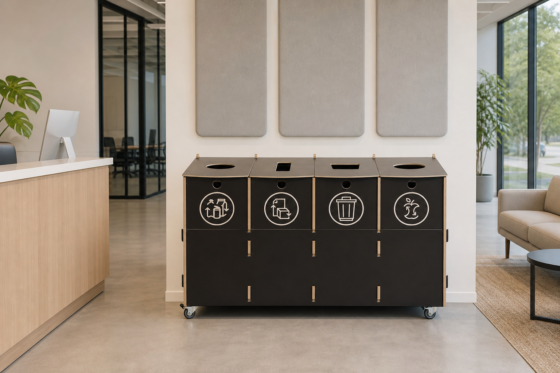
Recycling Bin Sorter 4 × 60 l brown
4 types of waste 4 x 60 l1 500,40 € (incl. 24% VAT)1 210 € (excl. VAT) -
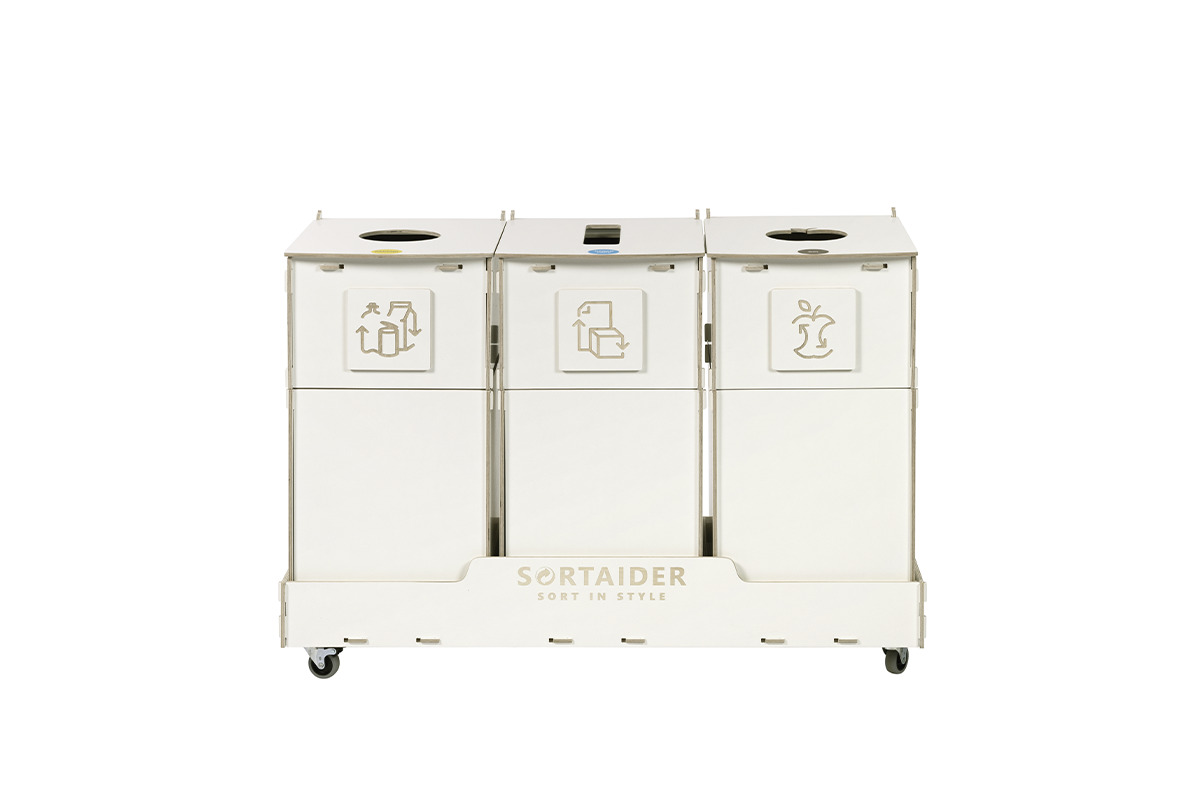
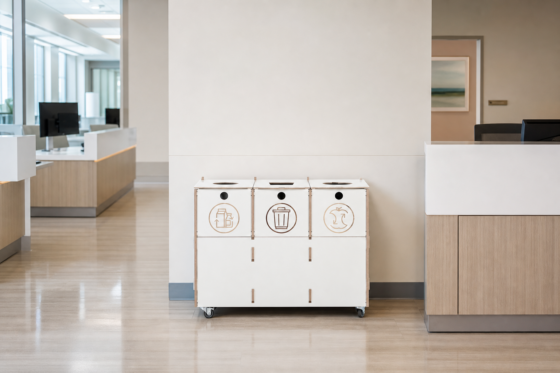
Recycling Bin Sorter 3 × 60 l white
3 types of waste 3 x 60 l1 140,80 € (incl. 24% VAT)920 € (excl. VAT) -
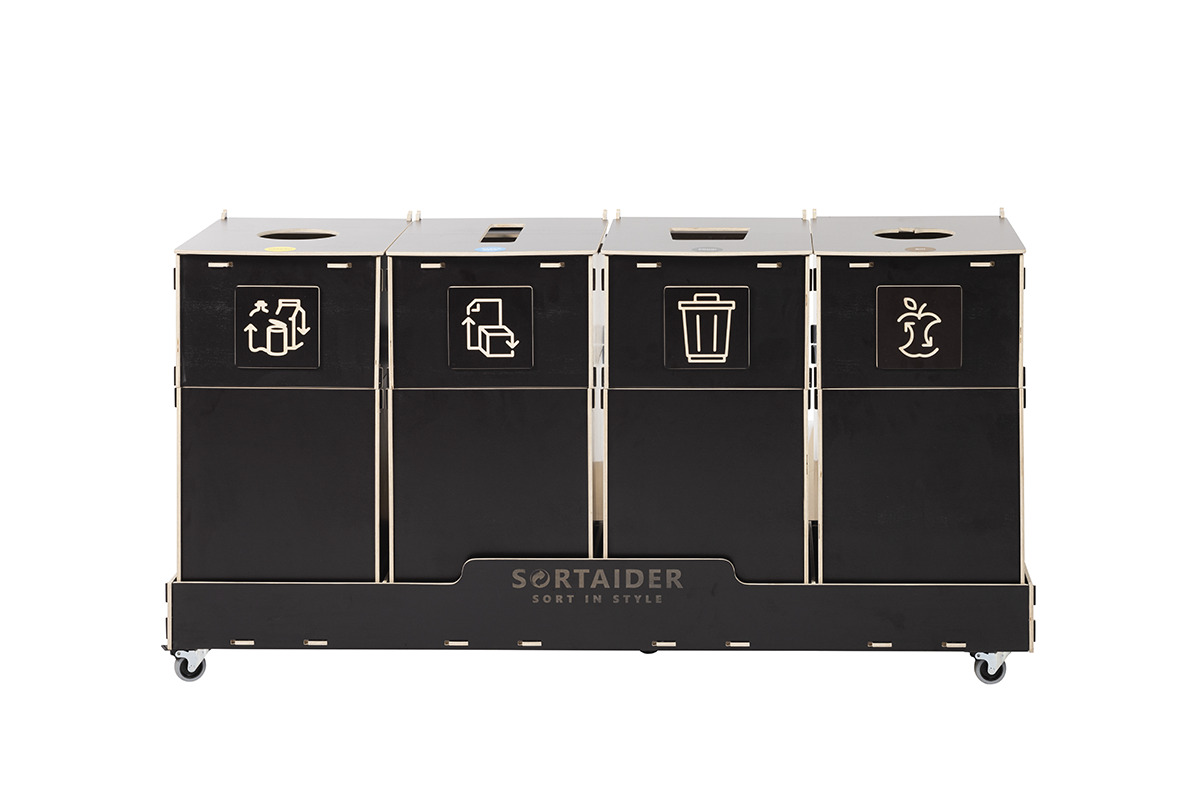
Recycling Bin Sorter 4 × 90 l brown
4 types of waste 4 x 90 l1 810,40 € (incl. 24% VAT)1 460 € (excl. VAT)
High-Traffic Hotspots and Functional Zoning
Different areas of a facility generate distinct waste profiles. Your placement strategy should reflect these “hotspots” to ensure the right bins are where they are needed most. For instance, in office kitchen waste management, it is critical to use bins with specialized lids to manage moisture and organic matter, as these areas are the primary source of bio-waste, plastics, and metals.
Beyond the kitchen, print and copy rooms should be equipped with large-capacity containers dedicated specifically to paper and cardboard. High-traffic corridors and entrances are ideal for multi-compartment stations that handle “on-the-go” waste like PET bottles and coffee cups. In conference rooms, smaller modular units work best to maintain a professional aesthetic while providing 2–3 sorting fractions for meeting attendees.

-
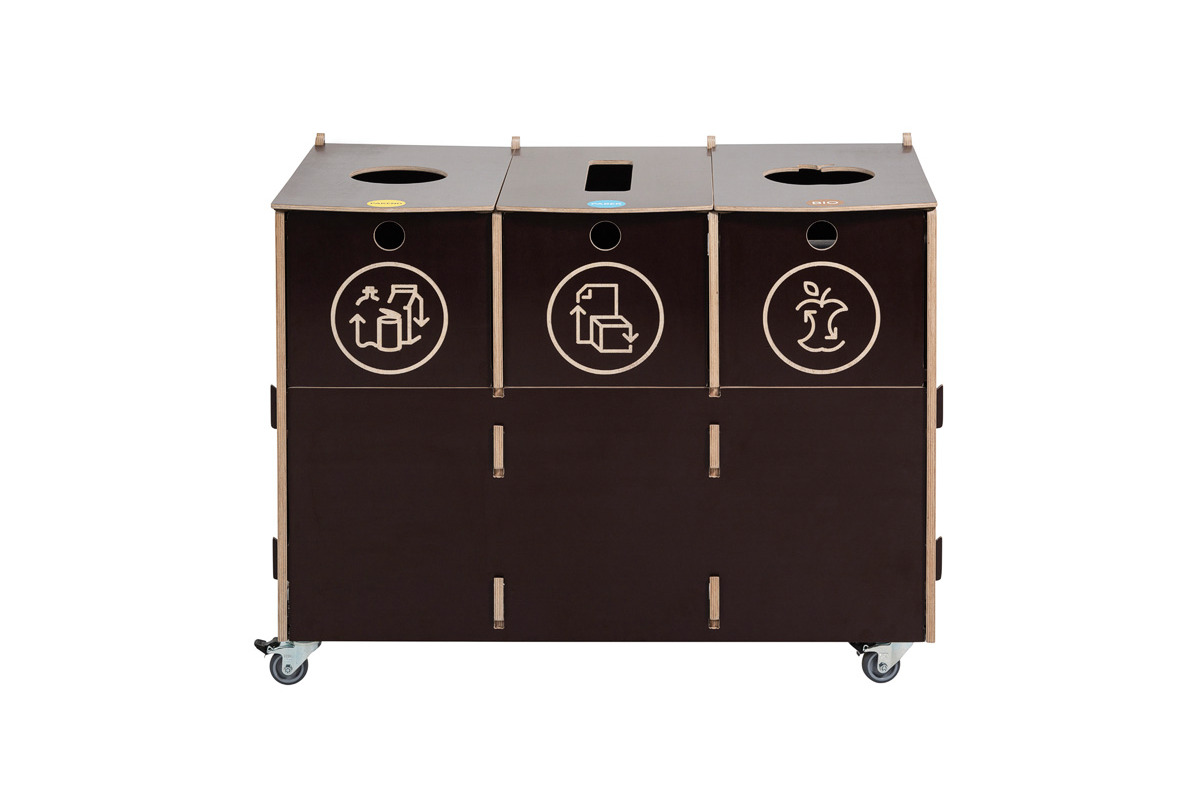
Recycling Bin Container 3 × 40 l brown
3 types of waste 3 x 40 l1 215,20 € (incl. 24% VAT)980 € (excl. VAT) -
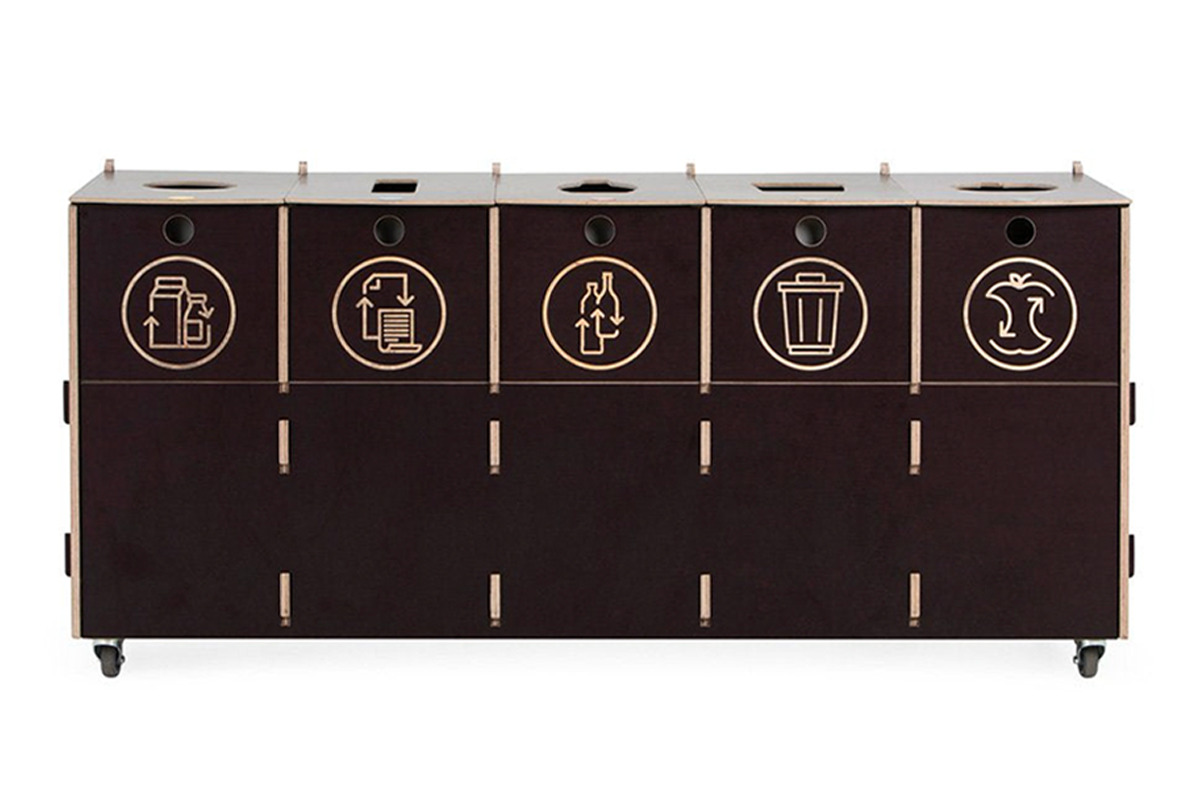
Recycling Bin Container 5 × 40 l brown
5 types of waste 5 x 40 l1 798 € (incl. 24% VAT)1 450 € (excl. VAT) -
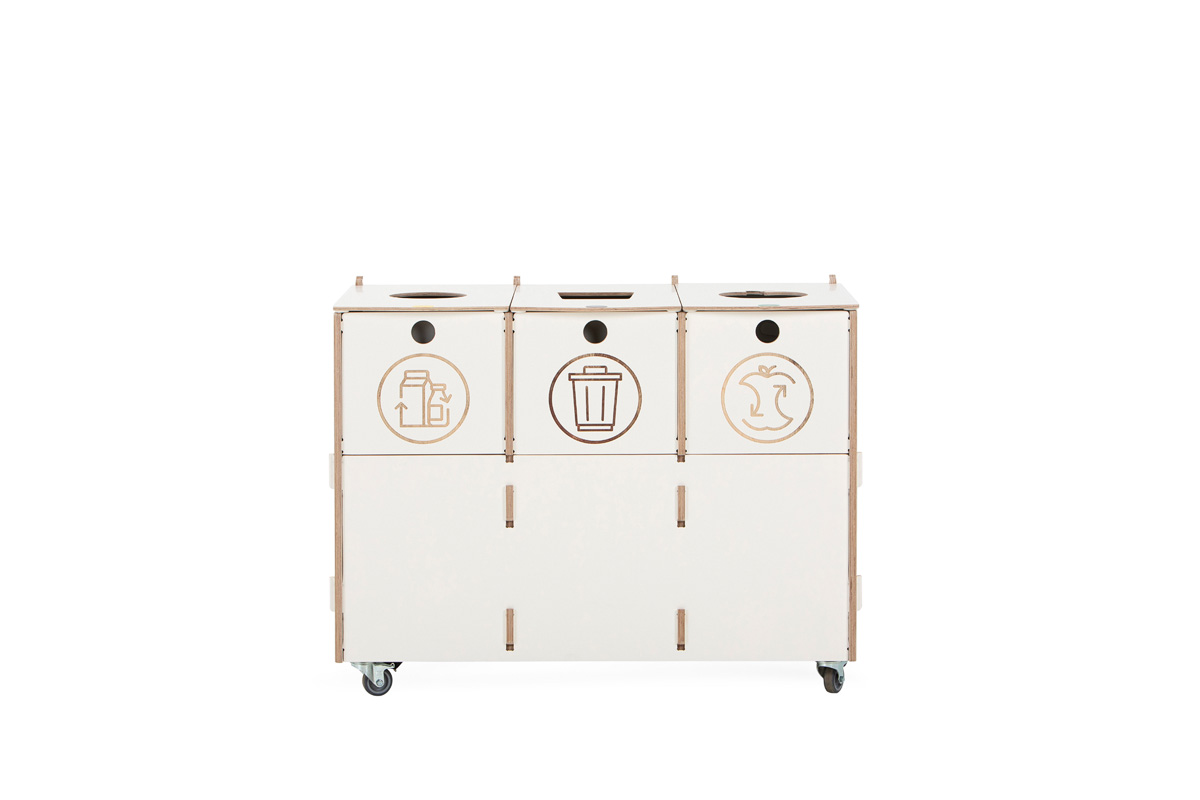
Recycling Bin Container 3 × 40 l white
3 types of waste 3 x 40 l1 215,20 € (incl. 24% VAT)980 € (excl. VAT) -

Recycling Bin Container 4 × 40 l white
4 types of waste 4 x 40 l1 612 € (incl. 24% VAT)1 300 € (excl. VAT) -
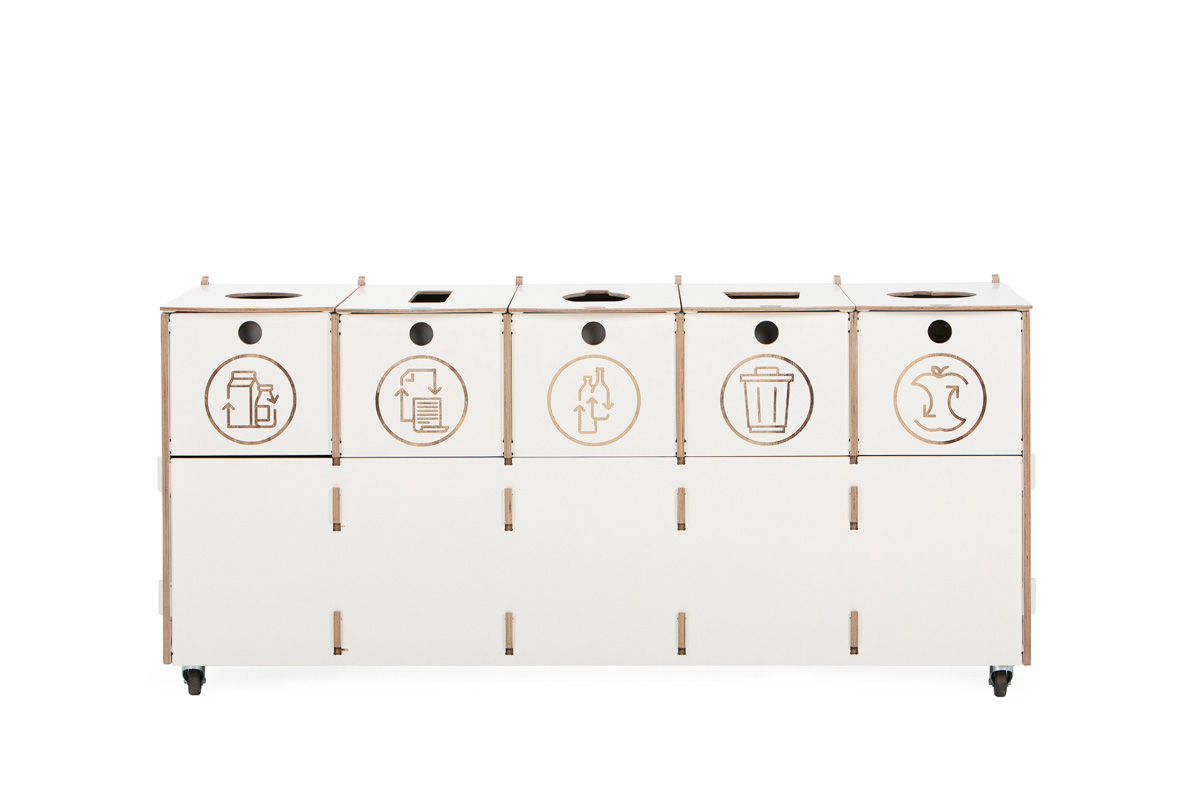
Recycling Bin Container 5 × 40 l white
5 types of waste 5 x 40 l1 798 € (incl. 24% VAT)1 450 € (excl. VAT)
Compliance and Accessibility Standards
When setting up recycling at work, facility managers must navigate a complex landscape of safety and accessibility regulations. Proper placement ensures your sustainability efforts do not conflict with legal safety requirements.
ADA and Universal Design
Under ADA Accessibility Standards, recycling receptacles in public-facing facilities must be accessible to all users. At least one bin of each type should have operable parts between 15 and 48 inches (38–122 cm) above the floor. Furthermore, lids must be operable with one hand, without requiring tight grasping, pinching, or more than 5 pounds of force. Clear floor space of at least 30 by 48 inches must be maintained around the bin to allow for a forward or parallel approach.
OSHA and Fire Safety
OSHA’s exit route standards require that all exit paths remain free and unobstructed. Recycling stations must not project into hallways in a way that reduces the exit width to less than 28 inches (71 cm). In European markets, facility managers should also ensure that bins are made from fire-safe materials and are positioned so they do not block fire suppression equipment or emergency exit signage.
Navigating European Waste Legislation
Across Europe, the Waste Framework Directive mandates the separate collection of paper, metal, plastic, glass, and bio-waste at the source. However, specific requirements vary by region, and non-compliance can result in significant financial penalties.
- The Nordics: Sweden and Denmark have some of the strictest rules; Sweden has mandated separate food waste collection for all businesses since 2024, while Denmark requires a minimum of four separate bins for workplaces.
- The Baltics: In Estonia, sites generating more than 10kg of bio-waste daily must have dedicated organic collection. Latvia applies Extended Producer Responsibility (EPR) for packaging exceeding 300kg per year.
- Future Regulations: The upcoming Packaging and Packaging Waste Regulation (PPWR) will soon require even more granular sorting across the EU to hit 2030 sustainability targets.
-
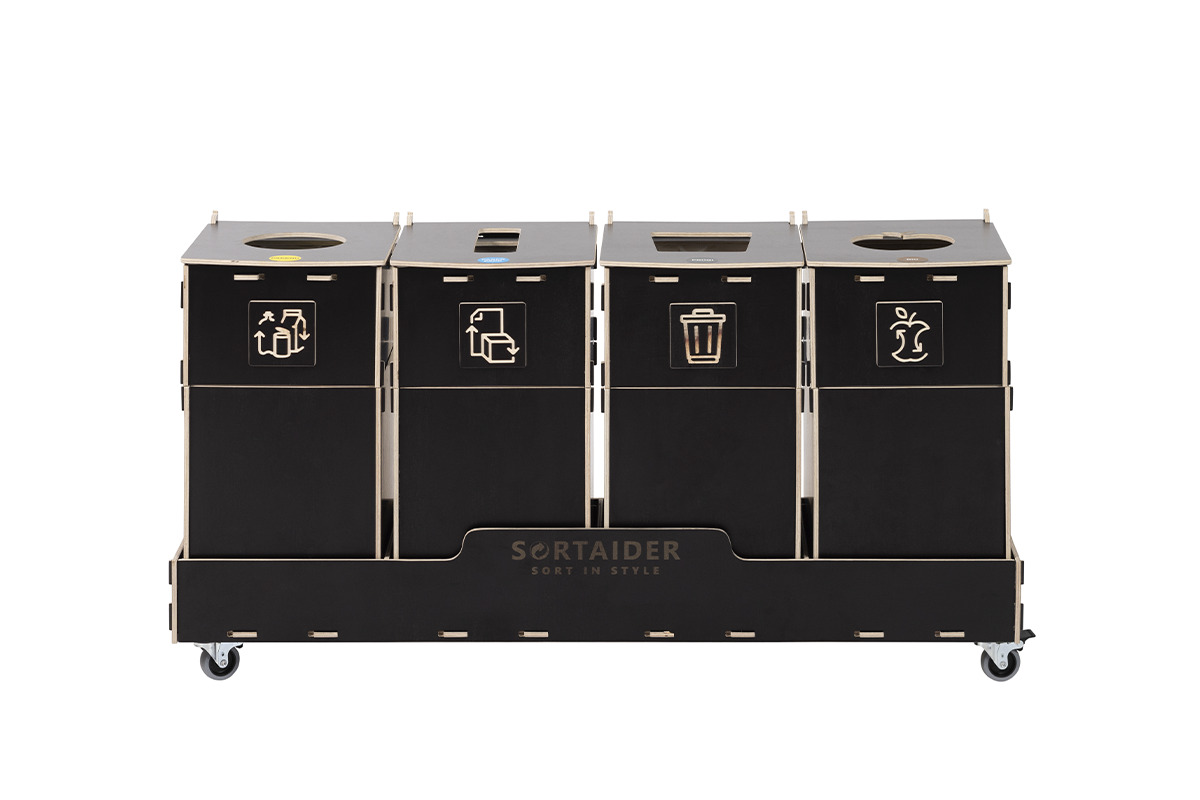
Recycling Bin Sorter 4 × 30 l brown
4 types of waste 4 x 30 l954,80 € (incl. 24% VAT)770 € (excl. VAT) -
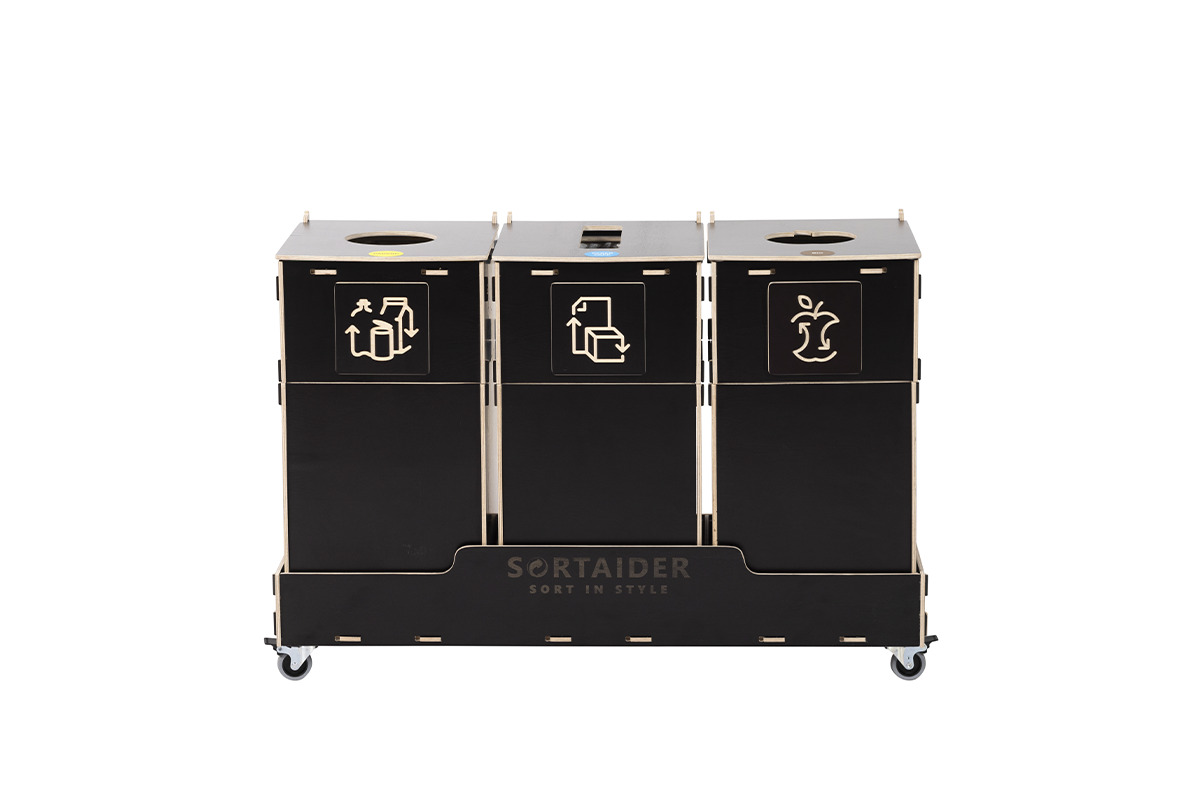
Recycling Bin Sorter 3 × 40 l brown
3 types of waste 3 x 40 l992 € (incl. 24% VAT)800 € (excl. VAT) -
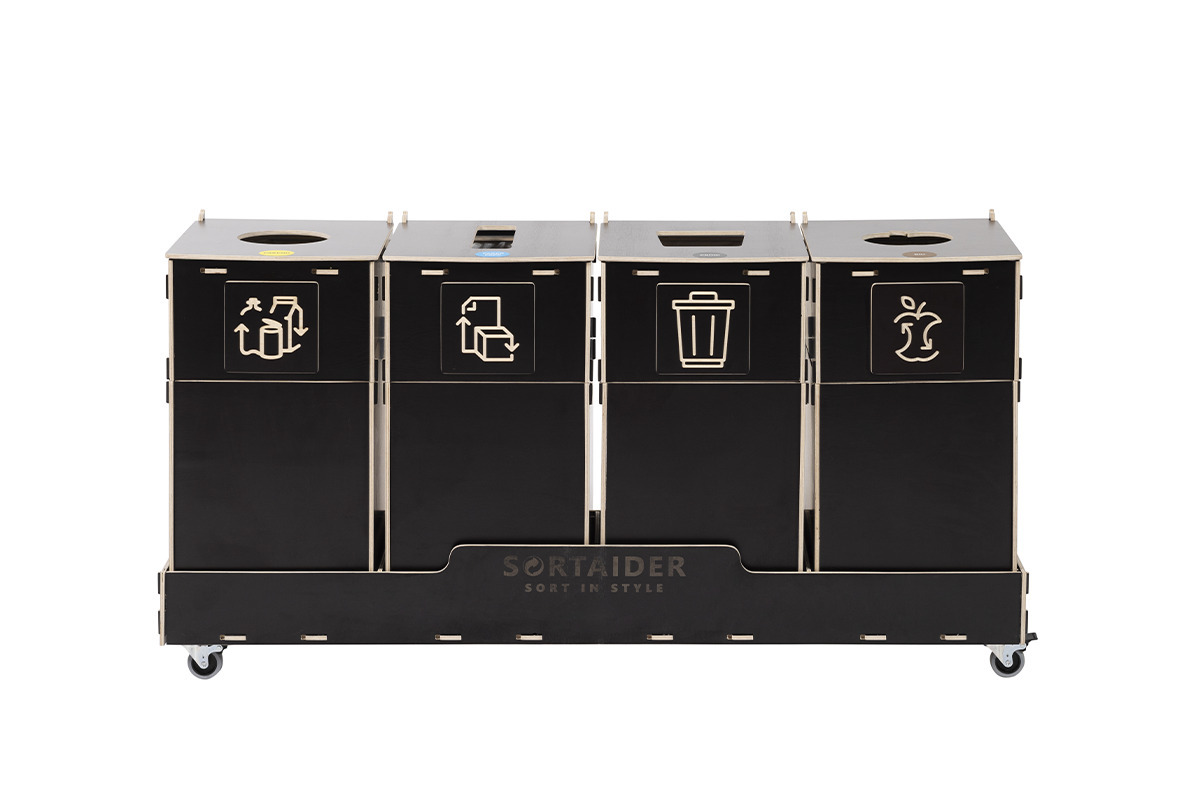
Recycling Bin Sorter 4 × 40 l brown
4 types of waste 4 x 40 l1 289,60 € (incl. 24% VAT)1 040 € (excl. VAT)
Minimizing Contamination with Behavioral Design
Even with perfect placement, recycling contamination can ruin an entire batch of waste, leading to higher disposal costs and rejected loads. Strategic design “nudges” can reduce sorting errors by up to 40% in multilingual environments.
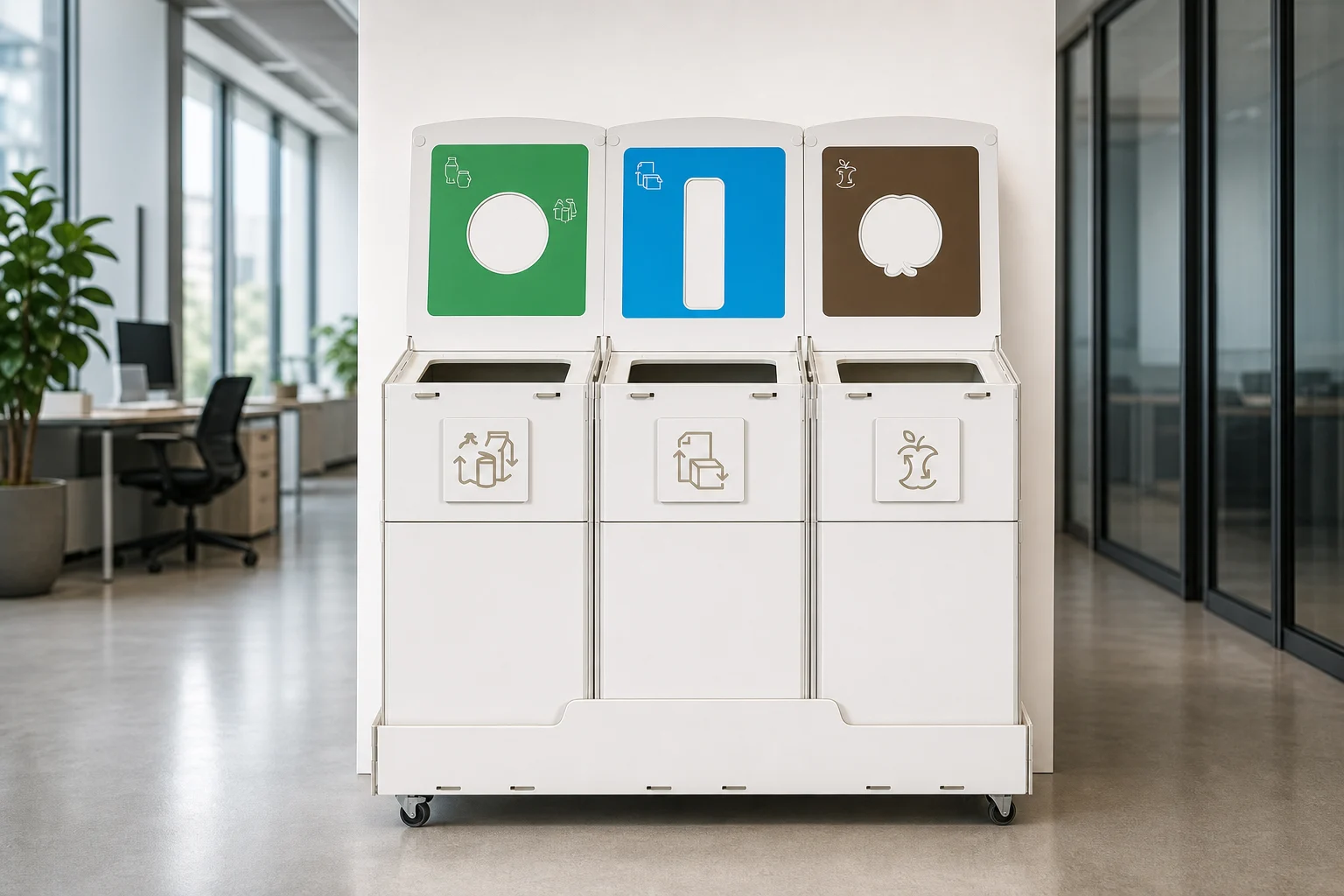
- Visual Icons: Use clear pictograms rather than text-heavy labels to ensure instant recognition.
- Color Coding: Consistent coloring for different waste streams helps users identify the correct bin without hesitation.
- Shaped Openings: Round slots for bottles and thin slits for paper physically guide the user toward the correct compartment.
Our Sorter and Sorta series utilize these behavioral cues, featuring bilingual instructions and shaped lids to ensure your waste streams remain pure and compliant.

-
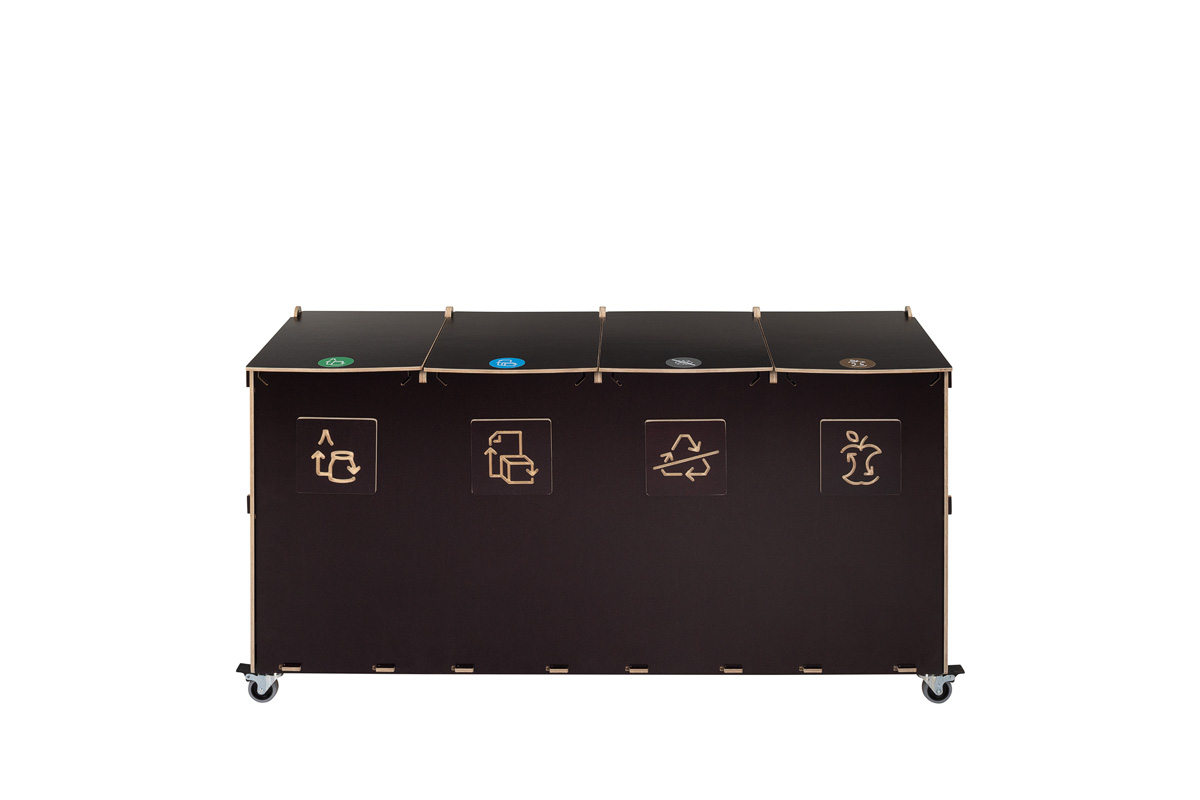
Recycling Bin Sorta 4 × 40 l brown
4 types of waste 4 x 40 l830,80 € (incl. 24% VAT)670 € (excl. VAT) -
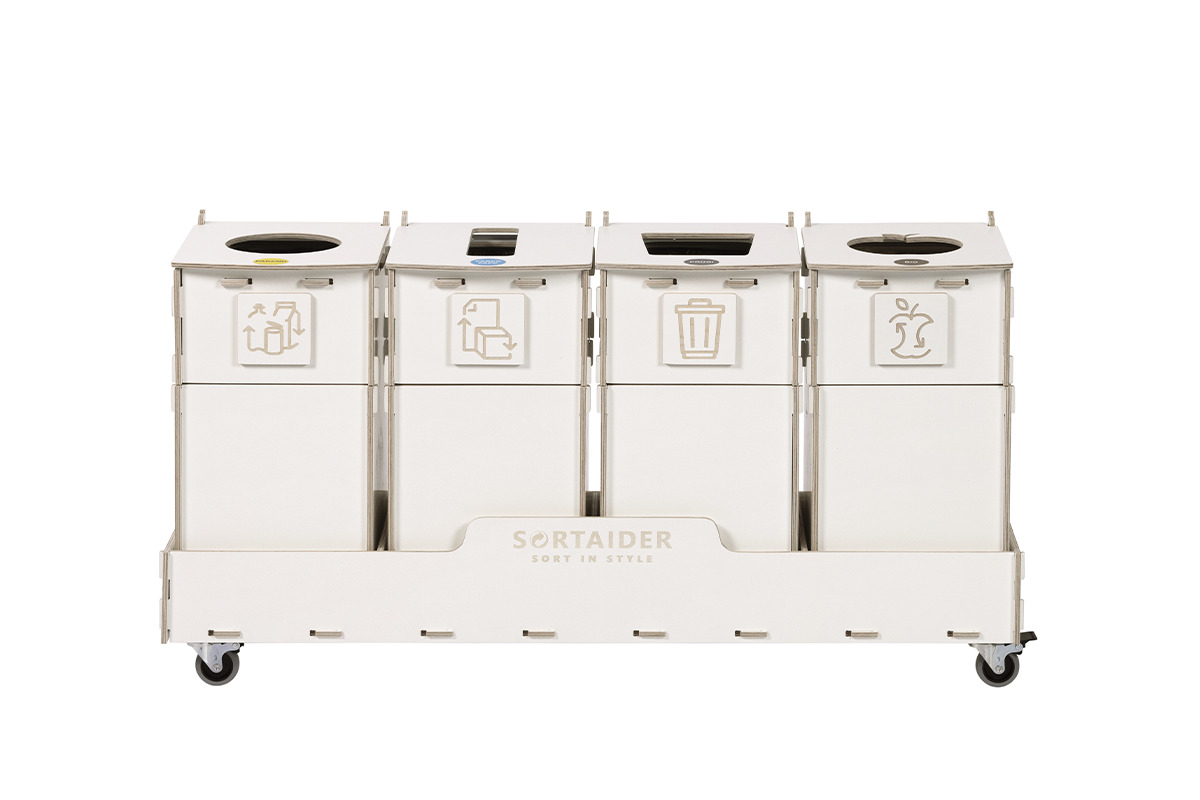
Recycling Bin Sorter 4 × 20 l white
4 types of waste 4 x 20 l607,60 € (incl. 24% VAT)490 € (excl. VAT) -
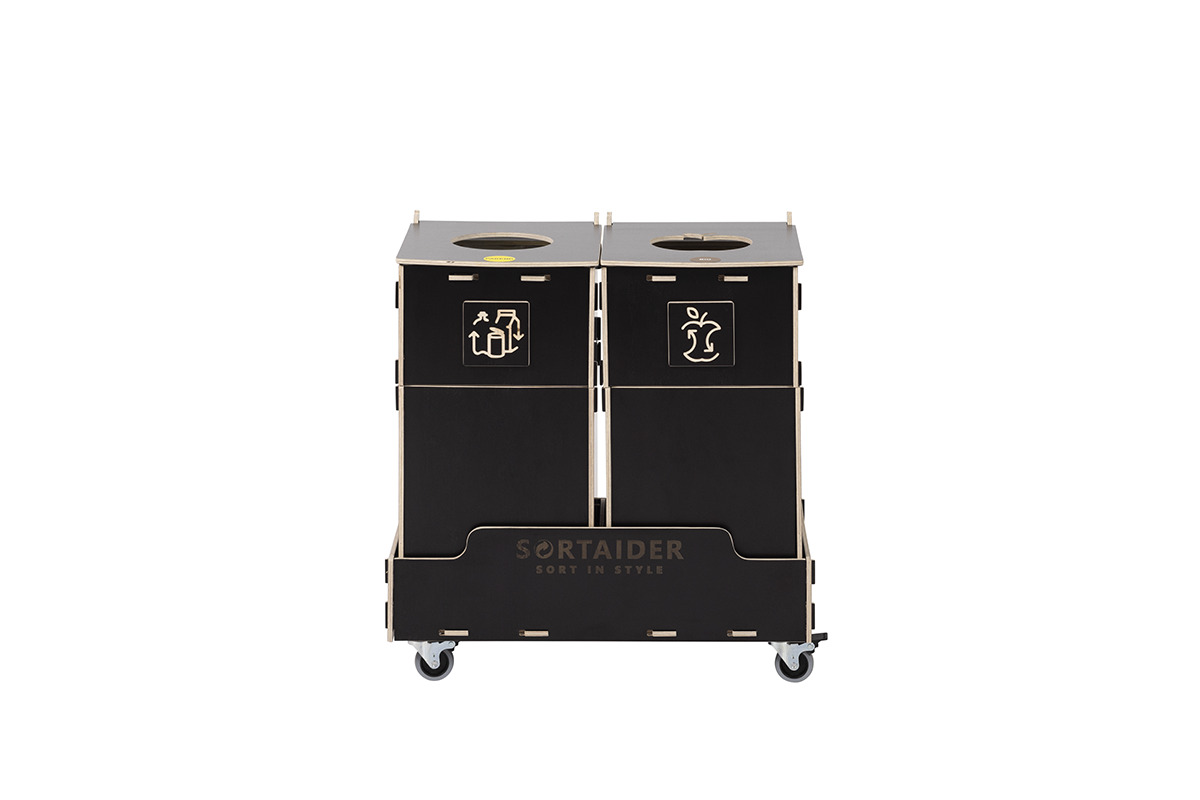
Recycling Bin Sorter 2 × 30 l brown
2 types of waste 2 x 30 l508,40 € (incl. 24% VAT)410 € (excl. VAT) -
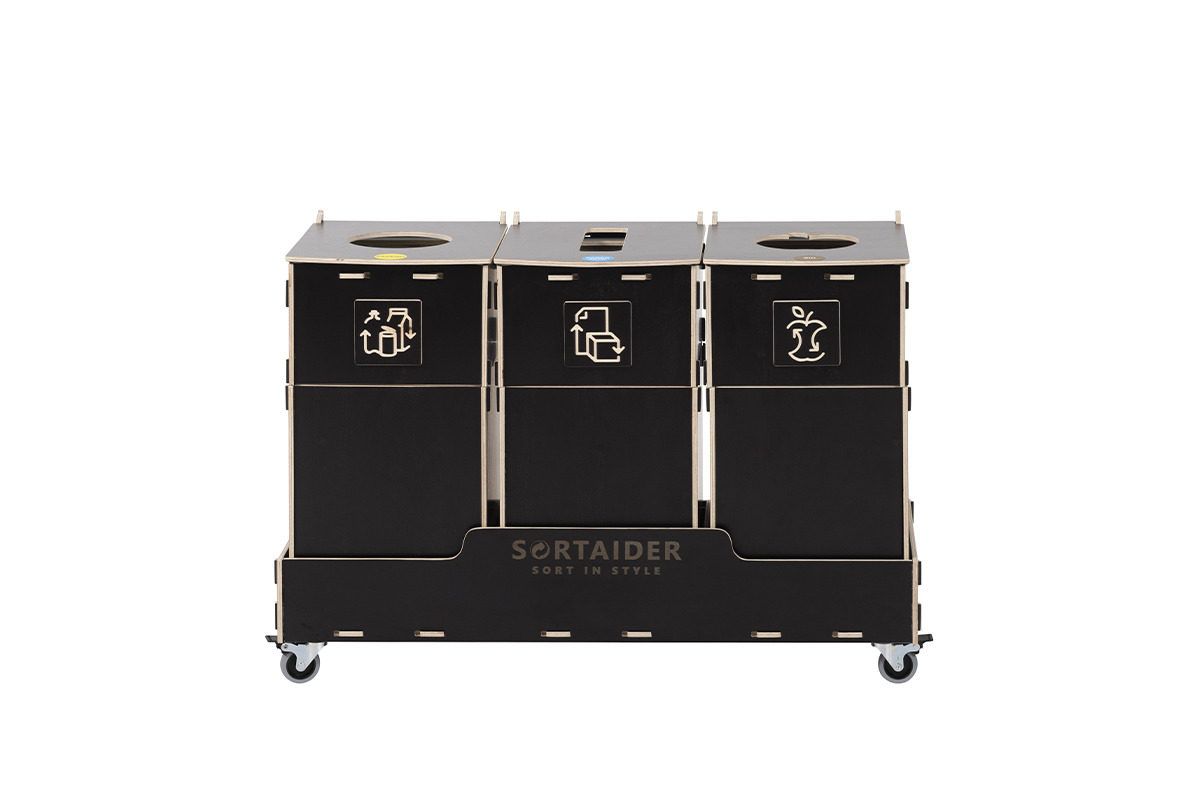
Recycling Bin Sorter 3 × 30 l brown
3 types of waste 3 x 30 l731,60 € (incl. 24% VAT)590 € (excl. VAT)
Streamlining Maintenance and Hygiene
Strategic placement is as much about maintenance logistics as it is about user behavior. Overflowing bins cause litter and signal to users that the recycling program is not a priority.
To maintain professional standards, you should use 60l to 90l bins for high-volume areas like canteens and 20l to 40l units for low-traffic zones. Modern stations are designed for effortless upkeep; our plywood units are treated with moisture-resistant finishes, making cleaning and sanitising recycling bins a simple process using standard microfibre cloths and mild detergents. Additionally, choosing bins equipped with lockable wheels allows for flexible layout changes and easier access for janitorial staff during deep-cleaning cycles.
Optimizing your facility’s waste management starts with choosing the right tools for the job. By focusing on proximity, compliance, and intuitive design, you can transform waste management into a seamless part of your organization’s sustainability journey. Browse our full range of professional recycling bins to build a station that fits your space and meets your goals.