Is your facility prepared for the 2026 PPWR rollout? European waste regulations are moving from voluntary to mandatory, introducing strict recycling targets and packaging rules. Understanding these frameworks is essential to avoid compliance fines and meet your organization’s sustainability benchmarks.
Understanding the EU Waste Framework Directive
The Waste Framework Directive serves as the legal foundation for waste management across the continent. This legislation establishes a five-step waste hierarchy, a conceptual ladder that prioritizes waste prevention and preparation for reuse over recycling. Other forms of recovery follow, with disposal acting only as a last resort. For facility managers, this means that your waste strategy must prioritize keeping materials in the circular loop as long as possible.
The most critical operational takeaway from this directive is the mandate for separate source collection. Since late 2023, businesses across the EU have been required to separate paper, metal, plastic, and glass at the source wherever technically feasible. Furthermore, the directive mandated the separate collection of biowaste by December 2023. These rules are designed to help the Union reach its ambitious municipal recycling targets, which include 55% by 2025, 60% by 2030, and 65% by 2035.
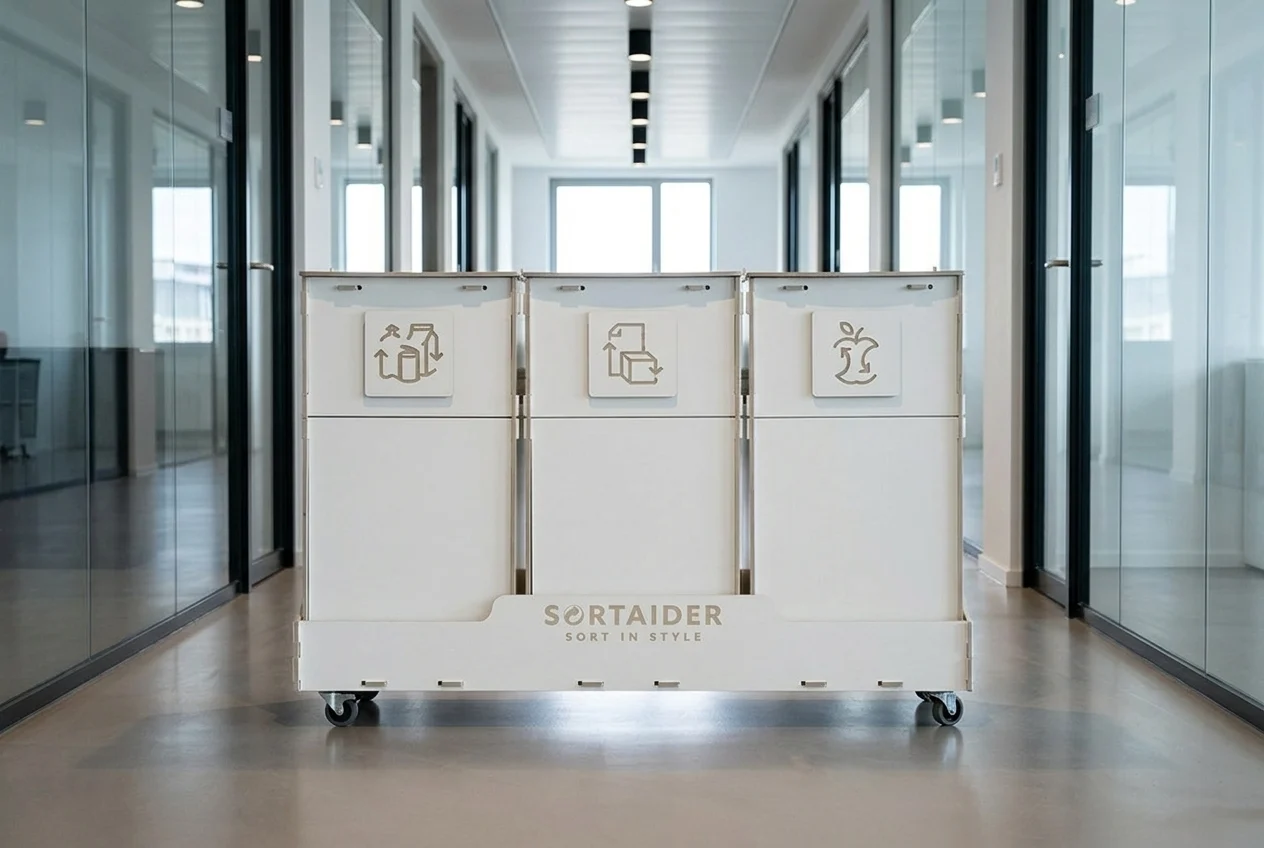
Navigating European workplace recycling regulations effectively requires a transition from individual deskside bins to centralized systems. Research suggests that replacing individual bins with centralized recycling bin sorters can boost waste diversion by up to 40% while maintaining a cleaner professional environment.
-
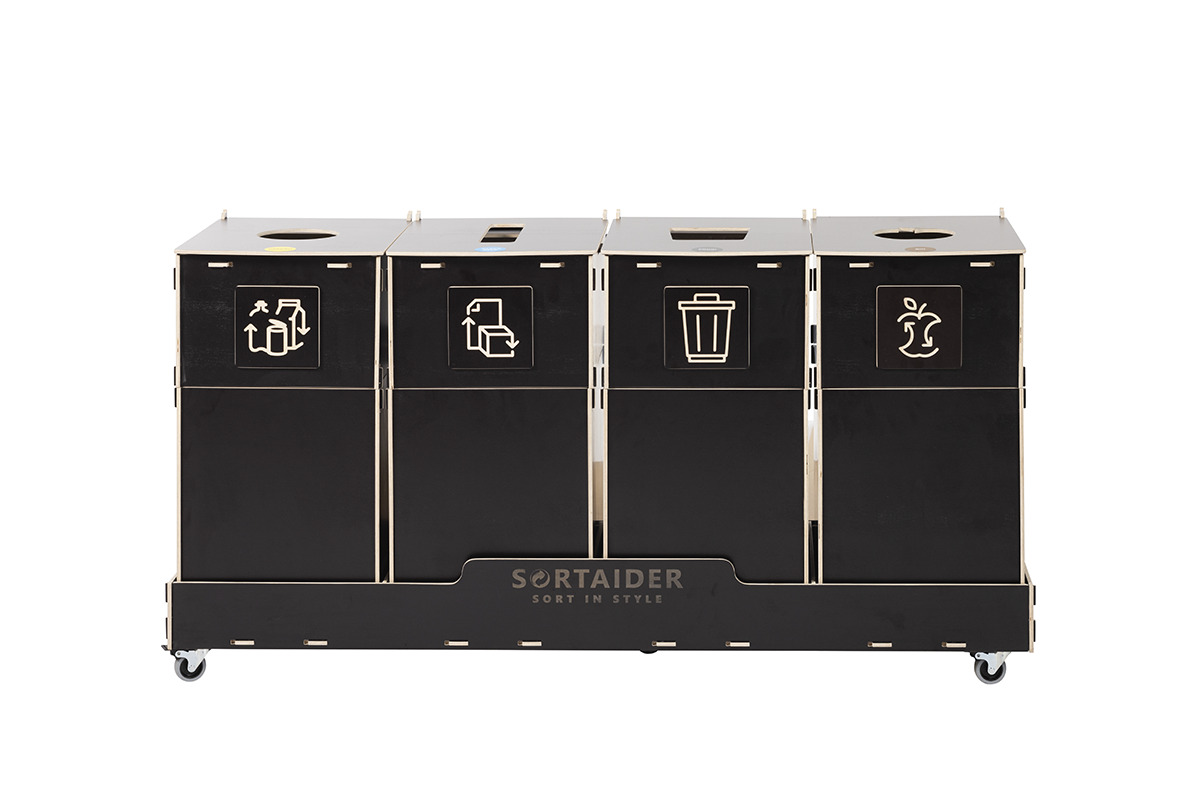
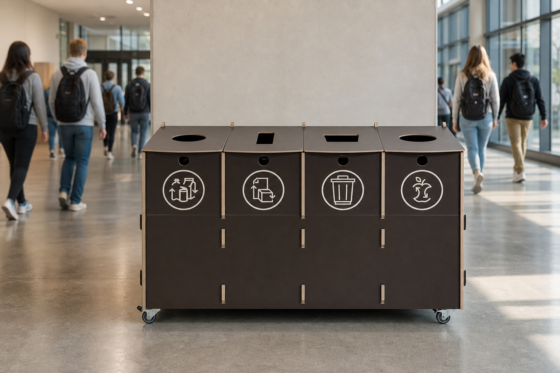
Recycling Bin Sorter 4 × 60 l brown
4 types of waste 4 x 60 l1 500,40 € (incl. 24% VAT)1 210 € (excl. VAT) -
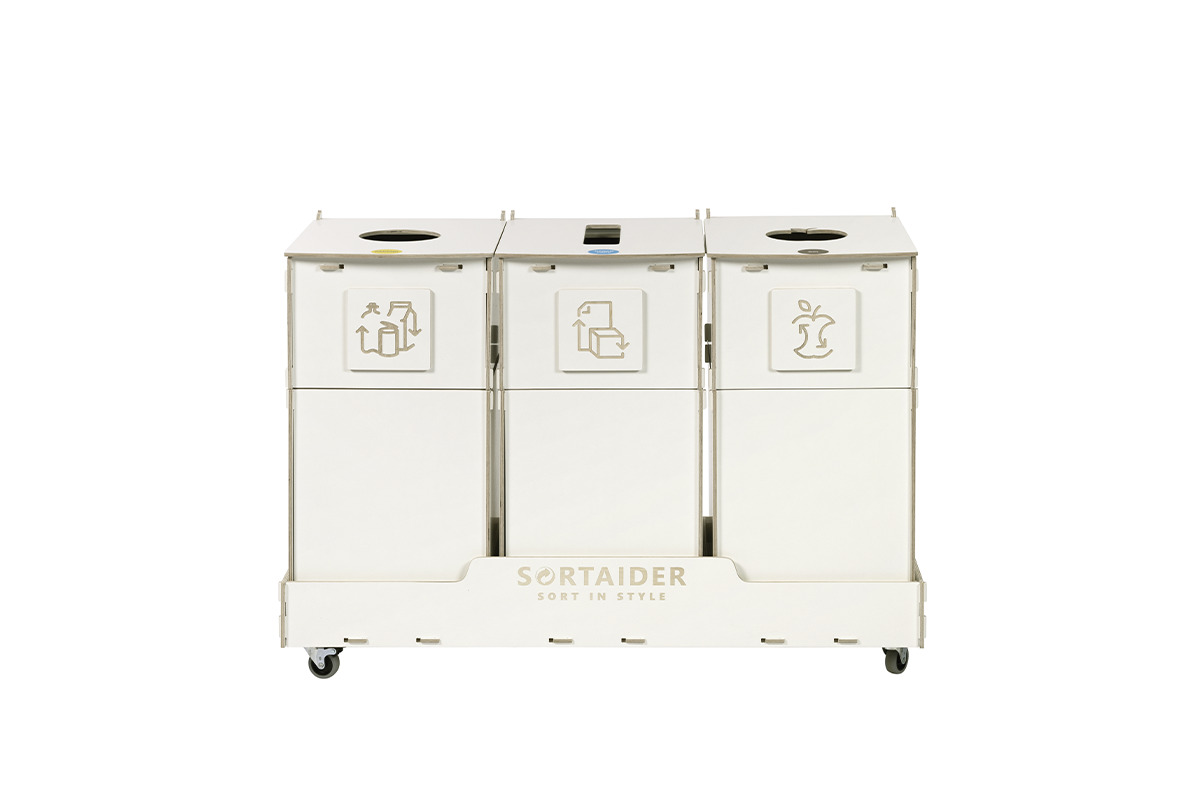
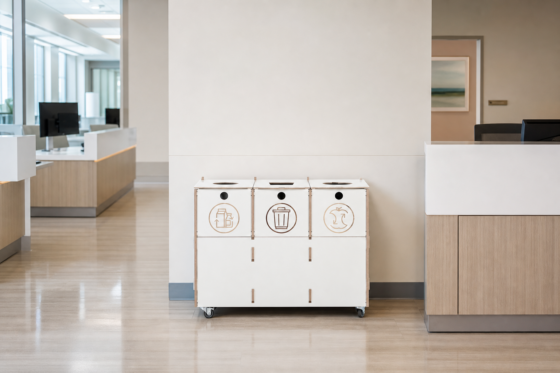
Recycling Bin Sorter 3 × 60 l white
3 types of waste 3 x 60 l1 140,80 € (incl. 24% VAT)920 € (excl. VAT) -
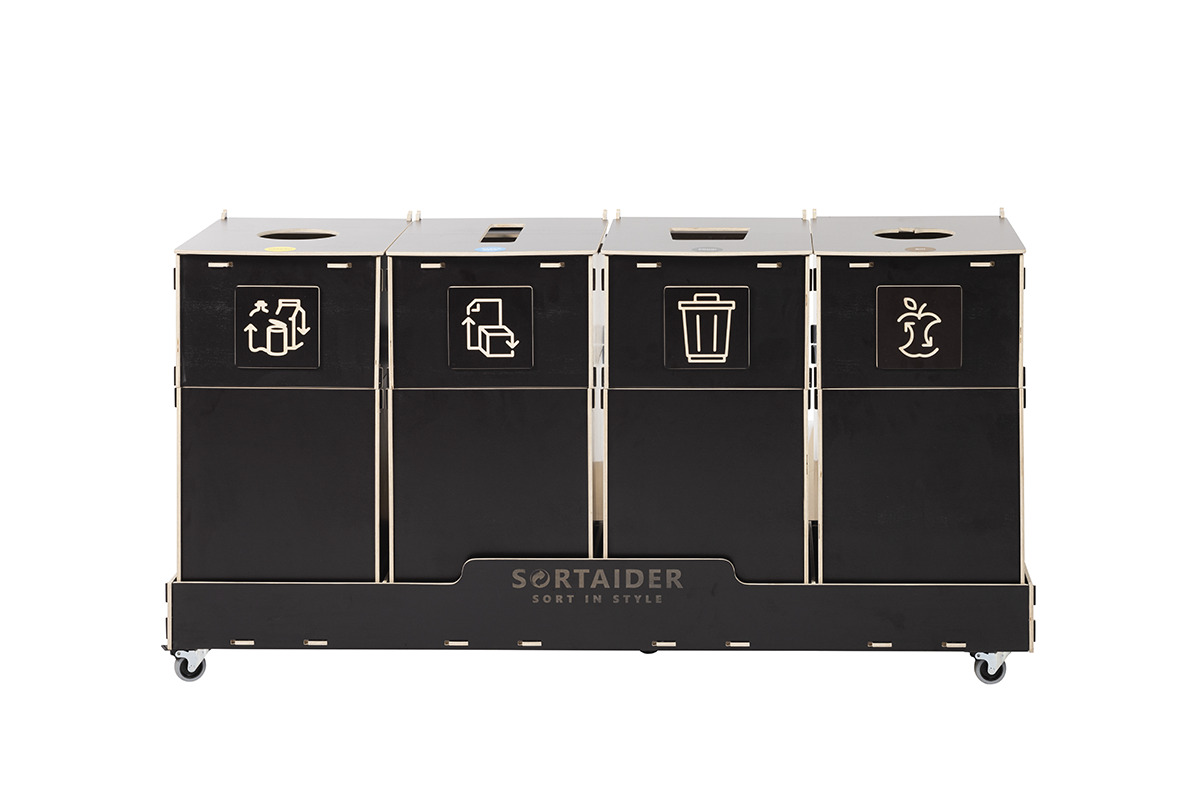
Recycling Bin Sorter 4 × 90 l brown
4 types of waste 4 x 90 l1 810,40 € (incl. 24% VAT)1 460 € (excl. VAT)
The Impact of the Packaging and Packaging Waste Regulation (PPWR)
The Packaging and Packaging Waste Regulation (PPWR 2025/40) entered into force in February 2025 and will generally apply to businesses starting in August 2026. This regulation is a significant shift in policy because it applies to all packaging placed on the EU market, regardless of the material or origin. It places the responsibility on businesses to ensure that the packaging they use – and the waste they generate – aligns with new circularity standards.
The PPWR introduces several mandatory requirements that you must account for in your office waste management plan:
- All packaging must be recyclable by 2030 and recycled at scale by 2035.
- Mandatory minimum post-consumer recycled content targets for plastic packaging will begin in 2030.
- The EU aims to reduce packaging waste by 5% by 2030, 10% by 2035, and 15% by 2040 compared to 2018 levels.
As these deadlines approach, procurement teams will need to favor suppliers who use compliant, recyclable packaging. Simultaneously, facilities must prepare for higher volumes of high-quality recyclable materials that require strict separation to avoid contamination.
New Rules for Textiles and Food Waste
A revised Waste Framework Directive, which entered into force in October 2025, specifically targets the textile and food sectors to boost circularity and reduce waste. For organizations that provide corporate apparel or uniforms, new rules now prohibit the destruction of unsold clothes and shoes. Businesses must also disclose the volume of unsold consumer products they discard as waste.
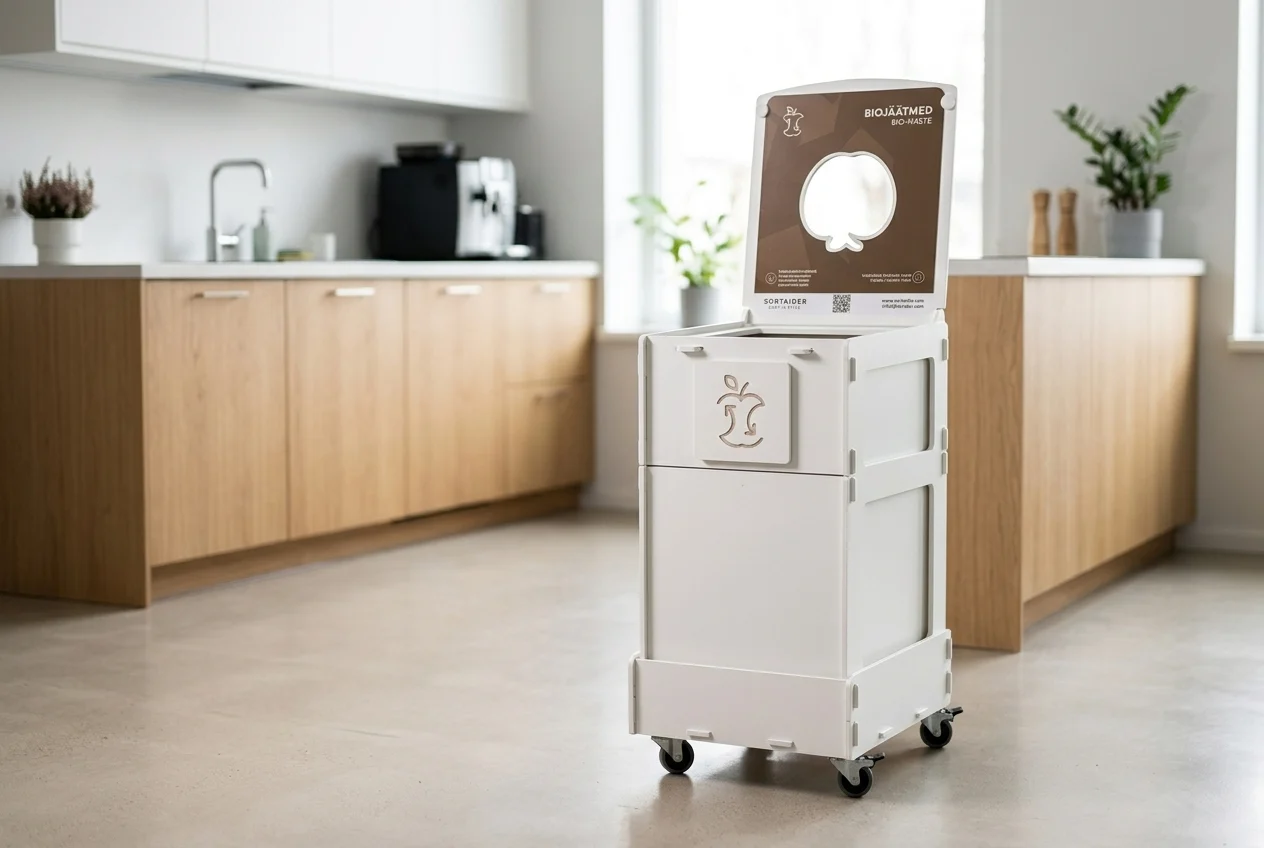
Food waste reduction is another major pillar of this revision. By 2030, the EU aims to reduce food waste by 10% in processing and manufacturing and by 30% per capita in retail and consumption. In a corporate environment, office kitchen waste management is no longer just a matter of office hygiene; it is a legal requirement. Managing biowaste effectively involves a strict “food-only” rule for organic bins to prevent the contamination that often occurs when conventional plastic bags or non-compostable items are introduced into the stream.
-
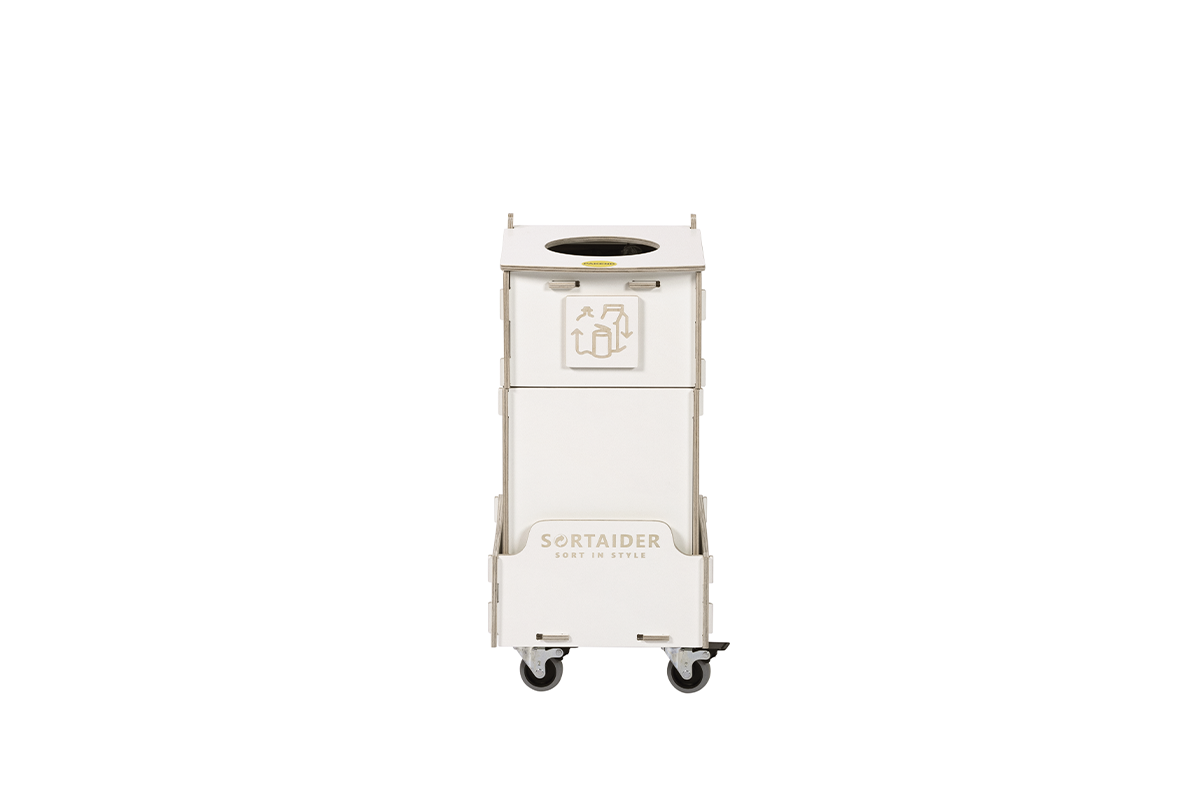
Recycling Bin Sorter 1 × 20 l white
1 type of waste 1 x 20 l223,20 € (incl. 24% VAT)180 € (excl. VAT) -
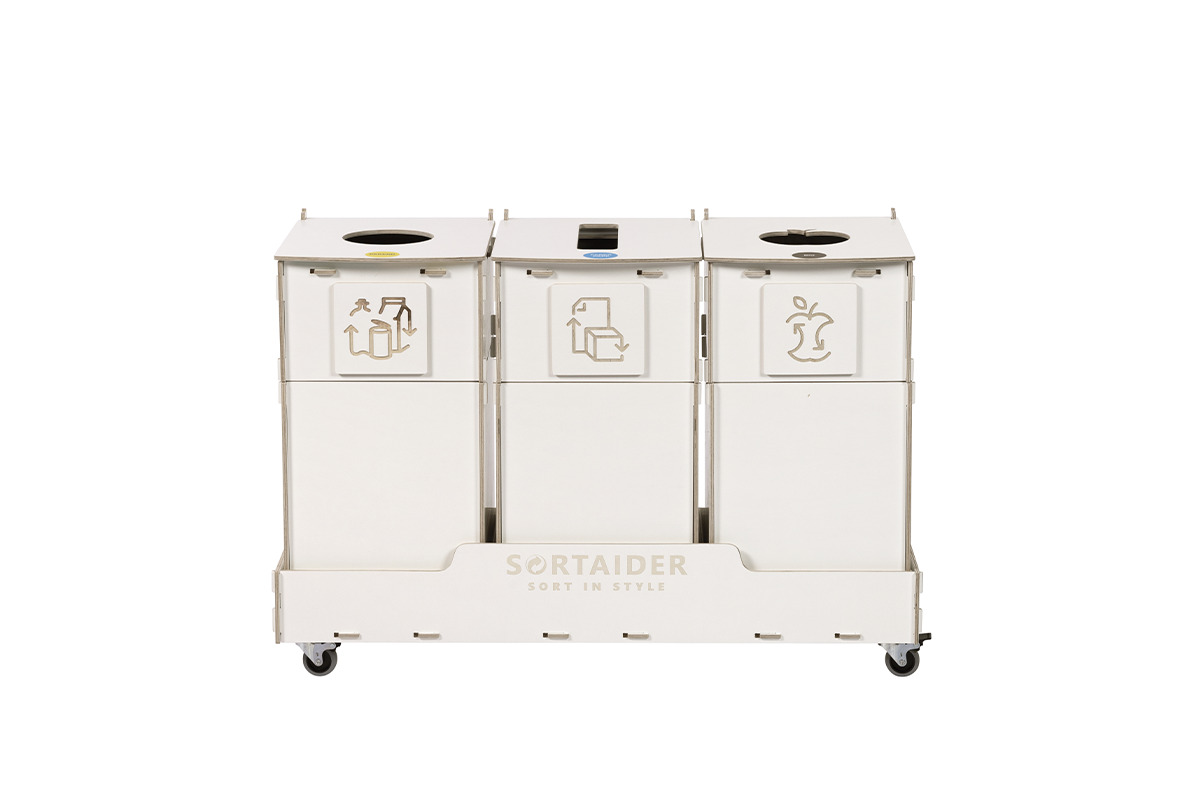
Recycling Bin Sorter 3 × 40 l white
3 types of waste 3 x 40 l992 € (incl. 24% VAT)800 € (excl. VAT) -

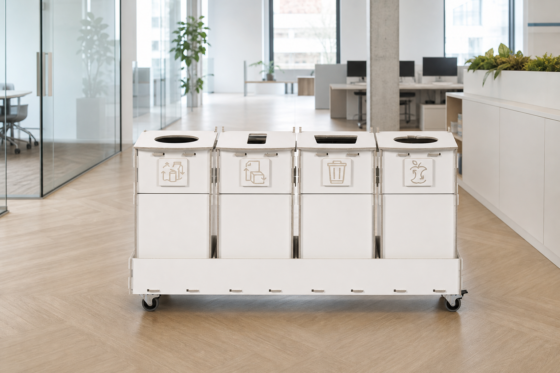
Recycling Bin Container 4 × 40 l white
4 types of waste 4 x 40 l1 612 € (incl. 24% VAT)1 300 € (excl. VAT)
Regional Variations and Local Requirements
While EU Directives provide a common framework, individual member states often implement stricter local rules tailored to their environmental goals. Understanding these commercial waste recycling requirements is vital for organizations operating across multiple European markets.
- In Sweden, separate food waste collection became mandatory for all businesses in 2024, with even more stringent municipal collection rules planned for 2027.
- Denmark requires workplaces to maintain a minimum of four separate bins. Facilities producing more than one ton of waste annually must also utilize digital tracking systems for every waste shipment.
- Estonia mandates the separation of paper, plastic, metal, glass, and biowaste, with particularly strict enforcement for sites generating more than 10kg of biowaste per day.
- Latvia applies Extended Producer Responsibility (EPR) for packaging exceeding 300kg per year, necessitating separate bins and strict recovery targets.
Practical Steps for Regulatory Compliance
Compliance is not just about installing bins; it is about ensuring that the waste collected is actually recyclable. High contamination levels – such as greasy food waste mixing with clean paper – can lead to entire batches being rejected by Materials Recovery Facilities (MRFs). Across Europe, these facilities face hundreds of millions of euros in added annual costs due to contaminated loads.
Identifying Waste Streams
To stay ahead of regulations, you should begin by establishing a data-driven baseline. Conducting a waste audit for offices allows you to identify exactly what your facility produces and where inefficiencies exist. This audit should involve weighing different categories – such as paper, plastic, and bio-waste – to calculate your Waste Diversion Rate. This metric is essential for proving progress to stakeholders and meeting reporting standards like GRI 306.
Optimizing Collection and Visual Cues
The success of your recycling program often depends on how intuitive it is for the user. To reduce errors, you should learn what goes in each recycling bin and communicate these rules through standardized visuals. Utilizing recycling signage that follows the EN 14092 standard for color-coding and high-contrast pictograms can reduce sorting errors by up to 40% in multilingual workplaces.
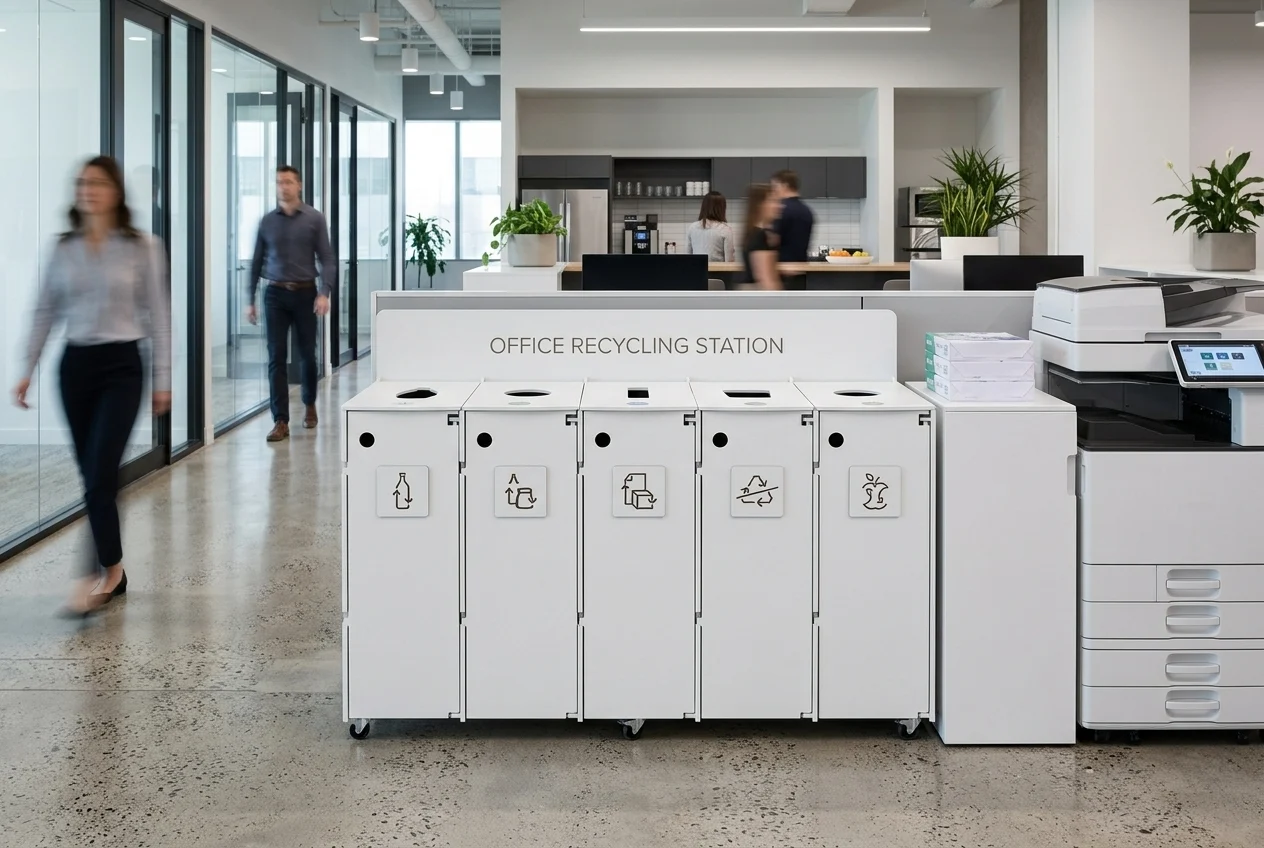
Strategic placement is another significant driver of participation. Hubs should be located in high-traffic areas like kitchenettes, printer rooms, and main hallways. Research indicates that proximity and clear visual cues can boost participation by 30% to 50% compared to poorly placed or poorly labeled stations.
-
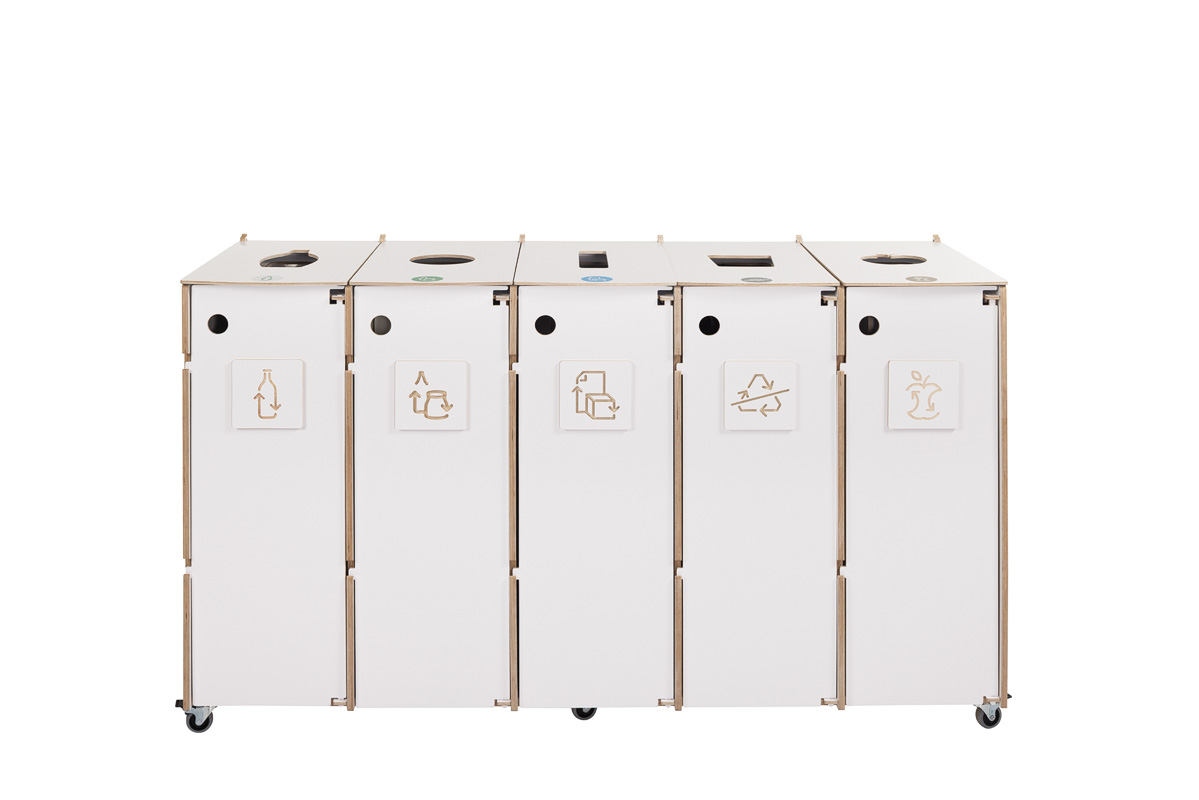
Recycling Bin Ecolong 5 × 90 l white
5 types of waste 5 x 90 l2 926,40 € (incl. 24% VAT)2 360 € (excl. VAT) -
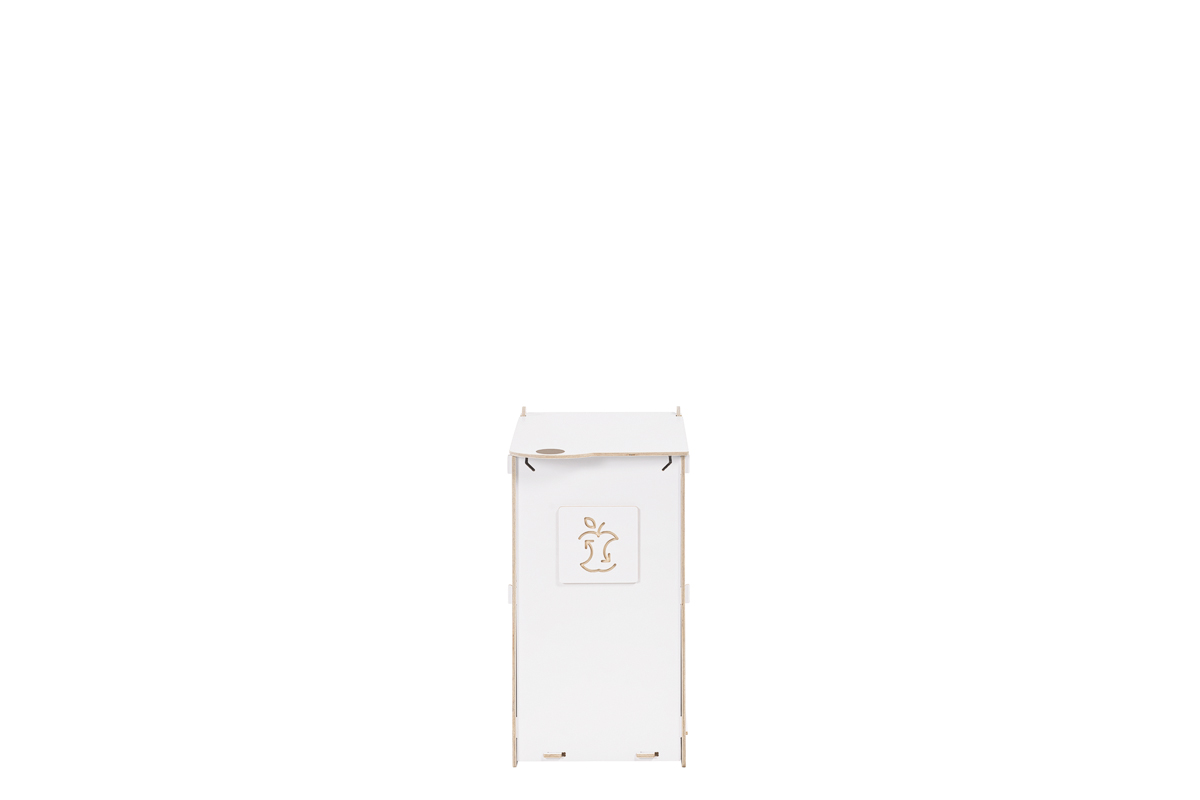
Waste Bin Sort 1 × 40 l white
1 type of waste 1 x 40 l148,80 € (incl. 24% VAT)120 € (excl. VAT) -
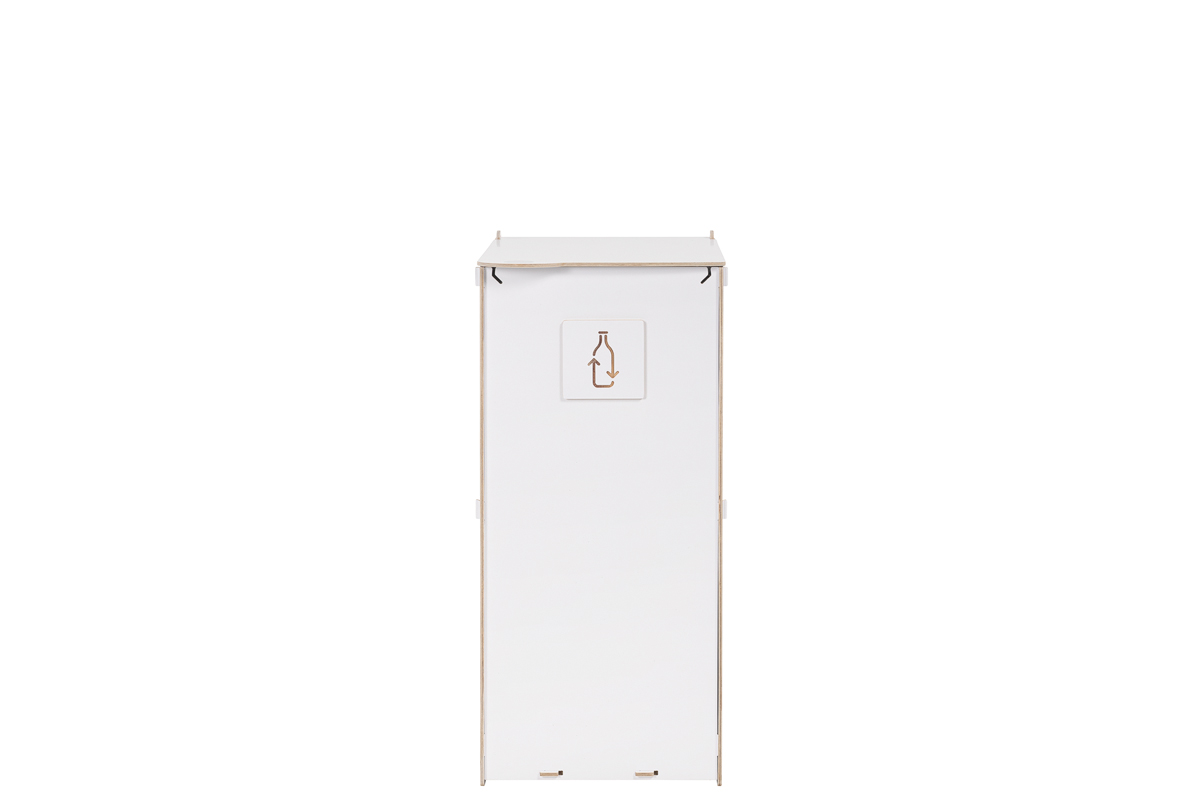
Waste Bin Sort 1 × 120 l white
1 type of waste 1 x 120 l297,60 € (incl. 24% VAT)240 € (excl. VAT)
As we move toward the 2026 implementation of the PPWR and the transition to digital waste shipment notification systems, the burden of proof for sustainable waste management will increase. Organizations that set up recycling at work now, using durable waste bins and modular systems, will be better positioned to meet future reporting requirements. By focusing on source separation and utilizing data to track and report recycling rates, you can turn compliance from a logistical hurdle into a core pillar of your organization’s ESG strategy.