Did you know the plastics industry accounted for 1.8 billion tonnes of greenhouse gas emissions in 2019? For organizations aiming for net-zero, the material choice of your waste infrastructure carries a significant environmental burden from production to disposal.
The Carbon Footprint of Plastic Production
The lifecycle of a plastic bin begins long before it reaches your office floor. Most industrial plastic containers are derived from fossil fuels, contributing to a massive carbon debt. Research indicates that plastics generate approximately 3.4% of the world’s total greenhouse gas emissions. If global production continues at its current pace, the plastics lifecycle could account for as much as 19% of global emissions by 2040.
For facility managers working toward ISO 14001 environmental management, these Scope 3 emissions – those originating in your supply chain and purchased goods – often outweigh direct energy use. Selecting infrastructure with low embodied carbon is a critical step in fulfilling compliance obligations and meeting specific environmental objectives.
Persistence in the Environment
While plastic is often chosen for its perceived durability, it is essentially permanent in a way that harms the ecosystem. Plastic pollution is incredibly persistent, often taking 100 to 1,000 years or more to decompose. When plastic bins eventually crack or reach the end of their functional life, they contribute to a growing global crisis. Projections estimate that 13.2 billion tons of plastic waste could be present in our ecosystems by 2050.
This environmental persistence leads to several critical issues:
- Microplastic Shedding: Even during use and mechanical recycling, plastic generates microplastics that enter the air and water, presenting emerging threats to health.
- Groundwater Contamination: In landfills, plastic waste disposal can cause soil degradation and groundwater contamination, impacting local biodiversity.
- Marine Impact: A significant portion of the world’s plastic waste eventually migrates to oceans, where it threatens marine ecosystems and enters the food chain.
The Recycling Paradox
Many organizations choose plastic bins because they are labeled as recyclable. However, the reality of plastic recovery is stark. In some regions, the recycling rate for post-consumer plastic is estimated at just 5% to 6%. In contrast, materials like paper and paperboard see recycling rates closer to 68%.
Unlike metal or wood, plastic typically degrades in quality every time it is recycled, eventually becoming un-recyclable. This process, known as downcycling, means that even a recycled plastic bin will eventually become permanent waste. Choosing materials that are more easily integrated into a circular economy is essential for a truly sustainable workplace.
Moving Toward Low-Embodied Carbon Alternatives
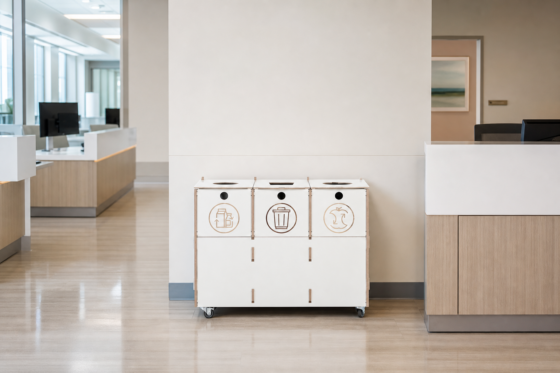
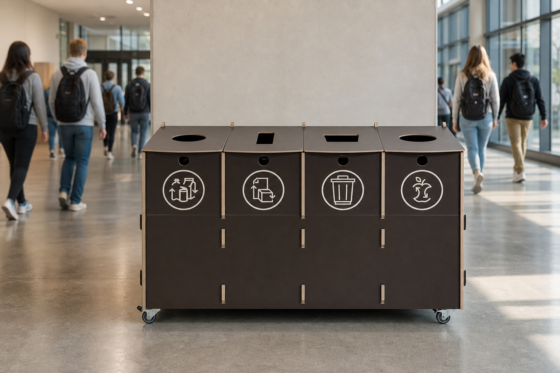
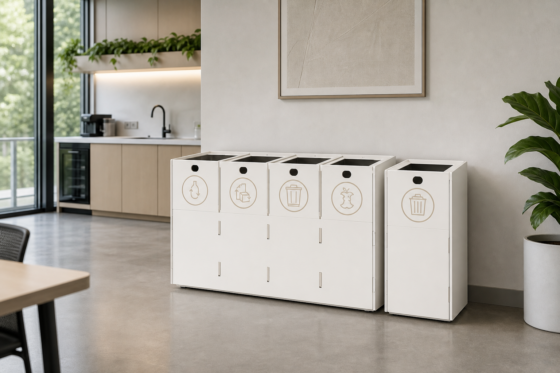
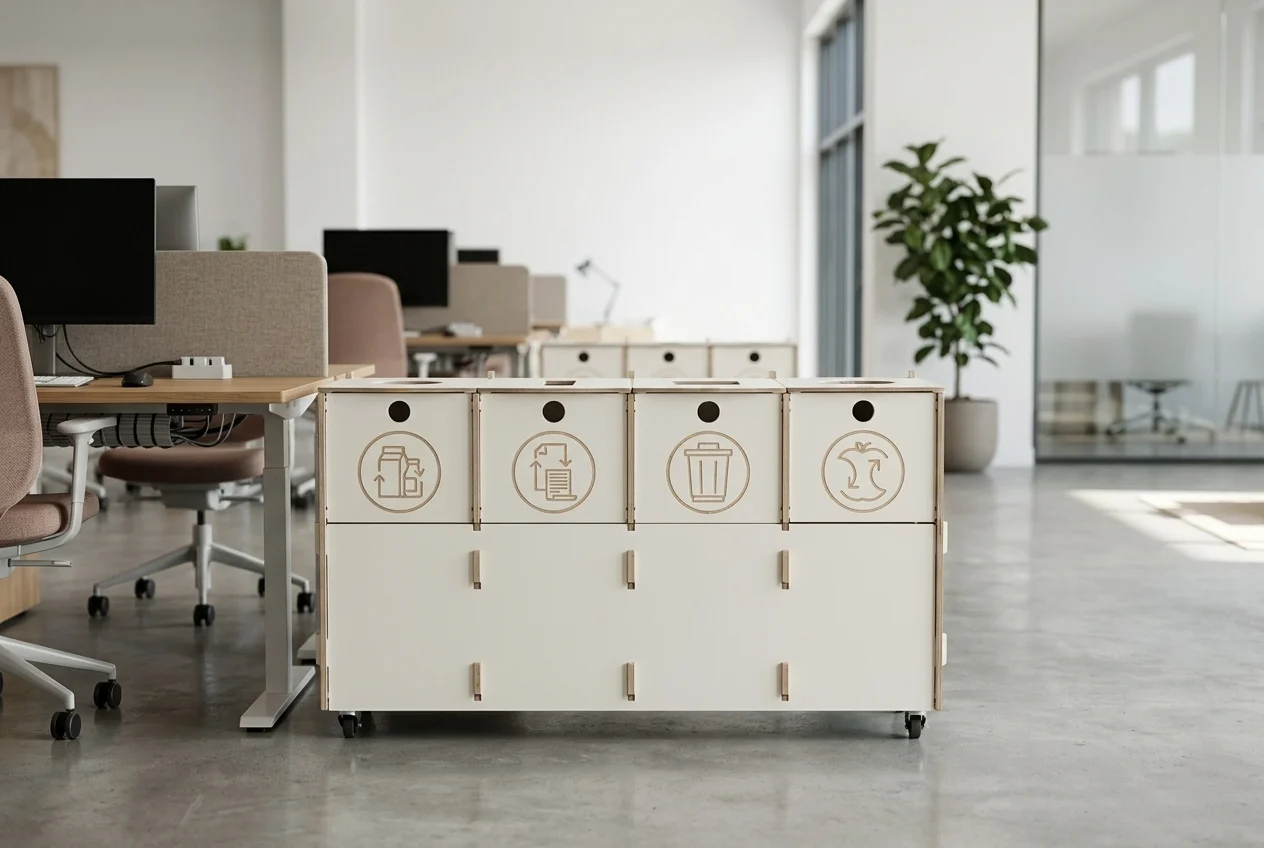
To effectively reduce your office carbon footprint, you should prioritize materials that are renewable and have lower embodied energy. Wood fiber and birch plywood are increasingly recognized as superior alternatives to plastic for indoor recycling bins.
Transitioning to waste sorting with sustainable materials like plywood can result in 2 to 4 times lower CO₂ emissions over the product’s lifecycle compared to plastic or metal. Wood is a renewable resource that naturally stores carbon, whereas plastic production actively releases it. Furthermore, high-quality plywood is often more durable for professional environments and can be repaired or refinished rather than replaced.
-
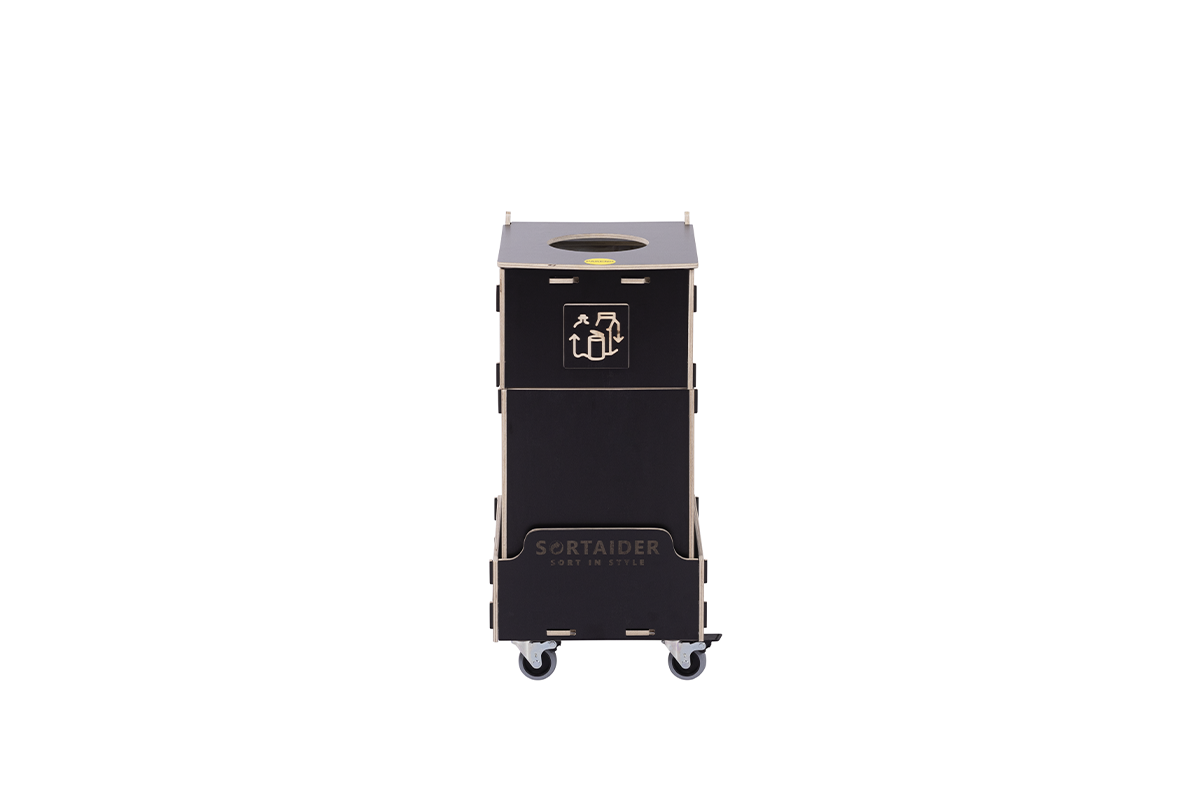
Recycling Bin Sorter 1 × 10 l brown
1 type of waste 1 x 10 l173,60 € (incl. 24% VAT)140 € (excl. VAT) -
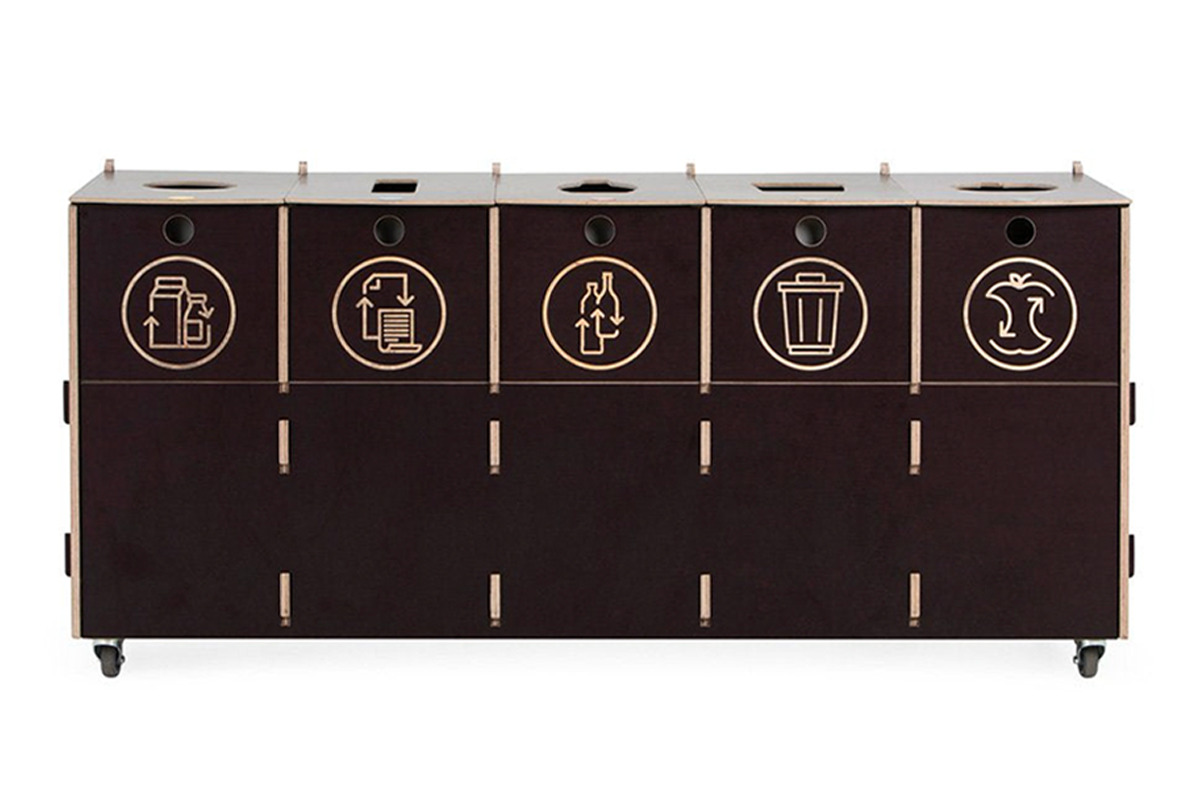
Recycling Bin Container 5 × 40 l brown
5 types of waste 5 x 40 l1 798 € (incl. 24% VAT)1 450 € (excl. VAT) -

Recycling Bin Container 4 × 40 l white
4 types of waste 4 x 40 l1 612 € (incl. 24% VAT)1 300 € (excl. VAT)
Strategic Waste Management Beyond the Material
Choosing the right material is only one part of the equation; how you deploy your infrastructure also dictates your environmental impact. Research shows that replacing individual deskside bins with centralized recycling hubs can boost waste diversion by up to 40%.
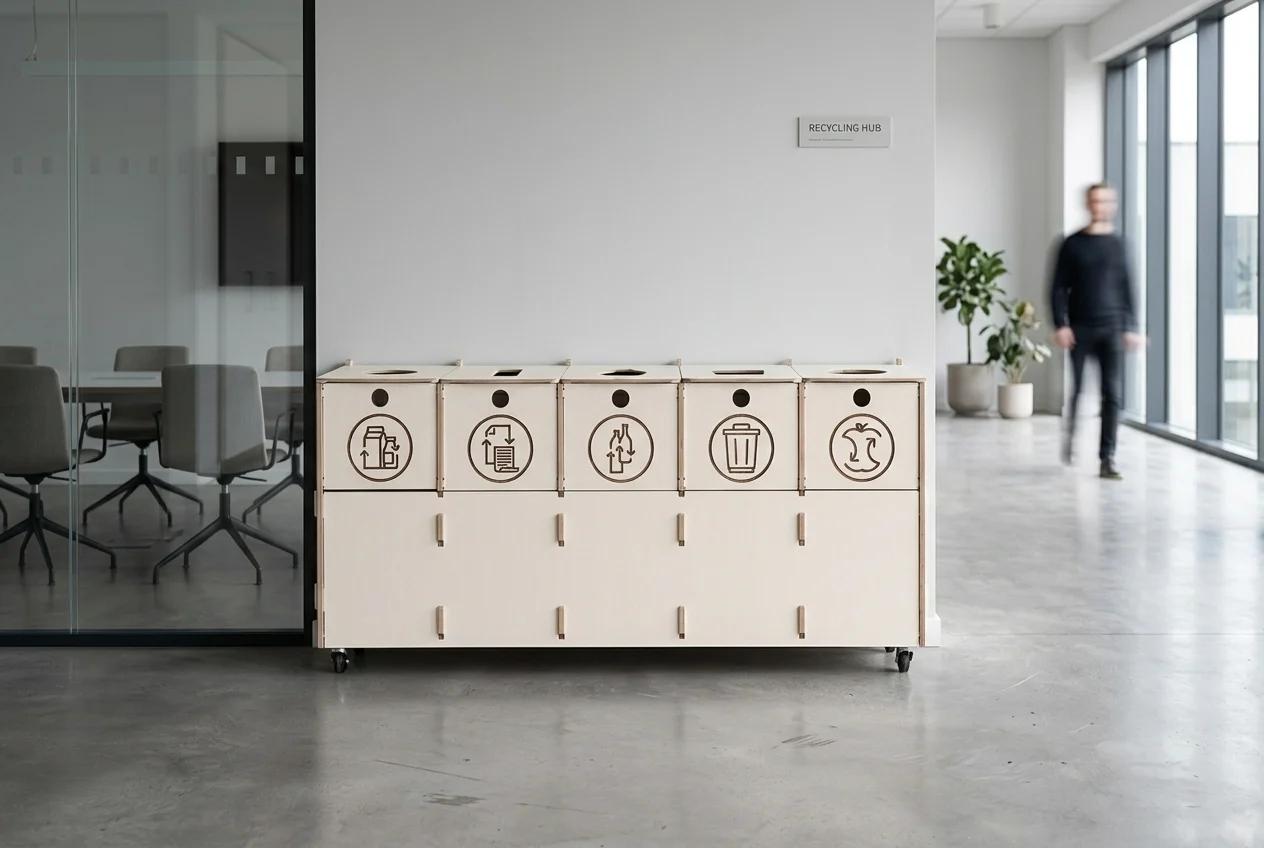
By creating high-visibility stations in kitchenettes and main hallways, you encourage staff to participate in proper sorting. Strategic bin placement and intuitive visual guidance are key requirements for achieving a green office certification, which provides a documented roadmap for enhancing your workplace’s environmental performance while potentially lowering maintenance costs.
-
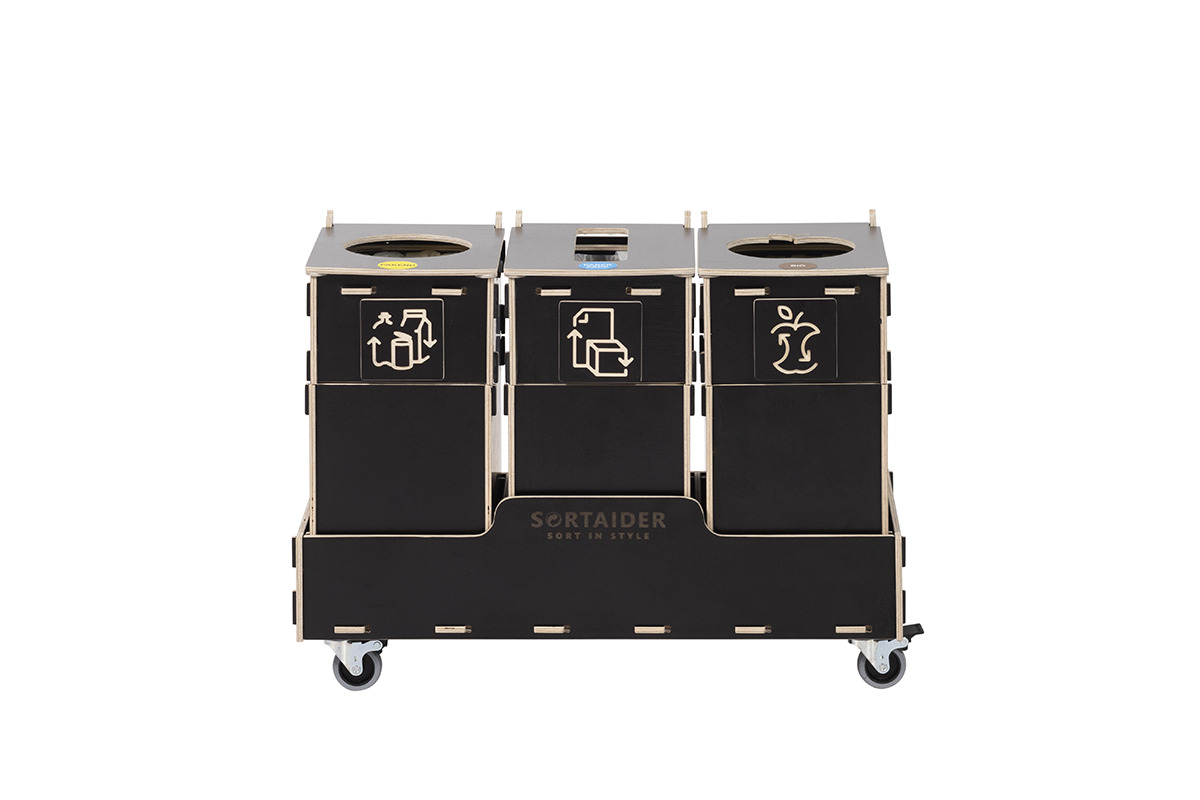
Recycling Bin Sorter 3 × 10 l brown
3 types of waste 3 x 10 l297,60 € (incl. 24% VAT)240 € (excl. VAT) -
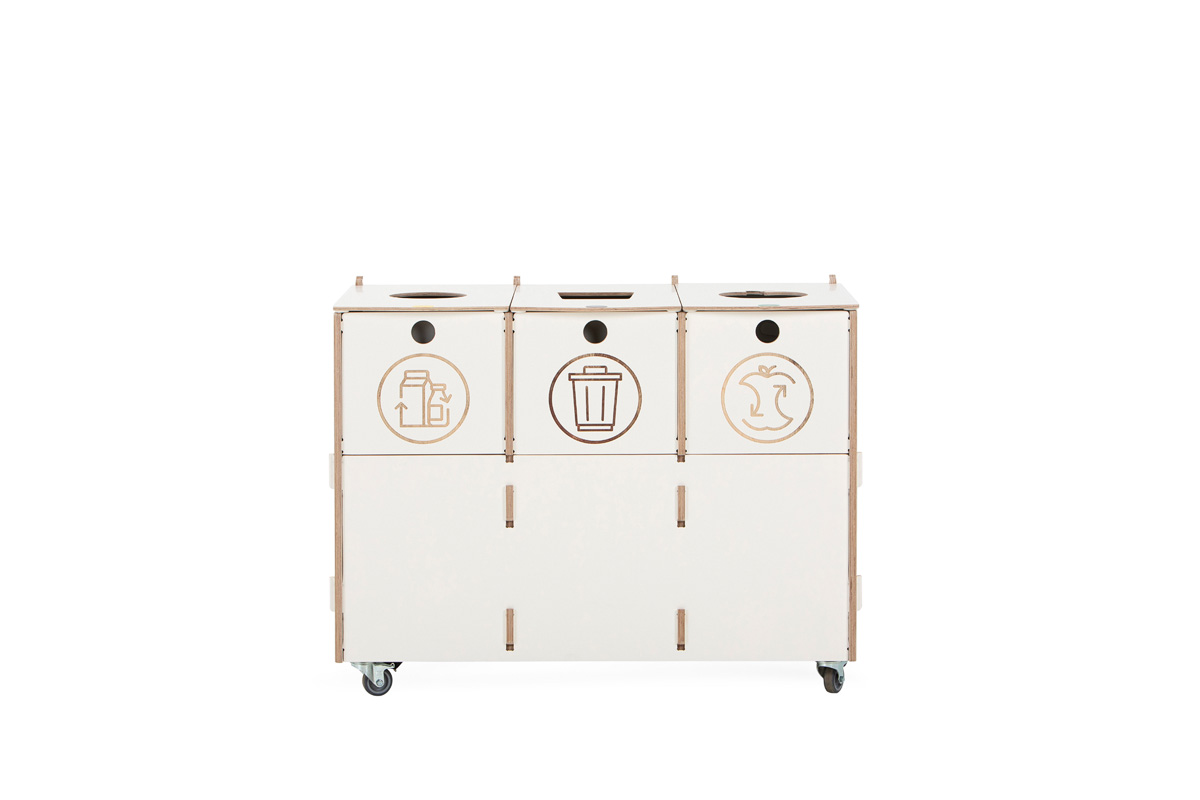
Recycling Bin Container 3 × 40 l white
3 types of waste 3 x 40 l1 215,20 € (incl. 24% VAT)980 € (excl. VAT) -
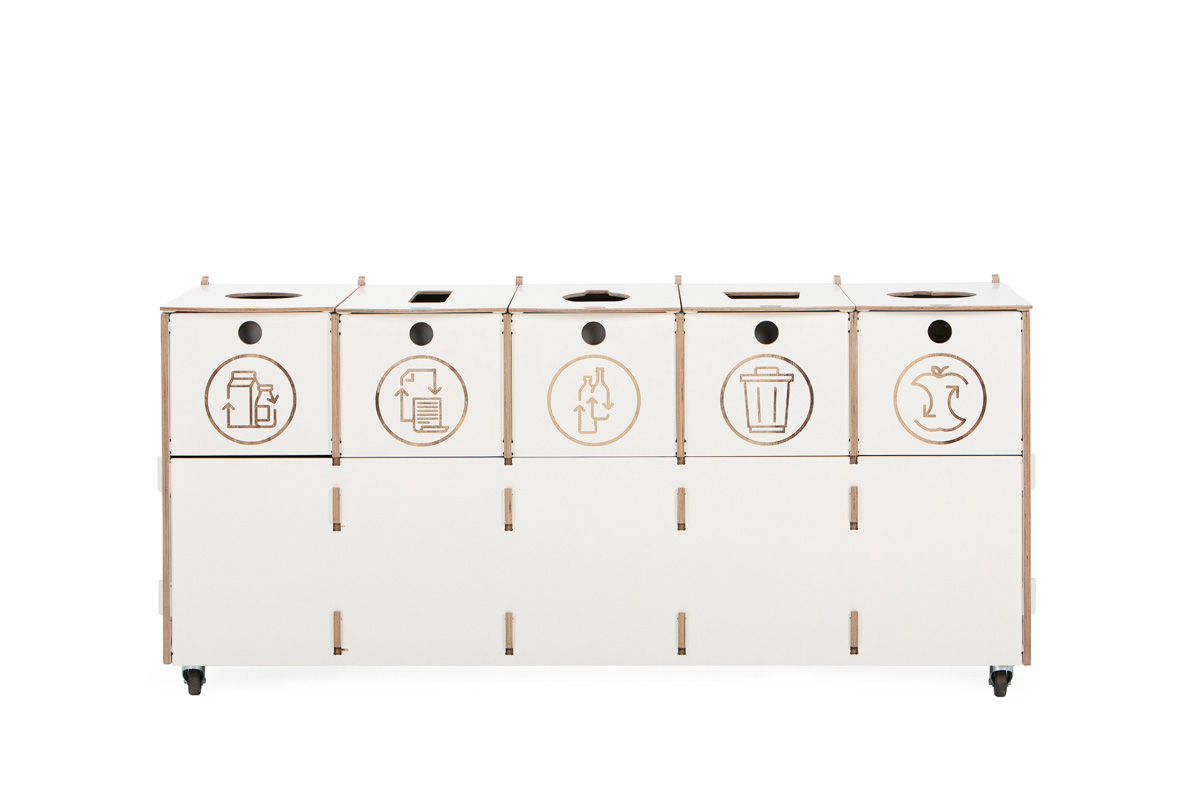
Recycling Bin Container 5 × 40 l white
5 types of waste 5 x 40 l1 798 € (incl. 24% VAT)1 450 € (excl. VAT)
Implementing Your Transition
If you are ready to move away from plastic-heavy waste systems, the first step is to conduct a workplace waste audit. This systematic assessment allows you to identify your primary waste streams – such as paper, organics, or e-waste – and right-size your new infrastructure based on actual volume and departmental needs.
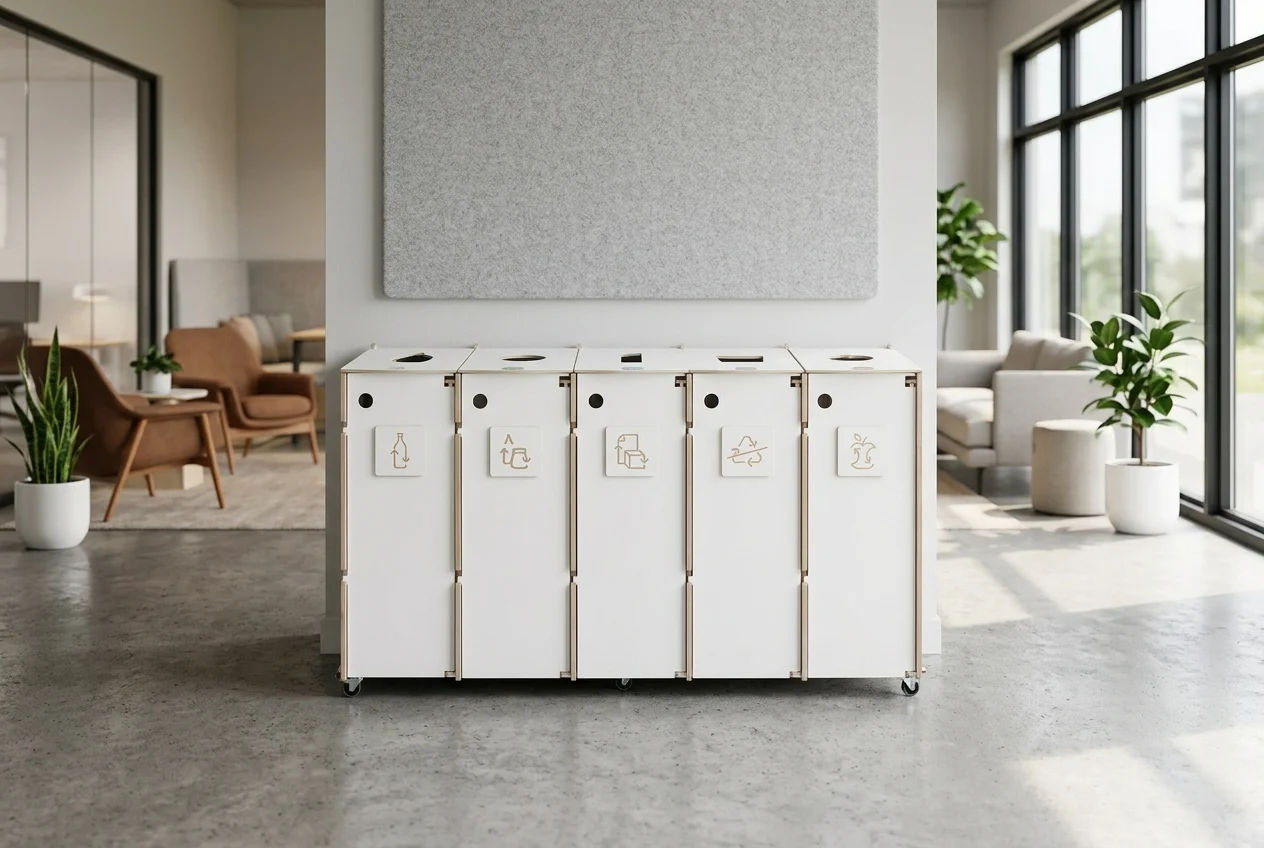
Once you understand your waste profile, you can develop a comprehensive office waste management plan that prioritizes sustainable materials and intuitive design. Switching to recycling bin sorters made from renewable birch plywood not only lowers your carbon footprint but also aligns your physical office environment with your corporate sustainability values.
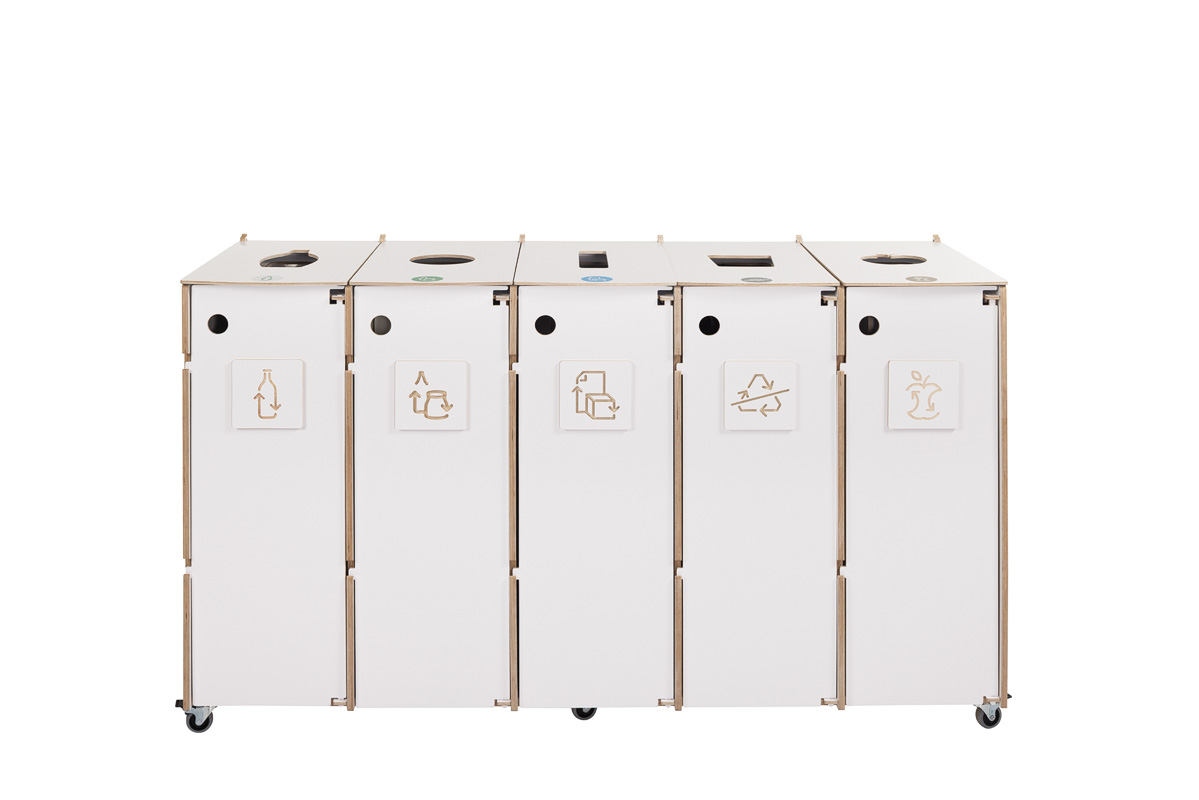
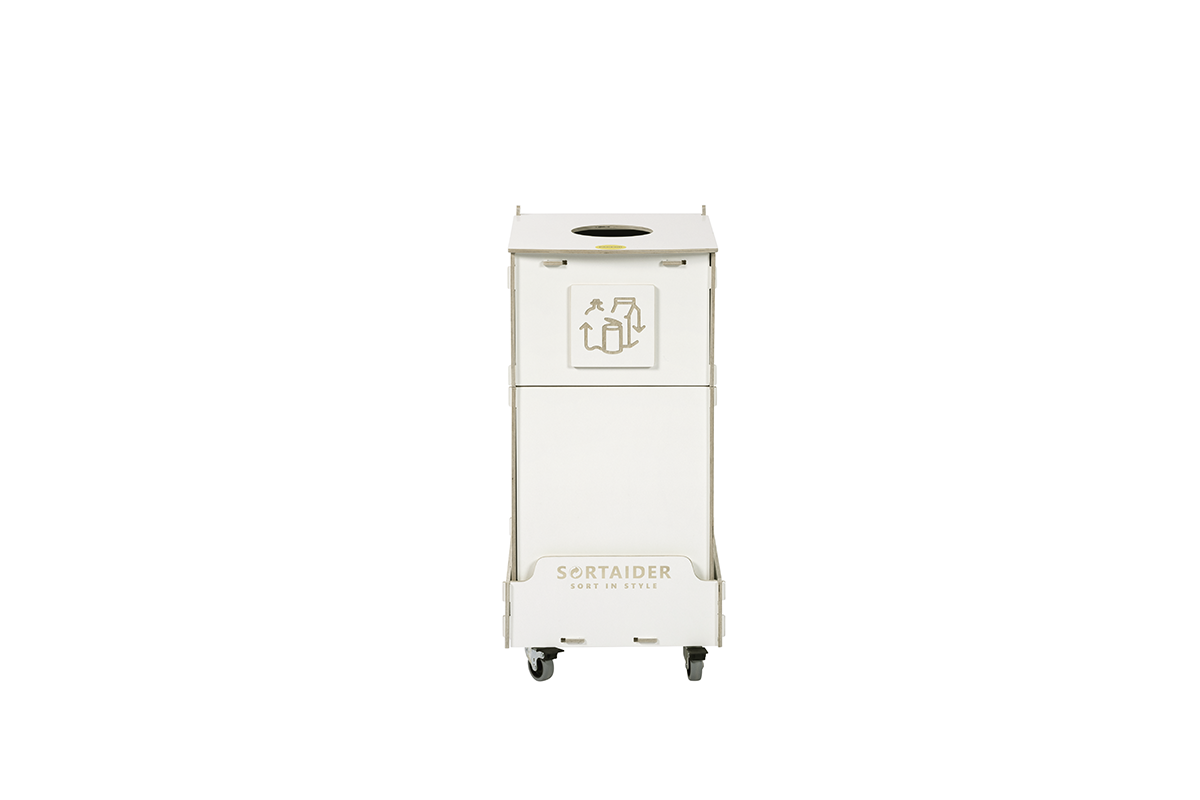
Selecting waste infrastructure made from renewable, low-emission materials is a tangible way to demonstrate environmental leadership. By replacing traditional plastic bins with sustainable alternatives, you can significantly reduce your organization’s ecological footprint while creating a more professional and aesthetically pleasing workplace. Explore our range of award-winning recycling bins to find a solution that fits your organization’s sustainability goals.