Did you know the average European office worker generates 2 kg of waste every single day? While providing bins is a start, infrastructure alone cannot change habits. To achieve high diversion rates, you must understand the behavioral science behind why employees choose – or refuse – to recycle.
The Psychology of Choice at the Bin
Research into workplace waste separation indicates that behavior is driven by a complex mix of personal norms, social pressure, and perceived control. Even when staff have the best intentions, their existing habits and the physical environment often override their goals. To bridge this gap, organizations must move beyond simple awareness campaigns and focus on identity.
One powerful psychological tool is product anthropomorphism. Studies have shown that giving products human-like traits or using messaging such as “Recycle Me!” triggers an emotional connection that increases participation. By framing the act of sorting as a social interaction rather than a chore, you can help employees internalize a comprehensive strategy that makes sustainability part of the corporate identity.
Infrastructure as a Behavioral Nudge
The physical design of your waste station acts as a silent nudge that guides user behavior without the need for constant supervision. One of the most effective evidence-based changes you can make is the transition from individual deskside bins to centralized recycling hubs.
Replacing isolated trash cans with multi-compartment stations forces a conscious decision-making process, whereas deskside bins encourage mindless disposal. Research suggests that this shift can boost waste diversion rates by up to 40%. Furthermore, strategic bin placement in high-traffic areas like kitchenettes and printer rooms can increase participation by 30% to 50% by making the sustainable choice the most convenient one.

Reducing Cognitive Load with Intuitive Design
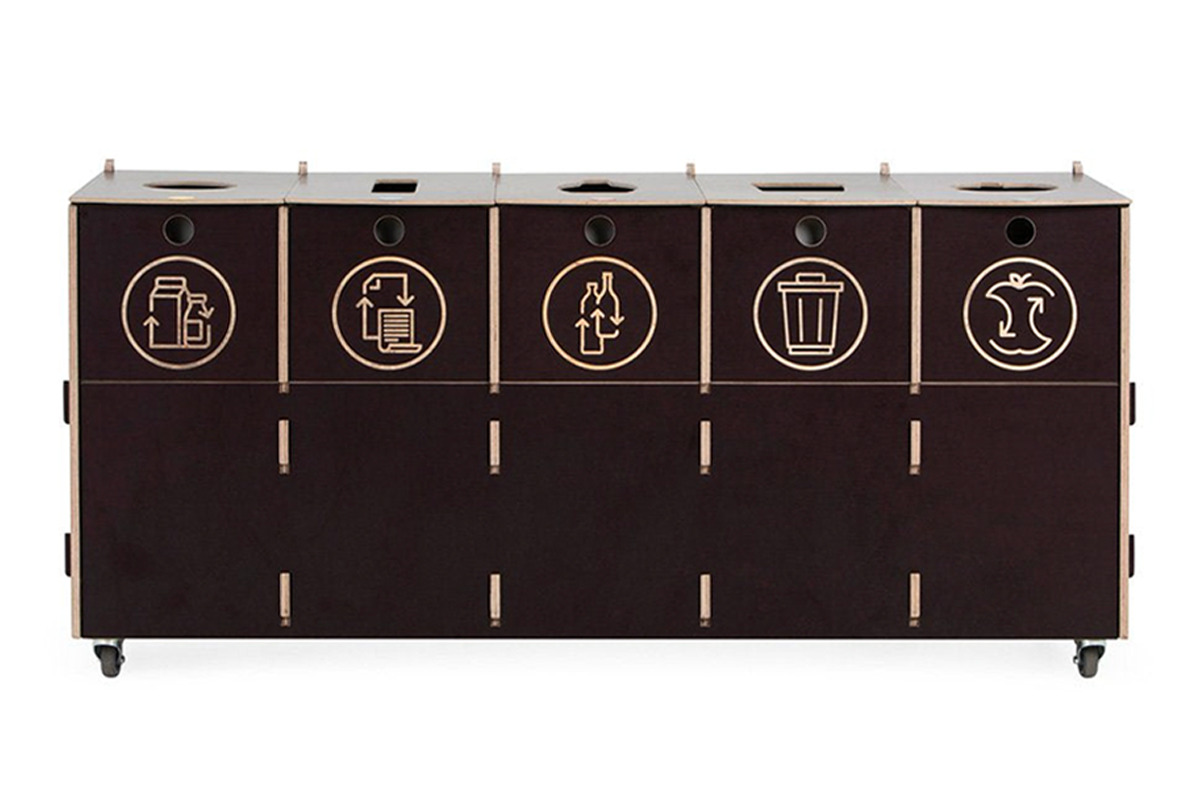
In a fast-paced office environment, employees spend only a few seconds deciding where to toss their waste. If the choice is difficult or confusing, they will default to the general waste stream. You can reduce this cognitive load and improve sorting accuracy through specific design elements:
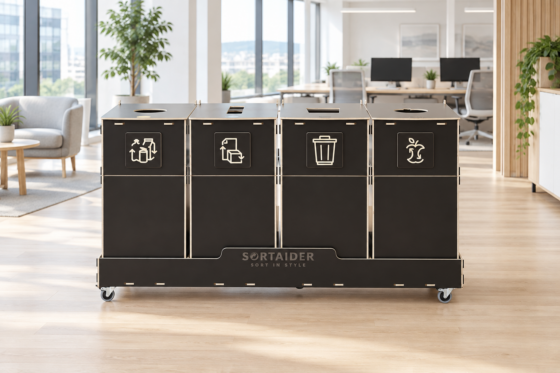
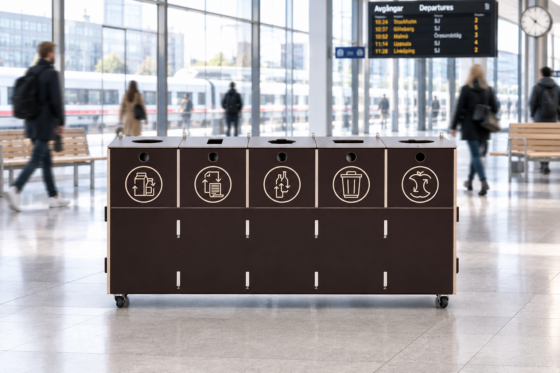
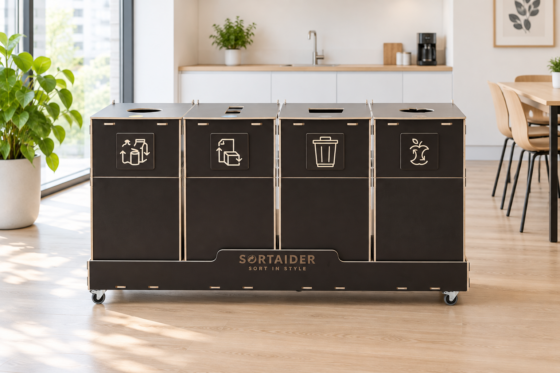
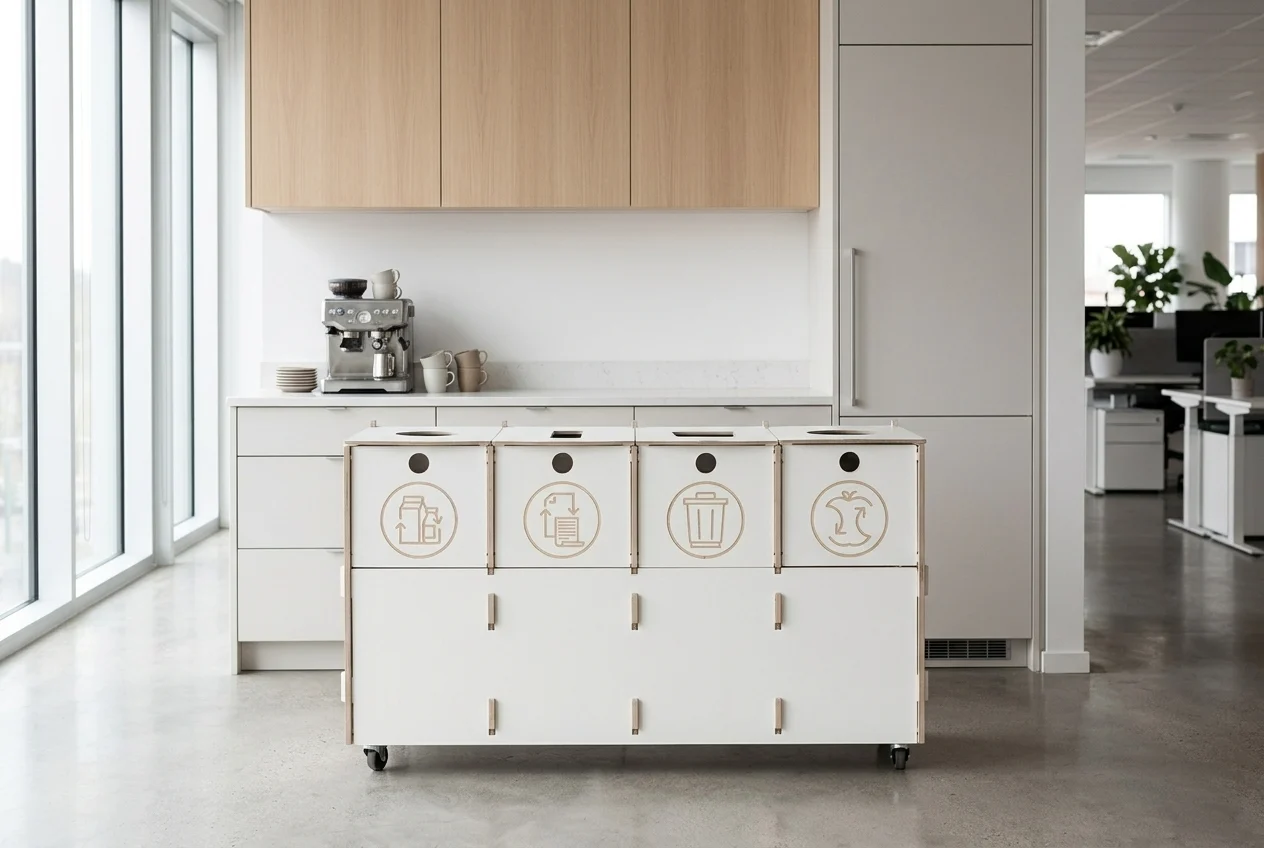
- Lid Apertures: Using specific shapes – such as a thin slit for paper or a round hole for bottles – provides a physical nudge that has been shown to improve waste-separation efficiency from 56% to over 70%.
- Visual Pictograms: Switching from text-heavy labels to high-contrast icons reduces sorting errors by up to 40%, which is particularly vital in multilingual European workplaces.
- Color-Coding: Aligning your system with the EN 14092 standard ensures that employees recognize the system instantly, creating muscle memory that carries over across different floors or departments.
-
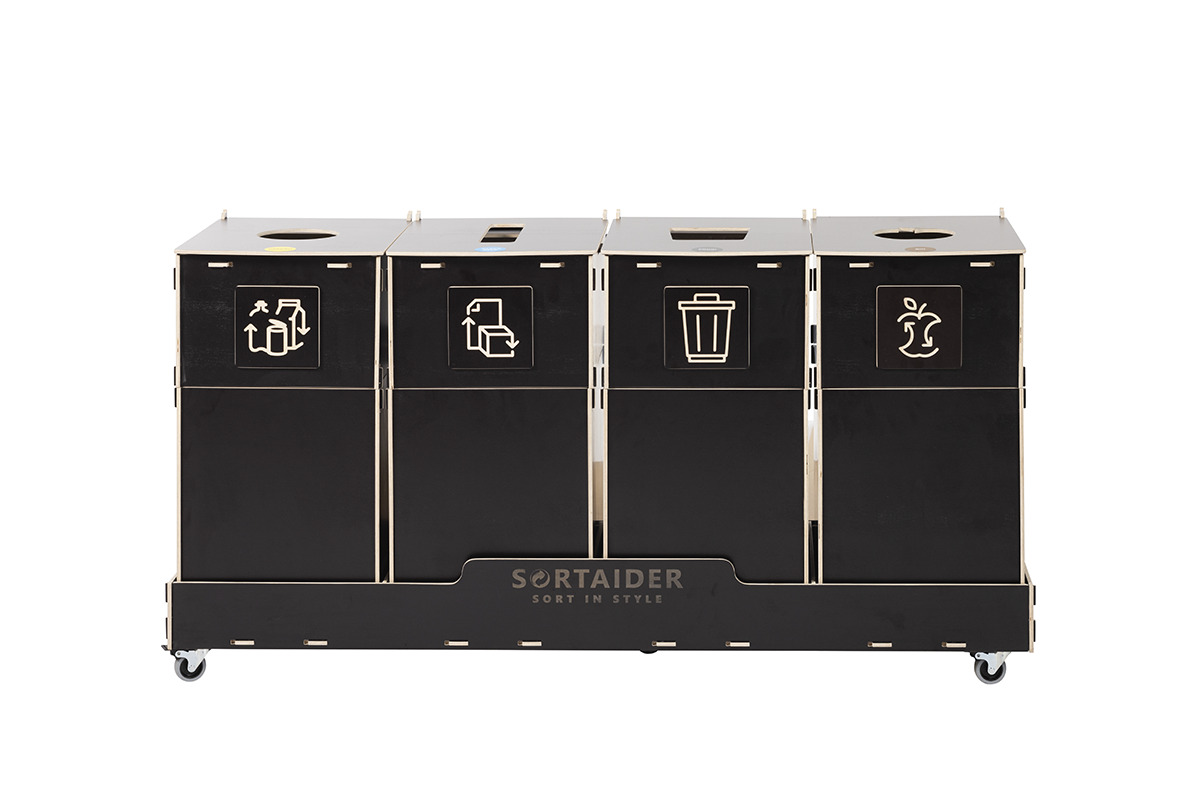
Recycling Bin Sorter 4 × 60 l brown
4 types of waste 4 x 60 l1 500,40 € (incl. 24% VAT)1 210 € (excl. VAT) -
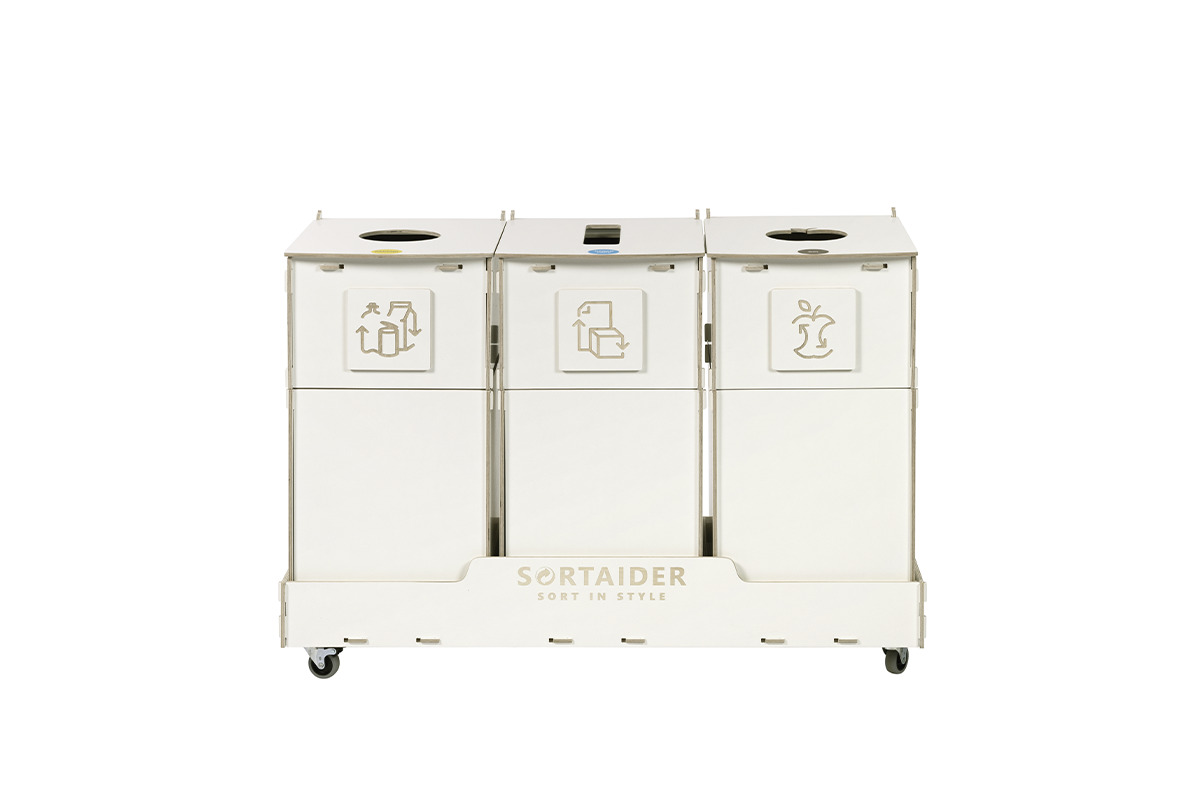
Recycling Bin Sorter 3 × 60 l white
3 types of waste 3 x 60 l1 140,80 € (incl. 24% VAT)920 € (excl. VAT) -
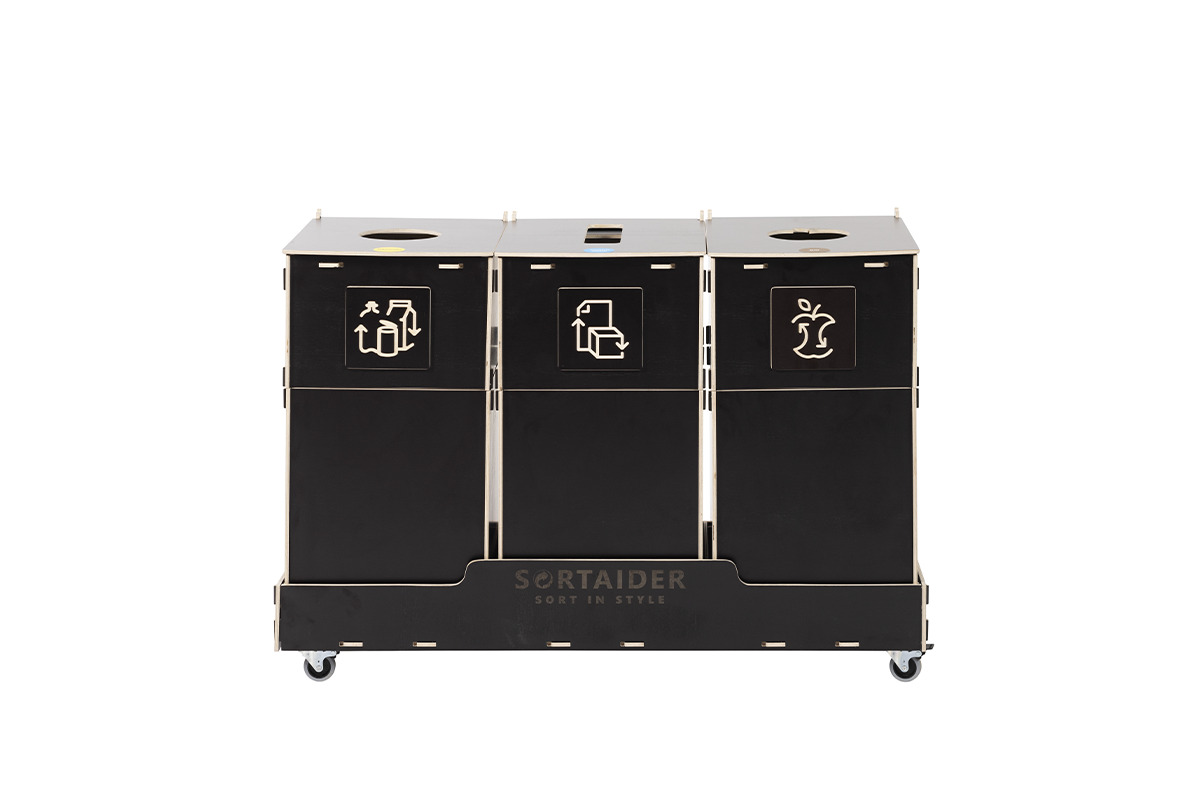
Recycling Bin Sorter 3 × 90 l brown
3 types of waste 3 x 90 l1 364 € (incl. 24% VAT)1 100 € (excl. VAT)
Establishing Social Norms and Climate
Behavioral consistency is heavily influenced by the green organizational climate and visible support from leadership. When employees perceive that their managers value sustainability, they are more likely to adopt these behaviors themselves.

To reinforce these norms, facility managers should prioritize transparency. You can conduct a periodic waste audit for offices and share the data with your team. When staff see the tangible impact of their efforts – such as reaching a 50% diversion rate or significantly reducing material contamination – it builds a collective sense of pride and reinforces the recycling habit as a shared social norm.
Navigating European Regulations and Compliance
While behavioral science handles the human element, workplace recycling regulations define the legal requirements. Across Europe, the Waste Framework Directive mandates the separation of paper, metal, plastic, and glass.
Specific markets have even stricter rules; for example, Sweden made separate food waste collection mandatory for all businesses in 2024. In Denmark, facilities producing more than one ton of waste annually must utilize digital tracking systems for every shipment. Investing in high-capacity recycling bins for bio-waste is no longer just a sustainability goal – it is a baseline for legal compliance in many jurisdictions.
-
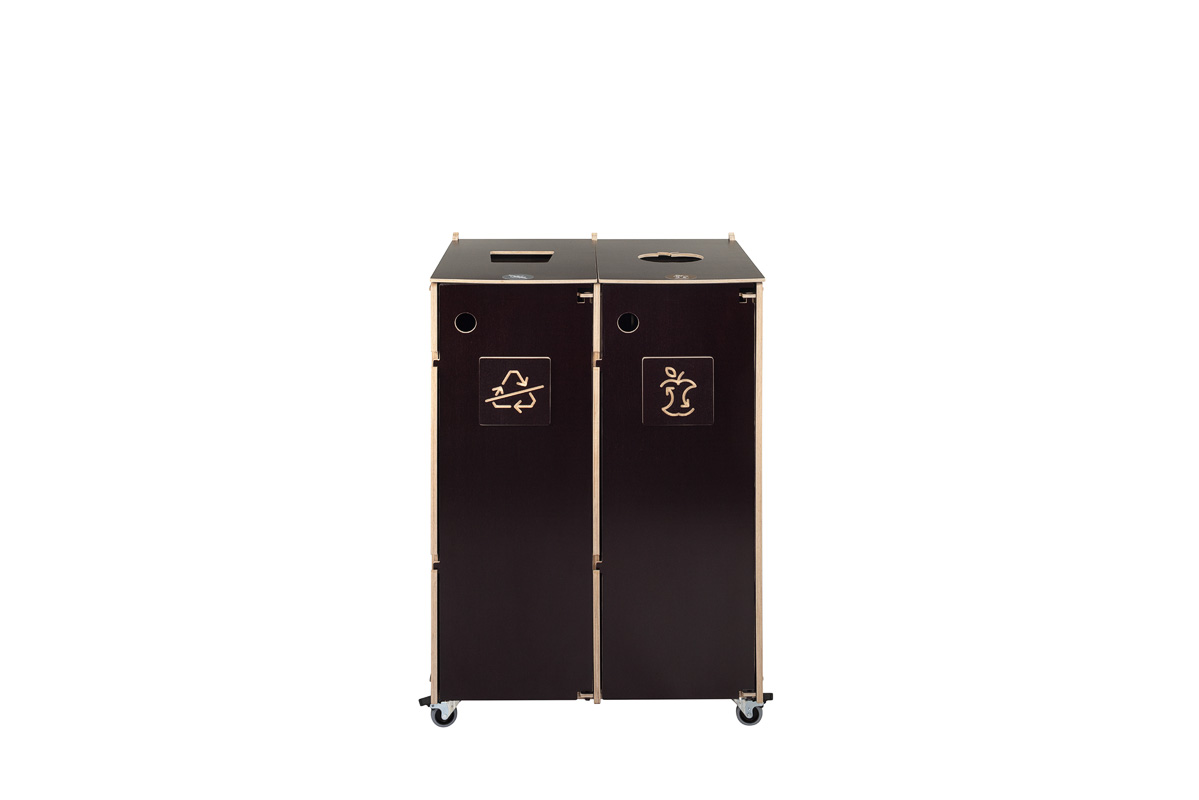
Recycling Bin Ecolong 2 × 90 l brown
2 types of waste 2 x 90 l1 339,20 € (incl. 24% VAT)1 080 € (excl. VAT) -
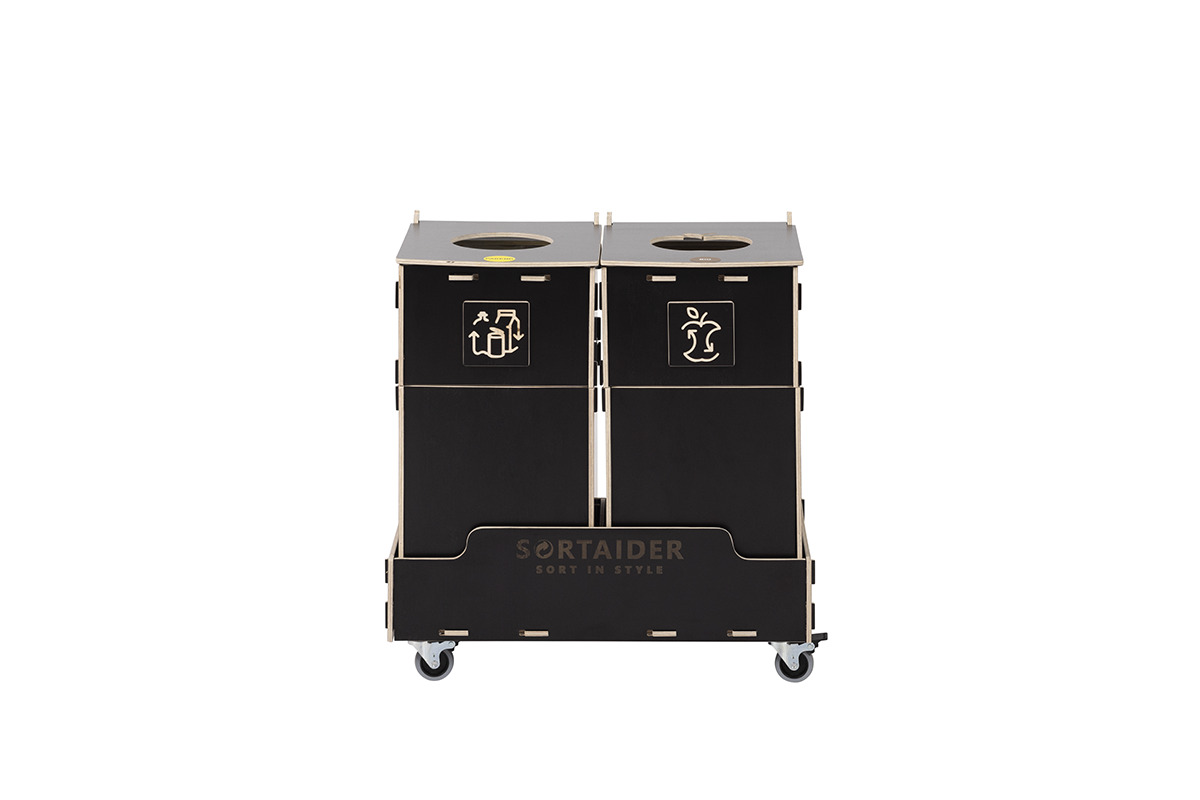
Recycling Bin Sorter 2 × 30 l brown
2 types of waste 2 x 30 l508,40 € (incl. 24% VAT)410 € (excl. VAT) -
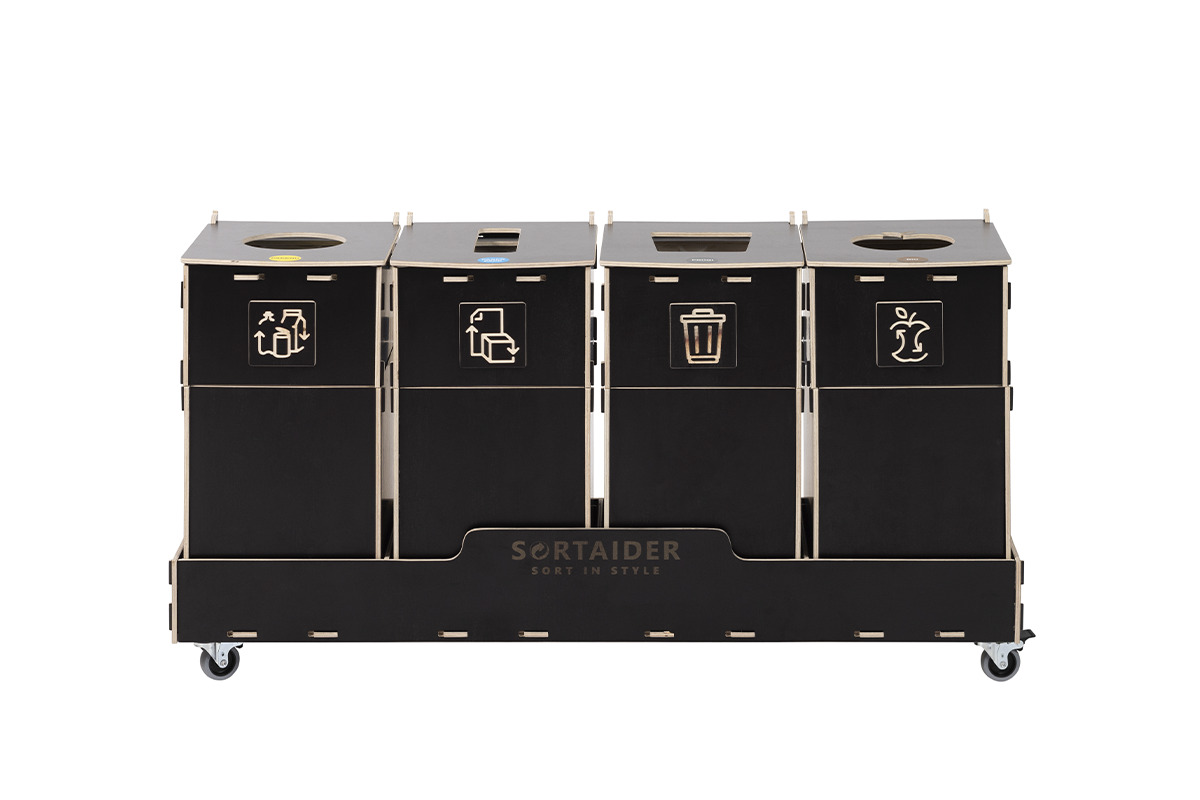
Recycling Bin Sorter 4 × 30 l brown
4 types of waste 4 x 30 l954,80 € (incl. 24% VAT)770 € (excl. VAT)
Overcoming the Contamination Barrier
The biggest threat to a successful program is contamination, which often occurs when employees are unsure of local rules. A primary example is the “Pizza Box” rule: a single greasy cardboard box can ruin an entire batch of clean paper. To prevent this, your recycling signage should focus exclusively on high-contrast images of permitted items.
By combining sustainable infrastructure – such as birch plywood bins that offer up to 4x lower CO2 lifecycle emissions than plastic – with these behavioral nudges, you create a workplace where recycling becomes the path of least resistance. To begin optimizing your facility’s waste performance, explore our range of modular recycling bin sorters designed for clear visual guidance and long-term professional durability.