Did you know the average European office worker generates 2 kg of waste daily? If your organization struggles with low participation or contaminated bins, small changes in infrastructure and placement can yield significant results and lower your environmental impact.
Eliminate Deskside Bins in Favor of Centralized Hubs
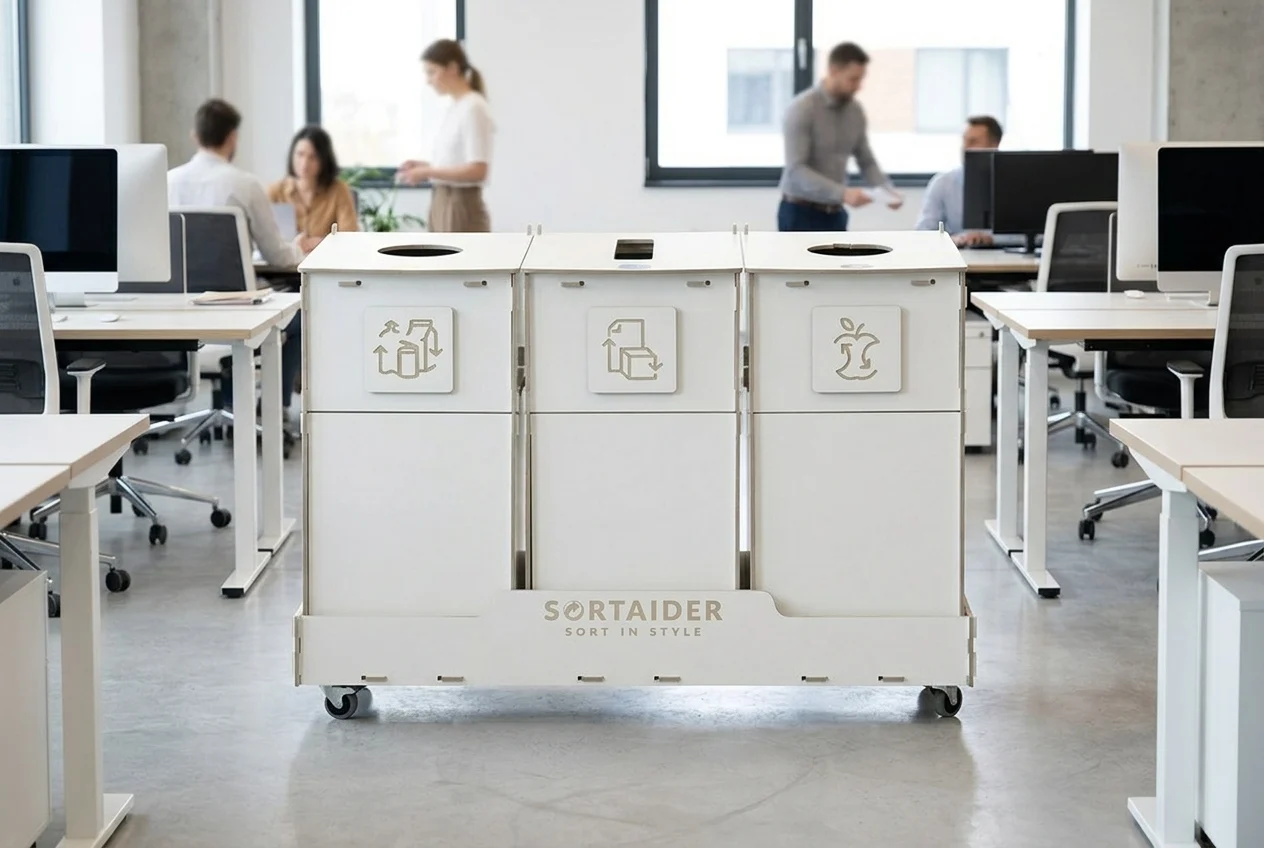
The most effective way to increase waste sorting efficiency is to remove individual bins under desks. Research shows that replacing deskside bins with centralized recycling hubs can boost waste diversion rates by up to 40%. When an employee has a bin at their feet, they are more likely to toss everything into a single stream. Centralization forces a conscious decision-making process at the point of disposal, encouraging staff to think about what goes in each recycling bin before they act.
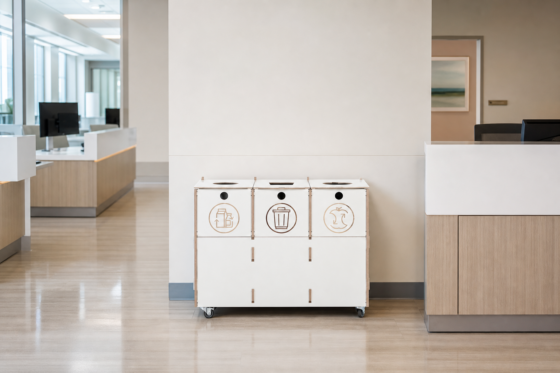
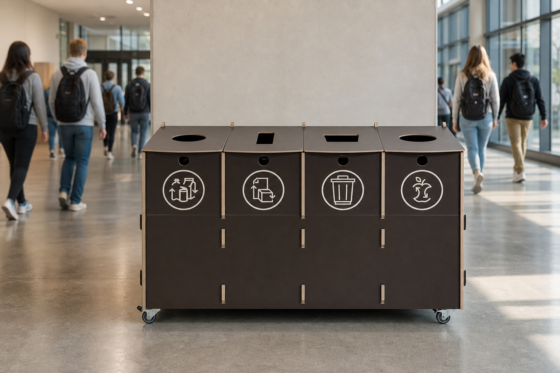
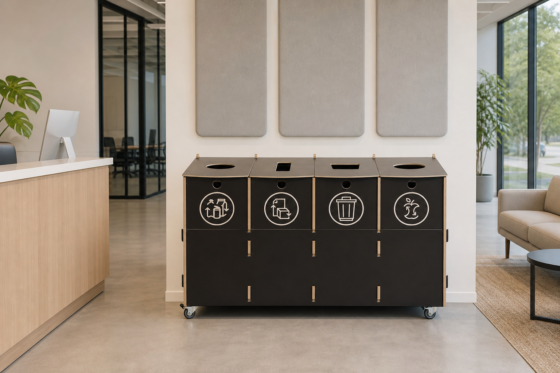
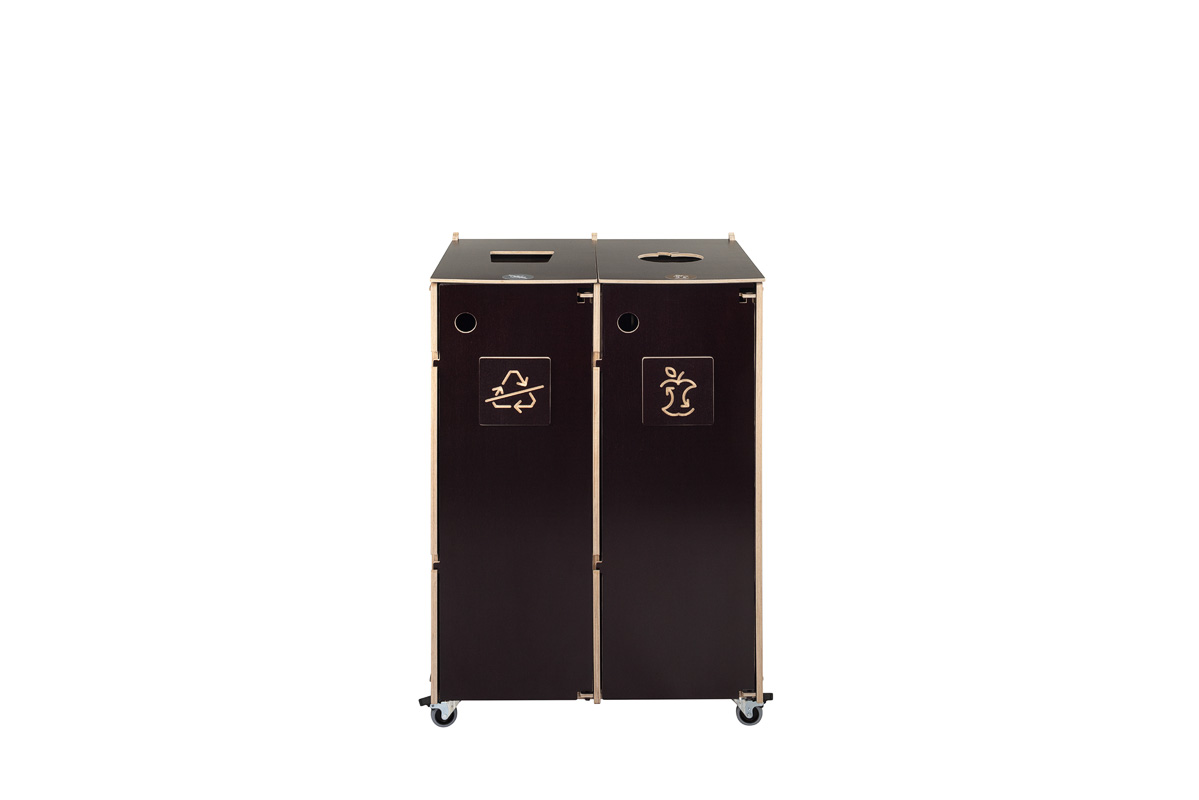
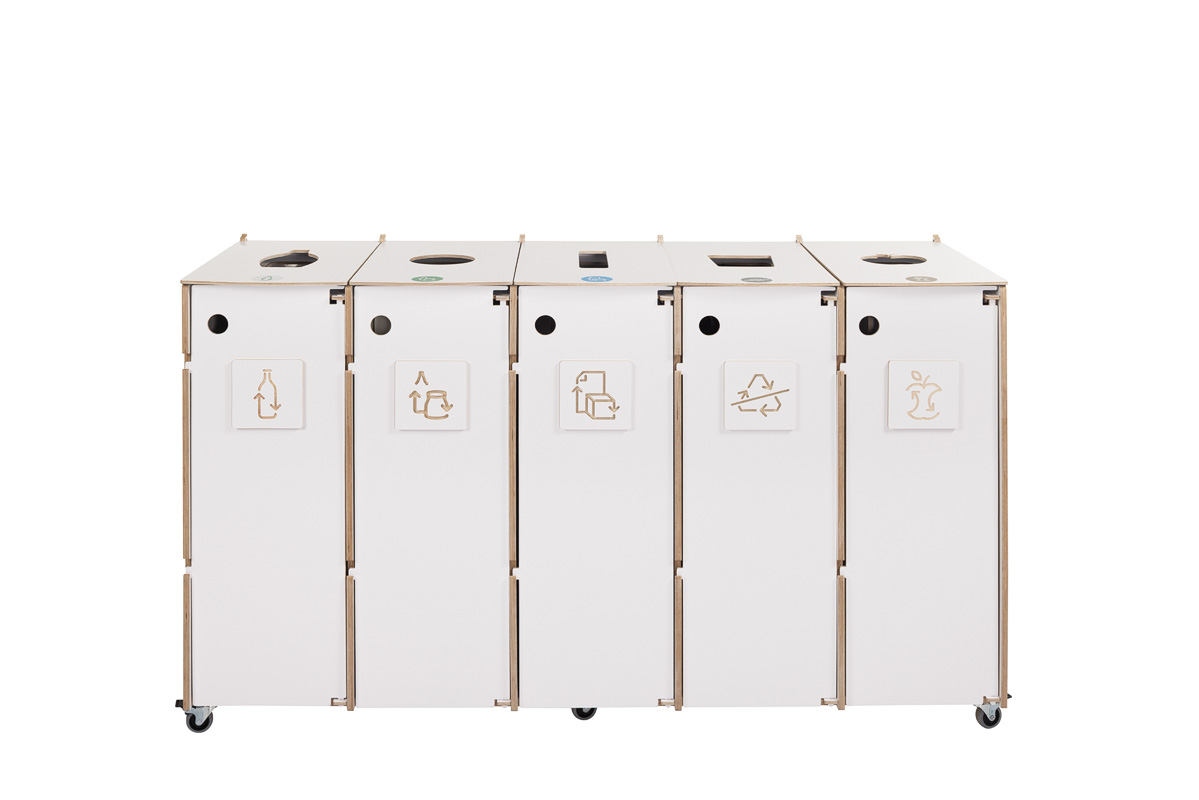
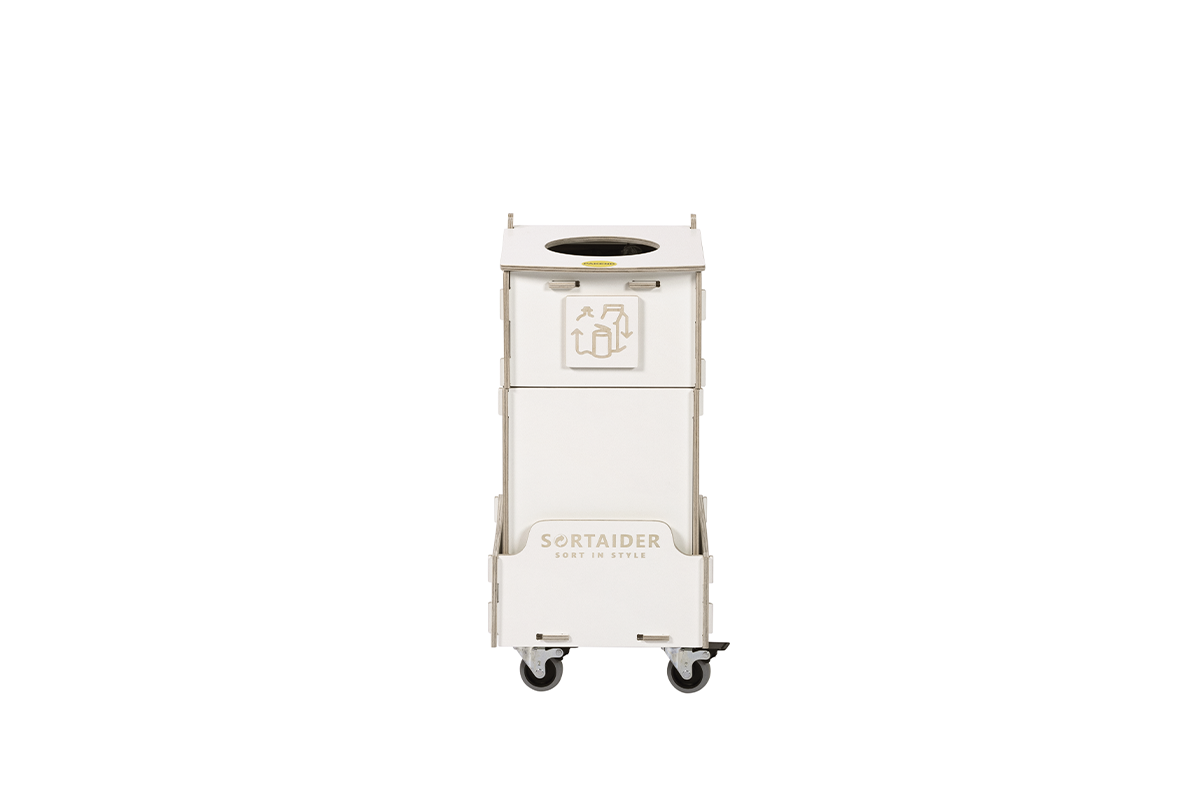
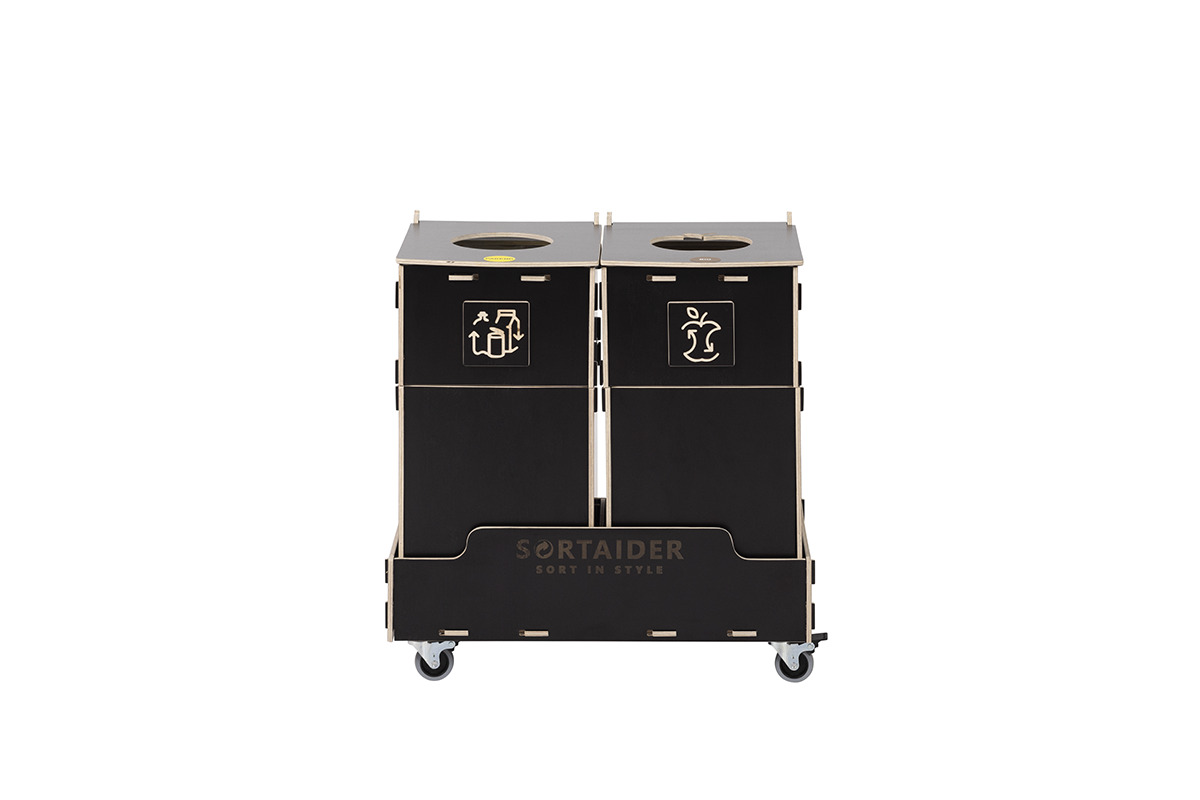
By utilizing multi-compartment systems like the recycling bins sorter series, you can offer 3 to 5 separate fractions in one stylish unit. This maintains a cleaner professional environment while ensuring materials like paper and plastic never enter the general waste stream. These systems are designed to make waste sorting in the office simple, efficient, and visually appealing.
-
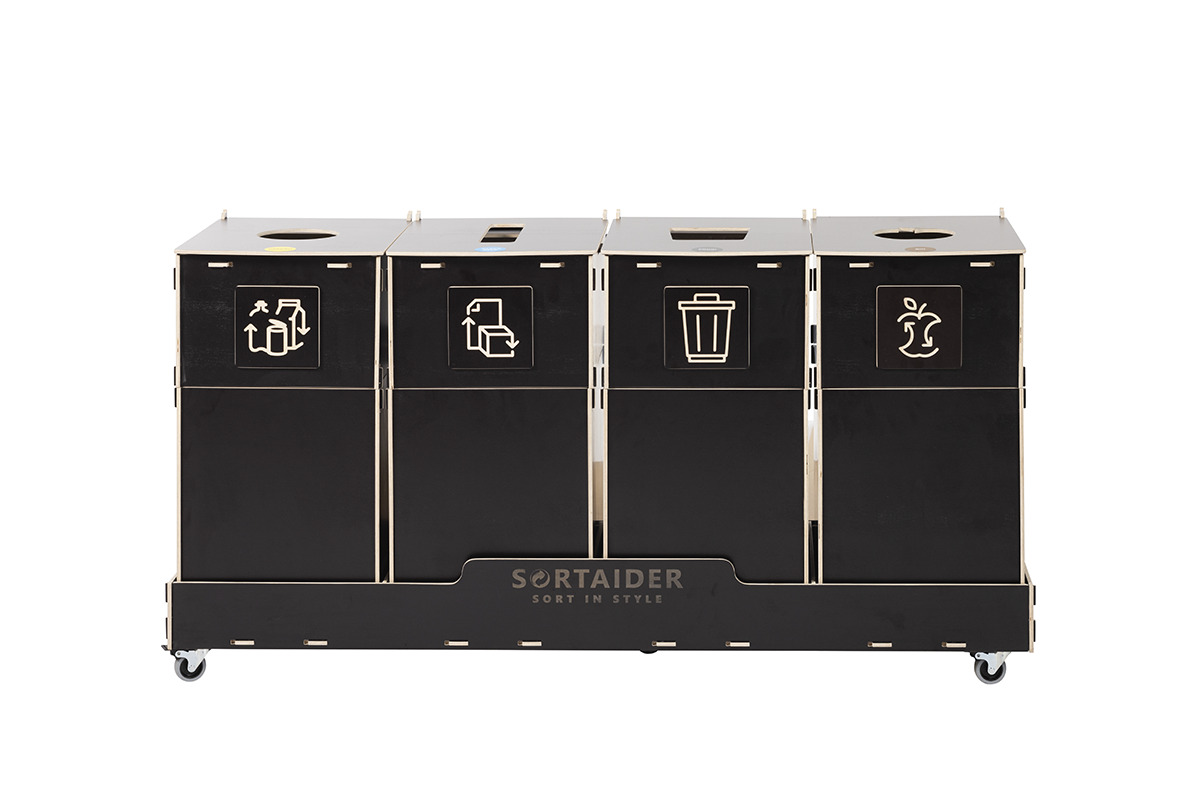
Recycling Bin Sorter 4 × 60 l brown
4 types of waste 4 x 60 l1 500,40 € (incl. 24% VAT)1 210 € (excl. VAT) -
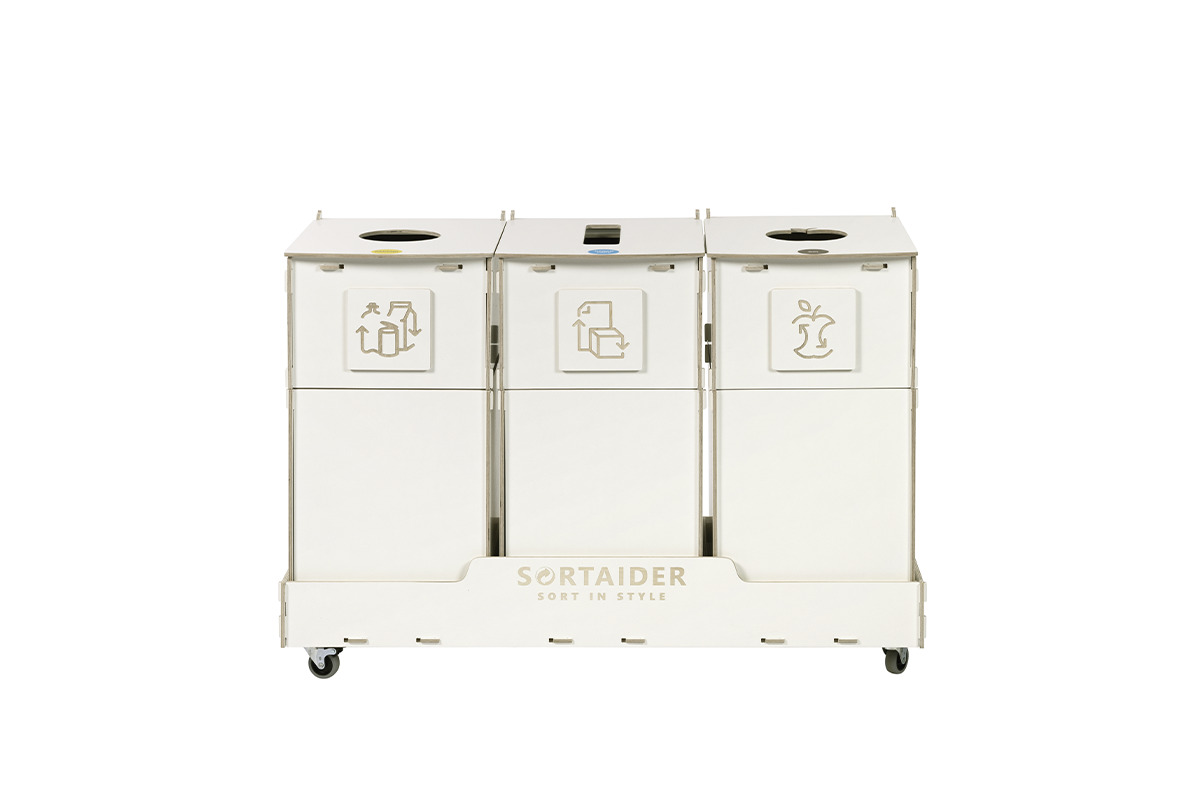
Recycling Bin Sorter 3 × 60 l white
3 types of waste 3 x 60 l1 140,80 € (incl. 24% VAT)920 € (excl. VAT) -
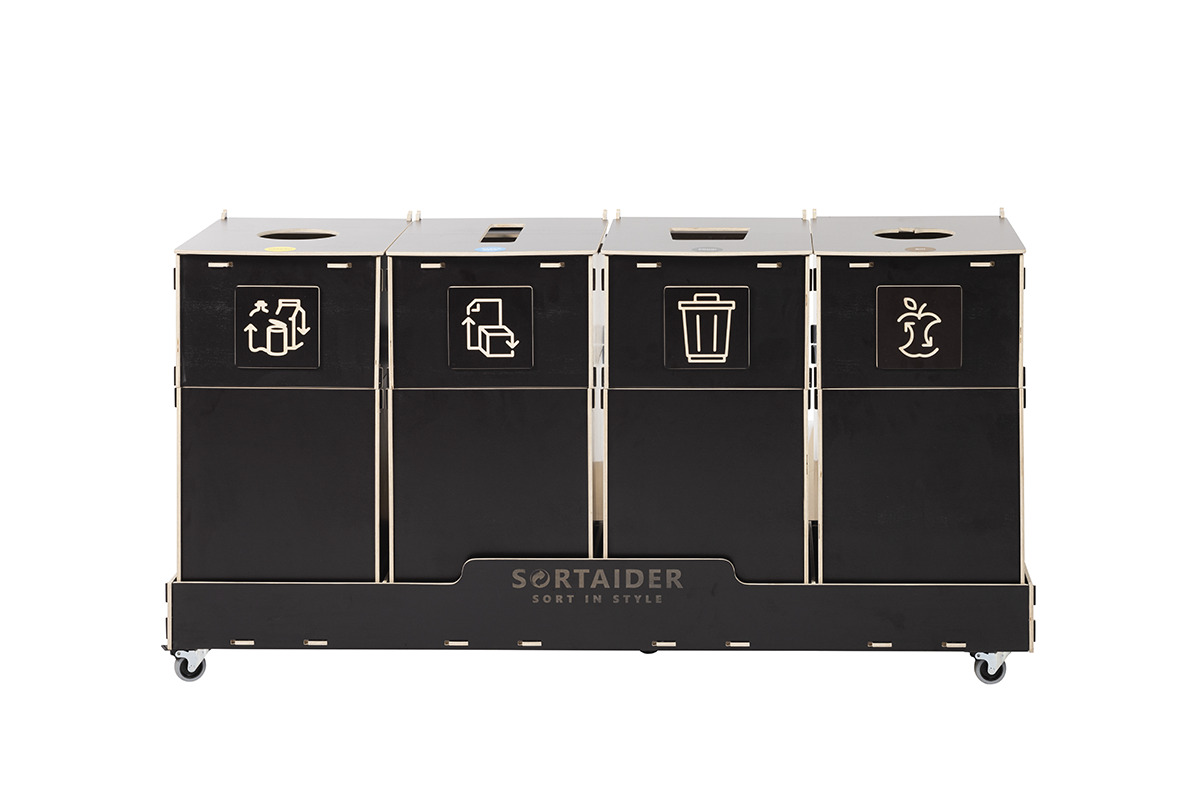
Recycling Bin Sorter 4 × 90 l brown
4 types of waste 4 x 90 l1 810,40 € (incl. 24% VAT)1 460 € (excl. VAT)
Optimize Placement in High-Traffic Zones
Proximity is the primary driver of success in office waste management. Strategic bin placement has been shown to boost participation by 30% to 50%. You should create recycling hubs in “hotspots” where waste is naturally generated:
- Kitchenettes and Canteens: Focus on bio-waste, plastics, and metals.
- Printer Rooms: Focus on high-volume paper and cardboard collection.
- Main Hallways and Entrances: General waste and mixed recycling for visitors.
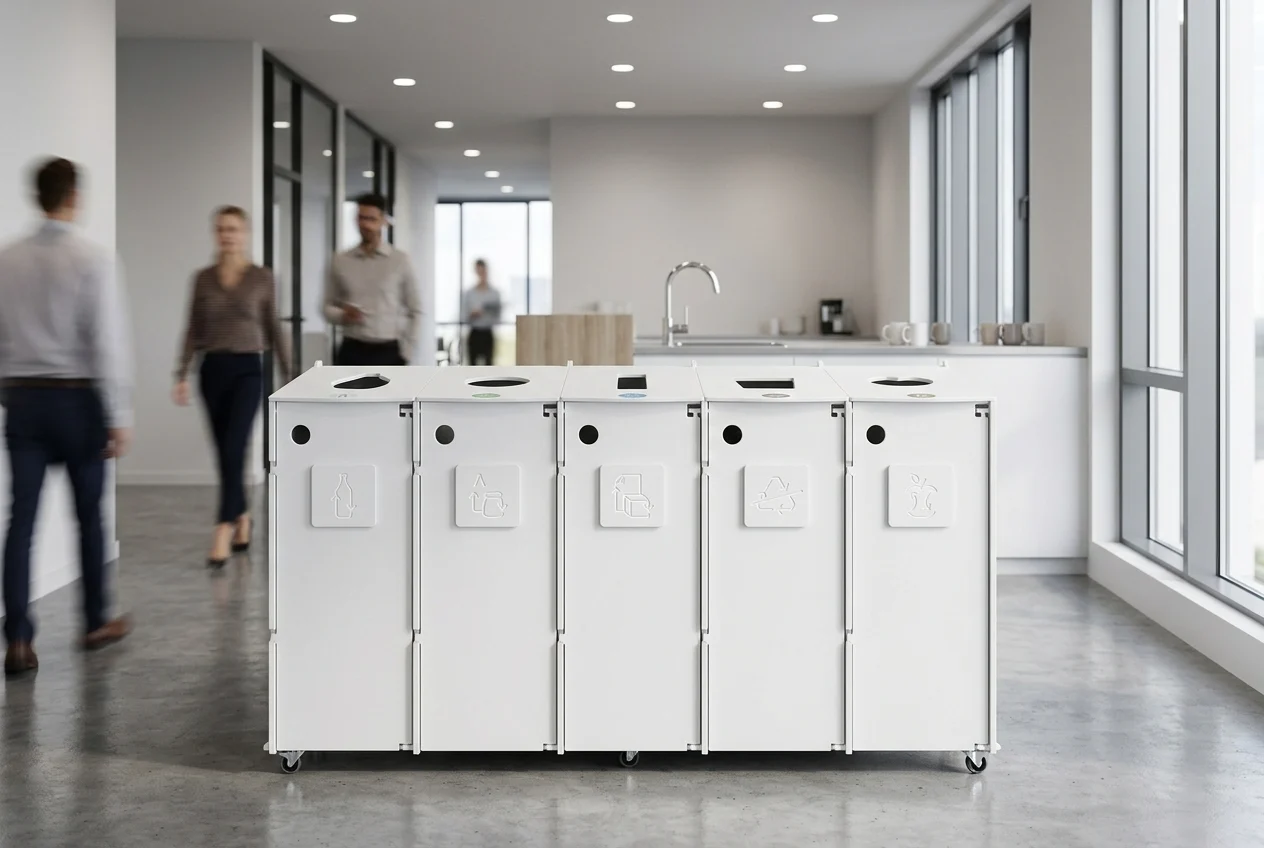
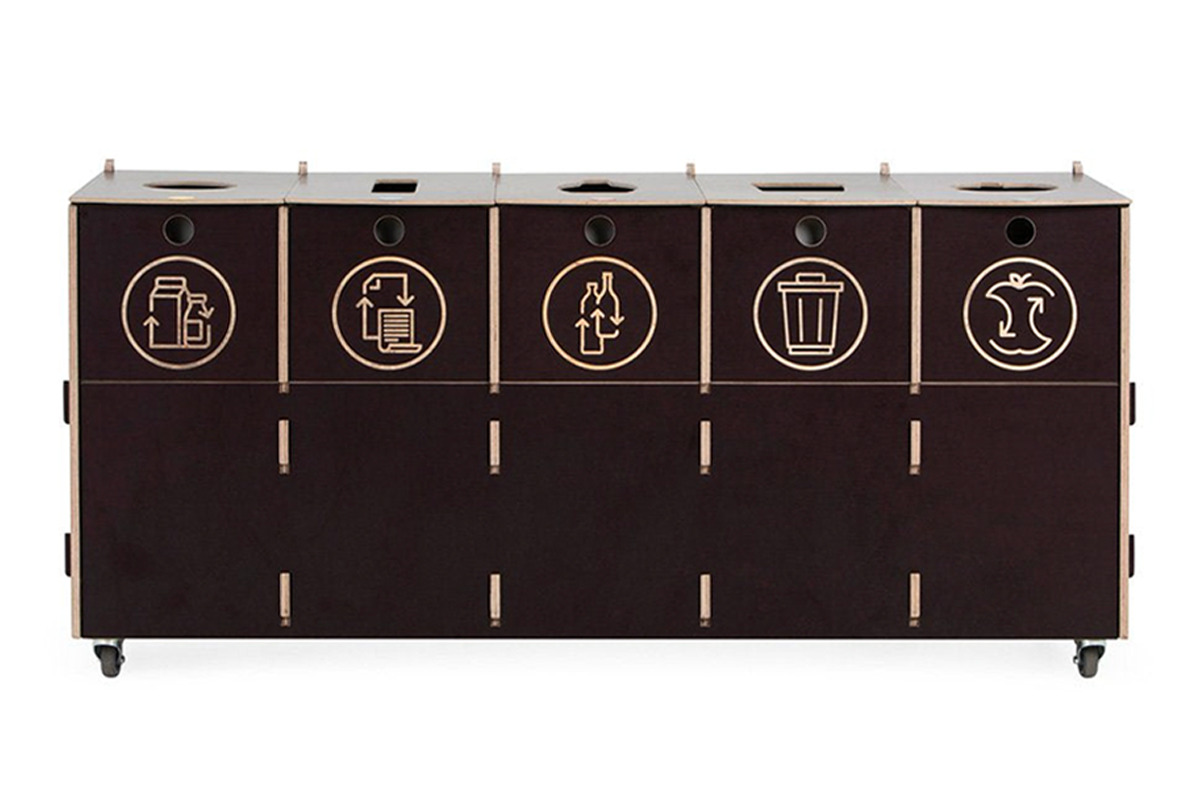
In high-traffic areas, high-capacity solutions like the recycling bins ecolong series are ideal. These systems provide a compact footprint – offering a 5-stream configuration within just 5 meters of width – ensuring that convenience doesn’t come at the cost of floor space. When learning how to set up recycling at work, prioritize these high-visibility areas to maximize your team’s engagement.
Implement Visual Signage and Physical Nudges
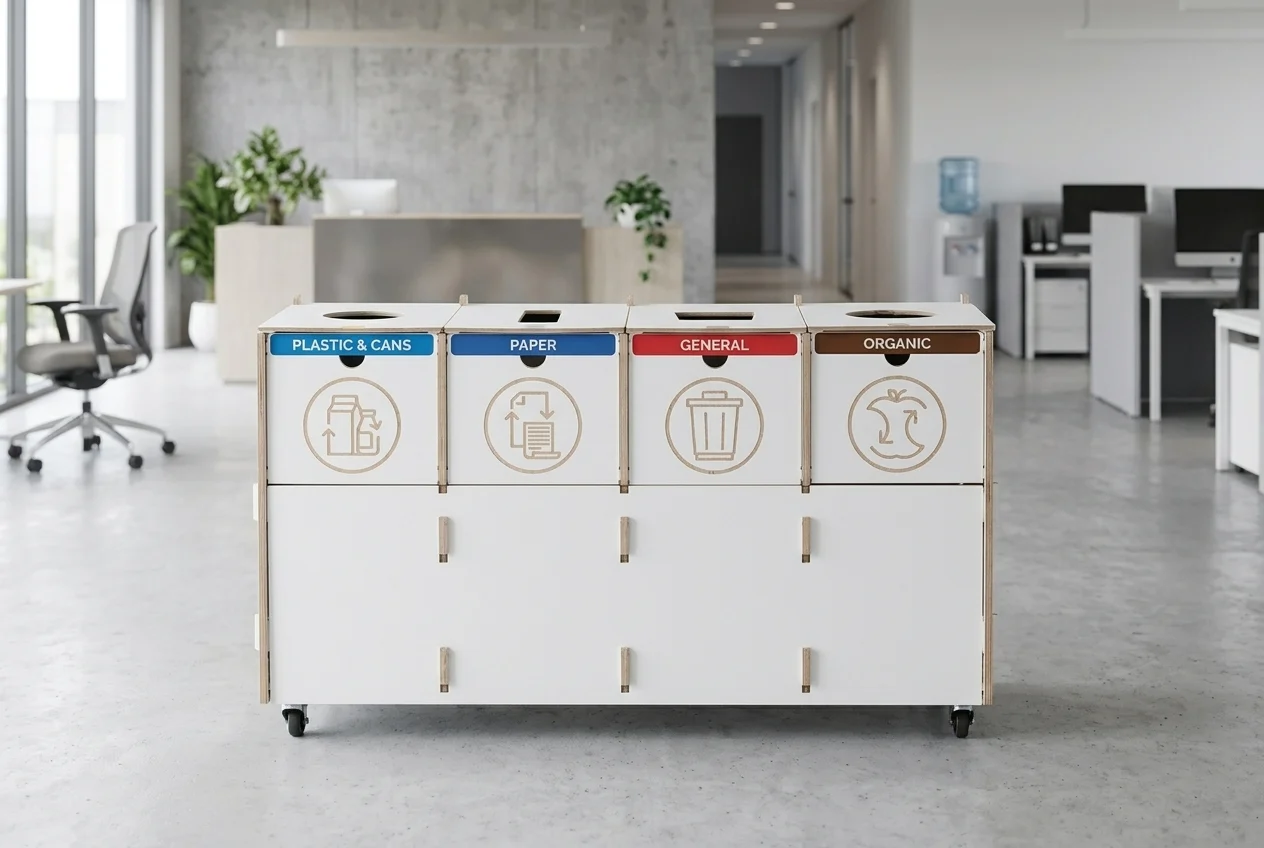
Effective signage is the bridge between your sustainability goals and actual employee behavior. In multilingual European workplaces, switching from text-heavy labels to clear visual icons can reduce sorting errors by up to 40%. Following recycling signage best practices involves using high-contrast images of permitted items to accelerate cognitive processing.
To further reduce contamination, utilize physical “nudges” like shaped lid openings. A thin slit for paper or a round hole for bottles provides an intuitive cue that reinforces the user’s choice. When designing your office waste management plan, align your bins with the EN 14092 standard for color-coding and pictograms to ensure universal understanding across your facility.

Align with European Regulatory Requirements
Compliance is no longer optional for modern organizations. Under the EU Waste Framework Directive, businesses must separate paper, metal, plastic, glass, and bio-waste at the source. However, you must be aware of specific regional variations:
- Sweden: Separate food waste collection became mandatory for all businesses in 2024.
- Denmark: Facilities producing more than 1 ton of waste annually must utilize digital tracking systems for every shipment.
- Estonia: Organizations generating more than 10kg of bio-waste daily must have dedicated sorting in place.
- Latvia and Lithuania: Stricter Extended Producer Responsibility (EPR) and digital registries like APVIS require precise logging of waste activity.
Failing to sort properly leads to the “Pizza Box” rule: a single greasy cardboard box or a bag of food scraps can contaminate an entire batch of clean paper, leading to rejected loads and higher disposal fees. Using recycling bins with compartments ensures you meet these commercial waste recycling requirements while minimizing the risk of workplace recycling regulation penalties.
Conduct Regular Audits and Report Progress
You cannot manage what you do not measure. A systematic waste audit for offices identifies exactly what is leaving your building and where sorting is failing. By analyzing waste hauler invoices and weighing diverted materials, you can track and report recycling rates by calculating your Waste Diversion Rate (Total Diverted Weight divided by Total Waste Weight).
Sharing these results with your team is a powerful engagement tool. Most facility managers find that “right-sizing” waste services based on audit findings can reduce disposal fees by 30% to 50% by lowering the frequency of general waste collection. To ensure long-term sustainability, consider the lifecycle of the bins themselves. Choosing bins made from renewable plywood results in 2–4x lower CO2 emissions compared to traditional metal or plastic alternatives, further contributing to your organization’s carbon footprint reduction.
Improving your workplace recycling rate is a combination of intuitive design, strategic placement, and clear communication. By moving toward centralized, visually clear sorting stations, you can transform waste management into a core part of your organization’s sustainability identity. To find the right configuration for your facility, explore our range of modular recycling bins today.