When 50,000 spectators clear out of a stadium, they leave behind tons of mixed rubbish within minutes. Can your facility maintain operational control while meeting strict zero-waste targets? Transitioning from reactive cleanup to a scalable waste diversion plan is critical for modern venue operators.
Pre-Event Planning and Waste Audits
Establishing a high-performing waste system requires detailed preparation long before turnstiles open. Facility operators should begin by conducting a thorough site assessment and waste audit to evaluate current waste streams, pinpoint peak generation zones, and review local recycling capabilities.
A vital operational step is coordinating directly with concessionaires and third-party vendors. Requiring vendors to standardize their food packaging by choosing recyclable or certified compostable materials drastically cuts mixed-stream contamination before items ever reach a fan’s hands. Structuring waste hauler contracts around reported weight data supports your broader ISO 14001 environmental management system goals by aligning financial incentives with landfill diversion. Appointing a dedicated recycling coordinator further ensures seamless execution across stadium concourses, parking zones, and press suites. Comprehensive venue strategies outlined in our guide to waste management for event venues highlight how pre-event planning forms the backbone of operational efficiency.
Strategic Placement, Capacity, and Accessibility
Placing waste containers randomly across concourses guarantees contaminated streams. To guide spectator behavior effectively, venues must adhere to a strict 1:1 pairing ratio: every residual waste container must stand directly alongside a dedicated recycling stream. As detailed in our outdoor waste bin placement guide, forcing attendees to walk more than 10 to 15 meters to find a recycling bin significantly increases improper disposal.
High-volume event spaces create distinct waste hotspots around main gates, concourse walkways, concession stands, and tailgating areas. To optimize crowd movement and bin usage, managers should consult our comprehensive recycling bin placement guide when designing layout maps. Universal design and accessibility standards must shape this layout:
- Clear path width: Maintain an accessible route clear width of at least 91 cm (36 inches) so crowd traffic flows smoothly around sorting hubs.
- Protrusion limits: Bins placed along walkways must not extend more than 10 cm (4 inches) into circulation paths if their leading edge falls between 68 cm and 203 cm above the floor.
- Reach ranges and operable parts: Deposit openings and handles should sit within forward or side reach heights of 38 to 122 cm (15 to 48 inches) and operate with less than 2.2 kg (5 lbs) of force.
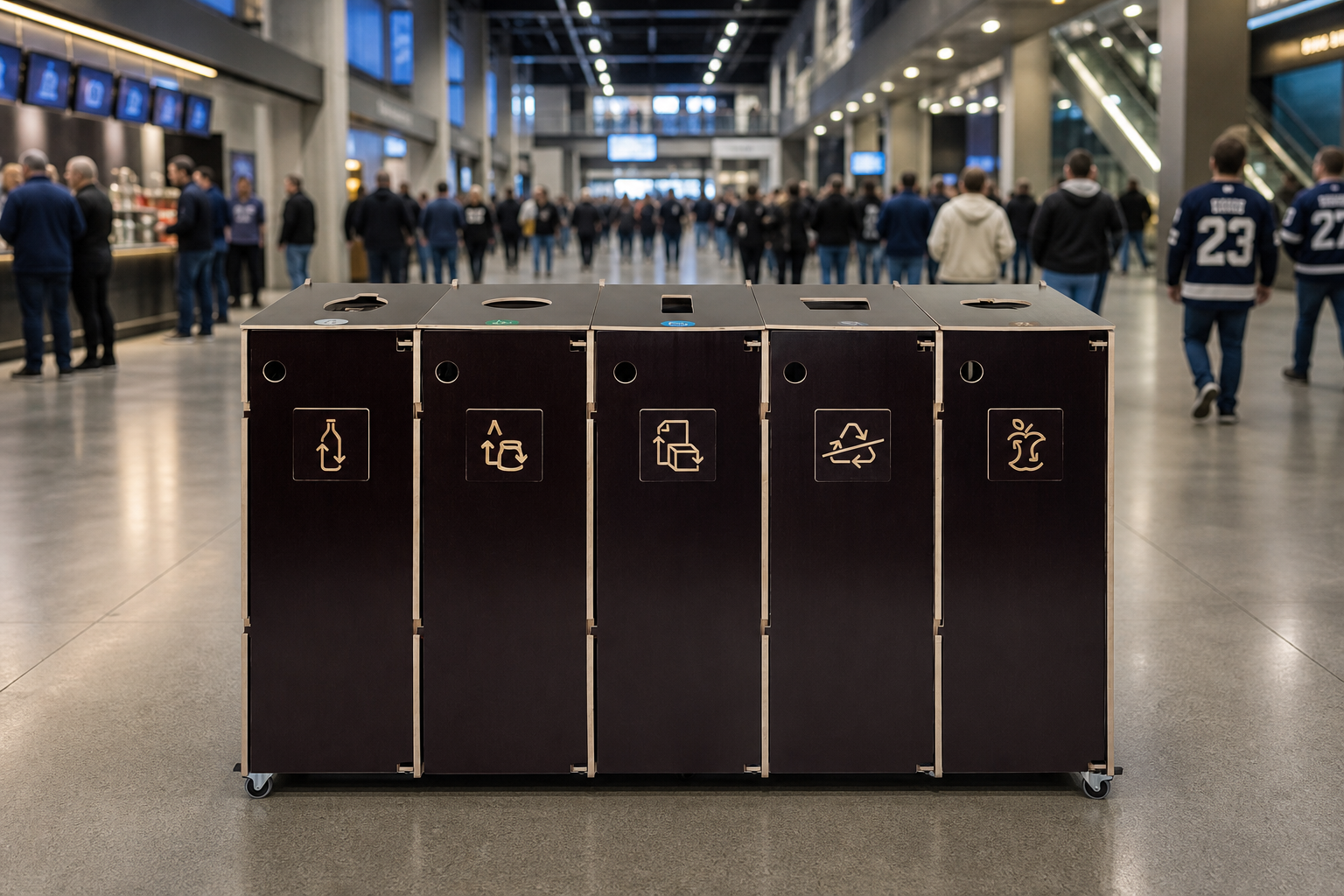
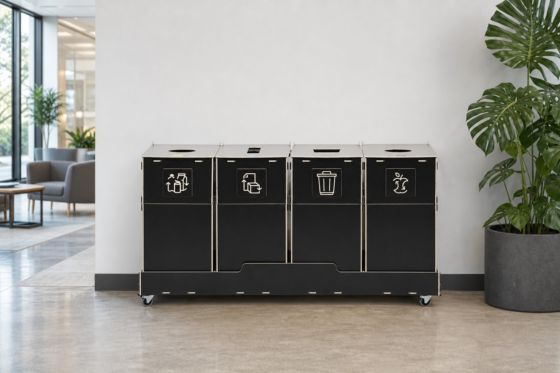
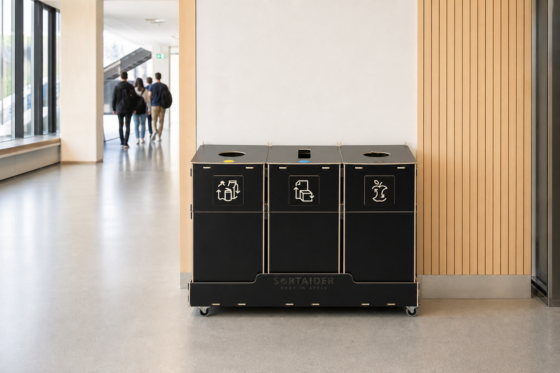
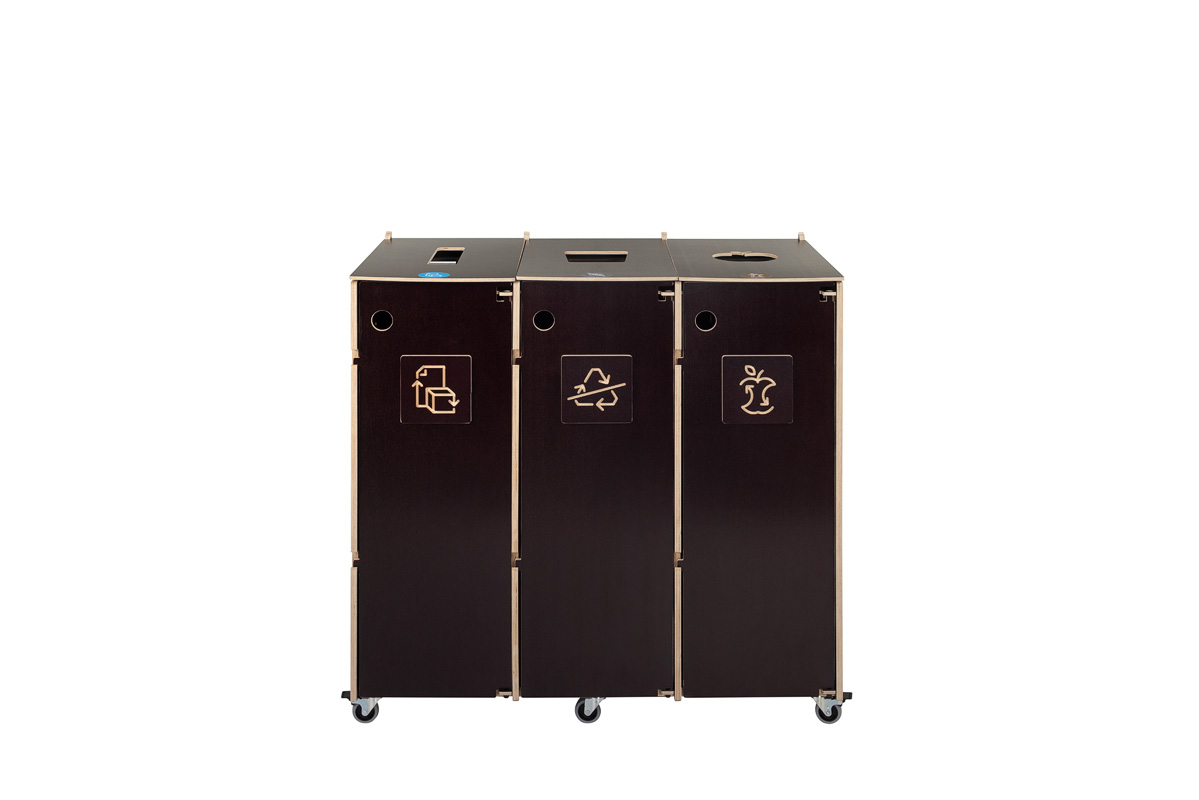
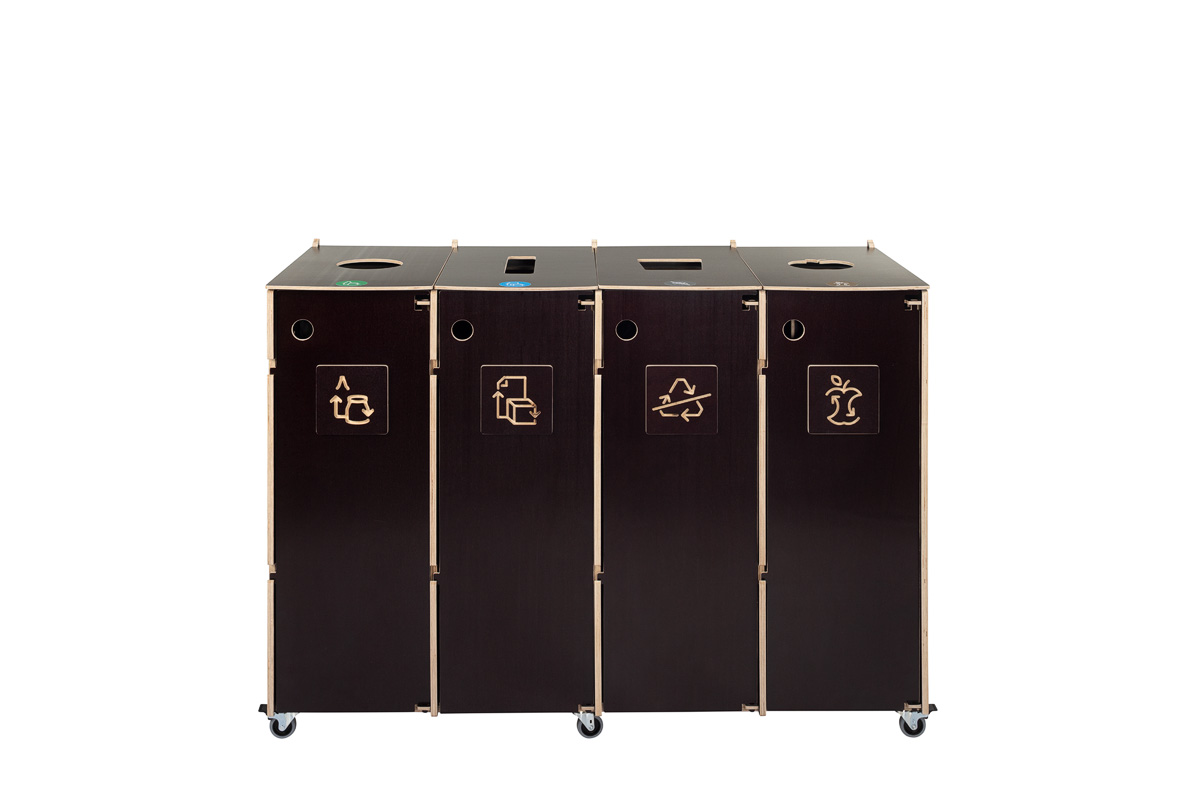
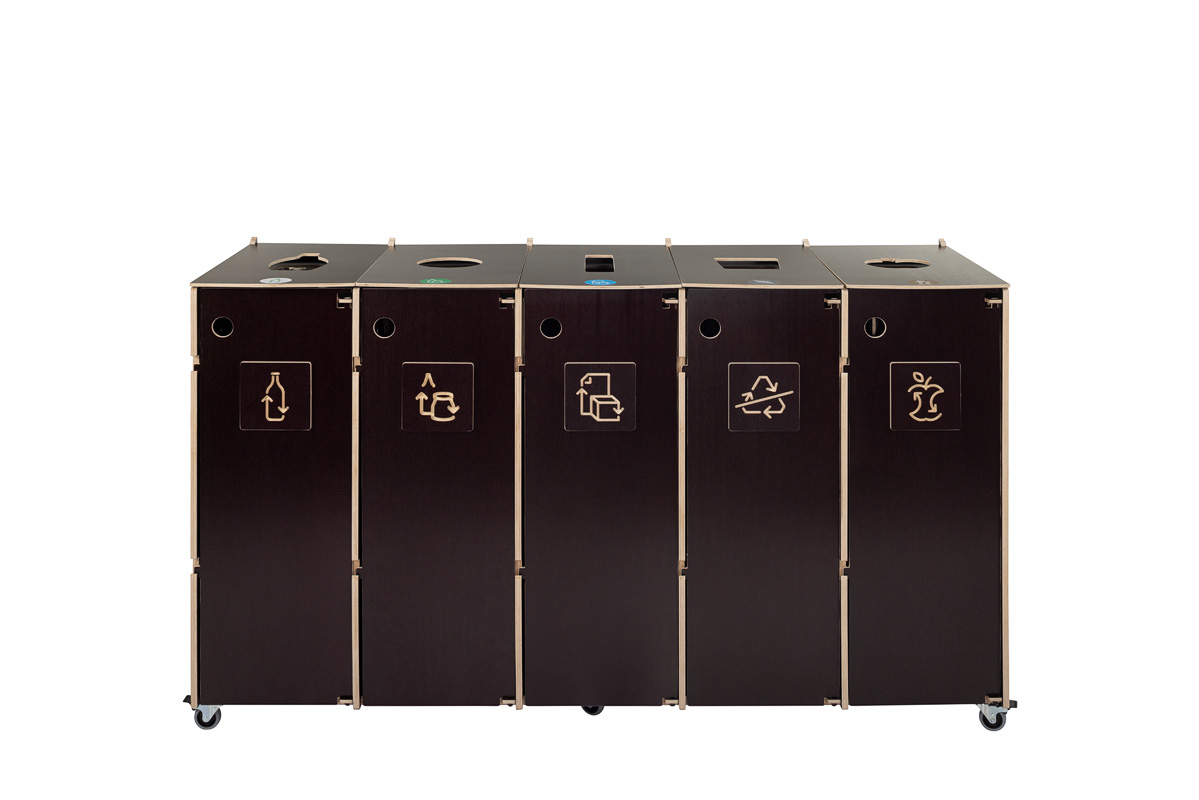
For dynamic venue environments where crowd flow shifts between pre-game entry and post-game egress, mobile collection hubs are vital. High-capacity sorting stations built on lockable wheels allow facilities teams to adjust bin layouts rapidly based on event requirements.
Explore modular recycling bins engineered for high-traffic public venues:
In-Game Operations and Post-Event Sweeps
Managing high-volume waste during an event requires proactive monitoring rather than waiting for containers to overflow. Operations crews should patrol designated concourse zones during peak food and beverage service hours, swapping full bags before contamination leaks into surrounding areas. Utilizing clear plastic liners enables custodial staff to visually inspect waste streams for improper sorting at a glance.
Once the event ends, custodial procedures transition to post-event collections. Executing systematic “stadium sweeps” across grandstands allows dedicated staff or volunteer groups to collect clean recyclables directly from seating areas before general sweepers move in.
Maintaining venue hygiene is equally crucial. Beverage spills and sticky residues around high-traffic stations require routine maintenance. Following a structured procedure for cleaning and sanitising recycling bins controls odours, prevents pest attraction, and protects your long-term capital investment.
Managing Organics and Food Scrap Diversion
Food scraps and organic waste account for a significant portion of total stadium waste weight. Implementing a dedicated bio-waste collection program for commercial concession kitchens and hospitality suites significantly reduces heavy organic loads bound for incineration or landfill.
To execute a successful organics program:
- Prevent stream contamination: Ensure strict separation protocols so conventional plastics do not enter bio-waste containers. Review our guide on what goes in each recycling bin to set unambiguous guidelines for staff and caterers.
- Recover unserved food: Donate untouched, temperature-controlled food to local non-profit organizations following established food safety guidelines to support the local community while lowering disposal costs.
- Align service ware: Require food vendors to supply certified compostable service ware that can be processed directly alongside organic food waste streams.
Visual Consistency and Personalized Branding
In fast-paced venue environments, intuitive visual cues drive fan participation. Switching from text-heavy labels to clear visual icons, pictograms, and direct item illustrations can cut sorting errors by up to 40%. Adhering to standard European visual conventions, as detailed in our recycling bin color coding guide, ensures international spectators quickly recognize proper disposal channels across diverse venues.
Modern sustainability infrastructure can also reflect your venue’s identity. Custom sorting stations – such as the customizable Sorter series featuring precision laser-engraved club logos – integrate environmental management directly into stadium branding. Crafted from renewable birch plywood treated with durable furniture-grade finishes, these sustainable units deliver up to 4x lower lifecycle CO₂ emissions compared to traditional metal or plastic bins.
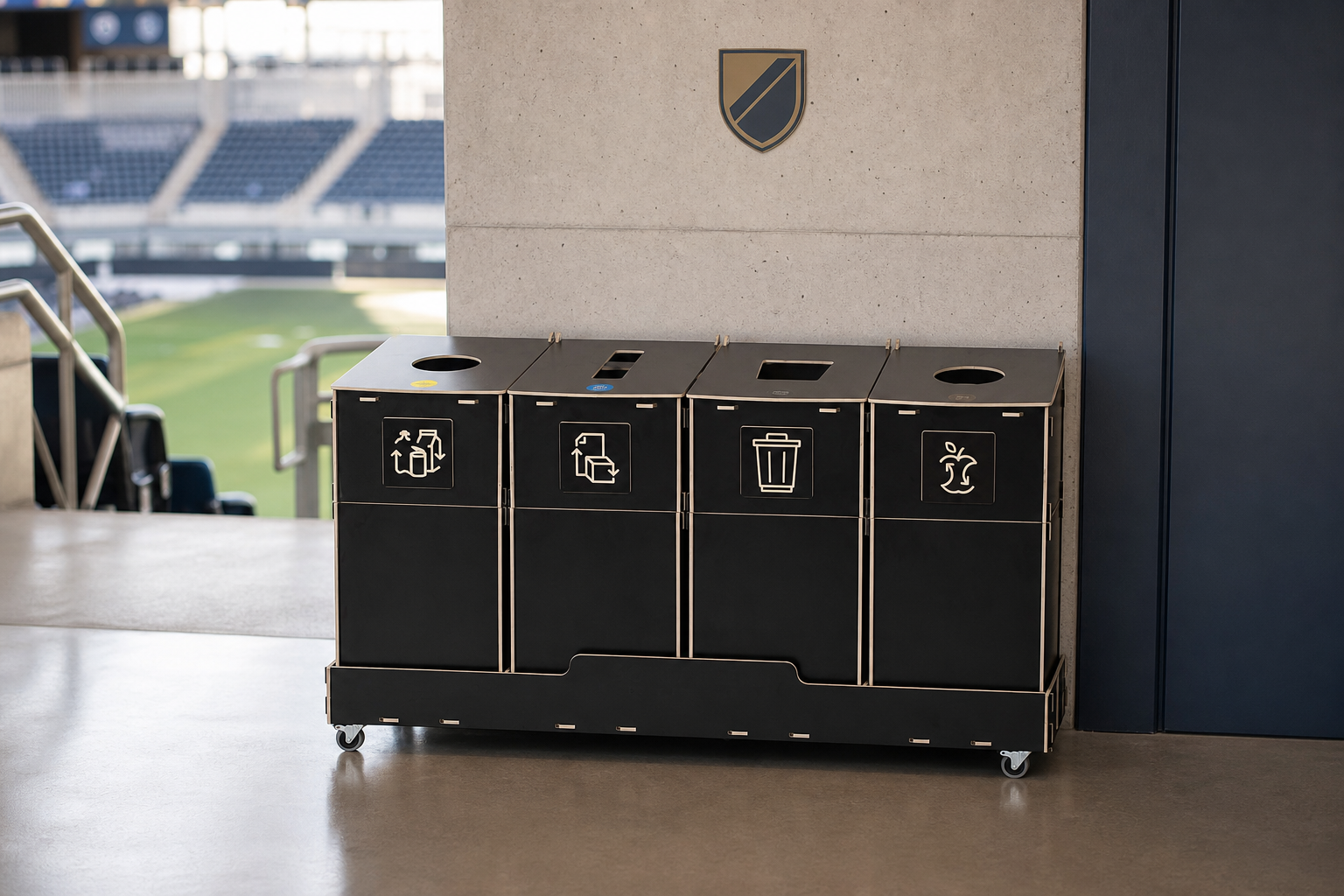
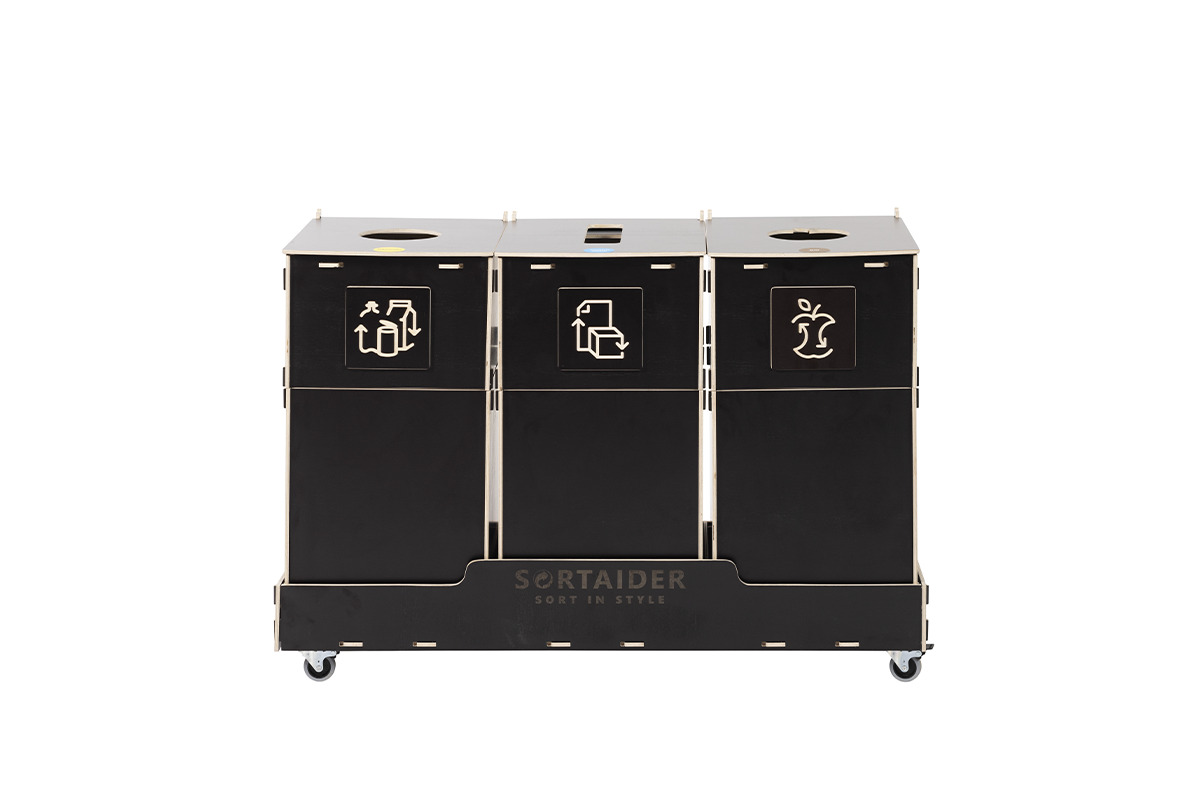
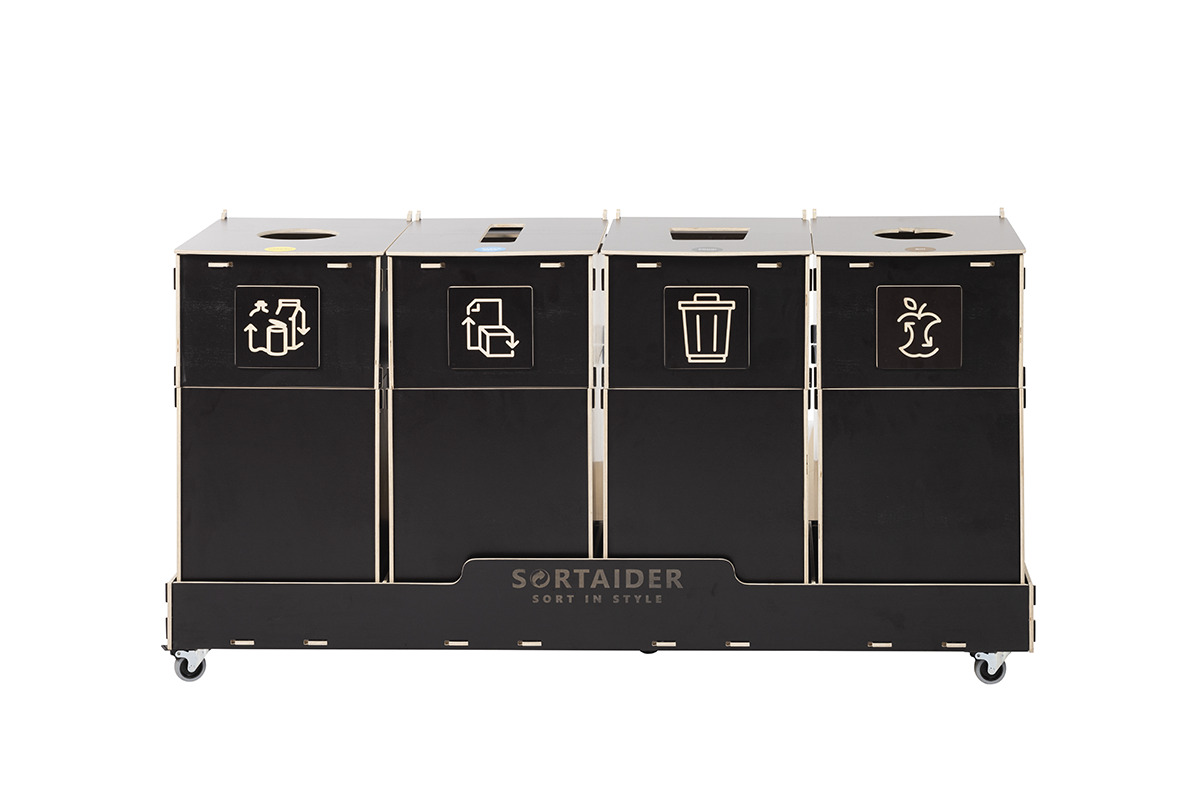
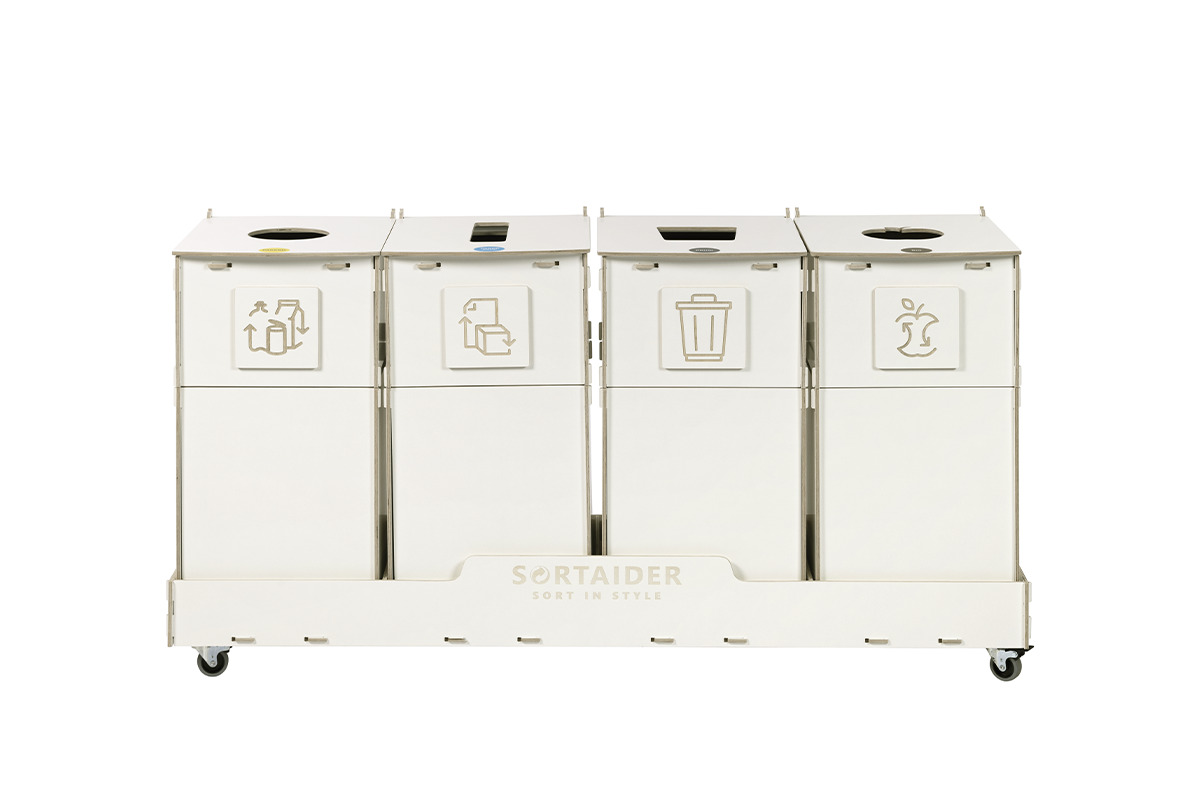
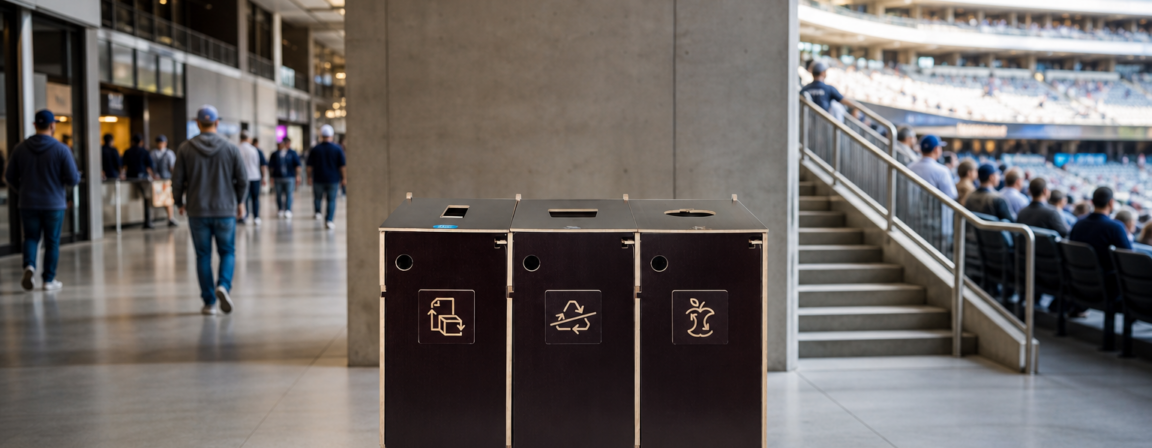
For sheltered outdoor concourses, gates, and perimeter areas, durable single-stream units offer versatile performance:
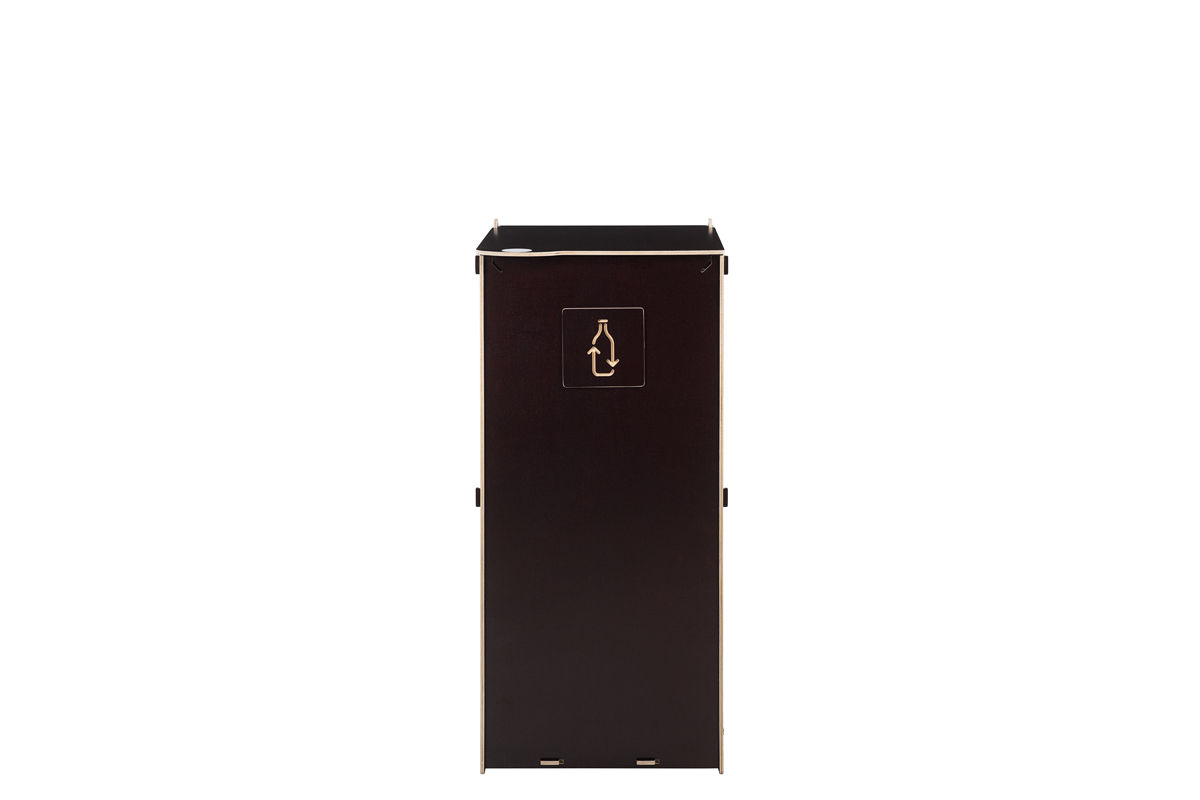
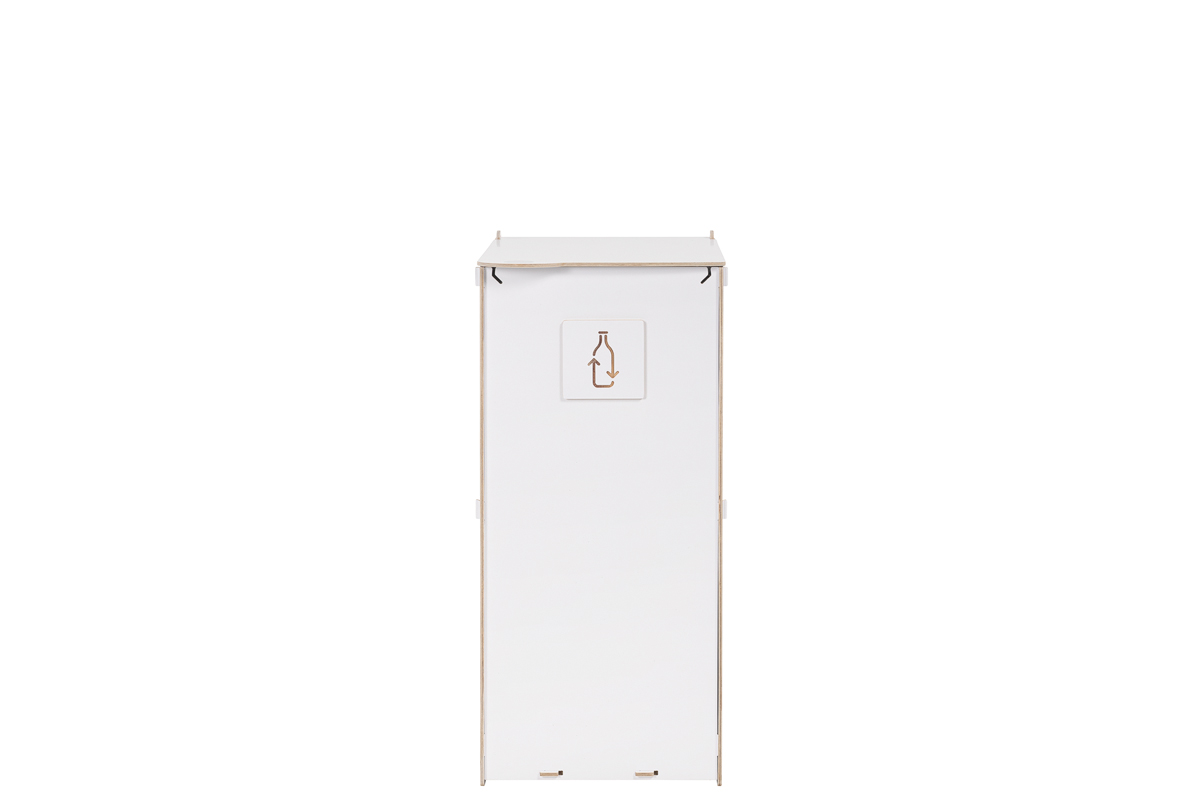
Explore our full line of weather-resistant waste bins for perimeter deployment.
Metrics, Compliance, and Zero-Waste Milestones
Sports venues across Europe operate under strict environmental obligations. The EU Waste Framework Directive requires facilities to separate paper, metal, plastic, glass, and bio-waste at the source. As outlined in our summary of recycling legislation in Europe, national mandates – such as Denmark’s minimum four-stream requirement or Sweden’s mandatory business bio-waste collection – require venues to maintain verifiable disposal records. Furthermore, upcoming directives like the Packaging and Packaging Waste Regulation (PPWR) place even greater emphasis on circularity and packaging waste reduction.
High-performing venues prove that zero-waste benchmarks are achievable at scale. Major venues like Ohio Stadium and the L.A. Memorial Coliseum routinely exceed diversion rates of 90% across full seasons. To evaluate facility performance accurately, calculate your diversion rate by weight using actual scale data from your hauler rather than volume estimates:
Diversion Rate (%) = (Weight of Diverted Material ÷ Total Material Generation Weight) × 100
In this calculation, diverted material includes recycled, composted, and reused streams, while total generation includes all diverted materials plus landfill and incineration streams. Relying on verified weight metrics provides the precise baseline necessary for statutory compliance, sponsor reporting, and continuous operational optimization.
Upgrading your venue’s waste infrastructure transforms operational complexity into a measurable sustainability milestone. Explore Sortaider’s high-capacity Ecolong series to design an efficient, compliant, and durable waste management system for your facility.