Are obsolete IT assets and discarded office appliances putting your organization at risk of regulatory fines? Navigating Waste Electrical and Electronic Equipment (WEEE) regulations requires strict compliance, secure data sanitization, and structured disposal workflows. Here is what facility managers need to know to stay fully compliant.
What Are WEEE Regulations and Who Must Comply?
WEEE regulations cover virtually all commercial and household equipment powered by electricity or batteries – ranging from IT servers and desktop computers to LED lighting, power tools, and office kitchen appliances. Across Europe, the legal framework is established by the EU WEEE Directive (2012/19/EU), which dictates that business-to-business (B2B) electronic waste cannot be mixed with general municipal waste or sent to landfills.
Compliance obligations generally fall into two distinct operational categories:
- Producers and Manufacturers: Under extended producer responsibility (EPR) frameworks, companies that manufacture, import, or sell electrical equipment are legally required to register with national registers, report sales volumes, and finance the collection, treatment, and recovery of end-of-life devices.
- Business End-Users and Facility Managers: Organizations that purchase and use electrical equipment must arrange for separate collection, secure storage, and compliant transfer to authorized waste handlers.
While national implementations vary – such as Denmark enforcing a minimum of four separate waste sorting categories at the workplace level – the core requirement across all EU Member States remains identical: commercial e-waste must be diverted from standard garbage into specialized recovery pipelines. Outside Europe, regulations differ significantly; for example, the United States relies on hazardous waste rules under the Resource Conservation and Recovery Act (RCRA) alongside state-specific laws across 25 states and the District of Columbia. For instance, Colorado prohibits landfill disposal of waste electronics, while Pennsylvania businesses with 50 or more employees must establish their own independent recycling arrangements.
To align your internal procedures with broader European environmental standards, review our guide to recycling legislation in Europe.
Core Legal Obligations for Facility Managers
Staying compliant requires facility managers to integrate formal e-waste management procedures into daily building operations. Failing to manage discarded electronics correctly can lead to heavy regulatory penalties, severe data security breaches, and operational disruptions.
Mandatory Source Separation
Commercial facilities must provide dedicated infrastructure to separate electrical waste from general garbage and traditional recyclables. Allowing e-waste to mix with standard municipal streams violates statutory collection rules and risks contaminating entire batches, where exceeding a 3–5% contamination threshold by weight can result in complete load rejection. Implementing commingled vs. separated recycling analysis demonstrates that source separation preserves raw material quality and ensures high-grade recovery.
Data Sanitization and Security
Before any computer, server, or data-bearing mobile device leaves your premises, you are legally and operationally responsible for purging sensitive financial records, employee data, and corporate IP. Following established guidelines such as NIST media sanitization standards – which specify overwriting, degaussing, or physical destruction – ensures complete data clearance. Facility managers should maintain a documented chain of custody and always demand official certificates of data destruction from certified processing partners.
Safe Management of Hazardous WEEE and Batteries
Certain components within electronic waste contain hazardous substances, including lead in legacy cathode ray tube (CRT) glass, mercury in fluorescent lighting, and cadmium in circuit boards. Furthermore, loose lithium-ion batteries present severe fire hazards in office environments and must never be placed in general garbage or standard co-mingled bins. Batteries must be removed, stored in fire-safe containers, and routed through dedicated safety protocols outlined in our breakdown of e-waste recycling at work.
Record Keeping and Chain of Custody
Documenting compliance is as vital as the physical recycling process itself. Commercial organizations must maintain records of all discarded electronics, including shipping logs, waste transfer notes, manifests, and recycling receipts. Under universal waste regulations, handlers are required to retain shipping manifests and tracking records for a minimum of three years to demonstrate full compliance during regulatory audits.
Setting Up Compliant Internal Collection Stations
Achieving high compliance rates inside commercial facilities depends largely on employee participation and accessibility. If disposing of small electronics, cables, or dead batteries requires excessive effort, items frequently end up in general waste streams.
Establishing central collection points equipped with intuitive, highly visible sorting stations encourages correct disposal habits across your workforce. Implementing clear visual icons and consistent color cues – as detailed in our recycling bin color coding guide – can reduce sorting errors by up to 40% while helping staff understand what goes in each recycling bin.
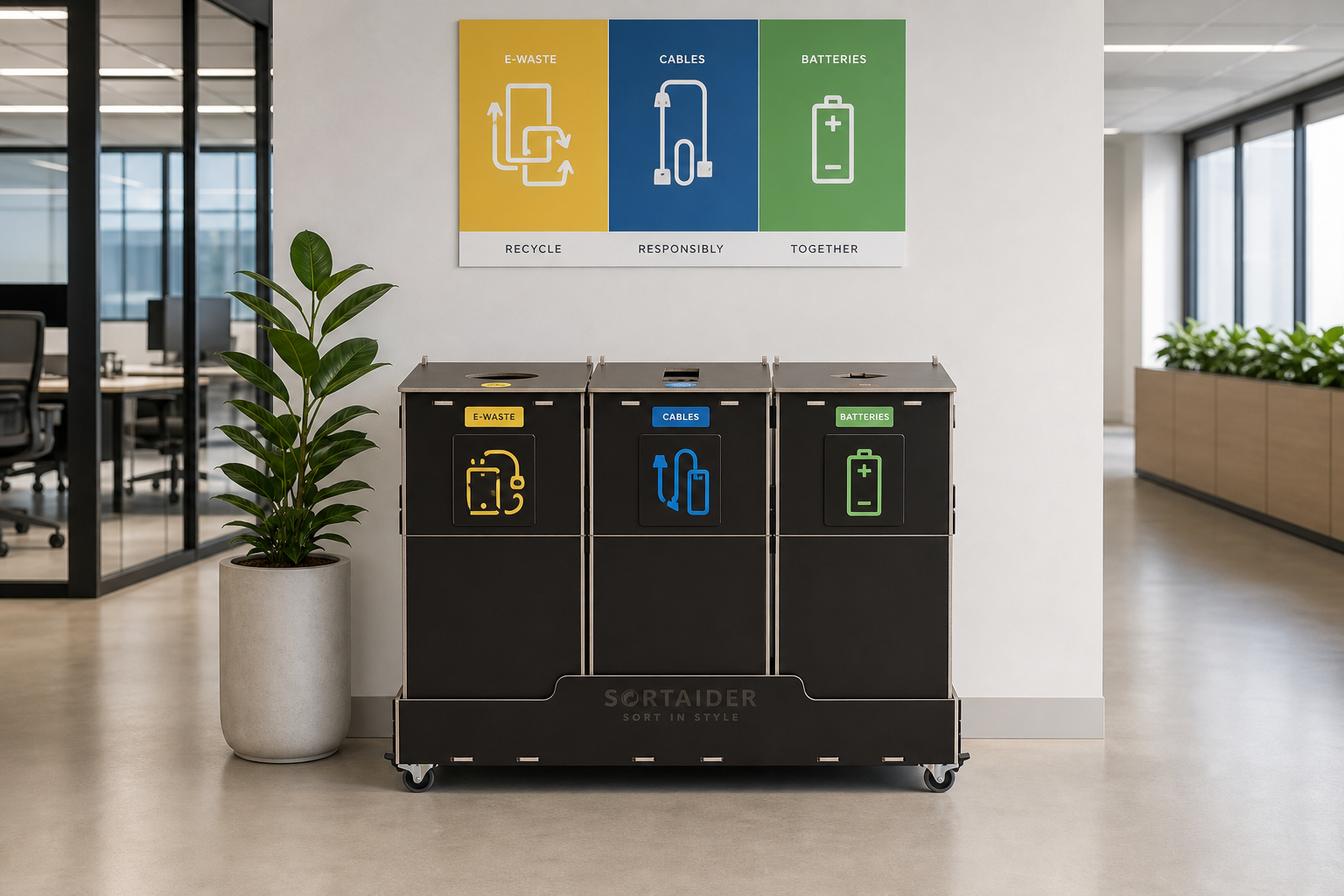
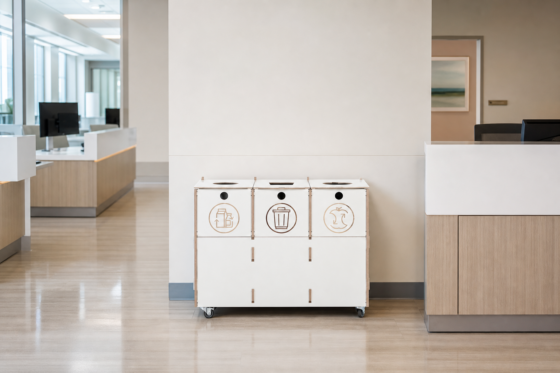
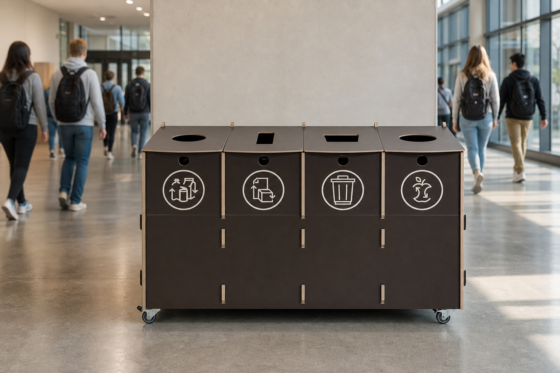
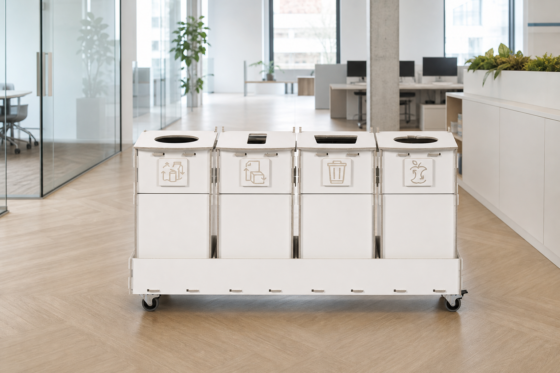
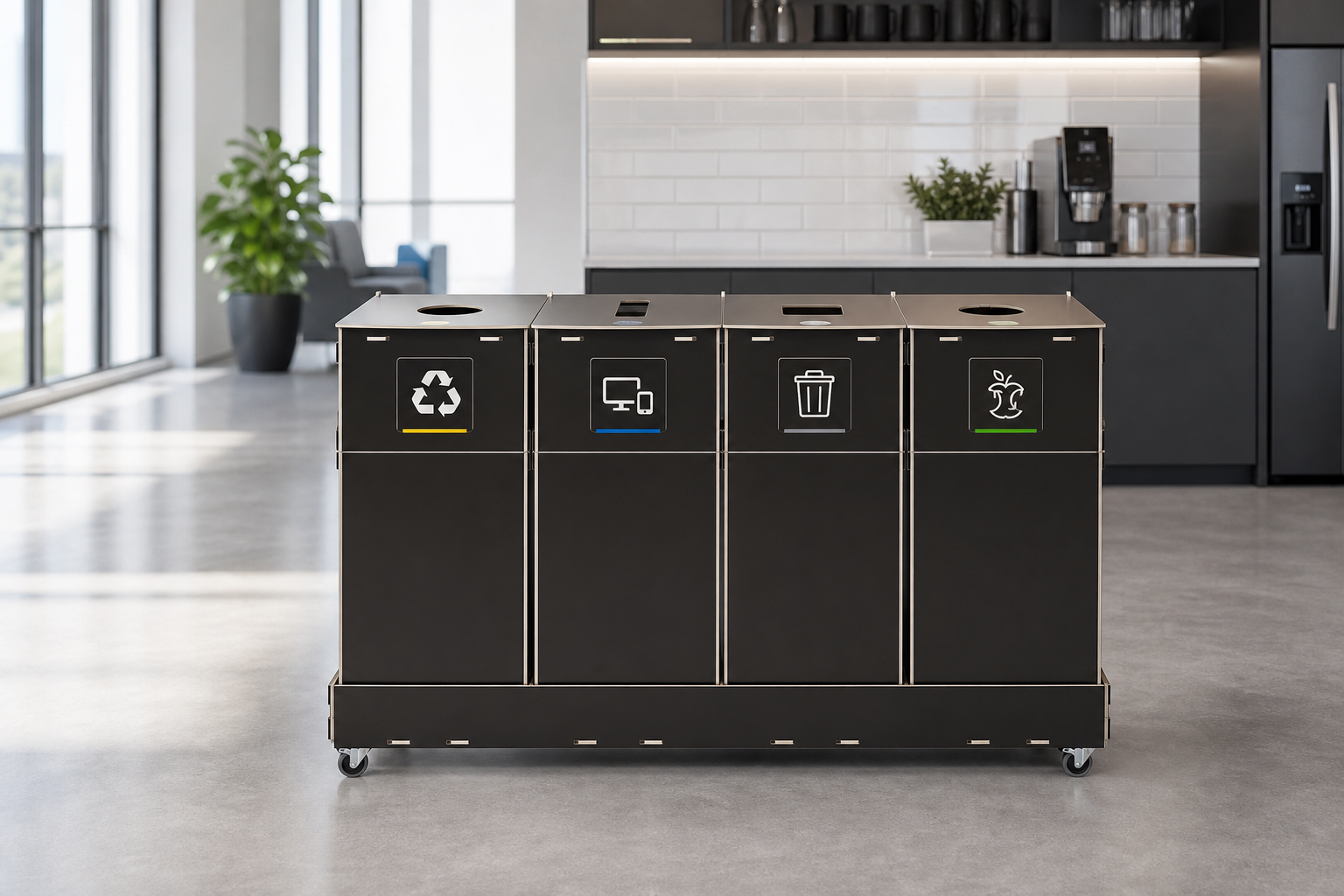
To maintain a clean and professional workspace, choose multi-compartment recycling stations crafted from durable materials. Sortaider offers modular indoor recycling bins designed to integrate e-waste collection alongside standard office recyclables. Explore our customizable recycling bins sorter range to configure dedicated slots for small electronics, cabling, and batteries.
-
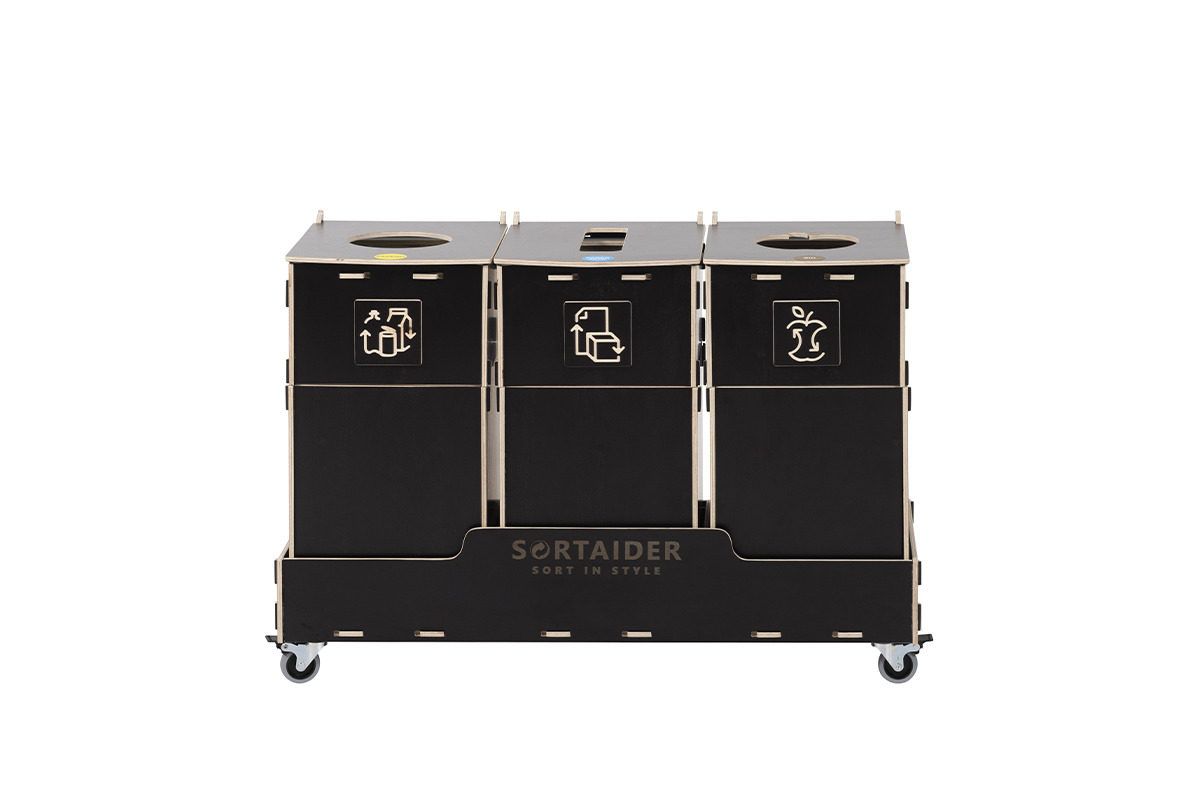
Recycling Bin Sorter 3 × 30 l brown
3 types of waste 3 x 30 l731,60 € (incl. 24% VAT)590 € (excl. VAT) -
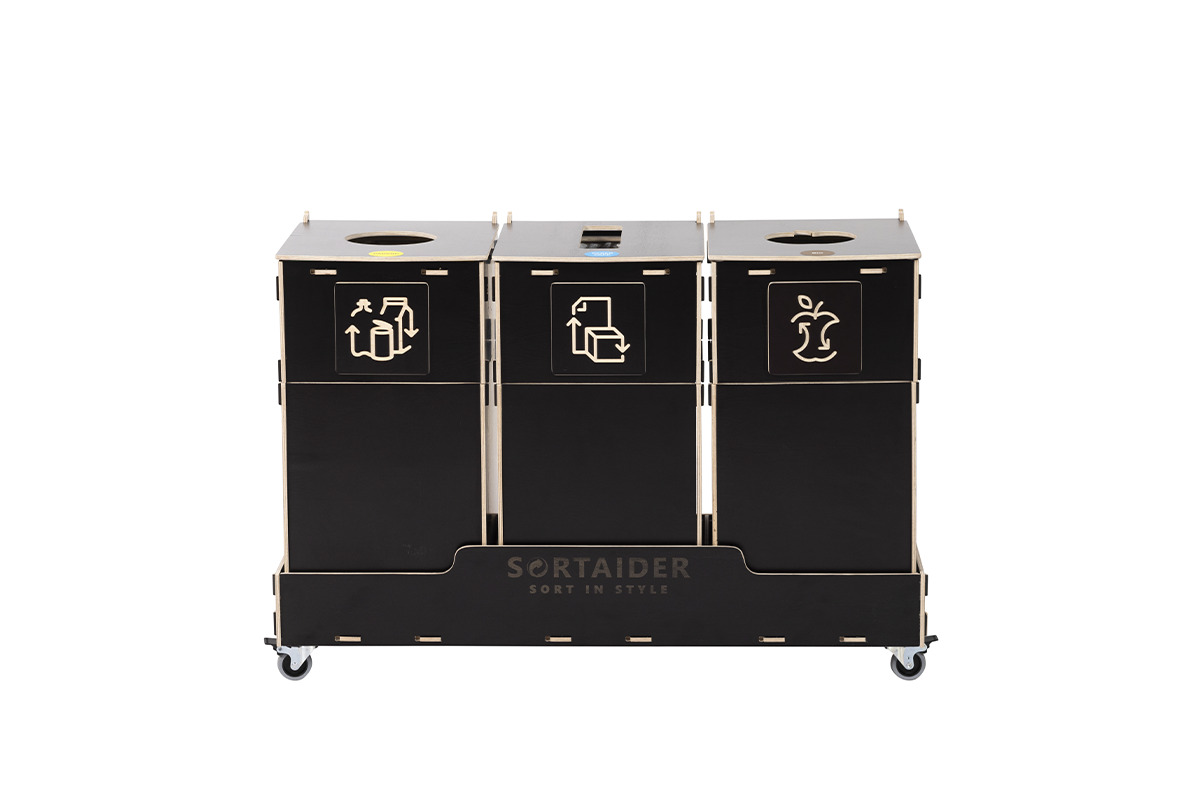
Recycling Bin Sorter 3 × 40 l brown
3 types of waste 3 x 40 l992 € (incl. 24% VAT)800 € (excl. VAT) -
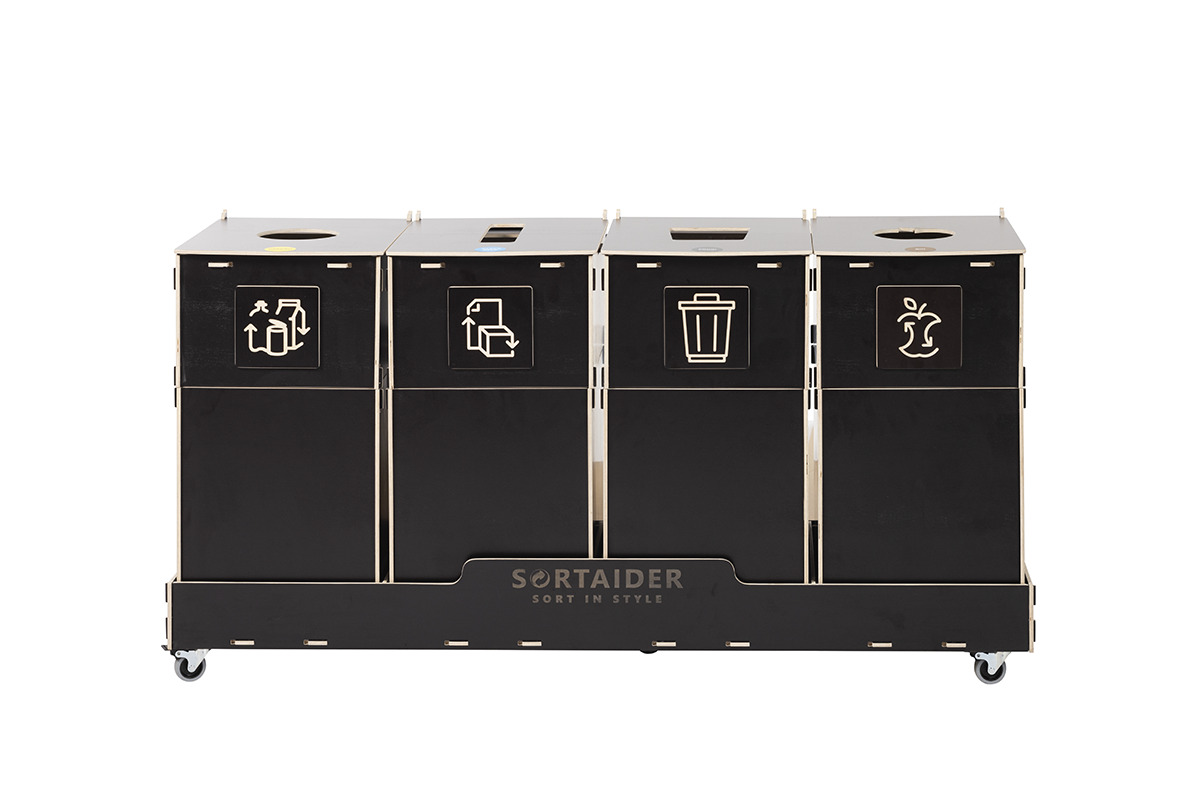
Recycling Bin Sorter 4 × 60 l brown
4 types of waste 4 x 60 l1 500,40 € (incl. 24% VAT)1 210 € (excl. VAT)
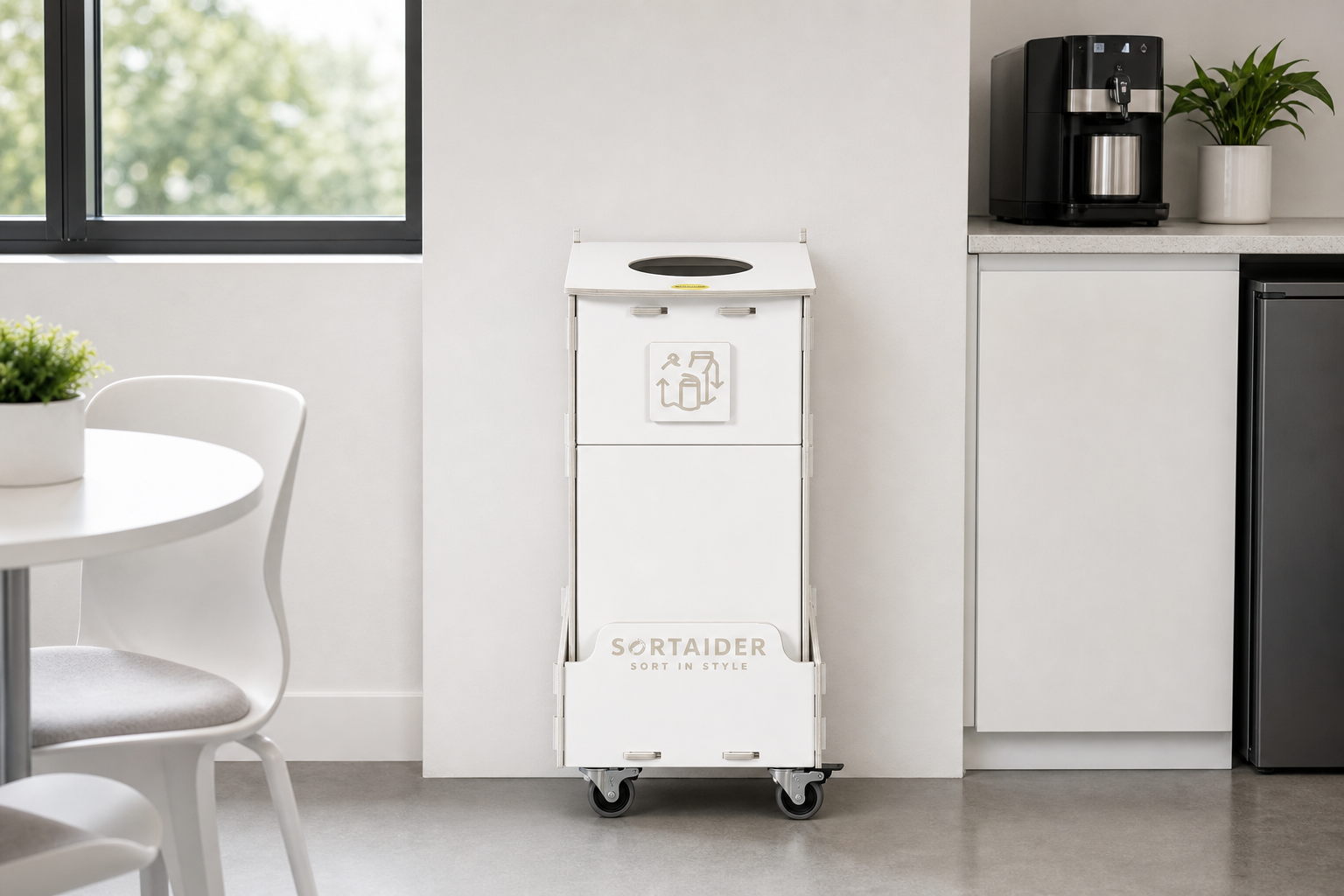
For smaller satellite offices or compact breakrooms, space-saving sorting stations provide effective collection without taking up valuable floor space.
-
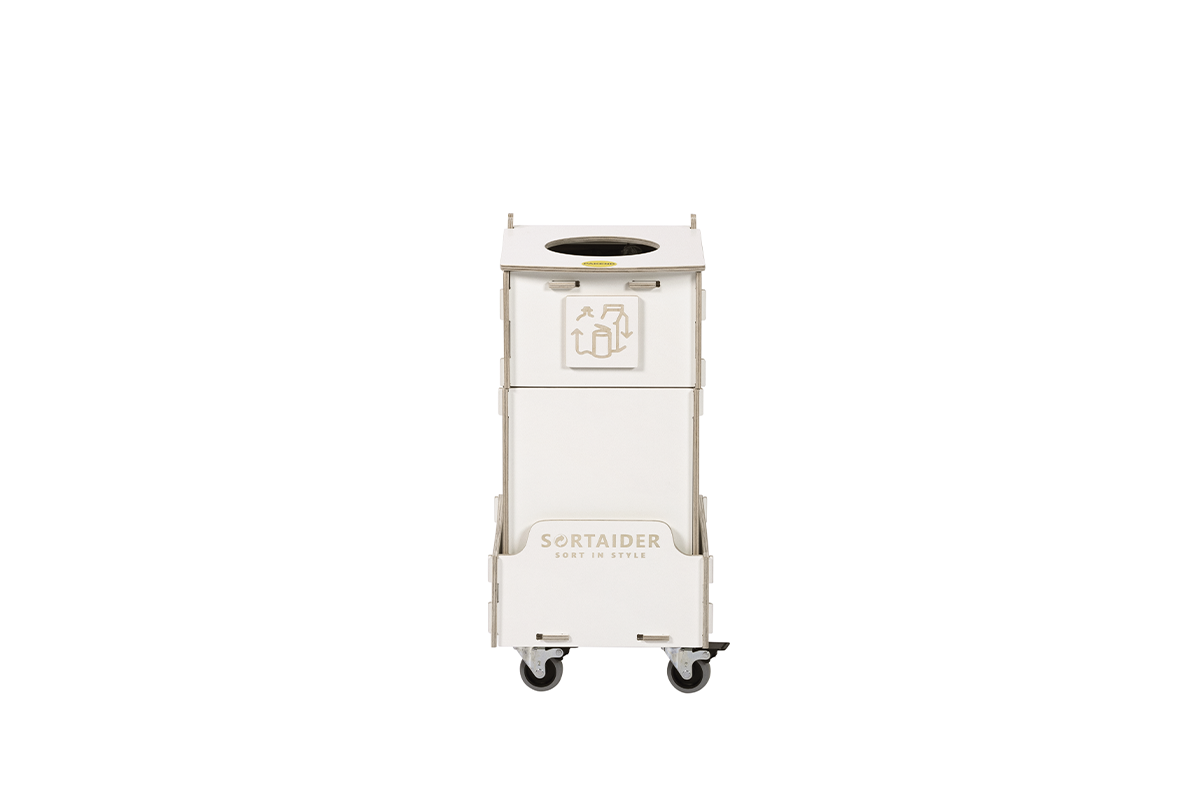
Recycling Bin Sorter 1 × 20 l white
1 type of waste 1 x 20 l223,20 € (incl. 24% VAT)180 € (excl. VAT) -
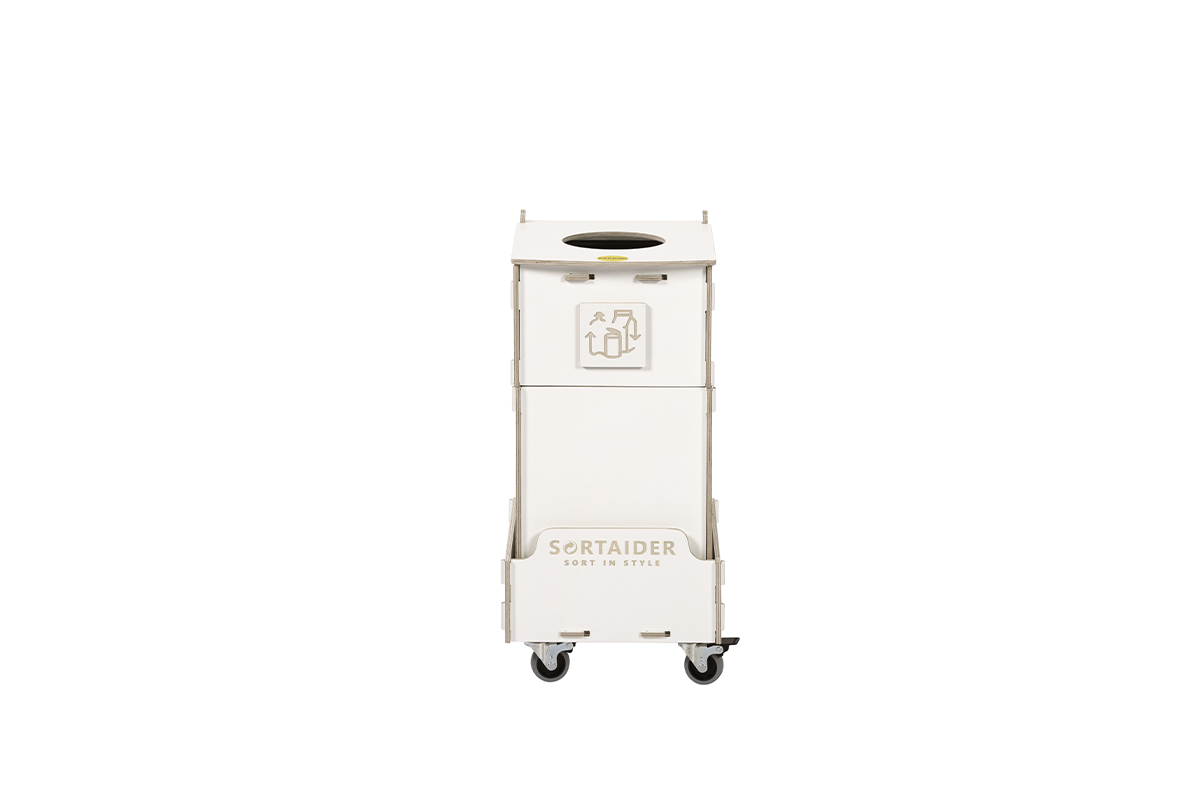
Recycling Bin Sorter 1 × 40 l white
1 type of waste 1 x 40 l409,20 € (incl. 24% VAT)330 € (excl. VAT) -
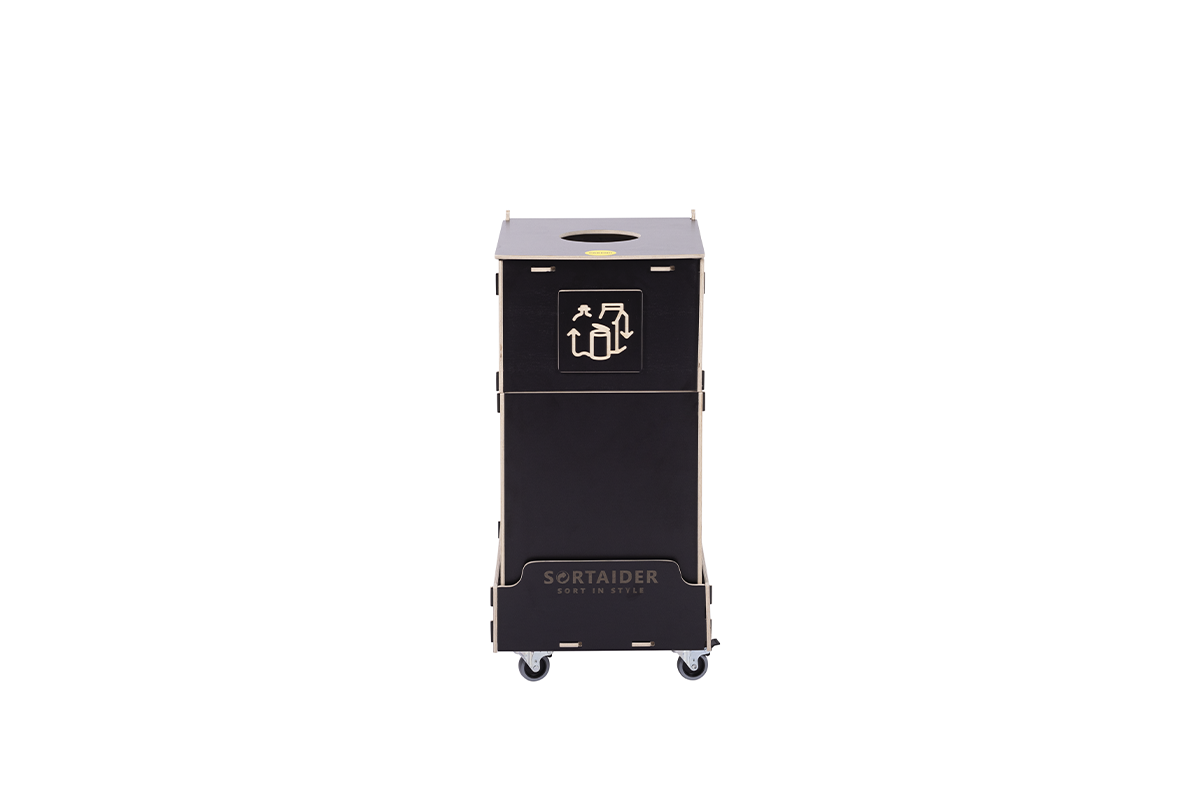
Recycling Bin Sorter 1 × 60 l brown
1 type of waste 1 x 60 l458,80 € (incl. 24% VAT)370 € (excl. VAT)
Selecting Certified Partners and Managing Off-Site Transport
Once e-waste is collected and safely stored on-site, it must be handed over to certified waste management providers. When vetting third-party logistics and recycling vendors, facility managers should verify that the provider maintains essential qualifications:
- Valid national waste carrier licenses and environmental operating permits.
- Recognized e-waste certifications (such as R2 or e-Stewards) ensuring strict downstream material tracking and hazardous waste management.
- Formal, documented protocols for physical hardware destruction and data sanitization.
If your organization handles cross-border transfers of discarded electronics, note that international regulations mandate prior written notification and consent between exporting, transit, and importing countries. Transporting devices containing lithium batteries also requires strict adherence to dangerous goods transport regulations covering specialized packaging, labeling, and shipping documentation.
Establishing a structured WEEE management framework protects your business from financial penalties and data breaches while keeping critical raw materials inside a circular economy. Audit your facility’s e-waste workflows today, establish convenient central collection stations, and equip your building with durable waste-sorting infrastructure.