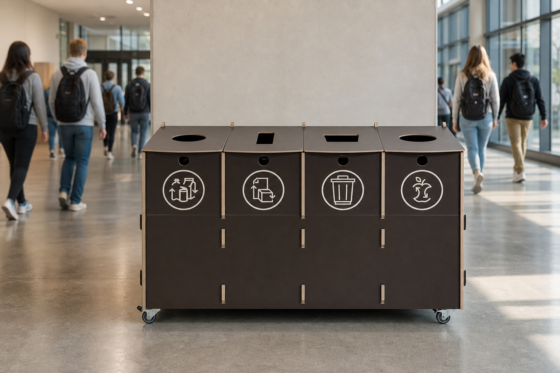
Are you financially responsible for the post-consumer lifecycle of the packaging your organization distributes? Extended Producer Responsibility (EPR) shifts end-of-life waste management costs from local taxpayers directly to producers, turning packaging footprint into a core business compliance metric.
What Is Extended Producer Responsibility (EPR)?
Extended Producer Responsibility is an environmental policy framework that holds businesses financially and physically accountable for the entire lifecycle of the products and packaging they place on the market. Under EPR, your responsibility does not end at the point of sale; it extends through post-consumer collection, sorting, recycling, and final recovery.
Assigning financial responsibility to producers creates a direct economic incentive to prevent waste at the source, optimize packaging eco-design, and accelerate a broader circular economy for businesses.
In the European Union, EPR is anchored by the EU Waste Framework Directive (Directive 2008/98/EC) and formalized for packaging under Regulation (EU) 2025/40 – the Packaging and Packaging Waste Regulation (PPWR). The PPWR entered into force on 11 February 2025 and applies broadly across Member States starting 12 August 2026.
Who Is Classified as a “Producer” Under EU Law?
Under EU law, a producer is any economic operator – whether a manufacturer, importer, distributor, or distance seller – that first makes packaged products available on a Member State’s territory.
To eliminate legal ambiguity, EU regulations ensure there is a single identified producer per packaging unit. You are generally classified as a producer if your organization:
- Manufactures and packages goods under your own brand for distribution within a Member State.
- Imports packaged goods or buys packaging from another Member State or third country to supply locally.
- Sells directly to end-users online via distance selling across national borders.
- Fills commercial or sales packaging at the point of distribution for initial commercialization.
Small businesses that fill service packaging (such as disposable takeaway containers or carrier bags) at the point of sale are generally exempt from primary producer status; in those instances, regulatory responsibility rests with the manufacturer or importer supplying that empty packaging. If your business handles commercial packaging, reviewing your obligations under national packaging waste regulations for businesses is essential.
Key Legal Obligations for Packaging Compliance
Fulfilling EPR compliance involves structured operational and reporting requirements across every European market where you distribute packaged goods.
Registration and Authorised Representatives
Producers must register with competent national packaging registers (such as LUCID in Germany) before placing packaging on the market. If you sell packaged goods into another Member State via distance selling without a physical establishment there, you must appoint a local Authorised Representative to manage your compliance obligations. Most producers fulfill their operational duties collectively by joining a Producer Responsibility Organisation (PRO).
Fee Modulation and Eco-Contributions
Producers pay financial contributions (eco-contributions) to PROs to fund waste collection, transport, treatment, and public awareness. Under Article 8a of the Waste Framework Directive, these fees are eco-modulated: packaging designed for high recyclability, durability, or reusability incurs lower fees, whereas non-recyclable or overly complex packaging faces financial penalties.
Eco-Design and Recyclability Criteria
The PPWR mandates that all packaging placed on the EU market must meet strict recyclability criteria rated in performance grades A, B, or C. Key regulatory requirements include:
- Mass and volume reduction: By 1 January 2030, packaging must be reduced to the minimum weight and volume necessary to ensure functionality, outlawing design features intended solely to increase perceived volume (such as double walls or false bottoms).
- Minimum recycled plastic content: Single-use plastic beverage bottles must contain at least 30% recycled plastic by 2030, increasing to 65% by 2040.
Harmonised Labelling Standards
To eliminate consumer confusion, packaging placed on the market must feature harmonised labels based on clear pictograms indicating material composition by 12 August 2028. To complete the loop, Member States must ensure waste collection receptacles feature matching visual indicators to facilitate separate collection.
Annual Data Reporting
Producers must submit audited annual reports detailing the exact mass, volume, and material categories (such as paper, PET, or aluminum) placed on each national market.
Sidenote: How EU EPR Compares to the US Framework While the EU enforces a harmonised regulation across all 27 Member States with standardized national producer registers and reporting rules, the United States relies on a state-by-state legislative framework. States such as California (SB 54), Oregon (SB 582), Colorado (HB 22-1355), Maine (LD 1541), Minnesota (HF 3911), Maryland (SB 901), and Washington (E2SSB 5284) have enacted individual packaging EPR laws, requiring independent state stewardship organizations rather than a unified national system.
What EPR Means for Facility Managers and Workplaces
EPR rules directly impact the physical infrastructure required inside commercial facilities. While product manufacturers fund off-site recovery networks, facility managers must capture clean, unmixed waste streams on-site to ensure compliance with broader recycling legislation across Europe.
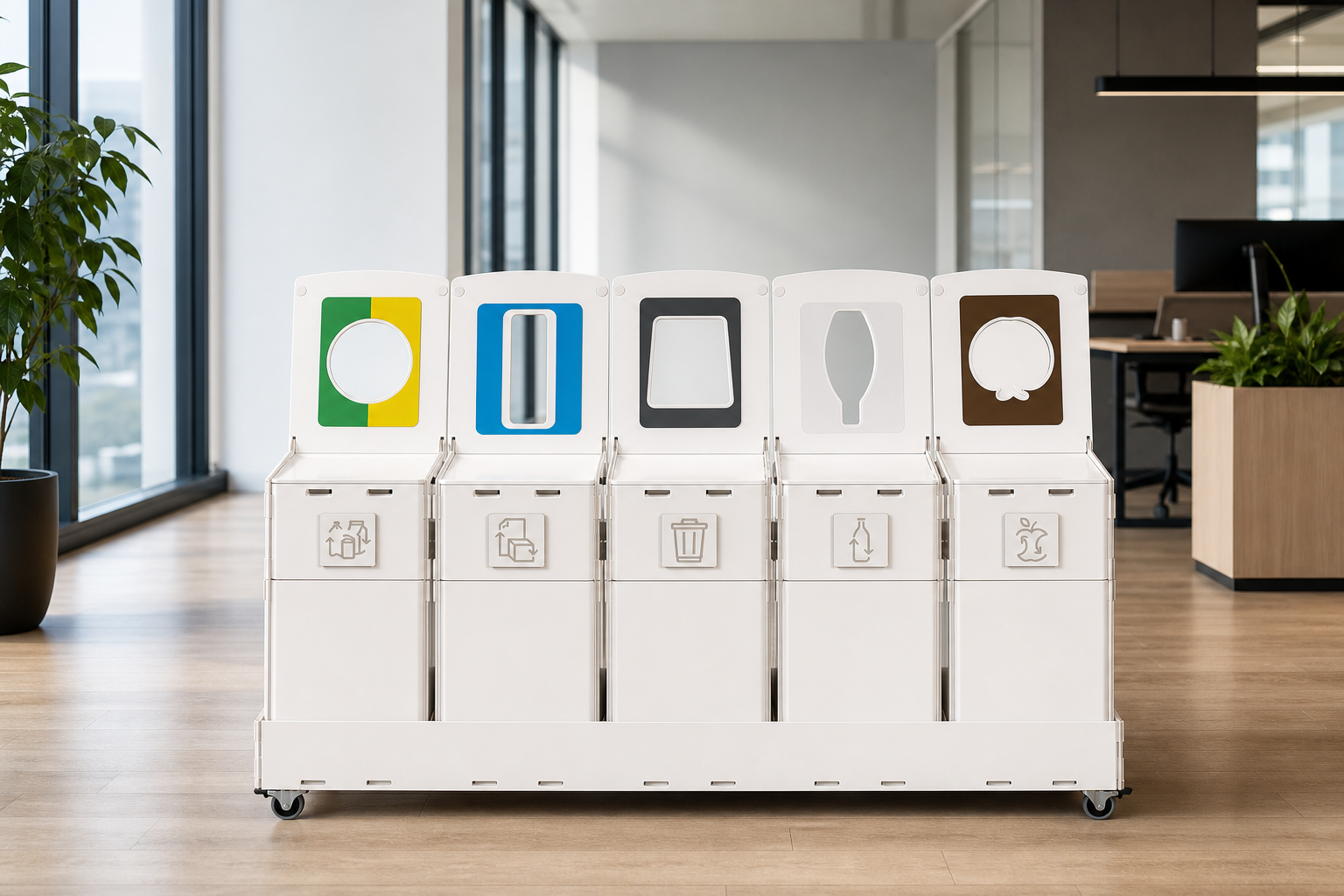
When packaging waste becomes contaminated at the office or facility level – such as food waste ruining clean paper – it cannot be processed by municipal or PRO-funded sorting facilities.
To maintain compliance with local commercial waste recycling requirements and regional workplace recycling regulations, workplace waste setups must mirror external EPR sorting requirements:
- Source Separation: Maintaining distinct streams for paper, plastics and metals, bio-waste, glass, and general waste.
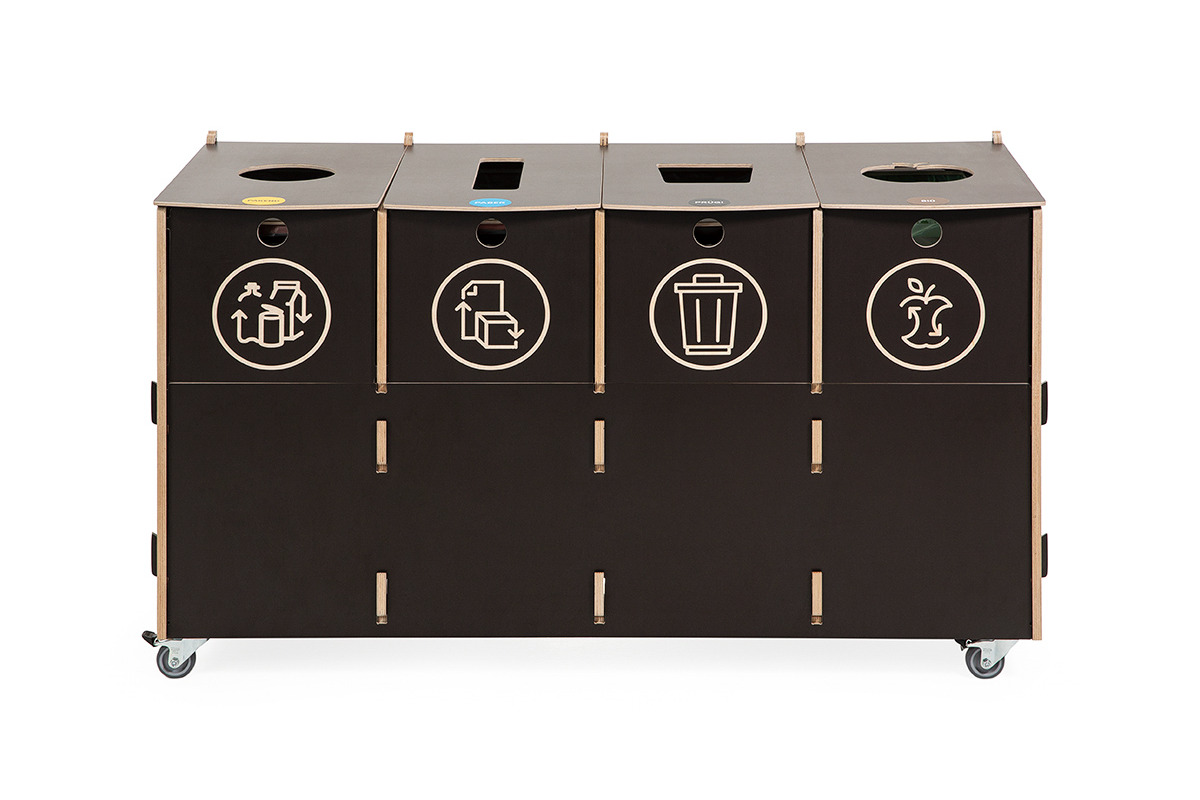
- Matching Visual Cues: Aligning indoor bin apertures, colors, and pictograms with standard material symbols to minimize employee sorting errors.
- Auditable Waste Streams: Partnering with licensed waste management contractors who provide detailed consignment notes proving correct material diversion.
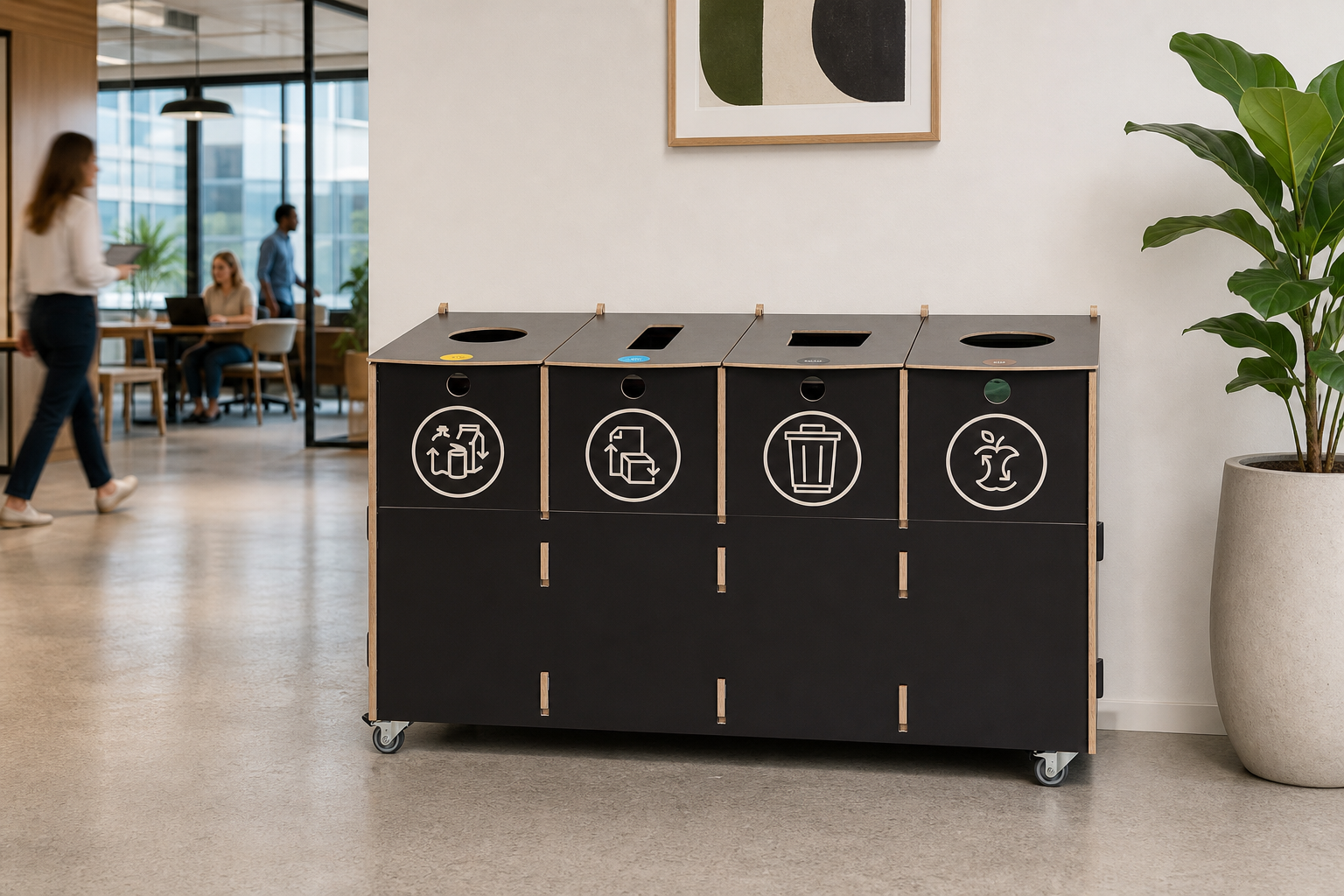
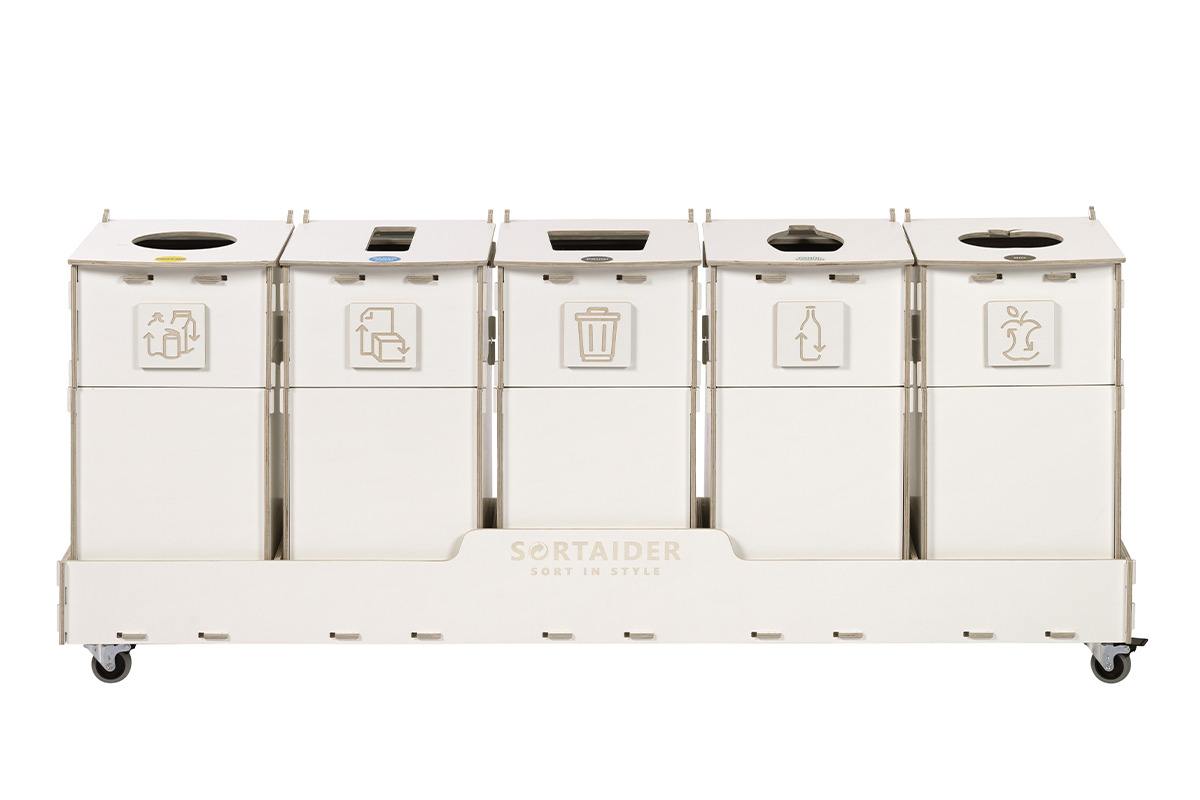
To support effective source separation, facility managers rely on centralized, modular recycling bins designed specifically for high-traffic commercial spaces.
Using multi-compartment recycling bin sorters or architectural container sorting stations helps organizations implement intuitive visual color-coding and clear aperture restrictions, maintaining waste purity at the point of disposal.
Aligning Your Facility with EPR Standards
Extended Producer Responsibility has transformed packaging from disposable waste into a regulated, accountable asset. Whether you are an e-commerce brand managing eco-modulated PRO fees or a facility manager organizing waste streams across a corporate office, success relies on clean source separation, clear visual sorting cues, and accurate reporting.
To ensure your workplace waste infrastructure meets modern compliance standards, explore high-efficiency sorting stations tailored for professional environments. Audit your current waste collection setup and upgrade to modular, clearly labeled sorting systems that keep your facility compliant and sustainable.