Are mis-sorted medical items inflating your hospital’s disposal costs while increasing safety risks? Managing healthcare waste demands balancing strict infection control, worker safety, and legal compliance. Here is how healthcare facility managers can structure compliant, cost-effective waste systems.
Healthcare Waste Streams: Primary Classifications
To manage hospital waste effectively, you must first classify each waste stream at the point of generation. Misclassifying non-clinical material as hazardous waste can inflate your treatment costs by up to ten times, while under-classifying infectious material creates severe safety risks.
Regulated Clinical and Infectious Waste
Infectious waste includes items saturated with blood or bodily fluids, microbiology laboratory cultures, anatomical waste, and pathological specimens. These materials pose direct infection risks and must be collected in leak-resistant, biohazard-marked bags or rigid containers closed before removal.
Sharps Waste
Sharps comprise needles, syringes, scalpel blades, broken glass slides, and unused sterile sharp instruments. Because percutaneous injuries carry significant pathogen exposure risks, sharps must be discarded immediately after use into rigid, puncture-resistant containers located as close to the patient care area as practical. Never attempt to bend, recap, or break needles by hand.
Hazardous Chemical and Pharmaceutical Waste
This stream includes unused or expired medications, cytotoxic chemotherapy agents, disinfectants, and heavy-metal-containing devices.
- Trace Chemotherapy Waste: Items containing minimal drug residue (such as empty IV bags, empty vials, gloves, and gowns) are typically managed via high-temperature medical waste incineration.
- Bulk Chemotherapy and Hazardous Pharmaceuticals: Leftover concentrated drugs, spill clean-up materials, or hazardous formulations must be managed under strict chemical waste rules. Pouring or flushing hazardous pharmaceuticals down sinks or drains is strictly prohibited.
Radioactive Waste
Generated during nuclear medicine treatments and diagnostic procedures, radioactive waste requires containment based on radionuclide half-life. Materials with physical half-lives of 120 days or less are typically held in secure decay-in-storage rooms until surface radiation surveys show they match background radiation levels before final disposal.
General Non-Clinical Waste and Recyclables
Over 70% of total hospital waste output consists of non-clinical items: administrative paper, cardboard, food service packaging, and clean plastic wrapping from sterile supplies. Implementing clear source separation in non-patient areas prevents clean recyclables from entering the clinical waste stream. You can explore practical strategies for setting up these systems in our guide on recycling in hospitals.
Segregation Standards and Color-Coding Protocols
Effective segregation relies on clear visual cues so healthcare staff can make split-second decisions correctly during intensive procedures. Standard practices combine distinct colors, universal biohazard symbols, and explicit text:
- Infectious / Regulated Waste: Biohazard bags or red containers that are leak-proof and closed before removal.
- Sharps: Rigid yellow or red sharps boxes that are puncture-resistant, kept upright, and locked when full.
- Hazardous Pharmaceuticals: Dedicated rigid containers that are closed, labeled, and barred from drain disposal.
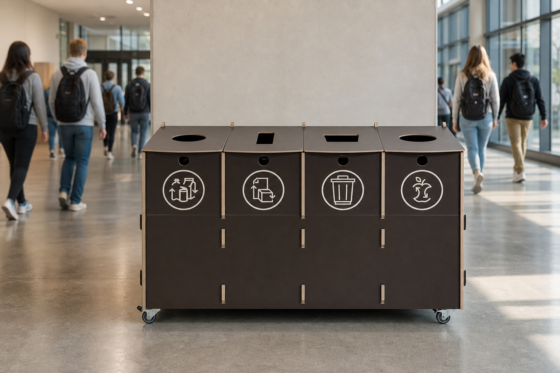
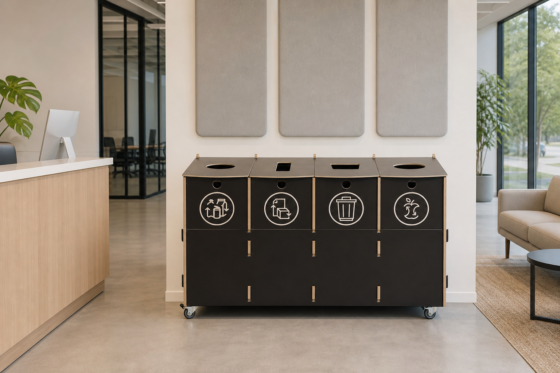
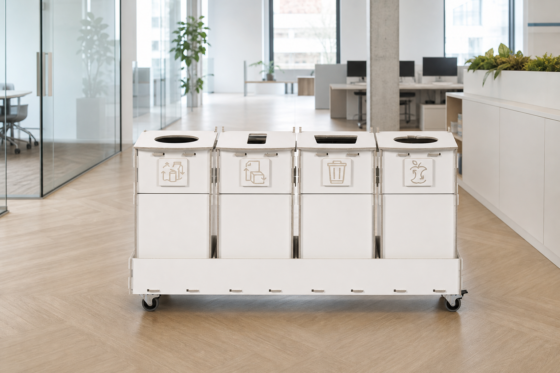
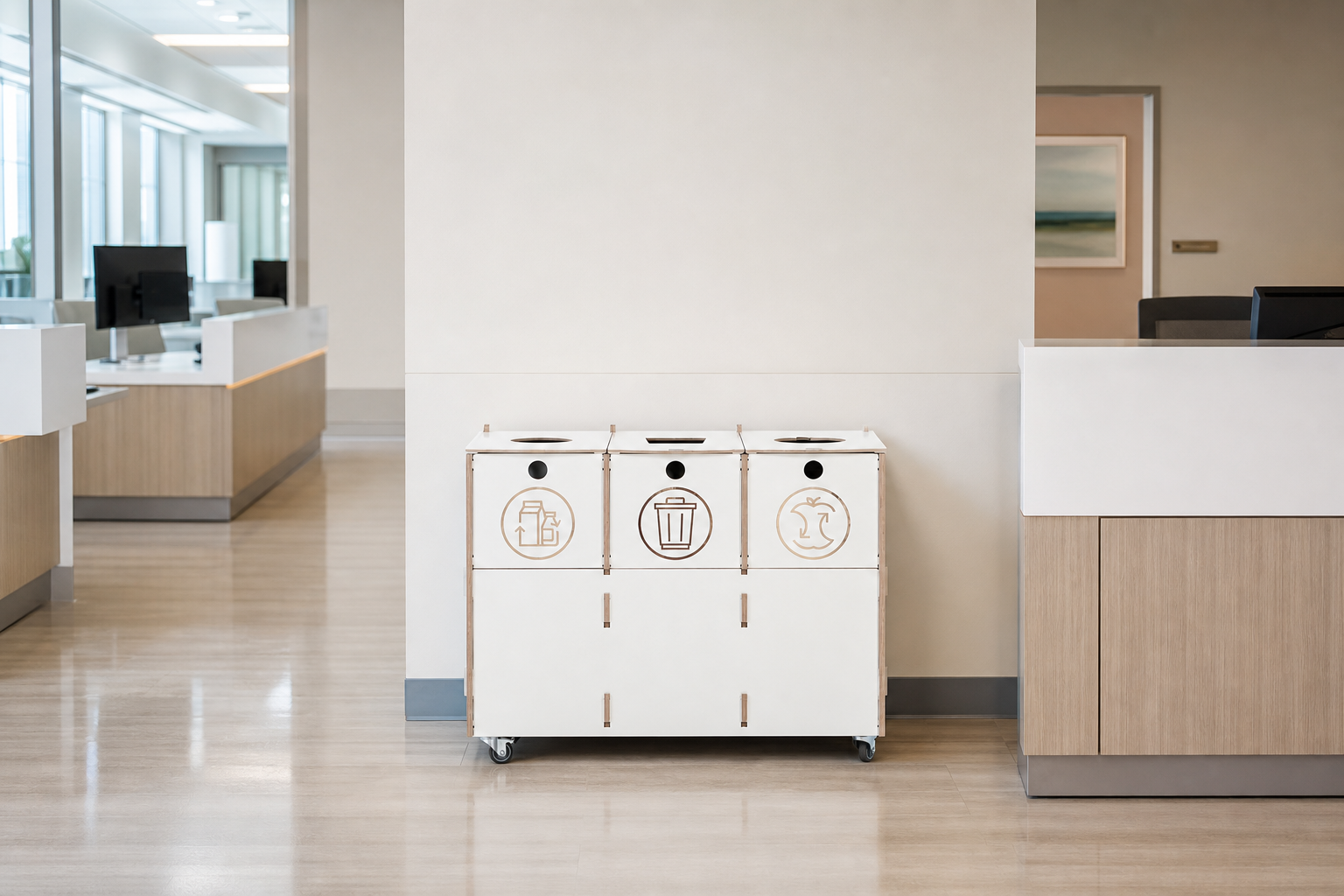
- General Recyclables: Multi-compartment sorting stations with clear visual icons located in high-traffic staff zones.
Across Europe, facility managers must also navigate broad regulatory requirements such as the EU Waste Framework Directive, which mandates separate collection for paper, plastics, glass, and metals. Individual member states often enforce additional local sorting mandates. For example, workplace waste regulations in Denmark require facilities to maintain at least four dedicated recycling streams, while Nordic and Baltic countries actively push for stricter point-of-source separation in healthcare administrative zones. To understand how color protocols apply in your region, consult our recycling bin color coding guide and our overview of recycling legislation in Europe.
Safe Handling, On-Site Storage, and Hygiene
Proper containment is only the first step; internal transport and storage procedures determine whether your facility maintains environmental safety.
Containment and Handling Procedures
- Bag Inspection: Waste bags should be filled to no more than three-quarters capacity and securely tied. If the exterior of a biohazard bag becomes contaminated or punctured, immediately double-bag the material.
- Sharps Container Maintenance: Sharps boxes must be kept upright and replaced routinely once they reach the fill line. Never allow sharps containers to overfill.
- Internal Transport: Use dedicated, leak-proof carts with smooth, easily cleanable surfaces to move waste from ward utility rooms to central storage.
On-Site Storage Requirements
Central waste holding areas must be strictly controlled to prevent foul odors, pest attraction, and unauthorized access:
- Ventilation and Climate: Ensure continuous mechanical exhaust ventilation and temperature control to prevent odor buildup.
- Access Control: Keep holding areas locked and restricted strictly to trained operational personnel.
- Pest Control and Cleanability: Maintain non-porous floors and walls that are easy to wash down, along with sealed perimeters to exclude pests.
Routine Bin Sanitation
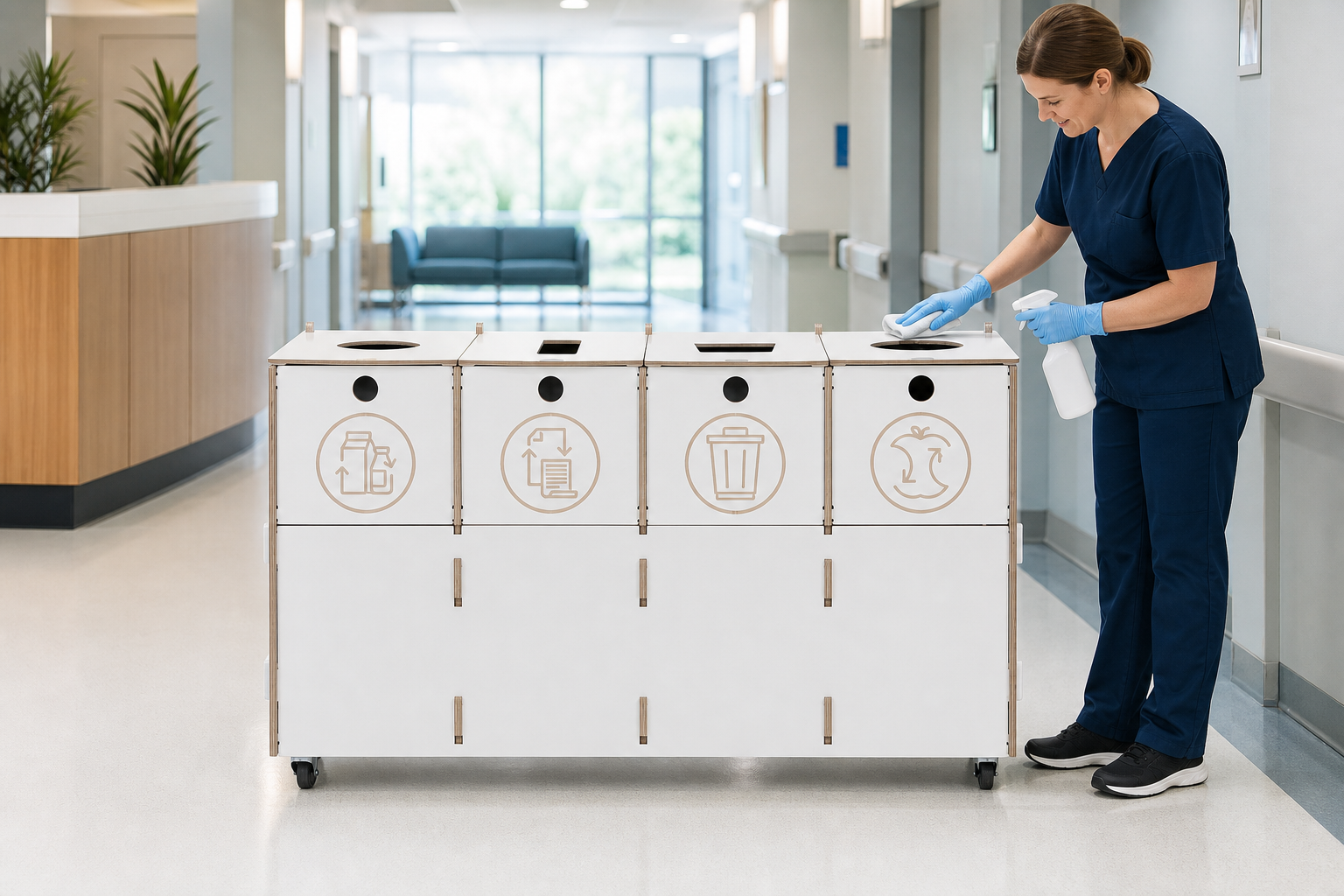
High-touch waste bins and recycling stations in communal staff rooms or corridors require regular maintenance. Bacteria can accumulate quickly around lid openings and handles. Implementing systematic cleaning procedures using professional disinfectants and microfibre cloths maintains facility hygiene without degrading bin finishes. Learn more in our detailed technical guide on cleaning and sanitising recycling bins.
Source Separation vs. Commingled Streams
Choosing between single-stream (commingled) recycling and multi-stream source separation impacts both operational cleanliness and waste management costs.
In commingled systems, occupants discard all recyclables into one container. While this can slightly increase initial participation, liquid residues or misplaced food packaging frequently contaminate paper and cardboard. Most Materials Recovery Facilities (MRFs) across Europe reject loads when contamination by weight exceeds 3–5%.
In a healthcare environment, source separation using dedicated compartments preserves material quality and avoids costly rejected shipments. Saturated or infectious clinical waste must go directly to high-temperature incineration, whereas clean paper, plastic, and cardboard collected via multi-stream stations go straight to high-value recycling facilities. To weigh the operational tradeoffs for your facility layout, review our analysis of commingled vs separated recycling and our breakdown of what goes in each recycling bin.
Compliance, Exposure Control, and Staff Training
Maintaining a legally compliant hospital waste system requires robust documentation and continuous training programs.
Written Exposure Control Plans
Facilities must maintain an updated, accessible Exposure Control Plan that identifies high-risk tasks, establishes engineering controls, and outlines personal protective equipment (PPE) requirements. This plan must be reviewed and updated at least annually and whenever procedures or employee roles change.
Annual Training and Recordkeeping
Operational personnel and clinical staff must undergo initial and annual refresher training covering key compliance protocols:
- Identification of regulated waste streams and proper segregation rules.
- Correct selection, donning, doffing, and disposal of PPE.
- Immediate response actions during exposure incidents or container spills.
Maintain training records – including dates, summaries, trainer qualifications, and attendee lists – for at least three years. Additionally, retain sharps injury logs recording the device type, department, and incident circumstances for at least five years to identify systemic risk areas.
Optimizing Waste Station Placement Across Facilities
A well-designed physical waste setup makes proper segregation effortless for medical staff, administrative workers, and visitors.
- Clinical and Patient Care Areas: Position puncture-resistant sharps boxes directly beside treatment carts. Keep biohazard foot-pedal bins adjacent to dirty utility areas to permit hands-free disposal.
- Staff Break Rooms and Cafeterias: Install high-visibility, multi-compartment recycling stations to capture clean packaging, beverage containers, and organic waste.
- Administrative Offices and Public Corridors: Deploy professional multi-stream recycling stations that integrate into your architectural interior while providing clear visual sorting labels.
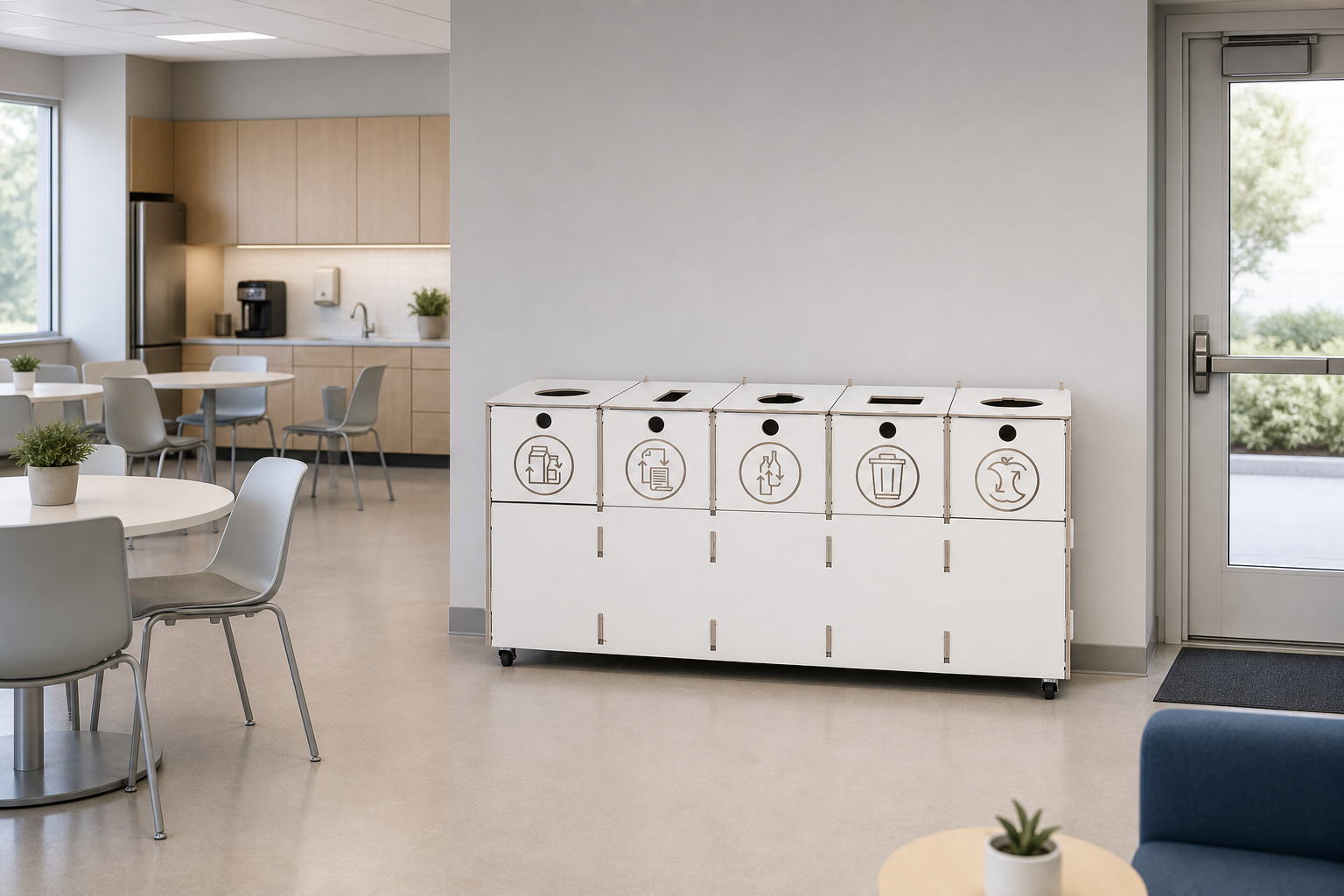
To establish clear, space-efficient sorting in non-clinical zones, explore our specialized ranges:
- Explore modular multi-compartment options in our recycling bin sorters category.
- View durable wooden design stations in our recycling bin containers category.
- Browse single-stream solutions in our waste bins category.
-
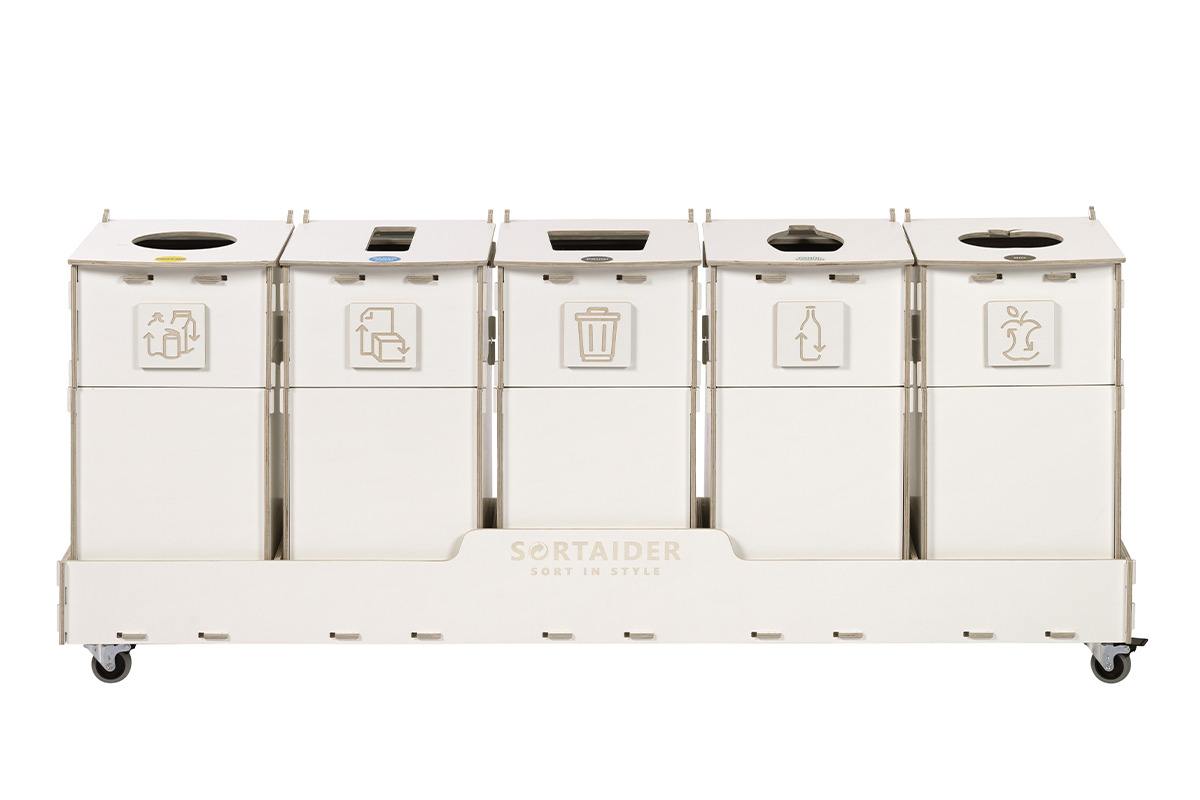
Recycling Bin Sorter 5 × 30 l white
5 types of waste 5 x 30 l1 165,60 € (incl. 24% VAT)940 € (excl. VAT) -
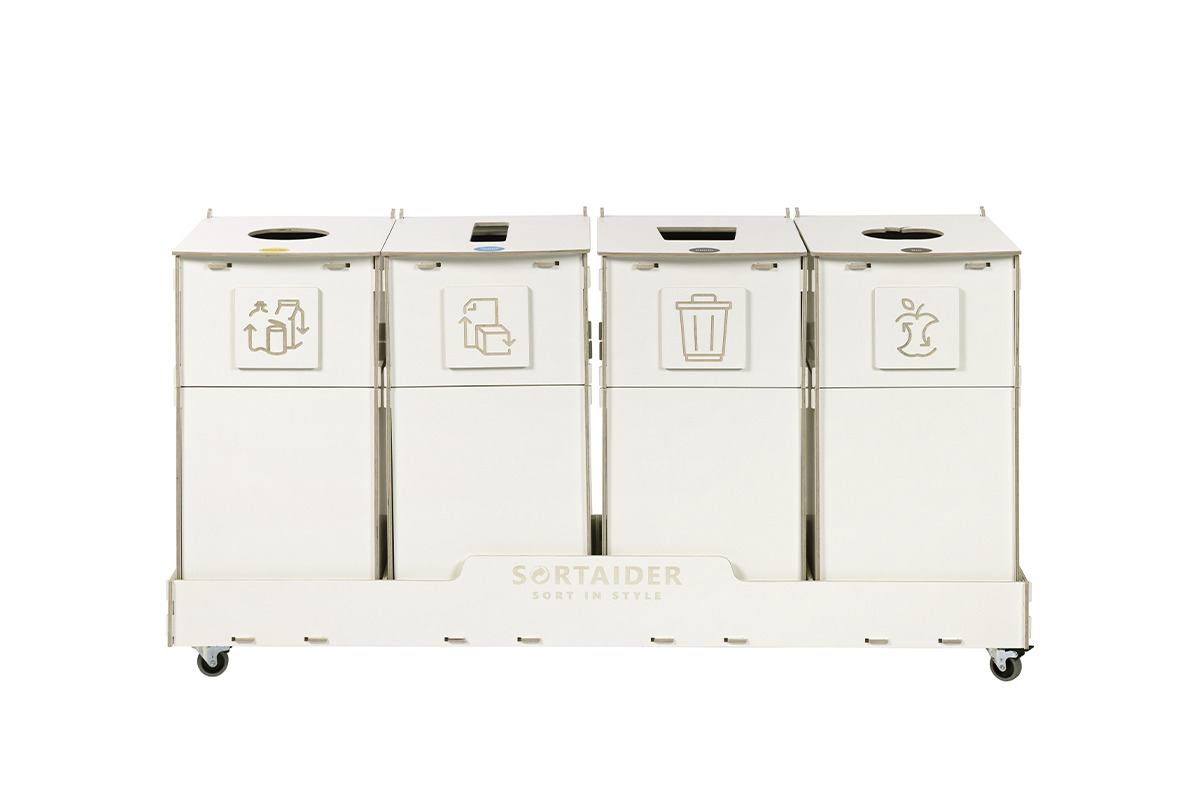
Recycling Bin Sorter 4 × 60 l white
4 types of waste 4 x 60 l1 500,40 € (incl. 24% VAT)1 210 € (excl. VAT) -
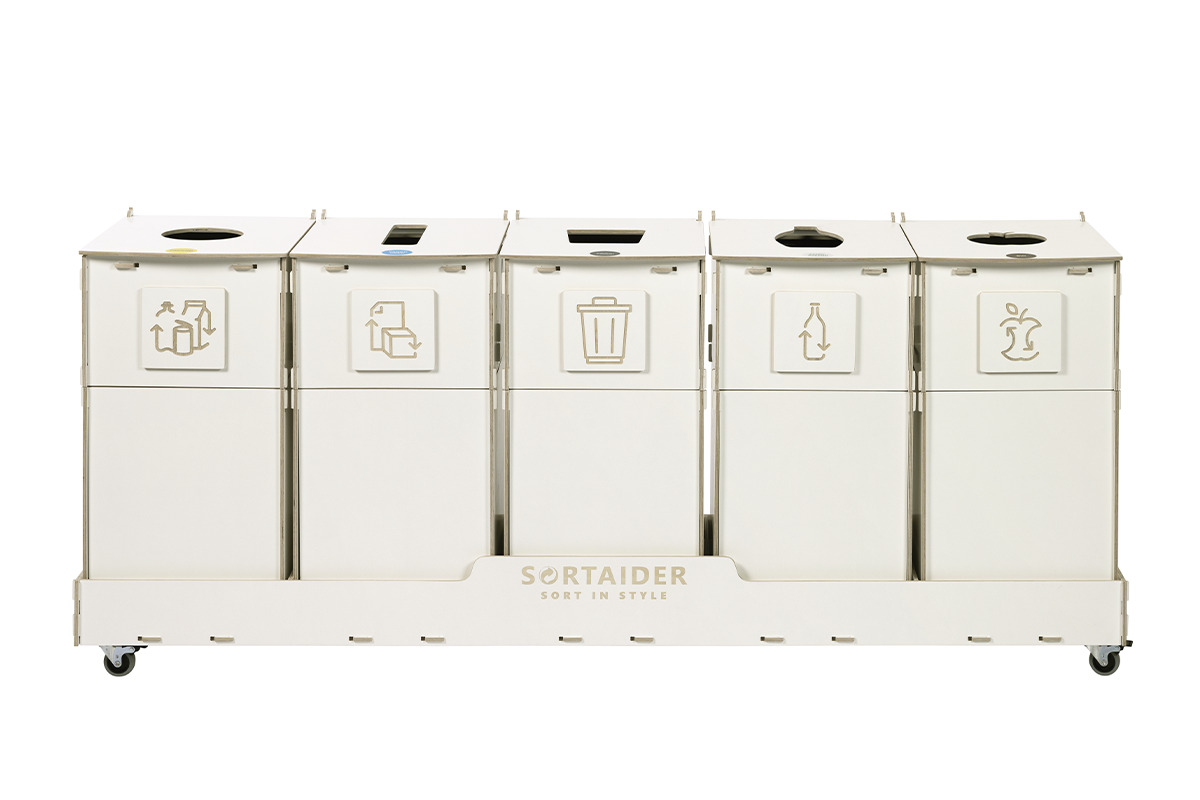
Recycling Bin Sorter 5 × 90 l white
5 types of waste 5 x 90 l2 219,60 € (incl. 24% VAT)1 790 € (excl. VAT) -
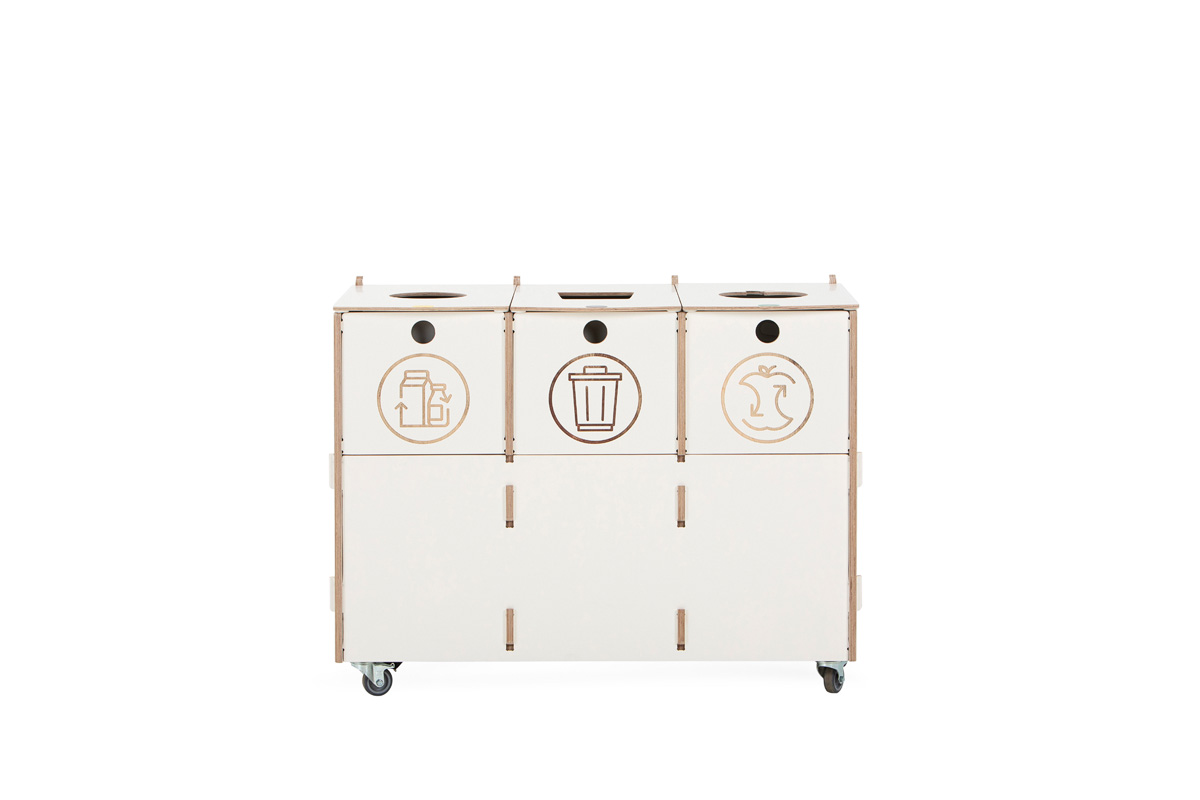
Recycling Bin Container 3 × 40 l white
3 types of waste 3 x 40 l1 215,20 € (incl. 24% VAT)980 € (excl. VAT) -

Recycling Bin Container 4 × 40 l white
4 types of waste 4 x 40 l1 612 € (incl. 24% VAT)1 300 € (excl. VAT) -
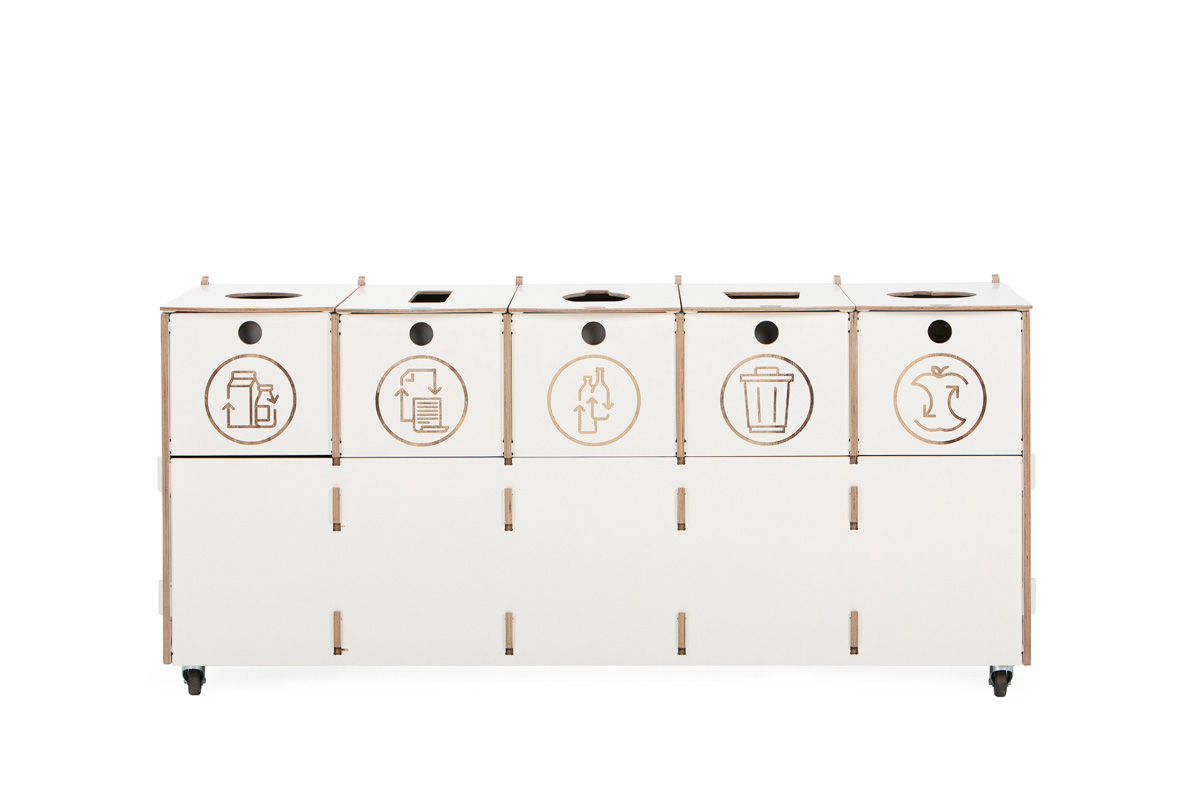
Recycling Bin Container 5 × 40 l white
5 types of waste 5 x 40 l1 798 € (incl. 24% VAT)1 450 € (excl. VAT)
Streamlining Your Facility’s Waste Operations
Compliant healthcare waste management protects staff, controls operational spending, and ensures compliance with environmental laws. By implementing clear point-of-use segregation, maintaining leak-proof containment, and conducting routine staff training, you ensure your facility meets both hygiene and sustainability standards.
Audit your hospital’s waste streams today to identify misclassifications, upgrade non-clinical sorting stations, and reduce unnecessary treatment costs.