The price tag is only the first line of a recycling bin’s cost. Liners, cleaning labour, repairs and replacement repeat for years. Here is how to count each one before you sign a purchase order.
The six cost lines at a glance
| Cost line | What drives it | Ask the supplier for |
|---|---|---|
| Acquisition | Unit price, number of units, delivery, assembly, labelling | Price per compartment, delivery time, what is included |
| Liners | Bag size and thickness, emptying frequency, bagless options | Exact bag size per compartment |
| Cleaning | Surface finish, wiping frequency, hygiene rules of your site | Approved cleaning method |
| Maintenance | Wear parts, inspections, wheels, lids, labels | Which parts can be replaced alone |
| Replacement | Material, environment, daily load | Warranty terms, the difference between warranty and service life |
| End of life | Material mix, disposal route | Material list, disposal advice |
How to calculate it
Public buyers in the EU already have a template. Article 68 of Directive 2014/24/EU on public procurement says life-cycle costing should, where relevant, cover acquisition, use, maintenance and end-of-life costs such as collection and recycling. It also requires the tender documents to state which data bidders must provide and how the costs will be calculated. Private buyers can copy the same discipline.
The working formula is simple:
Annual cost = (purchase + delivery + set-up + end-of-life) ÷ years in use + yearly liners + yearly cleaning labour + yearly maintenance
Use net prices throughout, or gross prices throughout. Never mix them.
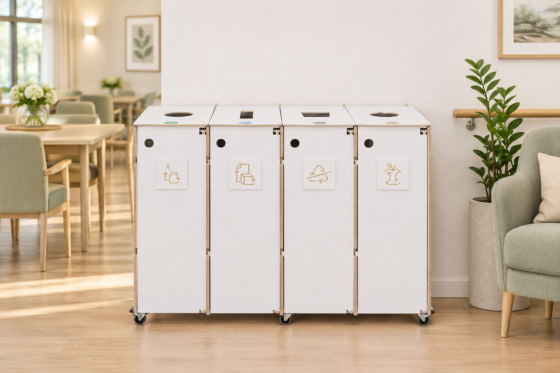
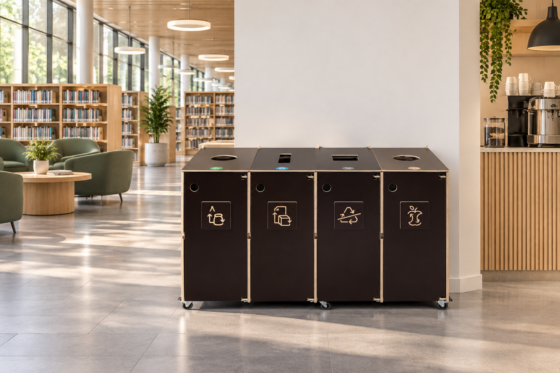
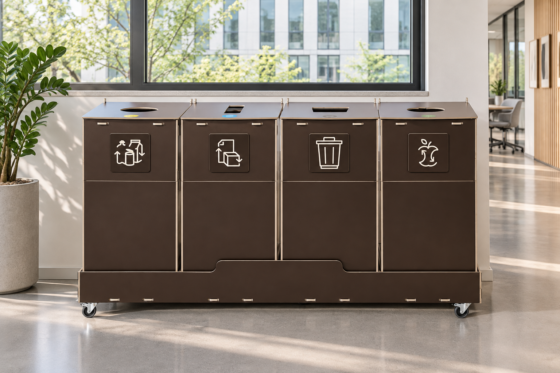
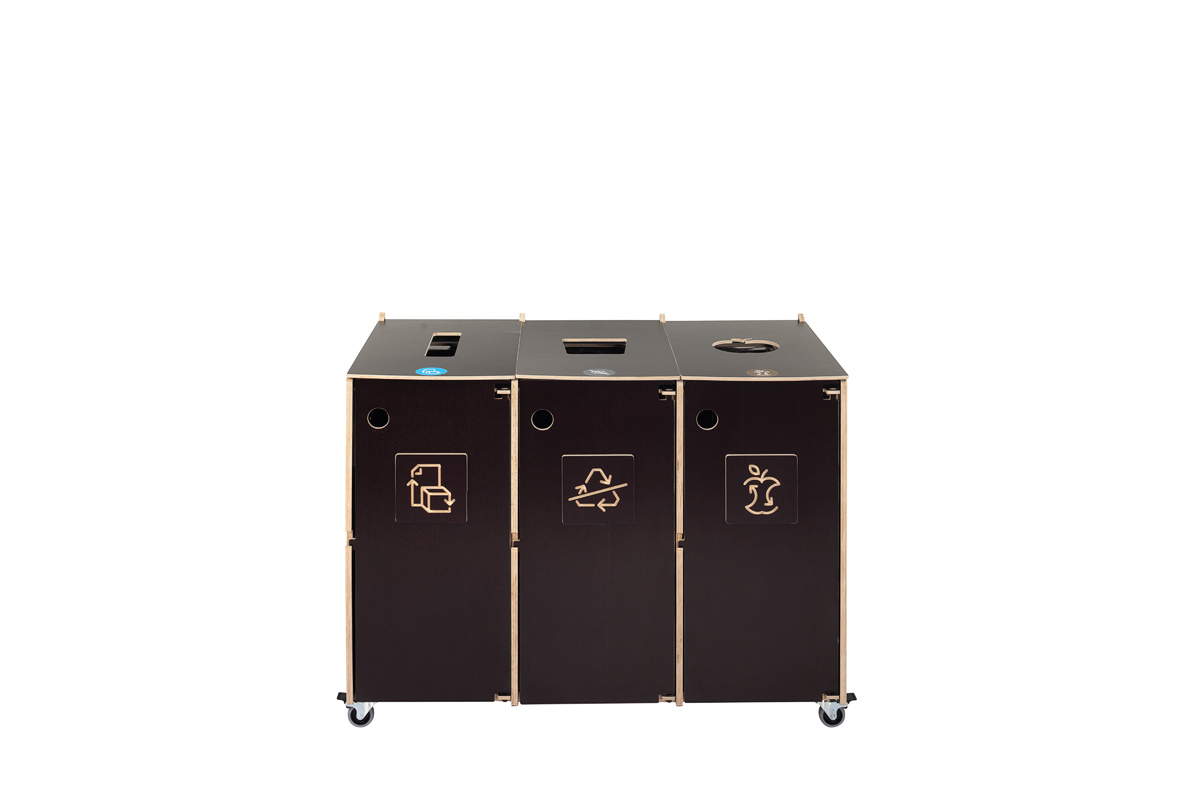
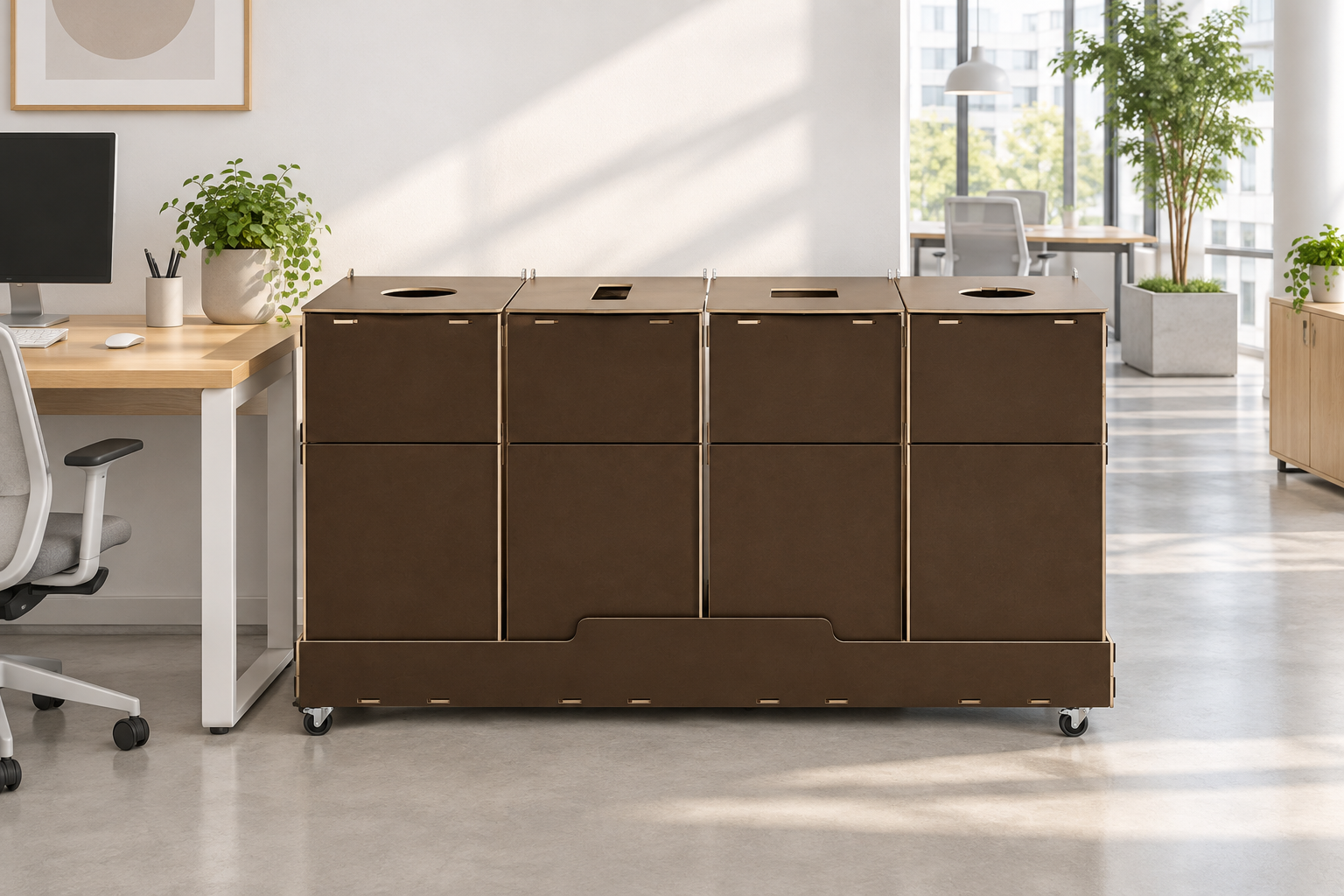
The years in use is the most sensitive number, so test it. Sortaider’s Recycling Bin Ecolong 3 × 60 l brown is listed at €1,190 excluding VAT. Spread over 5, 10 and 15 years, the purchase alone is about €238, €119 or €79 per year. This is arithmetic, not a lifespan promise. It shows why a bin that lasts longer or can be repaired changes the result far more than a small discount on the unit price.
Acquisition: compare what the price includes
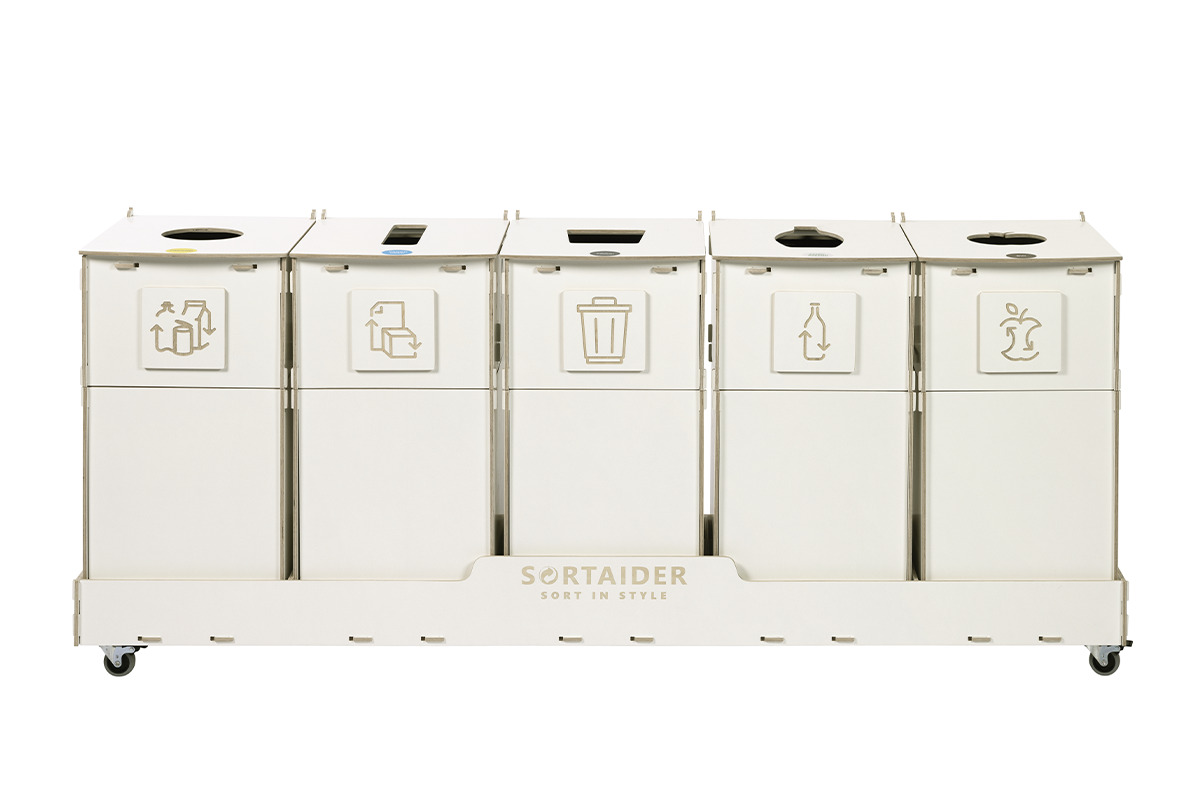
Compare on price per compartment, not per unit. The Ecolong 3 × 60 l above works out to roughly €397 per compartment. The Ecolong 5 × 90 l white, listed at €2,360 excluding VAT, comes to €472 per compartment. List prices change, so check the current page.
Then check what else the order contains:
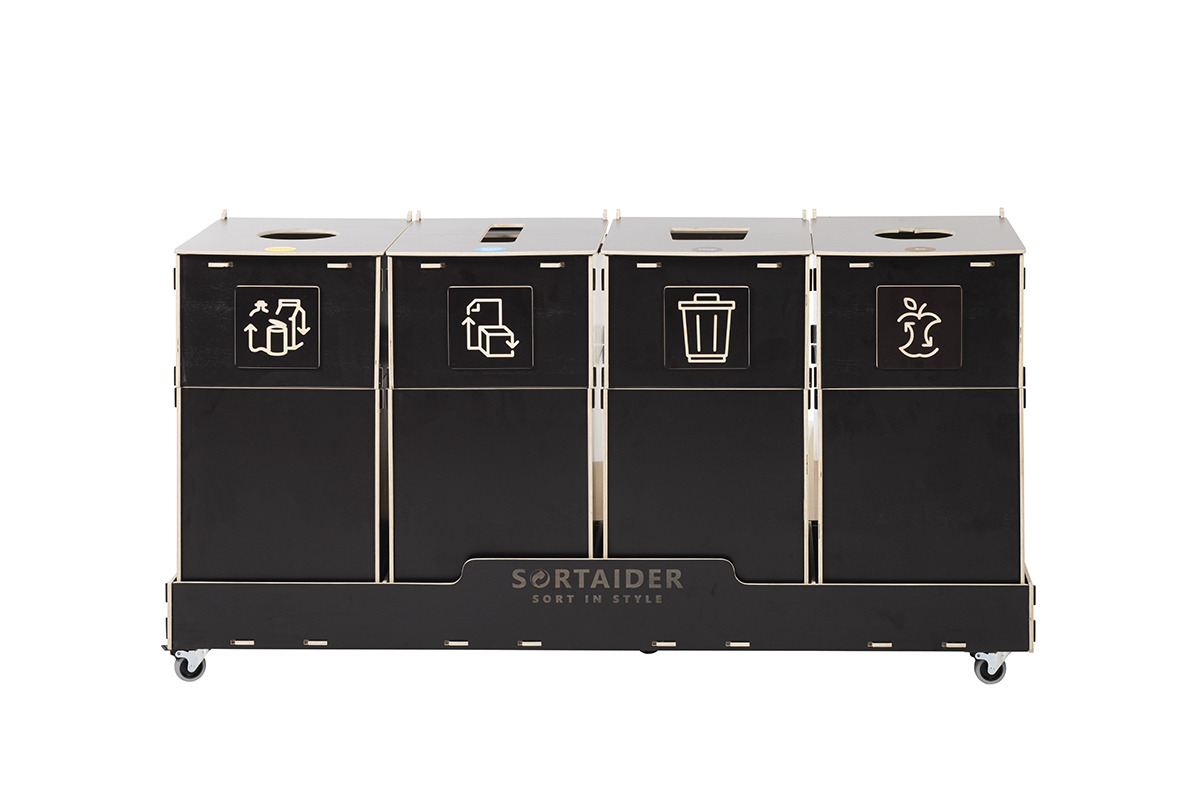
- Assembly labour. Sortaider’s bins are delivered assembled and ready to use, with the first correctly sized waste bag included. Delivery takes up to 14 days. Sorter pages also mention flat-pack shipping, so confirm which applies to your order.
- Labelling. On Sorter models you choose the waste categories and where the instructions go, on or under the lid. Company logo engraving on the front frame is free. A bin with wrong or missing labels costs you in contamination later.
- Unit count. One multi-compartment station replaces several single bins. Count the stations you need, not just the price of one.
For placement and sizing before you order, see our guide to building a workplace recycling programme and the Recycling bins category.
Liners: the cost that repeats every week
Liners are the one line item you pay for every time a bin is emptied. Three decisions control it.
1. Size the bag to the compartment. Sortaider lists 75 l bags for 60 l compartments, 100 l bags for 90 l, 50 l for 40 l and 30 l for 20 l. Over-sized liners waste plastic, because the bin’s capacity, not the bag’s, decides how much waste is hauled away.
If you buy non-standard bags, size them by flat dimensions. For a rectangular opening, flat width is the long side plus the short side. Flat length is the bin height plus half the short side plus 3–4 inches (about 8–10 cm) of overhang.
2. Match thickness to the waste. Thickness is quoted in gauge or microns, where 1 micron equals 4 gauge. A 120-gauge bag is 30 microns. Light office paper does not need the heavy bags that a kitchen needs. Thick bags still do not stop glass or metal from puncturing them.
3. Decide where a liner is not needed. Ecolong has a 3-in-1 system. Each compartment can use Longopac Mini continuous bags, a standard bag on a reversible frame, or no bag at all for suitable fractions such as paper and cardboard. A bagless compartment removes its liner line entirely. Ask for the Longopac refill price, because the product pages do not state it.
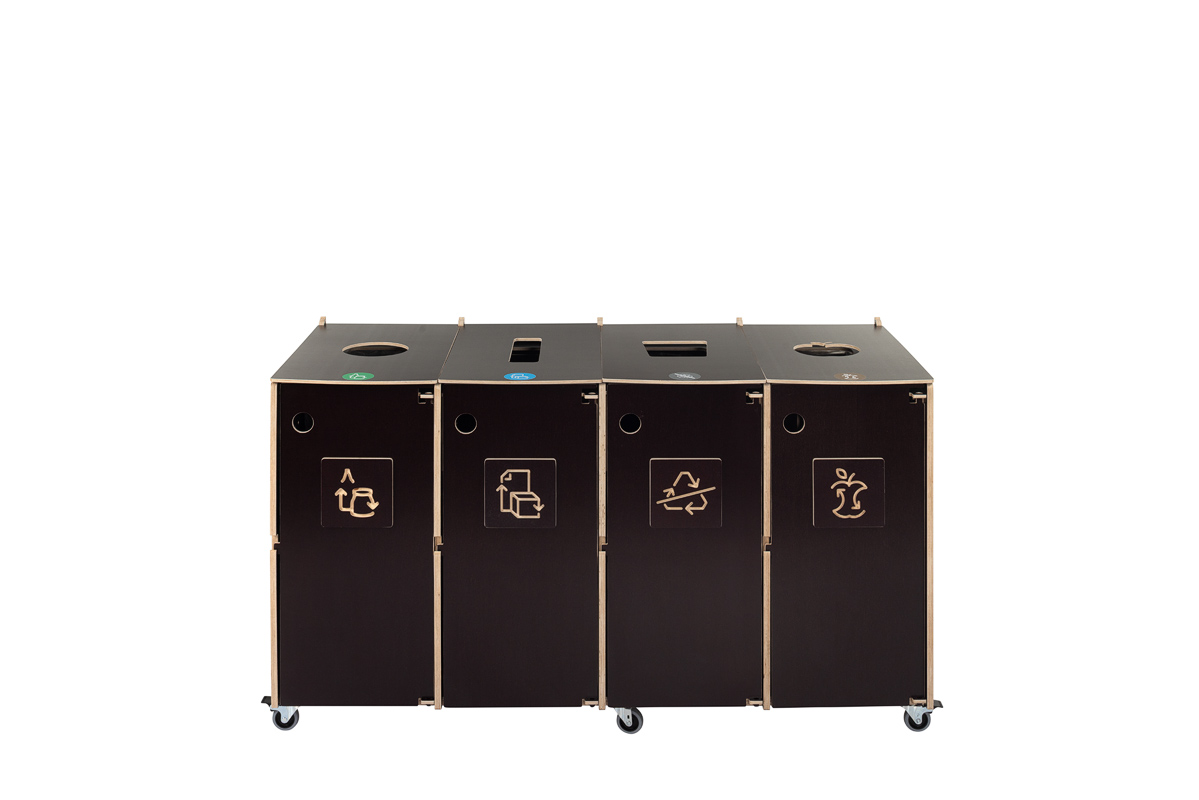
A worked count shows the scale. An Ecolong 4 × 60 l with each compartment emptied twice a week uses 4 × 2 × 52 = 416 bags of 75 l a year. Multiply by your own bag price. Cutting one compartment to bagless removes a quarter of that.
How often you empty also drives bag use. Our guide on how often commercial recycling bins should be emptied covers schedules by waste type.
Cleaning: you pay in minutes, not materials
Cleaning is mostly labour. Calculate annual cleaning labour cost per bin as (minutes per cleaning ÷ 60) × cleanings per year × your hourly labour cost. For a whole-site total, multiply by the number of bins. No source gives a reliable standard time, so time one full wipe-down yourself.
For Sortaider plywood bins, the manufacturer’s care instruction is a damp cloth with a mild cleaner, avoiding harsh chemicals and abrasives. That is cheap, but it limits what you can specify in a cleaning contract.
Frequency depends on the site. Guidance from different sectors shows the range:
- WHO guidance for health-care settings says non-sharps infectious-waste containers should be cleaned, disinfected and replaced after each intervention or twice daily. That applies to clinical waste containers, not to your recycling station.
- A Singapore school hygiene guideline sets daily wiping for bins in public-facing areas, weekly disinfection, and a scum-removing wash every three months.
- The US CDC says cleaning and disinfecting wooden surfaces such as benches is not recommended, and advises products suited to the surface.
The practical rule: if your hygiene protocol requires disinfectant, check its compatibility with the bin finish before purchase. A chemical that damages the surface turns a cleaning task into a replacement cost.
Always let a bin dry fully before inserting a new liner, because trapped moisture speeds up odour. Our guides on cleaning and sanitising recycling bins and preventing recycling bin odours give routines.
Maintenance and repairs: ask which part can be replaced
All Sortaider products carry a two-year warranty covering manufacturing defects. Beyond that, the manufacturer says many models allow a damaged part to be replaced without replacing the whole product. Sorting markings and engravings are confirmed as replaceable in the current range. Other parts are checked model by model, and the site does not describe a general spare-parts catalogue. Ask for the ordering process before you buy.
Replaceable labels matter more than they look. If your municipality changes its waste fractions, you can relabel rather than replace the station.
Minor scuffs on plywood can usually be touched up. Keep a simple inspection log with these fields:
- Model and location
- How the bin is used
- Visible damage
- Loose parts
- Whether the lid, wheels and labels still work
A log shows which locations wear fastest, and it gives you evidence for a warranty claim.
Usable life and replacement: warranty is not lifespan
No honest supplier can promise one number of years for every product. Sortaider says service life depends on the model, operating environment, daily load, correct use, inspections, maintenance and the availability of fitting parts. It also separates the warranty period, the period used in a calculation and the actual service life.
Warranty terms across the market vary widely. Hailo gives three years on its waste bins for commercial use in the EU and Switzerland, and five for non-commercial use. Rubbermaid Commercial gives its BRUTE containers a 10-year limited warranty. Sortaider gives two years. Compare what each warranty covers, not just its length.
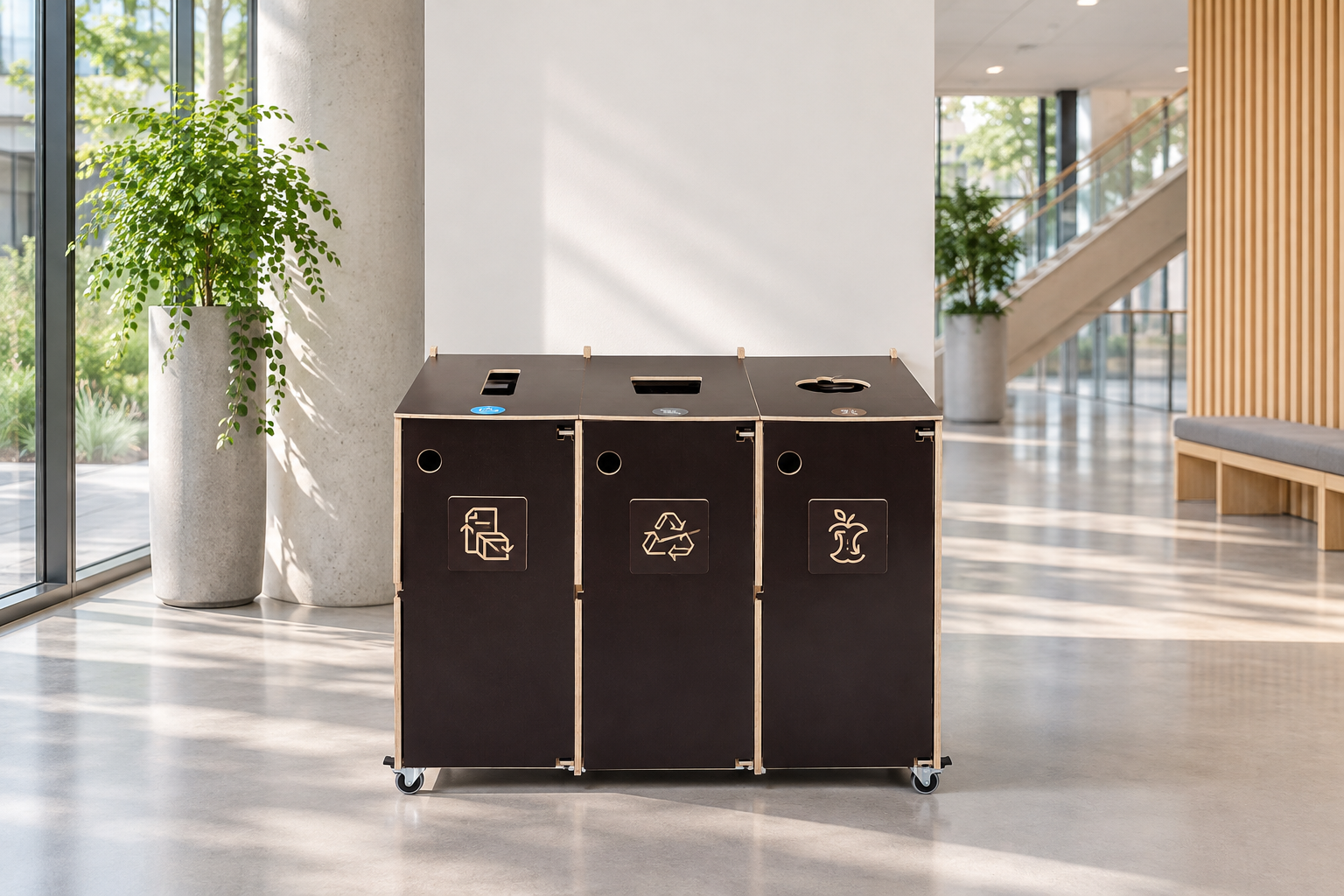
Environment decides service life more than material marketing does. Sortaider presents plywood for indoor spaces and covered entrances, advises keeping edges sealed and avoiding standing water, and recommends metal or heavy-duty plastic bins for unsheltered outdoor areas exposed to severe weather. Choose by exposure:
- Indoor, high traffic (lobbies, offices, schools): plywood stations suit well, and part replacement and relabelling keep them in service.
- Covered or sheltered outdoor entrances: check the specific model’s description first.
- Fully exposed outdoor spots with severe weather: compare metal and heavy-duty plastic on their own total cost.
Decide replacement criteria before you need them. Replace when a structural part cannot be replaced individually, when edges no longer seal against moisture, or when the bin can no longer be cleaned to your hygiene standard. Repair when the damaged part is a confirmed replaceable one.
End of life and environmental cost
Directive 2014/24/EU allows monetised environmental costs only when their value can be determined and verified. Sortaider says the environmental impact of a bin cannot be read from one material or one CO₂ figure. It depends on the parts, their masses, material origin, manufacturing, transport, use, maintenance and end-of-life treatment. So this guide gives no footprint multiplier.
If footprint matters to your tender, ask suppliers for a material list that separates plywood, glues, finishes, metal parts, plastic parts and packaging, and compare products on the same basis. Our plywood sustainability guide, plywood vs metal bins comparison and plastic bin impact guide explain what to check.
Send every supplier the same worksheet
Quotes only compare when every supplier answers the same questions. Ask for:
- Price per compartment, delivery and what is included
- Exact liner size per compartment, and which fractions can run bagless
- The approved cleaning method and products
- Warranty terms, and how a single part is ordered
- Environment limits for the model you want
- A material list for end-of-life planning
Then fill in the annual cost formula for each quote and compare the results. If you want help working out the compartments, sizes and liners for your site, send Sortaider your floor plan and waste streams, and request a quote for the Ecolong or Sorter models above.