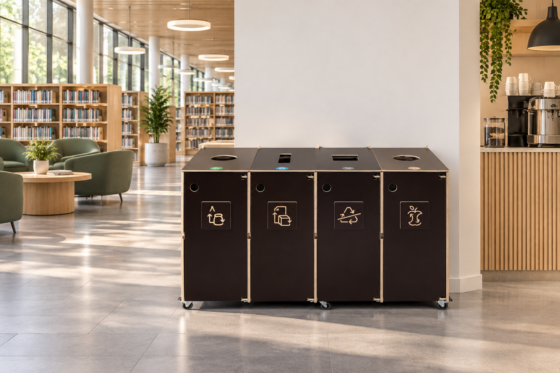
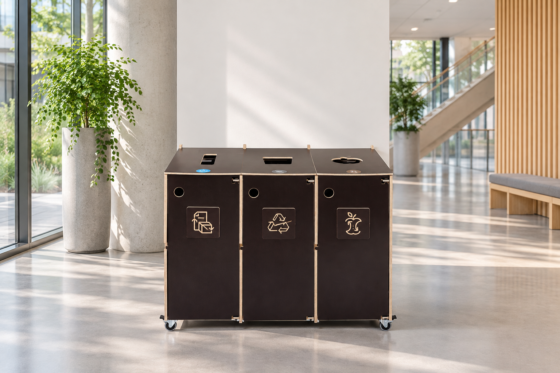
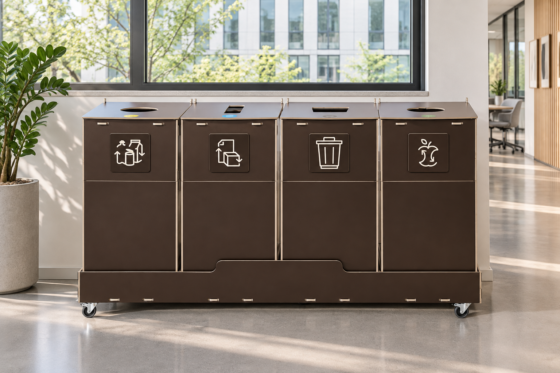
A recycling bin in a care home is only safe if the waste stream behind it is clear. This guide covers ordinary recyclables: where to place them, how to keep them hygienic and which routines your staff need. Clinical waste stays with your specialist provider.
The short version:
| Stream | Typical examples | Where it goes |
|---|---|---|
| Dry recyclables | Paper, cardboard, clean packaging, glass, metal | Recycling points in shared and back-of-house areas |
| Biowaste | Kitchen and food scraps | Separate food-waste collection |
| Residual and hygiene waste | Incontinence products, soiled items (rules differ by country) | Your local residual or offensive/hygiene route |
| Clinical waste | Infectious waste, sharps, medicines | Specialist provider, never a recycling bin |
Which waste belongs in a recycling bin
Care homes produce more than one kind of waste, and only one kind belongs in a recycling bin. The EU List of Waste (Decision 2000/532/EC) shows the dividing line. Chapter 18 covers waste from human healthcare. It explicitly excludes “kitchen and restaurant wastes not arising from immediate health care”. Your kitchen and dining room therefore produce ordinary waste, even in a nursing setting.
Inside chapter 18, the codes you will meet most often are:
- 18 01 03*: waste that needs special collection and disposal to prevent infection.
- 18 01 04: healthcare waste without those infection-prevention requirements, such as dressings, linen, disposable clothing and diapers.
- 18 01 01: sharps.
- 18 01 08* and 18 01 09: cytotoxic and other medicines.
The UK’s HTM 07-01 guidance on healthcare waste adds a practical layer. Nappies and incontinence pads are “offensive/hygiene waste” and go in a yellow-and-black striped (“tiger”) bag. If they come from a resident with a known infection, they are treated as infectious waste instead. HTM 07-01 also says sharps go in a sharps bin and medicines should be separated at source wherever possible.
The rule for your recycling points follows from this: nothing that has touched body fluids, no dressings, gloves or PPE, no sharps and no medicines. If a staff member has to ask “is this clinical?”, it does not go in recycling. Put it in the stream your waste provider has defined.
For the sorting side of the equation, see our guide to what goes in each recycling bin and the recycling bin colour guide.
Check your local rules before you plan the layout
Classification differs between countries, and so does what happens to hygiene waste. Treat the following as examples, not as a substitute for your waste provider’s instructions.
- UK (HTM 07-01): the health and social care guidance covers England and Wales. It prescribes colour-coded bags for each clinical and offensive stream.
- Wales: workplace recycling rules cover care homes. Food waste must be presented separately for collection if a premises produces 5 kg or more in any seven consecutive days (Welsh Government guidance).
- Norway: the regulation on infectious waste requires healthcare services to deliver it as soon as possible to a facility with a treatment or incineration permit. Healthcare facilities’ waste is treated as commercial waste, so the facility is responsible for getting it to an approved facility (Helsedirektoratet).
- Denmark: Copenhagen’s guidance for businesses says clinical waste must always be sorted out, regardless of quantity. Diapers count as residual waste there. The city began installing separate diaper bins in October 2026 and plans to extend collection to municipal nursing homes in February 2027.
- Estonia: Tallinn’s guidance lists diapers under mixed municipal waste for households. Whether this applies to a nursing home is a question for your provider.
- Finland: the waste decree lists diapers from human healthcare under 18 01 04, the non-infectious healthcare category.
Across the EU, the Waste Framework Directive required Member States to ensure that biowaste is separated and recycled at source or collected separately by 31 December 2023. Separate textile collection was due by 1 January 2025. National laws turn these into duties for businesses, so ask your municipality or collector how they apply to your home. Our overview of European recycling legislation explains the wider picture.
Where to place recycling points
Place recycling points where ordinary waste is produced. Do not place them where clinical waste is produced. UK infection-control guidance says to place waste receptacles close to the point of waste production, backed by a local risk assessment.
Good locations:
- Dining rooms and satellite kitchens: packaging, cartons and food scraps.
- Staff rooms and offices: paper, cardboard and drink containers.
- Reception and visitor areas: newspapers, leaflets and bottles.
- Back-of-house areas: deliveries, outer packaging and cardboard from supplies.
Keep recycling points out of resident bedrooms, bathrooms and treatment areas. UK adult social care guidance asks for foot-operated, lidded and lined bins in those spaces, and these bins are for residual or clinical streams. Waste must also not build up in corridors or other shared areas, which means every recycling point needs a regular emptying slot.
The Estonian elder-care provider Cerahome rolled out recycling across 13 care homes together with Sortaider in autumn 2025. The case study describes the challenge as balancing institutional efficiency with a warm, home-like atmosphere.
Size the bins from a one-week audit
Do not guess capacity. For one week, count how many bags or containers each fraction fills at each location. Then size to a bin that is never more than three-quarters full when it is emptied. Scottish national infection-prevention guidance for social care says to tie bags at three-quarters full instead of overfilling, and some local UK policies add a bag weight limit of 4 kg.
Here is an illustrative calculation. Suppose a dining-room station collects paper, packaging, glass and food scraps, and the food scraps compartment fills a 90 l bag to the brim once a day. At three-quarters full, 90 l gives about 68 l of usable volume, so one 90 l compartment would no longer be enough on that day. In this case, choose a larger compartment or add a second emptying round. Numbers like these should come from your own audit, not from a table.
For a deeper look at timing, see how often recycling bins should be emptied.
Keep recycling points hygienic
Hygiene in a care home is not only about looks. UK adult social care guidance on standard infection control precautions asks staff to wash their hands after handling waste, and the Scottish Care Home IPC Manual lists hand hygiene after handling waste, including used PPE.
Four practices keep recycling points from becoming a problem:
- Empty before overflow. Overfilled bins spill, attract pests and push staff to compress waste by hand.
- Clean on a schedule. Use documented cleaning schedules, as UK guidance for social care recommends. A UK NHS care-home cleaning template calls for a full daily clean of the external surfaces of waste receptacles. Scottish guidance recommends a general-purpose neutral detergent for regular bin cleaning.
- Use the right cleaning equipment. National colour coding for cleaning materials in UK care homes uses blue for general areas such as lounges and corridors and green for kitchens and food-storage areas. Keep this separation when you clean recycling points in the kitchen and dining room.
- Replace the bag straight away. After removing a full bag, clean the bin and put in a new bag immediately.
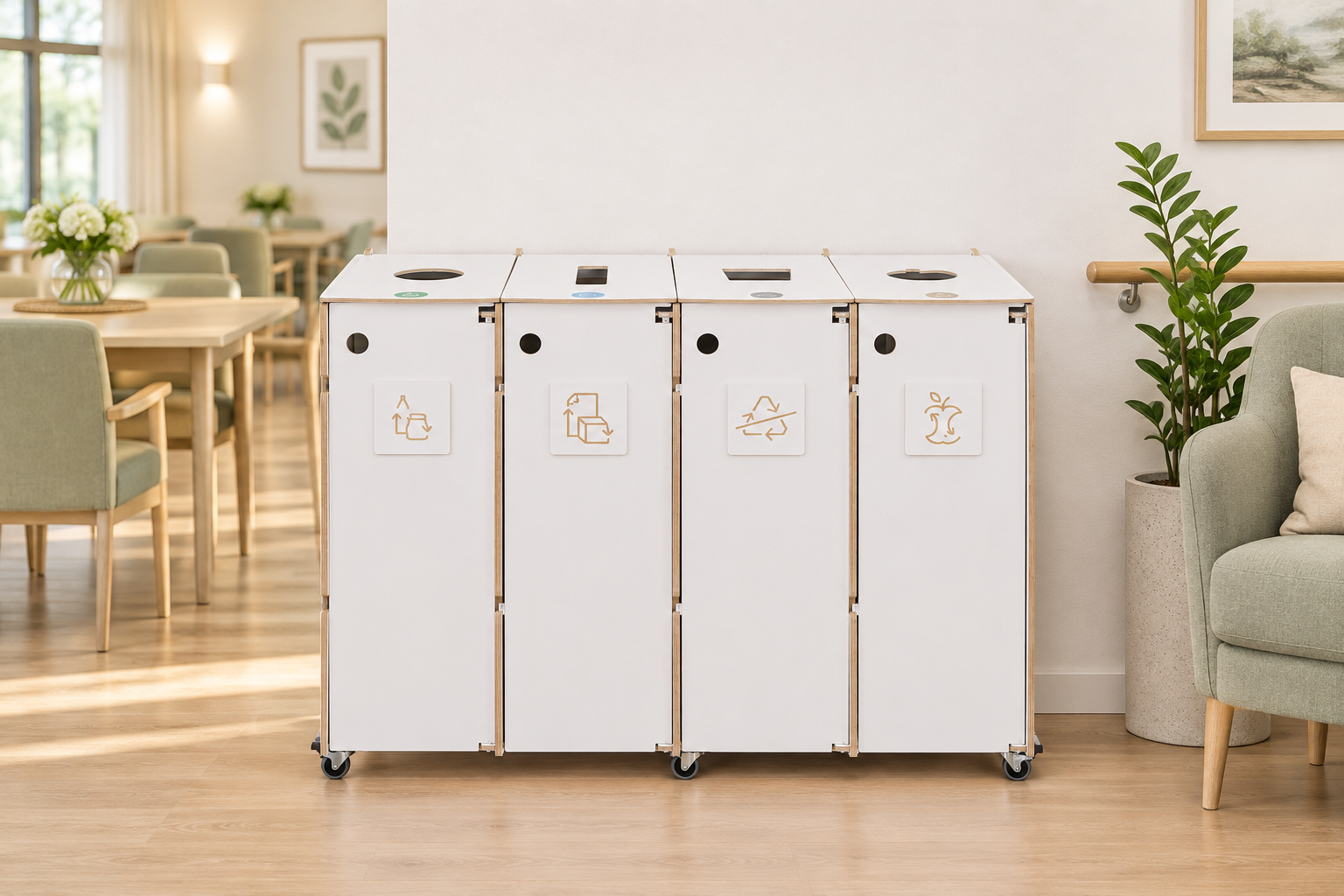
Design matters here. Smooth surfaces, removable inner containers and front doors make cleaning faster. Lids with a hole let people drop waste in without touching the lid, while a closed lid keeps odours in. Sortaider’s Container series is built around removable inner containers and smooth surfaces for hospitals, clinics and health centres. The Ecolong series has front doors for maintenance and lockable wheels so the unit can be moved for cleaning.
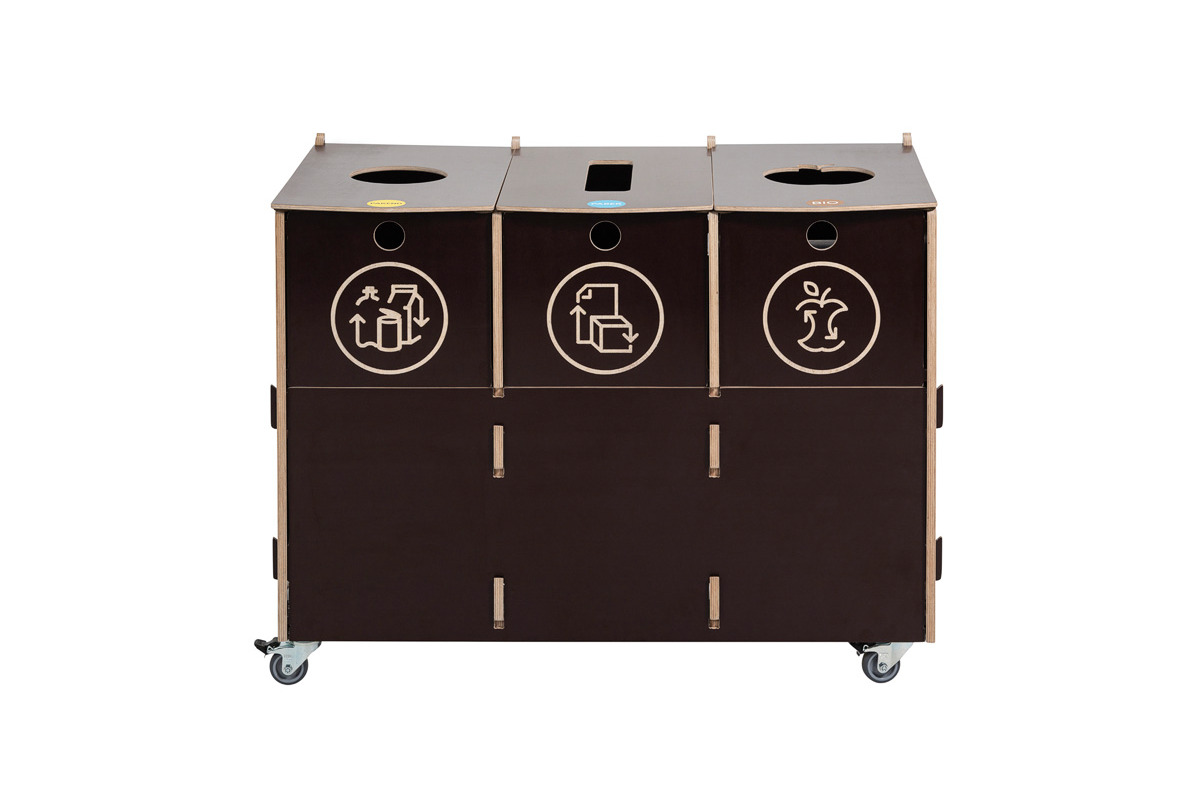
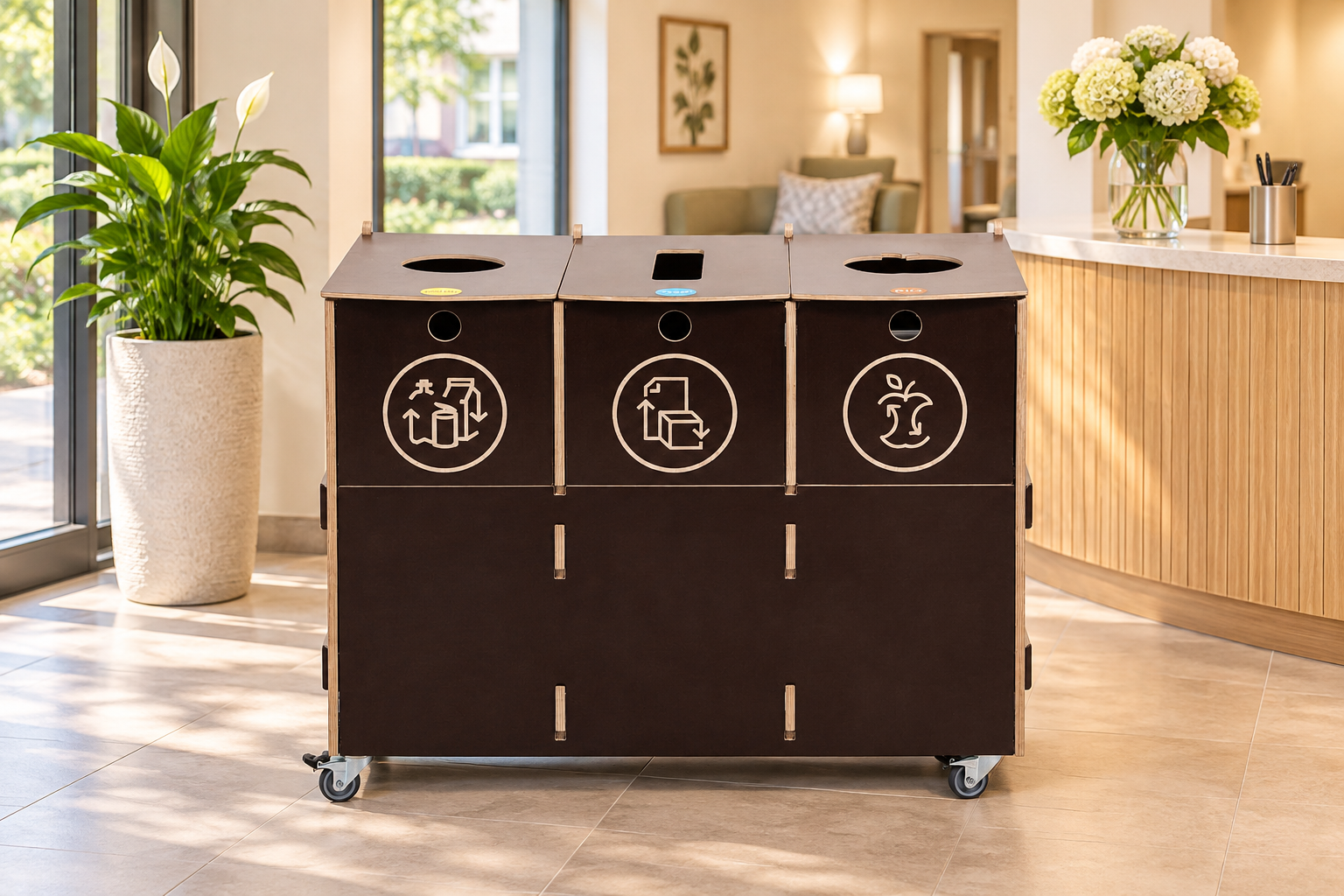
Be clear about what these stations are not. They collect dry recyclables and food scraps in shared spaces. They do not replace the lidded, lined and foot-operated bins that UK guidance asks for in resident rooms, toilets and clinical areas.
Build staff routines that prevent mistakes
Most recycling errors in a care home are not caused by carelessness. They happen when a person mid-task cannot quickly find the right bin. Staff need signage at the point of use and a short, fixed routine.
A daily routine that works in most homes:
- Check each recycling point at the start of the shift and remove anything that does not belong.
- Empty fractions that are three-quarters full, or on the schedule you set from your audit.
- Tie bags, label or record them if your collector requires traceability, and move them to the designated store.
- Wipe the outside surfaces and lids with the correct colour-coded cloth.
- Wash or rub your hands once finished, after removing PPE if you wore any.
UK guidance says care workers should be trained to know which waste category applies to the waste they handle. It also says managers must arrange collection through a licensed waste contractor. Keep training records, and give new staff and agency staff a one-page version of the stream table at the top of this article.
Common mistakes and how to avoid them:
- Gloves and wipes in the paper bin. Place a residual bin right next to the recycling point so staff do not improvise.
- Food scraps in the packaging fraction. Food residue contaminates clean paper and packaging. Choose stations with pictograms on the front, and put the food-scraps compartment close to the dining area.
- Clinical items in “just this once” bags. Follow the home’s agreed classification procedure. If an item’s clinical status is uncertain, consult the designated lead or specialist waste provider before choosing a waste stream. Nobody should be blamed for asking.
Store and collect waste safely
Waste awaiting collection should be stored in a designated, lockable area, usually outside the building. Keep it secure from unauthorised people and animals. UK HSE guidance for care homes says hazardous waste containers should not accumulate in corridors or places accessible to residents. The same logic applies to full recycling bags.
Fire safety belongs in the plan as well. Scottish practical fire safety guidance for care homes asks for external bins and waste to be sited well away from the building so a fire cannot reach external walls or overhanging eaves, secured against movement and fitted with lockable lids where fire-raising is a risk. In a London borough’s waste guidelines, fire prevention bodies such as the FPA and CFPA-Europe recommend keeping bins at least six metres from building openings. If that is not possible, use a structure that stops bins being moved closer.
No guidance sets a single collection frequency for care homes. The frequency follows your volumes, your storage capacity and the odour and pest risk of each fraction, with food waste the most sensitive. Agree the frequency with your collector after the one-week audit, and review it after any change in occupancy.
Choose recycling stations that fit a care home
Match the unit to the space and the fractions, not the other way around:
- Dining rooms and communal lounges, 3 fractions: the Container series suits spaces that need easy cleaning. It has removable inner containers and 40 l compartments.
- Busy corridors and entrances with higher volumes: Ecolong offers 60 l or 90 l compartments with Longopac Mini, ordinary bag or bagless use depending on the fraction. Its front doors give staff direct access to the compartments for emptying and cleaning.
- Back-of-house and staff areas: Sorter or Sorta units with 20 to 90 l compartments suit break rooms and offices.
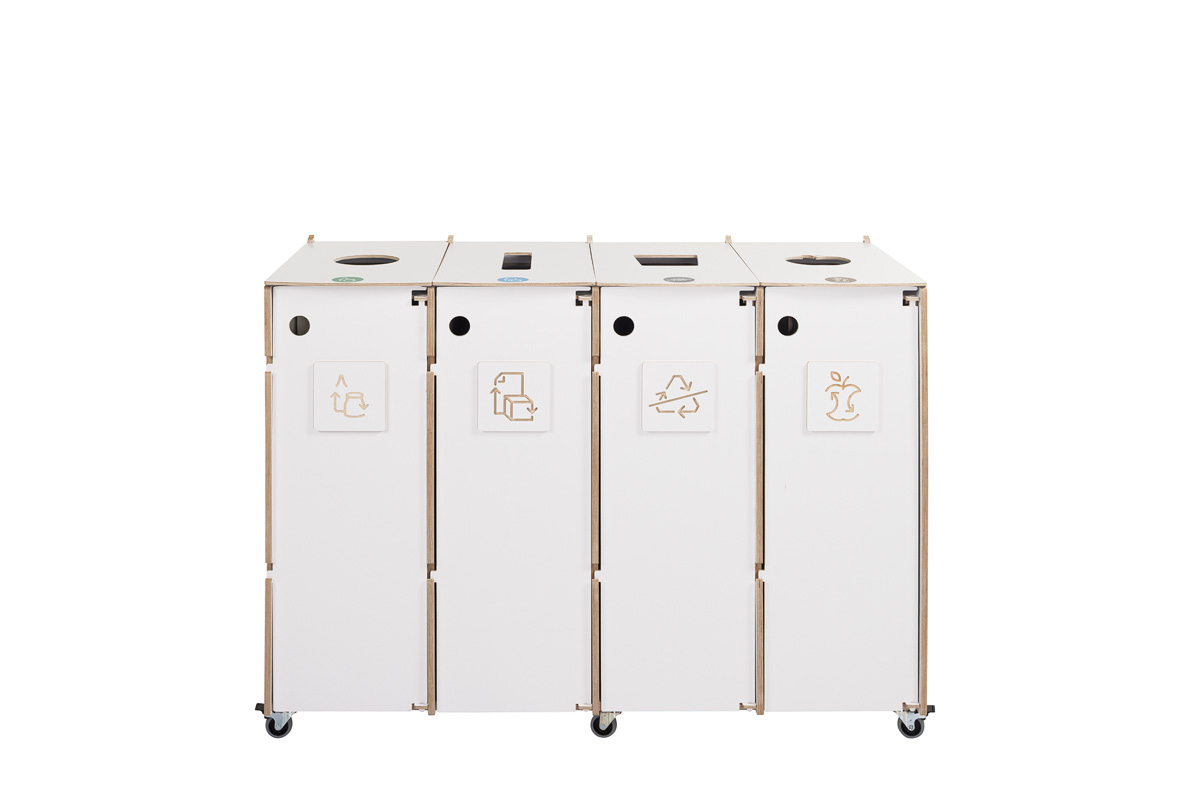
Not sure of the right setup? Browse the Ecolong indoor recycling bins or the Container series for public indoor spaces. For the clinical side of healthcare facilities, our hospital waste management guide explains stream classification and segregation. Start with a one-week waste audit, then send your counts to Sortaider and we will help you match units, fractions and labels to your care home.