Are your workplace recycling bins secretly sending valuable materials to landfills? Balancing occupant convenience against contamination risk is a primary operational challenge for facility managers. Here is how commingled and source-separated recycling systems compare across material purity, processing costs, and overall recovery efficiency.
Defining Commingled and Separated Recycling Systems
Choosing between collection methods dictates your facility’s operational workflow, janitorial efficiency, and waste diversion rates. The primary approaches differ fundamentally at the point of waste generation:
- Commingled (Single-Stream) Recycling: Occupants discard all recyclable commodities – paper, cardboard, plastics, aluminum, and tin – into a single container. These mixed materials are transported to a Materials Recovery Facility (MRF), where automated equipment and manual sorters divide the streams.
- Source-Separated (Multi-Stream) Recycling: As defined by standards like U.S. EPA 40 CFR 246.101 and European waste directives, source separation requires users to segregate recyclables at the point of disposal into designated compartments (such as paper and cardboard separate from plastic and metal packaging or glass).
- Dual-Stream Recycling: A middle-ground approach where materials are divided into two distinct streams – typically paper and fibers in one container, and rigid containers (plastics, metals, glass) in another.
While municipal infrastructure often dictates external haulage options, understanding internal sorting mechanics helps facility managers prevent expensive batch rejections. Across European markets, regulations such as the EU Waste Framework Directive (2008/98/EC) increasingly emphasize high-purity recovery, making internal collection strategy a regulatory priority as well as an operational one.
Commingled (Single-Stream) Recycling
The Advantages
The primary driver behind single-stream collection is user participation. Research indicates that single-stream systems can increase recyclable material set-outs by 10% to 20% because placing everything into one container requires minimal effort from building occupants.
For facility managers, commingled collection can simplify internal janitorial routes. Housekeeping staff service a single recycling stream alongside residual waste, reducing initial bin infrastructure requirements in corridors and meeting rooms. Furthermore, single-stream collection can reduce curbside collection costs by $10 to $20 per ton compared to source-separated pickups due to faster route times and single-compartment trucks.
The Tradeoffs
The convenience of single-stream systems comes with notable downstream costs:
- High Contamination Rates: Mixing paper with liquids, food residues, or broken glass frequently degrades fiber streams. When clean paper absorbs liquid or grease, it loses structural integrity and cannot be re-pulped into high-grade paper products.
- Elevated Processing Costs: Operating costs for single-stream MRFs are roughly 8% higher – and capital investments up to 35% higher – than dual-stream facilities due to complex optical sorters, ballistic separators, and manual labor required to segregate mixed waste.
- Net System Inefficiencies: Research shows that when total collection, processing, and remanufacturing costs are combined, single-stream recycling increases net system costs by roughly $3 per ton compared to source-separated collection.
- Load Rejections: Most commercial sorting facilities maintain strict intake thresholds. If a load exceeds a 3% to 5% contamination threshold by weight, the entire batch may be rejected and sent to a landfill or incinerator, incurring steep penalties.
Understanding the root causes of recycling contamination causes is essential if your facility operates under a commingled waste contract.
Source-Separated (Multi-Stream) Recycling
The Advantages
Source separation prioritizes material purity and economic circularity:
- Higher Quality Feedstock: Keeping paper, rigid plastics, and metals separated at the point of disposal preserves material quality. Clean, dry paper commands higher market prices and can be recycled into high-grade paper rather than low-value industrial applications.
- Lower Processing Fees: Facilities that deliver clean, pre-sorted materials can negotiate lower processing fees with waste contractors because less mechanical and manual sorting is required at the processing plant.
- Regulatory Alignment: European framework targets and emerging policies like the Packaging and Packaging Waste Regulation (PPWR) push for standardized, high-quality material streams. Multi-stream collection aligns commercial properties with national recovery targets and local compliance mandates.
The Tradeoffs
Source separation requires thoughtful planning inside the facility. Building occupants must take a moment to select the correct compartment, which can lead to mis-sorting if bins lack clear labeling or convenient access. Additionally, multi-stream collection requires multi-compartment stations, which demand deliberate floor plan allocation.
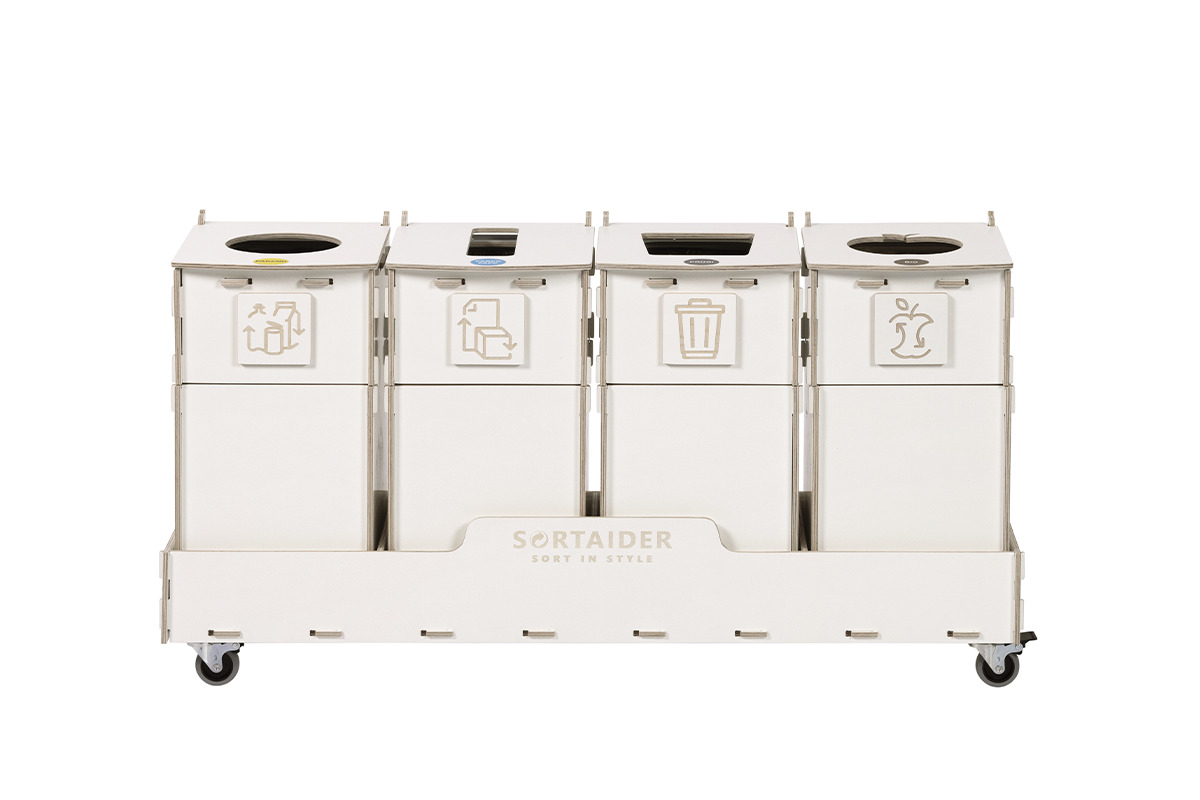
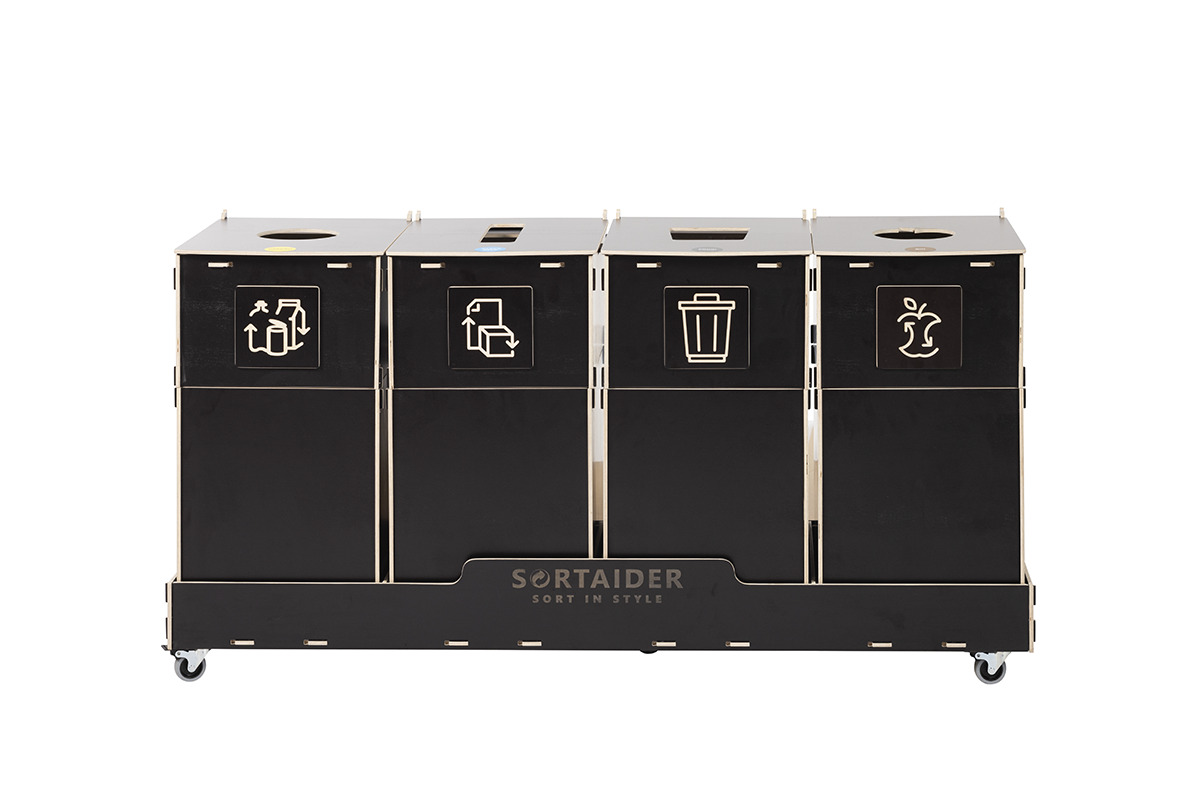
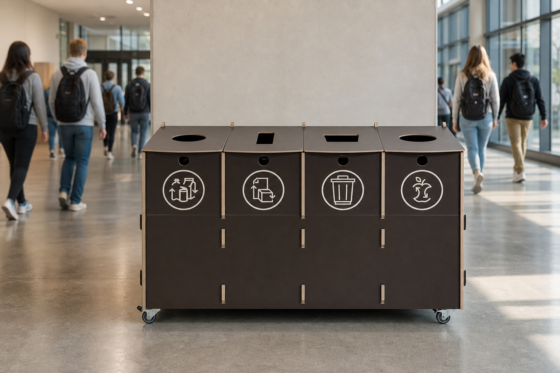
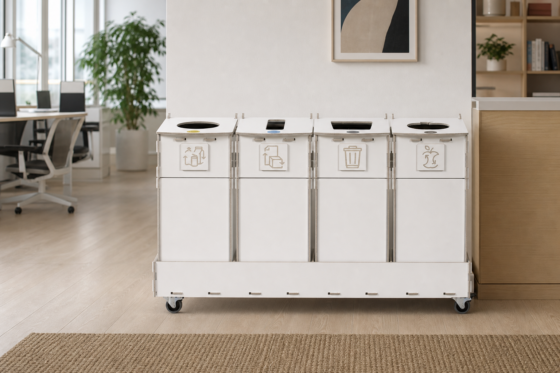
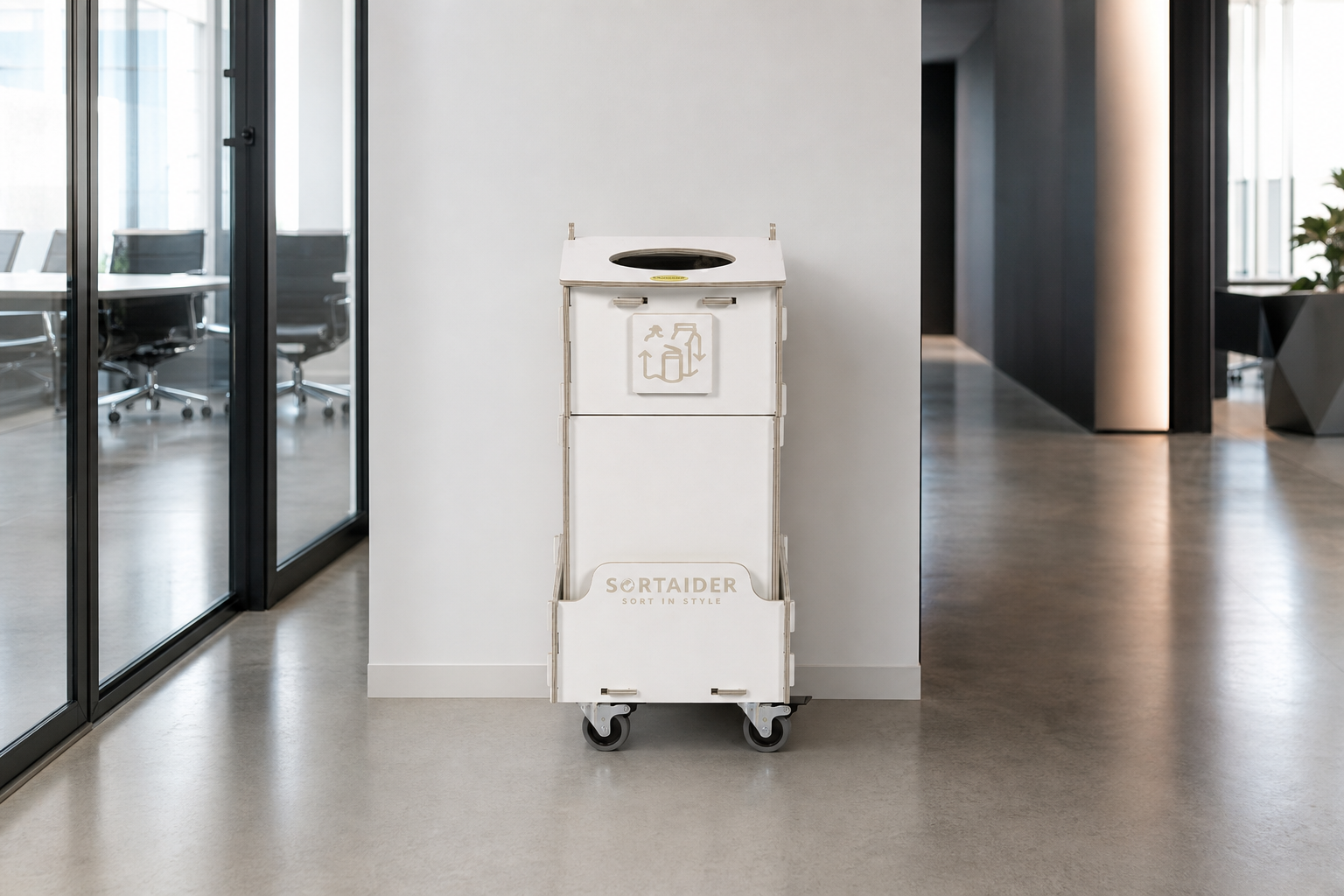
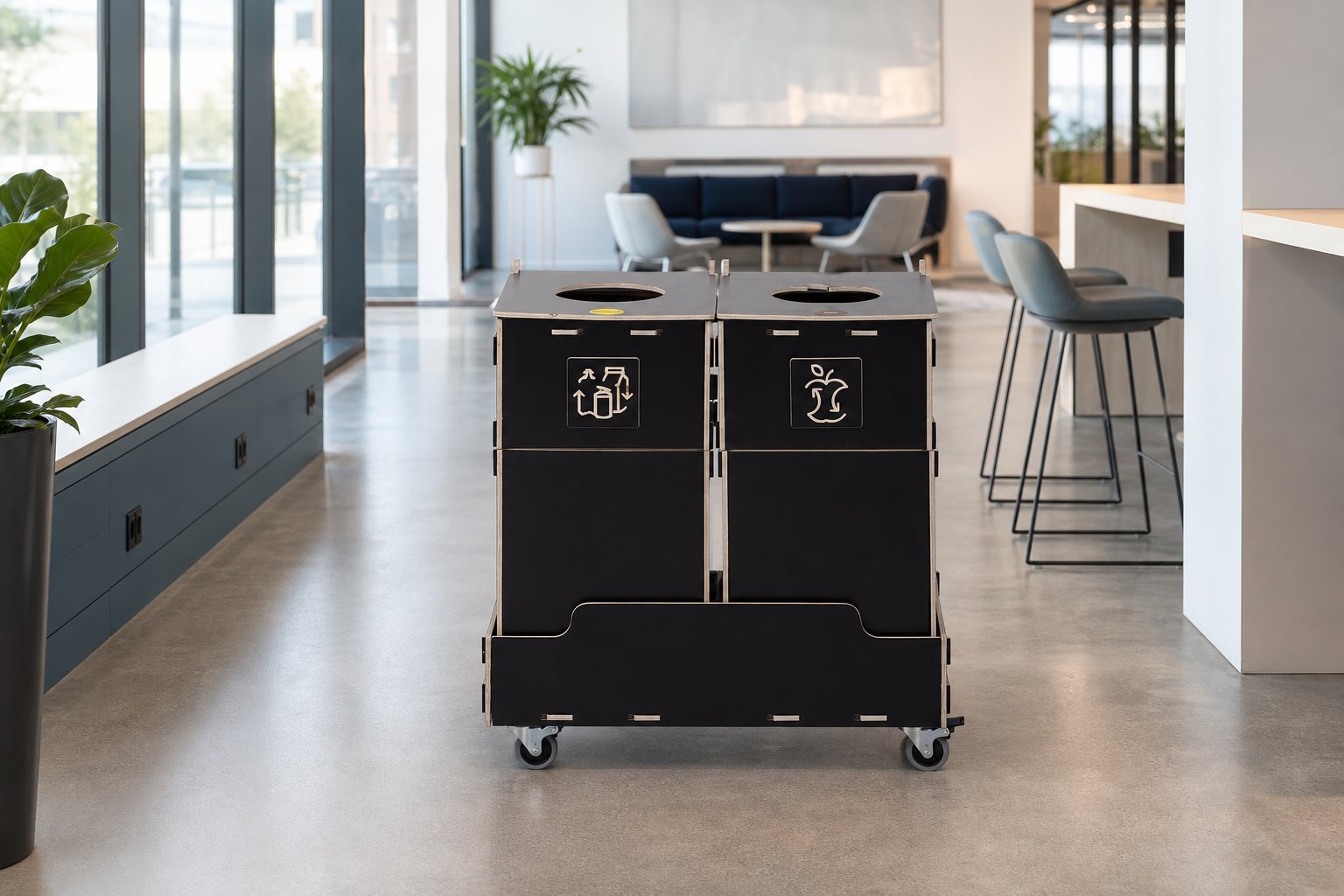
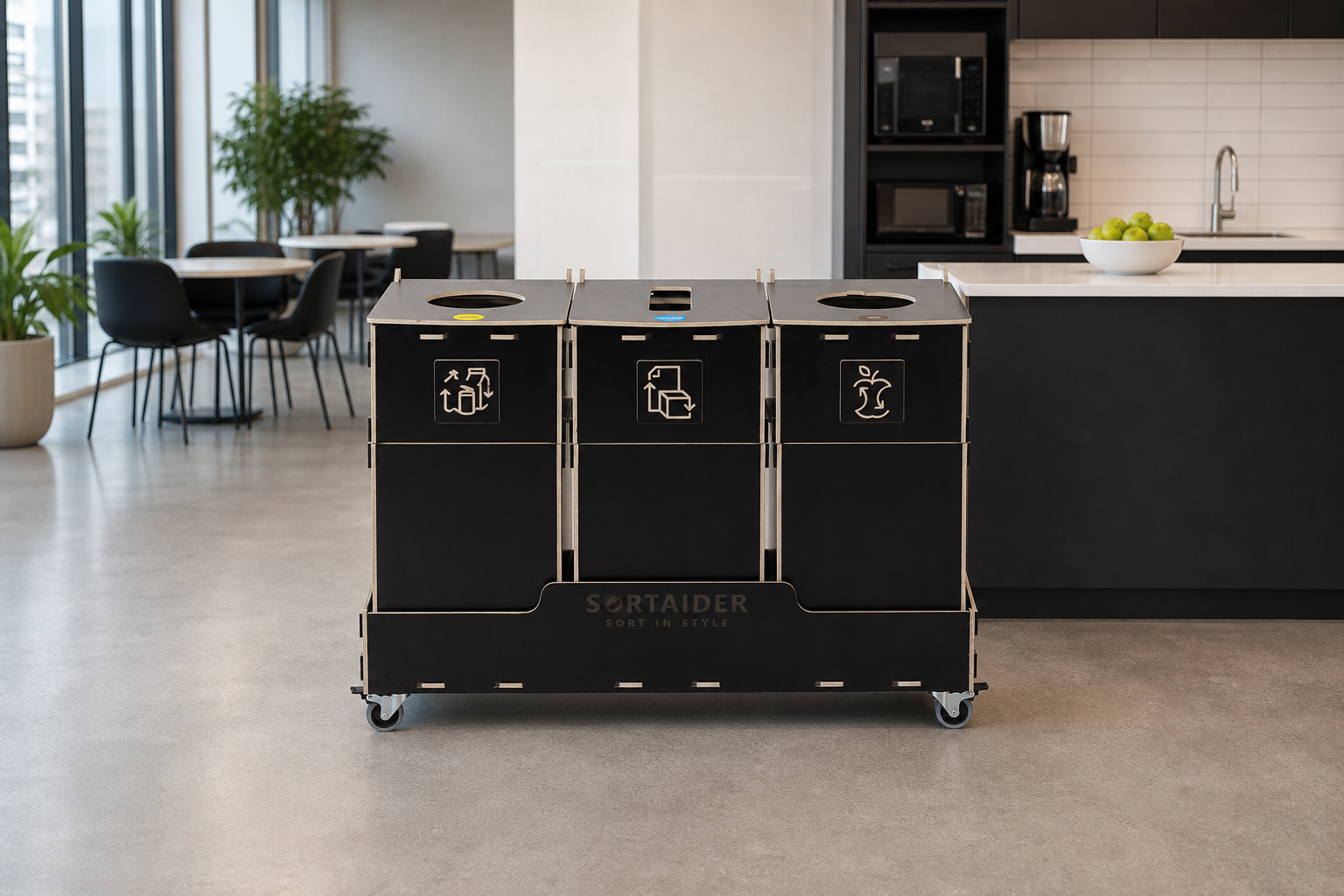
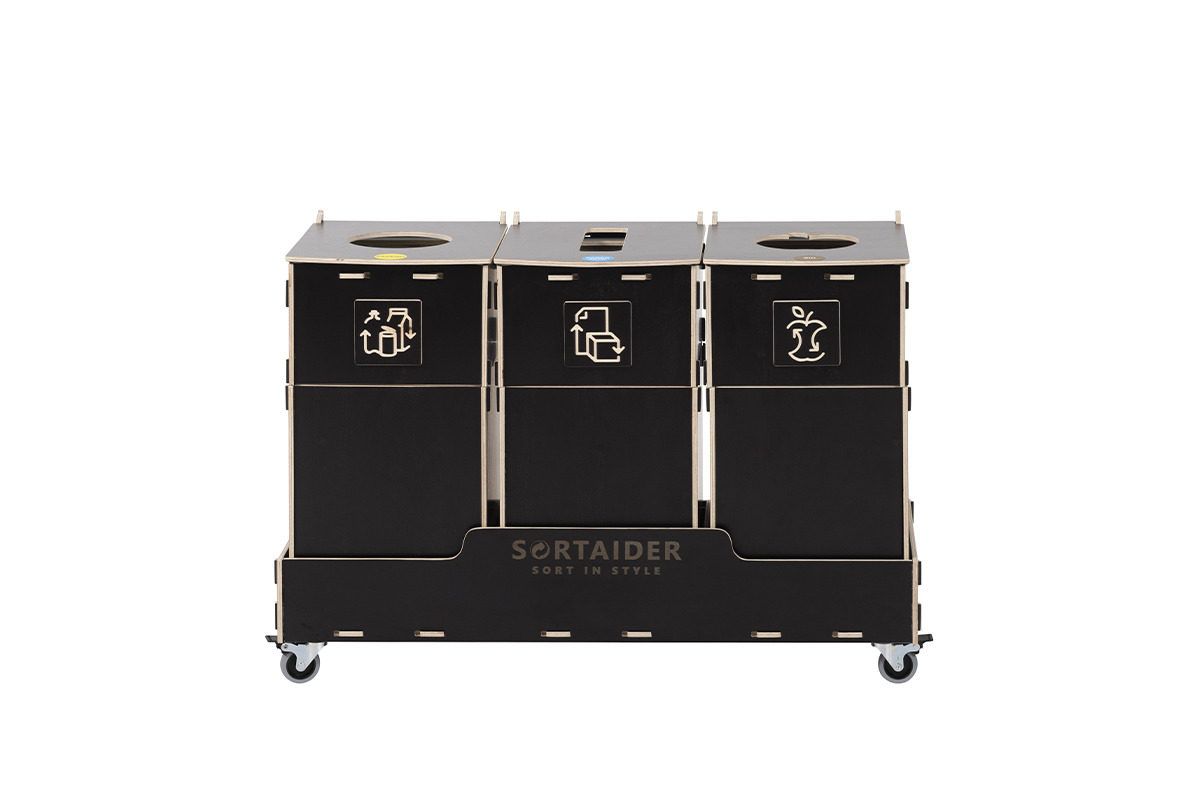
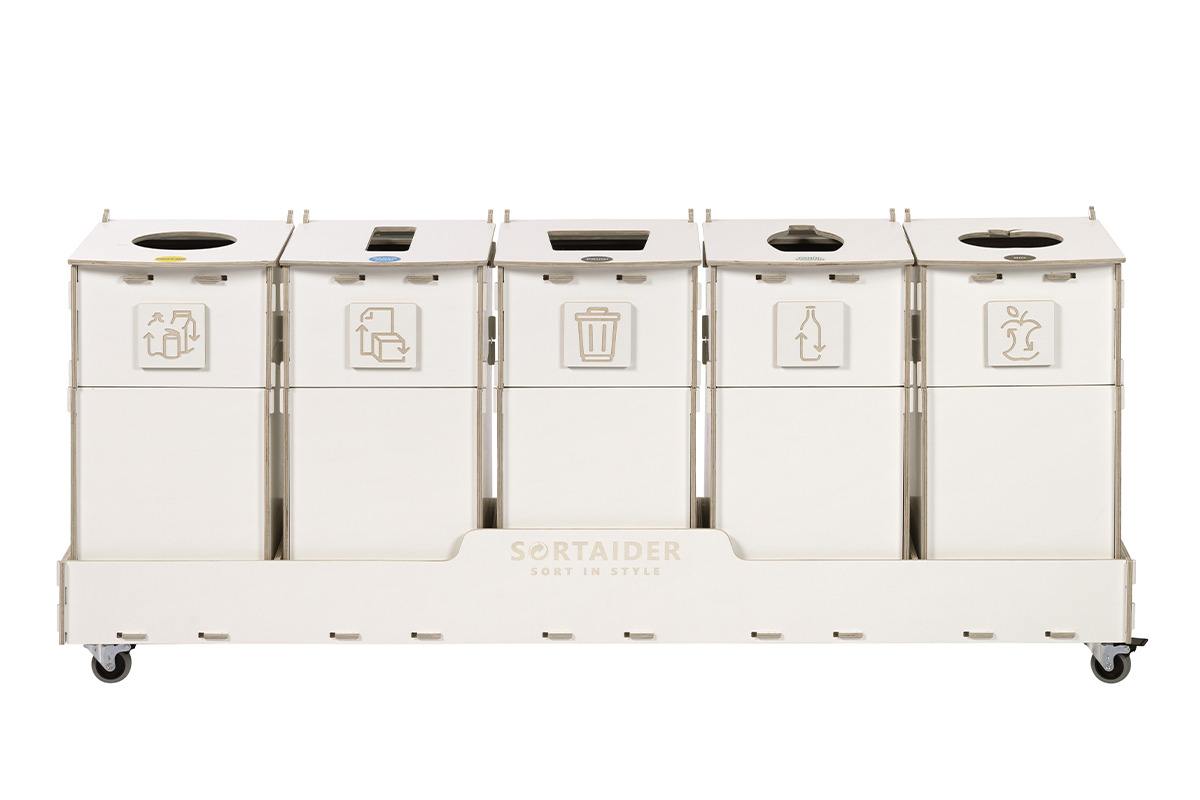
To streamline multi-stream collection without compromising interior aesthetics, modern facilities utilize modular indoor stations that simplify multi-category sorting.
Key Efficiency Tradeoffs: A Facility Manager’s Comparison
Evaluating how operational metrics align with your organizational sustainability targets helps determine the right setup:
| Metric | Commingled (Single-Stream) | Source-Separated (Multi-Stream) |
|---|---|---|
| User Convenience | Very high (single container) | Moderate (requires brief sorting decision) |
| Material Purity | Low to moderate (high cross-contamination risk) | High (minimal cross-contamination) |
| Internal Bin Footprint | Smaller per station | Requires multi-compartment footprint |
| MRF Processing Cost | Higher (complex optical and manual sorting) | Lower (materials arrive pre-sorted) |
| End-Market Commodity Value | Lower (degraded paper and plastic quality) | Higher (clean, mill-ready streams) |
| Risk of Load Rejection | Higher (frequent liquid and food residue mixing) | Low |
Optimizing Source Separation Through Behavioral Design
If your building contractor requires source separation – or if your corporate sustainability targets demand high material recovery – success relies on removing friction for building occupants. You can overcome the convenience gap of multi-stream recycling using proven behavioral design tactics:
- Standardized Visual Indicators: Replacing dense text instructions with intuitive pictograms and standardized color schemes can reduce sorting errors by up to 40%. Aligning bin visual cues with local standards, such as those outlined in our recycling bin color-coding guide, creates immediate visual recognition.
- Shaped Apertures: Integrating physical nudges – such as a narrow slot for paper or round apertures for bottles and cans – physically guides users toward the correct compartment before they release an item.
- Clear Signage at Eye Level: Adhering to recycling signage best practices by placing high-contrast icons at eye level and directly on container lids eliminates ambiguity in fast-paced workplace environments.
- Strategic Placement: Avoid placing standalone general waste bins in corridors or break rooms. Following our recycling bin placement guide, maintaining a 1:1 ratio between general waste and dedicated recycling streams prevents convenience-driven contamination.
Combining clear visual signage with dedicated multi-compartment containers allows source-separated systems to achieve participation rates that rival commingled setups while maintaining superior material purity.
Determining the Right System for Your Facility
Before altering your internal waste infrastructure or renegotiating hauling contracts, follow these essential steps:
- Conduct a Waste Audit: Perform a 1- to 7-day assessment using our guide on running a waste audit for offices. Identify the exact composition of your waste stream, comparing paper and cardboard volume against single-use food packaging and residual waste.
- Verify Hauler Capabilities: Consult your waste service provider to confirm local MRF sorting technology and downstream end markets. Verify whether materials collected in commingled contracts are genuinely recycled into high-value secondary products.
- Review Local Legislation: Ensure your waste setup complies with regional sorting mandates, such as the EU Waste Framework Directive, as well as municipal color-coding standards in your operational market.
- Educate Building Users: Incorporate clear guidelines on what goes in each recycling bin into staff onboarding and facility communications to reinforce proper sorting habits.
Matching your internal bin infrastructure to your waste contractor’s downstream processing capabilities ensures long-term regulatory compliance, lower operational costs, and measurable waste diversion success.
To explore modular waste sorting stations designed for commercial facilities, browse our full range of recycling bins or customize a solution with our recycling bins sorter series.