Are generic eco-friendly labels leaving your procurement team uncertain about real environmental performance? Validating sustainable office products requires evaluating material origins, third-party certifications, and total lifecycle emissions. Here is how to build a rigorous, data-driven purchasing framework.
Material Selection and Embodied Carbon
Evaluating office supplies, furniture, and equipment starts at the resource level. Scope 3 supply chain emissions often represent the largest fraction of an organization’s greenhouse gas footprint, making raw material choices critical when working to reduce your office carbon footprint.
When evaluating physical products, compare the carbon intensity of common manufacturing materials:
- Virgin Plastics: Extraction and refining of fossil-fuel feedstocks contribute significantly to global emissions. Traditional rigid plastic fixtures carry high embodied energy and low long-term recyclability.
- Metals (Steel and Aluminum): Highly durable and recyclable, but primary extraction and processing are intensely energy-demanding.
- Renewable Bio-Based Materials: Sustainably harvested wood fiber and birch plywood lock in biogenic carbon. Choosing renewable plywood over virgin plastic or metal fixtures can deliver two to four times lower CO₂ emissions across a product’s lifecycle, as detailed in our guide on the environmental impact of plastic bins.
Where plastic components are unavoidable, verify the percentage of post-consumer recycled (PCR) content. Procurement specialists should require independent verification, such as SCS Recycled Content certification, to substantiate claims regarding recycled content in bin manufacturing.
Navigating Eco-Certifications and Standards
Vague claims such as “green,” “earth-friendly,” or “natural” lack legal definition and often signal greenwashing. Trustworthy purchasing decisions rely on third-party, science-based certifications backed by clear supply chain audits:
- Forest Stewardship Council (FSC): For paper goods and wood furniture, FSC Chain of Custody certification confirms that raw materials originate from responsibly managed forests or reclaimed sources.
- EPEAT Registration: Essential for office electronics and IT equipment, EPEAT assesses products against environmental performance criteria covering energy efficiency, hazardous material reduction, and longevity.
- Green Seal: Applied primarily to institutional cleaning products and facility supplies, verifying health and safety alongside environmental performance.
Integrating certified equipment supports formal compliance frameworks like an ISO 14001 environmental management system. Furthermore, documented procurement of low-emitting, certified products provides mandatory credits when pursuing a recognized green office certification under LEED Operations & Maintenance or the WELL Building Standard.
While European Union directives establish baseline environmental requirements across European markets, individual member states like Sweden, Finland, or Germany often enforce stricter national public procurement standards. Always ensure your selected certifications align with both regional and national procurement mandates.
Durability, Repairability, and Total Lifecycle Impact
A low upfront purchase price often conceals high environmental and financial costs if a product requires frequent replacement. Procurement teams must analyze total cost of ownership alongside total lifecycle impact – from raw material extraction through manufacturing, transport, active use, and end-of-life disposal.
Prioritize products designed for longevity and repair. Screwless assembly methods, modular replacement parts, and furniture-grade finishes extend service life substantially compared to disposable alternatives.
Adopting a circular economy for businesses means keeping materials in active use for as long as possible. Before issuing a purchase order, evaluate these key end-of-life criteria:
- Can the product be easily disassembled into mono-material streams without specialized tools?
- Are replacement components readily available from the supplier to prevent full-unit disposal?
- Does the manufacturer offer a clear take-back program or utilize fully recyclable packaging?
This long-term perspective aligns directly with a corporate net-zero office strategy, cutting waste generation at the source while optimizing long-term capital expenditure.
Sustainable Office Infrastructure in Practice
Applying these evaluation standards to internal waste management infrastructure provides a visible demonstration of corporate sustainability. Moving from individual deskside bins to centralized waste-sorting hubs dramatically reduces liner consumption and increases recycling purity across workplace facilities.
When selecting sorting stations, look for modular options crafted from renewable materials that blend seamlessly into modern interiors while providing intuitive visual guidance for users.
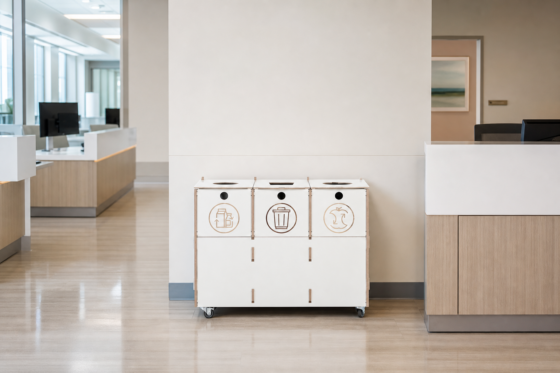
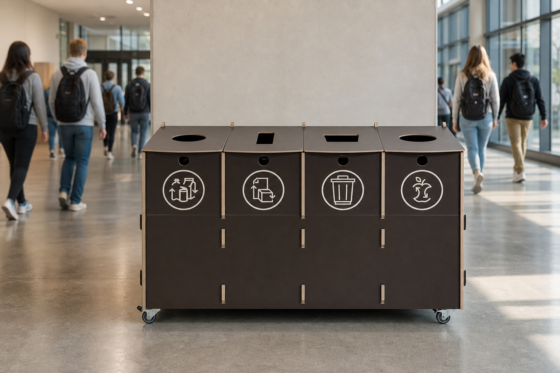
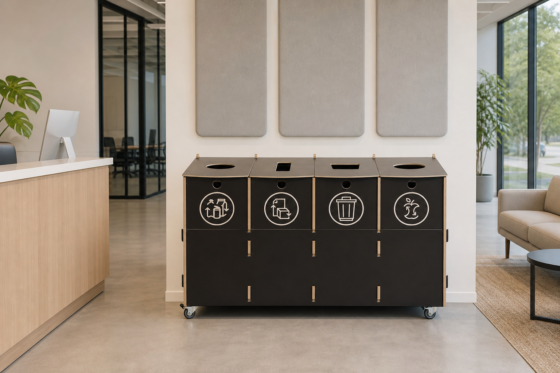
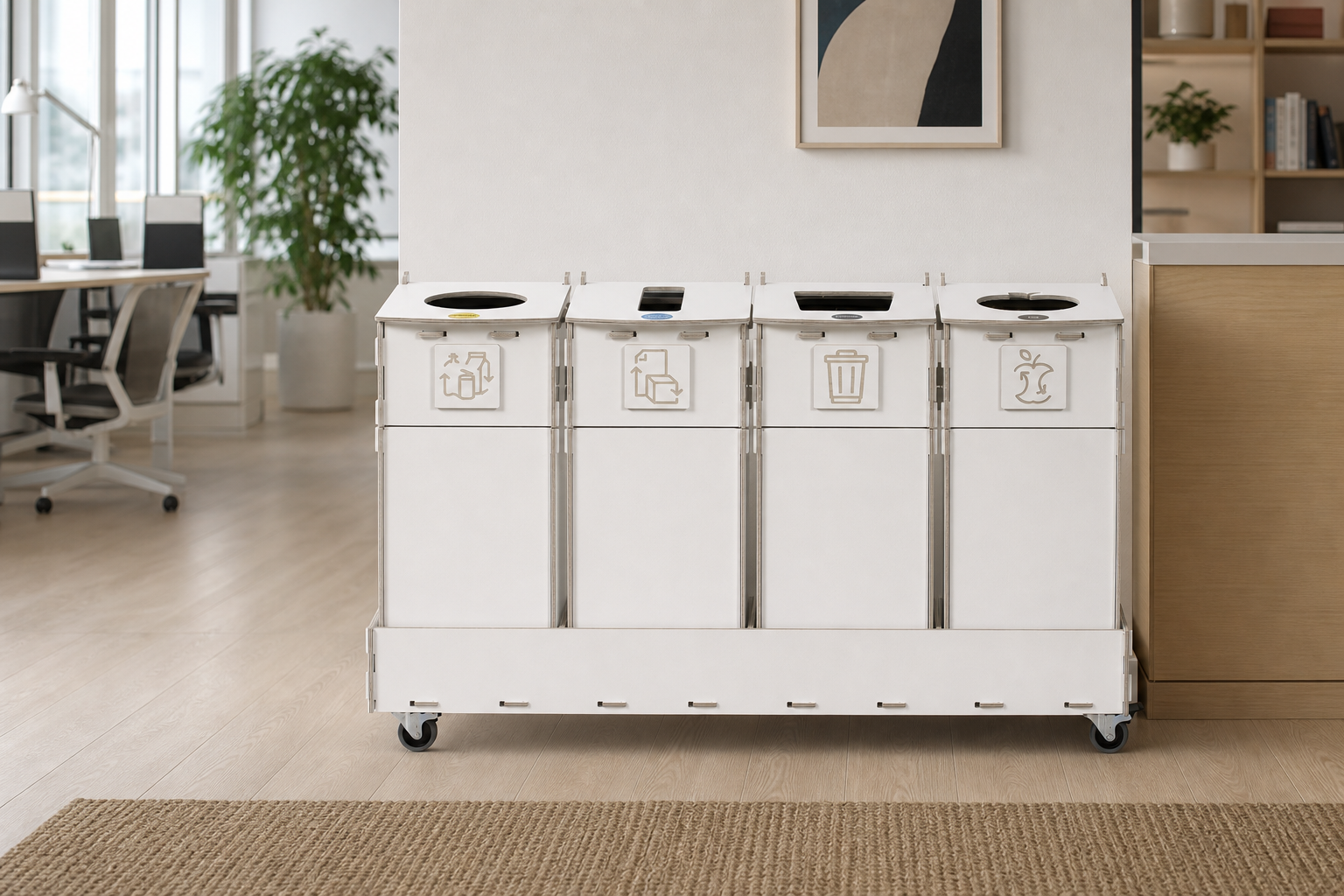
The Sorter series offers compact, customizable one- to five-compartment sorting stations constructed from durable, FSC-certified birch plywood. Equipped with clear pictograms and inner containers made from recycled materials, these systems combine clean Scandinavian design with operational durability.
-
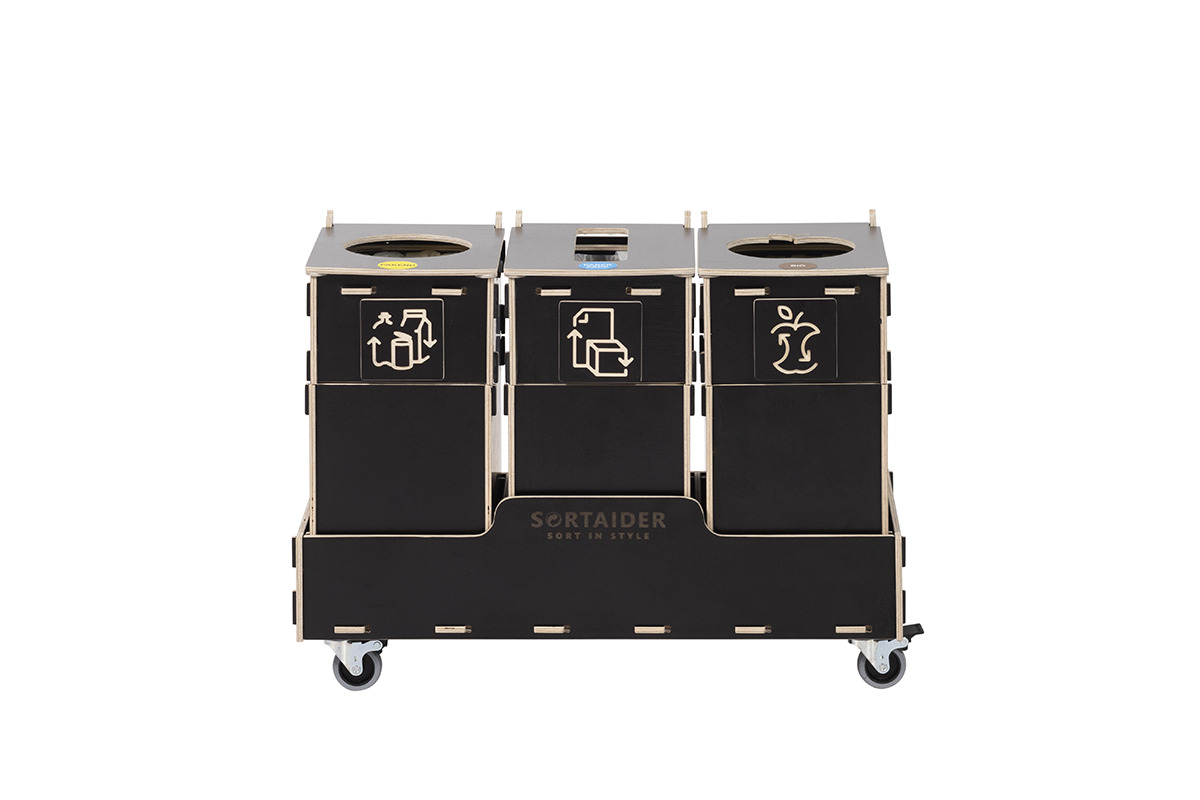
Recycling Bin Sorter 3 × 10 l brown
3 types of waste 3 x 10 l297,60 € (incl. 24% VAT)240 € (excl. VAT) -
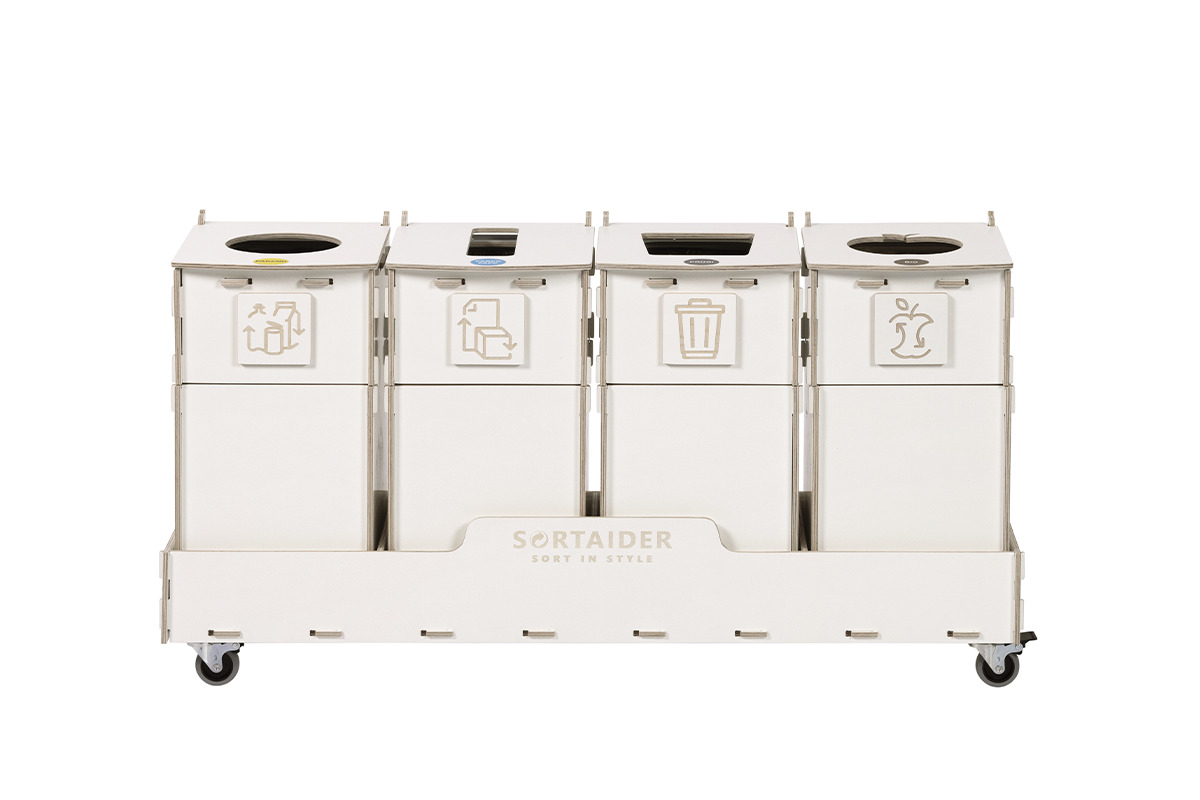
Recycling Bin Sorter 4 × 20 l white
4 types of waste 4 x 20 l607,60 € (incl. 24% VAT)490 € (excl. VAT) -
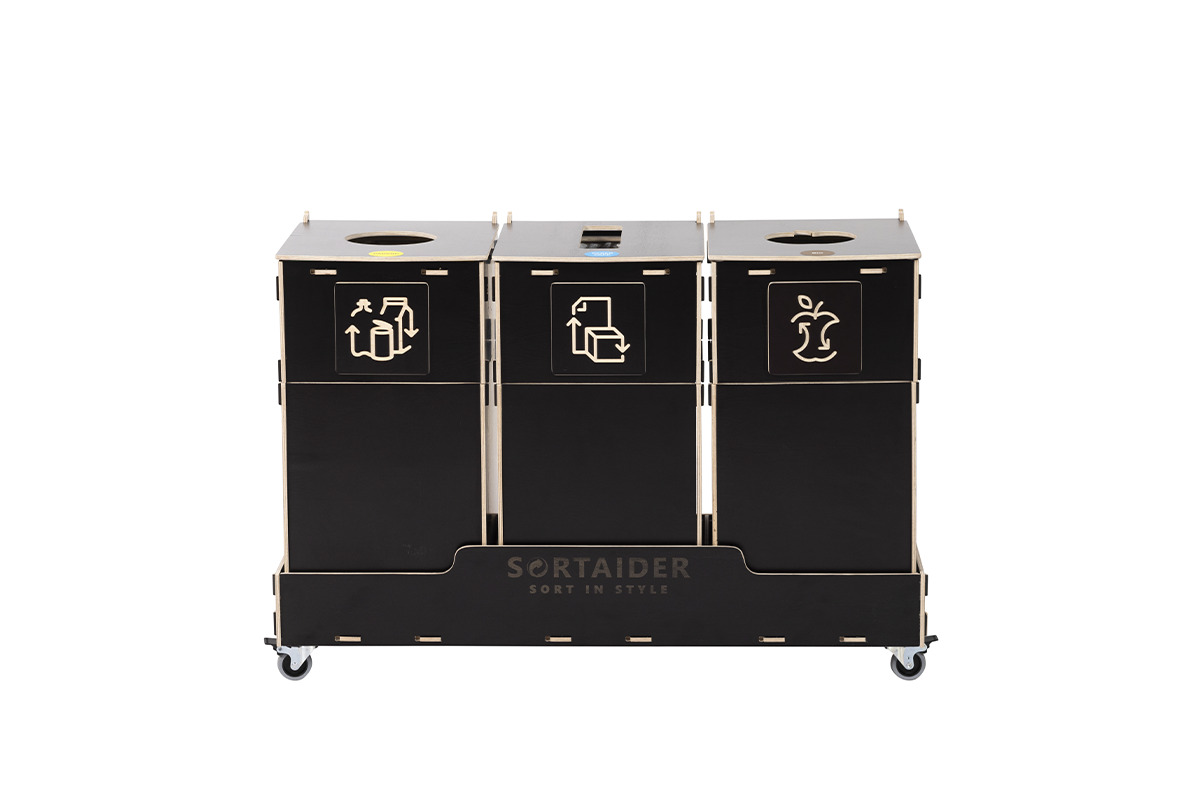
Recycling Bin Sorter 3 × 40 l brown
3 types of waste 3 x 40 l992 € (incl. 24% VAT)800 € (excl. VAT) -
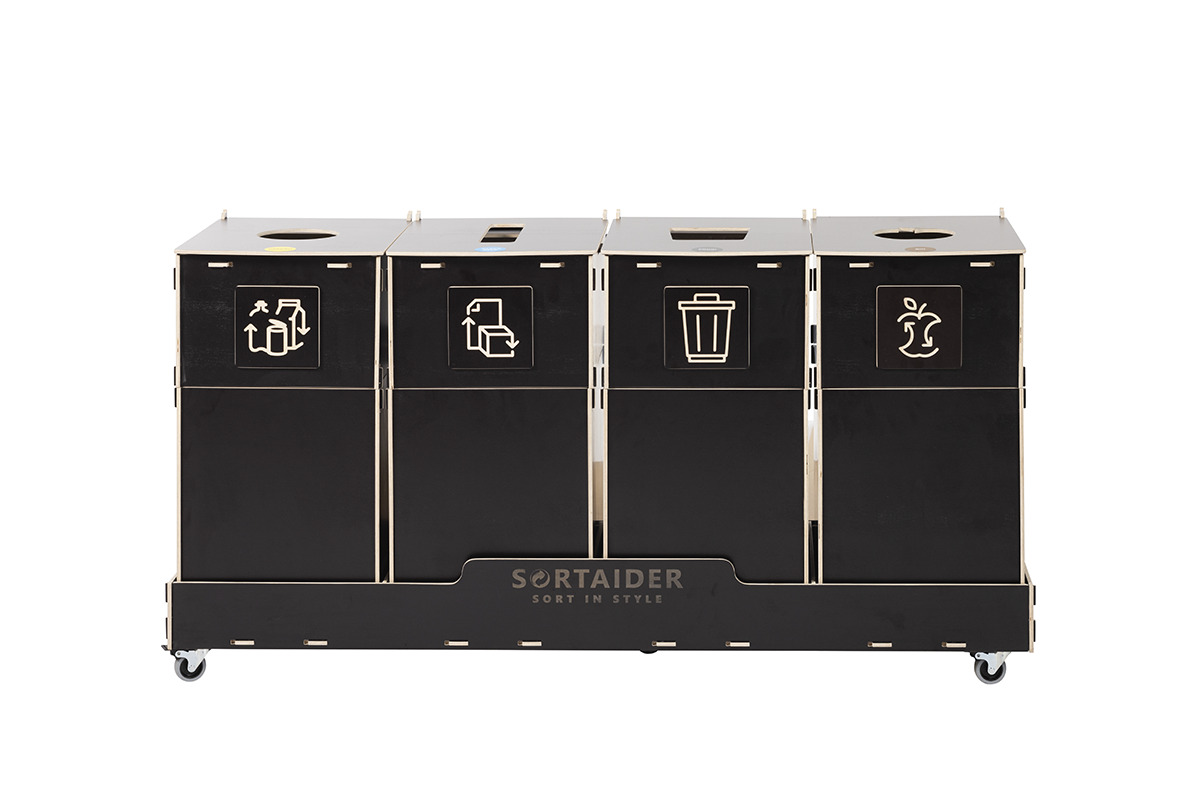
Recycling Bin Sorter 4 × 60 l brown
4 types of waste 4 x 60 l1 500,40 € (incl. 24% VAT)1 210 € (excl. VAT)
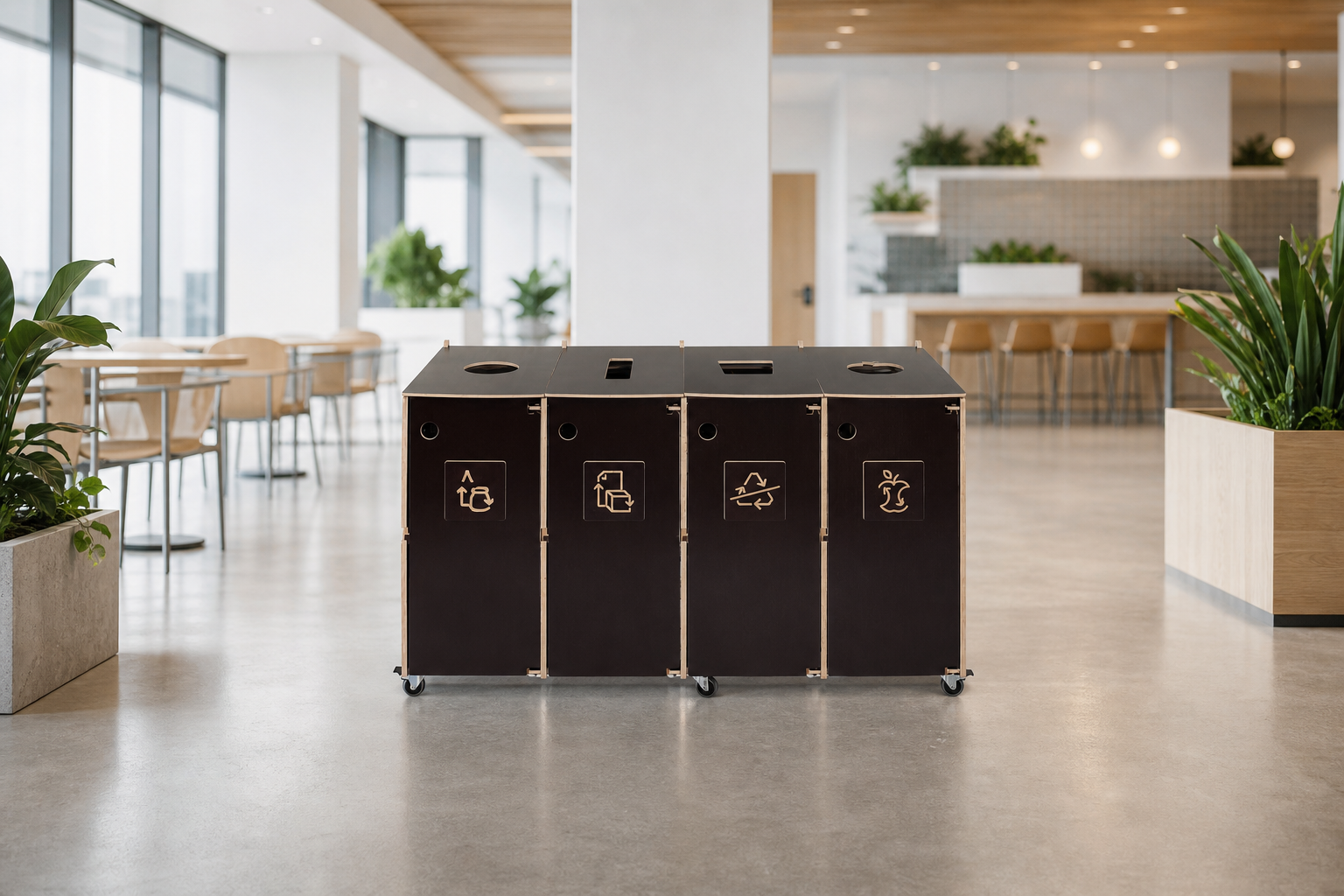
For high-traffic central areas like corporate cafeterias, healthcare facilities, or educational hubs, the multi-stream Ecolong series provides high capacity in a compact footprint. Its versatile 3-in-1 collection system allows facilities to switch effortlessly between continuous bag solutions, standard liners, or bag-free collection for paper and cardboard.
-
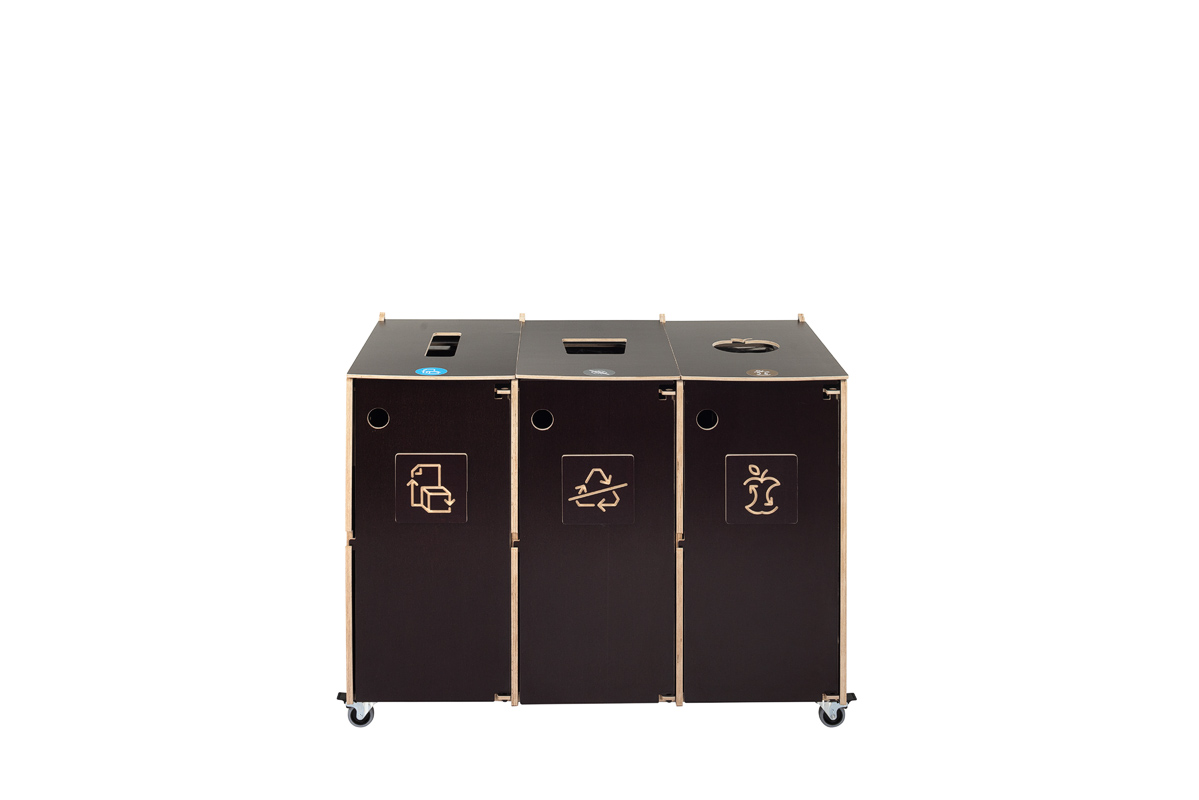
Recycling Bin Ecolong 3 × 60 l brown
3 types of waste 3 x 60 l1 475,60 € (incl. 24% VAT)1 190 € (excl. VAT) -
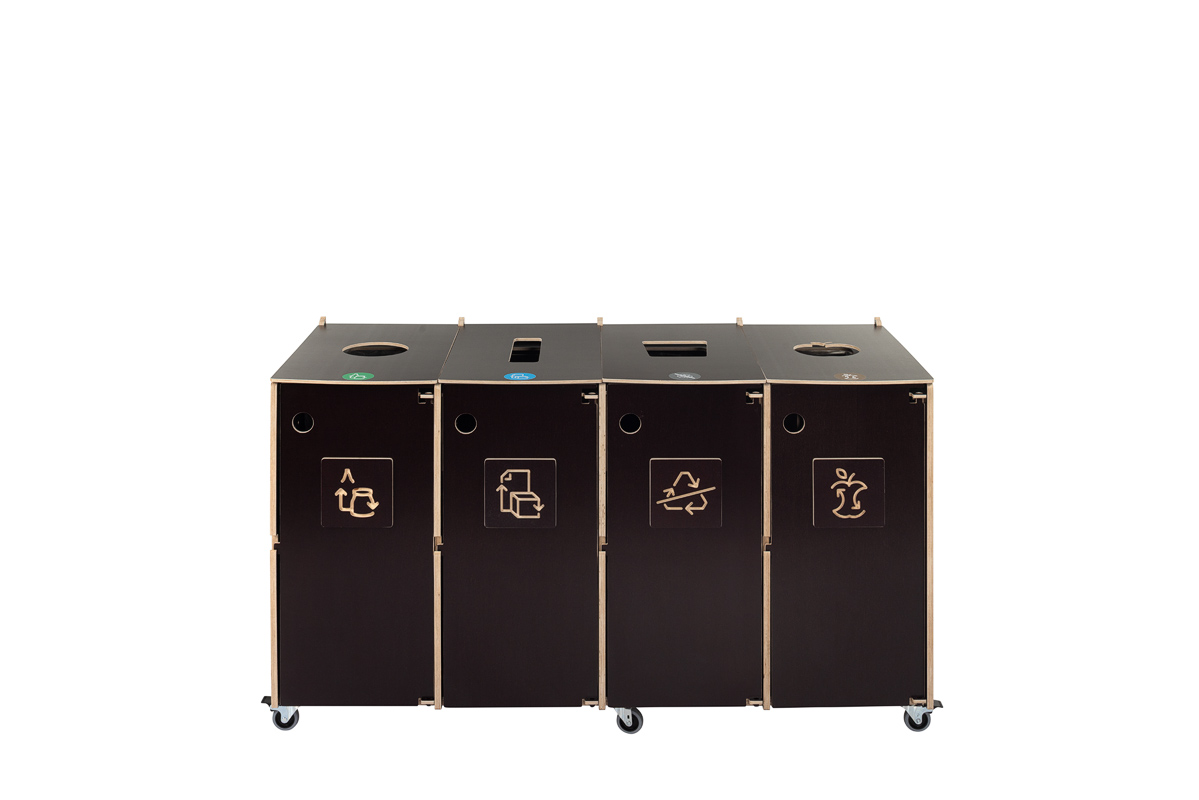
Recycling Bin Ecolong 4 × 60 l brown
4 types of waste 4 x 60 l1 872,40 € (incl. 24% VAT)1 510 € (excl. VAT) -
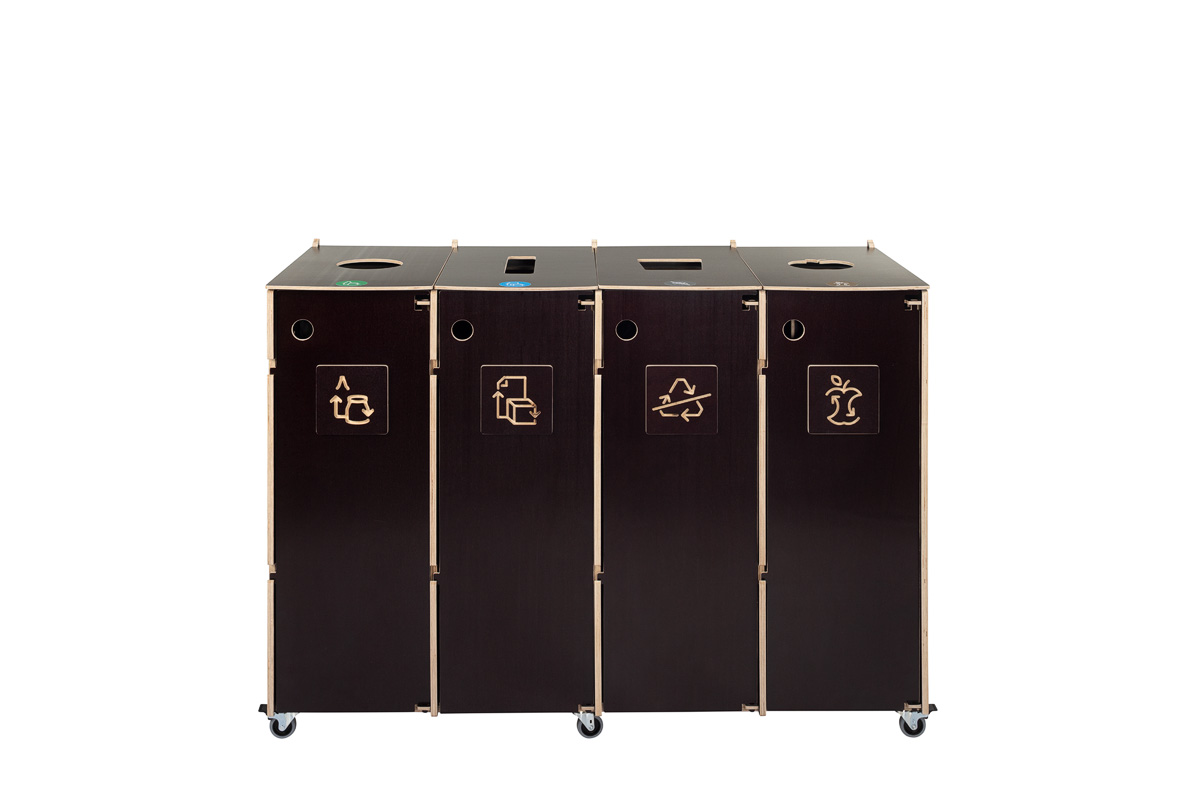
Recycling Bin Ecolong 4 × 90 l brown
4 types of waste 4 x 90 l2 442,80 € (incl. 24% VAT)1 970 € (excl. VAT)
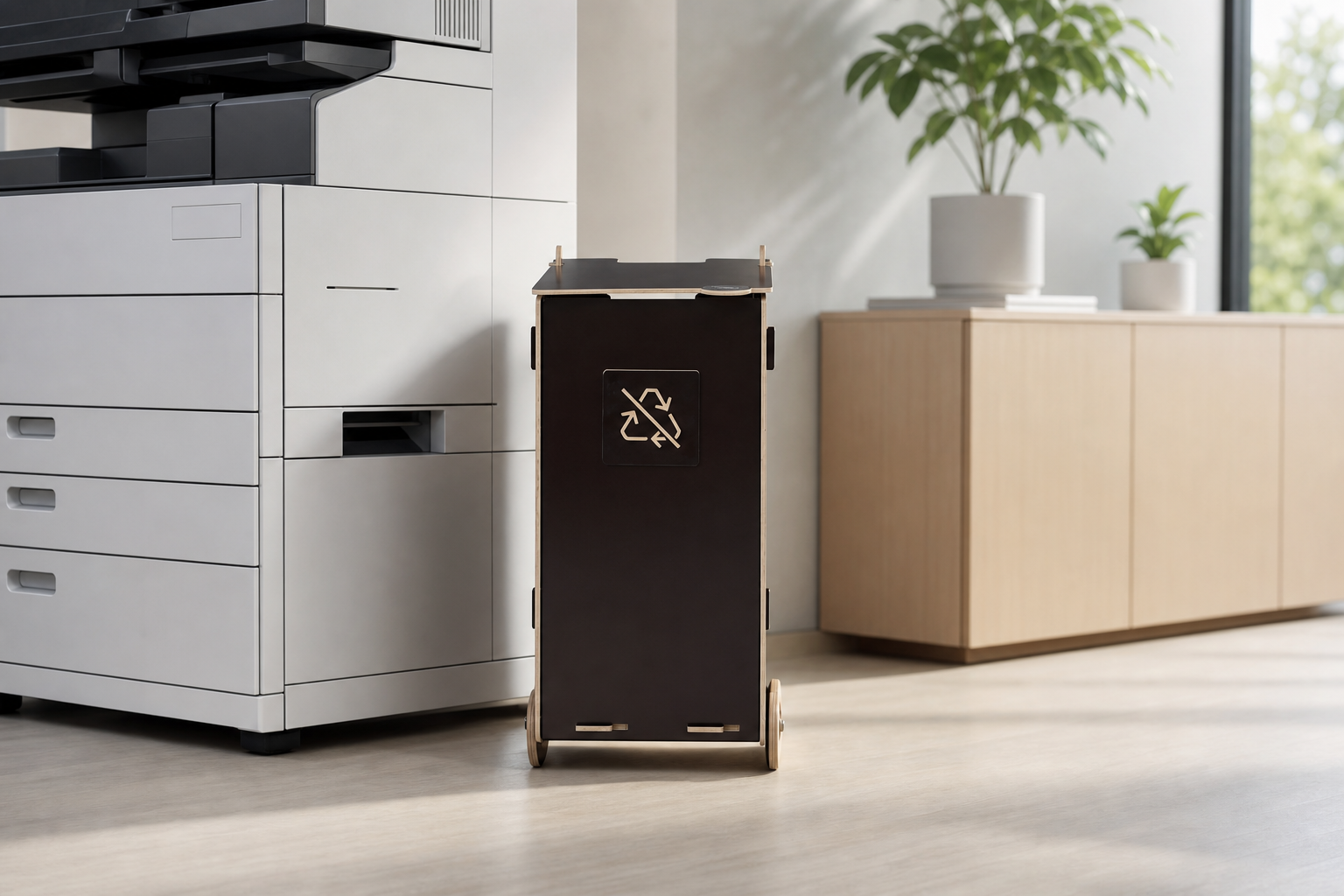
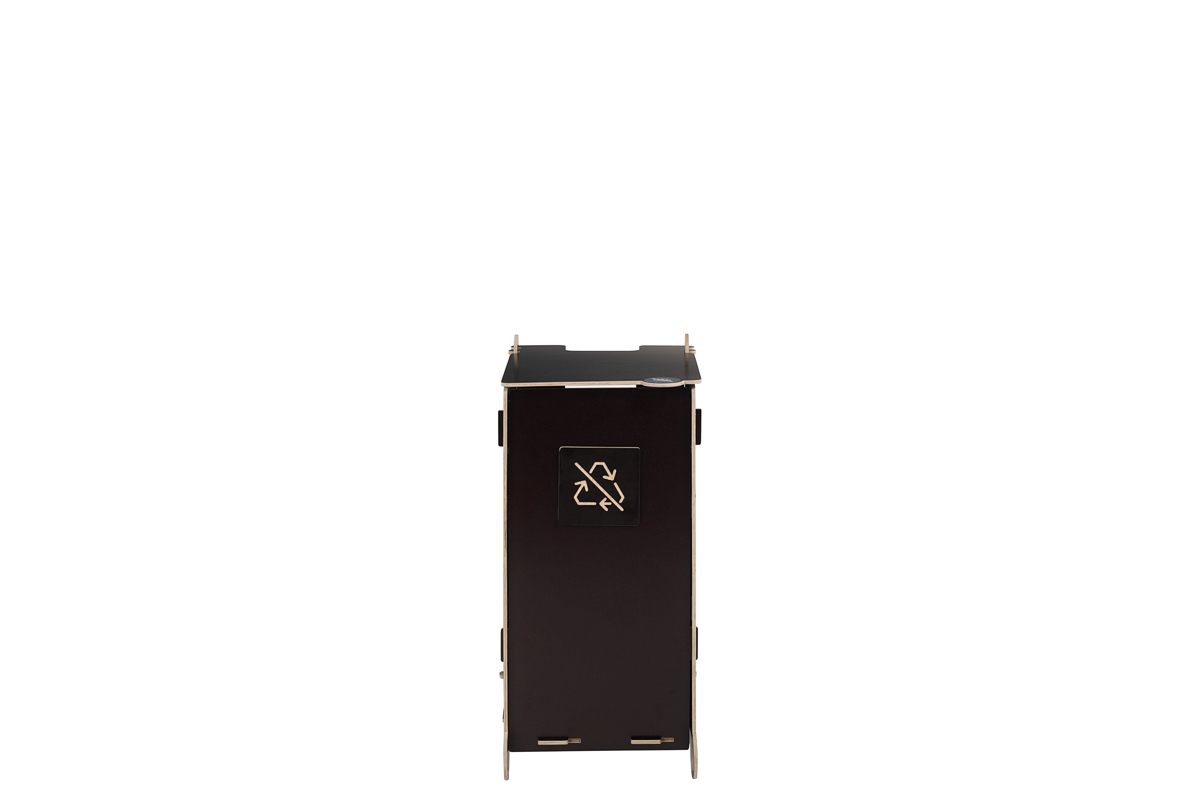
For simple single-stream collection needs in smaller office kitchens or copy rooms, standalone solutions like the Sortaider series incorporate practical maintenance details such as integrated bag roll storage and wooden wheels.
Upgrading Your Procurement Strategy
Transitioning to sustainable procurement requires a deliberate balance between material science, certified standards, structural durability, and operational efficiency. By establishing clear criteria for Scope 3 carbon reduction, insisting on verified third-party credentials, and selecting modular, long-lasting office infrastructure, procurement specialists can drive measurable environmental impact without compromising functionality.
To learn how top facility suppliers compare on material sourcing, durability, and customization, explore our industry guide comparing leading recycling bin manufacturers or review our full collection of professional recycling bins.