Can incorporating recycled content into commercial waste receptacles lower your facility’s carbon footprint without compromising durability? Evaluating material inputs, manufacturing steps, and mechanical tradeoffs is essential for procurement choices that survive rigorous sustainability audits.
Types of Recycled Materials Used in Bin Manufacturing
Specifying recycled content requires distinguishing between source streams. Under standardized reporting frameworks, recycled content claims are split into two categories, calculated consistently on a mass basis: recycled content % = (mass of recycled material ÷ total mass of the finished item) × 100.
- Pre-consumer (Post-industrial) Content: Material diverted from the waste stream during manufacturing, such as production trim, offcuts, or rejected parts. It excludes re-utilized process scrap that is routinely reground and reused within the same manufacturing process as a co-product.
- Post-consumer Recycled (PCR) Content: Material generated by households or commercial facilities that has fulfilled its intended end-use and can no longer be used for its original purpose.
Recycled Polyolefins (rHDPE and rPP)
Rigid commercial bins primarily rely on post-consumer polyolefins – specifically recycled High-Density Polyethylene (rHDPE) and recycled Polypropylene (rPP). Source materials include reclaimed detergent bottles, rigid packaging, and discarded commercial containers.
Recycled Metals
- Recycled Aluminum: Derived from post-consumer beverage cans, architectural scrap, and industrial manufacturing trimmings.
- Recycled Steel: Produced using scrap metal derived from demolished infrastructure, end-of-life equipment, and manufacturing cutoffs.
Manufacturing Processes: From Waste to Commercial Bins
Transforming recovered waste into structural receptacles requires precise mechanical and thermal processing to achieve consistent material properties.
For plastics, the process begins with collection and mechanical sorting. Post-consumer rigid plastics are separated by polymer type using near-infrared (NIR) sensors and thoroughly washed to remove organic residue, labels, and adhesives. The cleaned material is shredded into uniform flakes, melted inside an extruder equipped with melt-filtration screens to filter particulate contaminants, and cut into production-ready rHDPE or rPP pellets.
Once resin pellets are prepared, manufacturers utilize three primary molding techniques depending on the bin’s functional requirements:
- Injection Molding: Molten recycled resin is injected under high pressure into steel molds, creating precise components such as indoor bins and multi-compartment lid assemblies.
- Blow Molding: An extruded parison of molten rHDPE is clamped inside a mold and expanded using compressed air against the mold walls, producing seamless hollow container bodies.
- Rotational Molding: Powdered polymer rotates slowly inside a heated mold, producing stress-free, heavy-duty walls ideal for large outdoor receptacles.
For metal bins, recycled aluminum and steel scrap are melted in reverberatory or electric arc furnaces, re-alloyed to precise structural specifications, and cast into ingots or sheet stock before being formed via stamping, bending, and welding. To prevent rust, steel bins undergo hot-dip galvanizing – immersing formed steel in molten zinc to create a tightly bonded protective alloy layer – or receive durable powder coatings.
Quantifying Environmental Benefits and Energy Savings
Utilizing recycled inputs directly lowers the embodied carbon of waste infrastructure by bypassing resource-intensive extraction and refining steps.
- Aluminum Processing: Manufacturing products from recycled aluminum saves 95% of the energy consumed during primary extraction from bauxite ore, dramatically reducing associated greenhouse gas emissions.
- Steel Production: Utilizing scrap steel instead of virgin iron ore saves 60% to 74% of production energy and reduces carbon emissions by roughly 58%.
- Plastic Systems: Closed-loop polyolefin systems achieve up to 46% savings in cumulative energy demand and up to 28% reductions in greenhouse gas emissions compared to fossil-dependent virgin plastic systems.
While European Union frameworks set baseline circular economy goals, national public procurement guidelines across Finland, Sweden, Denmark, and the Baltics enforce strict verification rules. Integrating verified recycled-content receptacles helps satisfy operational criteria for an ISO 14001 environmental management system and supports Scope 3 supply chain targets.
Performance Tradeoffs and Material Limitations
While recycled materials offer environmental benefits, procurement teams must evaluate structural and chemical tradeoffs to ensure products meet service life expectations.
Polyolefin Tradeoffs (rHDPE and rPP)
- Impact Strength Loss: Post-consumer rPP exhibits lower impact strength than custom virgin PP grades. High mechanical loads or sub-zero winter temperatures can cause unmodified rPP bins to crack.
- Stream Heterogeneity and Cross-Contamination: Reclaimed rigid plastics often contain legacy fillers like calcium carbonate or subtle PE/PP cross-contamination. When rPP contaminates an rHDPE matrix, elongation at break and tensile impact strength drop. Manufacturers counter this by adding olefin block copolymer compatibilizers or impact polypropylene copolymers to restore toughness.
- Oxidative Degradation: Thermal stress during re-processing reduces thermo-oxidative stability and melt viscosity, requiring light-stabilizing additives for outdoor exposure.
Metal Performance Factors
- Localized Corrosion: Repeated recycling cycles can accumulate trace impurities in aluminum alloys; higher trace copper increases pitting corrosion susceptibility, while higher trace zinc elevates intergranular corrosion risks in wet environments.
- Galvanic Action: Direct contact between recycled aluminum and stainless steel hardware in outdoor settings risks galvanic corrosion if moisture settles at the junction without insulating barriers. In contrast, hot-dip galvanized steel provides high corrosion resistance for severe outdoor weathering.
Procurement Standards, Verification, and Compliance
To protect your organization against greenwashing and verify supplier claims for ESG waste management reporting, procurement specifications should mandate standardized third-party verification.
Third-party certifications, such as SCS Recycled Content Certification based on ISO 14021 and SCS-103 standards, verify exact percentage claims through mass-balance supply chain audits. Furthermore, public procurement policies – such as the US EPA Comprehensive Procurement Guidelines (CPG) under Federal Acquisition Regulation (FAR) standards – set mandatory minimum post-consumer recycled content levels for office waste and recycling containers.
When evaluating vendor proposals, always request SKU-specific product specification sheets and current certificates rather than accepting generic, company-wide sustainability statements.
Beyond Recycled Plastics: Low-Embodied Carbon Alternatives
While recycled plastic reduces virgin fossil fuel consumption, it does not eliminate the long-term management challenges of synthetic polymers. Evaluating the full environmental impact of plastic bins reveals that mechanical recycling degrades polymer quality over successive lifecycles, leaving un-recyclable residue.
For indoor workplace environments, healthcare facilities, and educational institutions, natural renewable materials present a compelling alternative that accelerates your circular economy strategy.
The Benefits of FSC-Certified Birch Plywood
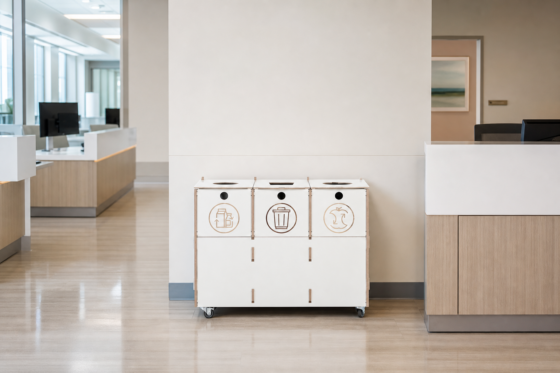
Manufacturing indoor waste stations from FSC-certified Baltic birch plywood provides distinct operational and structural advantages:
- Significantly Lower Carbon Footprint: Responsibly harvested timber acts as a natural carbon sink. Baltic birch plywood waste stations emit 2 to 4 times lower CO₂ lifecycle emissions compared to traditional virgin plastic or metal bins.
- Superior Interior Aesthetics: Natural wood finishes elevate corporate interiors, seamlessly integrating waste separation into high-profile offices far better than industrial plastic units.
- Structural Durability: High-grade birch plywood provides high tensile strength, dimensional stability, and impact resistance in busy commercial corridors.
Organizations aiming to lower Scope 3 supply chain emissions, earn points toward LEED certification waste management credits, or execute a comprehensive net-zero office strategy can transition indoor sorting infrastructure toward low-embodied carbon timber solutions.
Explore our versatile recycling bins collection to review modular configurations designed for modern facility management.
The Sorter Series
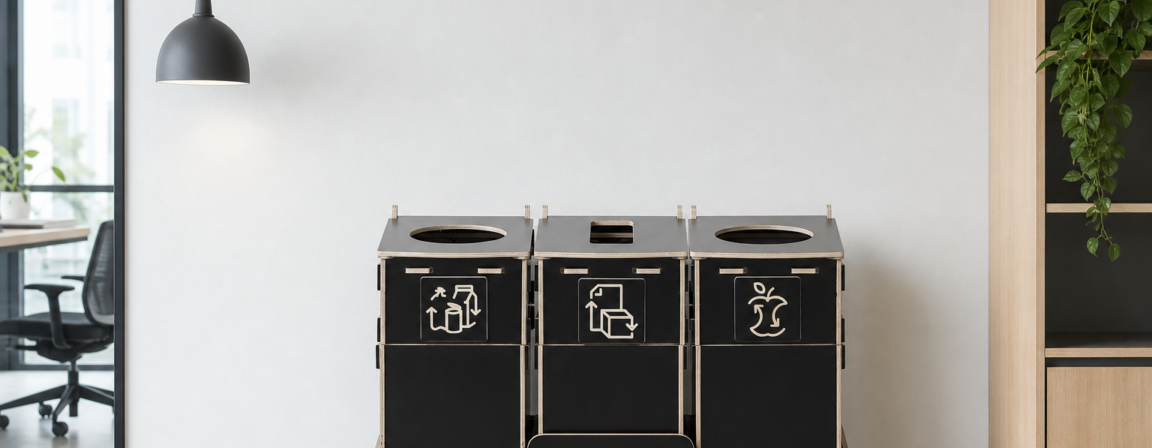
Compact indoor sorting stations featuring custom laser brand engraving options, renewable birch plywood construction, and a screwless assembly design.
-
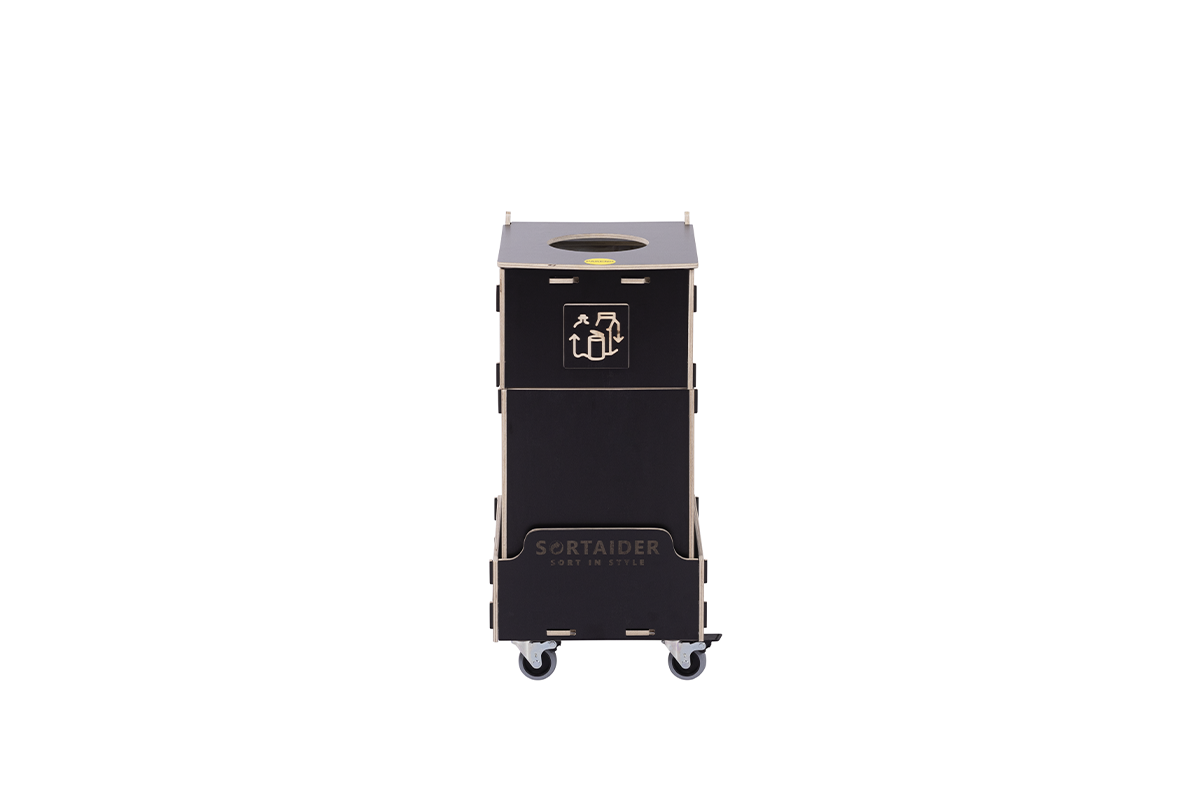
Recycling Bin Sorter 1 × 10 l brown
1 type of waste 1 x 10 l173,60 € (incl. 24% VAT)140 € (excl. VAT) -
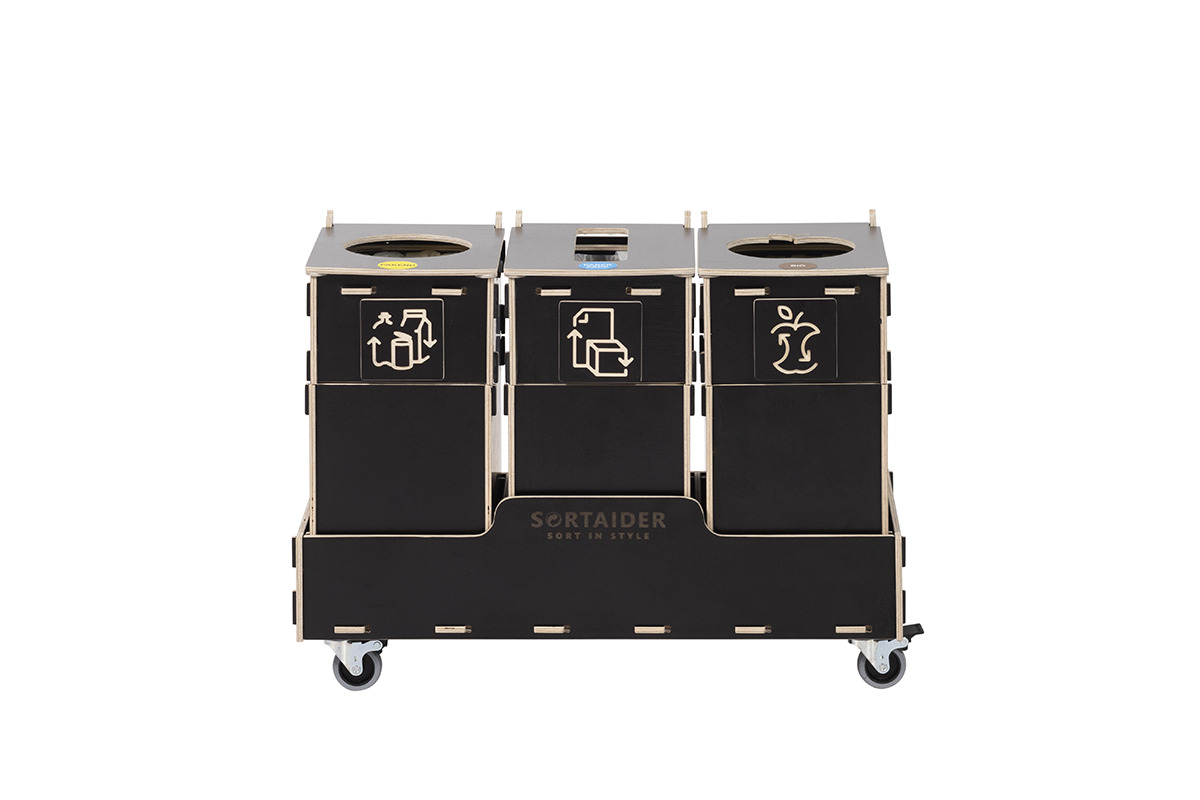
Recycling Bin Sorter 3 × 10 l brown
3 types of waste 3 x 10 l297,60 € (incl. 24% VAT)240 € (excl. VAT) -
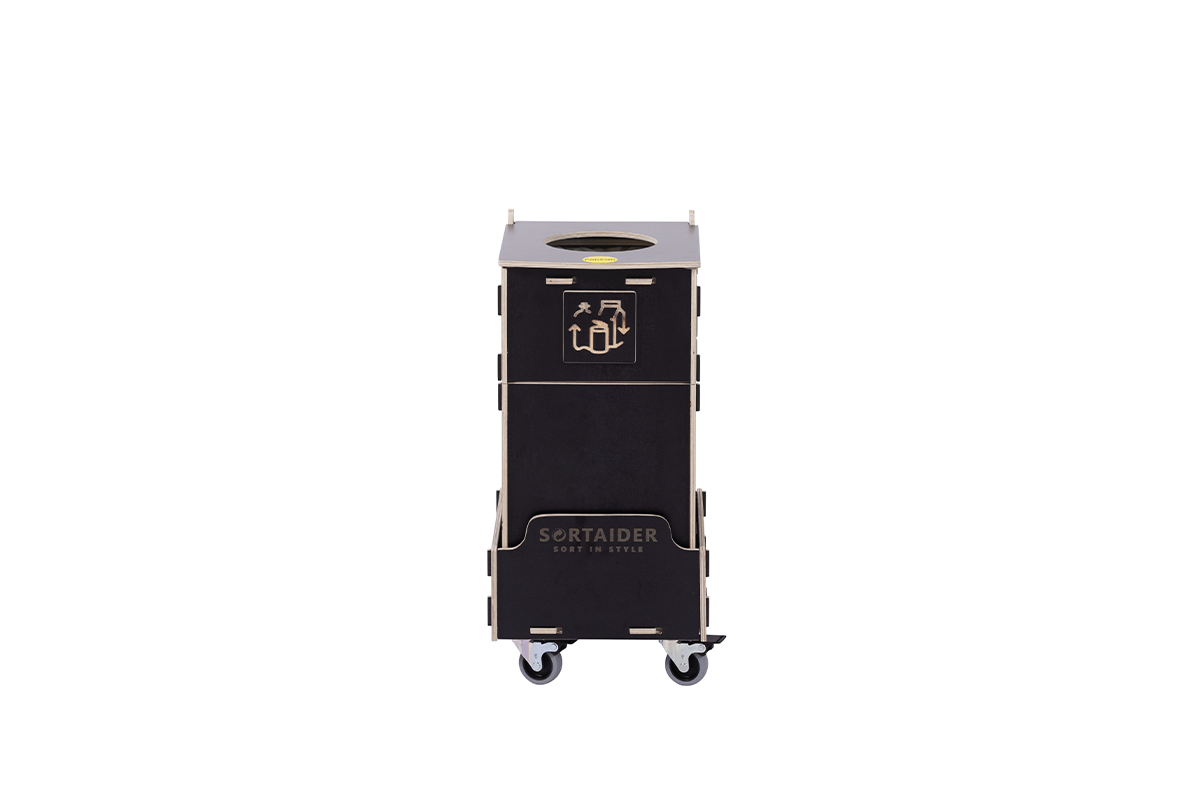
Recycling Bin Sorter 1 × 20 l brown
1 type of waste 1 x 20 l223,20 € (incl. 24% VAT)180 € (excl. VAT)
For flexible capacity demands across creative studios or corporate offices, review full Sorter series options.
The Container Series
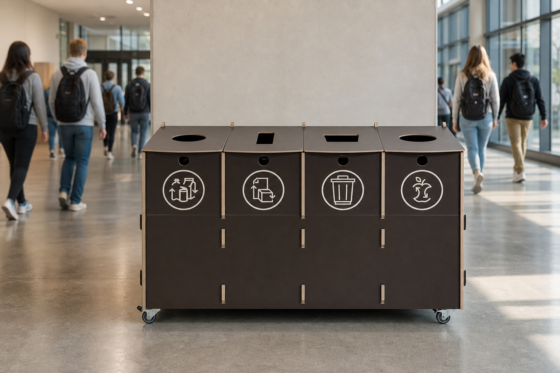
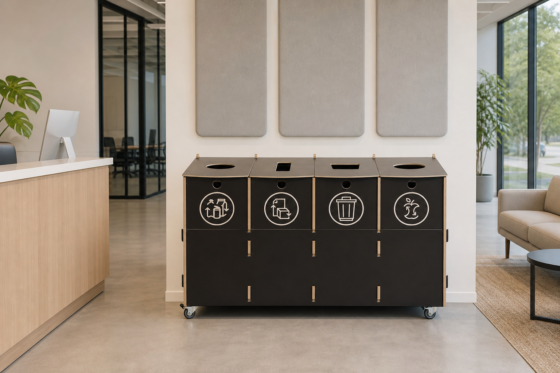
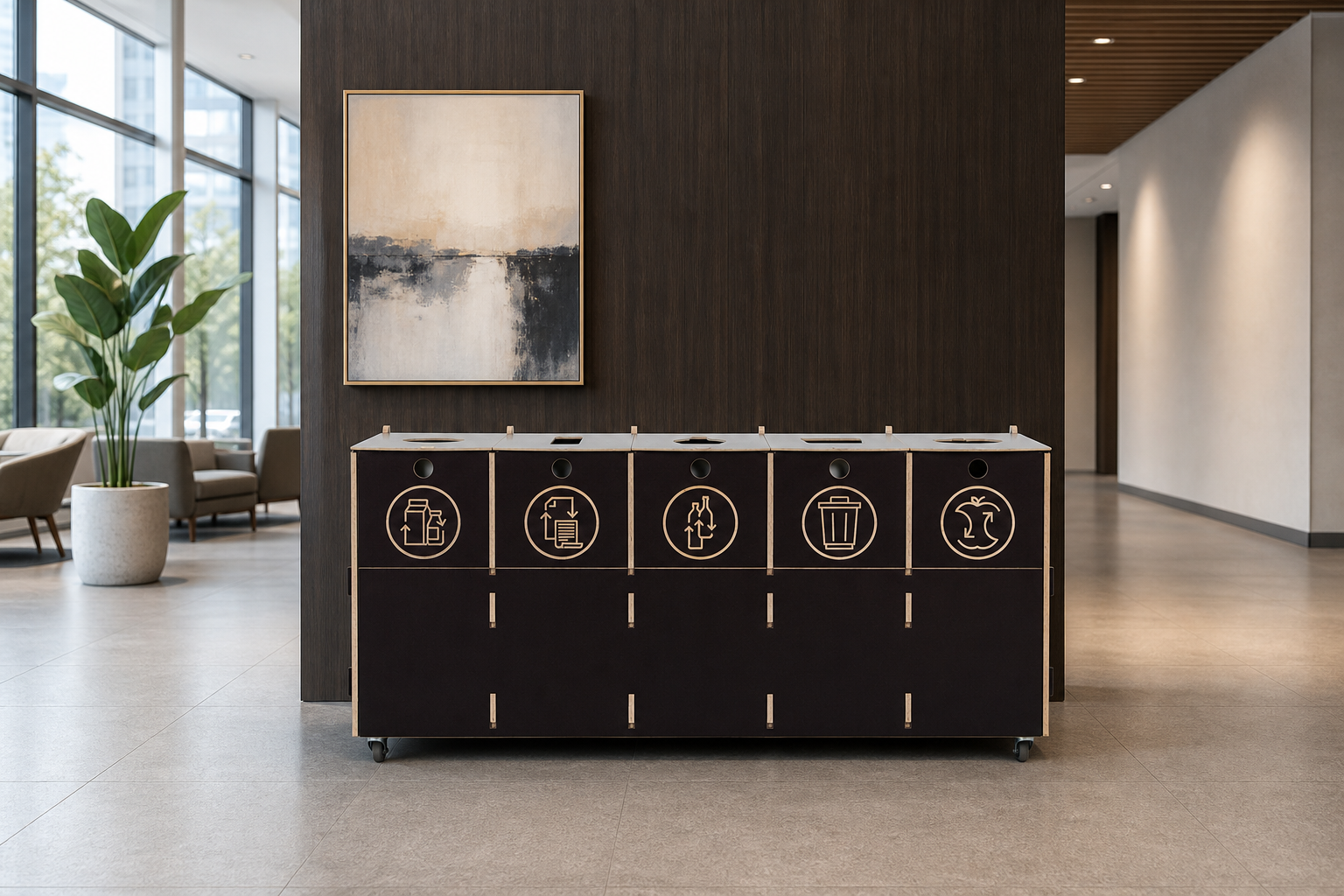
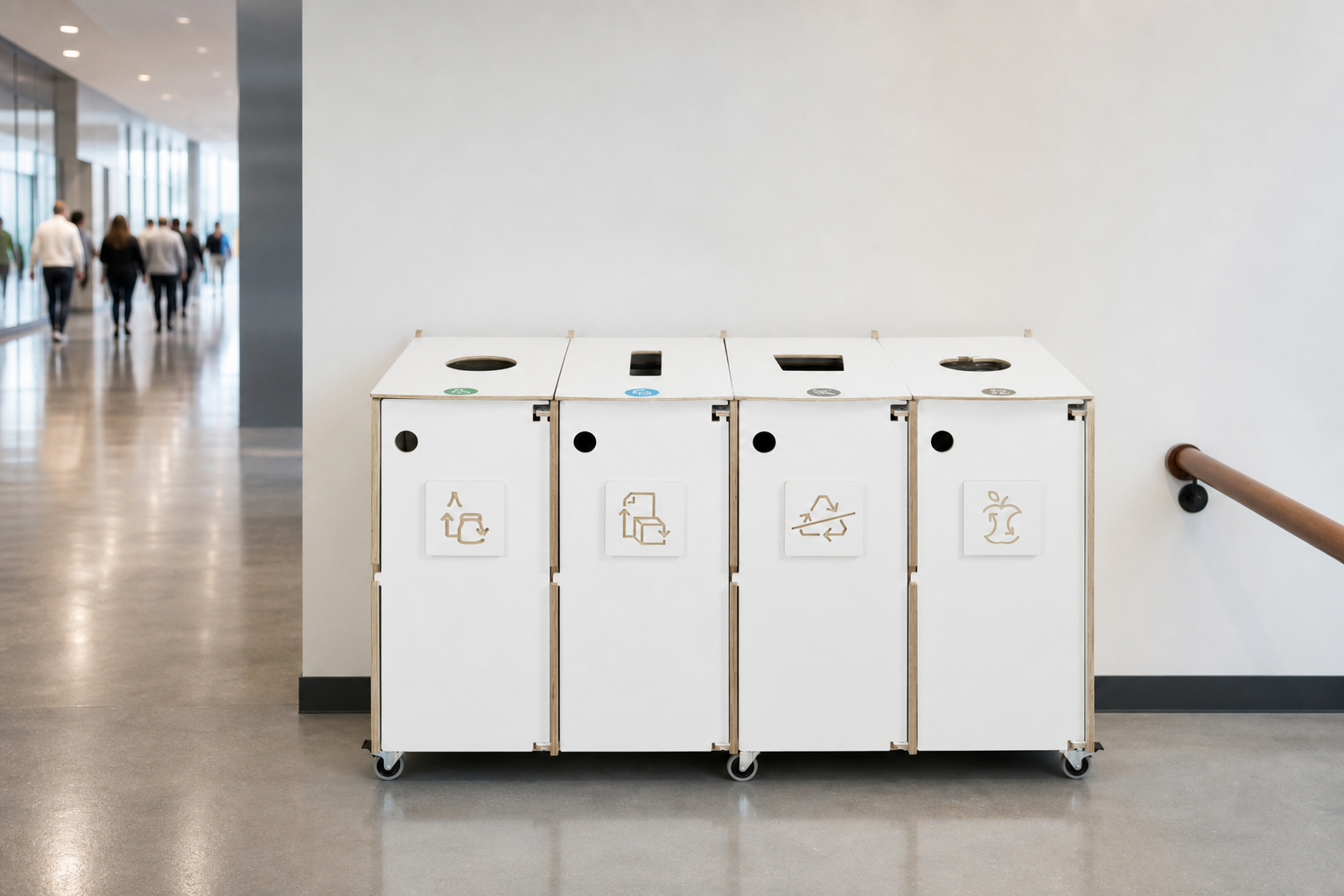
Award-winning multi-compartment recycling hubs tailored for high-traffic corporate spaces, combining Red Dot Design Award recognition with durable plywood construction.
-
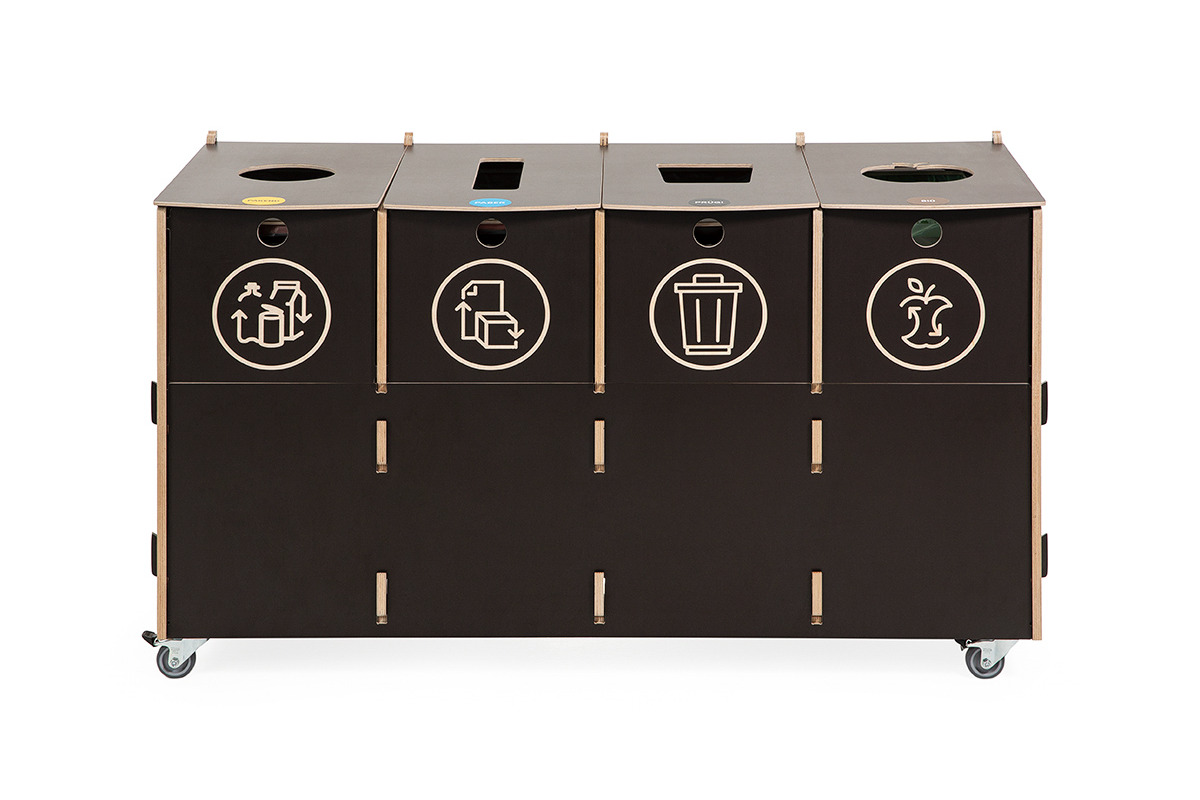
Recycling Bin Container 4 × 40 l brown
4 types of waste 4 x 40 l1 612 € (incl. 24% VAT)1 300 € (excl. VAT) -
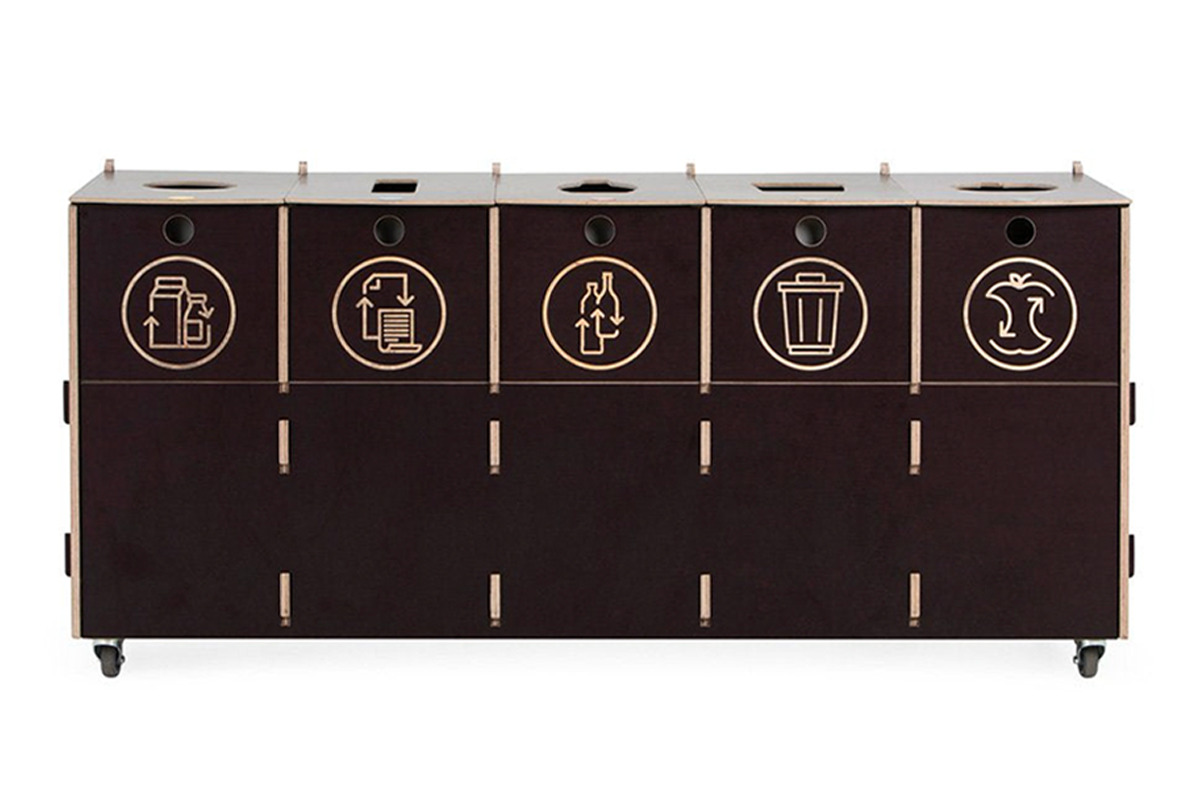
Recycling Bin Container 5 × 40 l brown
5 types of waste 5 x 40 l1 798 € (incl. 24% VAT)1 450 € (excl. VAT) -
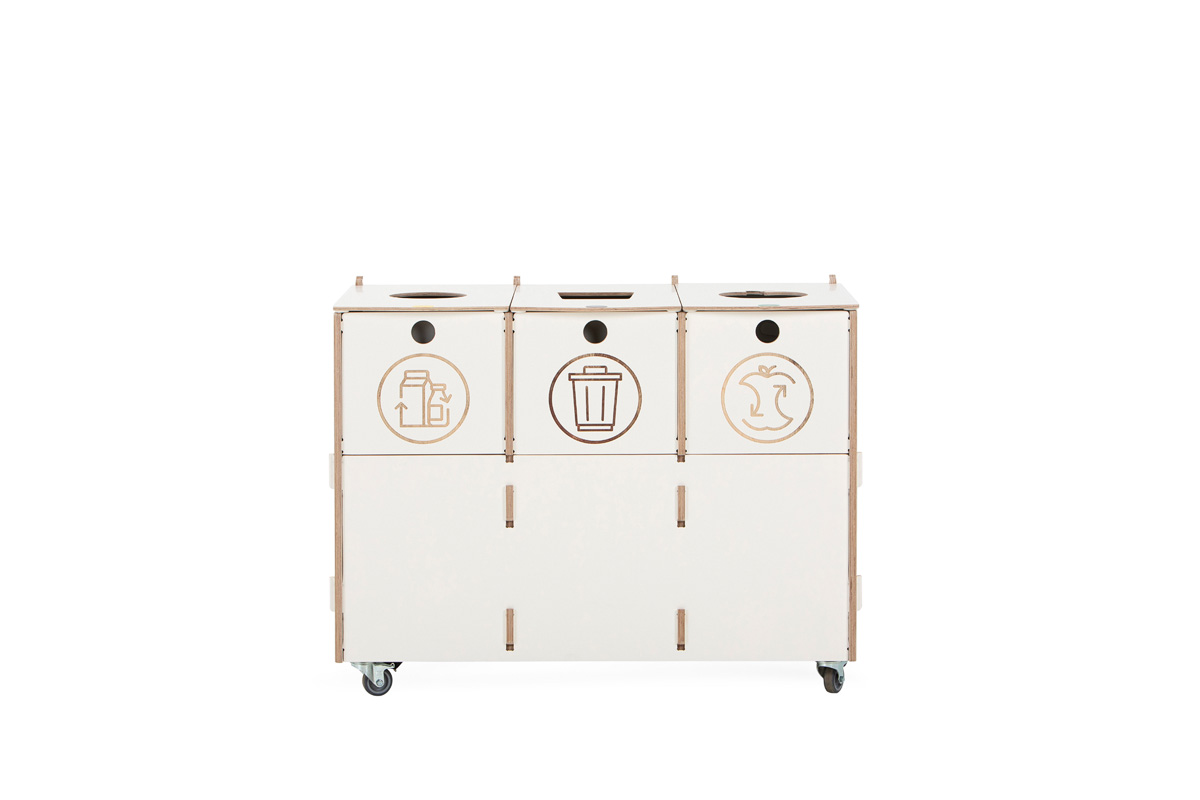
Recycling Bin Container 3 × 40 l white
3 types of waste 3 x 40 l1 215,20 € (incl. 24% VAT)980 € (excl. VAT) -

Recycling Bin Container 4 × 40 l white
4 types of waste 4 x 40 l1 612 € (incl. 24% VAT)1 300 € (excl. VAT) -
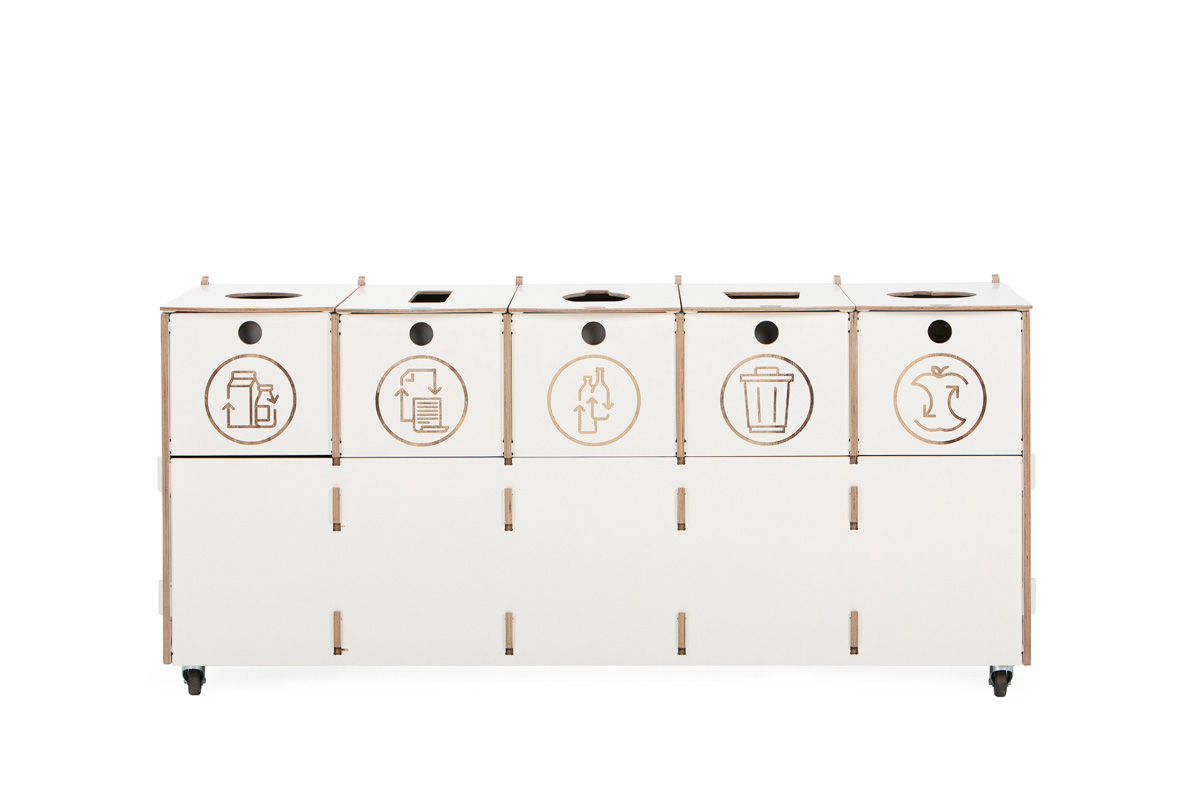
Recycling Bin Container 5 × 40 l white
5 types of waste 5 x 40 l1 798 € (incl. 24% VAT)1 450 € (excl. VAT)
Discover additional architectural configurations in our Container series catalog.
The Ecolong Series
High-volume waste sorting hubs featuring space-saving configurations and a unique 3-in-1 system that supports continuous bag, standard bag frame, or bag-free collection. Learn more about multi-stream setups in our Ecolong series line.
Optimizing Your Commercial Bin Infrastructure
Balancing recycled content compliance with long-term material durability requires matching the substrate to your operational setting. While heavy-duty outdoor locations benefit from hot-dip galvanized steel or UV-stabilized rHDPE, indoor commercial spaces achieve far greater carbon reductions and aesthetic integration by deploying renewable, low-embodied carbon timber solutions.
If you are evaluating waste infrastructure for your sustainability roadmap, review our comparative analysis of recycling bin manufacturers or read our practical guide on how to reduce your office carbon footprint. Contact our procurement specialists today to request technical specification sheets and lifecycle carbon assessment data for your facility setup.