Could your office operations survive a rigorous carbon audit? For sustainability managers, moving from green intentions to a verified net-zero strategy requires science-based targets and measurable infrastructure changes. Here is how to structure a credible roadmap for your organization.
Defining Your Net-Zero Boundaries
A credible net-zero office strategy must align with the Science Based Targets initiative (SBTi) Corporate Net-Zero Standard. This framework requires reducing Scope 1, 2, and 3 emissions to a residual level and neutralizing any remaining emissions through removals by 2050 at the latest.
To structure an effective plan, you must categorize your emissions according to the Greenhouse Gas Protocol:
- Scope 1 (Direct Emissions): These originate from sources your organization owns or controls, such as natural gas used for heating office buildings or fuel for company vehicles.
- Scope 2 (Indirect Energy): These are emissions from the generation of purchased electricity, steam, or cooling consumed within your facility.
- Scope 3 (Value Chain): This often represents the largest portion of an office’s footprint, covering indirect emissions from business travel, employee commuting, and waste disposal.
Setting Science-Based Targets
Vague goals like “being greener” no longer satisfy modern ESG reporting requirements or investor expectations. To be credible, targets must be SMART (Specific, Measurable, Achievable, Relevant, and Time-bound).
The US EPA and SBTi recommend setting near-term targets for the next 5–10 years that aim for an absolute reduction in emissions rather than just intensity-based metrics. Research suggests that most companies should aim to reduce their CO2 emissions by 90–95% by 2050, leaving only a tiny fraction to be neutralized by carbon removal technologies.
Decarbonizing Workplace Infrastructure
Energy use for heating, cooling, and lighting represents the primary direct operational source of carbon in modern offices. However, procurement managers must also address the “hidden” carbon in office furniture and fixtures.
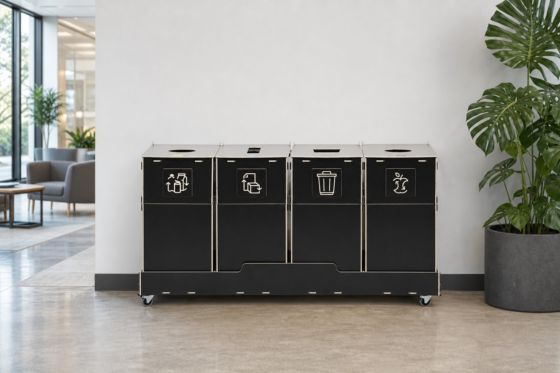
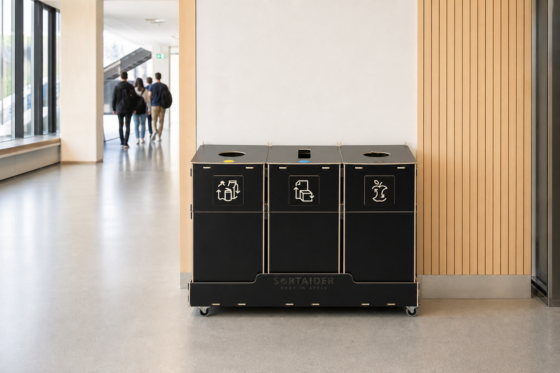
When selecting office equipment, prioritize low-embodied carbon materials. For example, choosing waste-sorting stations made from renewable birch plywood instead of metal or plastic can result in 2 to 4 times lower CO2 emissions over the product’s lifecycle. This simple procurement shift directly reduces your Scope 3 impact.
-
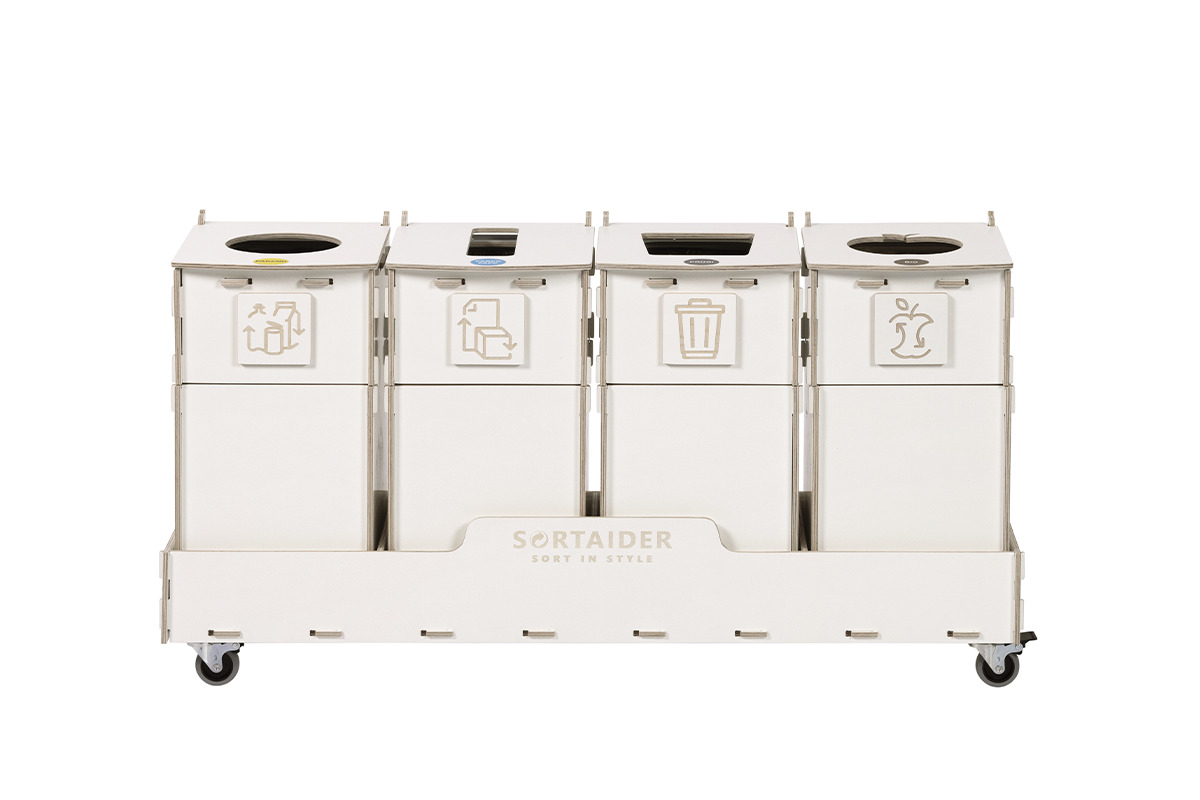
Recycling Bin Sorter 20W4
4 types of waste 4 x 20 L607,60 € (incl. 24% VAT)490 € (excl. VAT) -
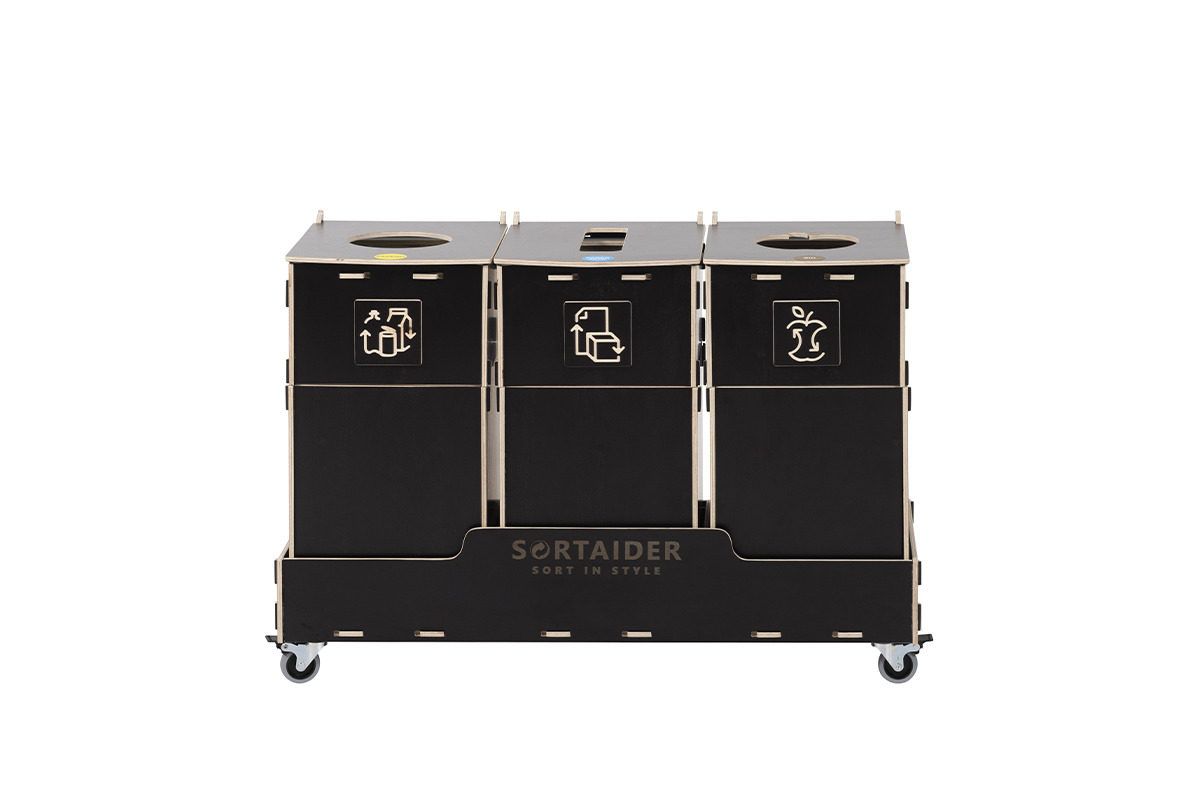
Recycling Bin Sorter 30B3
3 types of waste 3 x 30 L731,60 € (incl. 24% VAT)590 € (excl. VAT) -
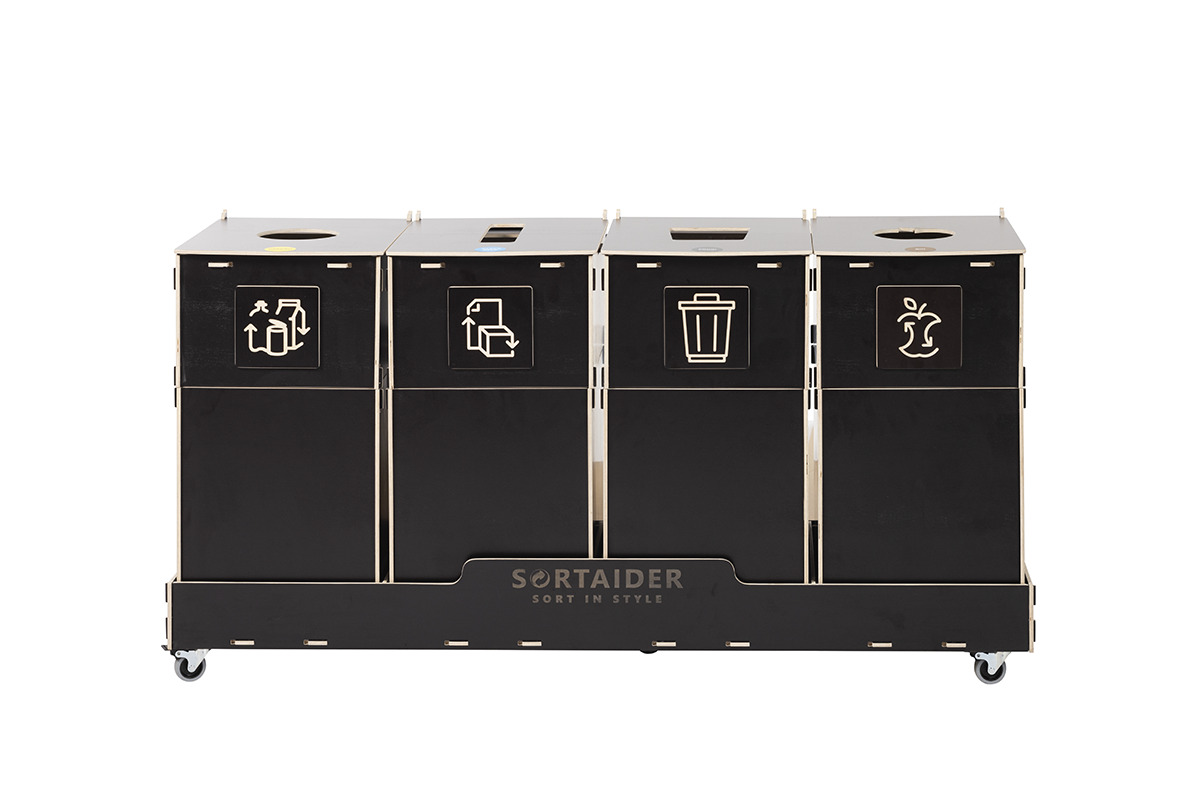
Recycling Bin Sorter 60B4
4 types of waste 4 x 60 L1 500,40 € (incl. 24% VAT)1 210 € (excl. VAT) -
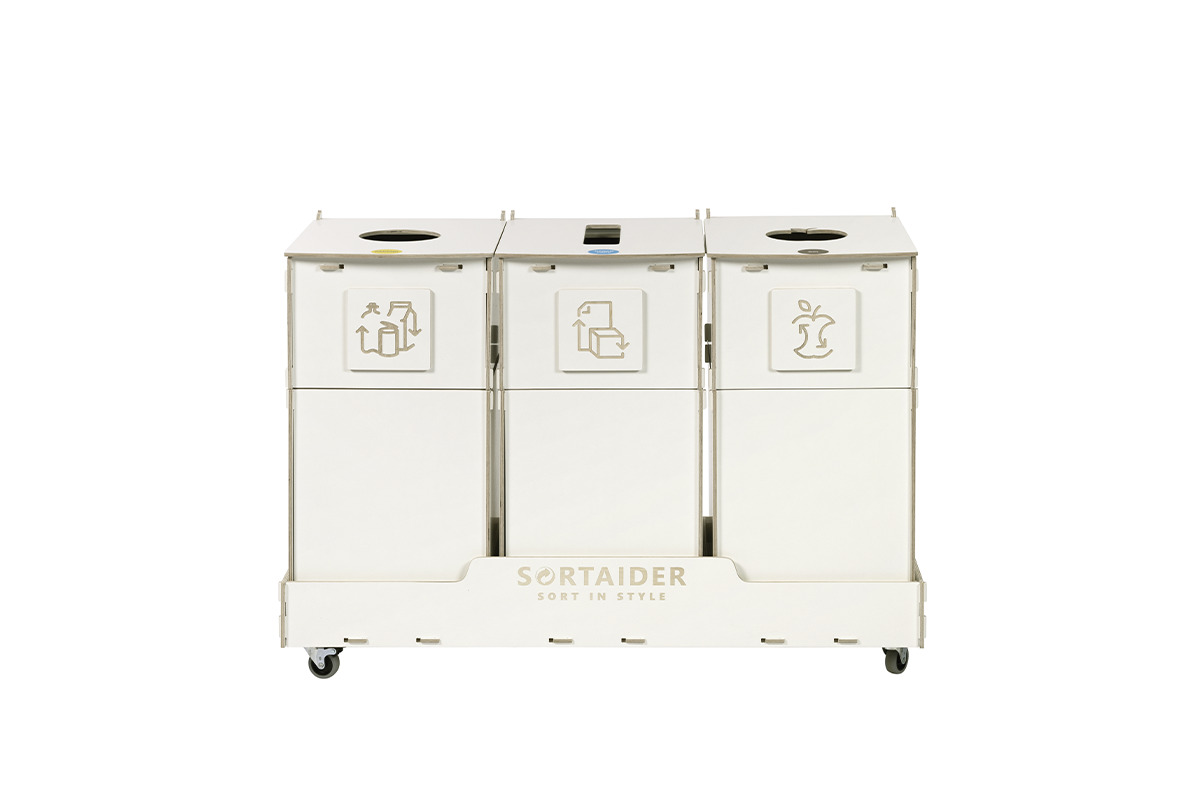
Recycling Bin Sorter 60W3
3 types of waste 3 x 60 L1 140,80 € (incl. 24% VAT)920 € (excl. VAT)
Implementing an Effective Waste-Sorting Framework
Waste management is one of the most visible pillars of any green office certification. To achieve high diversion rates, your strategy should focus on data and behavioral science.
Conduct a Baseline Waste Audit
You cannot manage what you do not measure. A systematic waste audit for offices involves collecting and weighing materials over a period of one to seven days to account for daily fluctuations. This process identifies exactly where the sorting process is breaking down, providing the empirical foundation needed for accurate sustainability disclosures.
Transition to Centralized Recycling Hubs
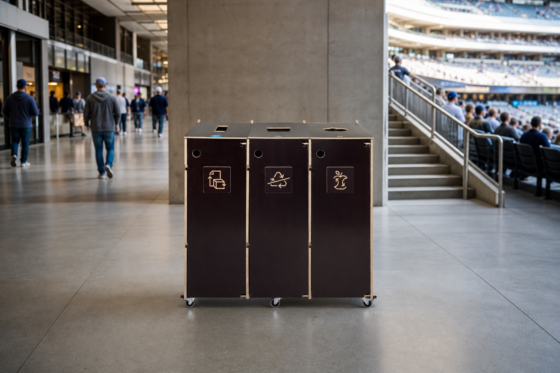
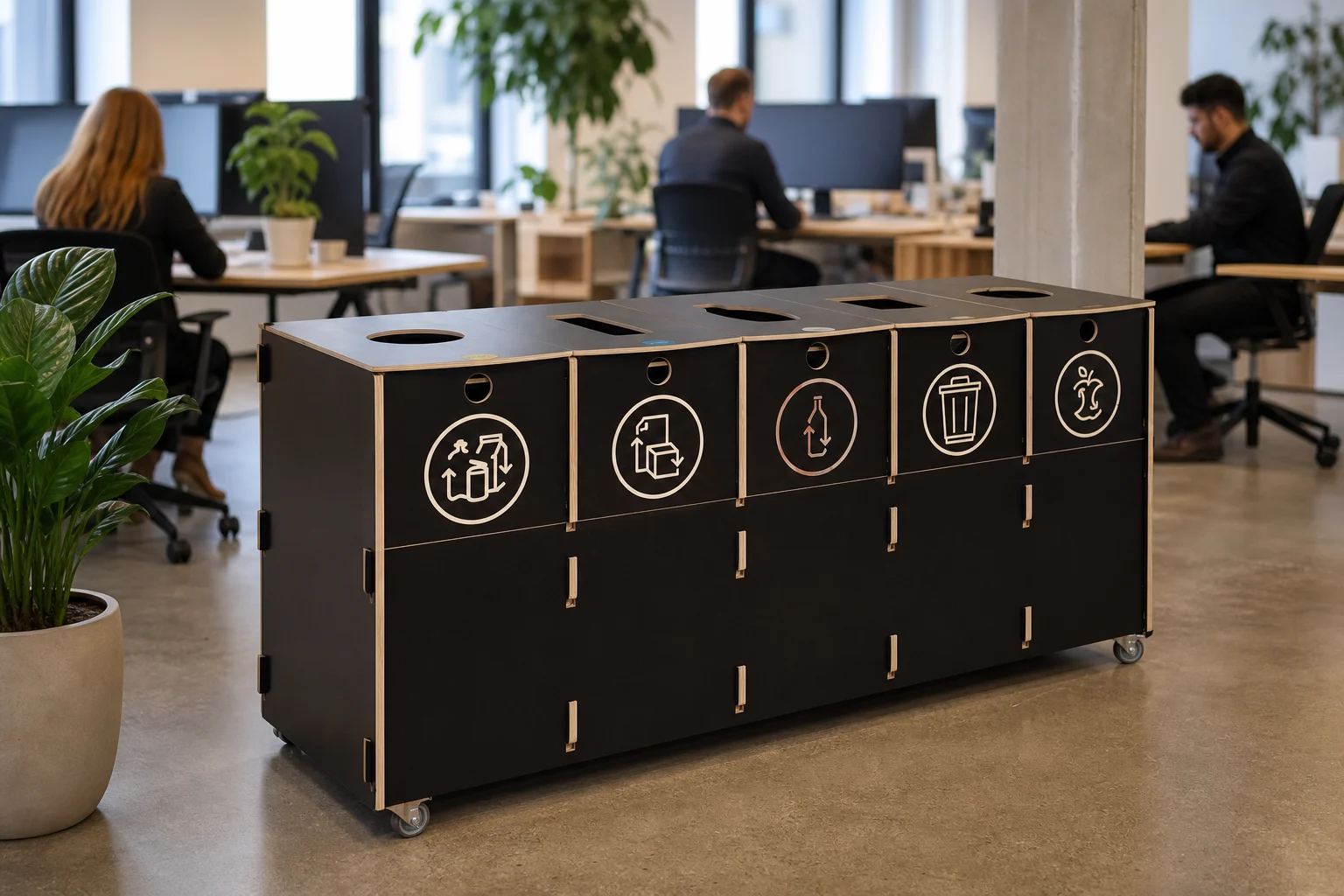
Research shows that replacing individual deskside bins with centralized recycling hubs can boost waste diversion rates by up to 40%. Centralized stations create a “social nudge,” fostering an employee recycling behaviour change by making sorting a collective, visible activity rather than a private convenience.
-
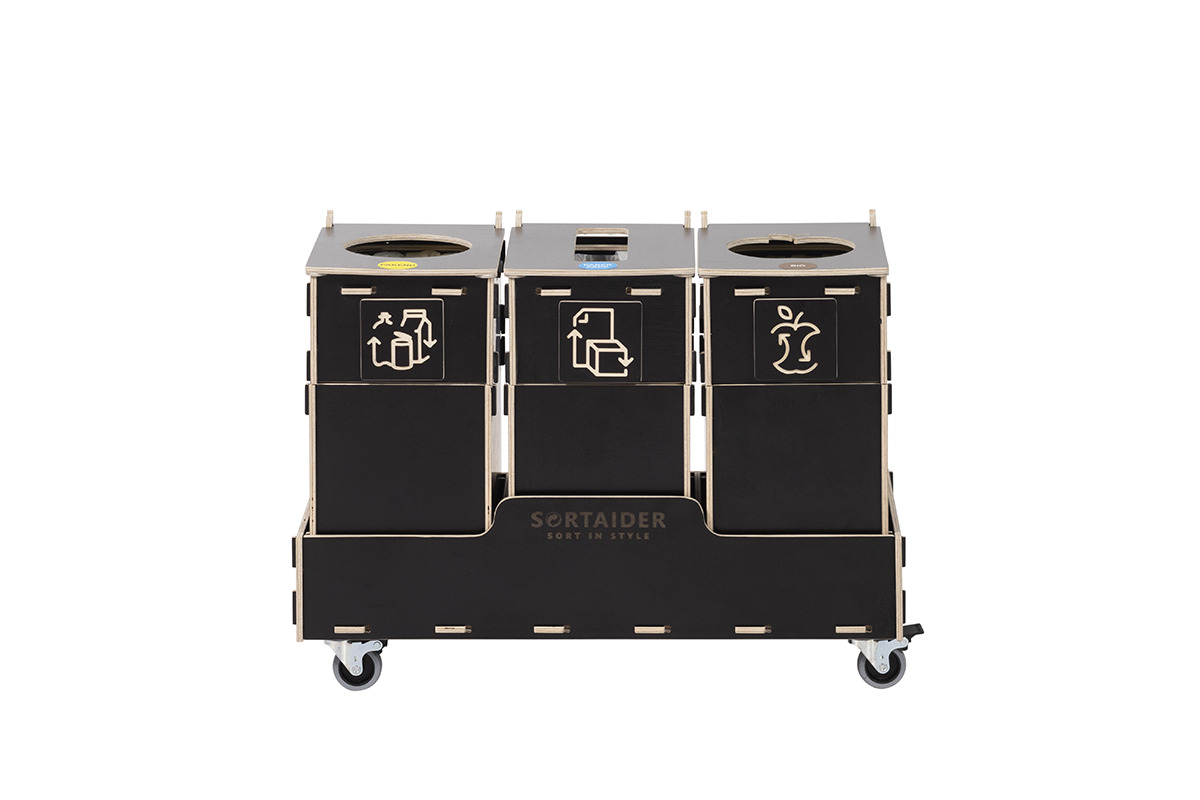
Recycling Bin Sorter 10B3
3 types of waste 3 x 10 L297,60 € (incl. 24% VAT)240 € (excl. VAT) -
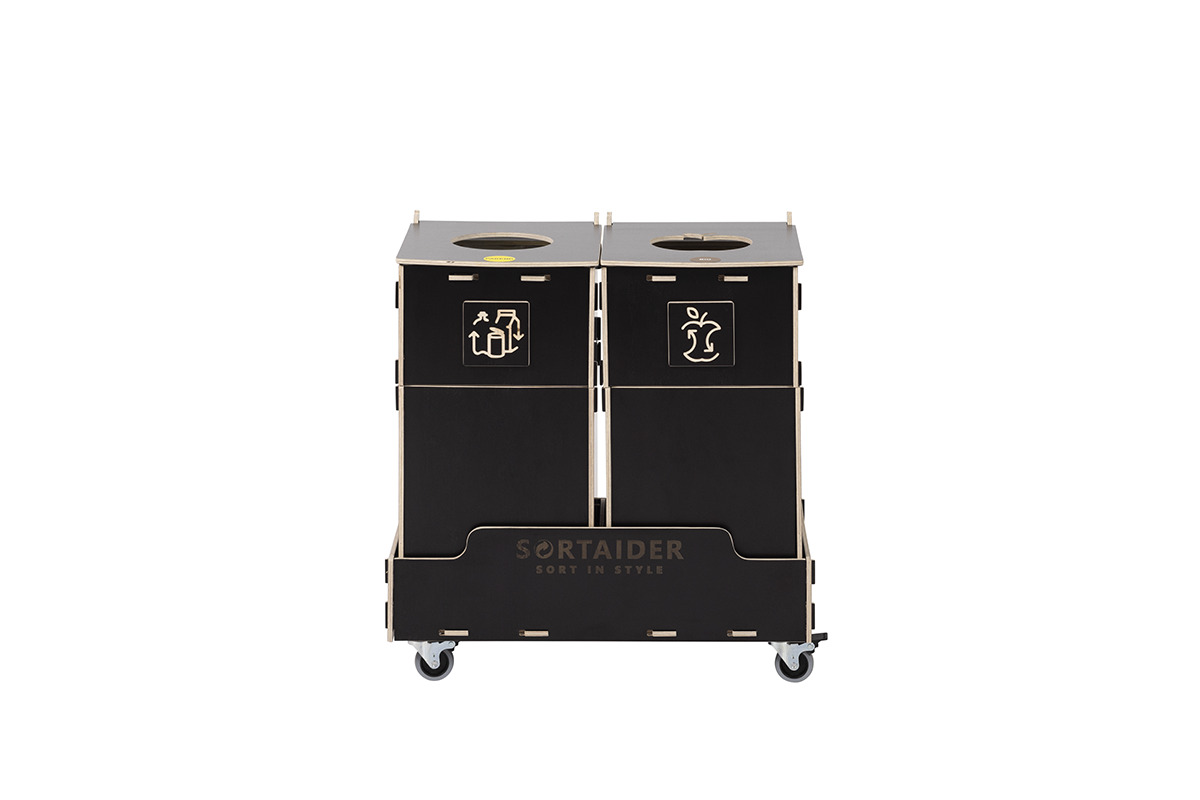
Recycling Bin Sorter 30B2
2 types of waste 2 x 30 L508,40 € (incl. 24% VAT)410 € (excl. VAT) -
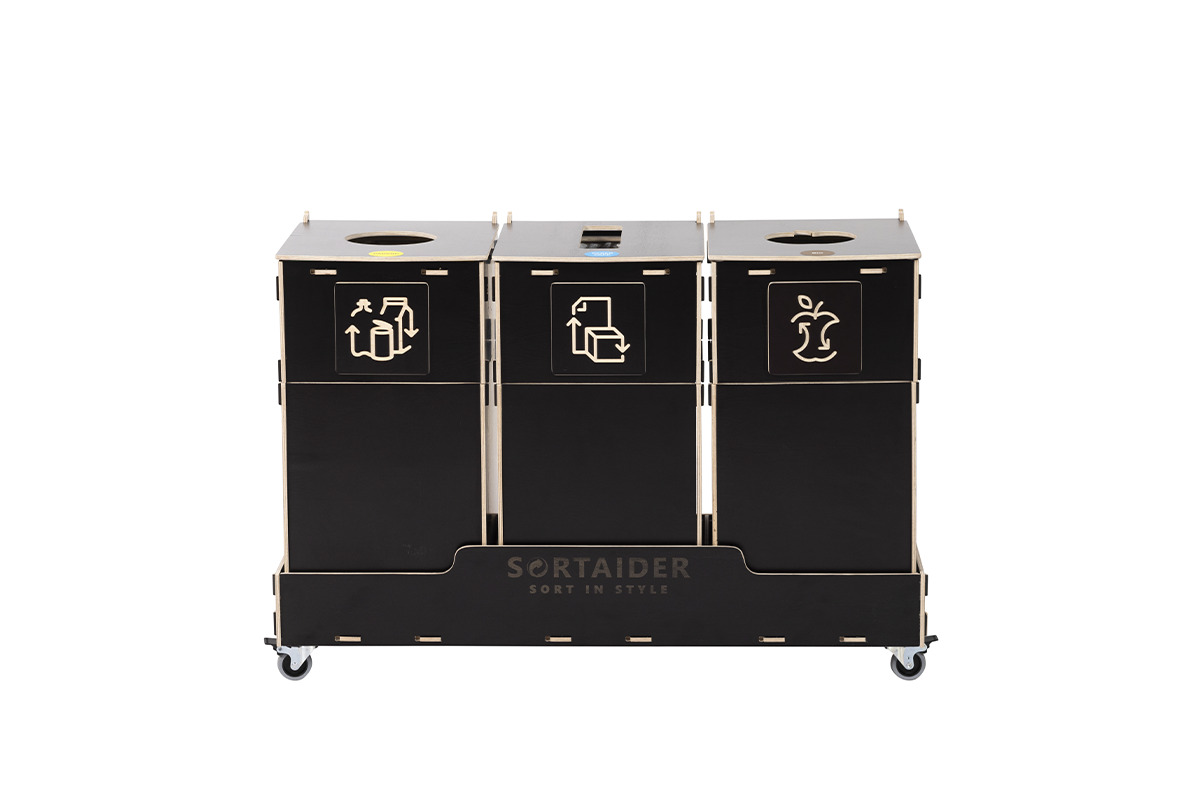
Recycling Bin Sorter 40B3
3 types of waste 3 x 40 L992 € (incl. 24% VAT)800 € (excl. VAT) -
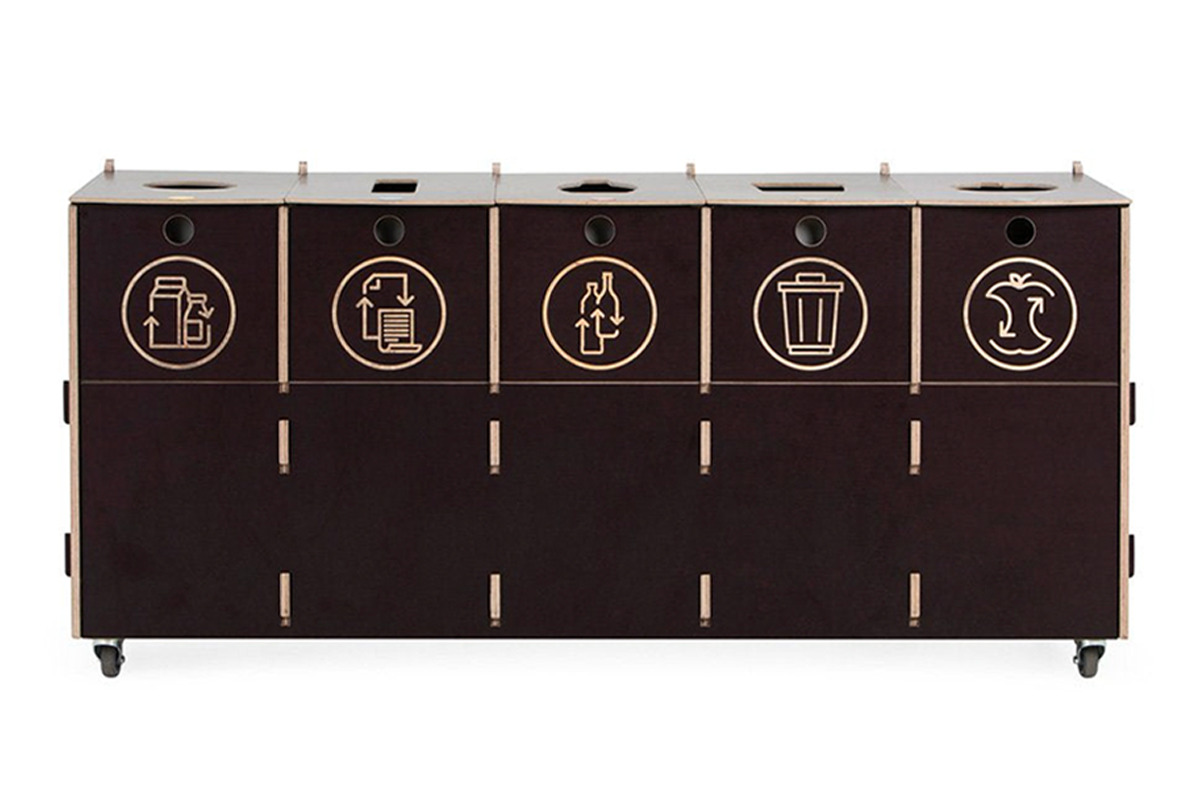
Recycling Bin Container B5
5 types of waste 5 x 40 L1 798 € (incl. 24% VAT)1 450 € (excl. VAT)
Standardize Signage and Nudges
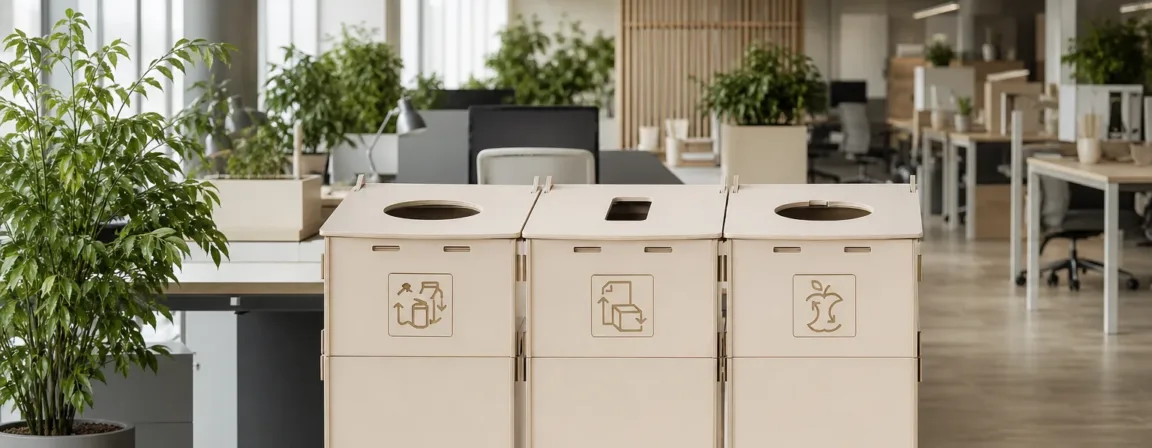
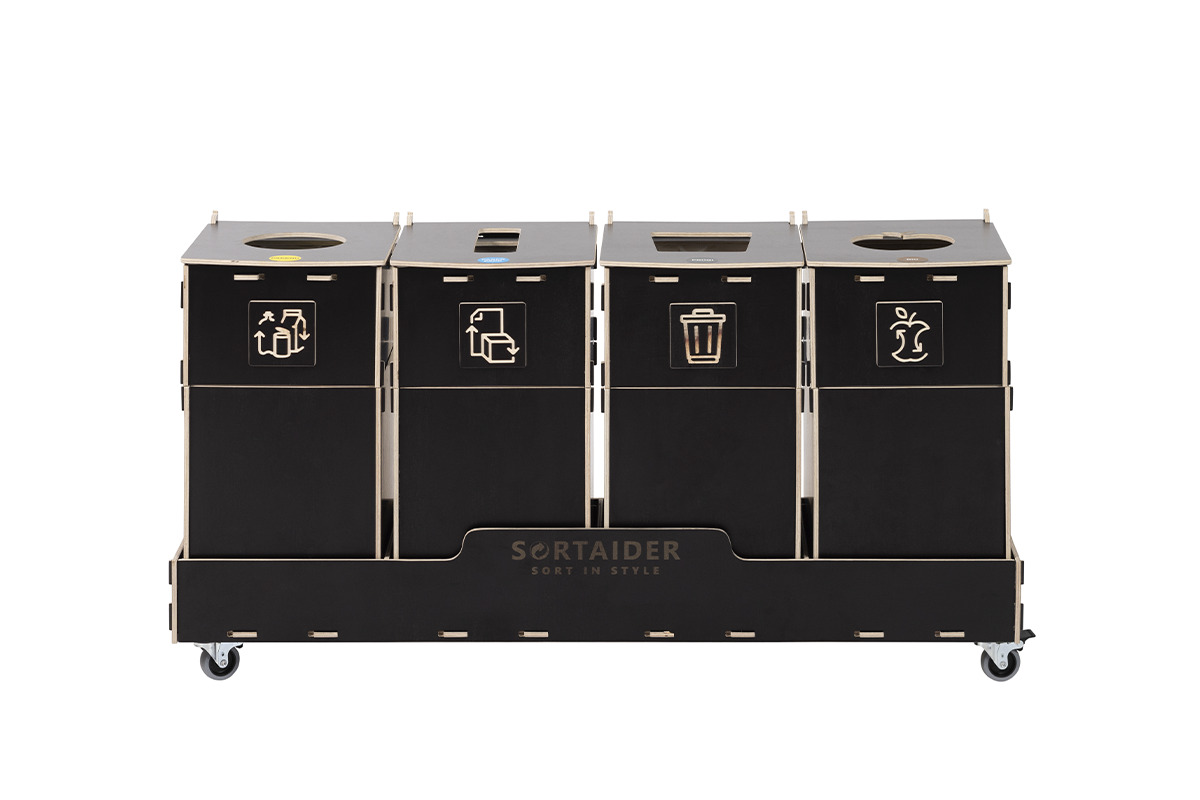
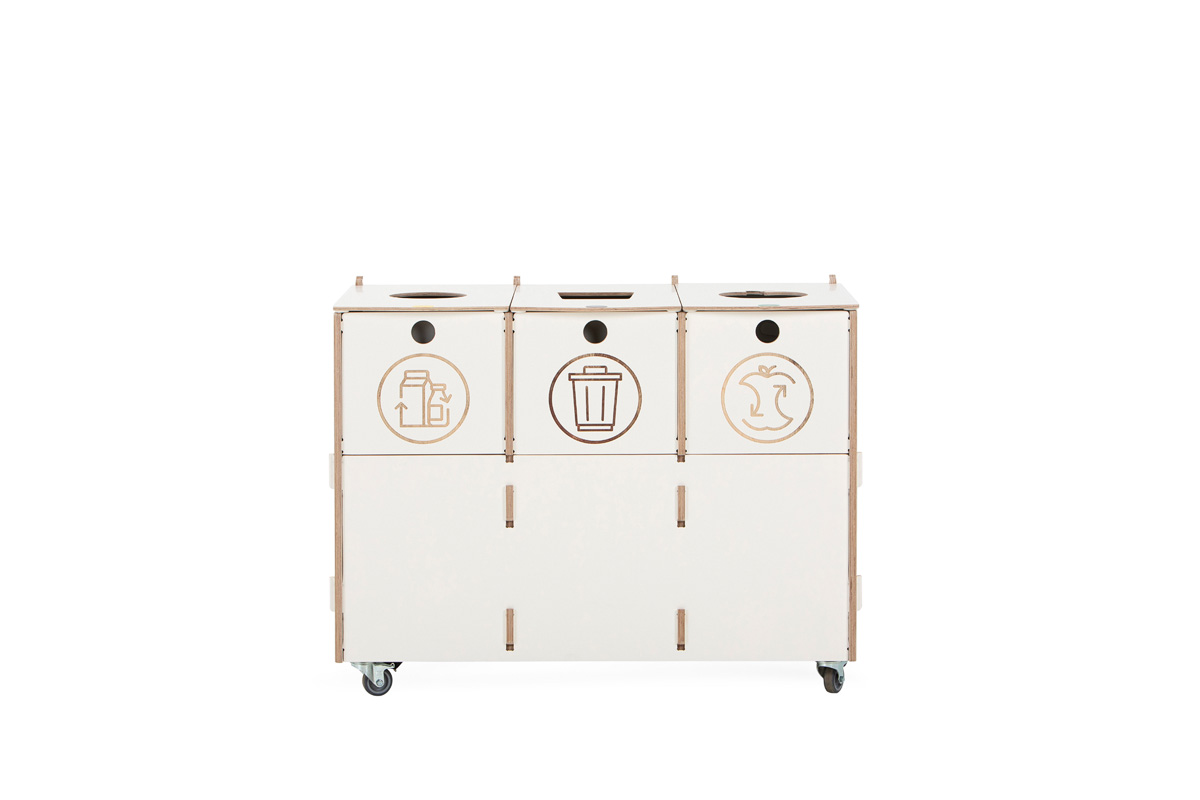
Sorting errors are the primary cause of recycling contamination, which can lead to entire loads being sent to landfills. Using clear visual icons and pictograms instead of text-heavy labels can reduce sorting errors by up to 40% in multilingual European workplaces. Additionally, physical “nudges” – such as thin lid slits for paper or round holes for bottles – provide intuitive guidance that makes error-free sorting automatic for staff.

Navigating European Regulatory Compliance
Your net-zero strategy must reflect the legal landscape of the markets where you operate. The EU Waste Framework Directive currently mandates the separate collection of paper, metal, plastic, glass, and bio-waste at the source.
- Nordic Markets: In Sweden, separate food waste collection became mandatory for all businesses in 2024. Denmark maintains rigorous requirements, often necessitating at least four separate waste streams for commercial facilities.
- Baltic Markets: Estonia and Latvia enforce strict recovery targets and Extended Producer Responsibility (EPR) for packaging, requiring organizations to adhere to precise workplace recycling regulations.
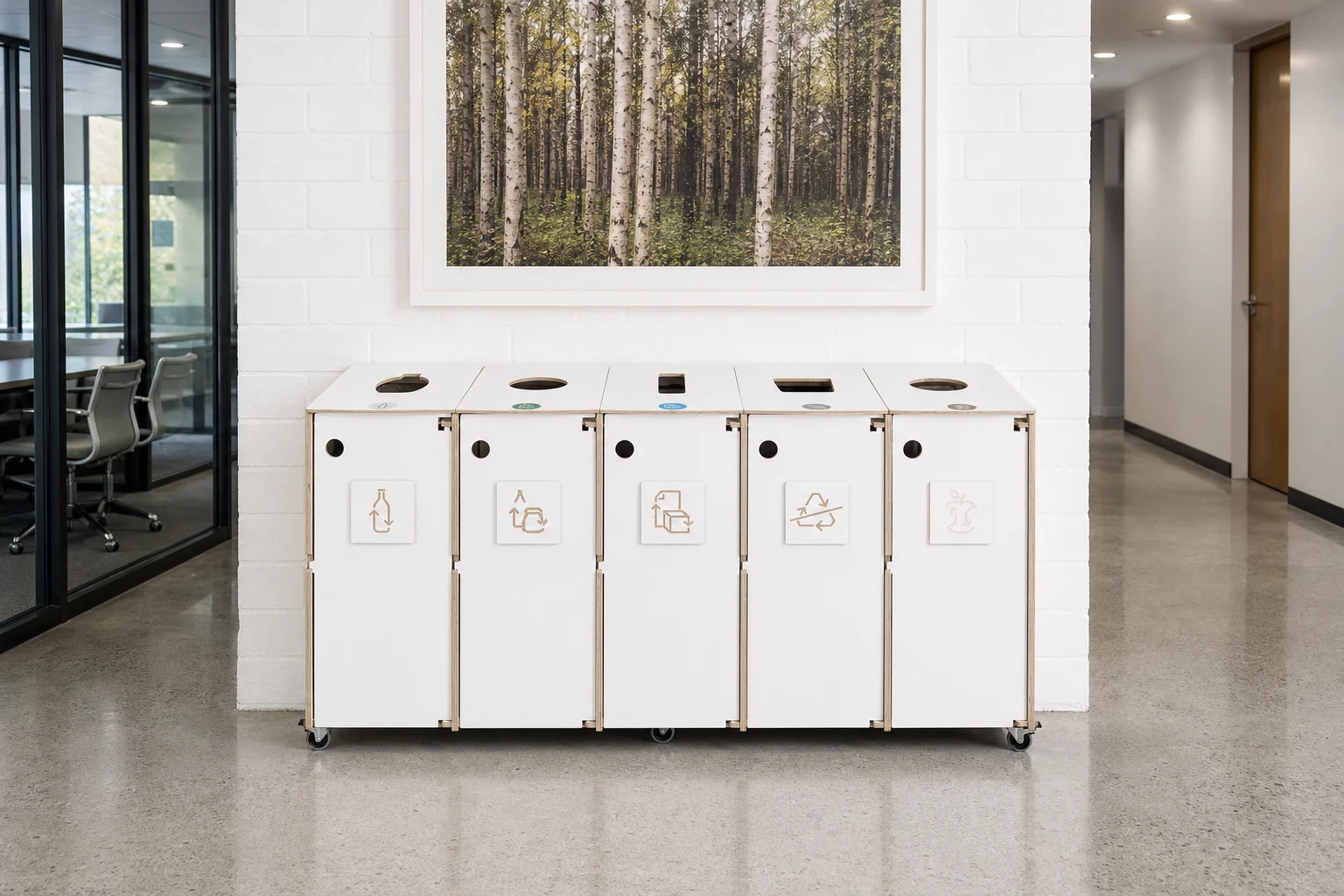
Utilizing a modular recycling bin sorter or a high-capacity recycling bin container that supports multiple fractions ensures your facility remains compliant with these evolving standards while maintaining a professional aesthetic.
-
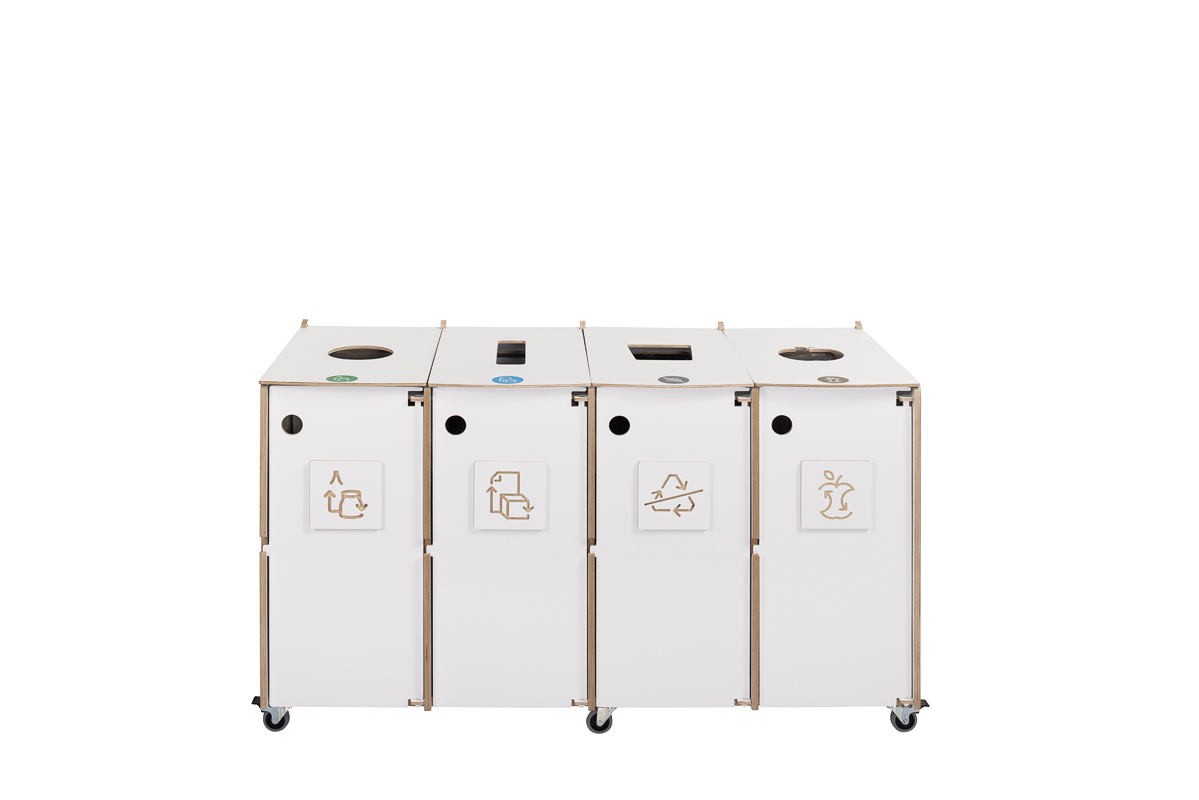
Recycling Bin Ecolong 60W4
4 types of waste 4 x 60 L1 872,40 € (incl. 24% VAT)1 510 € (excl. VAT) -
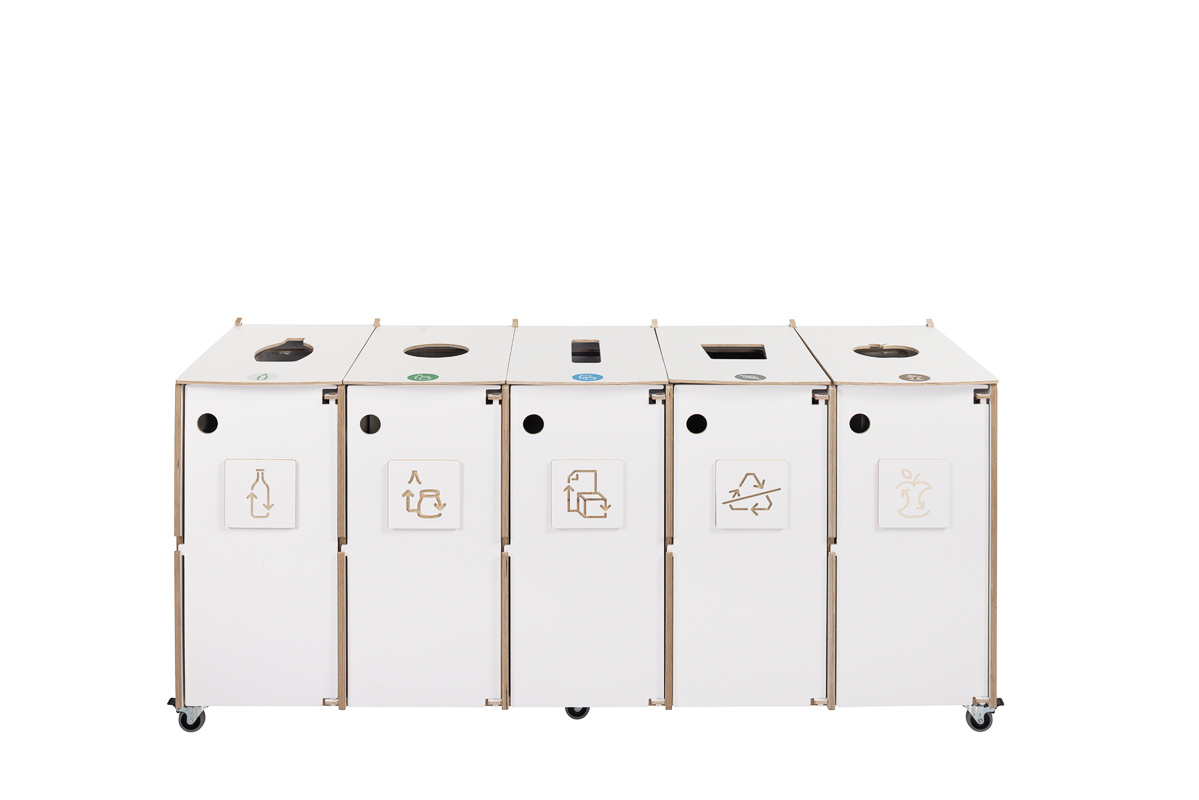
Recycling Bin Ecolong 60W5
5 types of waste 5 x 60 L2 269,20 € (incl. 24% VAT)1 830 € (excl. VAT) -
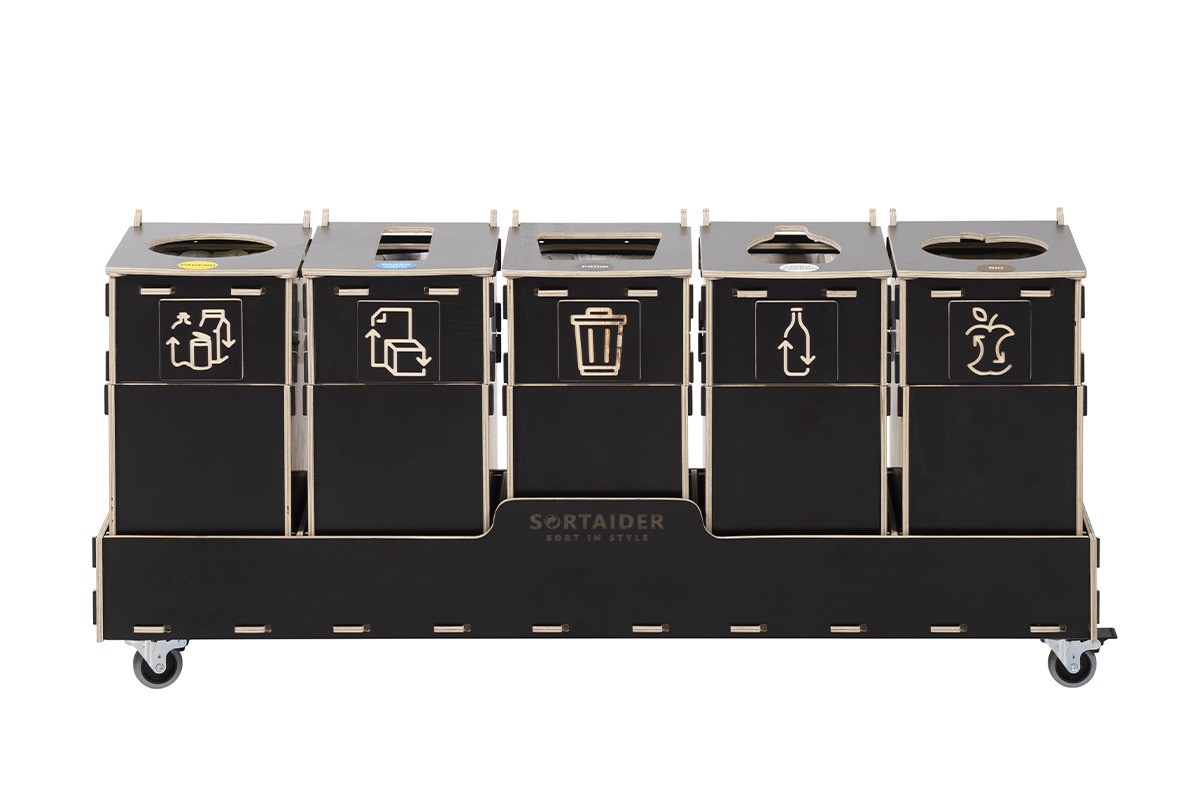
Recycling Bin Sorter 10B5
5 types of waste 5 x 10 L458,80 € (incl. 24% VAT)370 € (excl. VAT) -
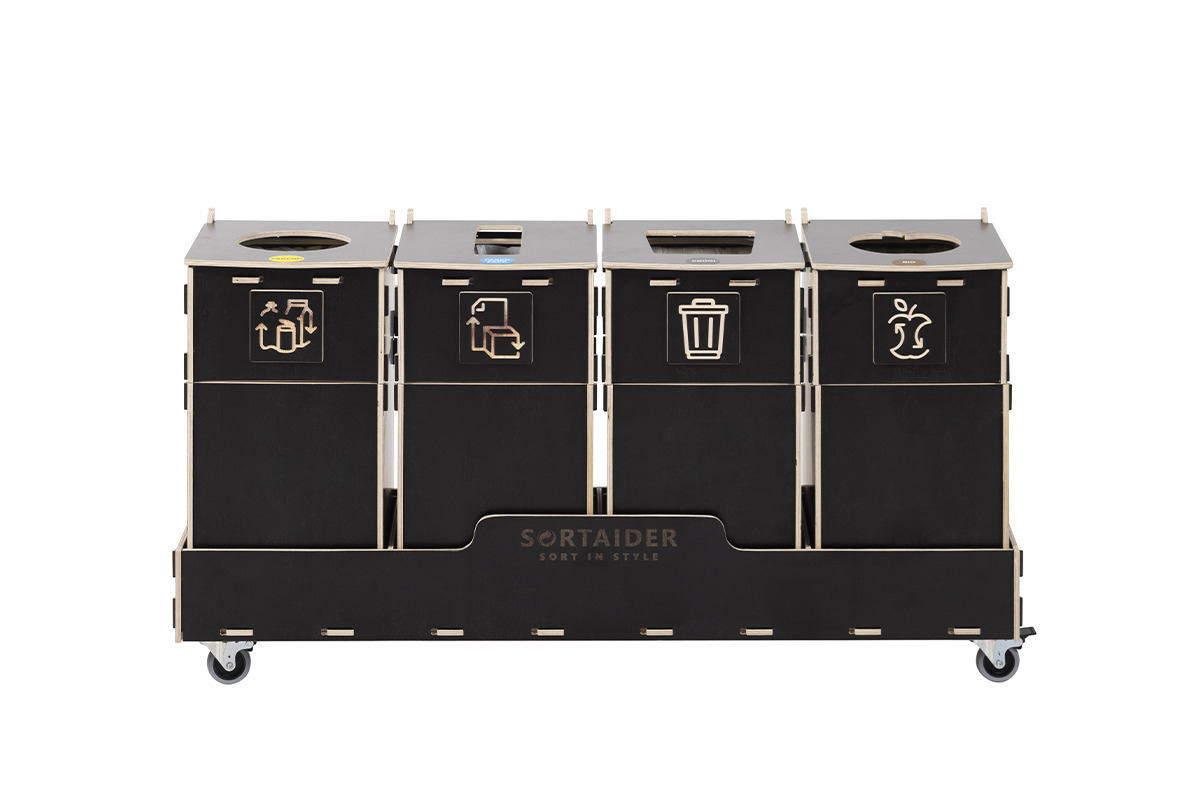
Recycling Bin Sorter 20B4
4 types of waste 4 x 20 L607,60 € (incl. 24% VAT)490 € (excl. VAT)
Monitoring and Continuous Improvement
A net-zero strategy is a living document that requires ongoing ISO 14001 environmental management to ensure continuous improvement. You should coordinate with waste haulers to receive monthly diversion reports, allowing you to track performance metrics against your base year.
To take the next step in your sustainability journey, start by assessing your current sorting infrastructure. Implementing high-capacity recycling bins designed for professional environments is the most effective way to signal your commitment to a circular economy while tangibly reducing your office’s operational carbon footprint.