
Can a building truly be sustainable if its construction process generates tons of unrecorded landfill waste? For project managers, the Materials & Resources (MR) credits are the benchmark for circularity, requiring rigorous planning and precise diversion calculations to achieve LEED certification.
The Foundation of LEED Waste Compliance
Under LEED v4 and v4.1, the Construction and Demolition Waste Management credit focuses on diverting nonhazardous debris from landfills and incineration. To qualify, projects must establish a comprehensive waste management plan that identifies targeted materials for diversion.
In the European market, where the workplace recycling regulations established by the EU Waste Framework Directive already mandate the separation of paper, metal, plastic, glass, and bio-waste, LEED requirements provide a structured way to document these efforts for global recognition. By aligning your site operations with these standards, you fulfill both local compliance and international certification criteria.
LEED v4 vs. v4.1 Diversion Thresholds
- LEED v4: Earning one point requires a 50% diversion of at least three material streams. To earn two points, you must reach 75% diversion across four separate material streams.
- LEED v4.1: This version introduces waste intensity options, such as earning points for generating less than 15 lbs (approximately 6.8 kg) of total waste per square foot of floor area, shifting the focus toward overall waste reduction.
- Material Streams: USGBC guidance generally suggests that a material stream should constitute at least 5% of total waste to count, though this is a rule of thumb rather than a rigid minimum.
Developing a Construction Waste Management Plan (CWMP)
Every LEED project must implement a CWMP before any demolition or construction begins. This plan is a technical roadmap that identifies the materials to be diverted and specifies whether they will be sorted on-site or handled as commingled waste at a secondary facility.
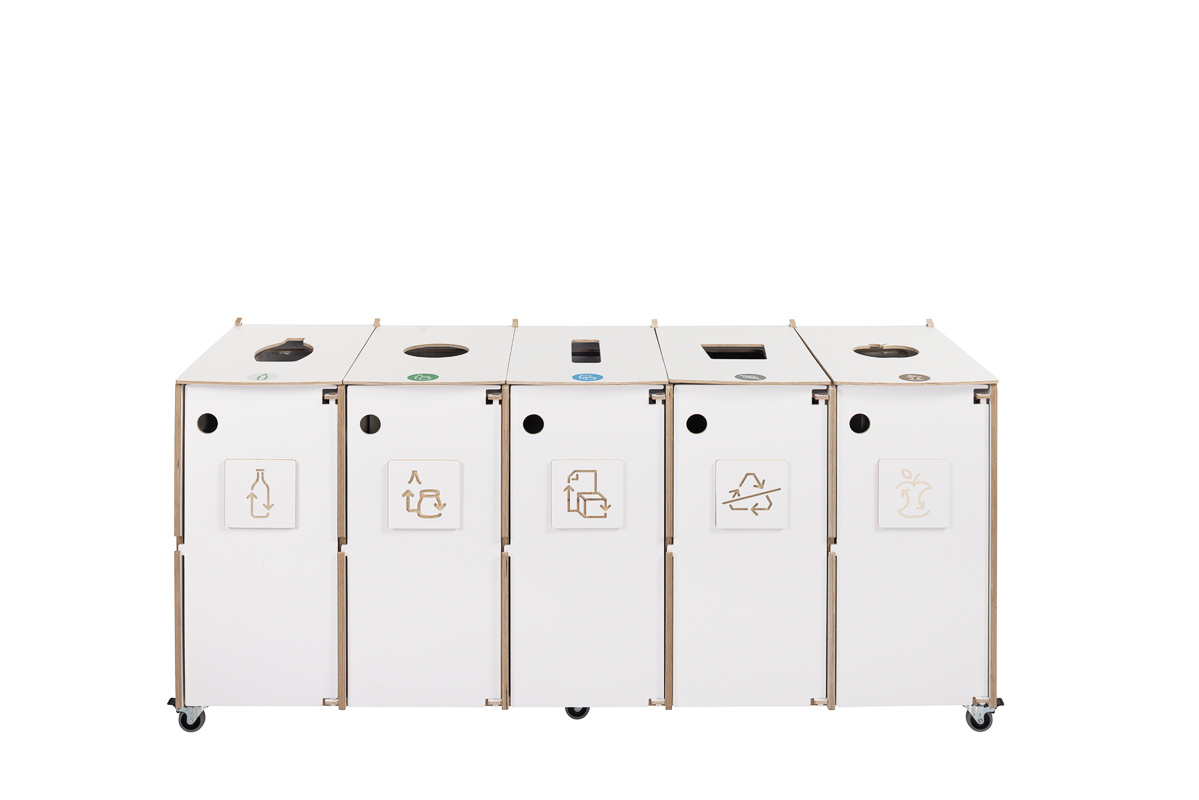
A robust plan includes specific diversion goals and identifies structural and nonstructural materials like concrete, wood, and gypsum board. When planning your facility’s long-term infrastructure, selecting durable sorting systems ensures that the waste management goals established during construction carry over into the green office certification process for the building’s operational phase.
Calculating Diversion Rates Correctly
Accuracy in LEED reporting depends on understanding what counts as “diverted.” Calculations can be performed by weight or volume, but you must remain consistent throughout the project. Reporting must detail all waste generated, providing a clear picture of the total disposal and diversion rates.
Critical Exclusions and Compliance Rules
- Excavated Soil: Soil and land-clearing debris must be excluded from all diversion and waste intensity calculations.
- Alternative Daily Cover (ADC): Materials used as daily cover in landfills are counted as waste, not as diverted material, even if they are repurposed.
- Commingled Waste: If using a commingled recycling facility, you must use the facility’s regulated average diversion rate. Visual inspection of the waste is never an acceptable method for determining diversion performance.
- Stream Counting: Commingled waste typically counts as a single material stream unless the facility provides project-specific tracking for each individual material.
Documentation and Final Reporting
To secure MR credits, project managers must submit a final construction and demolition waste management report. While monthly waste reports are standard, you should also maintain waste tickets and receipts as supporting documentation.
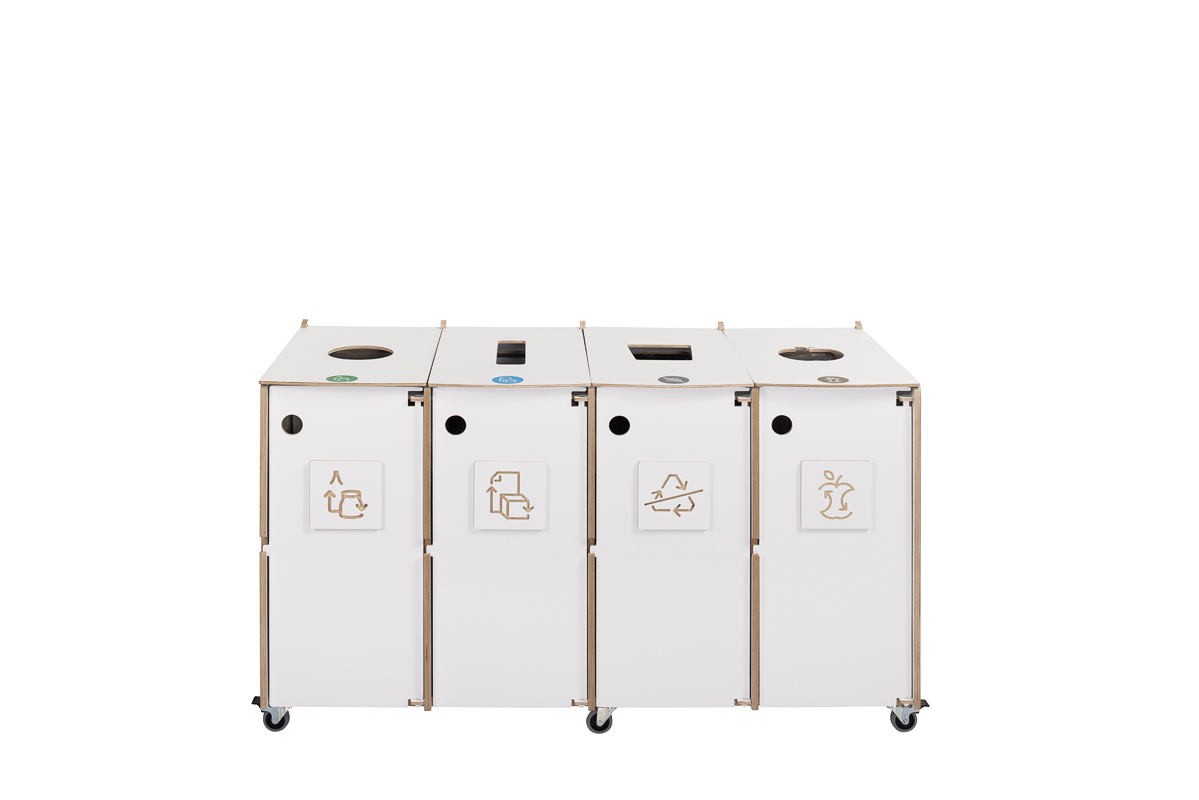
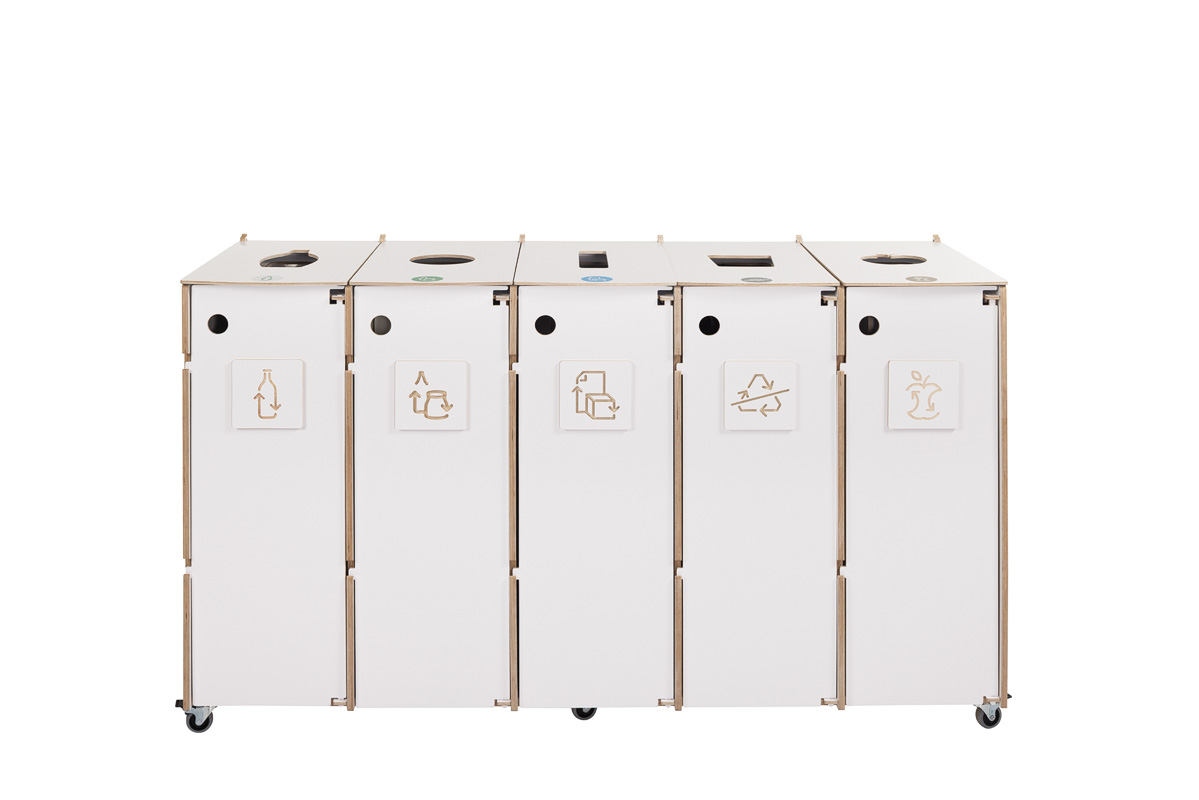
In markets like Denmark or Sweden, where digital tracking systems for waste are becoming mandatory for large facilities, this data is often easier to aggregate for ESG reporting and waste management disclosures. For indoor environments that prioritize low-embodied carbon, utilizing plywood-based sorting stations instead of plastic or metal can result in 2 to 4 times lower CO₂ emissions over the product’s lifecycle. This is particularly relevant when considering the environmental impact of plastic bins, which often involve high-embodied carbon and limited recycling potential.

Transitioning to Operational Waste Management
Once construction is complete, the focus shifts to LEED Operations & Maintenance (O+M). Achieving high diversion rates in a functioning building requires improving recycling rates through strategic infrastructure and employee engagement.
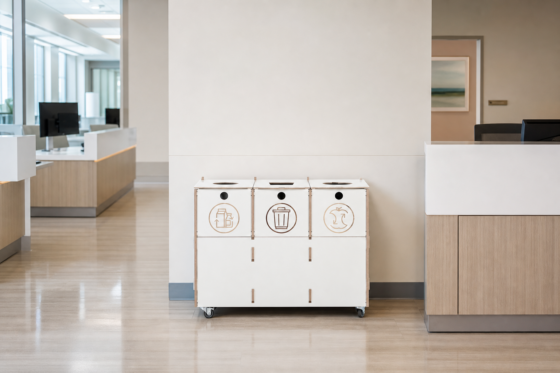
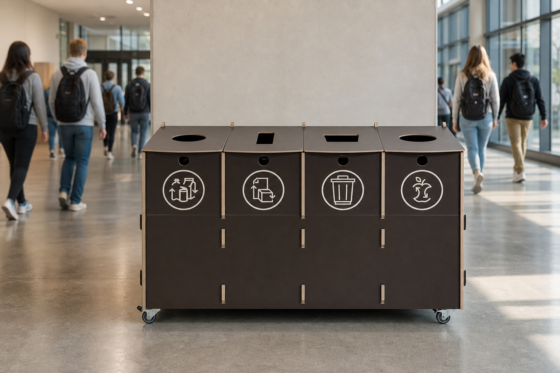
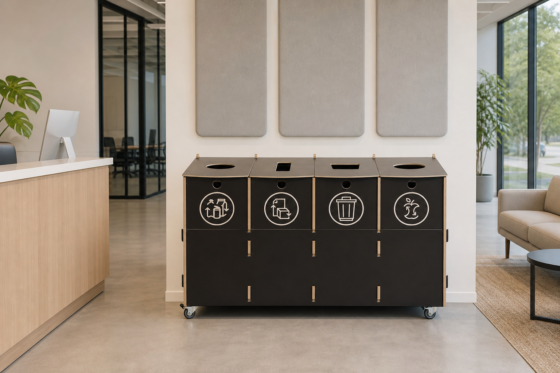
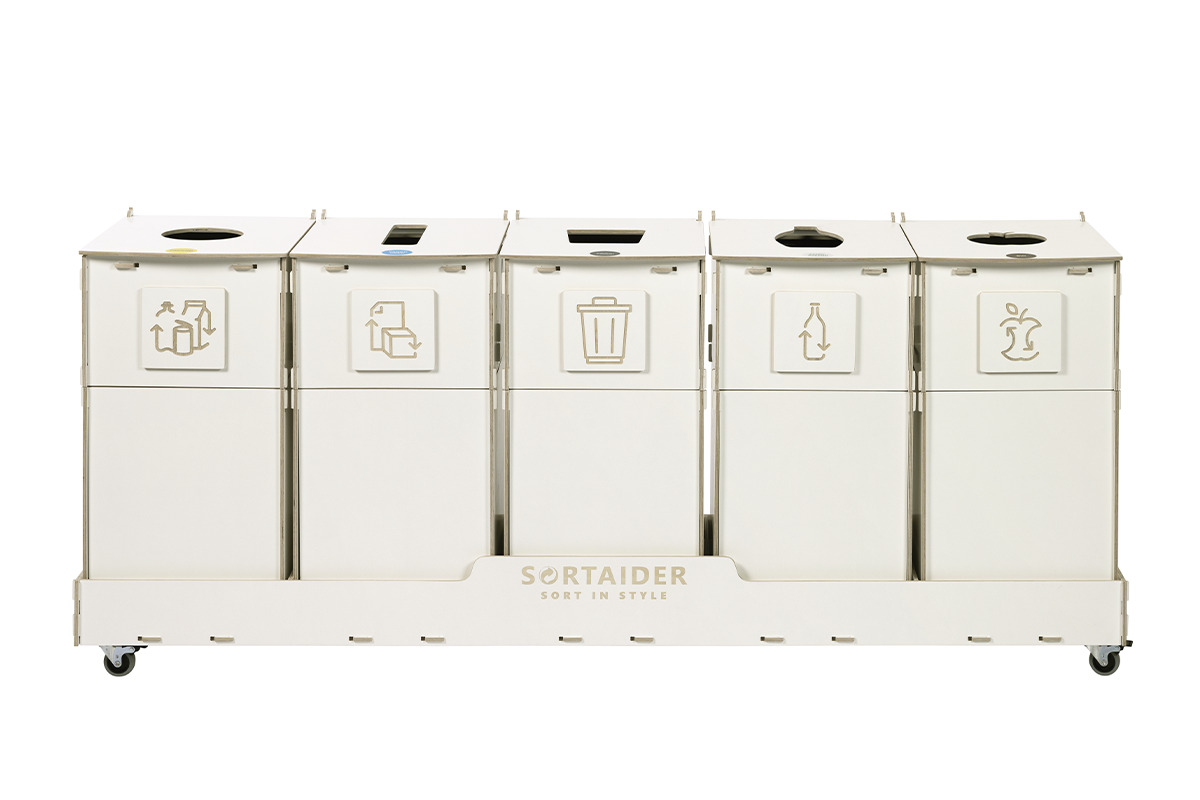
Centralized recycling hubs are significantly more effective than individual deskside bins, often boosting diversion by up to 40%. These stations should use high-contrast pictograms and support multiple streams, including paper, packaging, and bio-waste. Standardizing these visual cues is also a key strategy for maintaining ISO 14001 environmental management standards, as it reduces material contamination and ensures that the facility meets its ongoing environmental objectives.

-
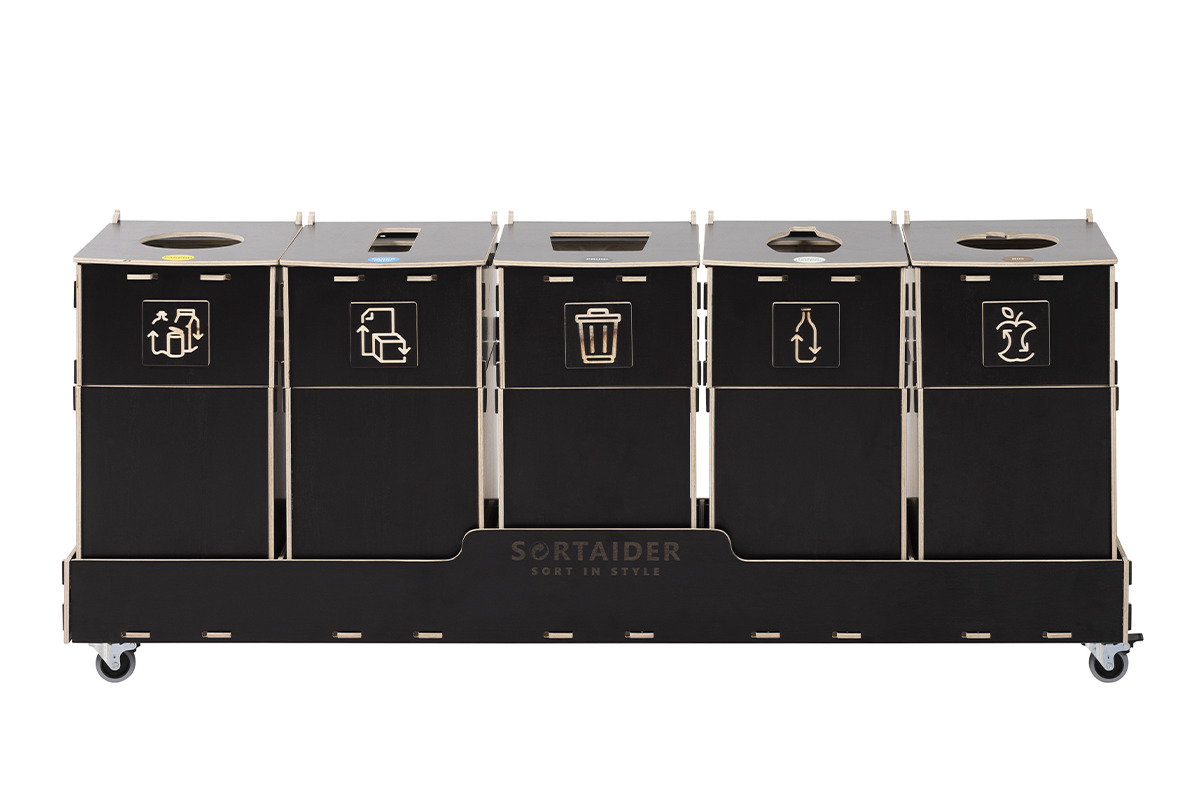
Recycling Bin Sorter 5 × 30 l brown
5 types of waste 5 x 30 l1 165,60 € (incl. 24% VAT)940 € (excl. VAT) -
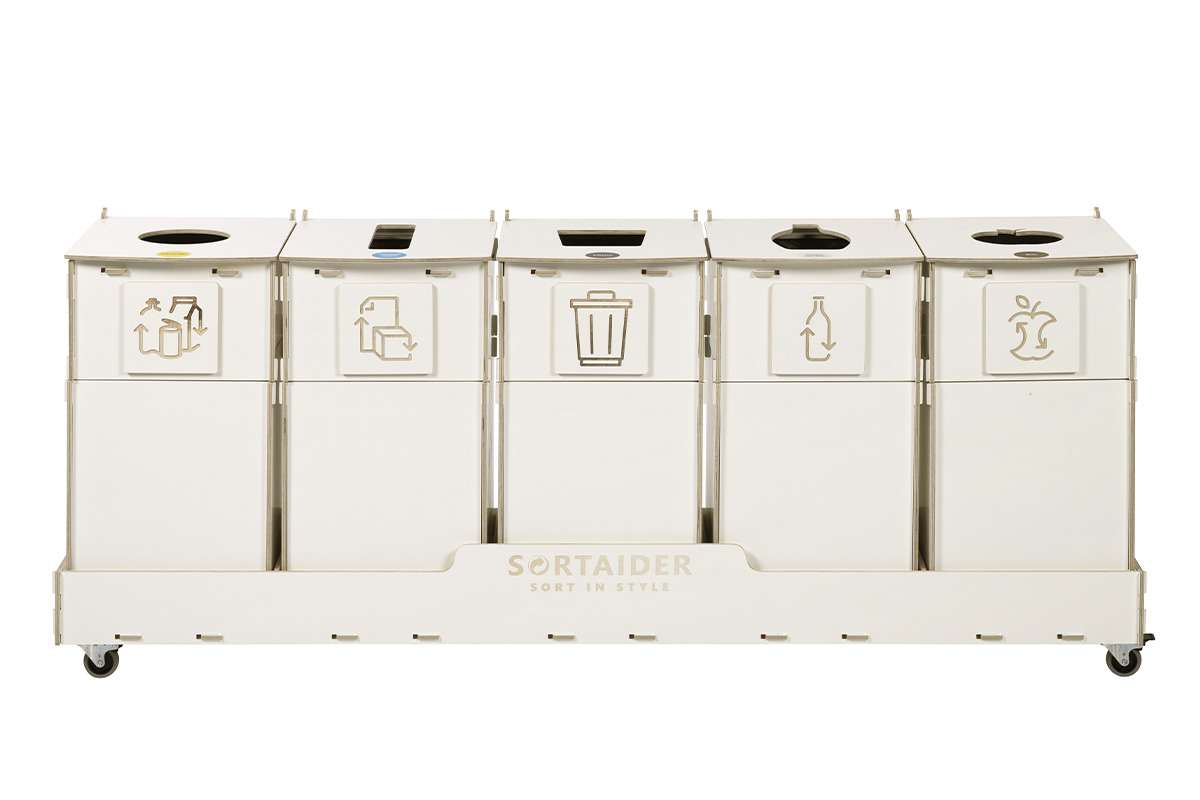
Recycling Bin Sorter 5 × 40 l white
5 types of waste 5 x 40 l1 525,20 € (incl. 24% VAT)1 230 € (excl. VAT) -
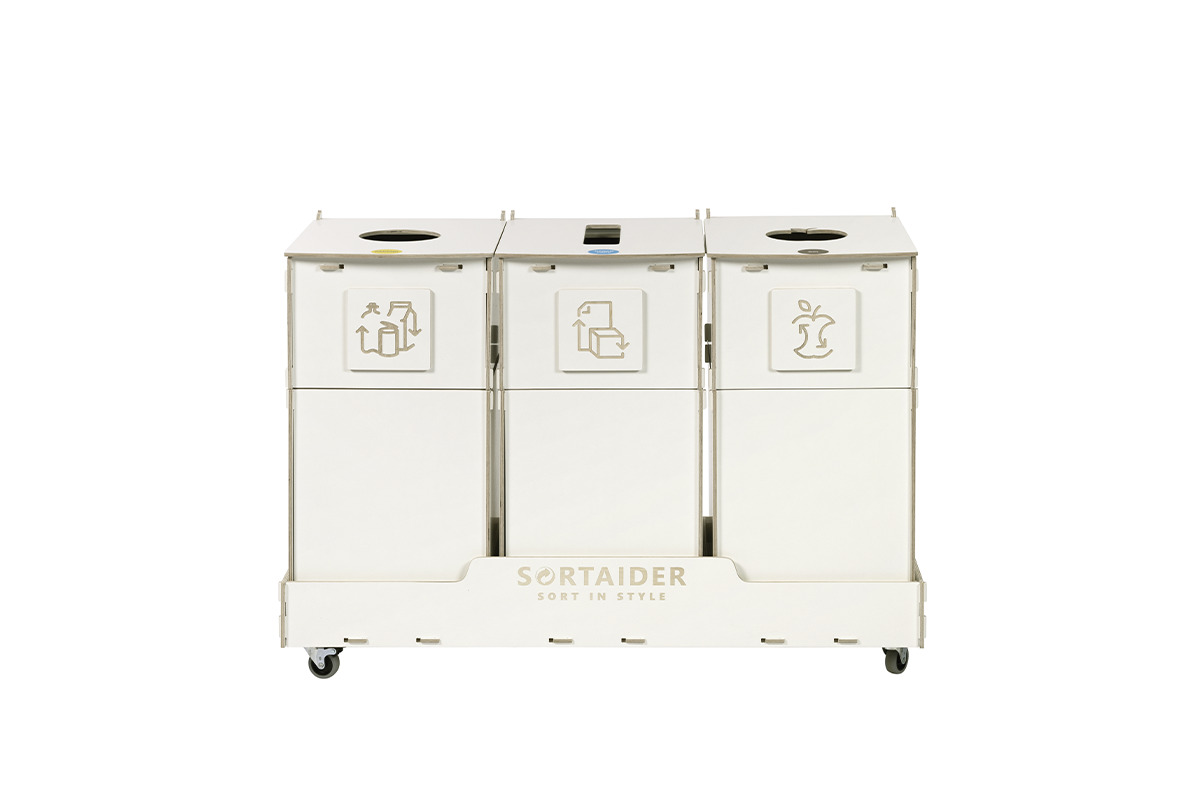
Recycling Bin Sorter 3 × 60 l white
3 types of waste 3 x 60 l1 140,80 € (incl. 24% VAT)920 € (excl. VAT) -
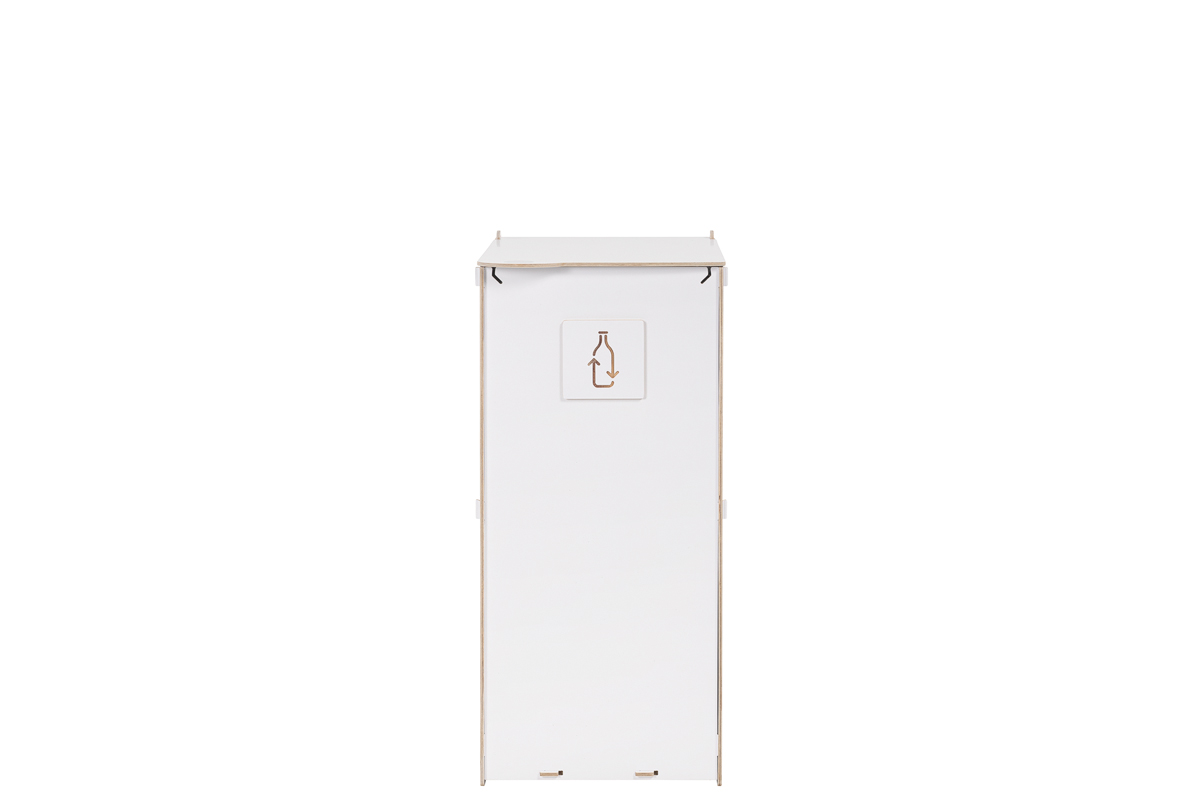
Waste Bin Sort 1 × 120 l white
1 type of waste 1 x 120 l297,60 € (incl. 24% VAT)240 € (excl. VAT)
Optimizing Your Sustainability Strategy
Complying with LEED waste requirements is a rigorous process that pays dividends in building value and environmental performance. By combining a solid Construction Waste Management Plan with high-quality, low-carbon sorting infrastructure, you ensure your project meets the highest global standards for resource efficiency.
If you are ready to equip your project with award-winning, sustainable sorting solutions that align with Nordic design and LEED goals, explore our modular systems designed for professional environments.