
Are redundant laptops, damaged cables, and spent batteries cluttering your office storage? Disposing of corporate e-waste requires balancing legal compliance, data security, and fire safety without disrupting daily operations. Here is how to manage workplace electronics safely, legally, and sustainably.
Understanding Your Workplace E-Waste Regulations
Managing waste electrical and electronic equipment (WEEE) is not just an environmental choice – it is a mandatory obligation for modern businesses. Electronic devices contain toxic substances such as lead, mercury, and cadmium alongside valuable critical raw materials that must be recovered through designated channels.
European Legal Framework (WEEE Directive)
In Europe, commercial e-waste handling is governed primarily by the EU WEEE Directive 2012/19/EU. This framework operates on Extended Producer Responsibility (EPR), making businesses that place electronic products on the market financially and operationally responsible for their end-of-life collection, treatment, and recovery.
Key compliance requirements under European rules include:
- Source Separation: Commercial entities must separate electronic devices and hazardous components from general workplace waste streams.
- National Transposition: Member states implement individual enforcement mechanisms. For instance, Denmark requires facilities producing over 1 ton of waste annually to hold specific permits and maintain digital tracking systems, while Baltic states enforce digital waste logging platforms.
- Prohibition of Landfill Disposal: B2B electronic waste cannot be sent to municipal landfills or incinerators and must be processed by certified treatment facilities or manufacturer take-back systems.
To better understand regional requirements for commercial facilities, review our guides to workplace recycling regulations and recycling legislation in Europe.
International Sidenote: While the EU enforces a unified directive across all 27 member states, the United States relies on a patchwork of regulations. At the federal level, certain electronics qualify as hazardous waste under the Resource Conservation and Recovery Act (RCRA). Additionally, 25 U.S. states enforce state-specific e-waste recycling laws, with 15 states imposing explicit landfill disposal bans, such as California’s Universal Waste regulations or New York’s Electronic Equipment Recycling and Reuse Act.
Data Security: Sanitization and Chain of Custody
Before any device leaves your facility, destroying sensitive financial records, employee records, or corporate IP is essential. Leaving old hard drives in unmonitored storage bins creates severe regulatory and security vulnerabilities.
To manage media sanitization effectively, align your IT Asset Disposition (ITAD) processes with NIST Special Publication 800-88 Revision 1 guidelines, which define three primary sanitization methods:
- Clear: Overwriting storage space using logical software commands, suitable for low-risk internal device reassignment.
- Purge: Executing physical or logical controller commands that render data recovery impossible even with advanced laboratory techniques, required when equipment leaves your control.
- Destroy: Physical destruction via shredding, incineration, or disintegration, recommended for highly confidential or classified data assets.
Always demand a complete chain of custody when handing devices over to a third-party vendor. Require your vendor to provide a formal Certificate of Destruction or Erasure that logs the serial number, asset tag, date, and exact sanitization method used for each piece of hardware.
Lithium-Ion Battery Safety and Storage Protocols
Loose batteries and battery-powered electronics present significant operational fire risks in office environments. Damaged, short-circuited, or overheated lithium-ion batteries can undergo thermal runaway, generating rapid fires and toxic gas emissions.
As outlined in our guide on what goes in each recycling bin, batteries must never be placed in general garbage or standard co-mingled recycling bins.
Mandatory Storage and Handling Practices
- Terminal Isolation: Cover exposed battery terminals with non-conductive electrical tape or seal each battery inside an individual plastic bag before collection to prevent electrical contact.
- Environmental Controls: Store collected batteries in cool, climate-controlled spaces with adequate ventilation, situated away from primary exit corridors and flammable materials like paper stock or cardboard packaging.
- Damaged, Defective, or Recalled (DDR) Batteries: Swollen, leaking, or crushed batteries cannot be managed under standard collection rules. Isolate DDR units immediately in dedicated fire-rated containers filled with insulating materials and arrange specialized hazardous waste handling.
- Emergency Preparedness: Equip battery storage areas with advanced fire detection systems, maintain thermal inspection protocols, keep specialized suppression tools accessible, and establish emergency response procedures with local fire marshals.
Building an Effective In-Office Collection System
A successful e-waste policy combines clear internal workflows with convenient, visible disposal infrastructure. Before recycling equipment, apply circular economy principles by prioritizing hardware upgrades, repairs, or formal donation programs for functioning assets.
When equipment reaches the end of its useful life, establish accessible collection points within your facility layout:
Centralized Hubs Over Hidden Storage
Do not hide e-waste drop-off bins in remote basements or locked IT closets where outdated hardware gathers dust without oversight. Integrate dedicated e-waste collection points into centralized, high-visibility recycling stations located near printer rooms, breakrooms, or main corridors.
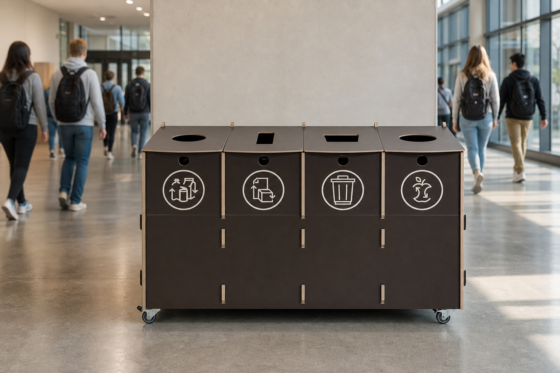
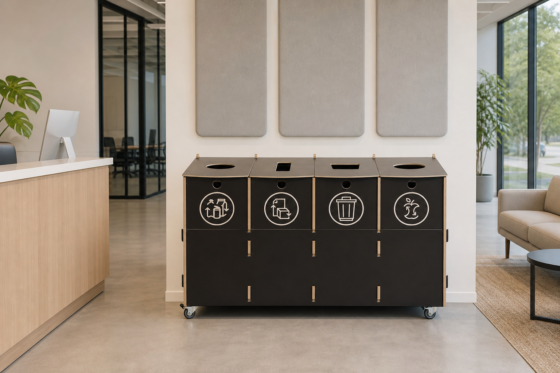
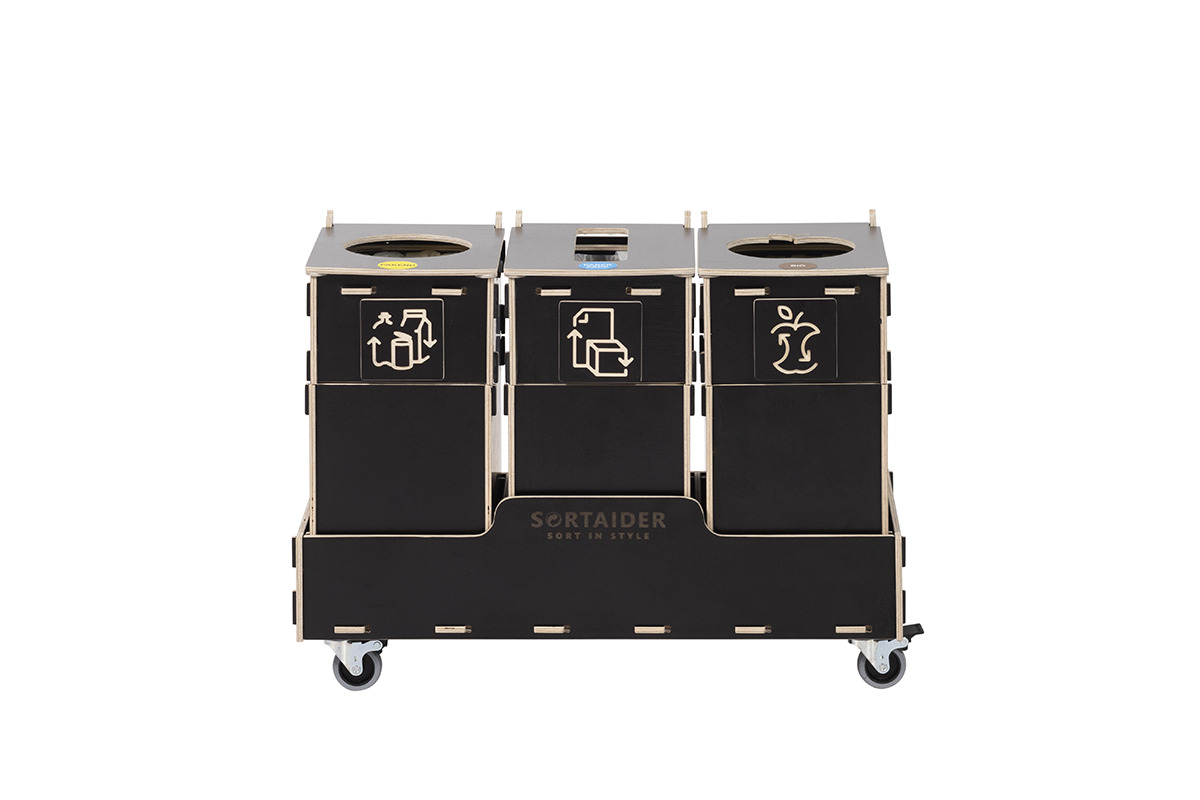
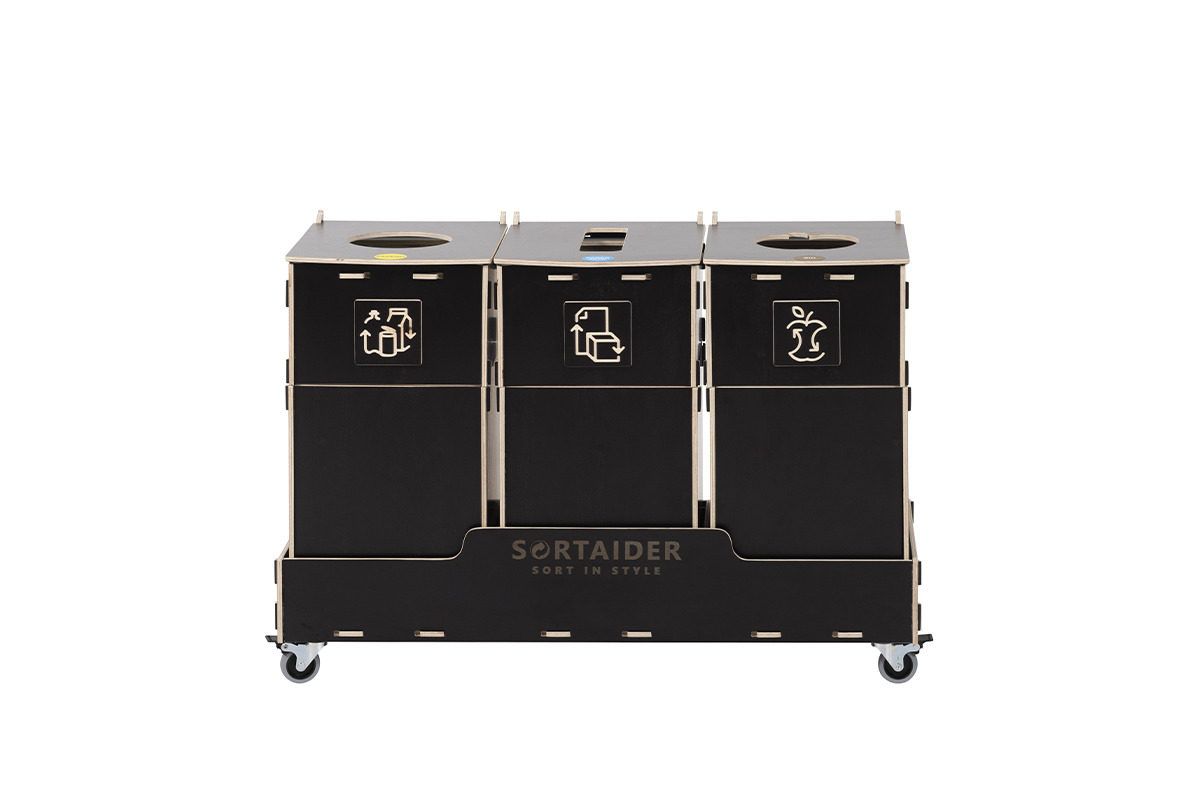
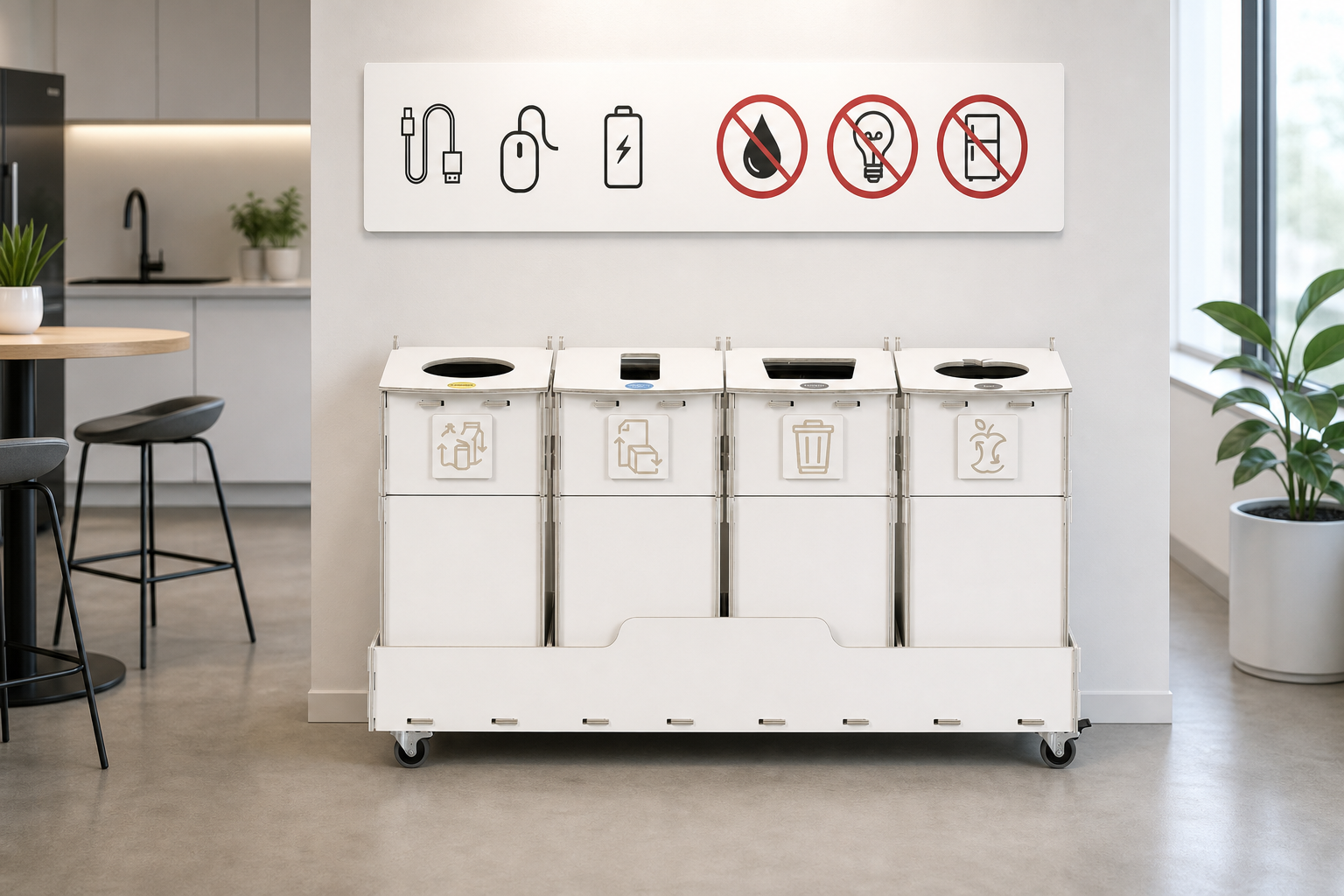
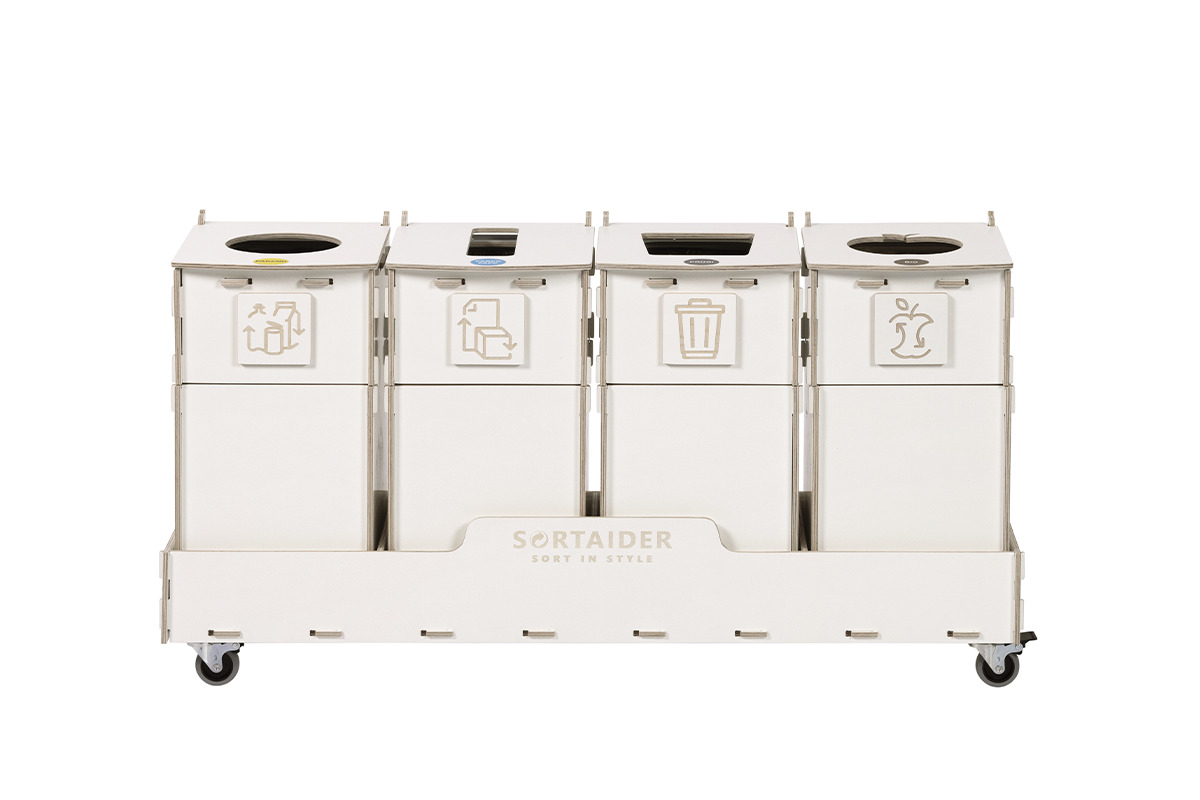
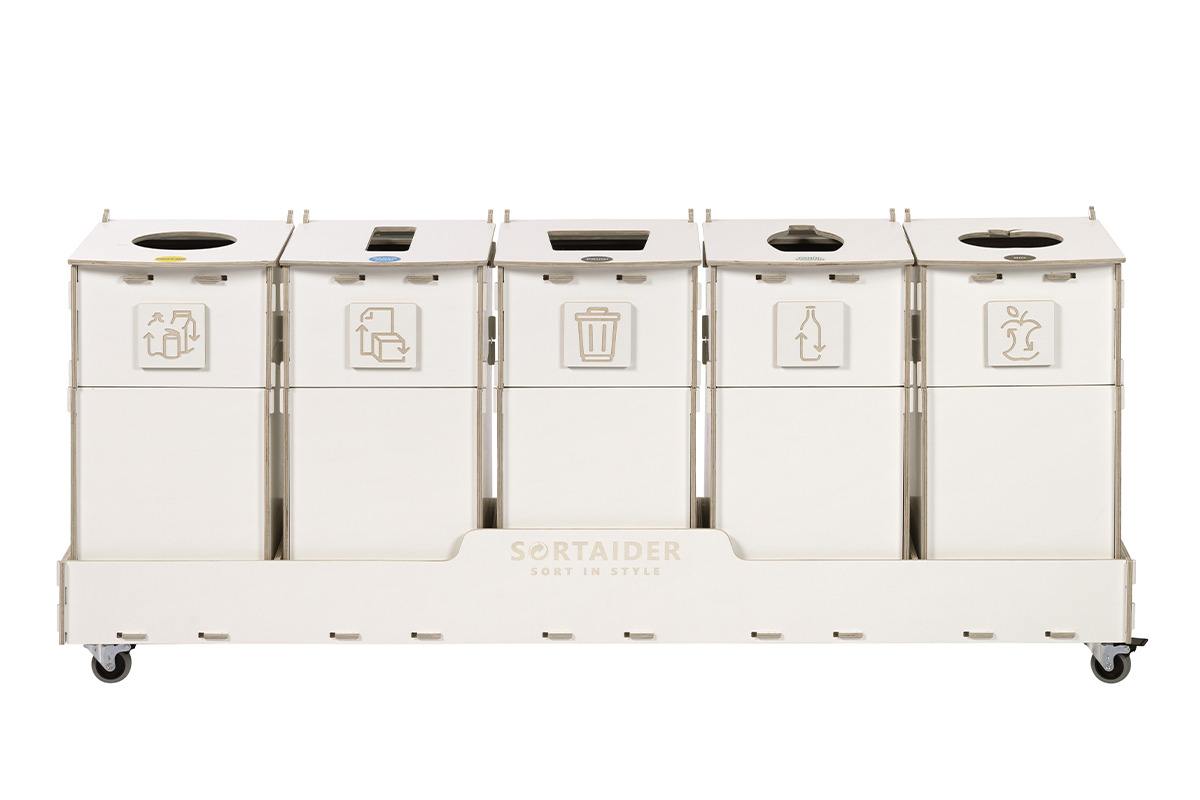
For high-traffic office floors, multi-compartment recycling hubs like the Sorter series offer flexible waste separation that keeps small e-waste, paper, plastics, and general waste organized within a clean, professional aesthetic.
Clear Visual Signaling
Eliminate employee sorting errors by utilizing intuitive visual communication at every collection station. Combine text with clear, high-contrast pictograms showing explicit examples of accepted items (such as cables, computer mice, and internal batteries) alongside prohibited items (such as liquid waste, lightbulbs, or damaged large appliances). Clear visual cues significantly reduce cross-contamination across all workplace waste streams.
For multi-tenant environments or shared facilities, adapt your sorting strategy following dedicated guidelines for co-working space waste management.
Vetting Recyclers and Maintaining Documentation
Handing workplace electronics to an uncertified collector exposes your business to environmental liability, illegal dumping fines, and data breach risks.
Choosing a Certified Partner
When selecting an ITAD vendor or commercial e-waste recycler, verify that they hold recognized industry certifications, including:
- R2 (Responsible Recycling) or e-Stewards: Rigorous third-party standards covering certified data destruction, worker safety, environmental management, and zero-landfill policies for hazardous e-waste.
- ISO Certifications: Partner with vendors that operate a certified ISO 14001 environmental management system and ISO 45001 for occupational health and safety.
Verify vendor credentials directly through official certification directories rather than relying solely on website badges.
Audit Trails and Record Keeping
To fulfill internal compliance targets and support formal environmental audits, maintain thorough documentation for all outbound hardware:
- Inventory Manifests: Track unit quantities, manufacturer names, model numbers, and serial numbers.
- Measurement Metrics: Record reused electronics by unit count and recycled hardware by total weight.
- Transfer Documentation: Retain all signed consignment notes, pickup receipts, and Certificates of Destruction for a minimum of three years.
Integrating these verification procedures directly into your broader office waste management plan guarantees ongoing audit readiness and operational compliance.
Streamlining Your Workplace Waste Strategy
Managing workplace e-waste safely requires secure data sanitization, strict battery isolation protocols, verified recycling partners, and visible, intuitive sorting infrastructure. By consolidating electronic waste collection into clear, high-visibility recycling hubs, office managers can eliminate fire risks, meet regulatory requirements, and foster a cleaner, more sustainable workplace.
Explore our full range of customizable, eco-friendly recycling bins to design a safe, compliant, and beautifully integrated waste separation station for your facility.