Did you know the average European office worker generates 2 kg of waste daily? Transitioning to a circular economy turns this material burden into a practical resource management strategy, reducing disposal costs while cutting Scope 3 carbon emissions.
Moving Beyond the Linear “Take-Make-Waste” Model
Traditional office operations rely on a linear pattern: purchasing items, using them briefly, and sending the discards to landfill or incineration. Applying a circular economy for businesses restructures this workflow around three fundamental principles:
- Eliminate waste and pollution by design: Prevent waste creation before items ever enter your procurement pipeline.
- Circulate products and materials at their highest value: Ensure paper, packaging, electronics, and organic waste are recovered, reused, or cleanly separated for high-grade recycling.
- Regenerate natural systems: Shift away from fossil-based materials like virgin plastics toward low-carbon, renewable infrastructure across your facilities.
Transitioning toward a zero waste office aligns daily operational practices with broader corporate sustainability goals while mitigating regulatory and financial risks.
4 Steps to Build a Circular Office Waste System
Step 1: Establish a Baseline with a Waste Assessment
You cannot manage what you do not measure. Conducting a structured waste audit for offices provides empirical data on the exact types and volumes of discards your workplace produces over a set period, typically between one and seven days.
In administrative settings, paper and cardboard often account for nearly half of total material volume, followed by organic waste, soft plastics, and single-use packaging. Evaluating actual discard rates allows facility managers to right-size waste hauling contracts and lower disposal fees by 30% to 50% by reducing general waste collection frequencies.
Step 2: Implement Prevention and Reuse Workflows
Before purchasing new equipment or setting up collection bins, facility leaders should prioritize source reduction and material reuse:
- Paper reduction: Configure network printers to double-sided printing by default and encourage digital documentation across all departments.
- Catered events and micro-kitchens: Replace single-use coffee cups and disposable cutlery with reusable items.
- E-waste and office furniture: Partner with local repair networks or donation programs to extend the operational lifecycle of computers, monitors, and ergonomic desks instead of discarding them.
Step 3: Nudge Employee Behavior via Centralized Sorting Stations
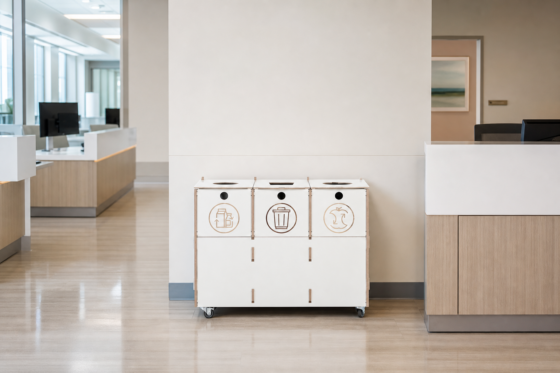
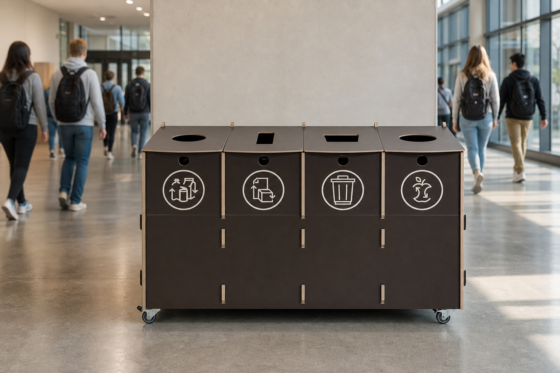
Infrastructure heavily dictates workplace habits. Removing individual, under-desk trash cans in favor of centralized waste-sorting hubs forces employees to make conscious disposal choices. Applying principles of employee recycling behaviour change shows that replacing deskside bins with multi-compartment central stations can boost waste diversion rates by up to 40%.
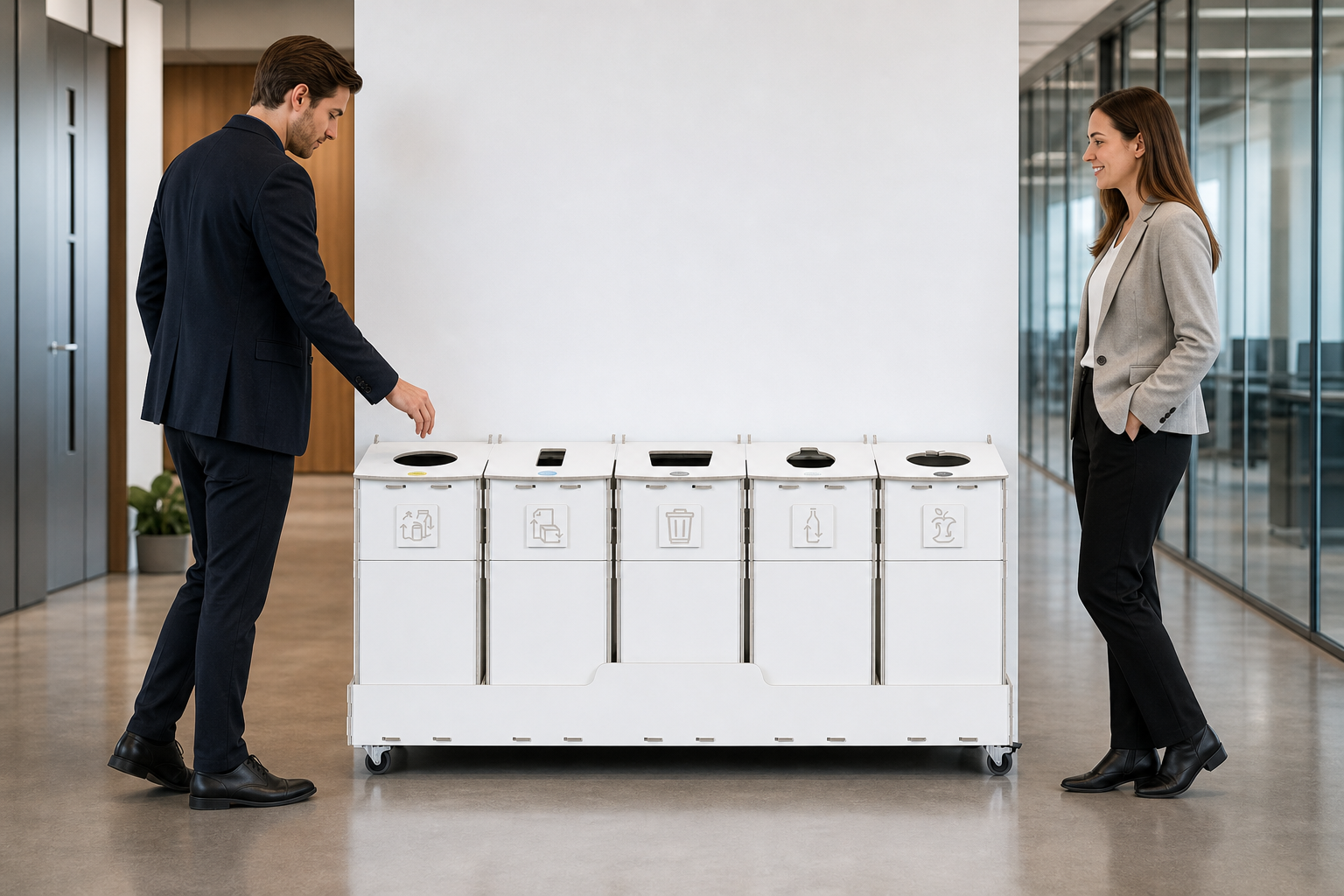
To maximize sorting purity and minimize cross-contamination across your facilities:
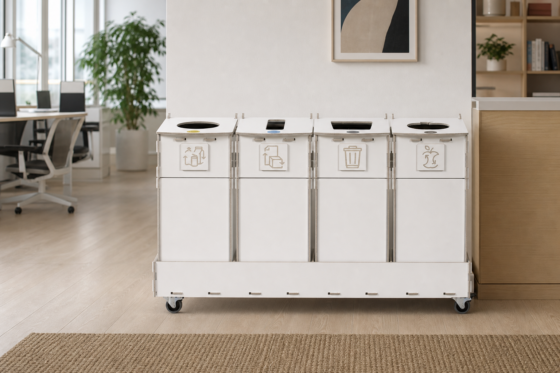
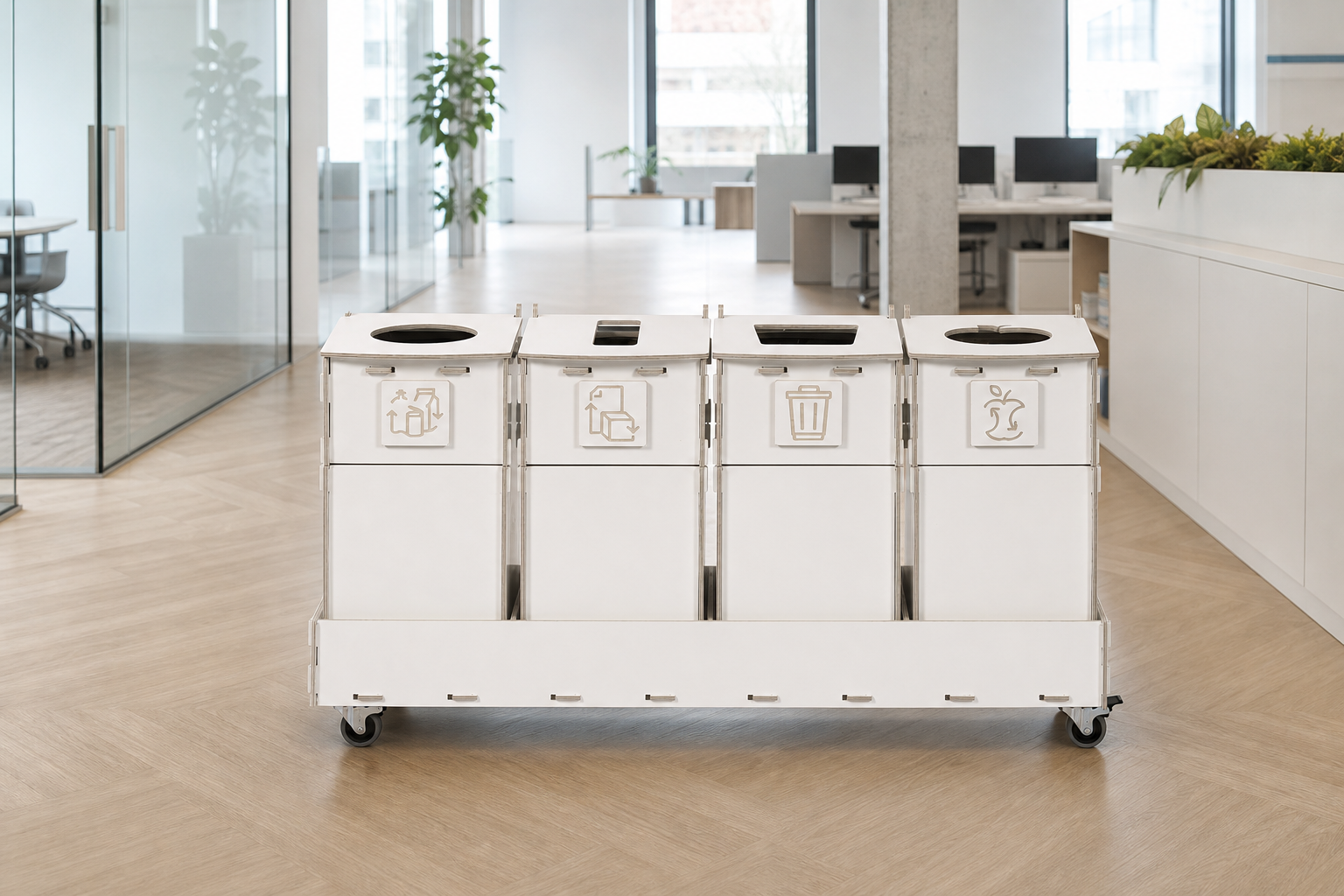
- Deploy distinct visual guidance: Switching from text-heavy labels to high-contrast visual pictograms reduces sorting errors by up to 40% in multilingual workplaces.
- Use functional opening shapes: Thin slits naturally guide paper sheet disposal, while circular apertures encourage bottle and can collection.
- Locate hubs strategically: Position centralized stations in high-visibility waste hotspots – such as printer rooms, kitchen entrances, and main corridors – while keeping units away from direct HVAC heating vents to prevent lingering odors.
For flexible workspace layouts, choosing modular, multi-compartment recycling units allows your facility team to expand or adjust waste streams as operational needs evolve. Learn more about selecting customized hub systems in our recycling bins sorter category.
-
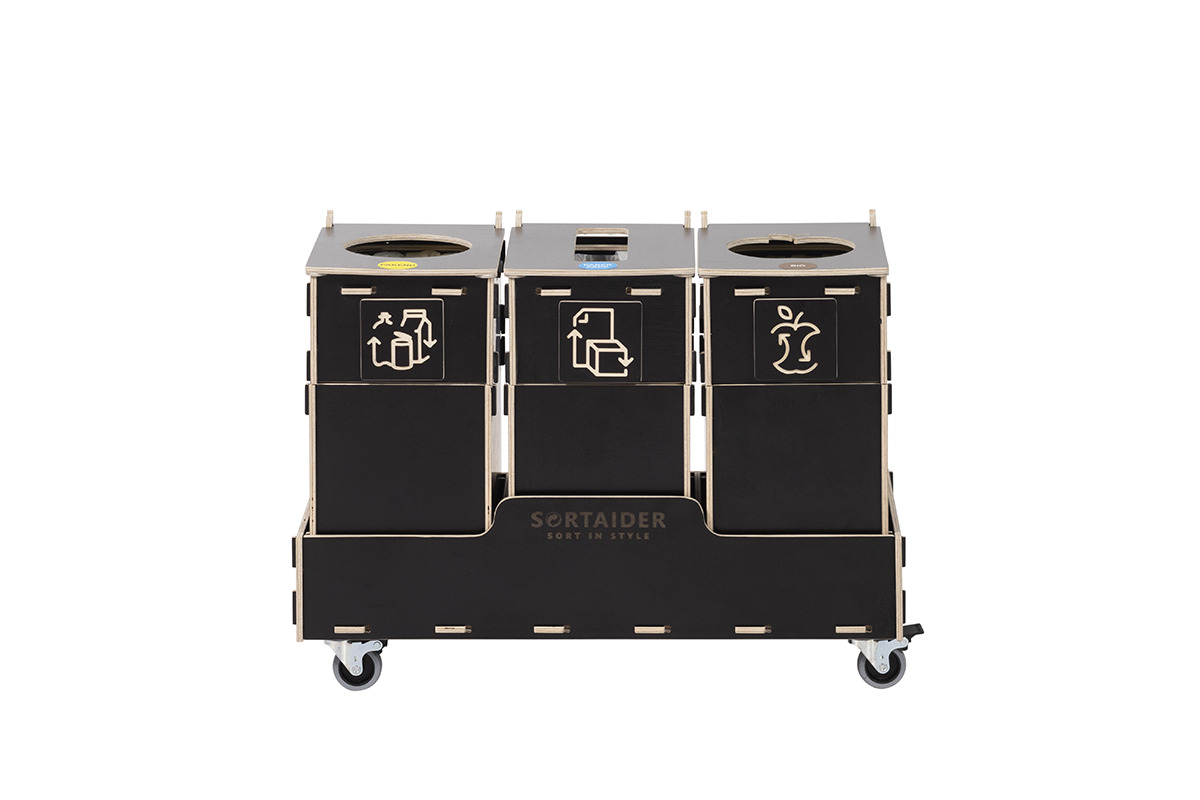
Recycling Bin Sorter 3 × 10 l brown
3 types of waste 3 x 10 l297,60 € (incl. 24% VAT)240 € (excl. VAT) -
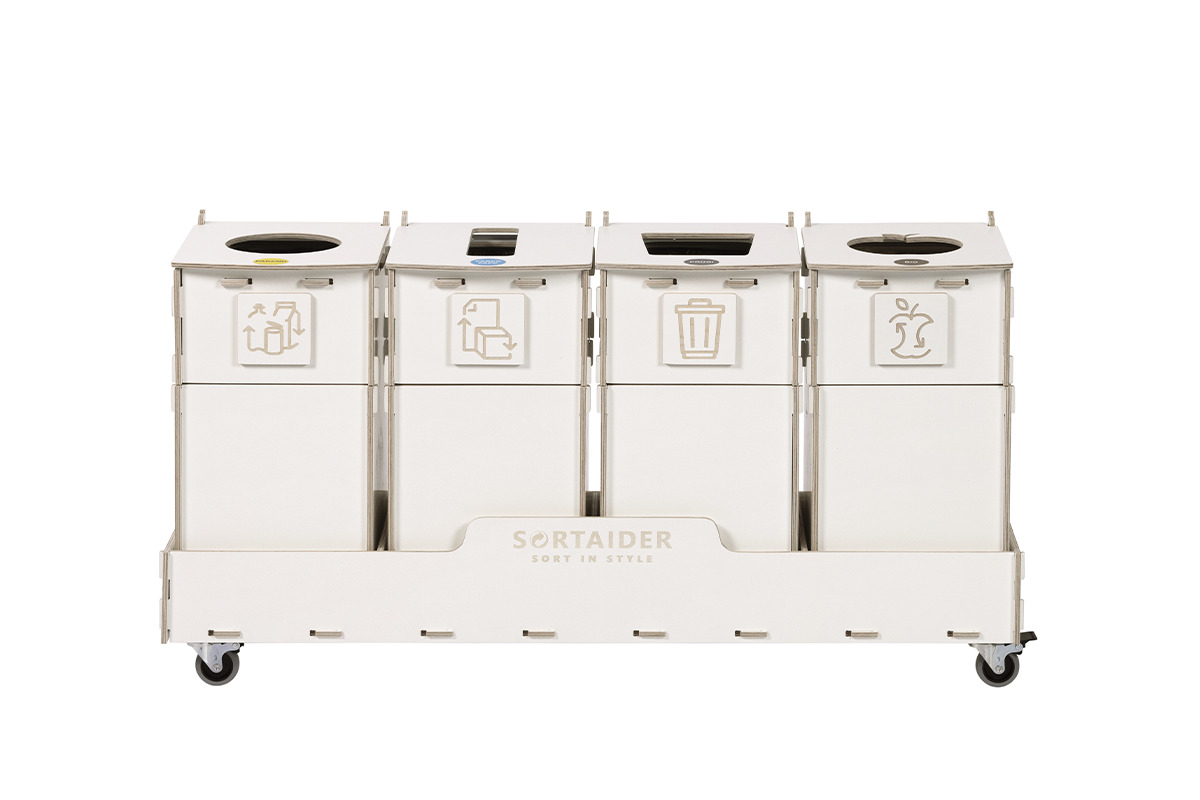
Recycling Bin Sorter 4 × 20 l white
4 types of waste 4 x 20 l607,60 € (incl. 24% VAT)490 € (excl. VAT) -
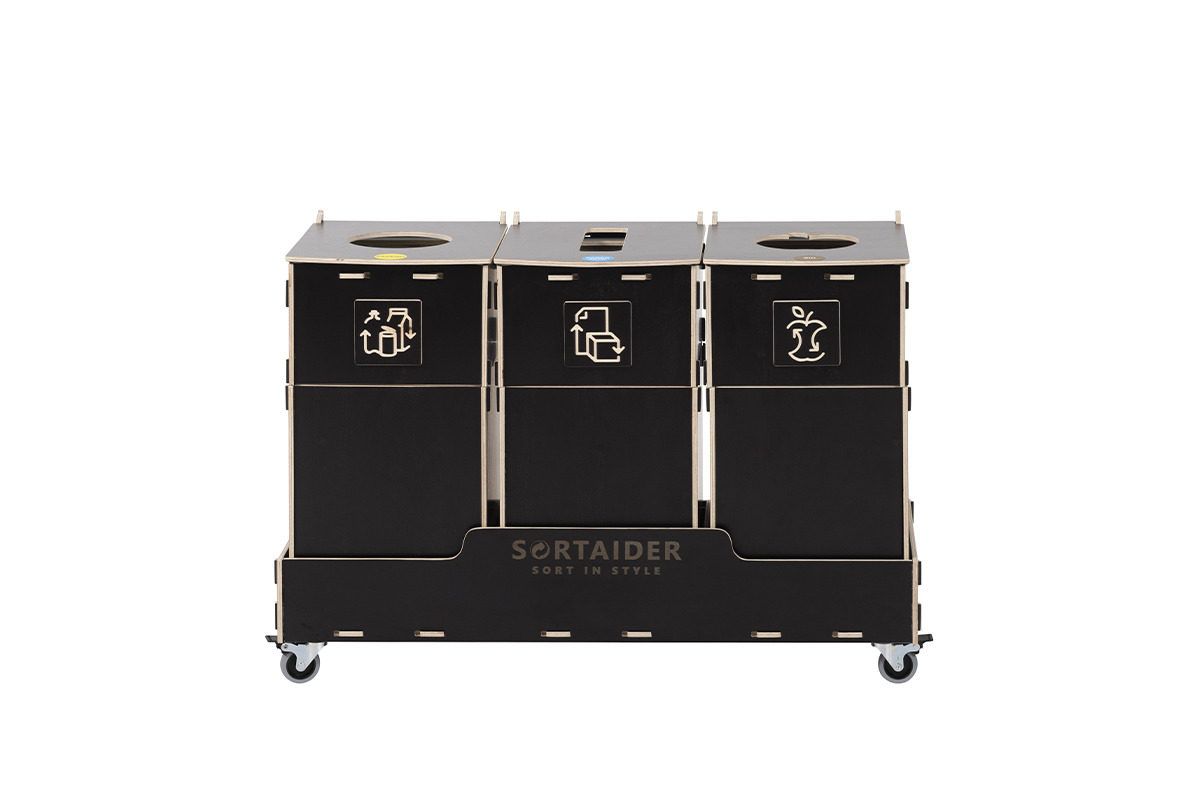
Recycling Bin Sorter 3 × 30 l brown
3 types of waste 3 x 30 l731,60 € (incl. 24% VAT)590 € (excl. VAT) -
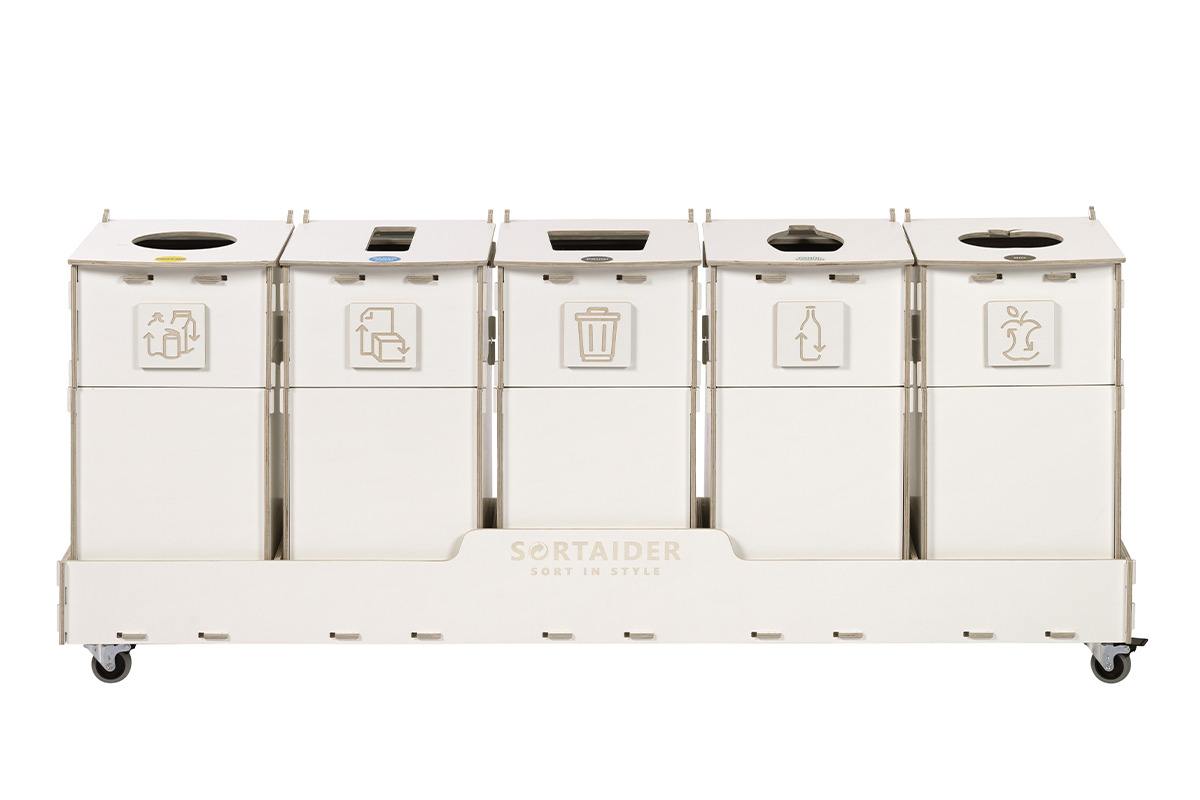
Recycling Bin Sorter 5 × 30 l white
5 types of waste 5 x 30 l1 165,60 € (incl. 24% VAT)940 € (excl. VAT)
Step 4: Procure Low-Embodied Carbon Waste Infrastructure
A circular waste strategy extends beyond the materials discarded inside the bin – it also encompasses the environmental footprint of the bin itself. Facility managers evaluating Scope 3 supply chain emissions are increasingly moving away from synthetic plastic containers.
The global plastics industry accounts for over 3.4% of worldwide greenhouse gas emissions, and post-consumer plastic degrades with every mechanical recycling cycle. In contrast, selecting waste containers constructed from sustainably harvested birch plywood provides a sturdy, aesthetic alternative. Birch plywood structures generate 2 to 4 times lower CO₂ lifecycle emissions than traditional metal or plastic bins while storing biogenic carbon throughout their operational lives. Read more on evaluating material footprints in our analysis of the environmental impact of plastic bins.
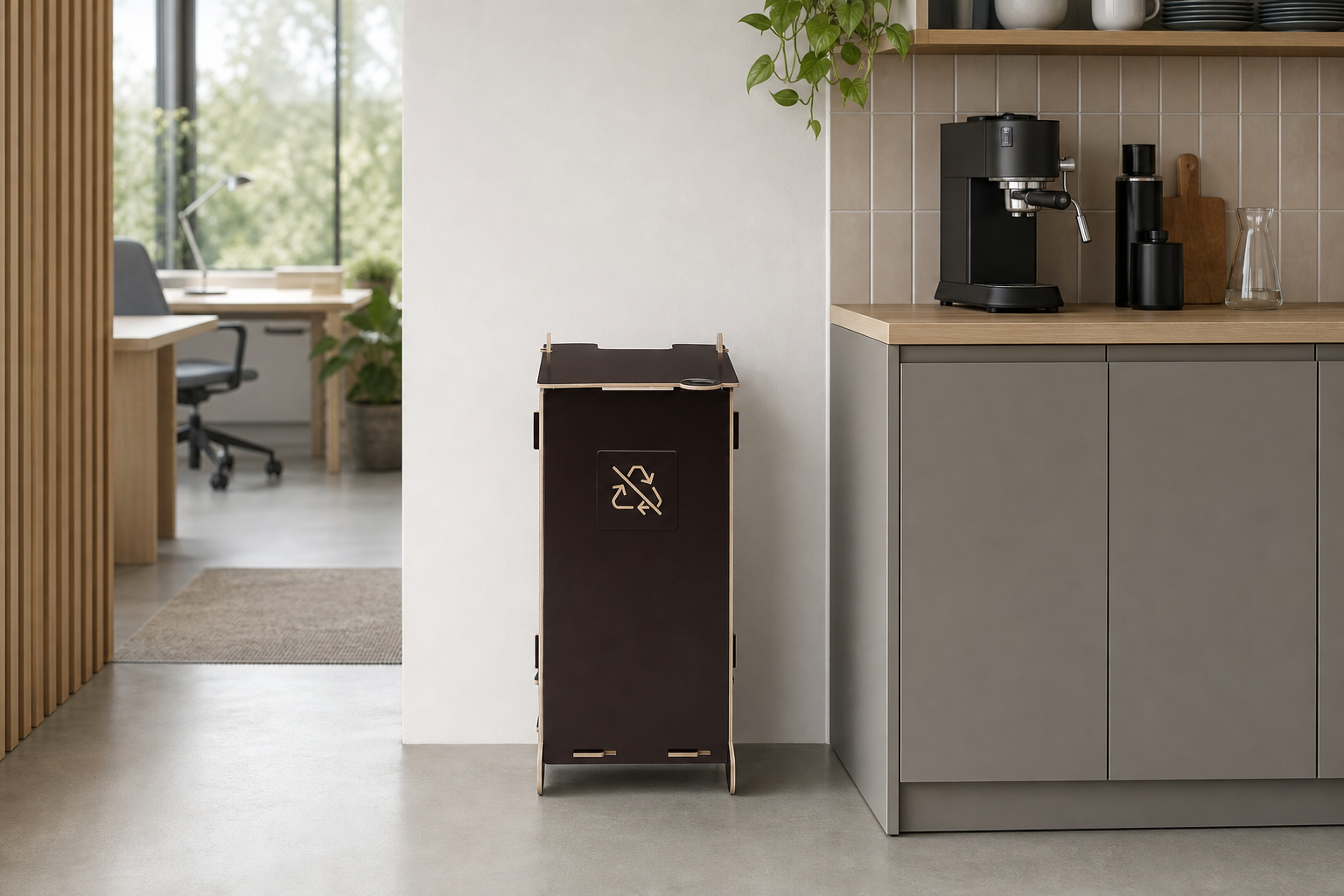
Explore our complete ranges across recycling bins and specialized single or multi-stream waste bins to match your building’s architectural aesthetic.
-
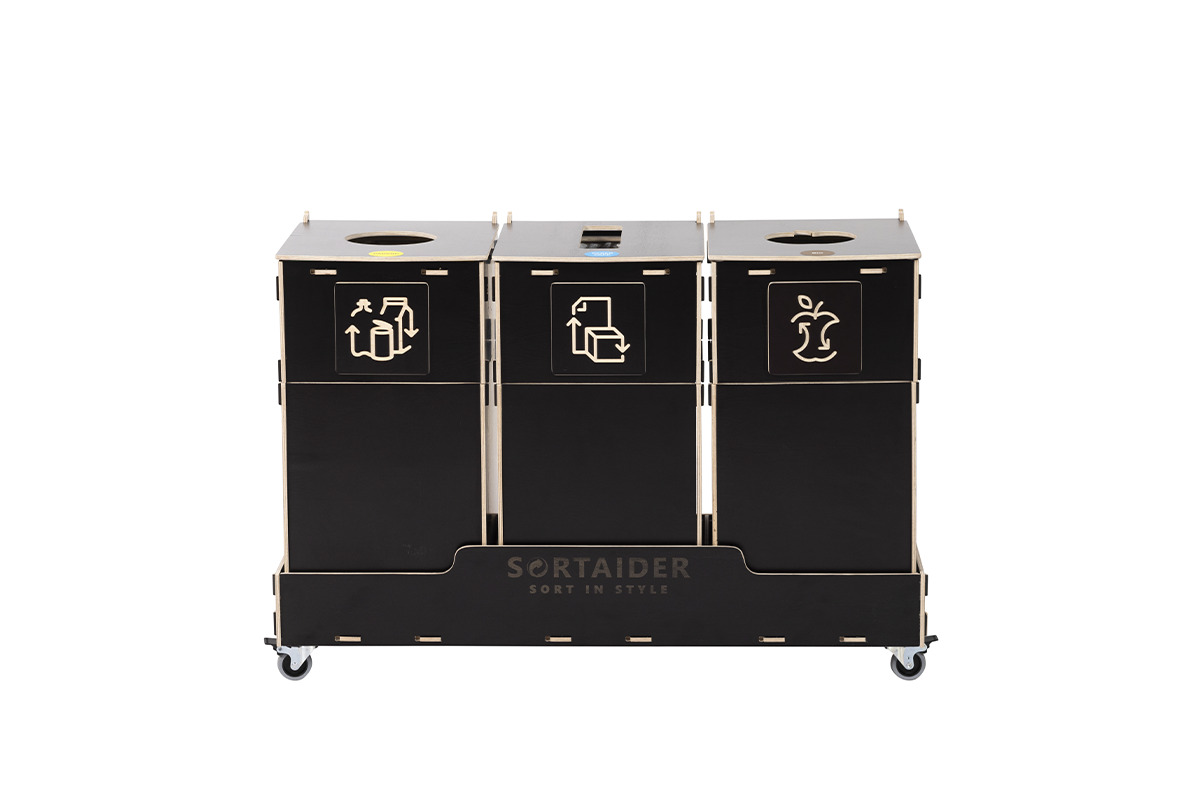
Recycling Bin Sorter 3 × 40 l brown
3 types of waste 3 x 40 l992 € (incl. 24% VAT)800 € (excl. VAT) -
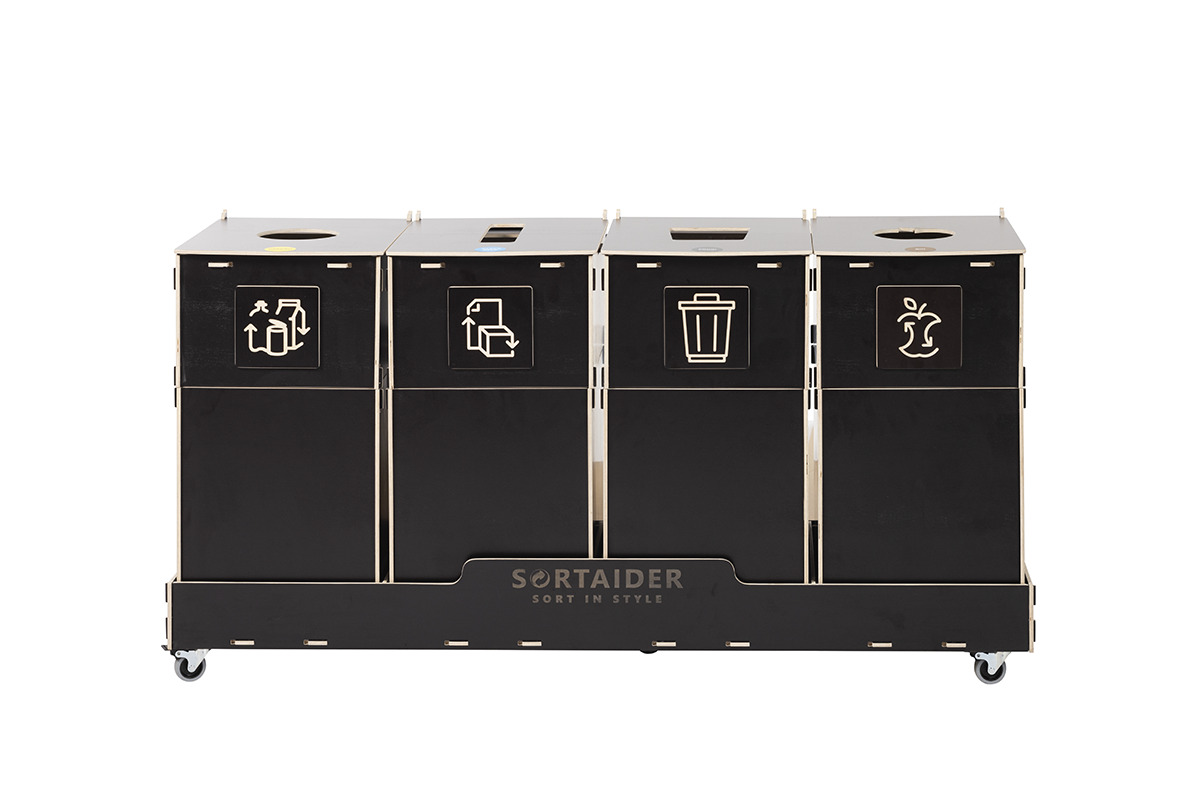
Recycling Bin Sorter 4 × 60 l brown
4 types of waste 4 x 60 l1 500,40 € (incl. 24% VAT)1 210 € (excl. VAT) -
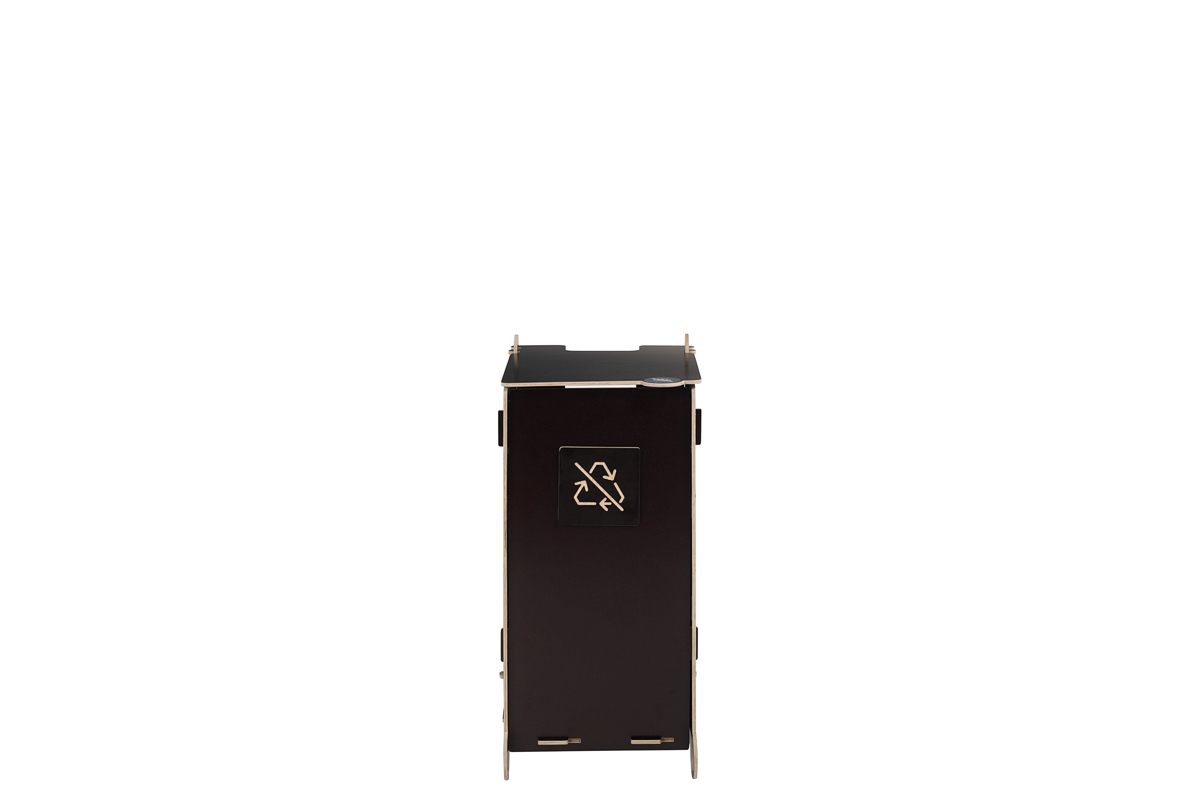
Waste Bin Sortaider 1 × 50 l brown
1 type of waste 1 x 50 l272,80 € (incl. 24% VAT)220 € (excl. VAT)
Navigating European Waste Regulations and ESG Reporting
Developing a structured office waste management plan ensures seamless compliance across diverse European national legal baselines. The EU Waste Framework Directive mandates separate collection for paper, metal, plastic, and glass, targeting a 65% municipal waste recycling rate by 2035.
Local jurisdictions frequently impose stricter regional requirements:
- Sweden: Mandated separate food waste collection for all commercial businesses in 2024.
- Denmark: Requires workplaces to separate solid waste into a minimum of four core collection streams.
Integrating precise tracking metrics – such as total monthly waste weight, waste composition, and landfill diversion percentages – helps facilities leaders simplify esg reporting waste management. Learn how to integrate these data points into key corporate dashboards in our guide to sustainability KPIs for facilities managers.
Transform Your Workplace Discards into Circular Value
Transitioning your office away from linear disposal patterns requires combining strategic bin placement, intuitive behavioral design, and low-embodied carbon infrastructure. Review our guide on how to set up recycling at work or explore actionable methods on how to reduce office carbon footprint to start optimizing your facility today.
To build a customized, high-yield recycling system tailored to your building’s operational requirements, contact our team for a personal consultation on modular sorting hub configurations.