Did you know the average European office worker generates 2 kg of waste daily? Slashing workplace waste requires structured policies, behavioral nudges, and high-efficiency sorting systems. Here is your actionable blueprint to build a zero-waste office that cuts costs and satisfies regulatory targets.
Defining Zero Waste in the Modern Office
Zero waste is not an abstract ideal in corporate facility management. Under the TRUE certification standard, achieving a zero-waste operation means diverting 90% or greater of all solid, non-hazardous waste from landfills, incineration, and the environment over 12 consecutive months. Incineration and waste-to-energy do not count toward this diversion threshold. Instead, materials must be reduced, reused, recycled, composted, or recovered for productive economic use.
Establishing a certified zero-waste target forms a core component of a comprehensive net-zero office strategy. Grounding workplace operations in a circular economy for businesses allows organizations to eliminate waste at the design phase rather than managing disposal as an inevitable operational overhead.
Step 1: Conduct a Baseline Waste Assessment
You cannot manage what you do not measure. Before ordering equipment or announcing new sustainability rules, conduct a thorough waste audit for offices. A typical assessment runs between one and seven days to capture natural variations in daily office activity while measuring both waste volume and material composition.
To execute an effective assessment:
- Examine purchasing records: Review paper consumption, office supply orders, and single-use kitchen packaging.
- Separate waste by zone: Keep waste bags from printer hubs, break rooms, and open office floors distinct during collection to spot localized inefficiencies.
- Weigh and categorize: Sort discards into paper, plastic, bio-waste, and residual trash to calculate your baseline diversion rate.
Once you establish accurate operational metrics, learn how to track and report recycling rates at work. Right-sizing commercial haulage schedules based on audit findings routinely reduces disposal fees by 30% to 50%.
Step 2: Implement Source Reduction and Sustainable Procurement
The upper tiers of the waste management hierarchy prioritize prevention over recycling. Preventing material from entering your facility in the first place delivers the highest operational and financial savings.
Implement direct workplace policies to eliminate unnecessary material streams:
- Paper reduction: Remove personal desk printers, default multi-function devices to double-sided draft printing, and shift administrative workflows to digital platforms.
- Supply reuse: Reuse metal-clasp envelopes, relabel durable file folders, and host quarterly office cleanouts to donate surplus equipment to schools or non-profit organizations.
- Vendor selection: Require suppliers to minimize secondary shipping packaging and prioritize remanufactured toner cartridges or recycled-content supplies.
Sustainable procurement extends to facility hardware. When assessing the environmental impact of plastic bins, traditional plastic and metal receptacles carry substantial embodied carbon. Selecting indoor sorting stations crafted from certified birch plywood can yield 2 to 4 times lower CO₂ lifecycle emissions while offering long-term structural durability.
Step 3: Transition to Centralized Sorting Stations
Removing individual deskside trash cans is one of the most effective structural shifts an office manager can implement. Requiring employees to walk to centralized sorting hubs provides a subtle behavioral nudge that increases waste diversion rates by up to 40%.
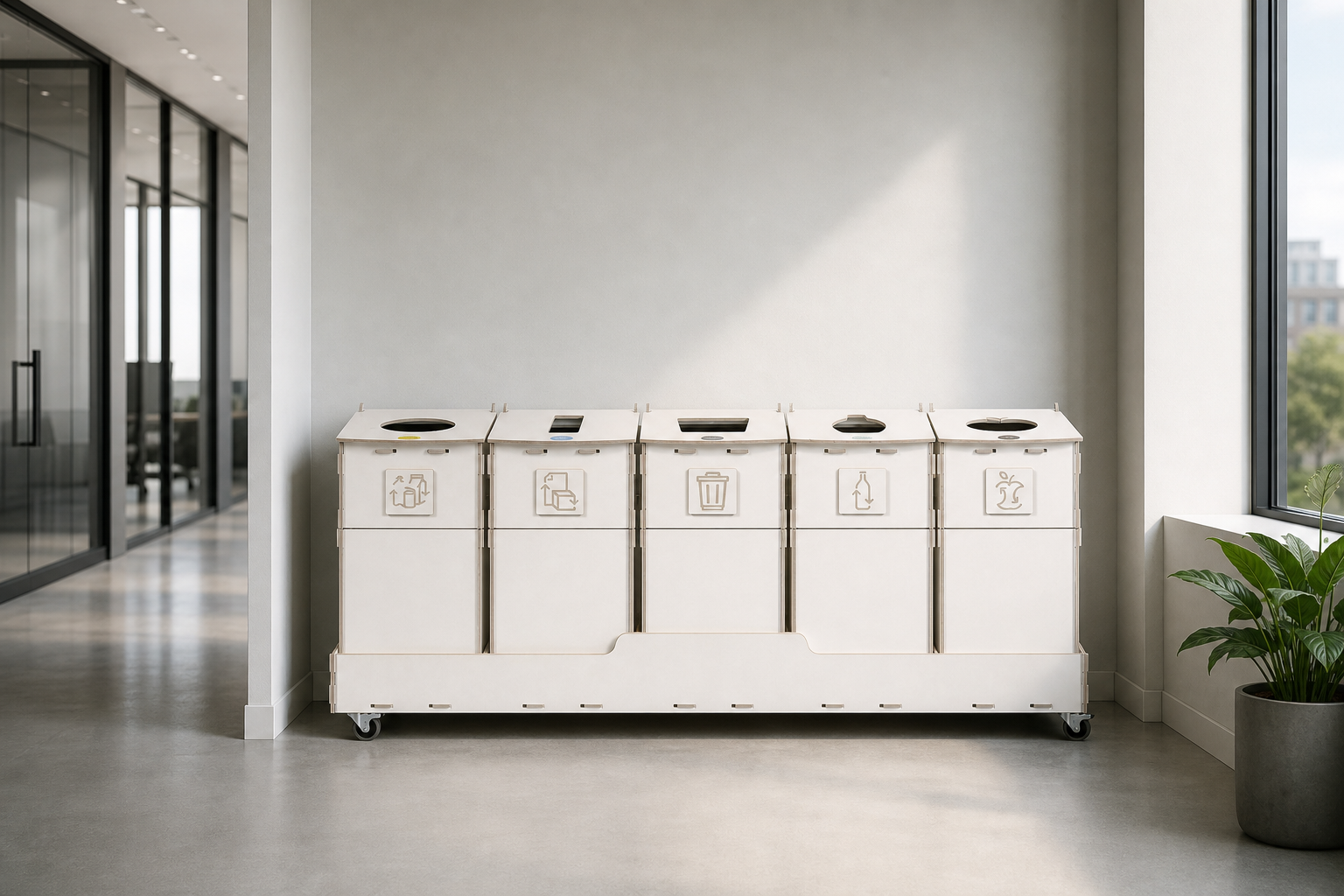
To maximize participation and keep streams clean, follow essential guidelines from our recycling bin placement guide:
- Maintain a 1:1 ratio: Never place a general waste receptacle without a corresponding recycling stream beside it.
- Target high-traffic hotspots: Position multi-compartment stations in printer alcoves, main corridors, and kitchenette areas.
- Ensure accessibility: Keep bin openings at accessible heights – between 38 cm and 122 cm above the floor – to meet universal design standards.
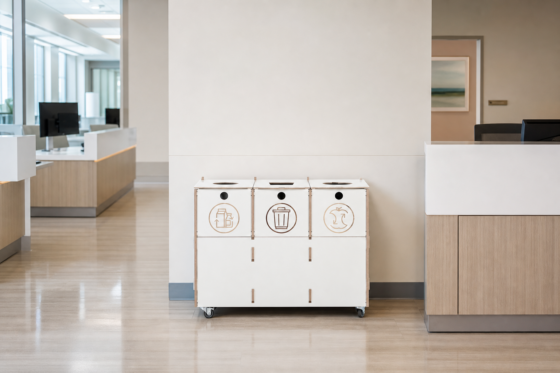
For compact office zones, modular multi-compartment stations deliver efficient separation without cluttering floor space:
-
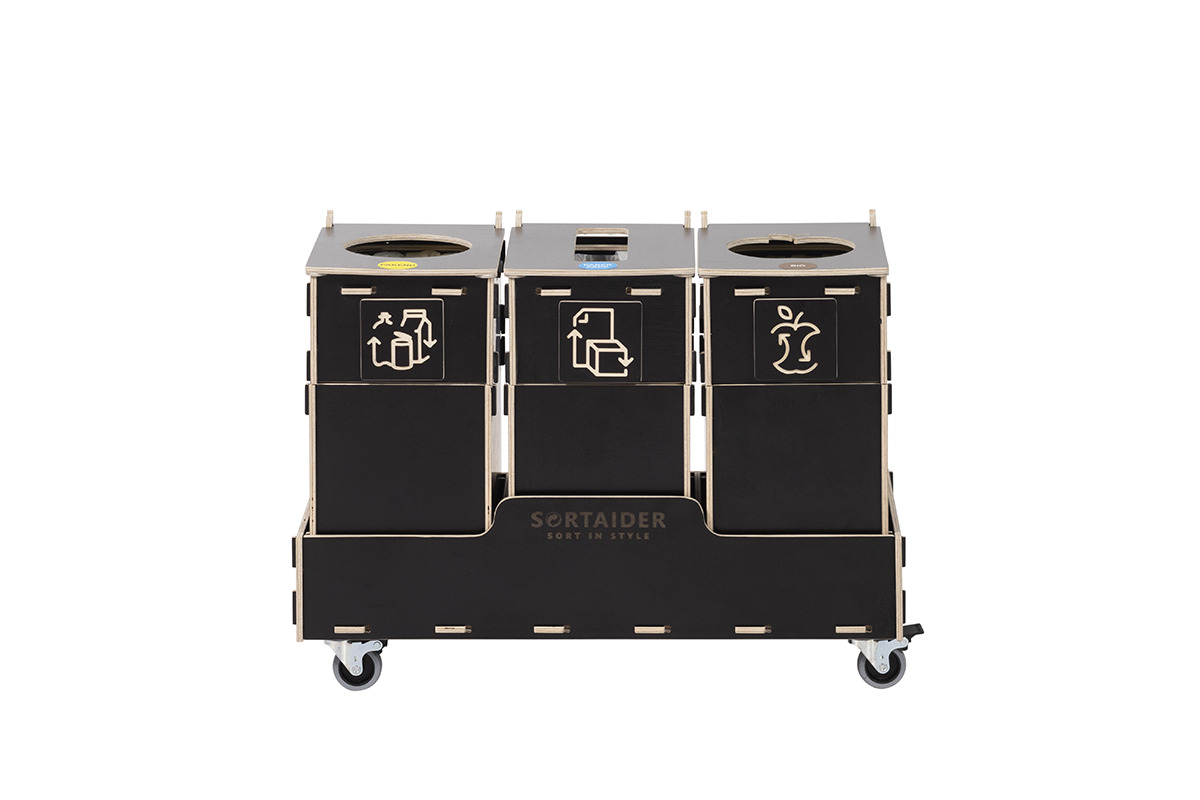
Recycling Bin Sorter 3 × 10 l brown
3 types of waste 3 x 10 l297,60 € (incl. 24% VAT)240 € (excl. VAT) -
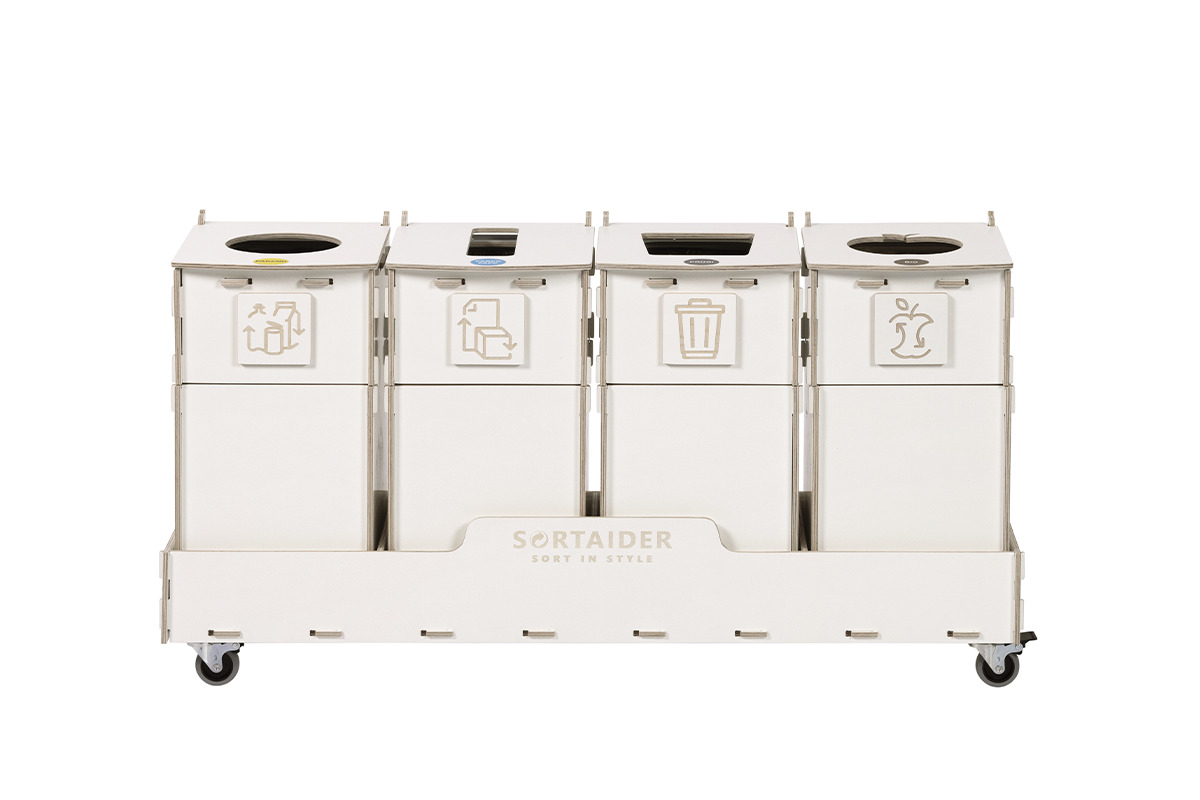
Recycling Bin Sorter 4 × 20 l white
4 types of waste 4 x 20 l607,60 € (incl. 24% VAT)490 € (excl. VAT) -
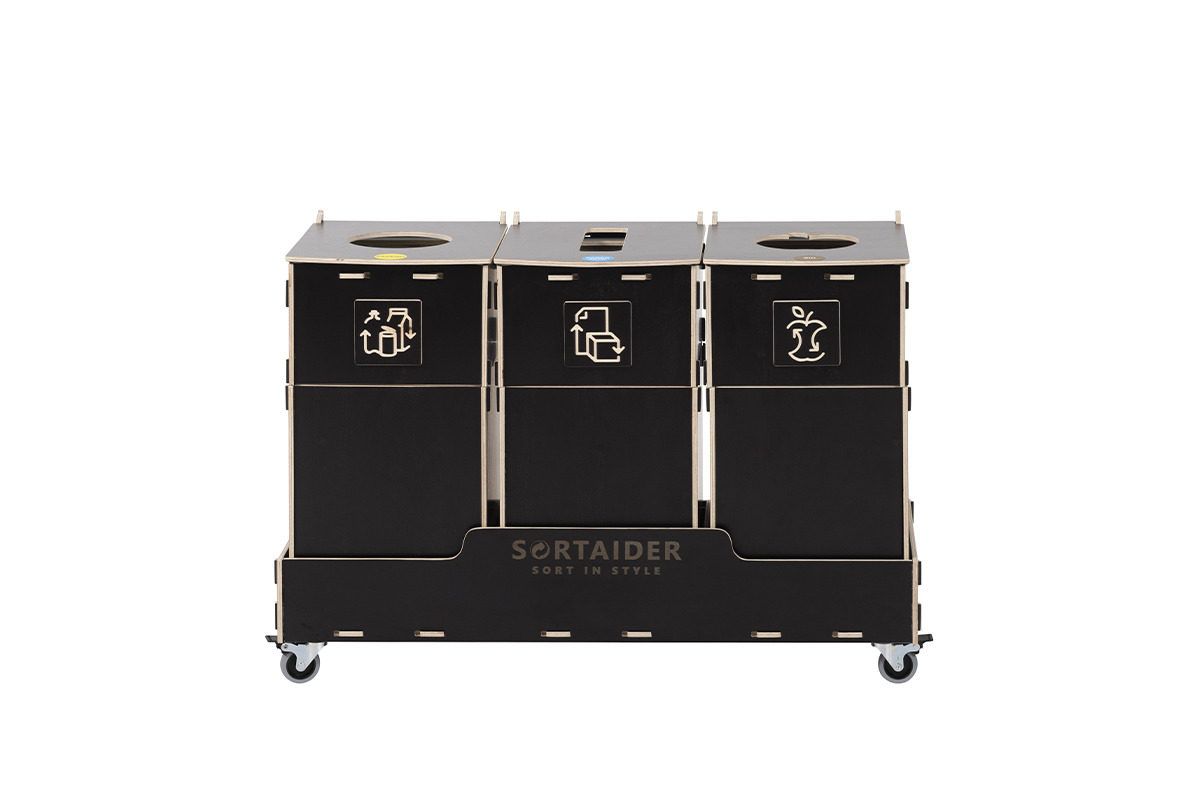
Recycling Bin Sorter 3 × 30 l brown
3 types of waste 3 x 30 l731,60 € (incl. 24% VAT)590 € (excl. VAT)
Step 4: Standardize Stream Separation and Kitchen Bio-Waste
Meeting European regulatory standards requires clear separation across multiple material streams. The EU Waste Framework Directive mandates source separation for paper, metal, plastic, and glass, while national regulations introduce localized requirements. For instance, Sweden made bio-waste collection mandatory for all commercial facilities in 2024, and Denmark requires a minimum of four separate workplace waste streams. Local regulations across North America and Europe also enforce strict mandatory commercial recycling rules based on waste volume thresholds.
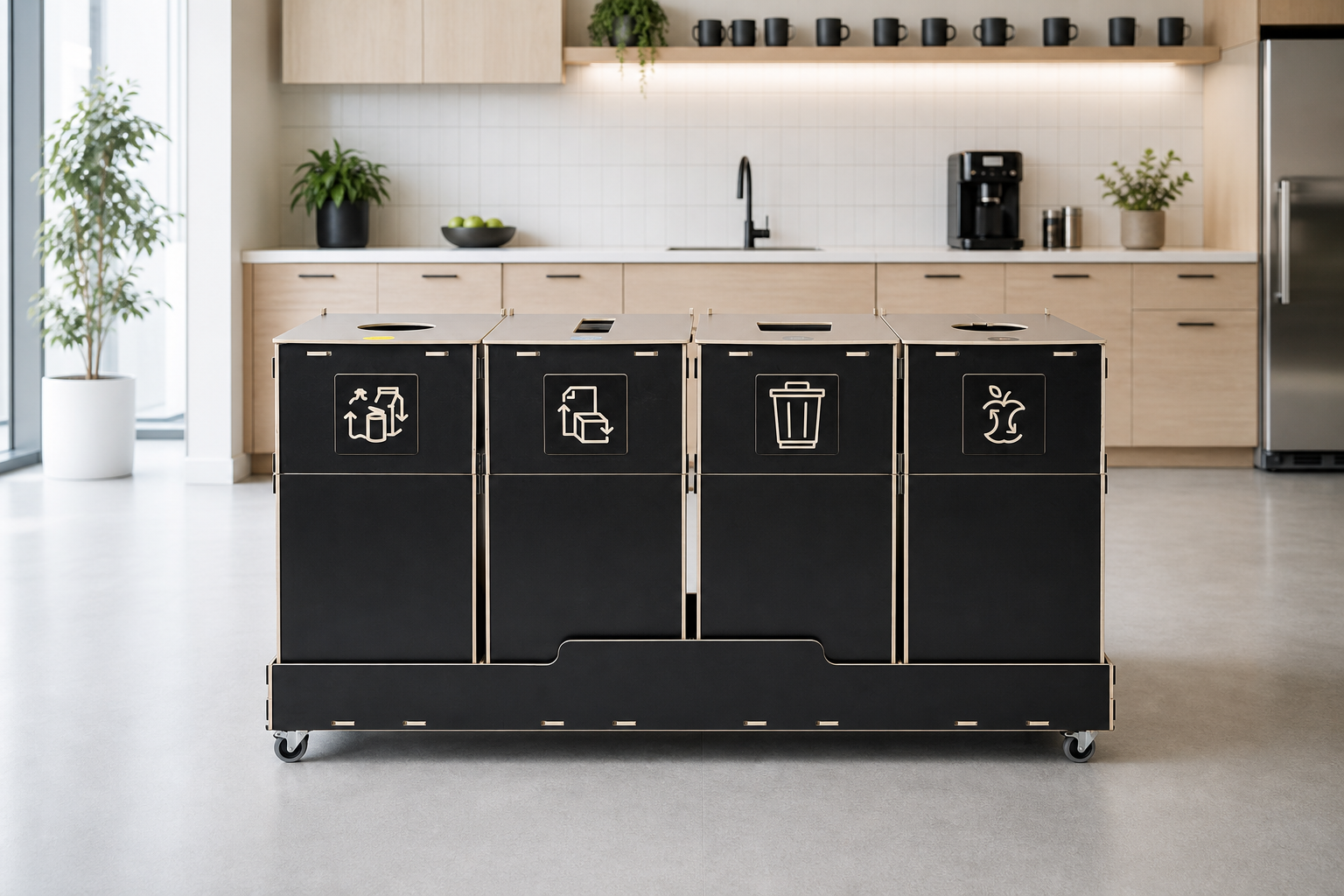
Understanding what goes in each recycling bin is critical to maintaining high stream quality. Under TRUE certification guidelines, outgoing materials must not exceed a 10% contamination rate.
- Paper and Cardboard: Collect clean paper and flattened cardboard. Divert greasy food packaging, such as pizza boxes, to organics or residual waste to avoid contaminating pulp batches.
- Plastics and Metals: Separate clean drink bottles, cans, and rigid plastic containers.
- Organics and Bio-Waste: Follow strict office kitchen waste management protocols. Provide dedicated, covered bio-waste bins for food scraps and coffee grounds, prohibiting non-compostable plastic liners.
- Universal and Hazardous Waste: Universal items – including lithium-ion batteries, fluorescent lamps, aerosol cans, and discarded electronics – must be stored in structurally sound, closed containers to prevent leaks or breakage and routed through specialized recyclers.
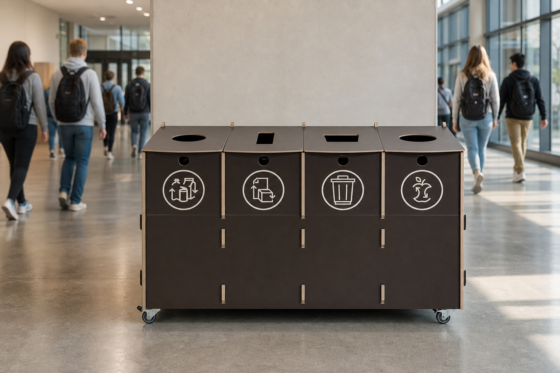
For high-volume communal hubs and cafeterias, larger multi-stream stations allow facilities to manage complex sorting streams with minimal footprint:
-
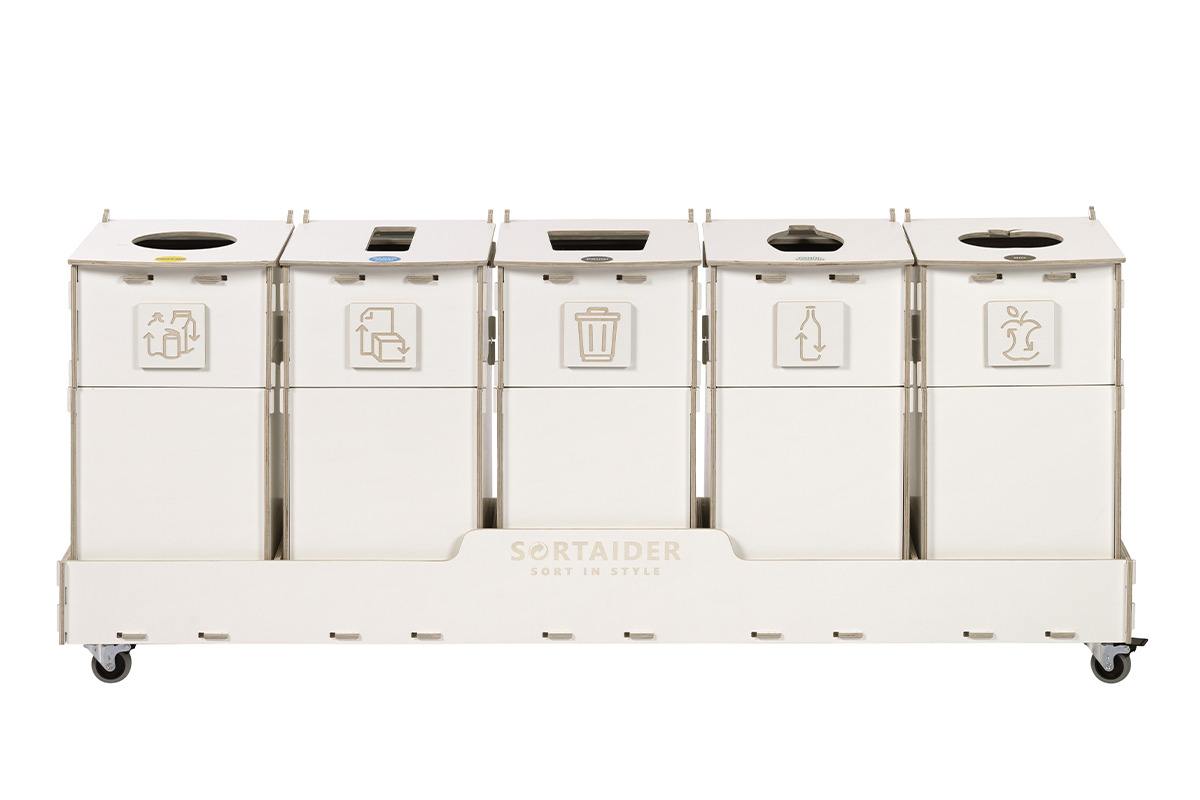
Recycling Bin Sorter 5 × 30 l white
5 types of waste 5 x 30 l1 165,60 € (incl. 24% VAT)940 € (excl. VAT) -
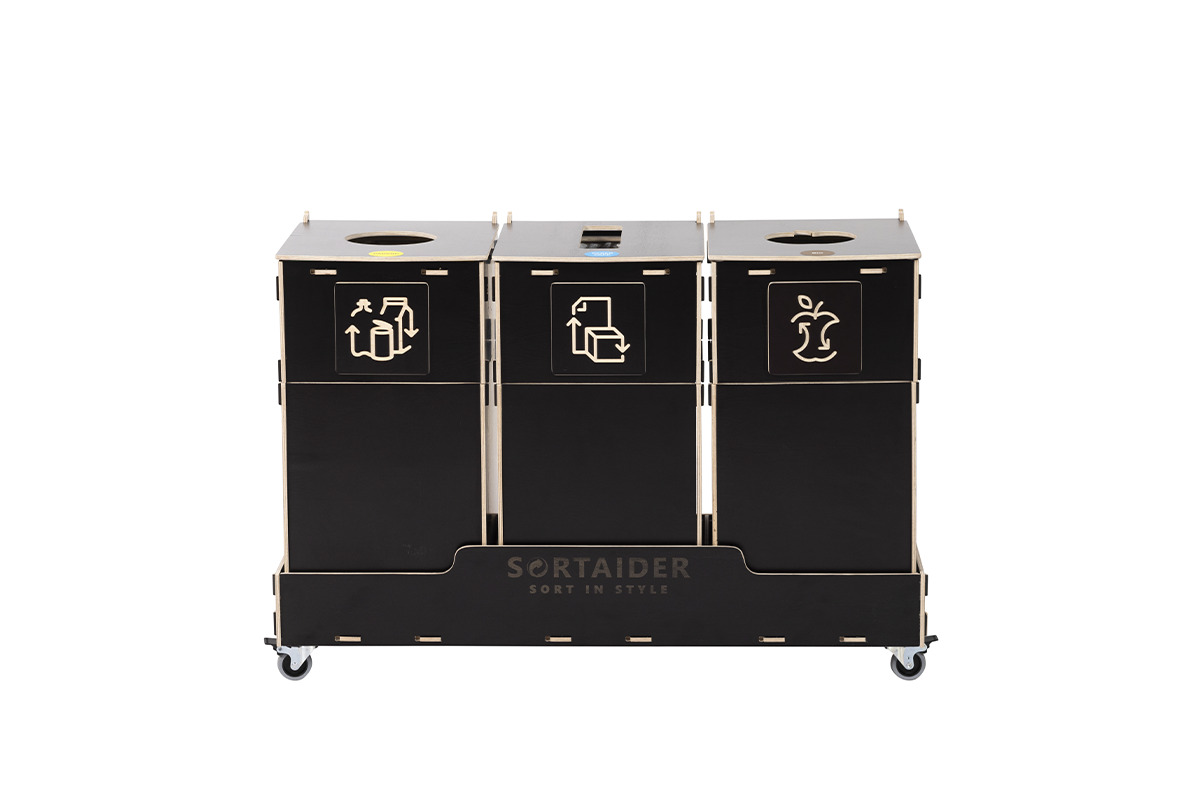
Recycling Bin Sorter 3 × 40 l brown
3 types of waste 3 x 40 l992 € (incl. 24% VAT)800 € (excl. VAT) -
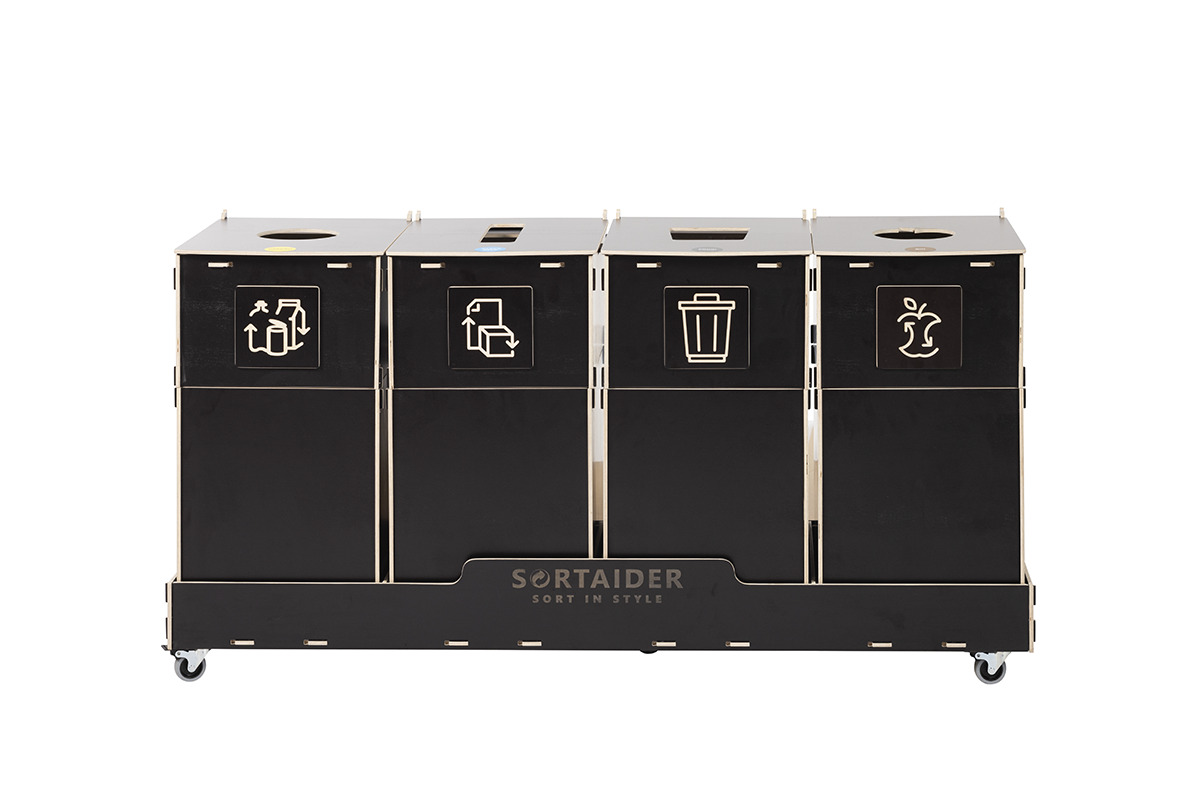
Recycling Bin Sorter 4 × 60 l brown
4 types of waste 4 x 60 l1 500,40 € (incl. 24% VAT)1 210 € (excl. VAT) -
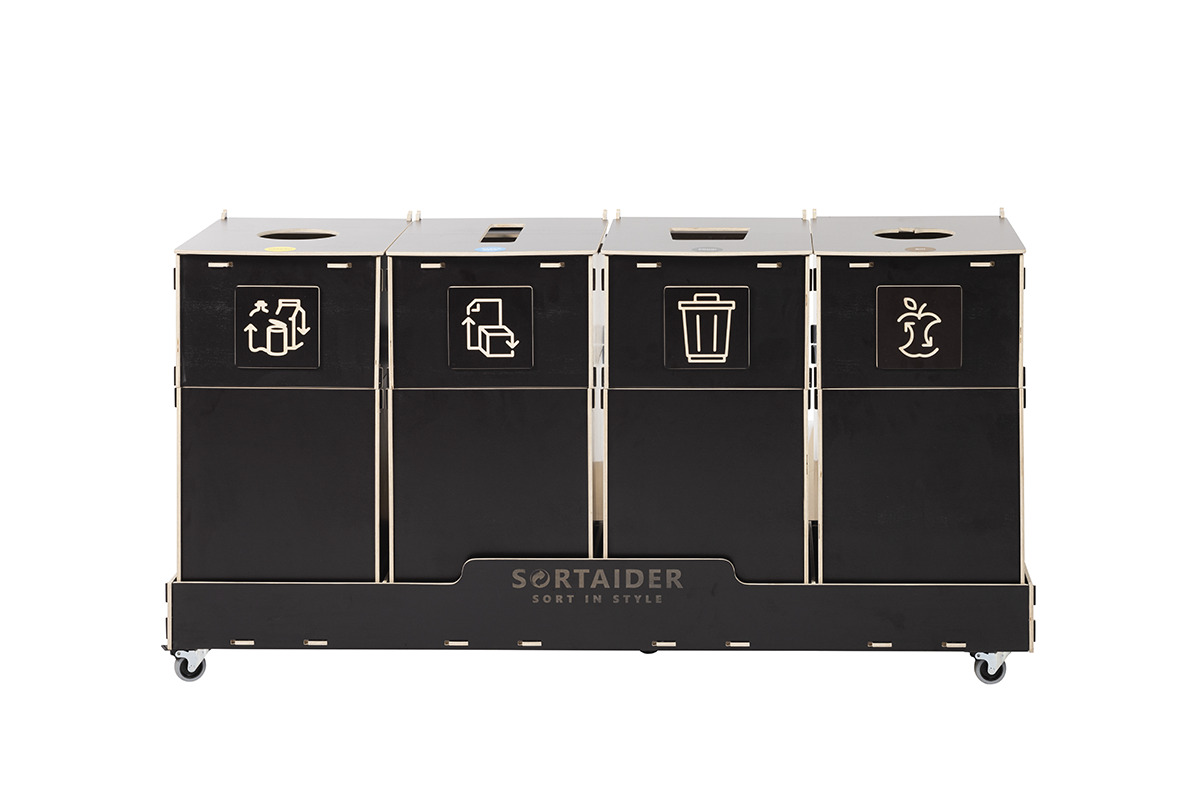
Recycling Bin Sorter 4 × 90 l brown
4 types of waste 4 x 90 l1 810,40 € (incl. 24% VAT)1 460 € (excl. VAT)
Step 5: Drive Employee Engagement and Behavioral Change
Infrastructure alone cannot sustain a zero-waste workplace; success depends on everyday habits. Combining clear visual cues with continuous culture-building drives reliable workplace compliance.
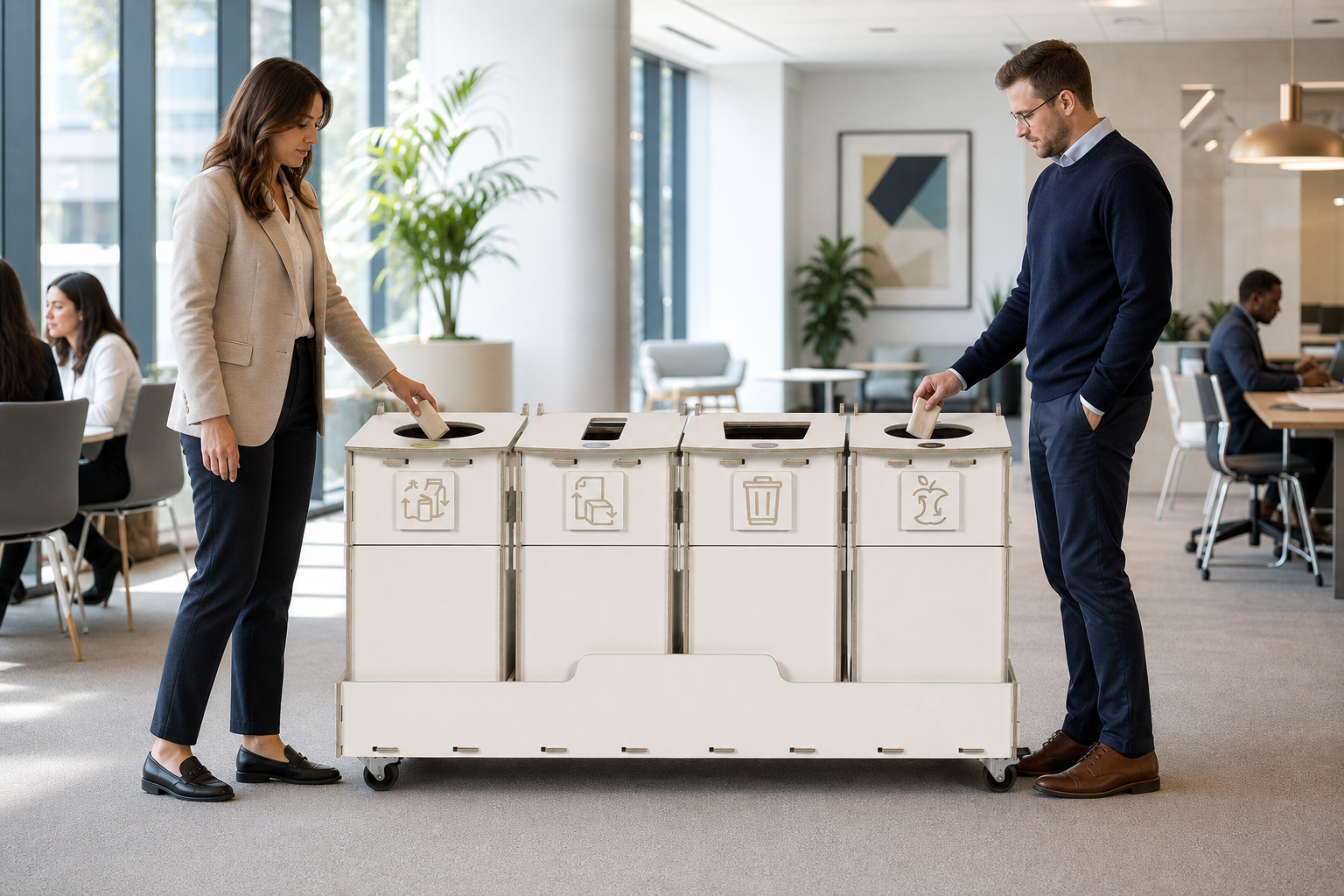
When designing your engagement strategy:
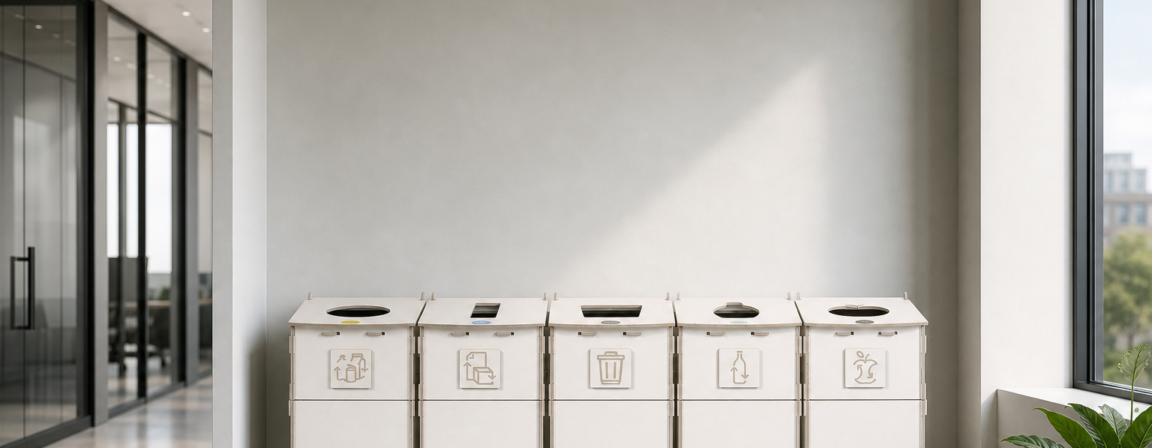
- Standardize visual signage: Consult our recycling bin color-coding guide. Replacing text-dense signs with high-contrast pictograms and dedicated lid openings reduces sorting errors by up to 40% in multilingual environments.
- Educate custodial staff: Train cleaning teams on stream integrity, liner replacement rules, and contamination reporting to prevent sorted materials from being commingled during collection.
- Foster a zero-waste culture: Share monthly diversion metrics across internal communication channels. Leadership support reinforces zero-waste habits as a shared organizational standard.
Reviewing an employee recycling behaviour change framework will help keep your team aligned. Incorporate these behavioral insights into your master office waste management plan to learn how to set up recycling at work effectively.
Mobilize Your Zero-Waste Office Strategy
Transitioning your workspace to zero waste is a systematic process combining accurate data collection, source reduction, sustainable procurement, and intuitive sorting infrastructure. By eliminating deskside bins, enforcing stream separation, and deploying user-friendly collection stations, facility leaders can achieve up to 90% waste diversion while lowering operating costs.
Ready to upgrade your workspace infrastructure? Explore our award-winning range of sustainable recycling bins, customize a solution with our modular Sorter series recycling stations, or browse our indoor waste bins to launch your zero-waste initiative today.