Are contaminated bins and low participation stalling your sustainability targets? Replacing desk bins with a structured engagement strategy can boost waste diversion rates by up to 40%. Here is how facility managers can build an employee recycling awareness program that drives lasting habit change.
Establish Your Baseline with a Waste Audit
You cannot improve what you do not measure. Before launching an awareness campaign, conduct a systematic waste audit for offices over one to seven days to analyze your facility’s baseline metrics. Weighing and cataloging discarded items reveals your current diversion rate and pinpoints where sorting errors occur most frequently.
Simultaneously, issue an anonymous employee survey to measure recycling knowledge, attitudes, and perceived friction points. Research shows that common workplace contaminants include paper towels, greasy food containers, plastic wraps, and disposable coffee cups. Identifying these specific misunderstandings allows you to tailor your educational outreach to real workplace behavior rather than abstract guidelines.
Secure Leadership Support and Appoint Green Champions
An awareness program gains immediate traction when leadership actively models the desired behaviors. Have a senior executive host a formal program launch explaining the company’s environmental goals, regulatory commitments, and waste-reduction targets. When staff observe that management prioritizes waste separation, social norms shift, encouraging broader adoption across teams.
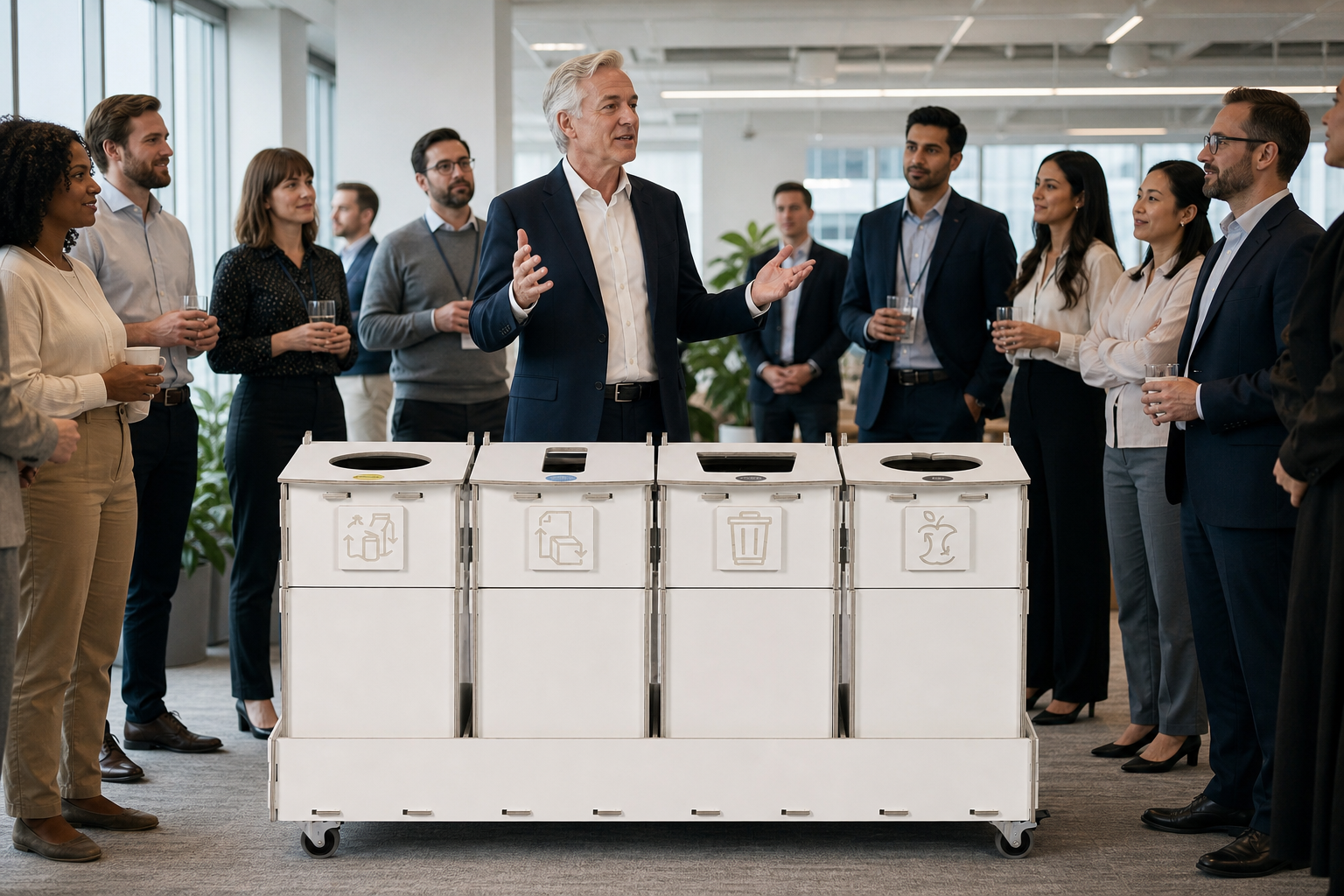
To sustain momentum, recruit dedicated sustainability champions from different departments, including operations, HR, and facility cleaning staff:
- Departmental champions: Act as peer-to-peer contacts, answering day-to-day sorting questions and encouraging proper habits within their teams.
- Facilities and cleaning staff: Provide essential feedback on collection efficiency, contamination hotspots, and overflowing bins.
- Cross-functional committees: Meet monthly to review performance metrics and resolve practical bottlenecks.
Understanding the psychological principles behind employee recycling behaviour change reinforces these efforts, ensuring that social influence and peer recognition drive long-term habit formation.
Upgrade Workplace Infrastructure and Visual Nudges
Education alone rarely solves sorting errors if the physical setup creates friction. Research indicates that changing signage on non-intuitive collection units yields minimal improvement in sorting compliance. To achieve high compliance, your physical infrastructure must guide user choices naturally.
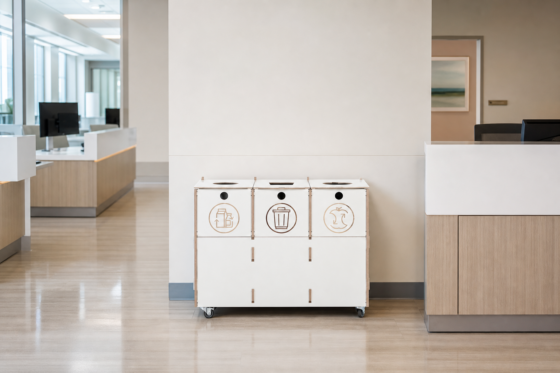
Start by replacing individual desk bins with centralized sorting hubs located in high-traffic hotspots, such as kitchenettes, coffee stations, and print areas. Ensuring that a recycling stream stands directly next to every general waste bin prevents employees from tossing recyclables into residual waste out of convenience. When determining station density, aim to place stations so that no employee is more than 10 to 15 meters away, serving roughly 20 to 70 staff members per hub. Check our guide on how many recycling bins an office needs to calculate your exact requirements.
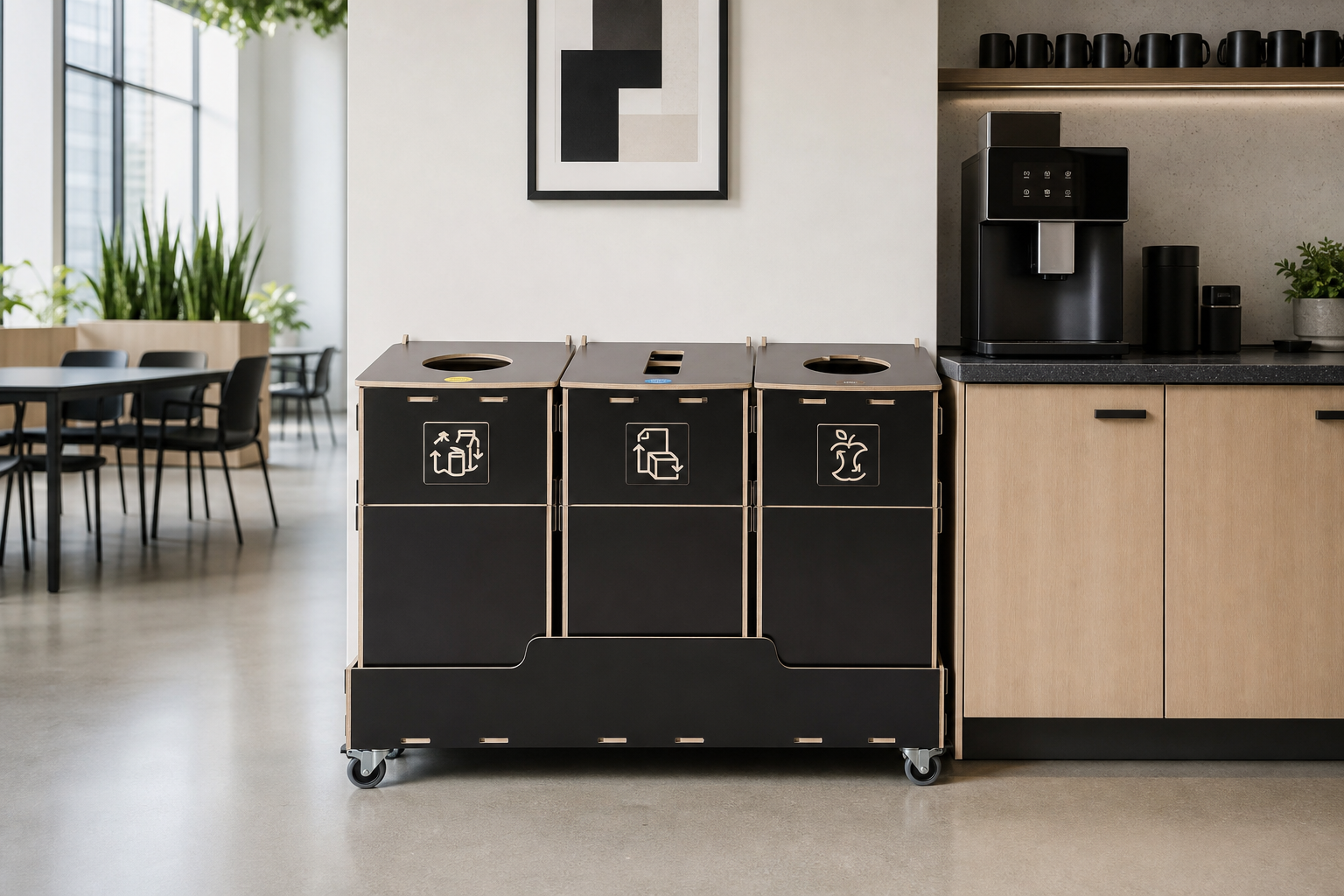
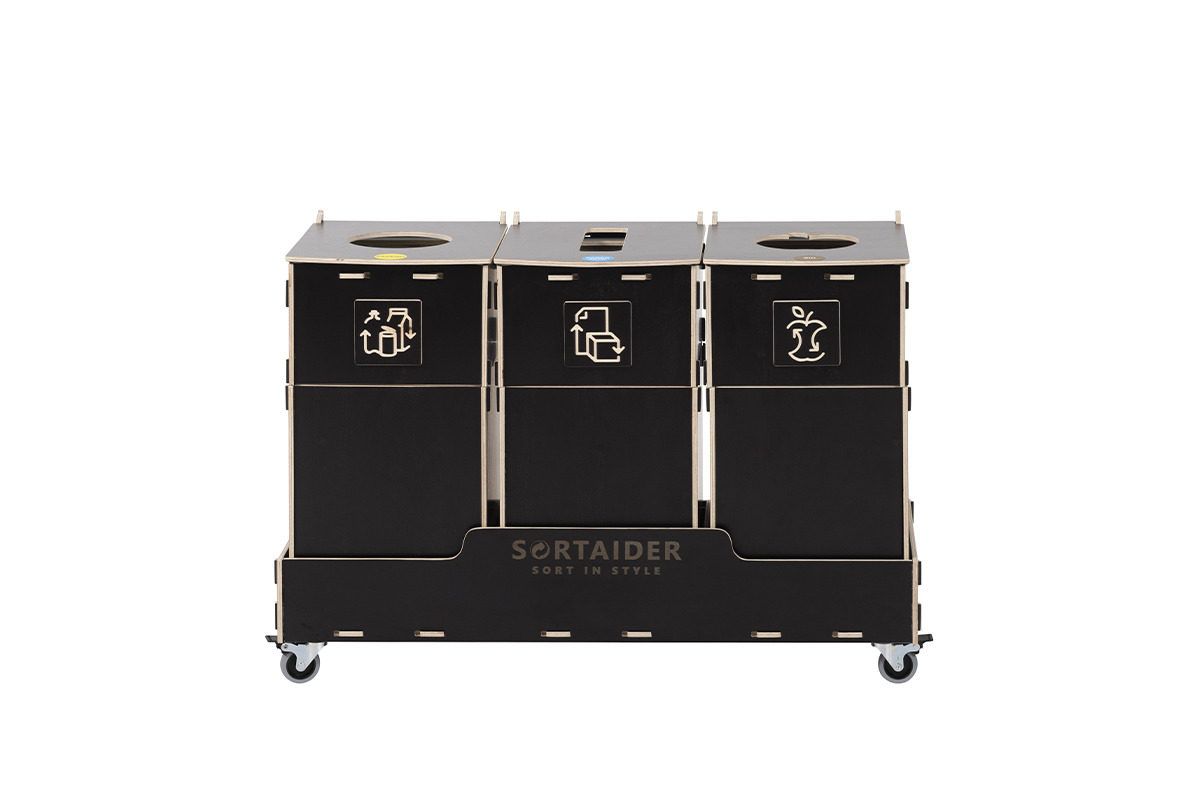
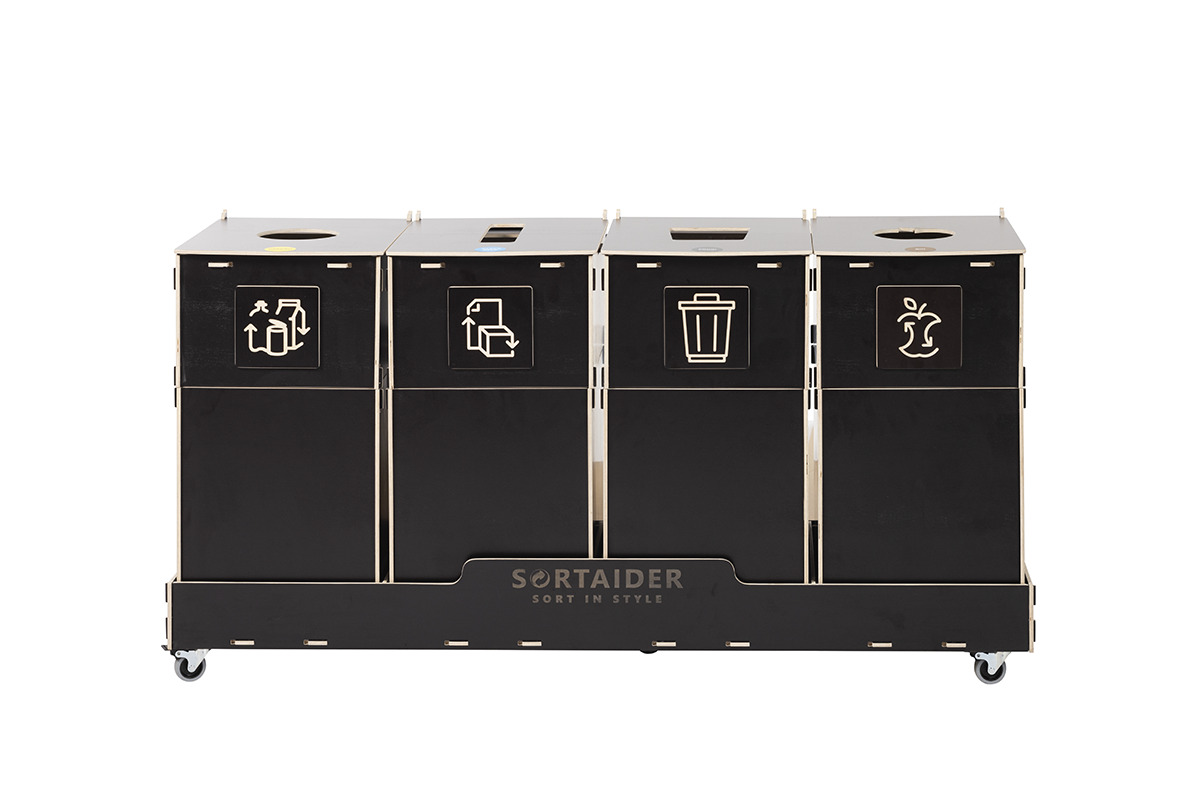
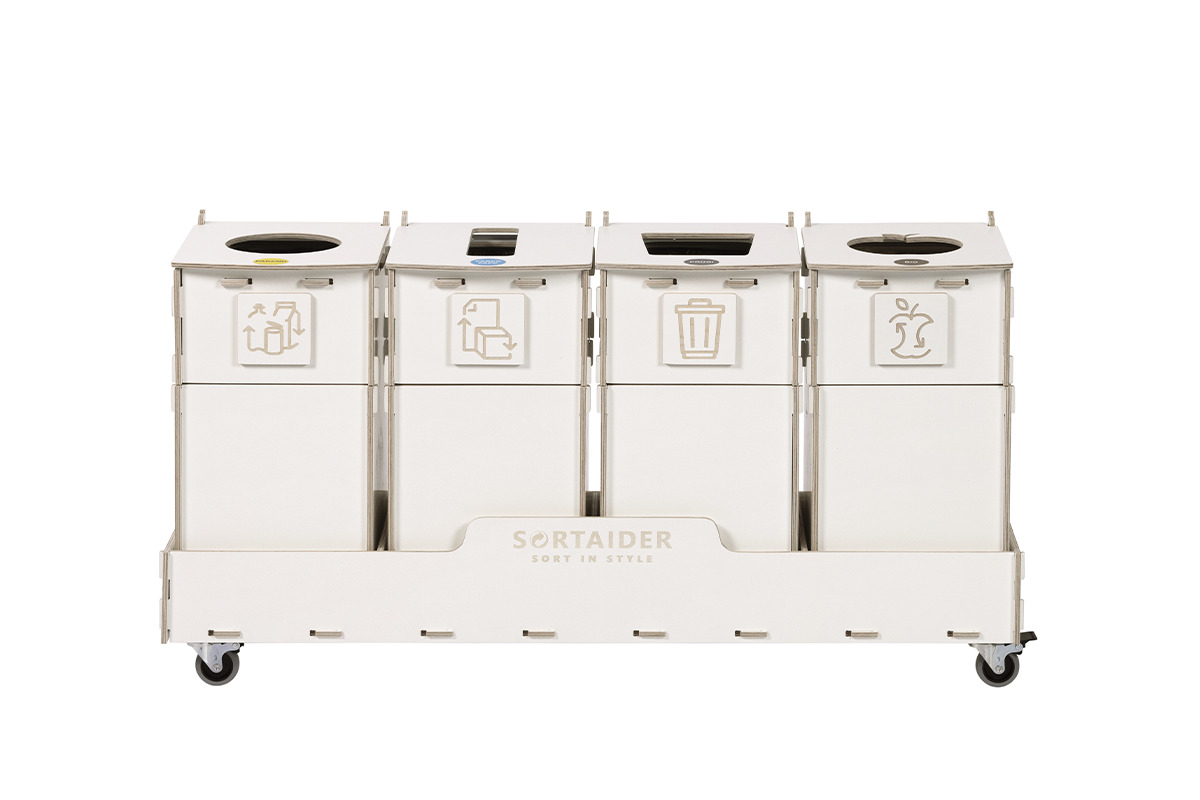
To make correct sorting effortless, implement physical nudges and clear visual cues:
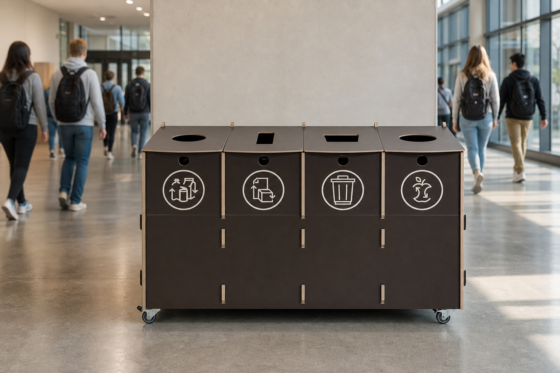
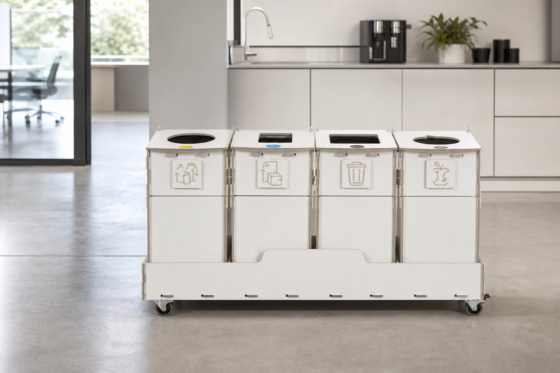
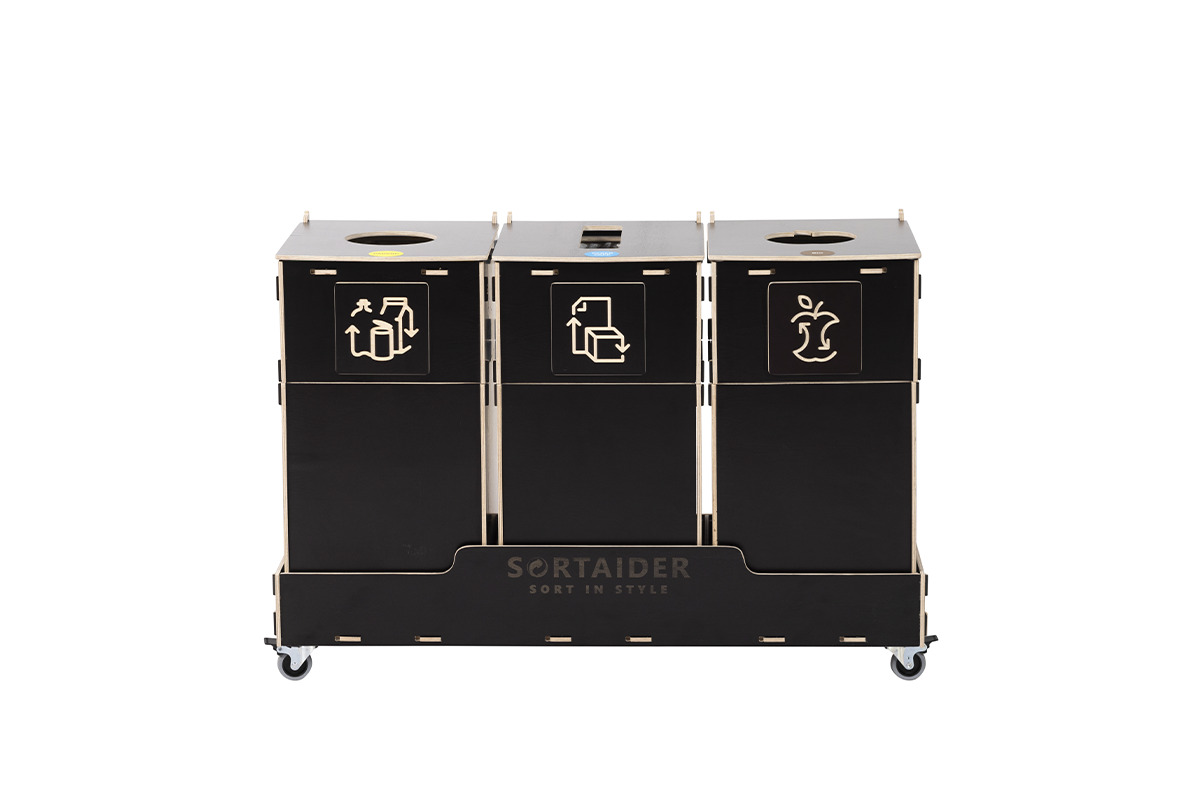
- Pictograms over text: In multilingual workplaces, switching from text-dense labels to high-contrast visual icons reduces sorting errors by up to 40%. Follow established recycling signage best practices by showing exact images of accepted and non-accepted items.
- Proximity prompts: Placing instructional prompts directly on or immediately adjacent to recycling receptacles yields up to a 54% improvement in recycling accuracy compared to distant wall signs.
- Shaped apertures: Using dedicated lid openings – such as narrow paper slits or round bottle apertures – provides a tactile cue that prevents impulse tossing.
- Color coding: Align your bins with local standards and the EN 14092 framework. Consult our recycling bin color coding guide to match your facility’s streams with regional expectations.
For modern commercial spaces requiring customizable, modular multi-stream stations, explore our complete range of high-quality recycling bins.
Drive Engagement with Gamification and Feedback Loops
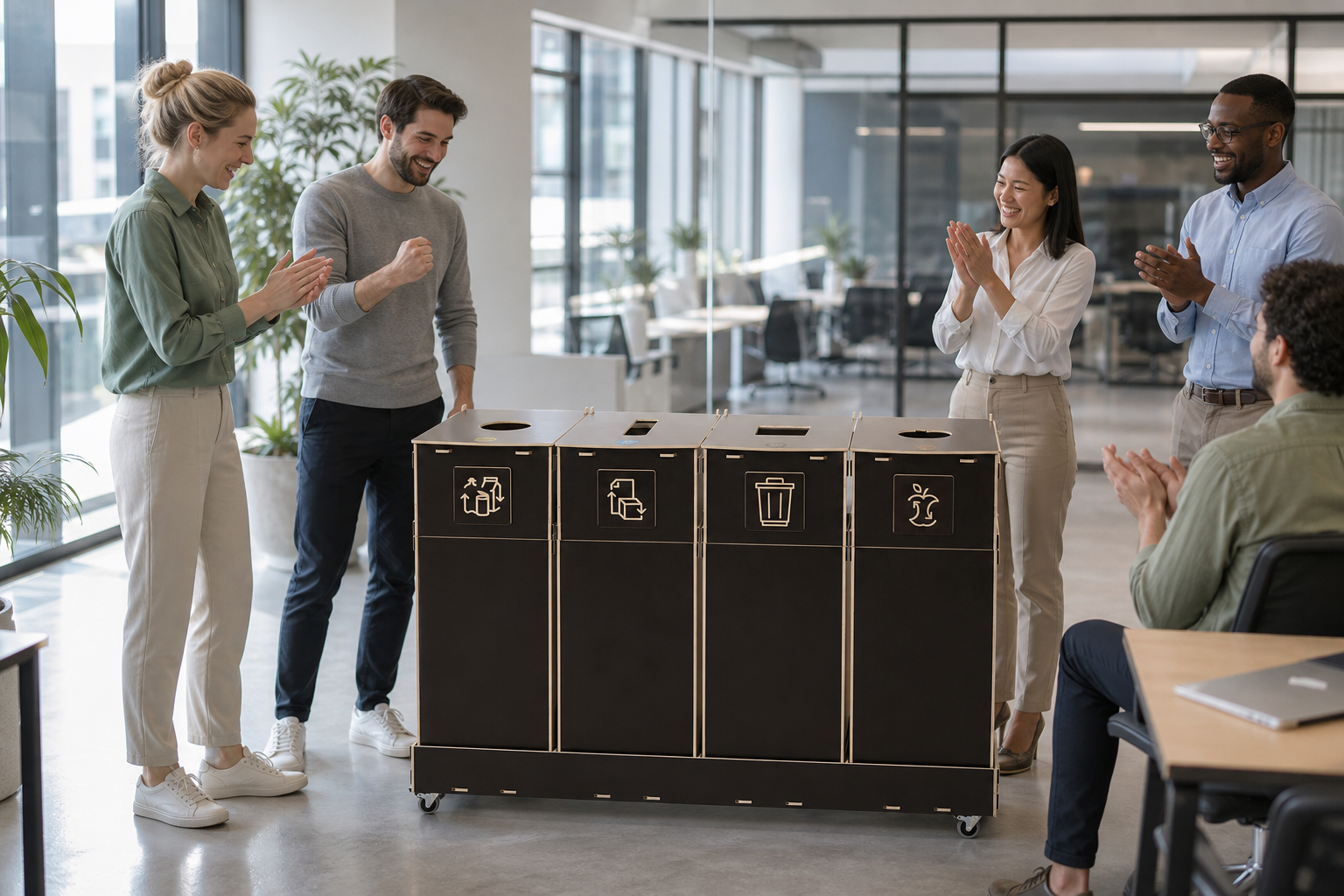
Keeping an awareness campaign alive requires active, ongoing participation. Gamify the experience by introducing structured 30-day “green challenges” where departments compete to achieve the highest diversion rates or lowest contamination levels. Celebrate key milestones – such as reaching a ton of recycled paper – in staff newsletters and town halls.
Maintain two-way communication to prevent engagement fatigue:
- Zero-waste lunches: Host informal educational workshops during lunch breaks to review local recycling rules and answer tricky questions about items like bio-plastics or foil packaging.
- Feedback boxes: Place quick feedback cards or digital survey links near recycling stations so employees can report confusing labels or request extra capacity.
- Transparent guidance: Regularly clarify complex categories by distributing guides on what goes in each recycling bin, reducing confusion surrounding items like soiled packaging and black plastics.
Track Metrics and Maintain Regulatory Compliance
A successful program relies on continuous measurement and adjustment. Use tracking tools like ENERGY STAR Portfolio Manager® or custom facility spreadsheets to record monthly material weights, haulage costs, and diversion percentages.
A critical operational metric is your bin contamination rate. Most materials recovery facilities (MRFs) across Europe will reject an entire recycling load if non-recyclable contamination exceeds 3% to 5% by weight. Periodic inspections of your centralized stations allow you to detect contamination early and offer targeted refresher training to specific zones.
Understanding broader regulatory frameworks helps keep your facility compliant:
- EU Waste Framework Directive: Mandates the mandatory separate collection of paper, metal, plastic, glass, and bio-waste at the source for commercial entities across all EU member states.
- Regional mandates: Rules vary by country; for example, Sweden implemented mandatory separate food waste collection for all businesses in 2024, while Denmark requires workplaces to sort up to ten distinct waste streams.
- Packaging and Packaging Waste Regulation (PPWR): Pushes for standardized sorting symbols and higher recycled content requirements across the European market.
For detailed operational guidance on launching a fully compliant waste separation system, read our step-by-step guide on how to set up recycling at work.
Accelerate Your Workplace Sustainability Goals
Building an employee recycling awareness program requires combining leadership commitment, continuous feedback, and intuitive infrastructure. By conducting a baseline audit, deploying clear visual nudges, and transitioning to centralized sorting hubs, facility managers can achieve permanent behavioral change while reducing commercial disposal fees.
If you are looking to upgrade your office waste infrastructure, explore our Sorter recycling stations or discover the functional design of the classic Sortaider series. Crafted from durable, sustainable birch plywood, our award-winning multi-stream stations blend into modern architectural interiors while supporting seamless waste separation. Discover additional strategies in our guide on how to improve recycling rates in the workplace, or contact our team today to design a tailored sorting solution for your facility.