Does your office recycling program fail because bins are too far away or simply non-existent? Balancing bin quantity with strategic placement is the fastest way to hit sustainability goals and ensure legal compliance. Here is how to calculate the right number for your workplace.
The Employee-to-Station Ratio
While there is no “one size fits all” formula, industry data suggests a shared recycling station should serve between 20 and 70 employees. The specific number depends heavily on your office density and the nature of the work performed.
In dense, open-plan environments or entry-level floors with high staff turnover, one hub per 60–70 people is often sufficient. However, in more spacious layouts or executive suites with lower density, you may need one station for every 20–30 people to maintain convenience. To ensure high participation, no employee should ever be more than 10–15 metres from the nearest recycling station.
-
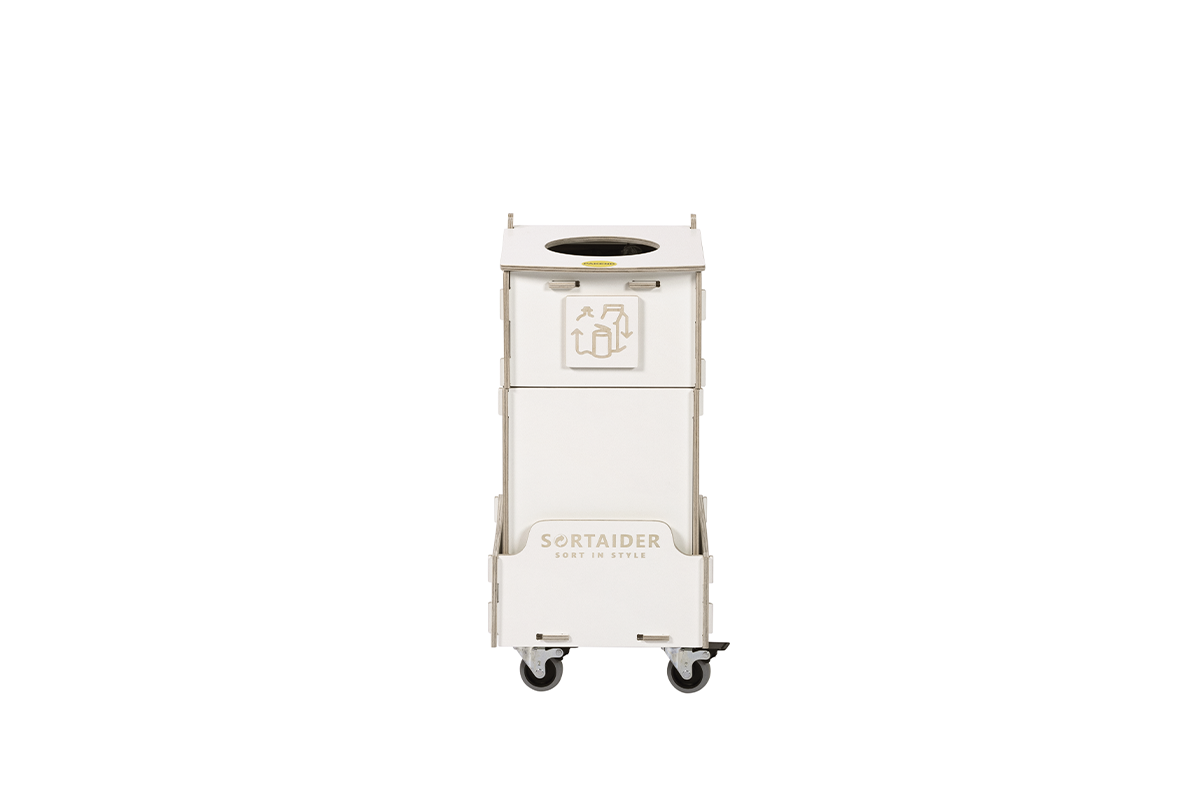
Recycling Bin Sorter 1 × 20 l white
1 type of waste 1 x 20 l223,20 € (incl. 24% VAT)180 € (excl. VAT) -
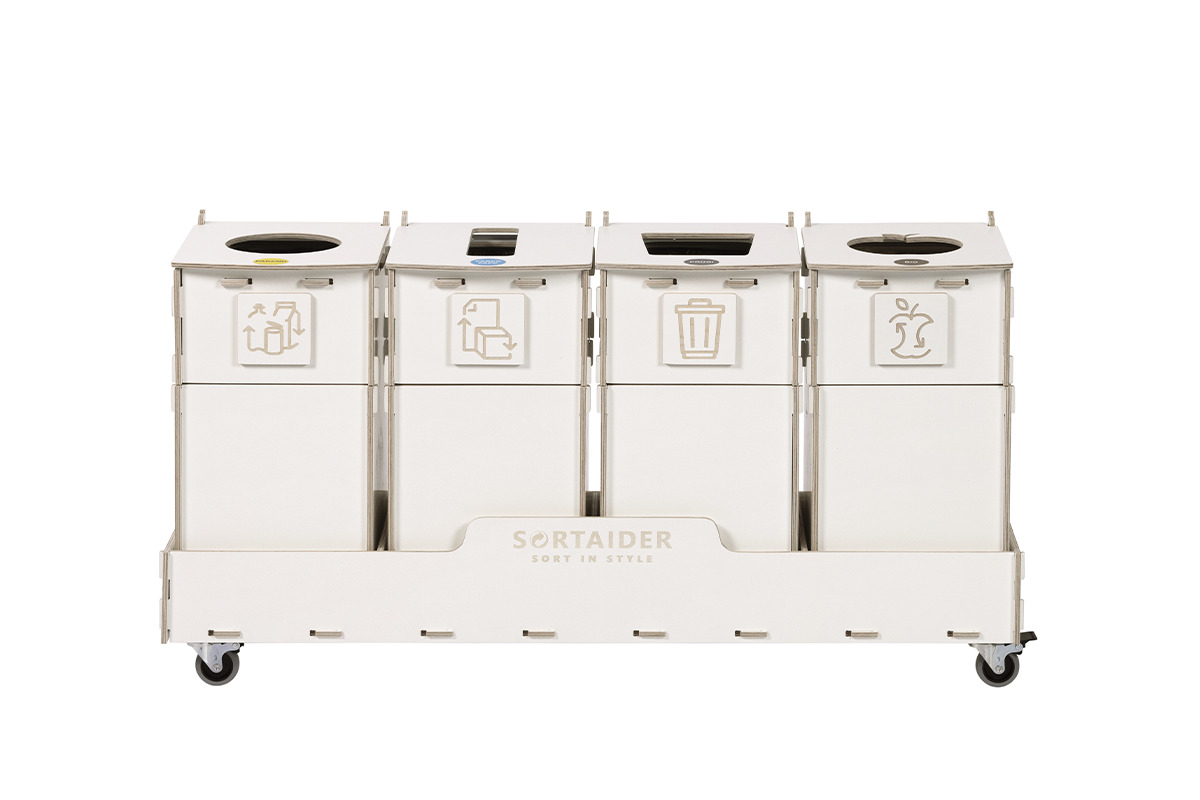
Recycling Bin Sorter 4 × 20 l white
4 types of waste 4 x 20 l607,60 € (incl. 24% VAT)490 € (excl. VAT) -
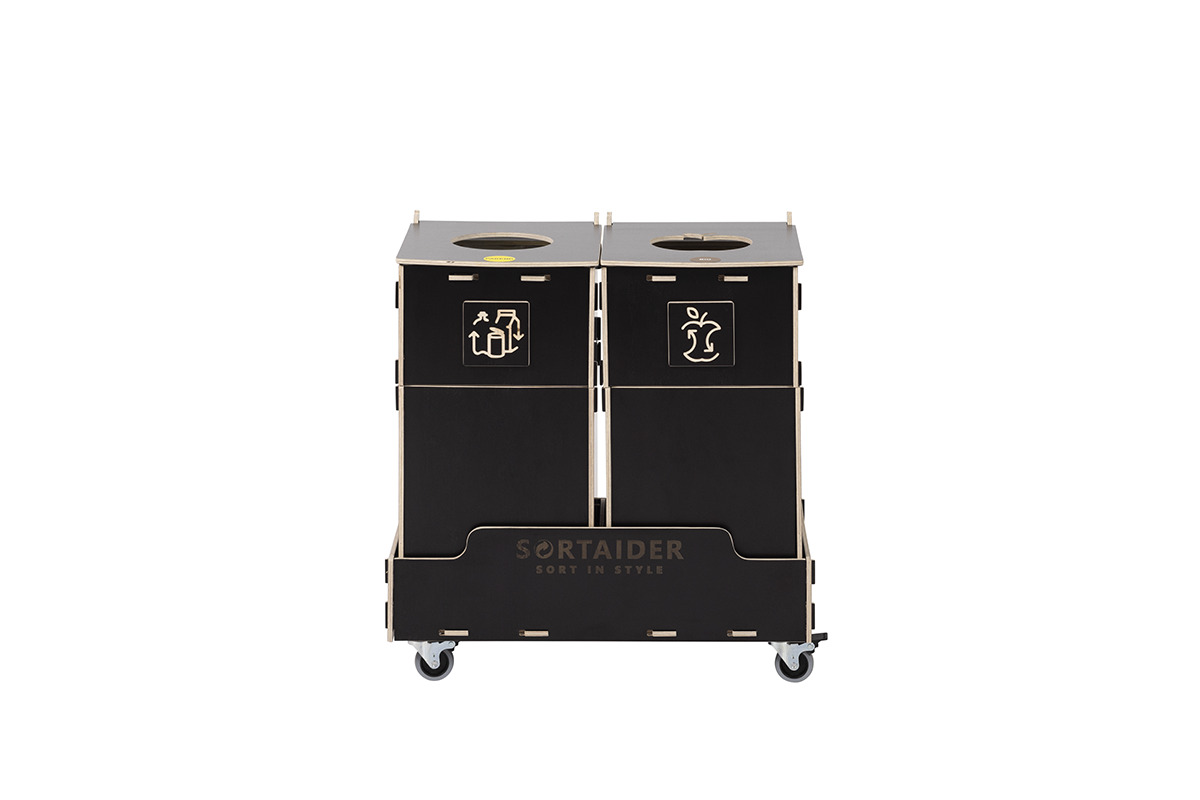
Recycling Bin Sorter 2 × 30 l brown
2 types of waste 2 x 30 l508,40 € (incl. 24% VAT)410 € (excl. VAT)
Strategic Placement and Waste Hotspots
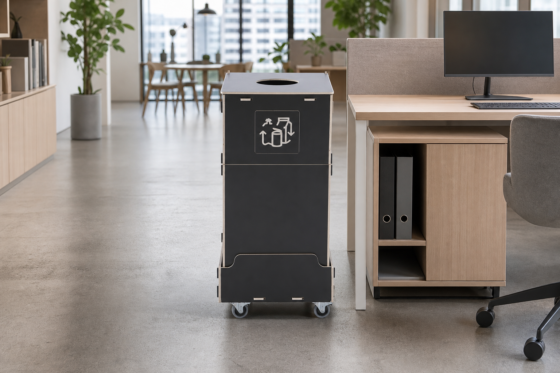
The quantity of bins is only as effective as their location. Research into employee recycling behavior change confirms that proximity is the primary driver of success. Bins should be placed in “hotspots” where waste is naturally generated to reduce the effort required for sorting.
- Kitchens and Canteens: These areas require high-capacity units for bio-waste, plastics, and metals. Effective office kitchen waste management requires specialized bins to handle moisture and food residue while keeping smells contained.
- Printer and Mail Rooms: These spaces generate the highest volume of paper and cardboard, requiring dedicated large-capacity slots.
- Main Entrances and Exits: Placing bins near exits allows staff to dispose of items conveniently as they leave or enter the building, capturing “on-the-go” waste.
- Conference Rooms: Smaller, modular units are ideal for managing drink containers and light paper waste without cluttering the professional environment.
-
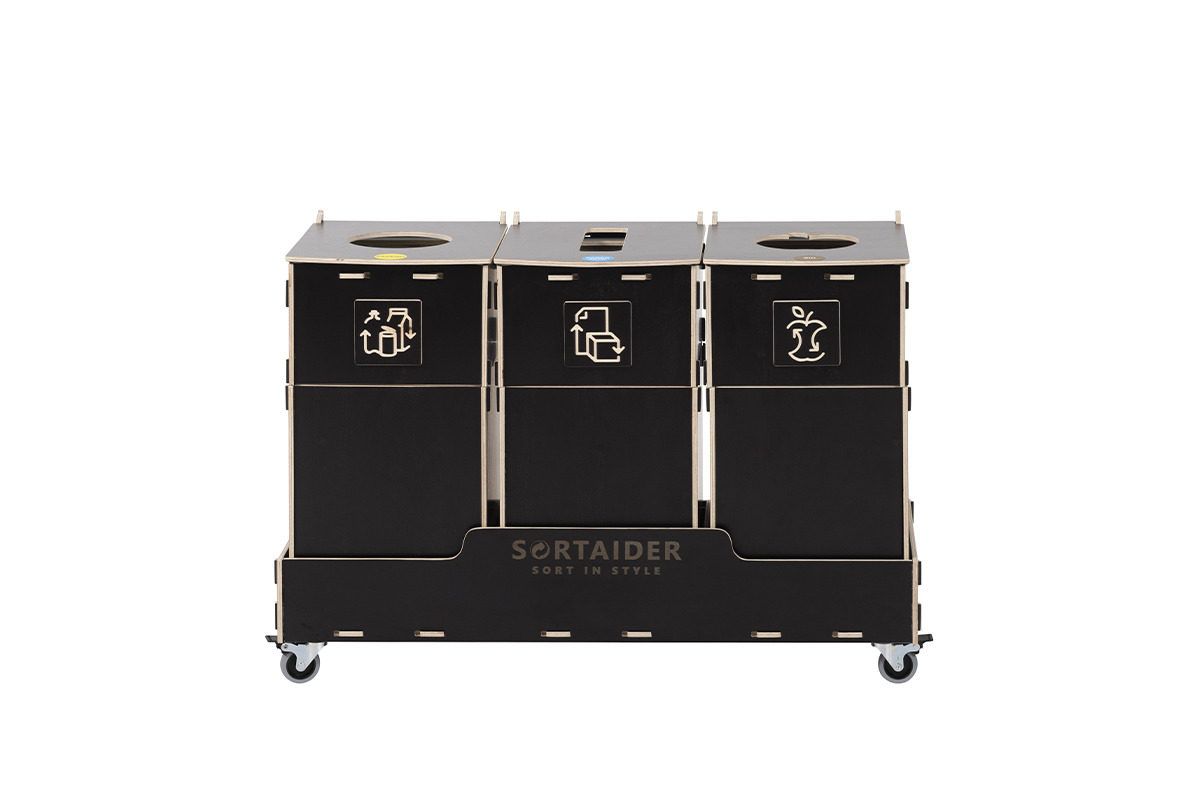
Recycling Bin Sorter 3 × 30 l brown
3 types of waste 3 x 30 l731,60 € (incl. 24% VAT)590 € (excl. VAT) -
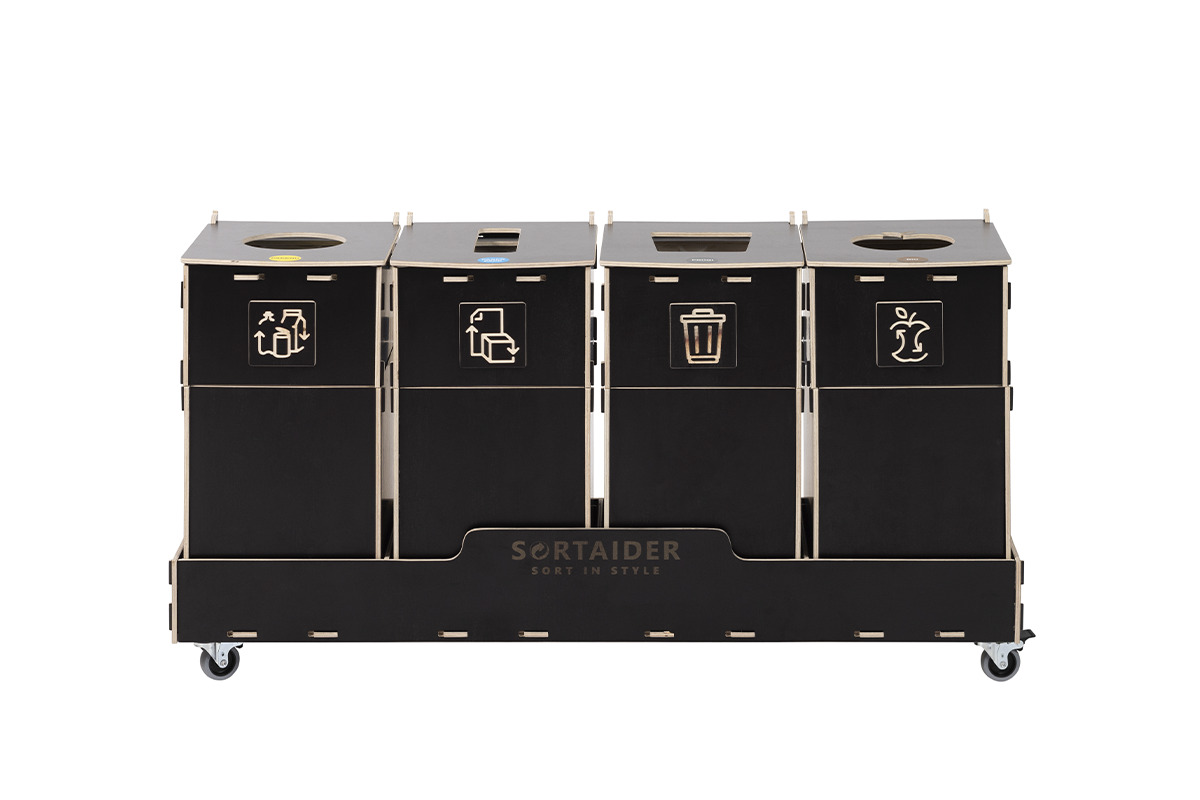
Recycling Bin Sorter 4 × 30 l brown
4 types of waste 4 x 30 l954,80 € (incl. 24% VAT)770 € (excl. VAT) -
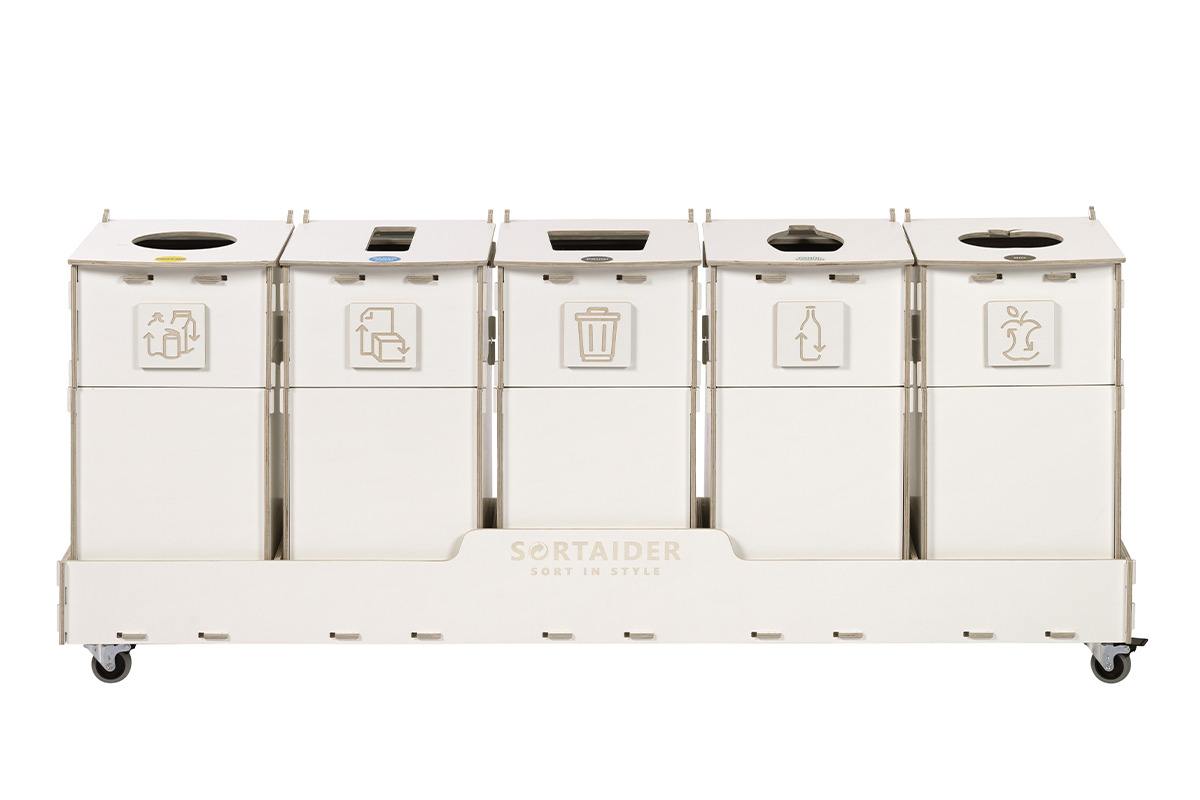
Recycling Bin Sorter 5 × 30 l white
5 types of waste 5 x 30 l1 165,60 € (incl. 24% VAT)940 € (excl. VAT)
Compliance and Mandatory Waste Streams
Your bin count is also dictated by the number of waste fractions you are legally required to separate. Under the EU Waste Framework Directive, businesses must separate paper, metal, plastic, glass, and bio-waste at the source.
Regional variations can increase the required number of bins per station across Europe:
- Denmark: Workplaces are strictly required to maintain a minimum of four separate bins.
- Sweden: Since 2024, separate food waste collection has become mandatory for all businesses.
- Estonia: Strict separation of bio-waste is required, particularly if the site generates more than 10kg of organic waste daily.
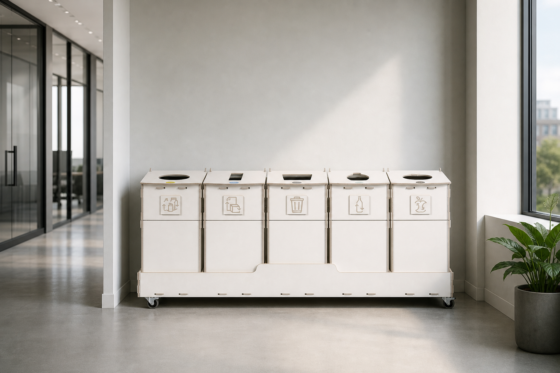
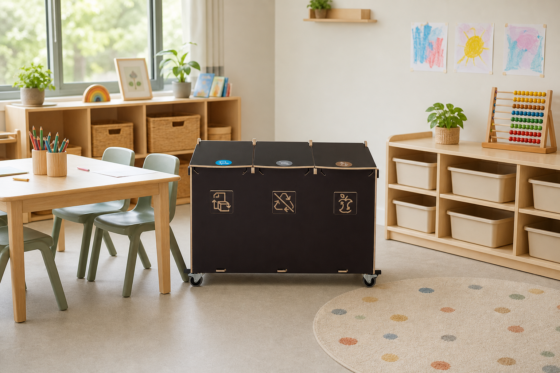
To meet these requirements without cluttering the office, many facility managers utilize modular recycling bins that house three to five separate streams within a single aesthetic unit.
-
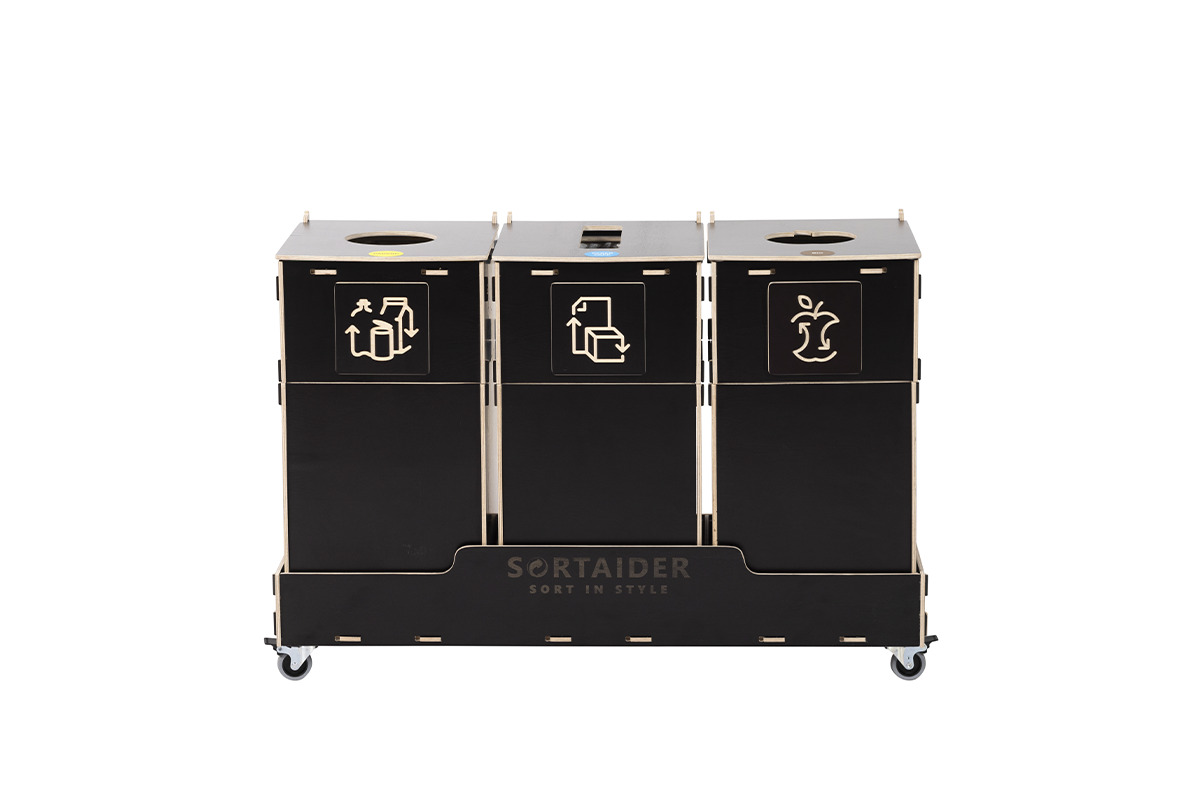
Recycling Bin Sorter 3 × 40 l brown
3 types of waste 3 x 40 l992 € (incl. 24% VAT)800 € (excl. VAT) -
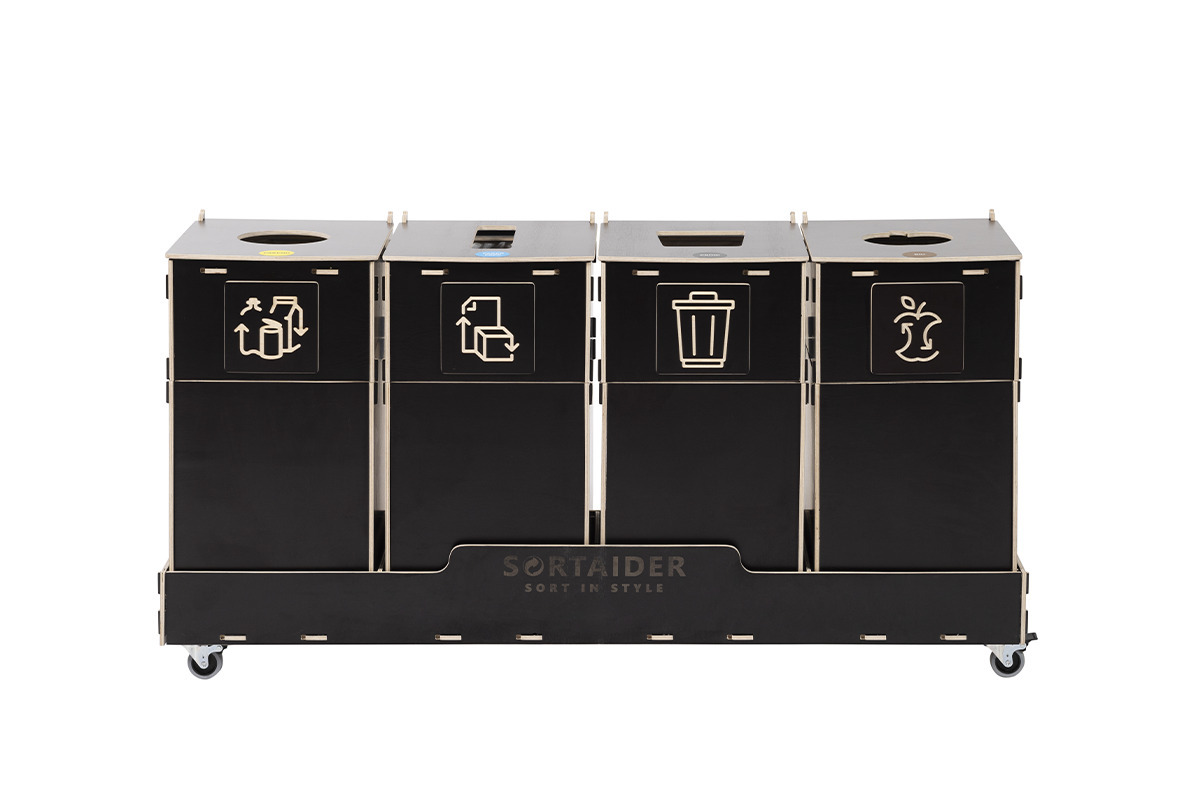
Recycling Bin Sorter 4 × 40 l brown
4 types of waste 4 x 40 l1 289,60 € (incl. 24% VAT)1 040 € (excl. VAT) -
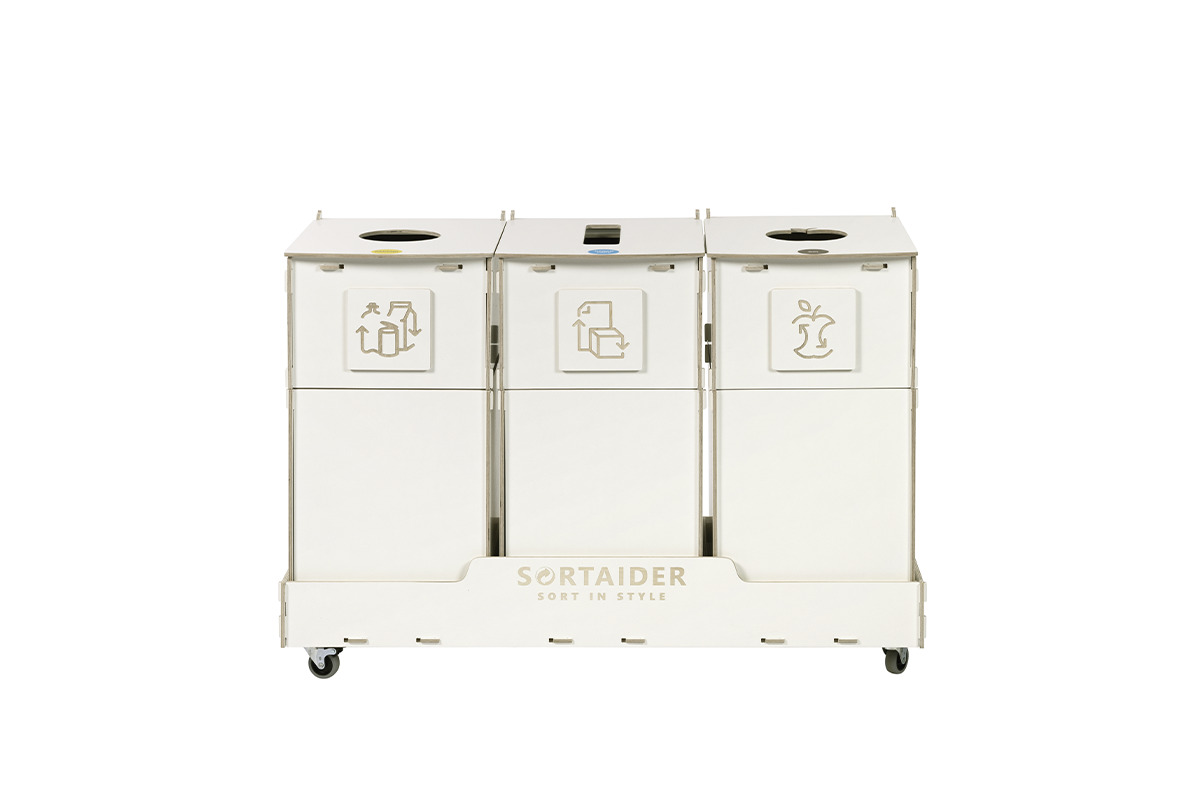
Recycling Bin Sorter 3 × 60 l white
3 types of waste 3 x 60 l1 140,80 € (incl. 24% VAT)920 € (excl. VAT)
Why Centralized Hubs Outperform Deskside Bins
Transitioning from individual deskside bins to centralized recycling hubs can improve recycling rates in the workplace by boosting waste diversion rates by up to 40%. When employees have a bin at their feet, they are statistically more likely to toss everything into a single stream. Centralized hubs encourage a moment of conscious sorting.
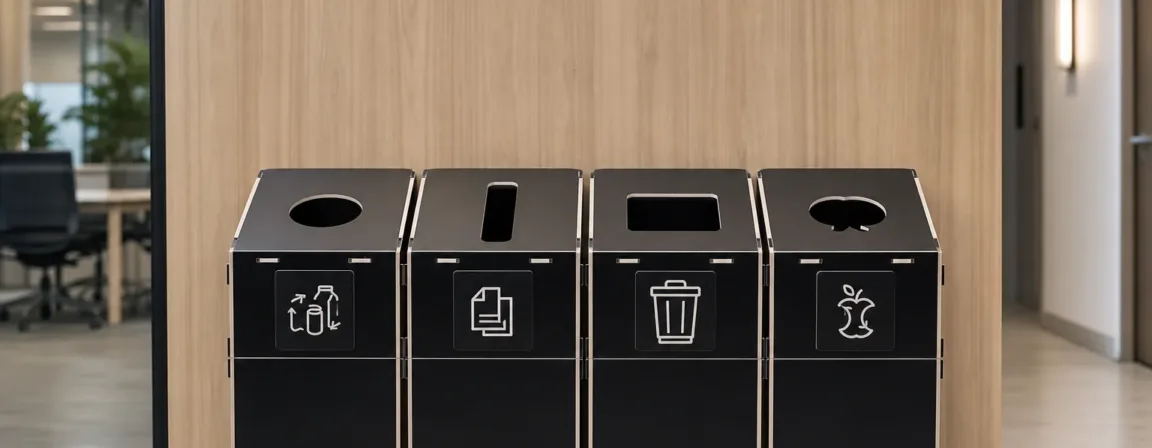
When choosing these hubs, ensure they include clear visual cues. Using high-contrast pictograms and specific lid apertures – such as thin slits for paper or round holes for bottles – reduces sorting errors by up to 40% in multilingual European workplaces.
-
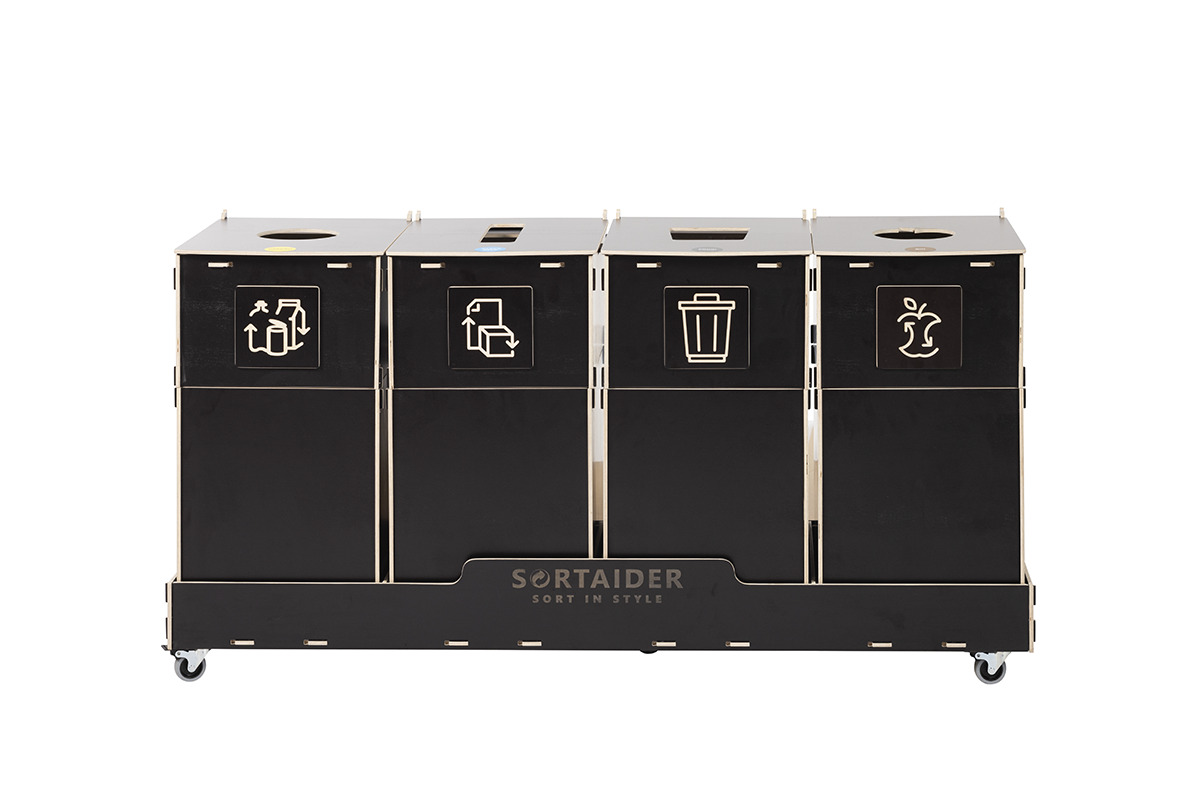
Recycling Bin Sorter 4 × 60 l brown
4 types of waste 4 x 60 l1 500,40 € (incl. 24% VAT)1 210 € (excl. VAT) -
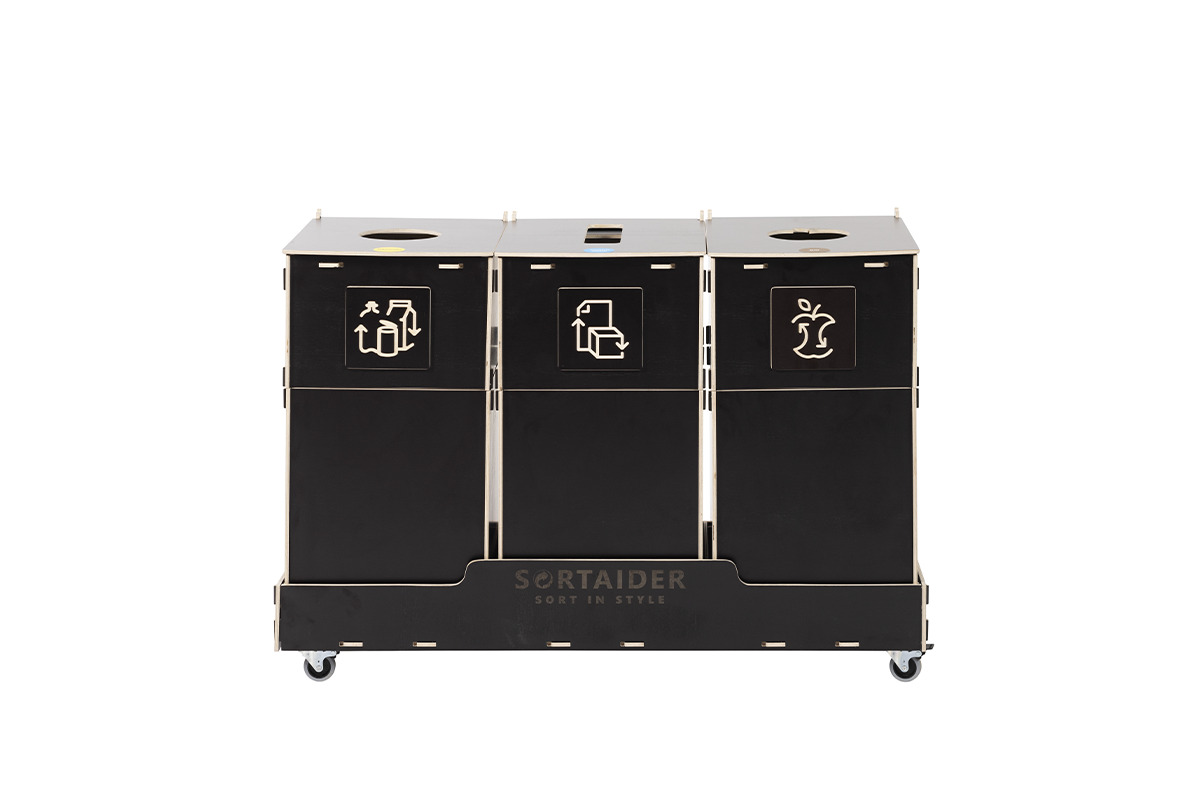
Recycling Bin Sorter 3 × 90 l brown
3 types of waste 3 x 90 l1 364 € (incl. 24% VAT)1 100 € (excl. VAT) -
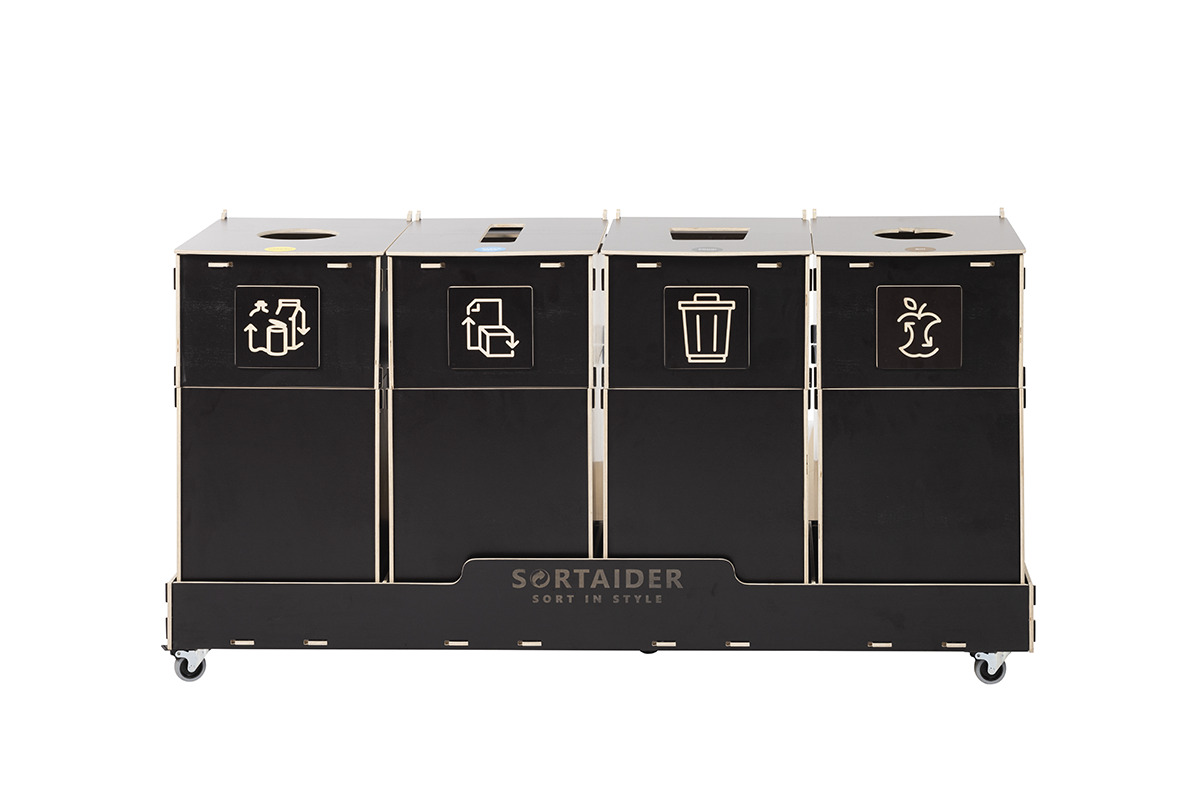
Recycling Bin Sorter 4 × 90 l brown
4 types of waste 4 x 90 l1 810,40 € (incl. 24% VAT)1 460 € (excl. VAT)
Accessibility and Design Standards
Facility managers must ensure that recycling stations do not block accessible paths or create hazards. According to ADA-related guidance, bins should be located on a continuously accessible path with a clear floor space of at least 30 by 48 inches for wheelchair access. Operable parts, such as lids, should be within a reach range of 15 to 48 inches above the floor.
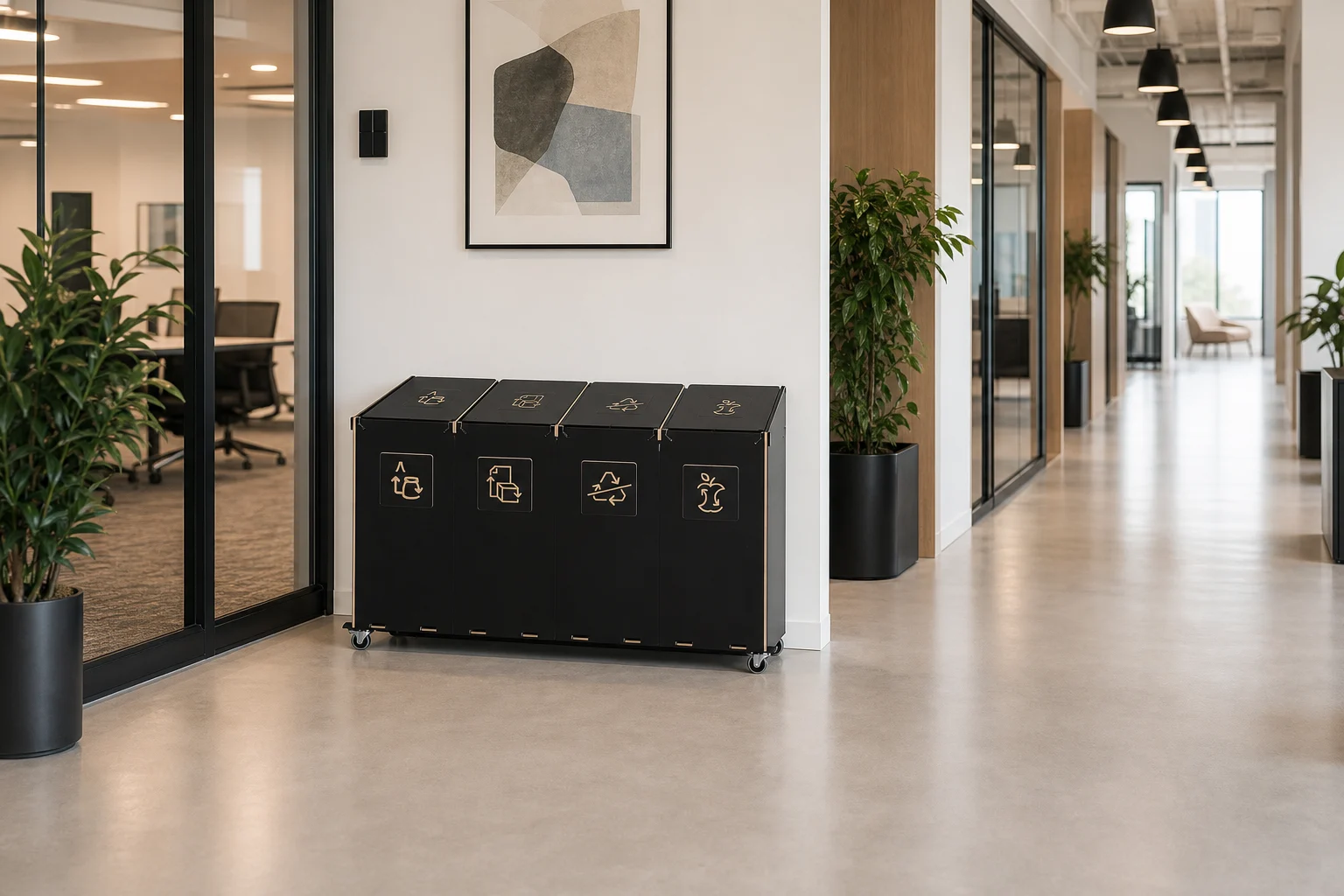
The Sorta recycling bins are designed with these functional details in mind, offering moisture-resistant plywood construction and intuitive visual guidance that fits seamlessly into public spaces and professional offices.
-
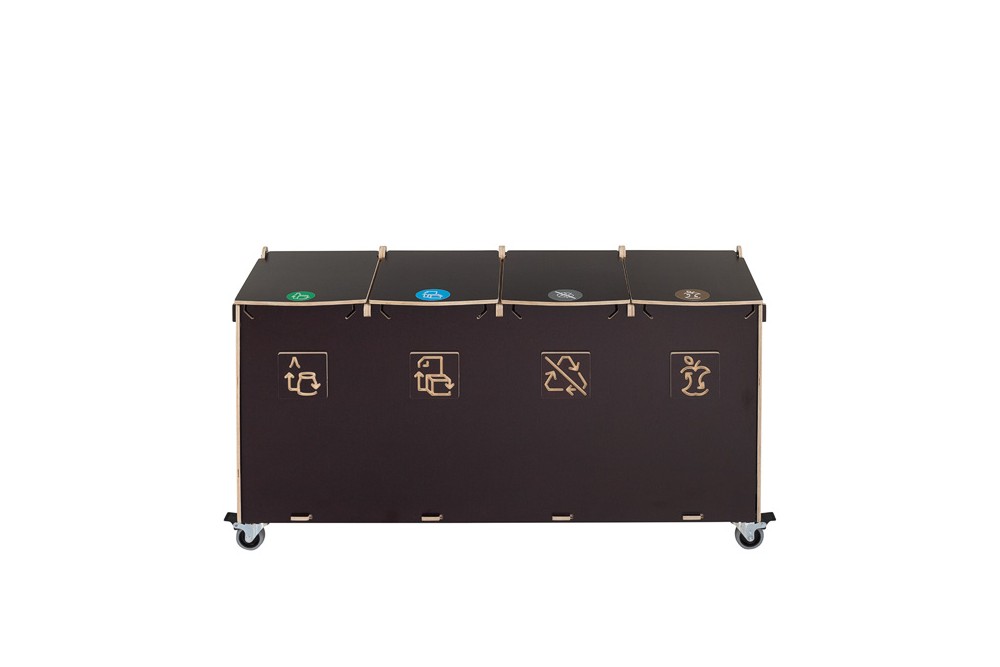
Recycling Bin Sorta 4 × 20 l brown
4 types of waste 4 x 20 l458,80 € (incl. 24% VAT)370 € (excl. VAT) -
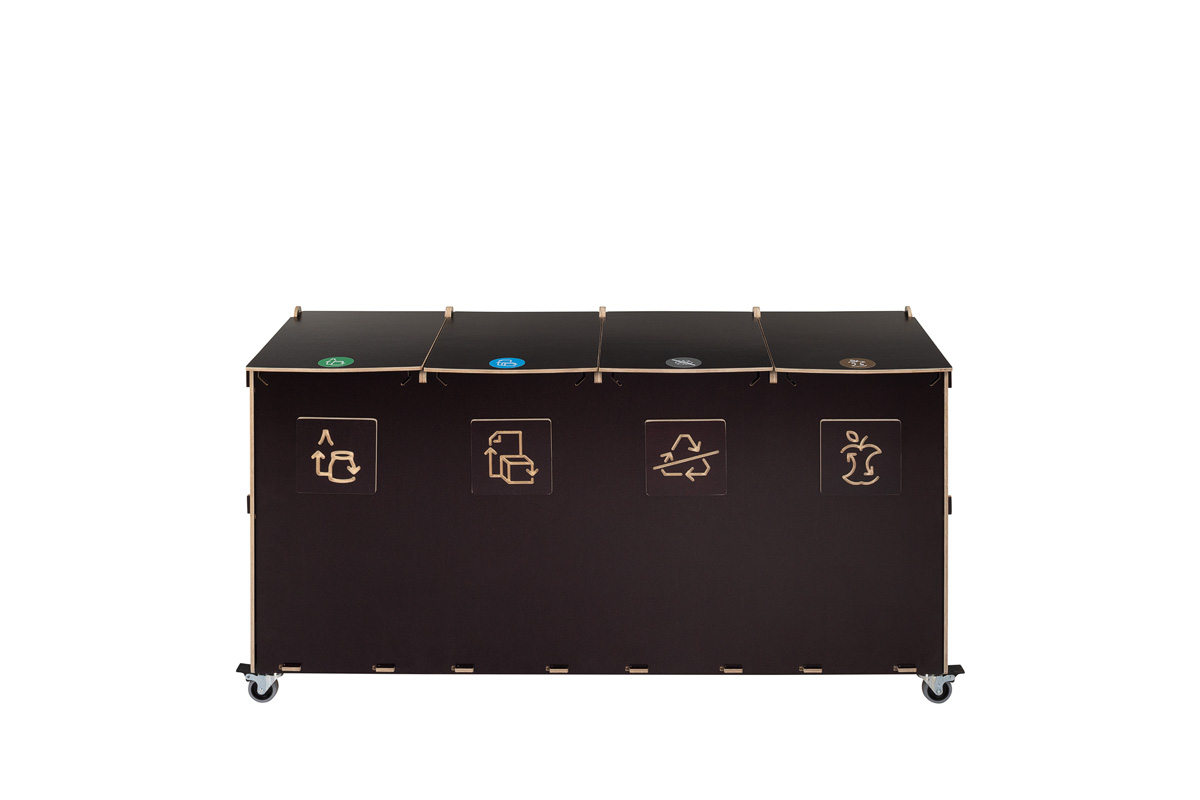
Recycling Bin Sorta 4 × 40 l brown
4 types of waste 4 x 40 l830,80 € (incl. 24% VAT)670 € (excl. VAT) -
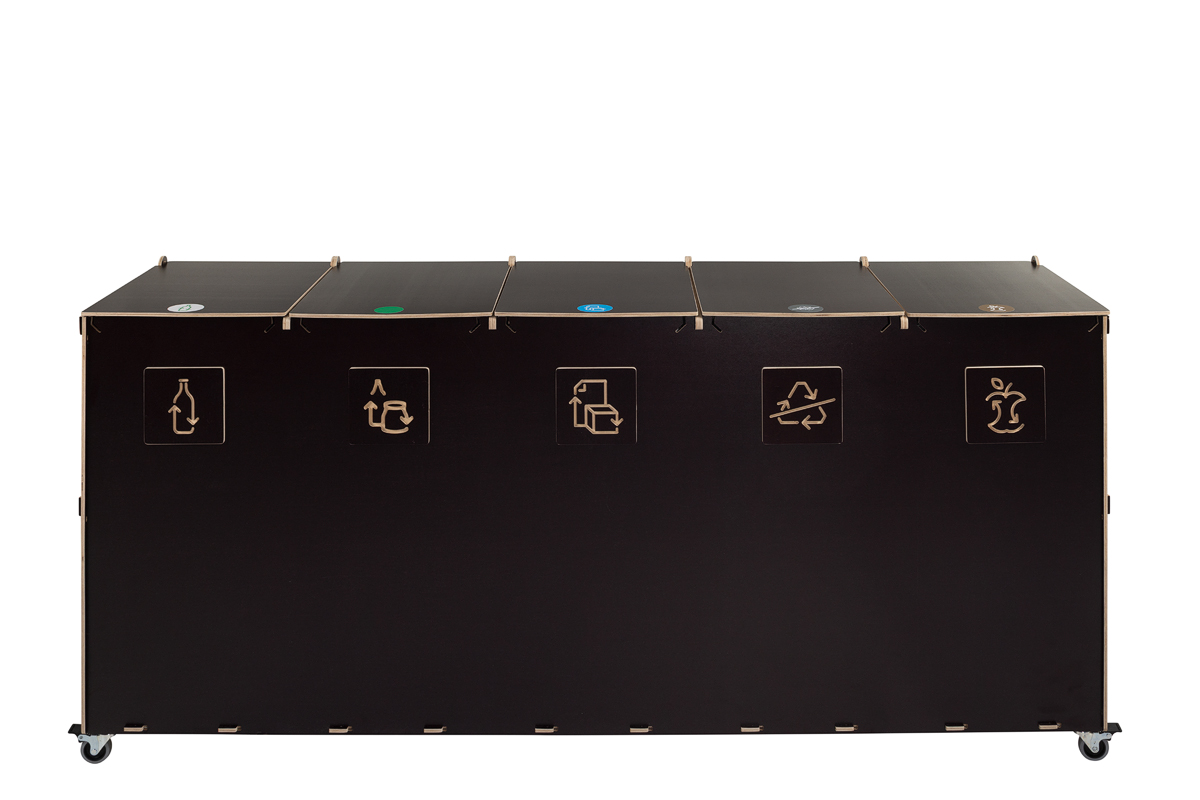
Recycling Bin Sorta 5 × 60 l brown
5 types of waste 5x 60 l1 116 € (incl. 24% VAT)900 € (excl. VAT)
To determine the exact capacity your office requires, the first step is to conduct a waste audit for offices to measure the actual volumes of each material produced. Right-sizing your collection based on audit data can reduce disposal fees by 30% to 50% while ensuring you have enough bins to prevent overflows.
Ready to optimize your workplace sorting? Explore our modular recycling bin sorters to find the perfect configuration for your staff count and layout.