Did you know the average European office worker generates 2 kg of waste daily? Unmanaged workplace disposal drains facility budgets through unnecessary hauler fees and missed recycling targets. A structured waste reduction strategy turns operational waste into measurable cost savings and regulatory compliance.
Establish Your Baseline with a Waste Audit
You cannot manage what you do not measure. Before setting targets, conduct a systematic office waste audit to capture your facility’s baseline volume and material composition over a one-to-seven-day assessment period.
Evaluating your facility effectively involves three complementary assessment approaches:
- Records examination: Review waste hauler invoices, weighbridge receipts, and service agreements to estimate total waste generation and current fee structures.
- Facility walk-throughs: Inspect functional zones – such as kitchenettes, print stations, and reception areas – to map where specific waste streams originate.
- Physical waste sorts: Collect and weigh discarded materials by category to quantify paper, plastics, organics, and hazardous items while measuring contamination levels.
Use your audit findings to calculate your baseline waste diversion rate:
Diversion Rate = (Weight of Diverted Recyclable & Organic Material / Total Weight of All Waste Generated) × 100
Right-sizing waste haulage services based on physical audit findings can reduce facility disposal costs by 30% to 50% by eliminating unnecessary collection pickups and shrinking general waste volume. Establishing this empirical data is also essential when learning how to track and report recycling rates at work.
Apply the Waste Hierarchy to Reduce at the Source
To maximize operational efficiency, anchor your policy in the core tiers of the waste management hierarchy: prevention first, followed by reuse, recycling, and energy recovery. Preventing material from entering your building eliminates waste collection, transportation, and purchasing costs altogether.
Integrating source reduction into daily operations accelerates your transition toward a circular economy for businesses and supports broader goals on how to become a sustainable business. Focus your policy on three clear operational tiers:
- Prevent: Transition to digital administrative workflows, eliminate single-use catering items, and enforce double-sided printing defaults across all departments.
- Reuse: Establish internal sharing initiatives for surplus office furniture, stationery, and IT assets across site departments.
- Recycle and Recover: Direct remaining materials – including regulated streams like e-waste, lamps, and batteries – to certified downstream recovery facilities.
Properly classifying regulated streams, such as universal waste and electronic equipment, prevents severe compliance penalties while ensuring critical raw materials are recovered efficiently.
Design High-Efficiency Sorting Infrastructure
Physical environment directly shapes employee habits. Replacing individual deskside trash cans with centralized sorting hubs is one of the single most effective interventions a facility manager can make, boosting waste diversion rates by up to 40%.
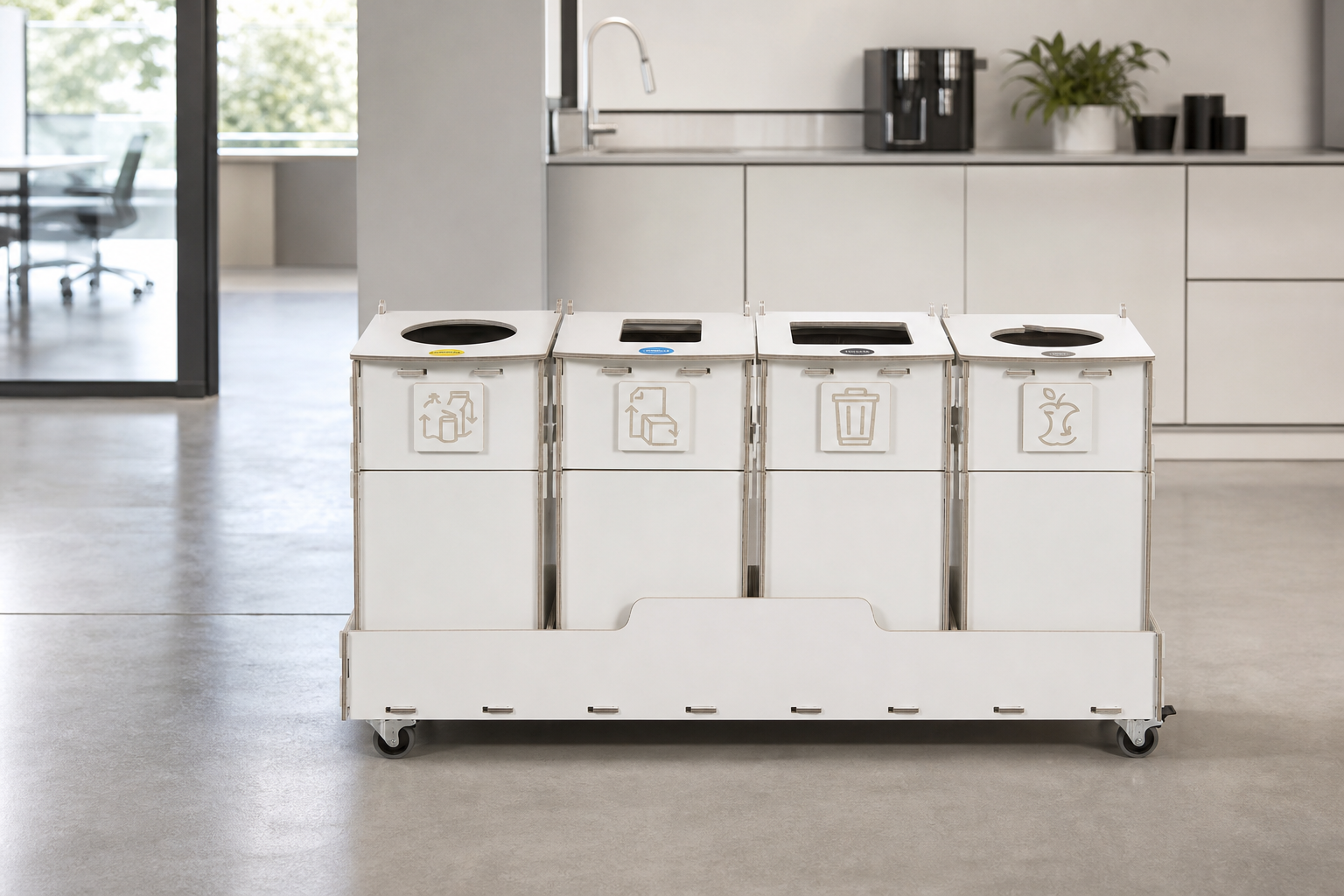
When reviewing how to set up recycling at work, incorporate proven ergonomic and visual standards:
- Strategic Placement: Position centralized hubs in high-traffic zones, including kitchenettes, printer rooms, and main building entrances.
- Intuitive Visuals: Pair high-contrast pictograms with concise text labels. Visual icons reduce sorting errors by up to 40% in multilingual workplaces.
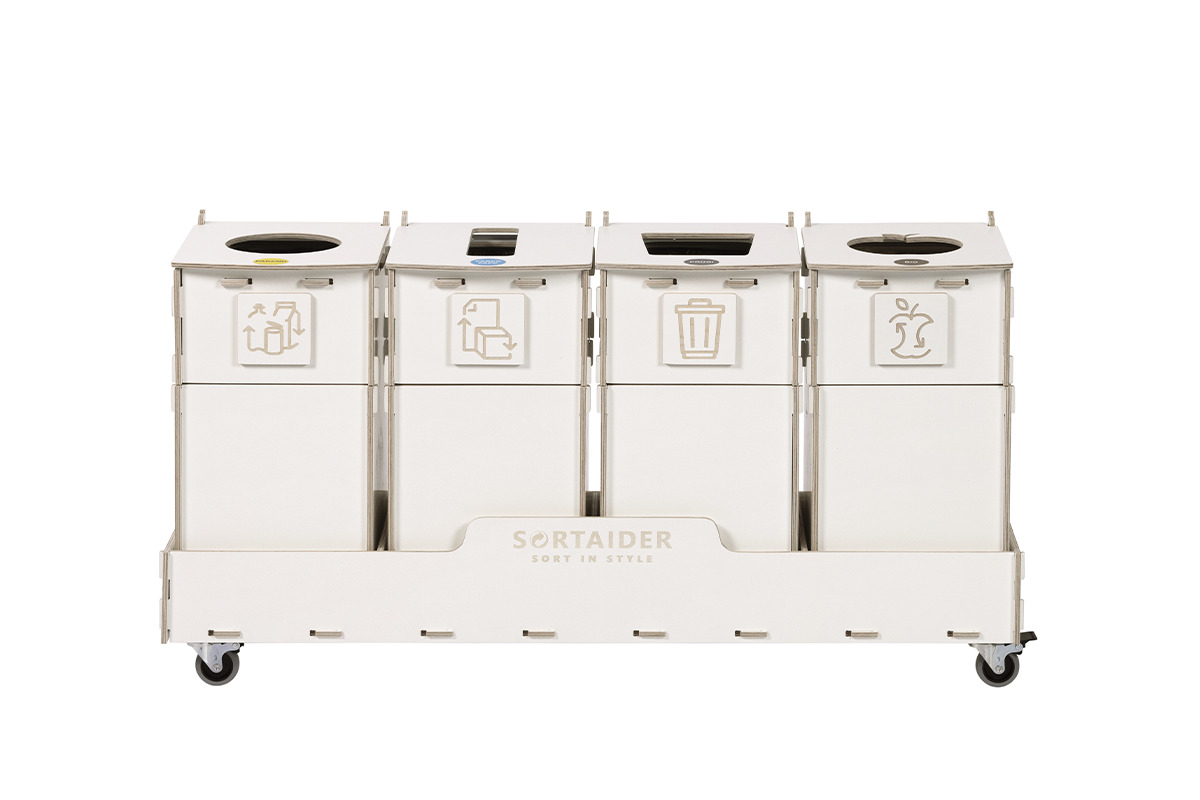
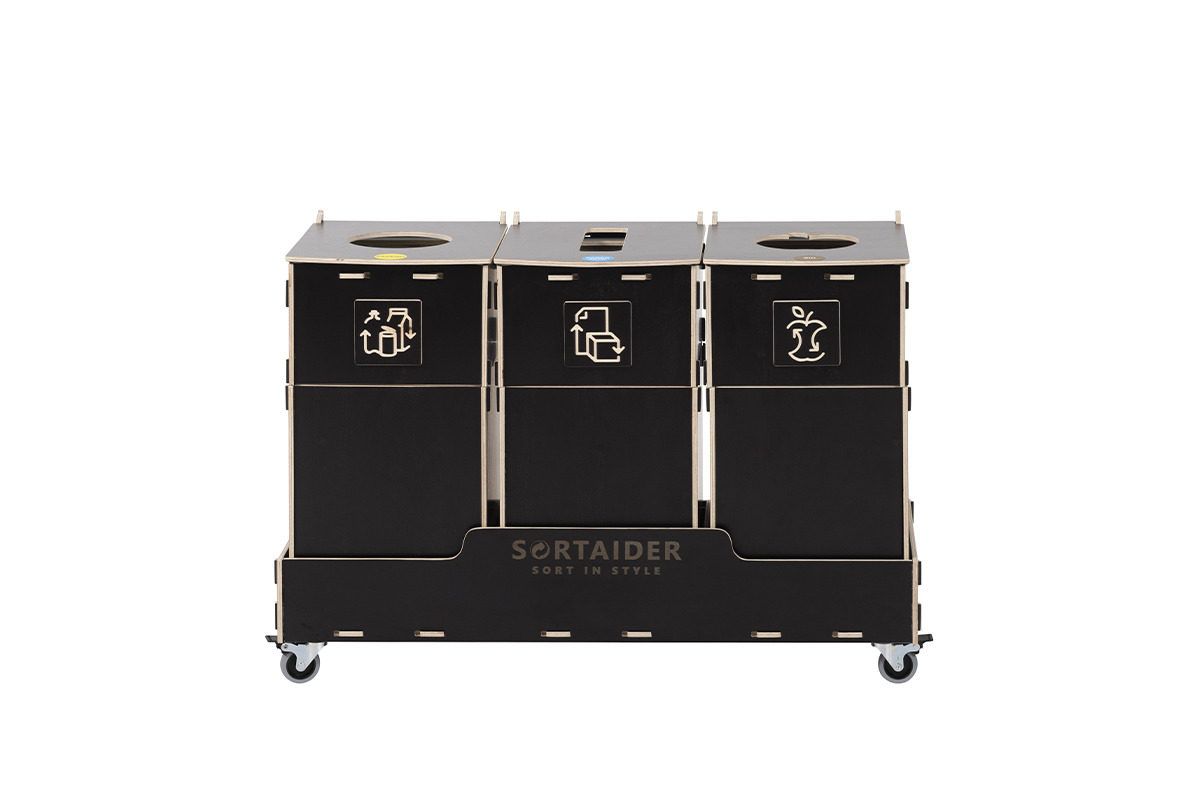
- Standardized Coding: Align bin opening shapes and colors with established standards (such as EN 14092) so waste separation becomes instant and intuitive.
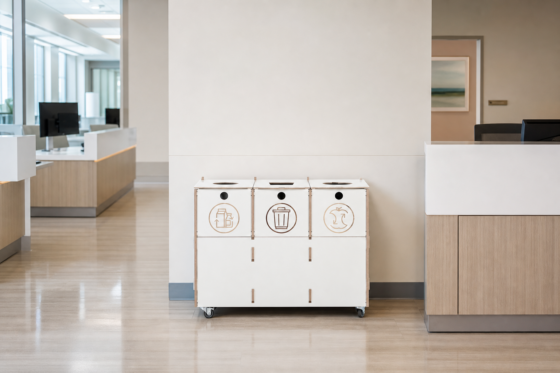
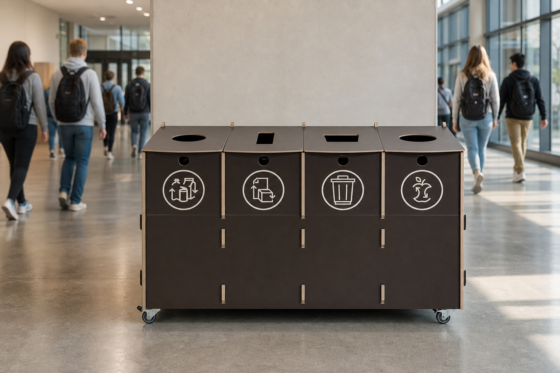
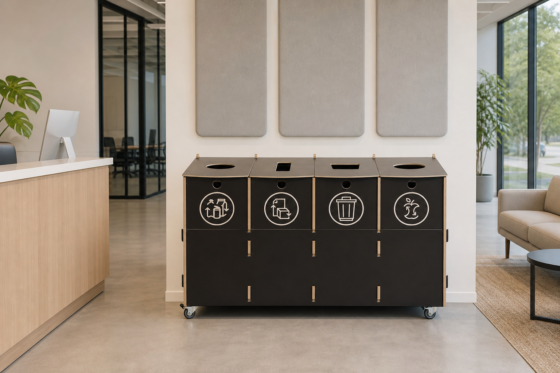
Integrating multi-compartment recycling bins and modular recycling bin sorters into communal areas simplifies maintenance routines for custodial staff while maintaining a clean aesthetic across your facilities.
Drive Employee Engagement and Behaviour Change
Infrastructure provides the opportunity to recycle, but workplace culture determines daily execution. Achieving long-term progress toward a zero-waste office requires consistent employee participation and leadership reinforcement.
Implement targeted behavioral initiatives to support employee recycling behaviour change:
- Secure Executive Sponsorship: Ensure facility leaders and department heads actively demonstrate proper sorting habits and endorse green policies.
- Form a Cross-Functional Green Team: Recruit representatives from facilities, HR, procurement, and operations to lead ongoing waste reduction efforts.
- Publish Progress Metrics: Share monthly diversion rates, avoided greenhouse gas emissions, and cost savings publicly to celebrate milestones and keep teams engaged.
Ensure Regulatory Compliance and ESG Reporting
Corporate waste management strategies must stay ahead of evolving statutory obligations across European and international markets.
Understanding recycling legislation in Europe helps multi-site operators navigate mandatory frameworks effectively:
- Waste Framework Directive: Enforces mandatory source separation for paper, metal, plastic, and glass across commercial operations.
- Packaging and Packaging Waste Regulation (PPWR): Imposes strict target reductions on commercial packaging and mandates recyclable design standards.
- National Regulations: Member states frequently enforce stricter local rules. For example, Denmark requires workplaces to maintain at least four separate collection streams, while Sweden mandated separate commercial organic food waste collection in 2024.
Under mandatory framework requirements such as the EU Corporate Sustainability Reporting Directive (CSRD), commercial entities subject to ESRS E5 guidelines can no longer rely on unverified carrier estimates. Organizations must report accurate, audit-ready data fields detailing total waste weight, stream classifications mapped to the European List of Waste, and verifiable treatment pathways. For full compliance guidance, consult our overview of CSRD waste reporting.
Select Scalable, Sustainable Equipment
Building an efficient waste program requires evaluating the lifecycle impact of your physical sorting stations. Selecting multi-compartment stations crafted from renewable materials – such as certified birch plywood – delivers high durability while emitting up to four times less lifecycle CO₂ compared to traditional metal or virgin plastic alternatives.
-
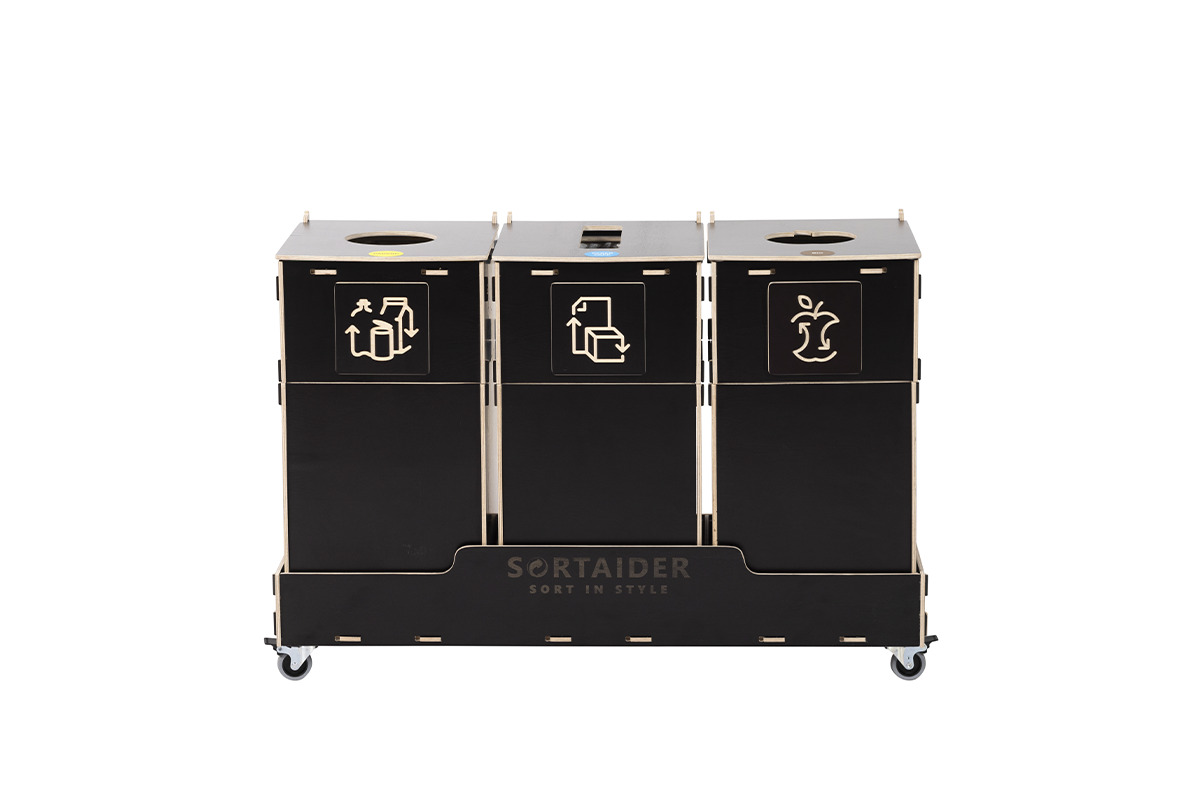
Recycling Bin Sorter 3 × 40 l brown
3 types of waste 3 x 40 l992 € (incl. 24% VAT)800 € (excl. VAT) -
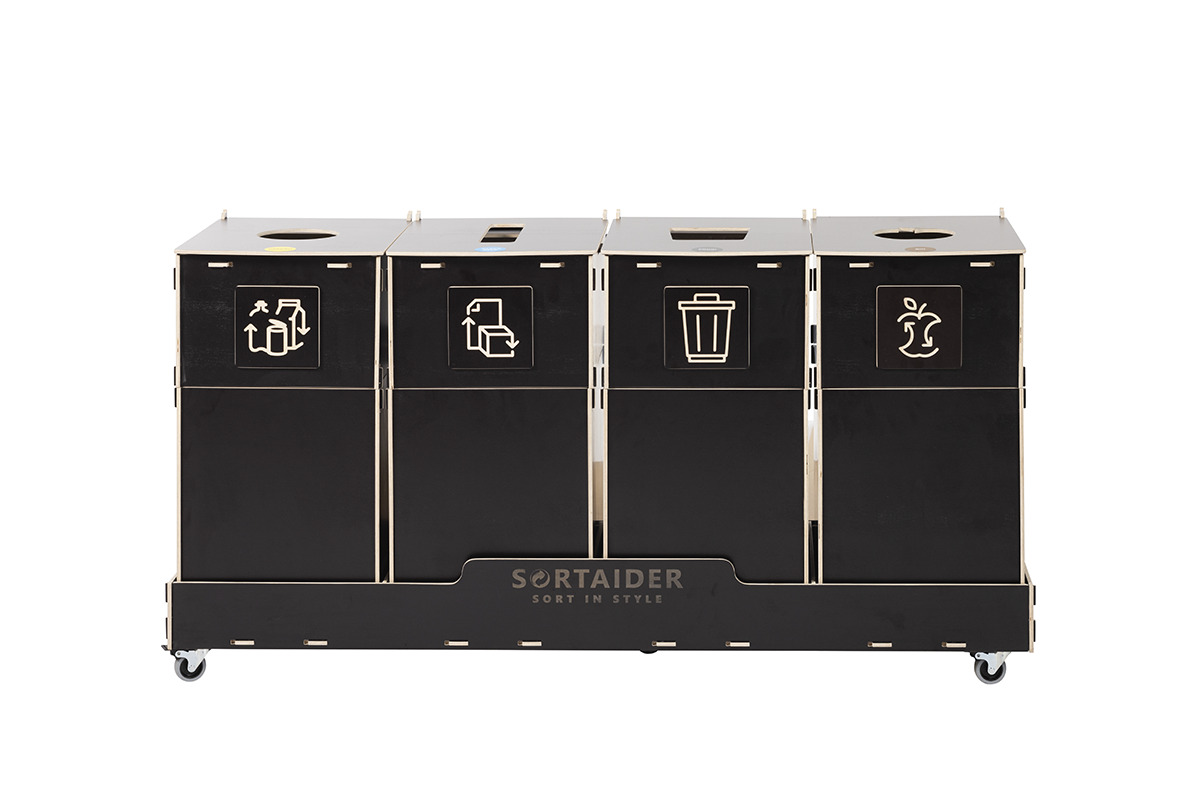
Recycling Bin Sorter 4 × 60 l brown
4 types of waste 4 x 60 l1 500,40 € (incl. 24% VAT)1 210 € (excl. VAT) -
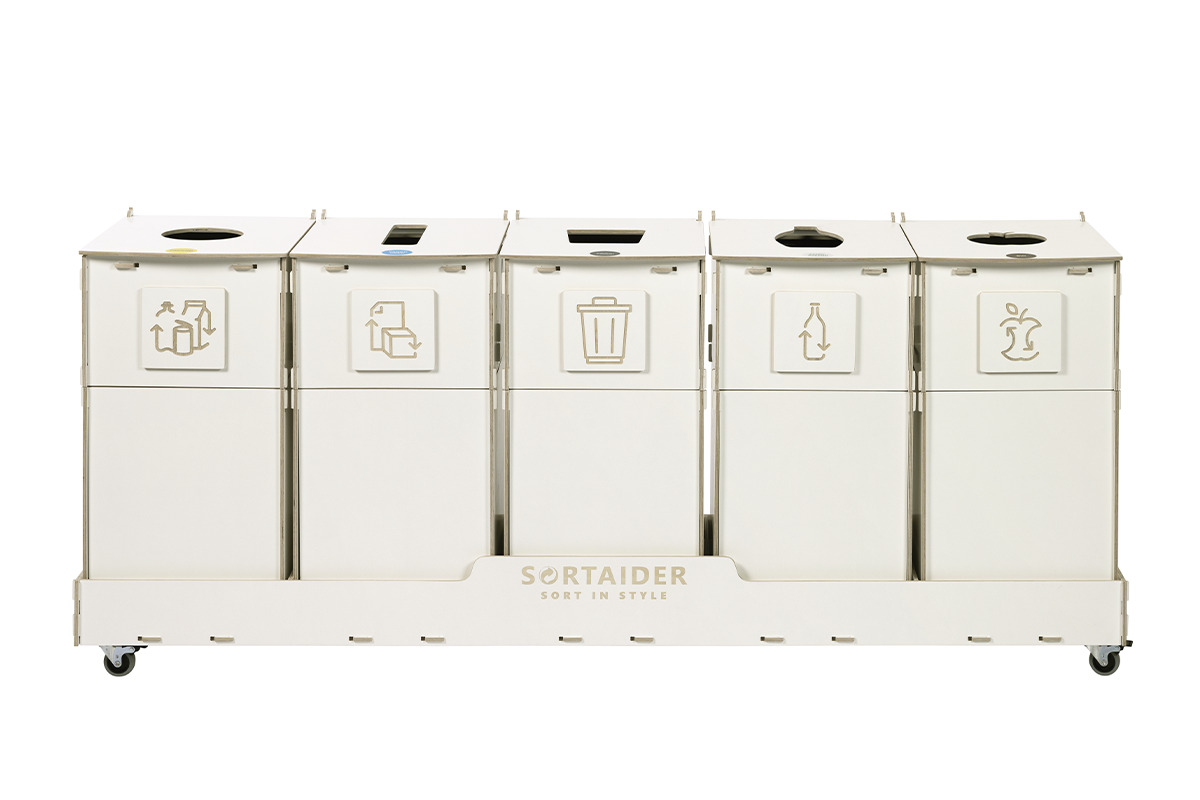
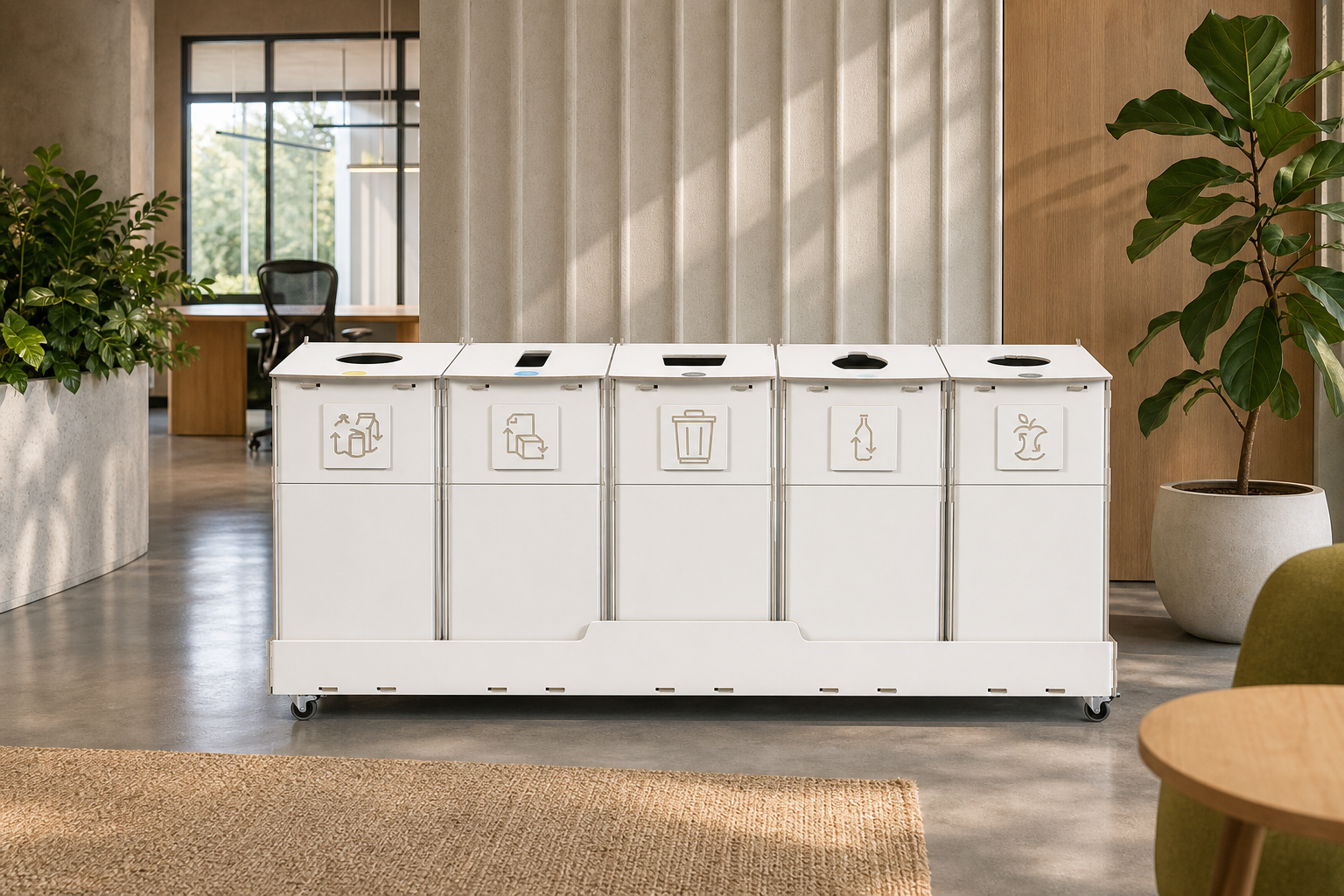
Recycling Bin Sorter 5 × 90 l white
5 types of waste 5 x 90 l2 219,60 € (incl. 24% VAT)1 790 € (excl. VAT)
Durable, modular stations allow facility managers to adjust bin capacities and waste stream labels as operational requirements evolve, protecting your long-term capital investment.
Transform Waste Operations into a Strategic Advantage
An effective corporate waste reduction strategy harmonizes precise auditing data, ergonomic infrastructure, active employee engagement, and statutory compliance. By shifting focus from continuous disposal to systematic source reduction and material recovery, facility managers lower operational costs while meeting corporate sustainability commitments.
To upgrade your facility’s waste infrastructure, explore our selection of modular recycling bin sorters and heavy-duty waste bins, or turn your audit data into an actionable office waste management plan today.