

Are your operational waste records ready for a limited assurance audit under CSRD? Under ESRS E5, broad estimates and generic vendor receipts no longer pass compliance checks. You must systematically gather, structure, and report verifiable waste data across all operational facilities.
Understanding ESRS E5 Waste Disclosures
The Corporate Sustainability Reporting Directive (CSRD) transforms how European businesses manage and report environmental impacts. Under European Sustainability Reporting Standards (ESRS E5: Resource use and circular economy), operational discard streams are no longer treated as simple utility expenses. Instead, regulators treat them as direct indicators of material efficiency and circular economy performance.
If your double materiality assessment determines that resource use and waste are material topics, your organization must disclose specific quantitative and qualitative metrics:
- Total waste generated: Reported in tonnes or kilogrammes based strictly on the material’s weight in its original state (data adjustments like dry weight calculations are explicitly forbidden).
- Waste diverted from disposal: The total weight split by hazardous and non-hazardous categories, further categorized by recovery process: preparation for reuse, recycling, and other recovery operations (such as energy recovery).
- Waste directed to disposal: Total weight divided into hazardous and non-hazardous waste, classified by final disposal method: incineration, landfill, and other disposal operations.
- Non-recycled waste: Disclosed both as total metric weight and as a percentage of total waste generated.
- Unknown final destination: The proportion of total generated waste where treatment cannot be verified, reported as a percentage of total waste.
- Radioactive waste: Reported separately in line with Council Directive 2011/70/Euratom definitions.
Beyond raw figures, ESRS E5 requires context regarding your corporate policies, implemented actions, targeted milestones, and anticipated financial effects. If value chain counterparty data is missing, ESRS 2 permits estimation using indirect sources, provided you disclose your methodology, accuracy levels, and plans for data improvement.
Structuring Your Data Taxonomy for Auditability
Auditors require a complete audit trail from physical generation to final treatment. Every recorded waste load across your sites must maintain four core data attributes before being consolidated into your corporate sustainability report:
- Original State Weight: Measured raw mass captured at the point of collection or hauler dispatch without artificial moisture adjustments.
- Controlled Stream Classification: Standardized stream tagging mapped to the European List of Waste (LoW) and explicitly flagged as hazardous or non-hazardous.
- Treatment Facility Mapping: Mapped treatment codes matching Annex I (Disposal) or Annex II (Recovery) operations under the EU Waste Framework Directive, rather than unverified carrier statements like “treated” or “zero waste to landfill.”
- Verified Timestamp and Location ID: Specific facility identifiers and dates to align records with your financial accounting year and prevent duplicate counting across internal site transfers.
Navigating Regional Legislative Variations
Although the EU Waste Framework Directive sets baseline standards, individual member states enforce specific operational mandates:
- Sweden: Mandatory separate food waste collection applies to all commercial businesses.
- Denmark: Workplaces must maintain source separation across at least four distinct waste streams.
Understanding local rules ensures site managers comply with regional waste laws while feeding accurate data into group-level ESRS reporting. To explore these frameworks further, review our guides on commercial waste recycling requirements and recycling legislation in Europe.
Establishing On-Site Baselines Through Waste Audits
Relying strictly on aggregated waste hauler invoices creates significant compliance risks, often obscuring stream contamination and site-level generation trends. Performing periodic physical audits provides the empirical groundwork needed for a dependable ESG reporting framework.
Follow a structured audit protocol across your properties:
- Define Assessment Scope: Conduct a physical audit over a representative 1 to 7 day period to reflect daily operational fluctuations.
- Segregate Collection by Zone: Collect discard bags separately from distinct facility areas, such as kitchenettes, print rooms, and open-plan offices, keeping them strictly segregated to spot problem areas.
- Weigh and Classify: Use calibrated scales to record each material stream in its original state before classifying fractions.
- Calculate Diversion Metrics: Measure operational efficiency by dividing the total weight of recycled and composted materials by the total weight of all generated waste, then multiplying by 100 to determine your Diversion Rate percentage.
For operational templates, refer to our practical guides on executing a waste audit for offices and establishing methods to track and report workplace recycling rates.
Internal Controls, Value Chains, and Audit Trails
CSRD stresses rigorous internal controls over sustainability reporting processes. To ensure data integrity across multi-site networks, sustainability teams should implement continuous verification controls:
- Reconcile Site Completeness: Cross-reference real estate registers against reporting tools so small, leased, or satellite sites are not omitted.
- Validate Waste Transfer Notes: Collection invoices alone do not confirm recovery. Archive official Waste Transfer Notes (consignment notes), weighbridge receipts, and verified carrier treatment certificates.
- Track Scope 3 Category 5: Utilize primary vendor weight data to calculate upstream operational emissions from waste disposal. Read our guide on Scope 3 emissions and waste for calculation protocols.
- Log Direct vs. Estimated Metrics: Explicitly record whether numbers reflect direct scale readings or estimation models, detailing underlying assumptions as mandated by ESRS E5.
Embedding these verification steps within an ISO 14001 environmental management system strengthens data governance and simplifies third-party verification.
Improving Baseline Data Quality at the Source
Unclear source separation directly undermines ESRS reporting accuracy. When commingled waste becomes contaminated, valuable recyclables are diverted to landfills or incinerators, inadvertently shifting reported figures from “Recovery” to “Disposal.”
Replacing isolated deskside bins with centralized multi-stream recycling bins can boost source separation and waste diversion rates by up to 40%. Centralized stations featuring color coding and intuitive pictograms clarify sorting decisions for employees, preventing batch rejection at recovery facilities.

Modular, indoor recycling bin sorters adapt easily to varied office layouts while reinforcing correct sorting behavior.
-
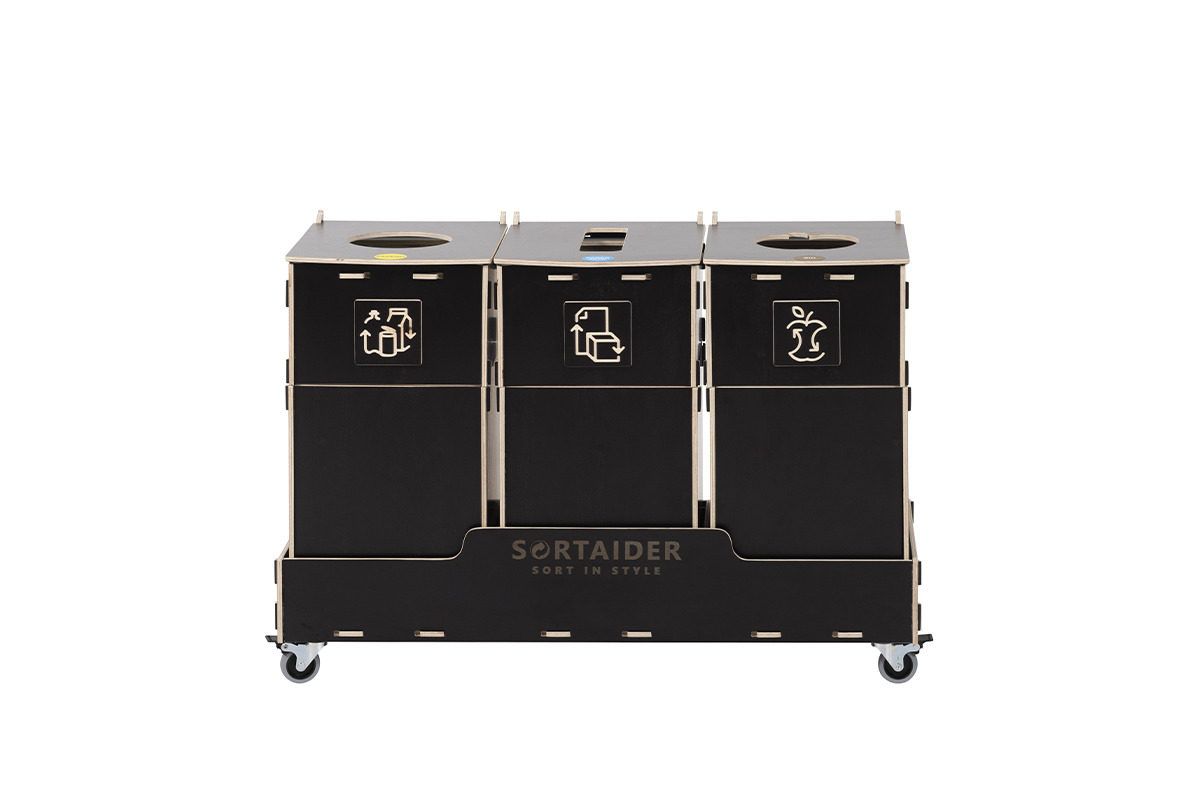
Recycling Bin Sorter 3 × 30 l brown
3 types of waste 3 x 30 l731,60 € (incl. 24% VAT)590 € (excl. VAT) -
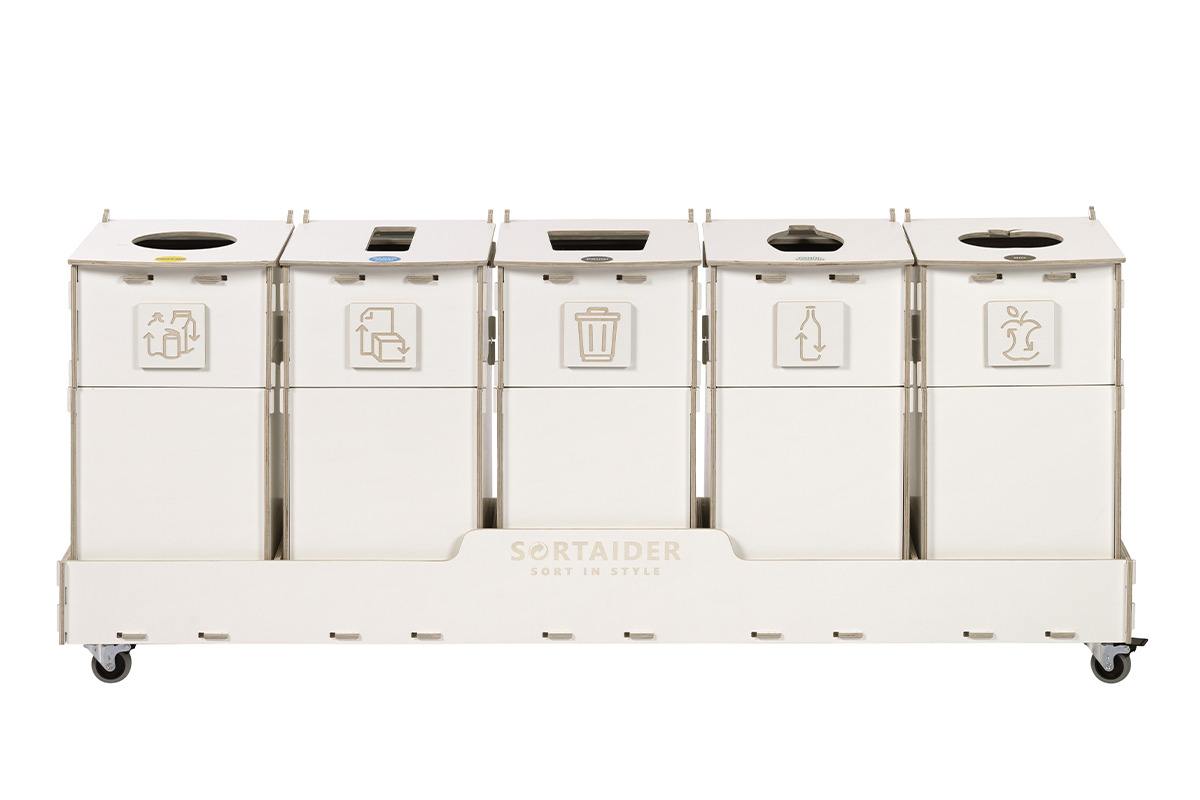
Recycling Bin Sorter 5 × 30 l white
5 types of waste 5 x 30 l1 165,60 € (incl. 24% VAT)940 € (excl. VAT) -
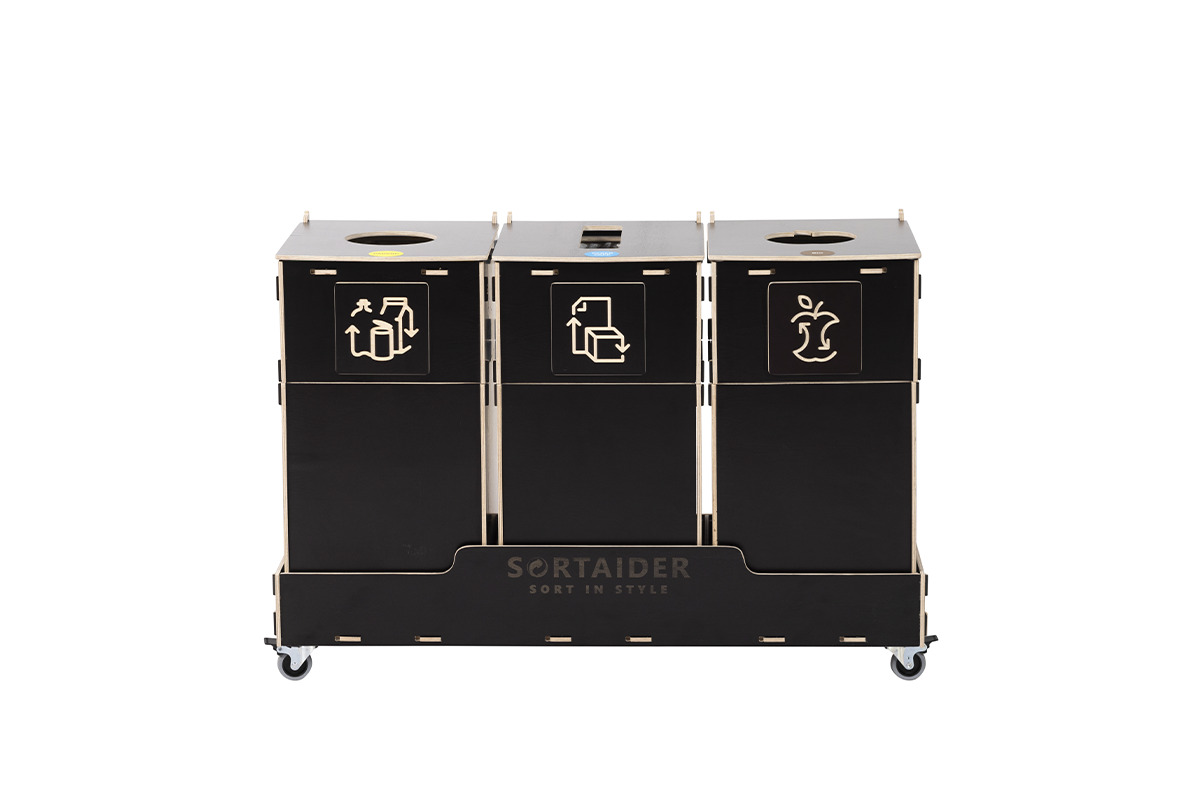
Recycling Bin Sorter 3 × 40 l brown
3 types of waste 3 x 40 l992 € (incl. 24% VAT)800 € (excl. VAT) -
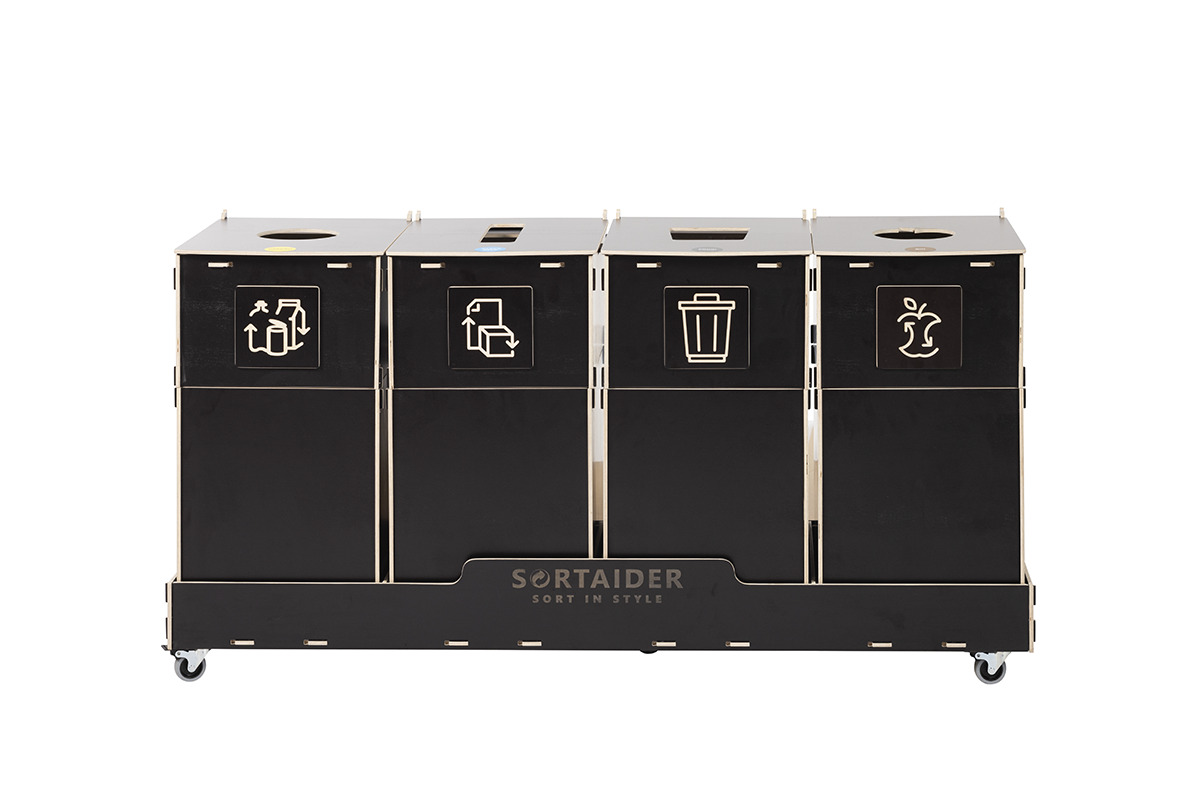
Recycling Bin Sorter 4 × 60 l brown
4 types of waste 4 x 60 l1 500,40 € (incl. 24% VAT)1 210 € (excl. VAT)
For high-traffic areas, educational facilities, or executive suites, heavy-duty container recycling systems handle larger volumes without sacrificing aesthetic integration. Choosing sustainable plywood construction also reduces environmental impacts at the facility level, emitting 2 to 4 times less lifecycle CO₂ than traditional sheet metal or plastic options.

-
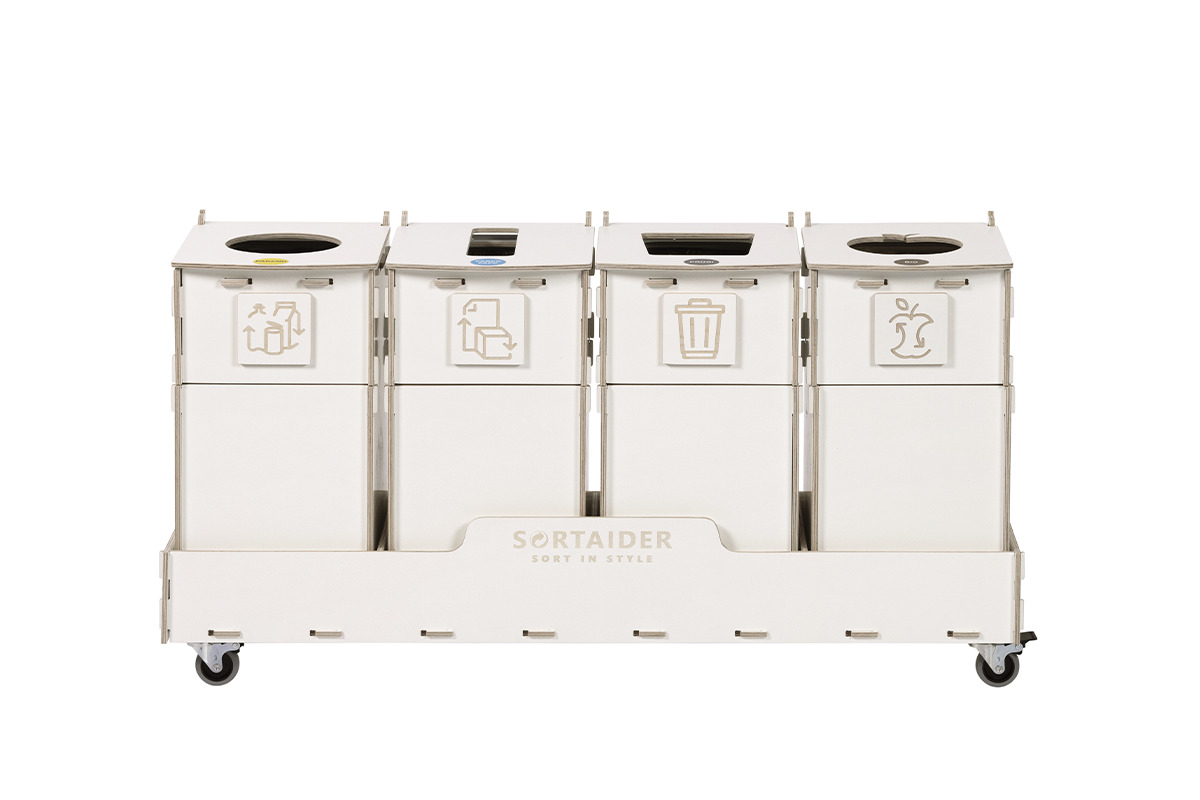
Recycling Bin Sorter 4 × 20 l white
4 types of waste 4 x 20 l607,60 € (incl. 24% VAT)490 € (excl. VAT) -
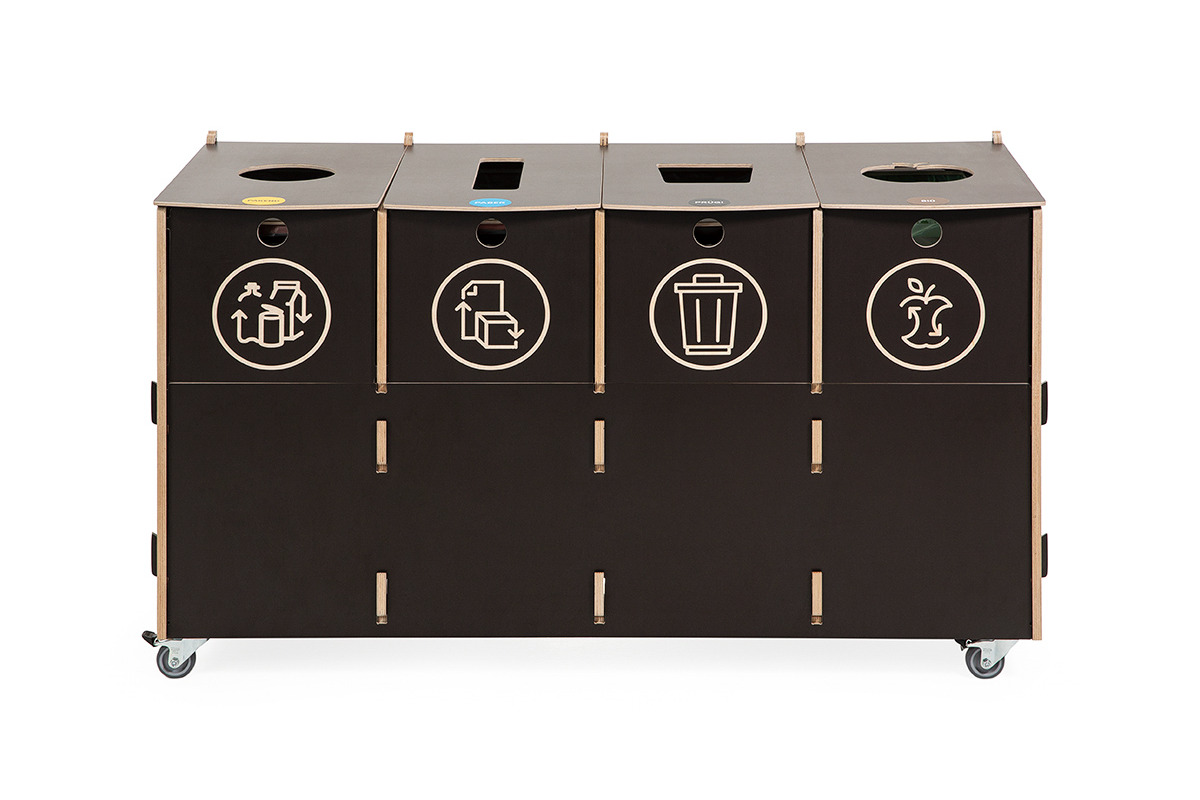
Recycling Bin Container 4 × 40 l brown
4 types of waste 4 x 40 l1 612 € (incl. 24% VAT)1 300 € (excl. VAT) -
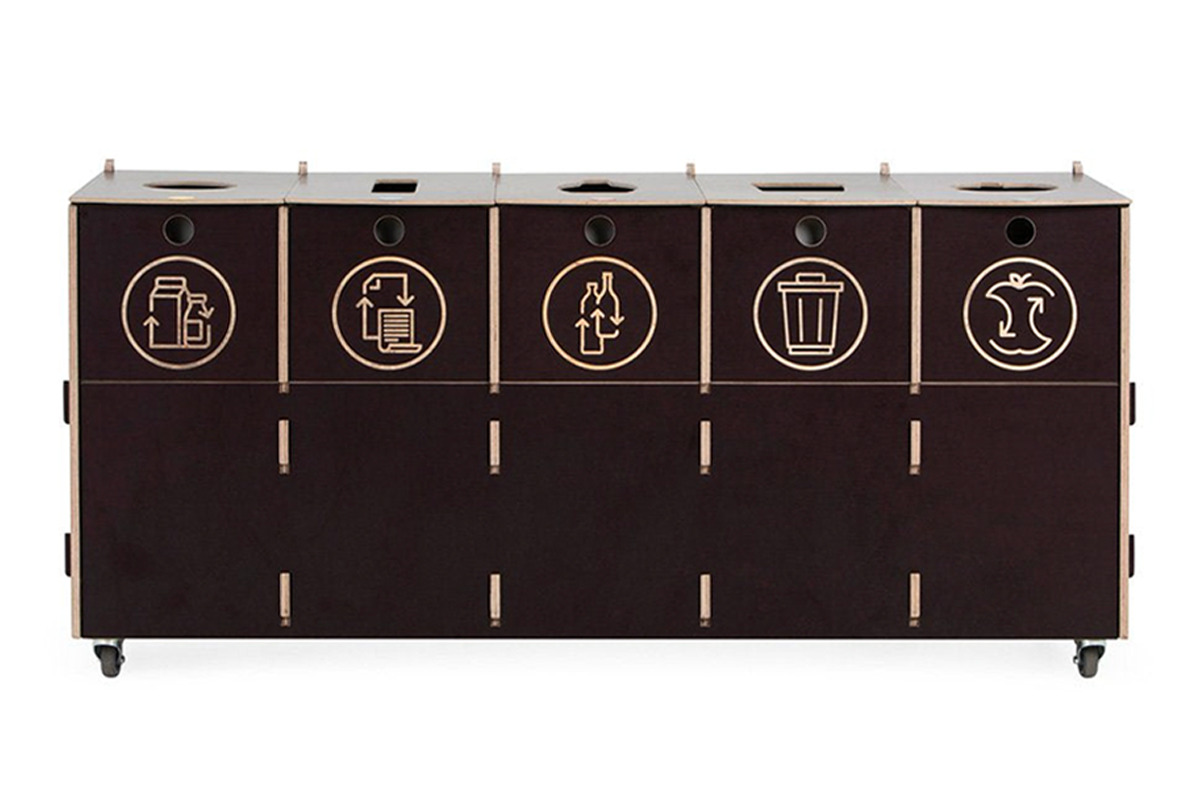
Recycling Bin Container 5 × 40 l brown
5 types of waste 5 x 40 l1 798 € (incl. 24% VAT)1 450 € (excl. VAT)
Upgrading physical waste infrastructure creates a reliable data baseline, driving your sustainability KPIs for facility managers and accelerating your corporate transition to a circular economy model.
Accelerating Your CSRD Compliance Strategy
Achieving ESRS E5 compliance requires uniting systematic data management with practical site-level infrastructure. By defining clean stream taxonomies, securing treatment receipts from contractors, and deploying user-friendly sorting stations, you transform regulatory burden into auditable environmental performance.
Contact Sortaider today to evaluate your facility setup and discover durable, Nordic-designed plywood recycling stations engineered for European compliance.