Did you know that nearly 85% of manufactured textiles are discarded into landfills or incinerators? Implementing an efficient commercial textile recovery program protects your organization from tightening EU regulations while cutting disposal costs. Here is how to establish a seamless textile recycling system for your facility.
Commercial Textile Recycling Regulations in Europe
Facility managers across Europe face mounting legal requirements regarding commercial waste handling. Under the European Union’s revised Waste Framework Directive, Member States were required to establish separate collection systems for textiles by 1 January 2025. Furthermore, updated rules mandate Extended Producer Responsibility (EPR) schemes across Member States by April 2028, requiring producers and commercial entities to finance collection, sorting, and material recovery.
For organizations operating across Northern and Central Europe, local enforcement imposes immediate operational duties:
- Mandatory Source Separation: Commercial facilities must segregate fabric waste from general refuse streams at the point of origin.
- Traceability and Documentation: Every commercial waste collection requires signed consignment notes or digital entries in official registries to prove waste was transferred to licensed carriers.
- Disposal Restrictions: Untreated textile waste is increasingly banned from municipal landfills and energy recovery incinerators without prior sorting.
Similar regulatory pushes are emerging globally. For instance, California’s Responsible Textile Recovery Act of 2024 (SB 707) established the first state-level EPR program in the United States, requiring producers to join a approved stewardship plan by July 2026. Failing to separate textiles creates legal exposure and financial penalties regardless of your jurisdiction. Reviewing your broader legal obligations under workplace recycling regulations and overall commercial waste recycling requirements is essential to maintaining full facility compliance.
What Textile Materials Can Businesses Recycle?
Commercial textile recovery extends far beyond corporate clothing. Waste processing vendors accept a wide range of post-industrial and post-consumer materials from offices, healthcare facilities, hotel chains, and manufacturing facilities.
Commonly Accepted Materials
- Workwear and Uniforms: Corporate polo shirts, high-visibility jackets, protective aprons, suits, and coveralls.
- Facility and Hospitality Linens: Bed sheets, pillowcases, duvet covers, towels, tablecloths, and cloth napkins.
- Interior Fabrics: Window curtains, drapery, upholstery offcuts, and clean fabric scraps.
- Footwear and Accessories: Leather or canvas shoes, belts, work boots, and bags (vendors typically require shoe pairs to be tied together).
Item Condition and Quality Thresholds
Items do not need to be in wearable condition to be accepted. Commercial recyclers regularly process textiles that are heavily worn, torn, stained, faded, or missing buttons and zippers.
Strictly Prohibited Contaminants
- Wet or Mildewed Fabrics: Damp textiles introduce mold growth, destroying entire batches during storage or transport.
- Chemical Contamination: Materials saturated with industrial solvents, motor oils, grease, or hazardous chemicals must be routed through specialized chemical waste streams.
- Non-Textile Debris: Unattached metal hardware, solid plastics, electronics, and general trash.
Understanding how to sort waste correctly across all facility streams ensures non-textile items never compromise your dedicated bins.
How Commercial Textile Recycling Works: Step-by-Step
Understanding how recovery facilities process waste helps facility managers prepare materials for vendor collection, maximizing recovery rates and reducing contamination fees.
- On-Site Collection and Staging: Employees or visitors deposit discarded textiles into dedicated sorting stations in changing rooms, laundries, or stockrooms. Materials are kept dry and moved to a centralized staging area.
- Transport and Documentation: An authorized waste carrier collects the staged textiles, issuing formal consignment documentation confirming weight and material type.
- Sorting and Grading: At the processing facility, sorters and automated systems categorize items by fiber composition (such as pure cotton, wool, PET, or nylon blends), color, and quality. High-grade items are directed toward reuse markets.
- Pre-Processing: Items designated for recycling undergo trim removal – cutting away zippers, buttons, labels, and thick seams – before being shredded into uniform fiber feedstock.
- Fiber Processing: Shredded fibers are mechanically processed or carded into shoddy yarn for acoustic insulation, carpet underlay, and automotive padding, or chemically recycled into new spun fibers. Unsuitable residual fractions are diverted to industrial wiping rags or secondary energy recovery as a last resort.
Integrating these steps into your waste policy supports a genuine circular economy for businesses, reducing raw material extraction and lowering carbon emissions.
On-Boarding a Commercial Textile Recycling Vendor
Before initiating service, commercial recycling providers require specific technical details to establish your pickup schedule and pricing structure. Be prepared to discuss:
- Fiber Composition: Can your site segregate pure cotton or synthetic polymers, or will textiles be collected as a commingled stream?
- Volume and Frequency: What is your estimated monthly generation weight in kilograms or metric tons?
- Containment and Storage: Will materials be stored loose in rolling hampers, packed in heavy-duty bags, or machine-baled on pallets?
- Quality Assurance: What internal controls ensure textiles remain dry and free from chemical solvents or organic residue?
Always verify your vendor’s regional waste licenses and ensure they provide weight-verified collection receipts. These records are vital for corporate ESG reporting on waste management.
Practical Strategies for On-Site Collection
An effective textile collection initiative relies on strategic bin placement, clear visual guidance, and durable infrastructure.
Establish Centralized Sorting Hubs
Avoid placing textile collection containers in isolation. Follow the 1:1 placement rule by positioning textile receptacles alongside general recycling streams within central sorting hubs. Primary placement zones include:
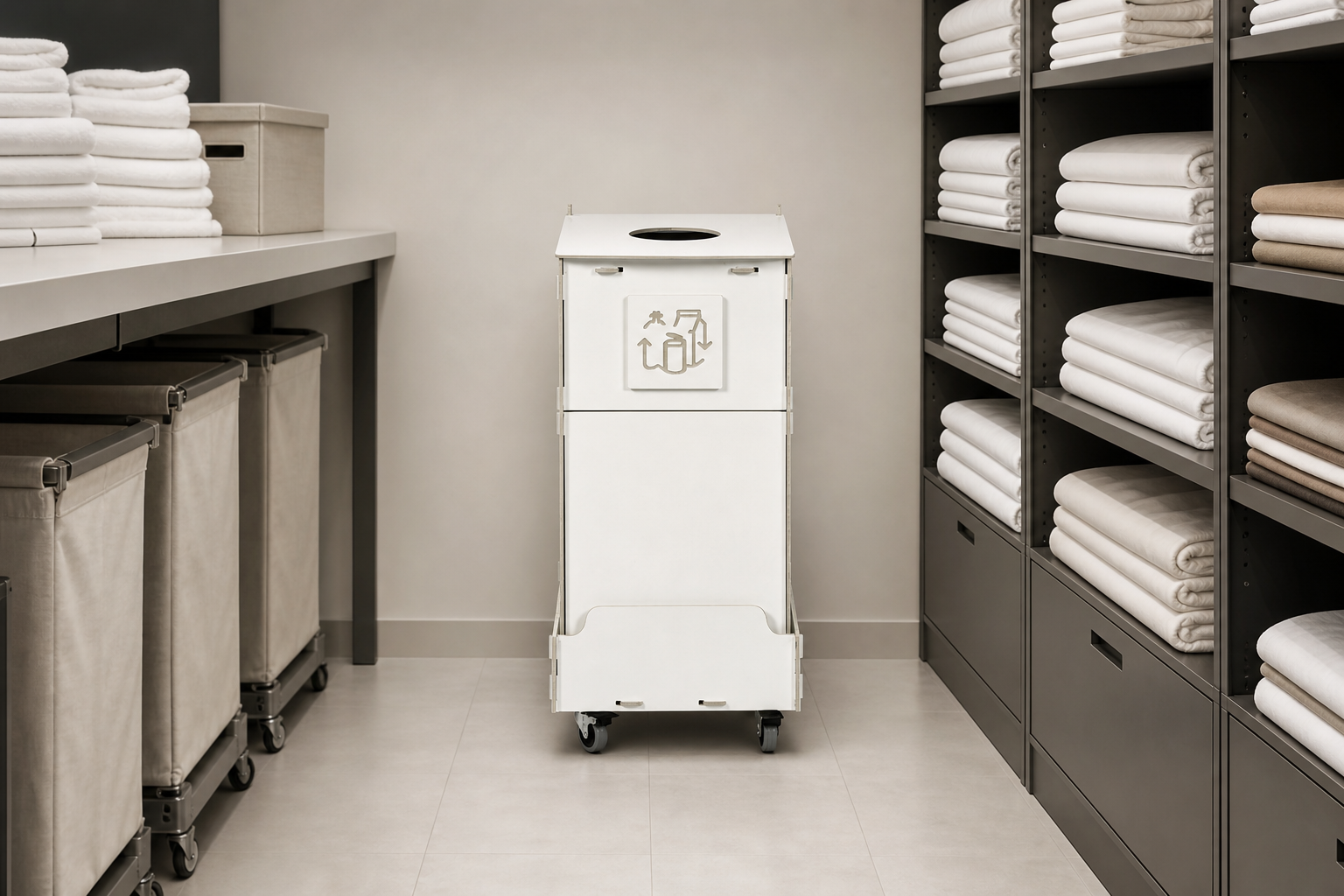
- Locker rooms and staff changing areas.
- Laundry facilities and back-of-house hospitality hubs.
- Stockroom exits and uniform distribution desks.
Review our detailed recycling bin placement guide to optimize container locations across your site layout.
Implement Intuitive Signage
Sorting errors directly lower material value and increase hauling penalties. Utilize high-contrast graphics, standardized color coding, and visual pictograms rather than text-heavy labels to guide staff instantly. Explore our recycling signage best practices guide to implement effective visual nudges.
Deploy Professional Sorting Infrastructure
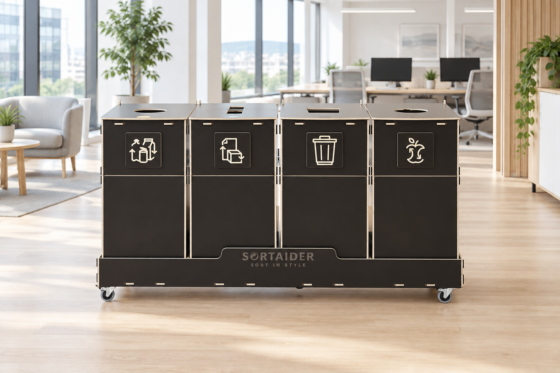
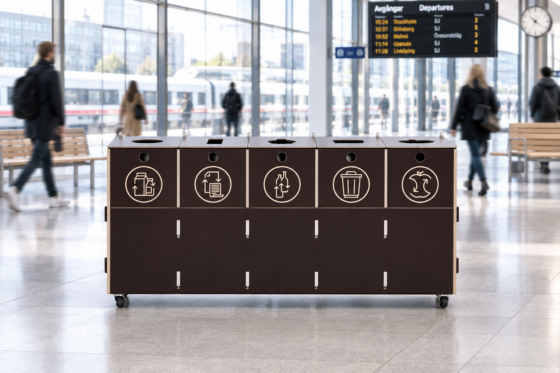
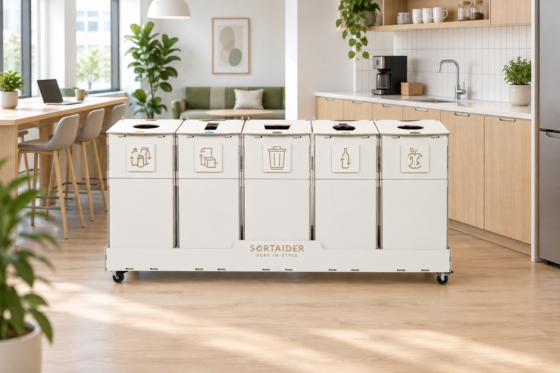
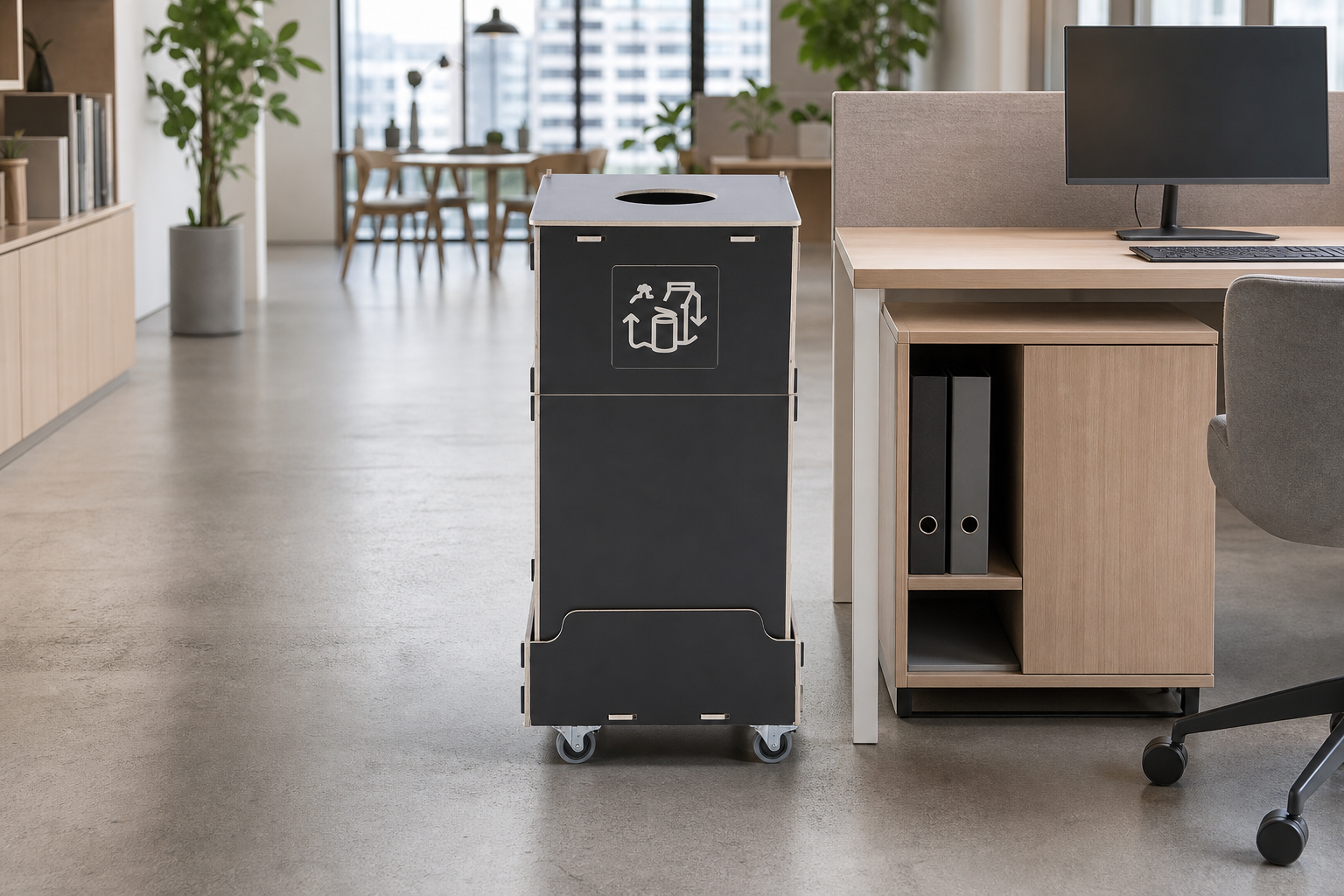
For office buildings, public spaces, and institutional facilities, collection infrastructure must combine high durability with visual appeal. Sorting stations crafted from sustainably sourced birch plywood provide a clean aesthetic while emitting up to four times less lifecycle CO₂ than conventional plastic or metal bins.
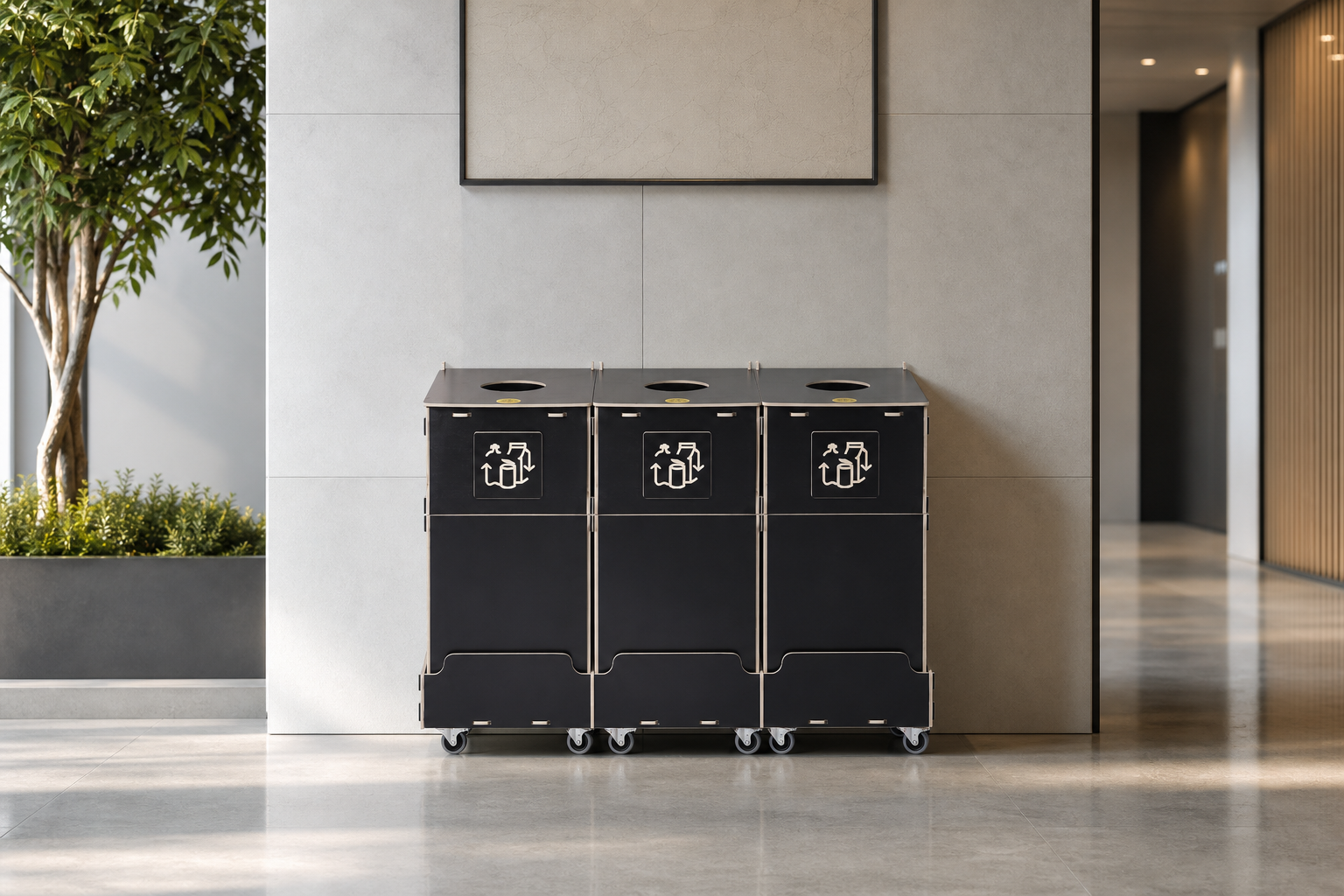
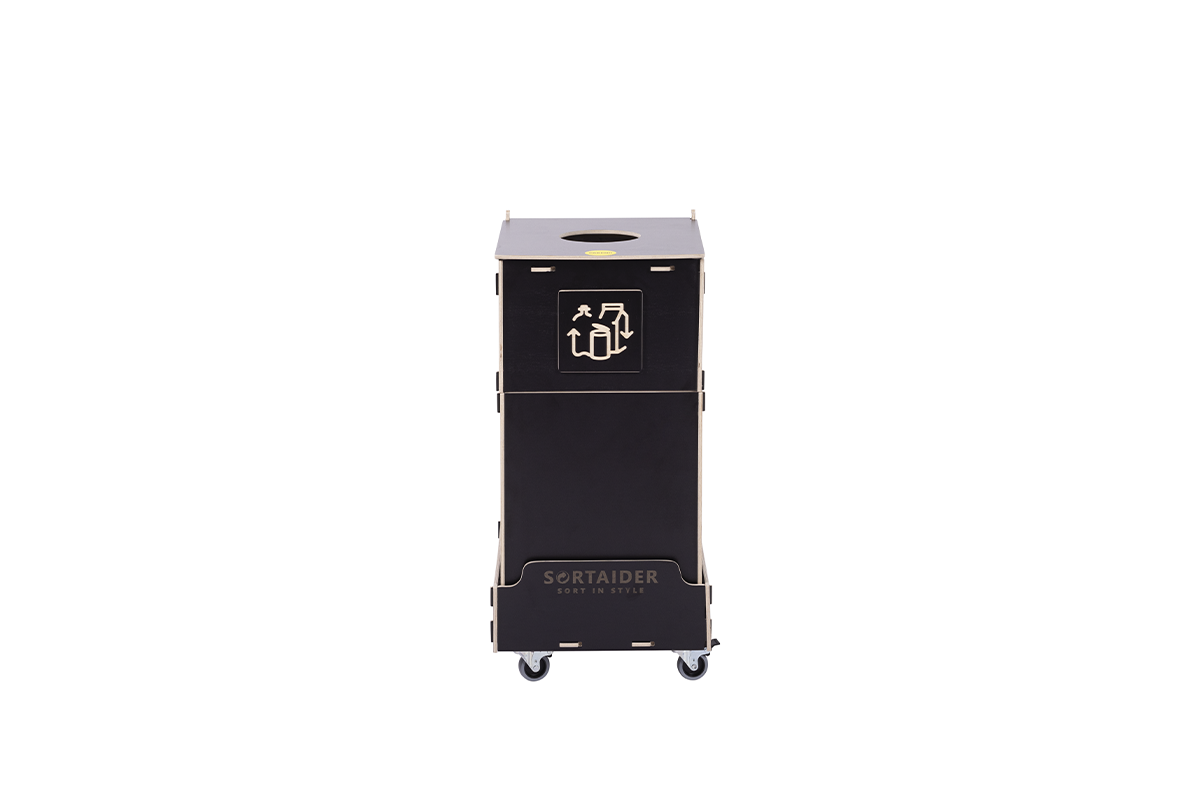
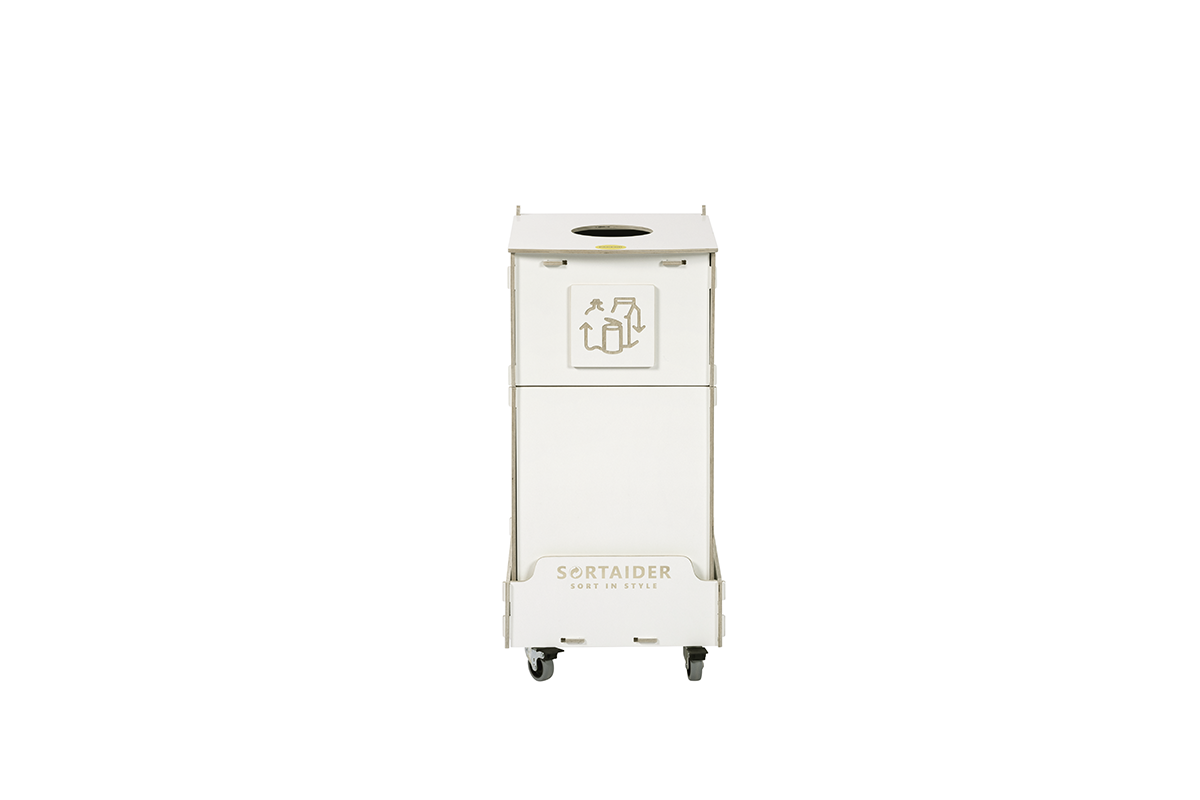
For high-traffic operations requiring higher volume capacity, multi-compartment modular units preserve stream separation while reducing maintenance frequency:
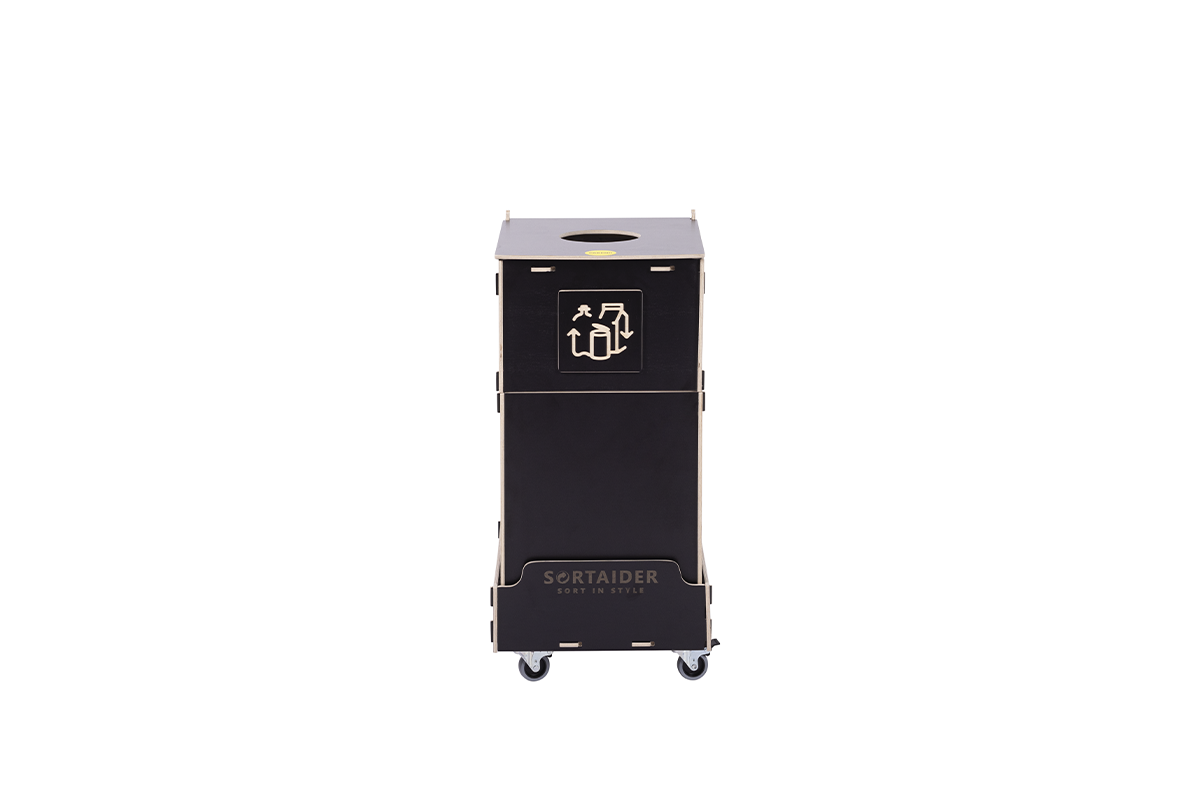
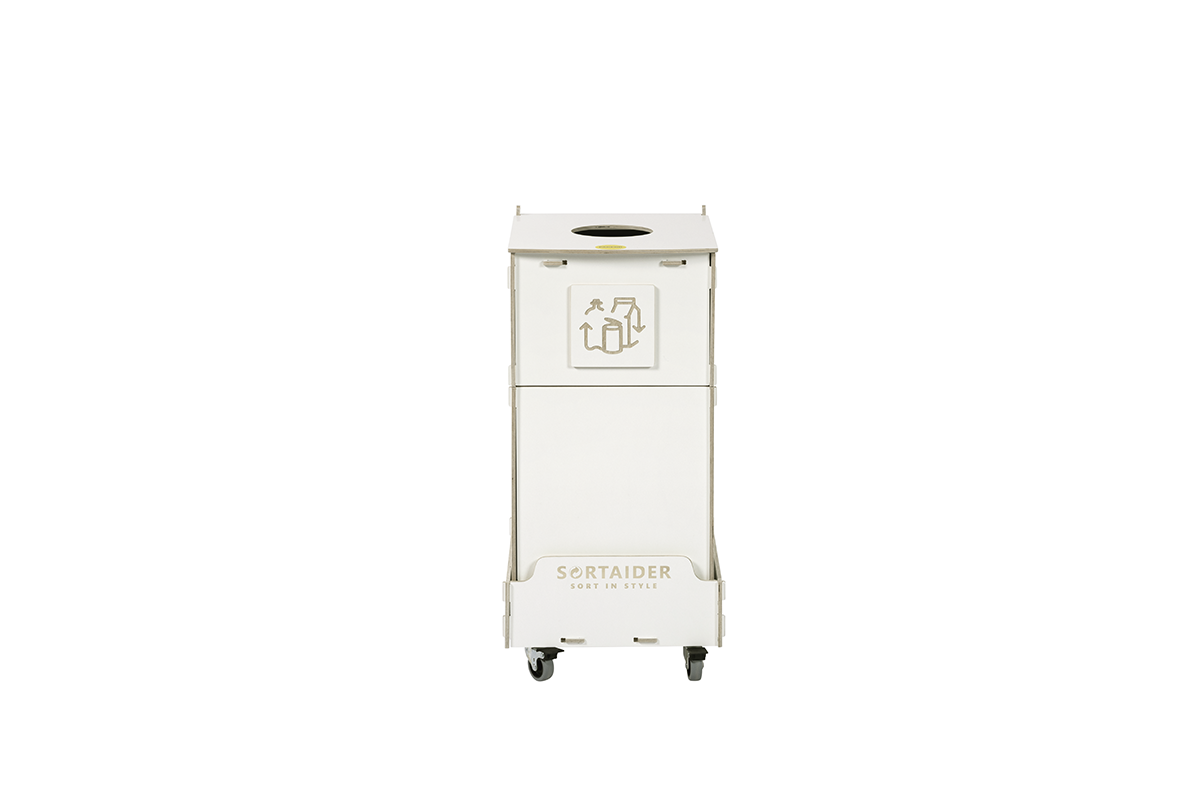
Browse our complete recycling bins catalog or select modular configurations from our recycling bin sorter line to build a setup tailored to your space.
Track and Report Your Diversion Rates
Consistent data logging maintains program momentum. Weigh collected textiles prior to vendor haulage, log monthly totals, and calculate your waste diversion rates. Follow our guide on how to track and report recycling rates at work to measure your sustainability performance accurately over time.
Upgrade Your Facility’s Textile Recycling System
Establishing a compliant commercial textile recycling program protects your business from regulatory fines, cuts general waste costs, and demonstrates concrete progress toward circular resource management.
Equip your organization with Nordic-designed waste sorting systems engineered for professional environments. Contact the Sortaider team today to configure a modular recycling station tailored to your facility’s operational needs.