Did you know the average student generates up to 0.45 kg of waste every single school day? For facility managers, managing this volume while meeting strict European recycling regulations requires more than just extra bins – it requires a strategic, durable, and intuitive system.
Understanding the School Waste Profile
To implement an effective system, you must first understand what your facility produces. Research indicates that a typical school waste stream is remarkably consistent, consisting of approximately 50.8% organics, 31.4% paper, and 12.7% plastic by weight. Food waste alone often accounts for 32% to 55% of the total generated waste in educational settings.
In many regions, recycling services are significantly cheaper than general trash collection – sometimes by as much as 36%. By shifting materials from the landfill stream to recycling, schools can realize substantial budgetary savings. To get an accurate picture of your specific needs, conducting a waste audit for offices and communal spaces is the best starting point for right-sizing your collection frequency and bin capacity.
Navigating European Regulatory Compliance
Educational institutions across Europe are subject to the EU Waste Framework Directive, which mandates the separate collection of paper, metal, plastic, and glass. However, local requirements often go further based on national environmental goals:
- In Sweden, separate food waste collection became a mandatory requirement for all professional entities in 2024.
- Denmark requires workplaces to maintain a minimum of four separate bins and utilize digital tracking systems for waste shipments.
- Estonian schools must separate bio-waste, particularly if the site generates more than 10kg of organic waste daily.
- Latvia applies strict Extended Producer Responsibility (EPR) for packaging, making source separation a legal necessity to avoid heavy landfill taxes.
Adhering to these rules is a core component of ISO 14001 environmental management, which many modern educational boards now require for accreditation. You can find more detail on these requirements in our guide to workplace recycling regulations.
Designing Efficient Sorting Stations for Schools
The most common mistake in school facility management is relying on individual deskside bins. Research shows that replacing these with centralized recycling hubs in high-traffic areas can improve recycling rates in the workplace by up to 40%. Centralized hubs encourage students to think about the material they are discarding rather than defaulting to the nearest bin.
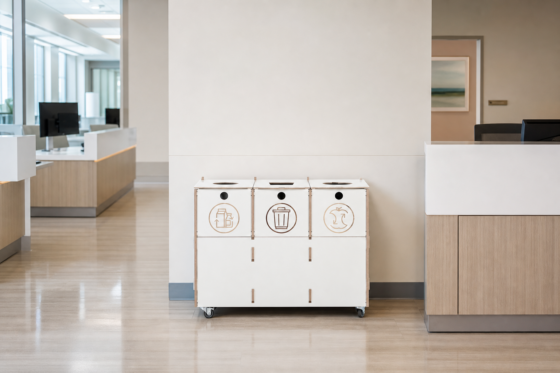
For schools, equipment must meet specific criteria to ensure longevity and safety. The Sorta series and the Container series are specifically designed for these high-traffic environments. These stations are crafted from moisture-resistant laminated plywood, offering a splinter-free finish that is safe for children. Furthermore, wooden bins provide a significantly lower carbon footprint – up to 4x lower than metal or plastic alternatives.
-
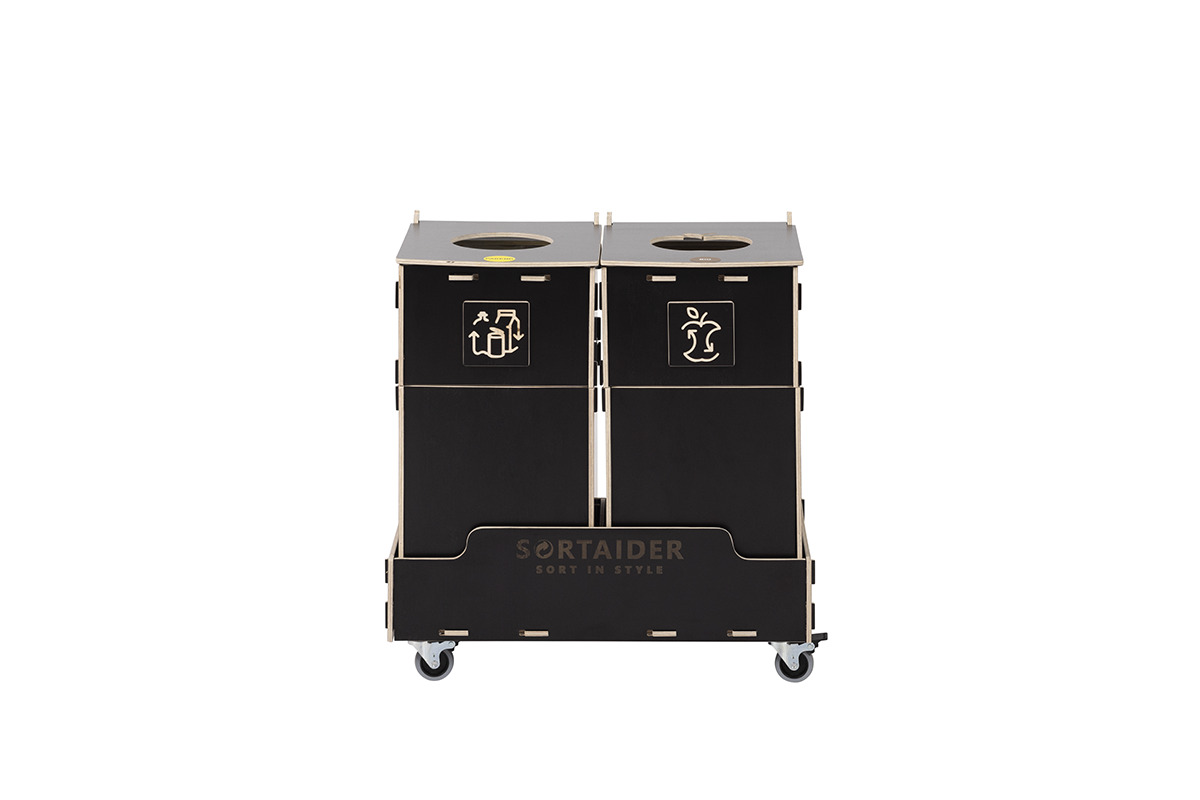
Recycling Bin Sorter 2 × 30 l brown
2 types of waste 2 x 30 l508,40 € (incl. 24% VAT)410 € (excl. VAT) -
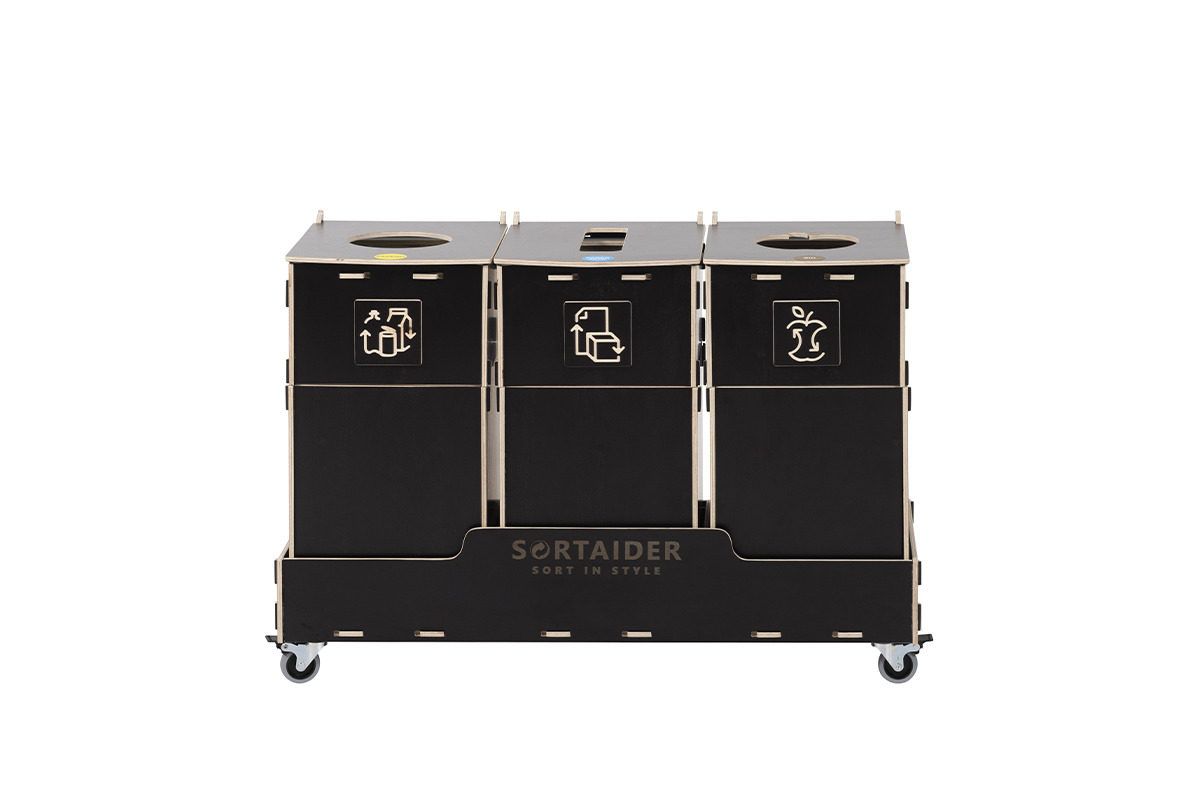
Recycling Bin Sorter 3 × 30 l brown
3 types of waste 3 x 30 l731,60 € (incl. 24% VAT)590 € (excl. VAT) -
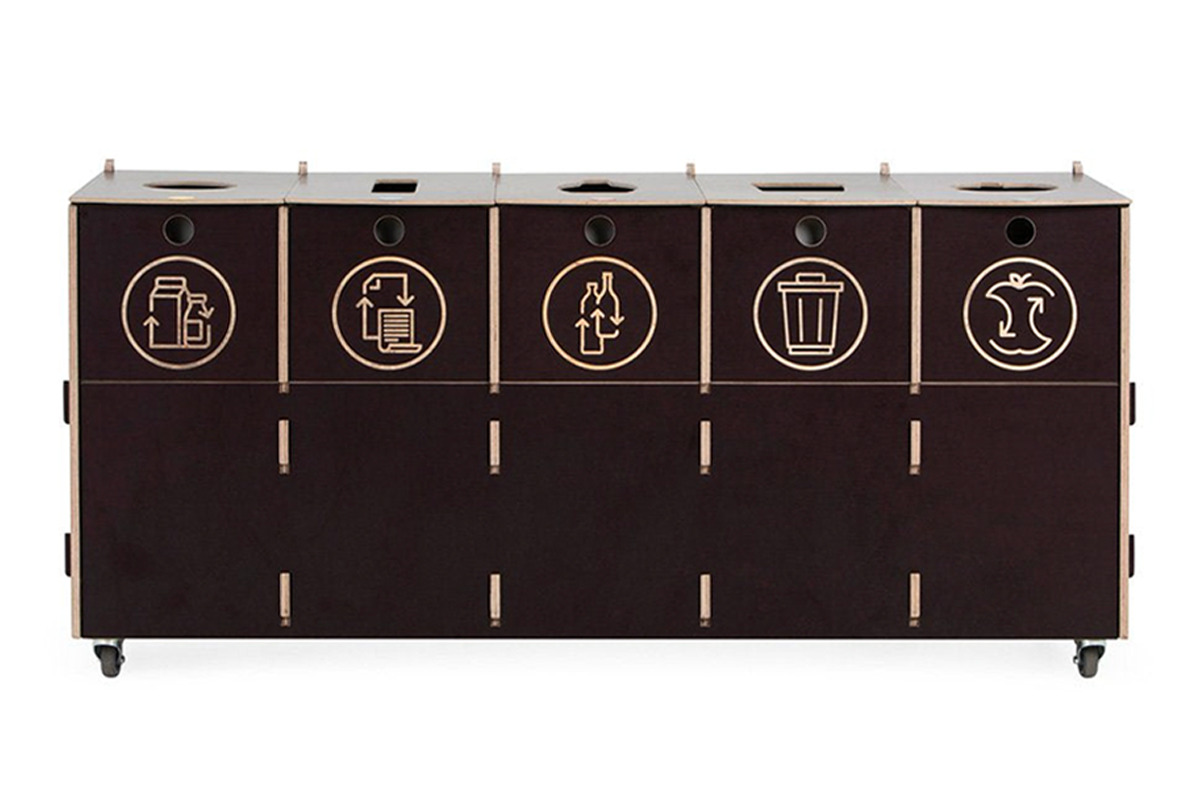
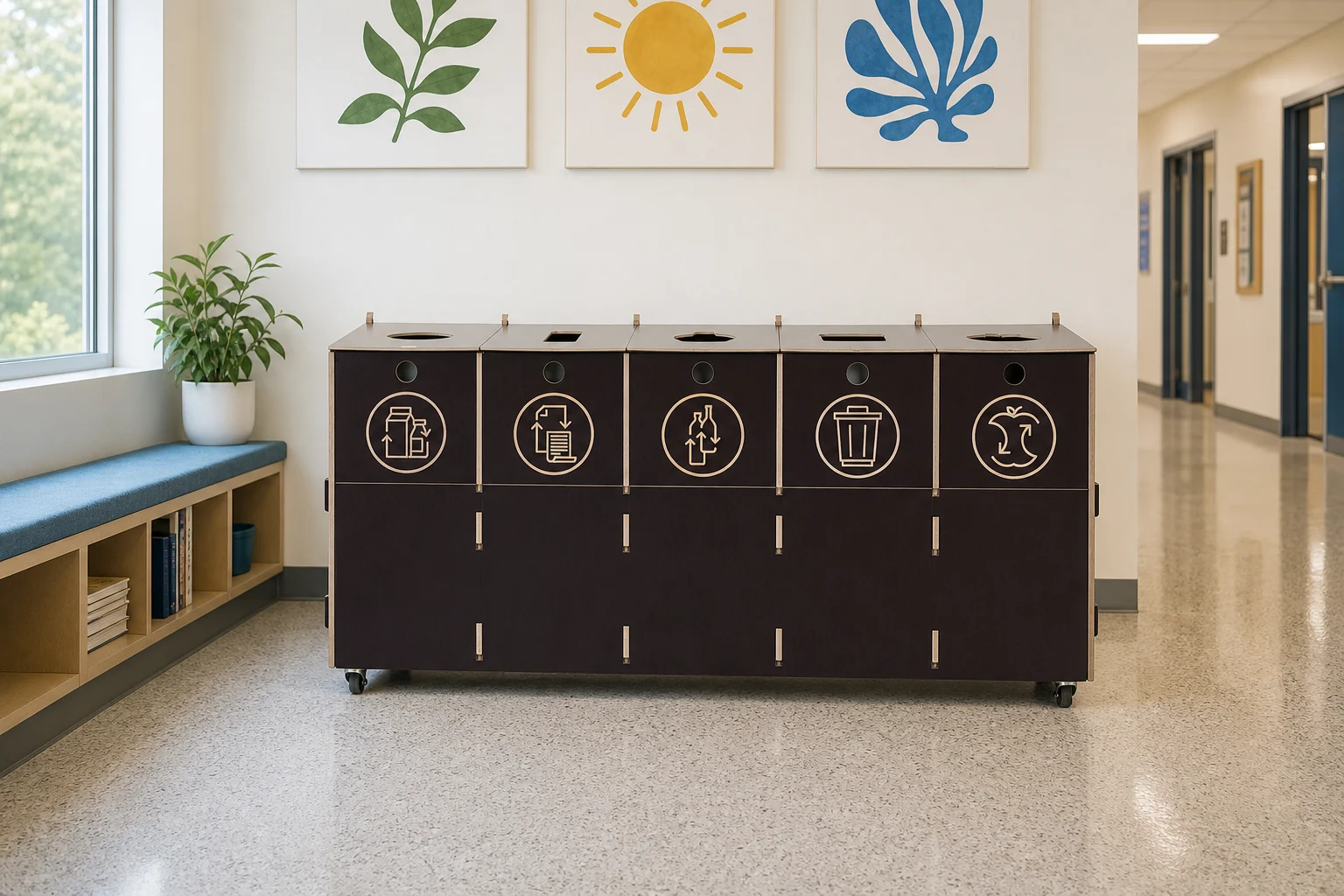
Recycling Bin Container 5 × 40 l brown
5 types of waste 5 x 40 l1 798 € (incl. 24% VAT)1 450 € (excl. VAT)
Reducing Contamination with Visual Nudges
Contamination is the primary reason why well-intentioned waste sorting fails. When food scraps or liquids end up in paper bins, it can ruin an entire batch, leading to higher disposal costs and rejected loads. To prevent this, schools should move away from text-heavy instructions and follow recycling signage best practices.
Using high-contrast pictograms and bilingual instructions reduces sorting errors by approximately 40%. Physical nudges are also highly effective; for instance, using a narrow slit for paper bins and a round hole for bottles instinctively guides the user toward the correct choice. This is particularly important in cafeterias, where recycling contamination causes are most frequent due to residues and liquids.

-
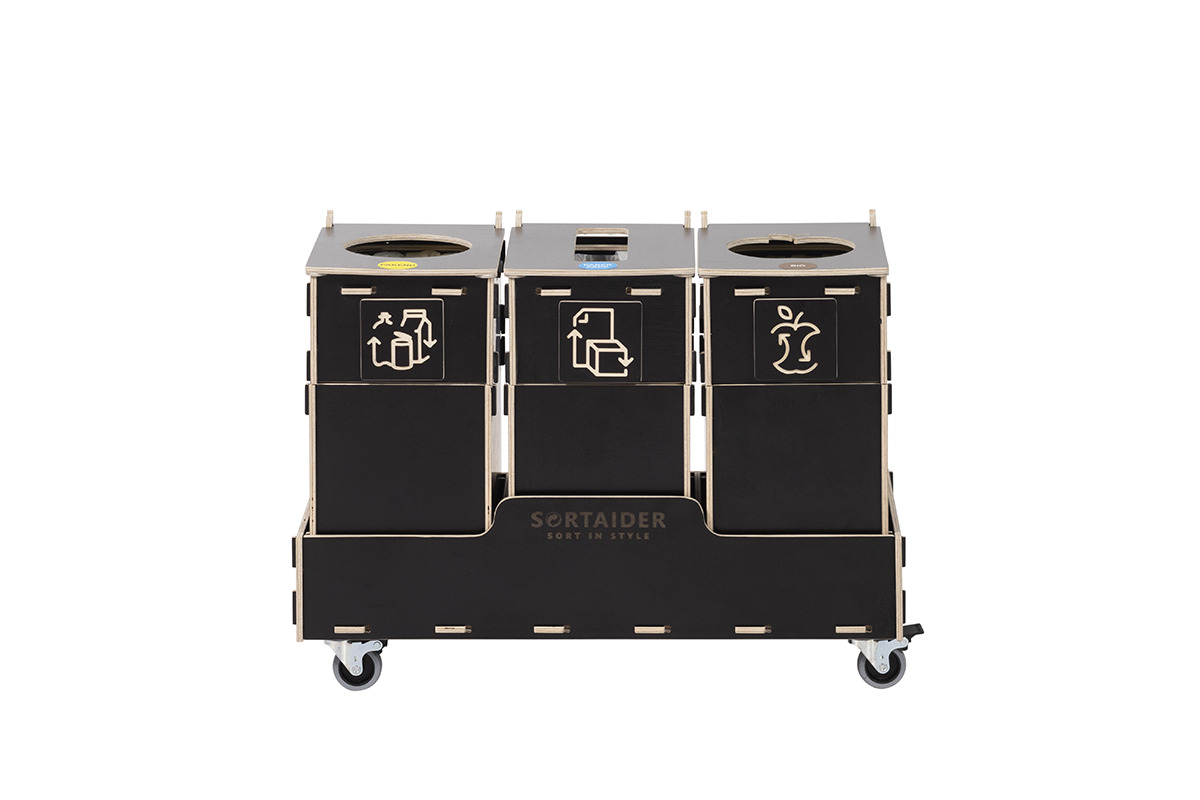
Recycling Bin Sorter 3 × 10 l brown
3 types of waste 3 x 10 l297,60 € (incl. 24% VAT)240 € (excl. VAT) -
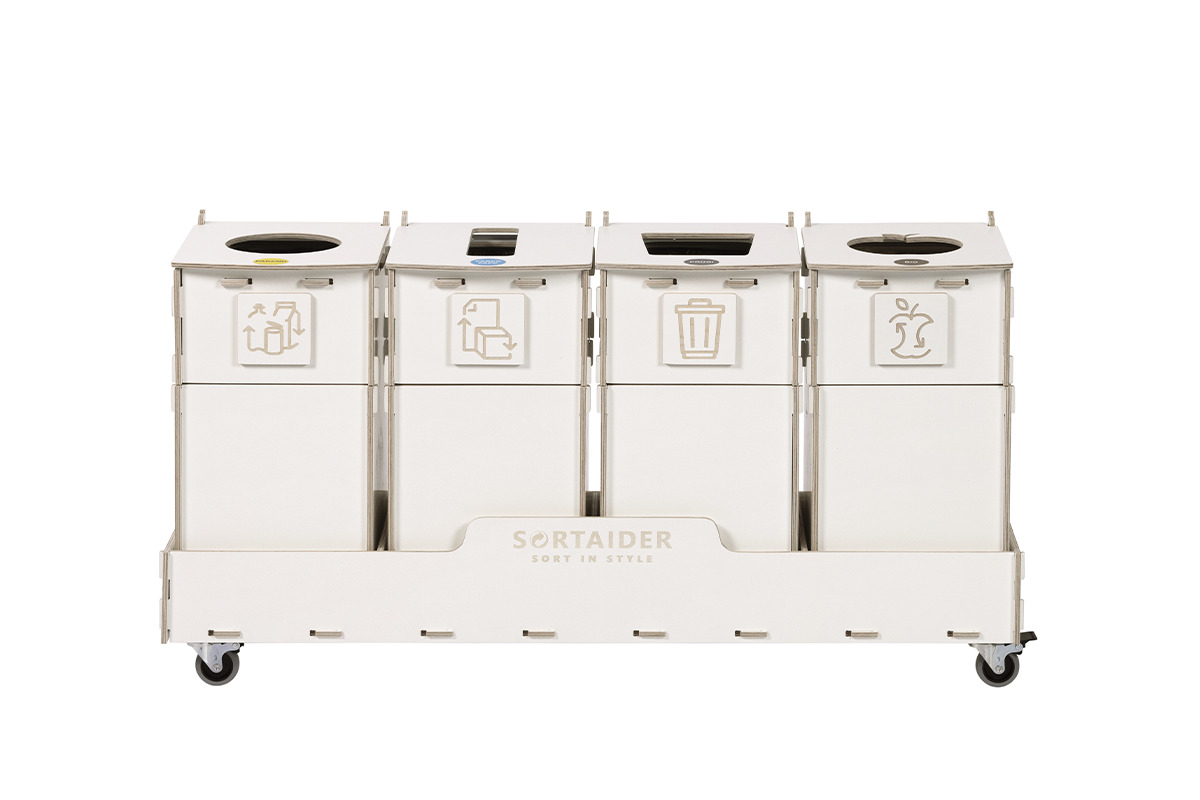
Recycling Bin Sorter 4 × 20 l white
4 types of waste 4 x 20 l607,60 € (incl. 24% VAT)490 € (excl. VAT) -
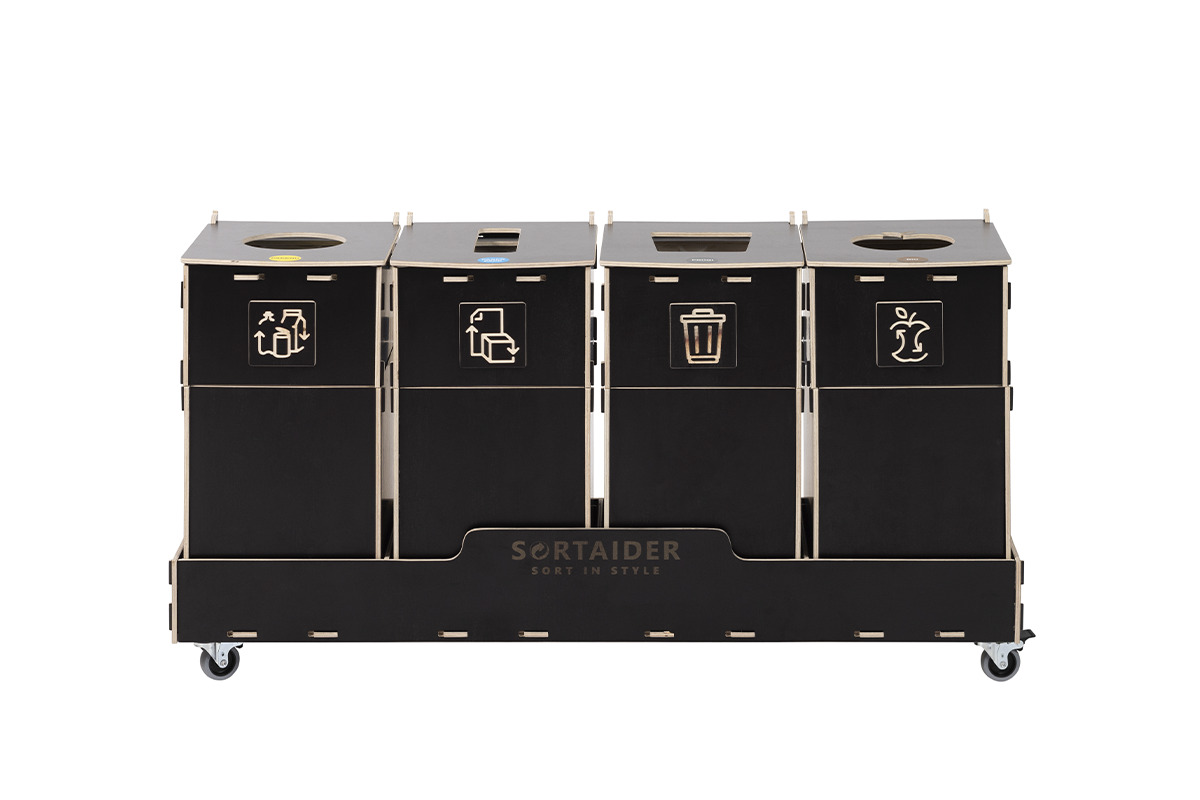
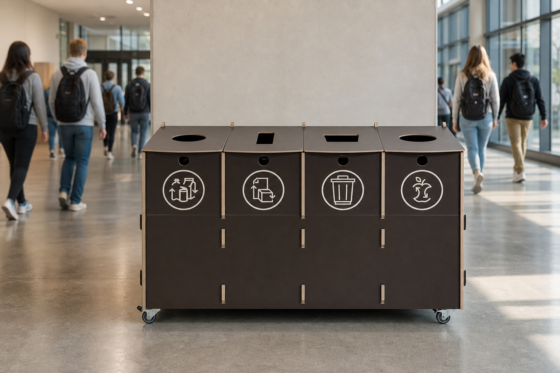
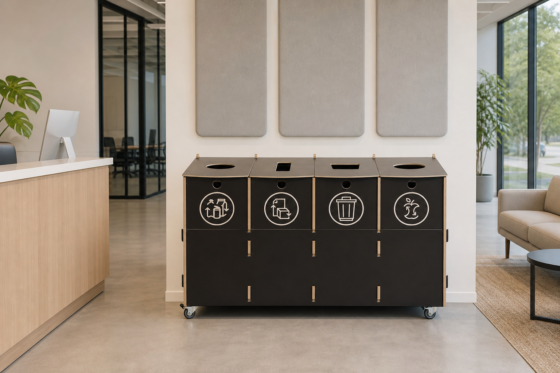
Recycling Bin Sorter 4 × 30 l brown
4 types of waste 4 x 30 l954,80 € (incl. 24% VAT)770 € (excl. VAT)
Strategic Placement and Maintenance
Proximity is the strongest driver of recycling success. If a student has to walk more than a few meters to find a recycling station, the material usually ends up in the nearest general waste container. Strategic placement in “hotspots” where waste is naturally generated can boost participation by 30% to 50%.

- In cafeterias, focus on high-capacity units from the Container series specifically configured for bio-waste, plastics, and metals.
- For hallways and entrances, modular recycling bin sorters equipped with lockable wheels allow for effortless mobility and flexible placement during school events.
- In staff rooms and administrative offices, smaller aesthetic units for paper and cardboard should be the priority.
Maintaining hygiene is equally critical in a school setting. To prevent bacteria buildup and pests, ensure your stations are designed for easy maintenance. Plywood units with furniture-grade finishes allow for quick sanitization with a damp microfiber cloth and mild detergent. For a deeper dive into hygiene protocols, see our guide on cleaning and sanitising recycling bins.
-
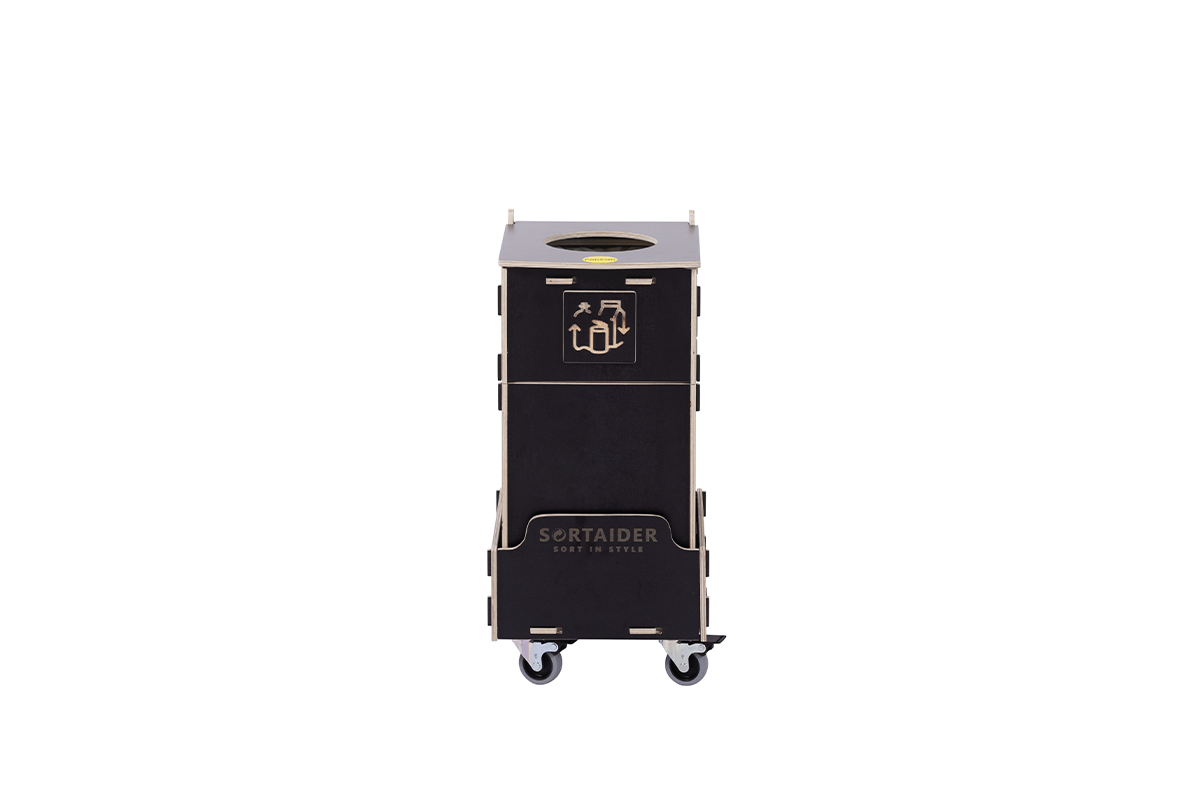
Recycling Bin Sorter 1 × 20 l brown
1 type of waste 1 x 20 l223,20 € (incl. 24% VAT)180 € (excl. VAT) -
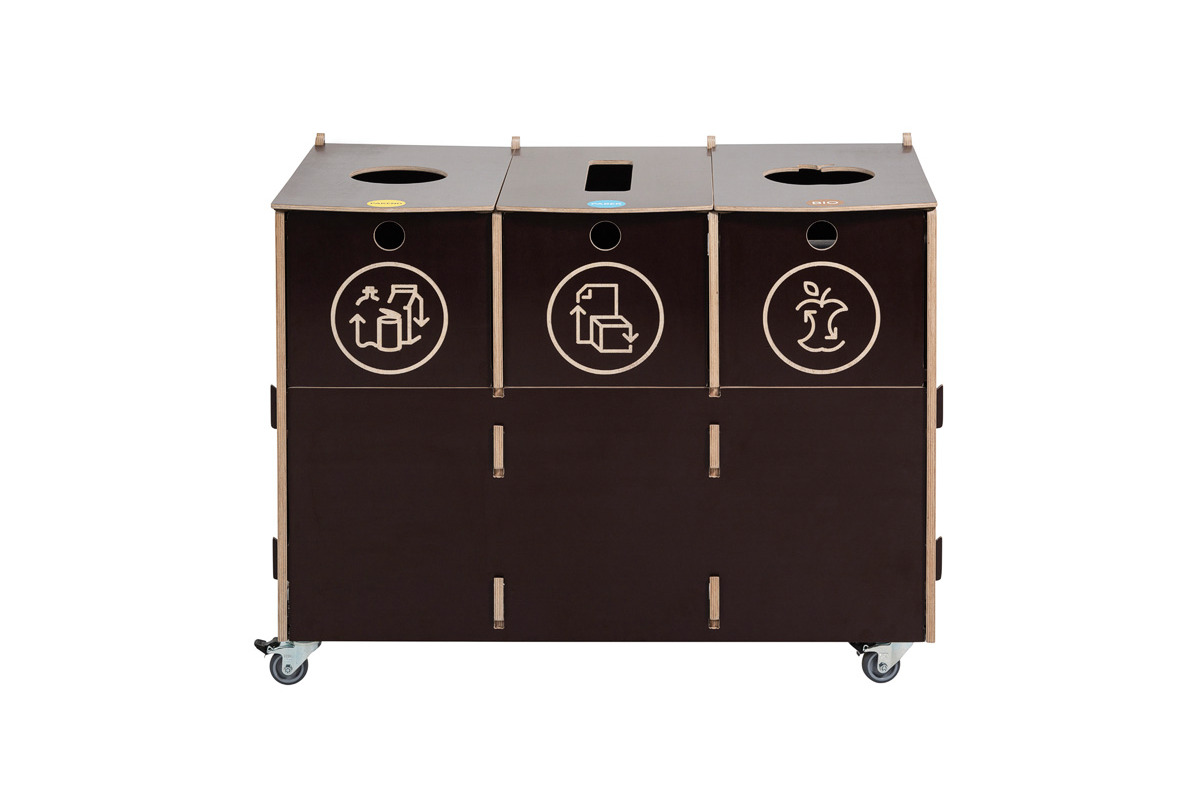
Recycling Bin Container 3 × 40 l brown
3 types of waste 3 x 40 l1 215,20 € (incl. 24% VAT)980 € (excl. VAT) -

Recycling Bin Container 4 × 40 l white
4 types of waste 4 x 40 l1 612 € (incl. 24% VAT)1 300 € (excl. VAT)
Implementing Your School Waste Plan
A successful waste management system is a collaboration between administrators, custodial staff, teachers, and the student body. Start by identifying your facility’s needs through a walk-through to determine the number of containers and labels required in each zone. By choosing sustainable materials like plywood over traditional plastic, you also provide a tangible lesson in the circular economy to your students.
To begin upgrading your facility’s infrastructure, explore our full range of recycling bins for schools or contact our team for a customized layout plan that ensures both regulatory compliance and long-term durability.