Are you prepared for the mandatory separation of bio-waste? Since January 2024, European businesses have faced new legal obligations to segregate food waste at the source, transforming a sustainability goal into a critical compliance requirement.
The Legal Mandate for Bio-waste in Europe
Under Article 22 of the EU Waste Framework Directive, Member States must ensure that bio-waste is either recycled at the source or collected separately. This regulation, which came into full force on January 1, 2024, applies across all commercial sectors, including offices, restaurants, canteens, and retail distribution hubs. The primary objective is to divert organic matter from landfills, where it generates methane, and redirect it toward high-value treatments like composting or anaerobic digestion for biogas production. You can find more detail on how these rules fit into the broader legislative landscape in our guide to workplace recycling regulations.
Regional Implementation Across Member States
While the European Union provides the overarching framework, individual countries have implemented specific timelines and enforcement rules that facility managers must navigate.
- In Sweden, as of January 2024, it is mandatory for both households and businesses to sort food waste and separate it from its packaging before disposal.
- In Tallinn, Estonia, separate bio-waste collection became mandatory for all institutions in early 2023, with strict rules for sites generating more than 10kg of bio-waste daily.
- Denmark requires workplaces producing significant waste to utilize digital tracking systems for every shipment to ensure compliance with national circular economy goals.
- Latvia has mandated that municipalities establish dedicated biowaste collection systems to support business and residential compliance.
To understand how these regional variations might affect your multi-site operations, see our comprehensive overview of recycling legislation in Europe.
Practical Sorting Guidelines to Prevent Contamination
Effective food waste recycling depends entirely on preventing contamination. Most Material Recovery Facilities (MRFs) will reject an entire load if the contamination threshold exceeds 3–5%, leading to higher disposal costs and regulatory liability. In a professional environment, this usually requires adhering to a strict “food-only” rule. When setting up your internal systems, ensure your staff knows exactly what goes in each recycling bin to protect the integrity of your waste streams.
Items to include in bio-waste bins:
- Fruit and vegetable peels, scraps, and cores.
- Coffee grounds and paper coffee filters.
- Leftover cooked food, meat scraps, and eggshells.
- Paper towels and napkins, provided your local waste collector permits them.
Items to exclude from bio-waste bins:
- Liquids, sauces, and soups, which cause leaks and hygiene issues.
- Conventional plastic bags, which are the primary contaminant in commercial composting.
- Non-compostable packaging and “biodegradable” plastics that do not meet BS EN 13432:2000 standards.
- Soiled cardboard, such as the greasy bottom of a pizza box, which should be separated from the clean, recyclable lid.
Setting Up Your Workplace Recycling Station
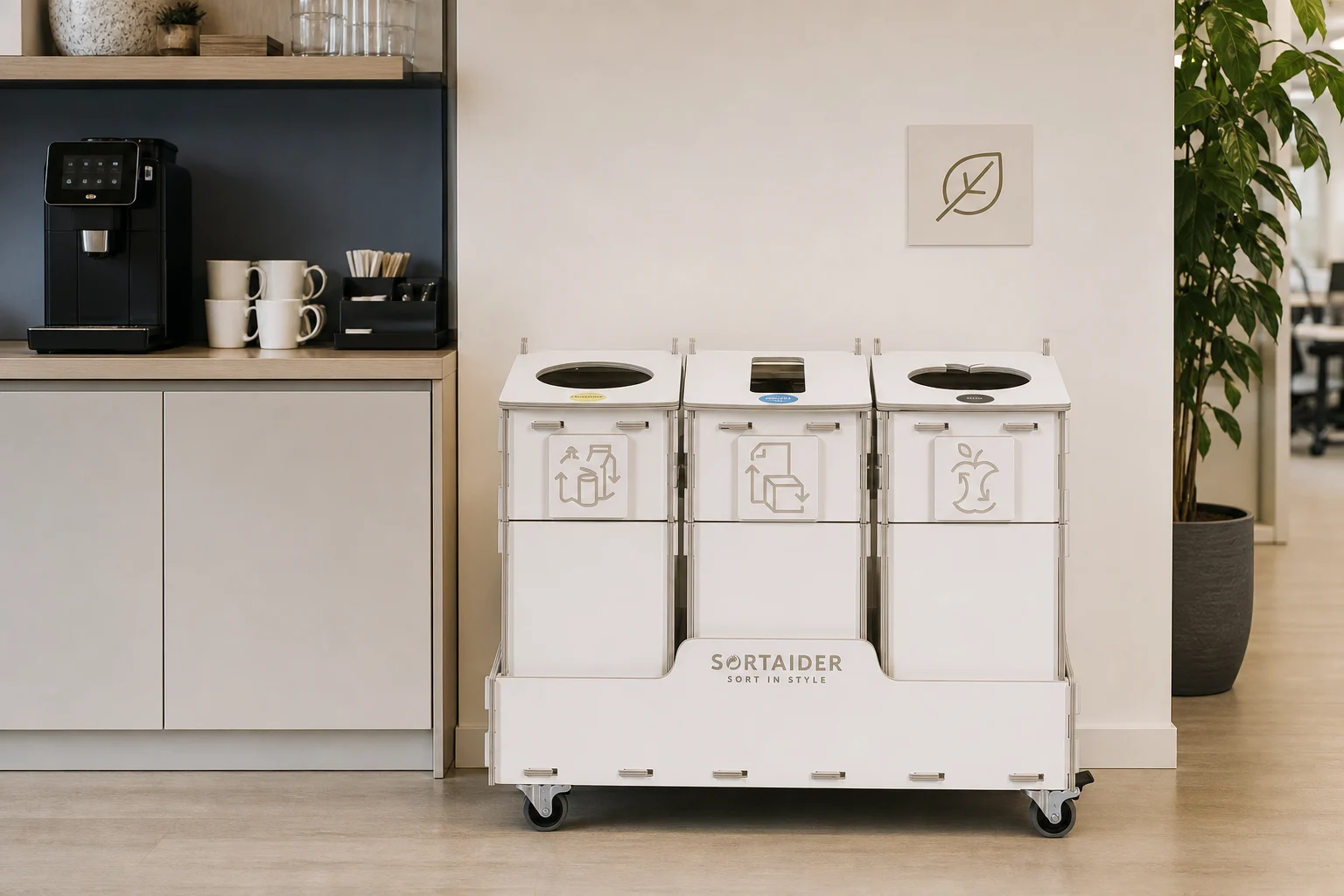
The success of any bio-waste program relies on strategic placement and appropriate infrastructure. Employees are significantly more likely to sort correctly when bins are located in “hotspots” where waste is naturally generated, such as canteens, kitchenettes, and coffee stations.
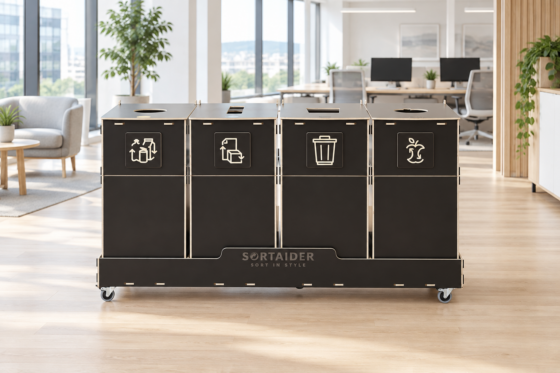
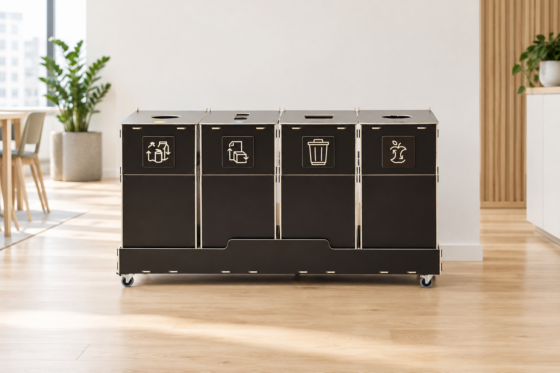
For food waste, smaller containers – typically 35 liters or less – are recommended. This ensures they remain light enough for safe manual handling and encourages frequent emptying, which prevents unpleasant odors and pest attraction. Look for fully enclosed, leak-proof designs with lids to maintain hygiene standards in communal areas. Modular systems, such as our Sorter series, allow you to pair bio-waste compartments with paper and plastic streams in a single, visually integrated unit.
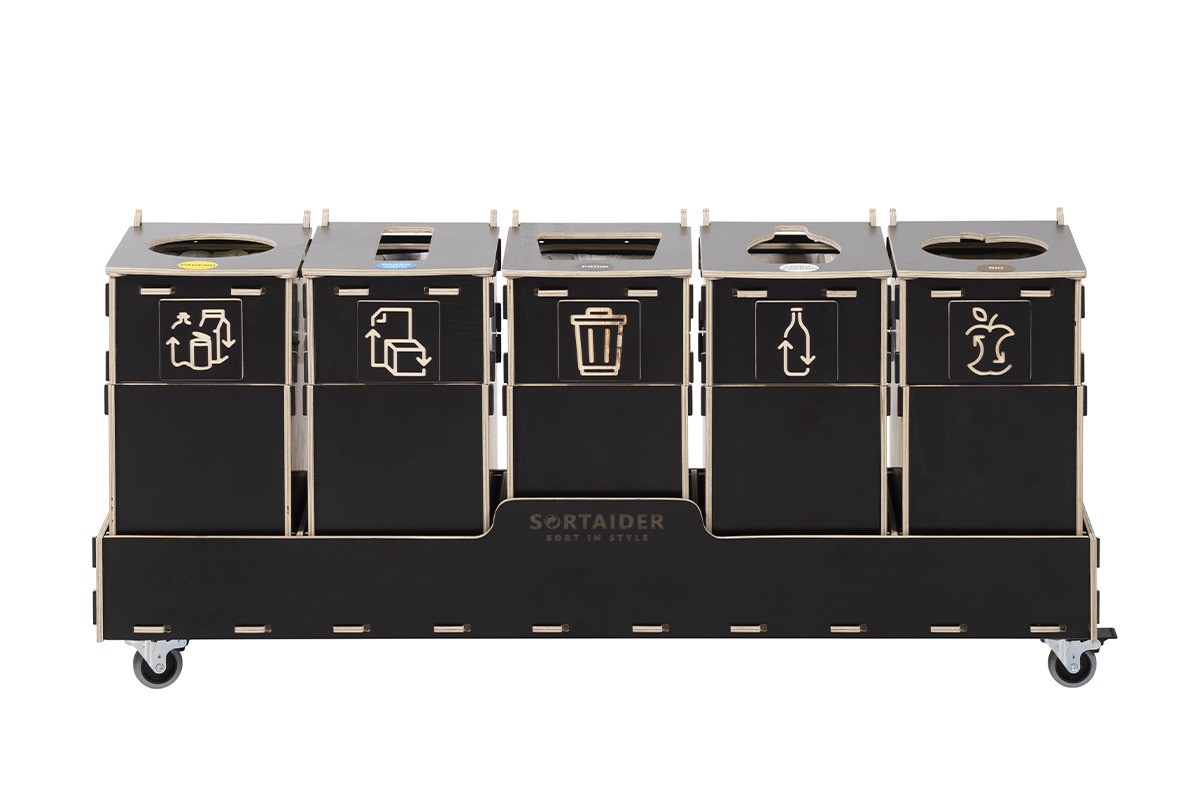
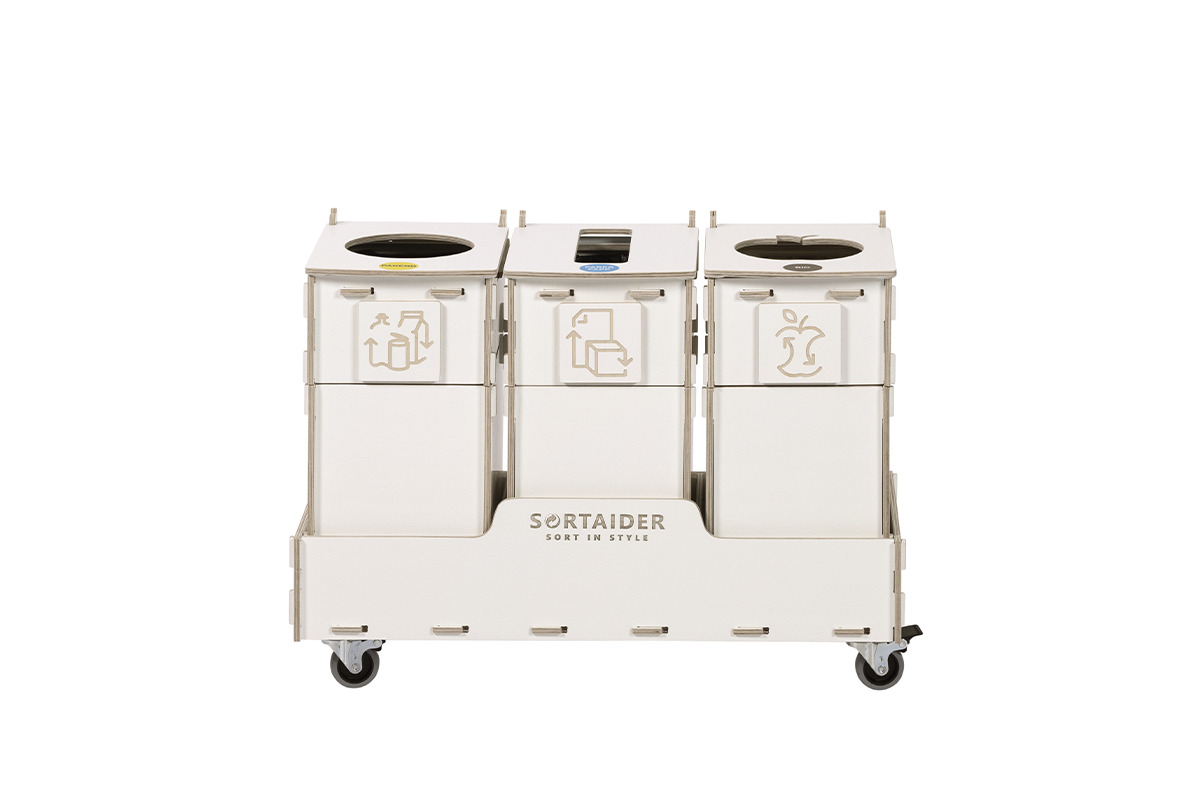
If your facility requires a more refined aesthetic for high-end office environments or public galleries, the Container series offers Red Dot-awarded designs that blend functional waste sorting with architectural beauty.
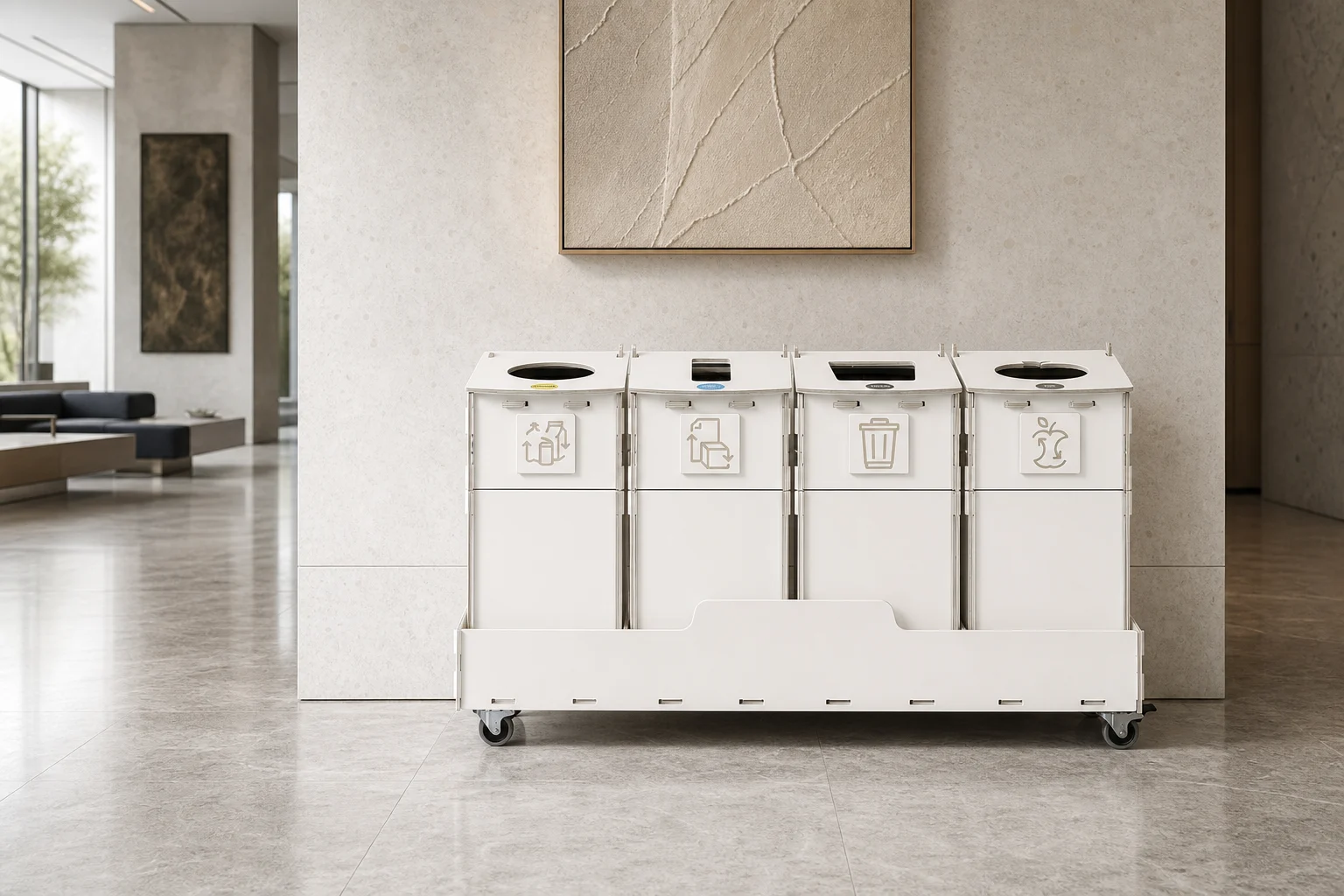
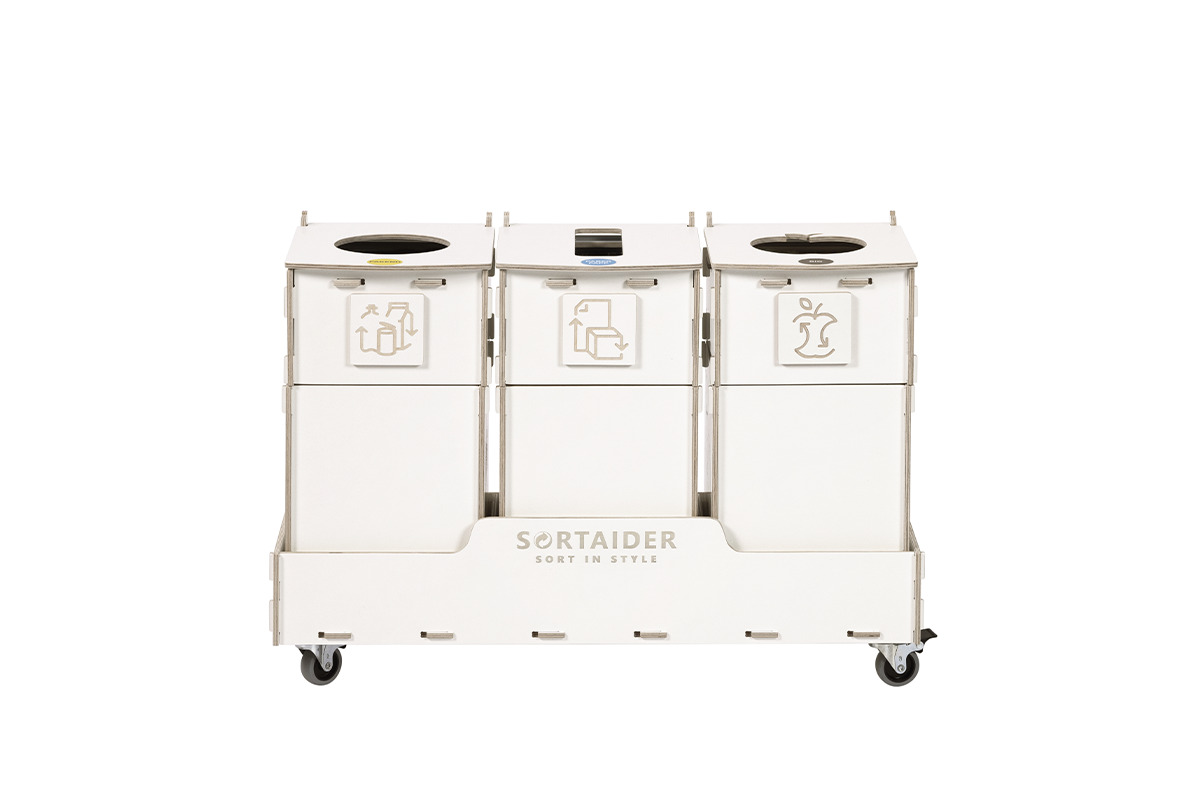
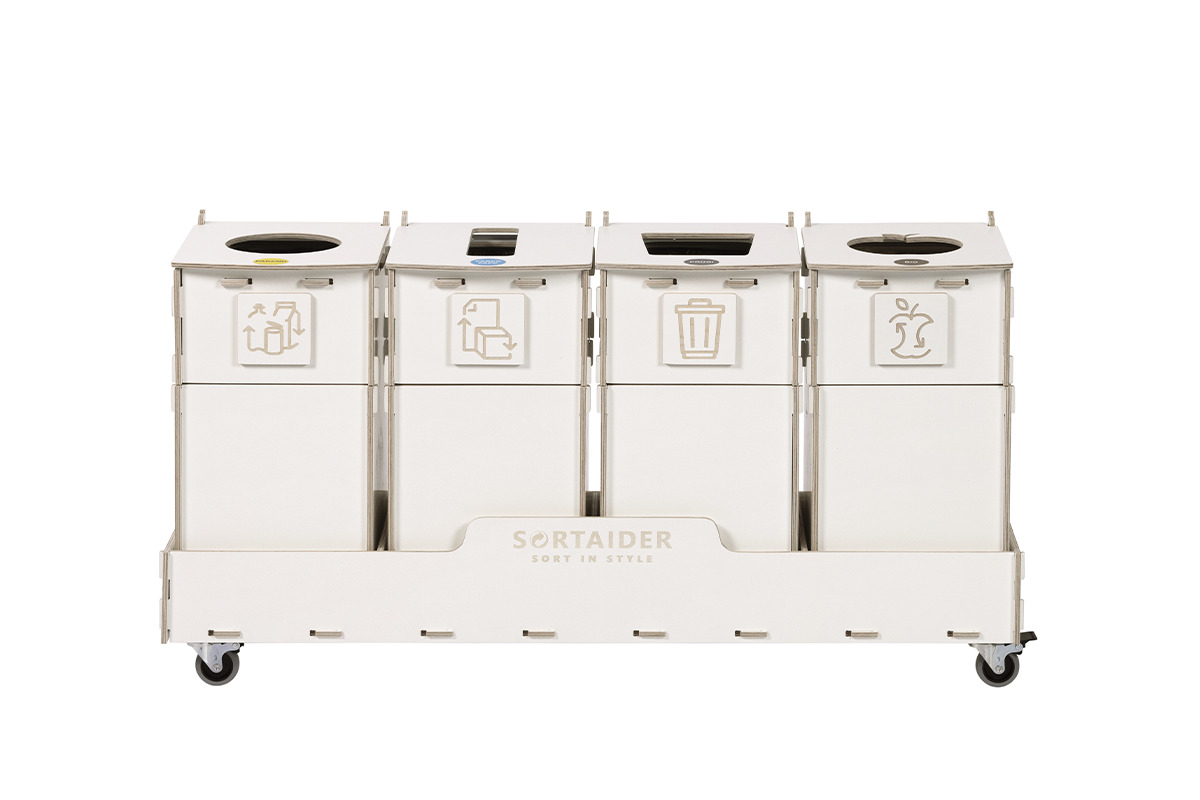
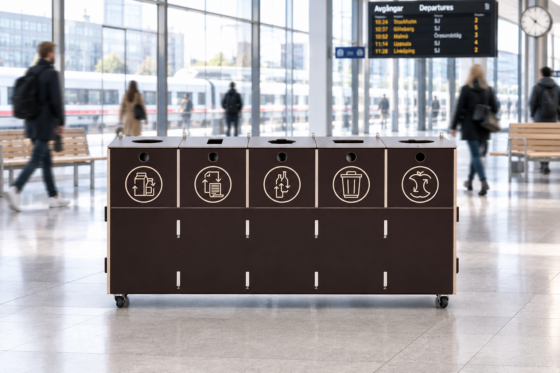
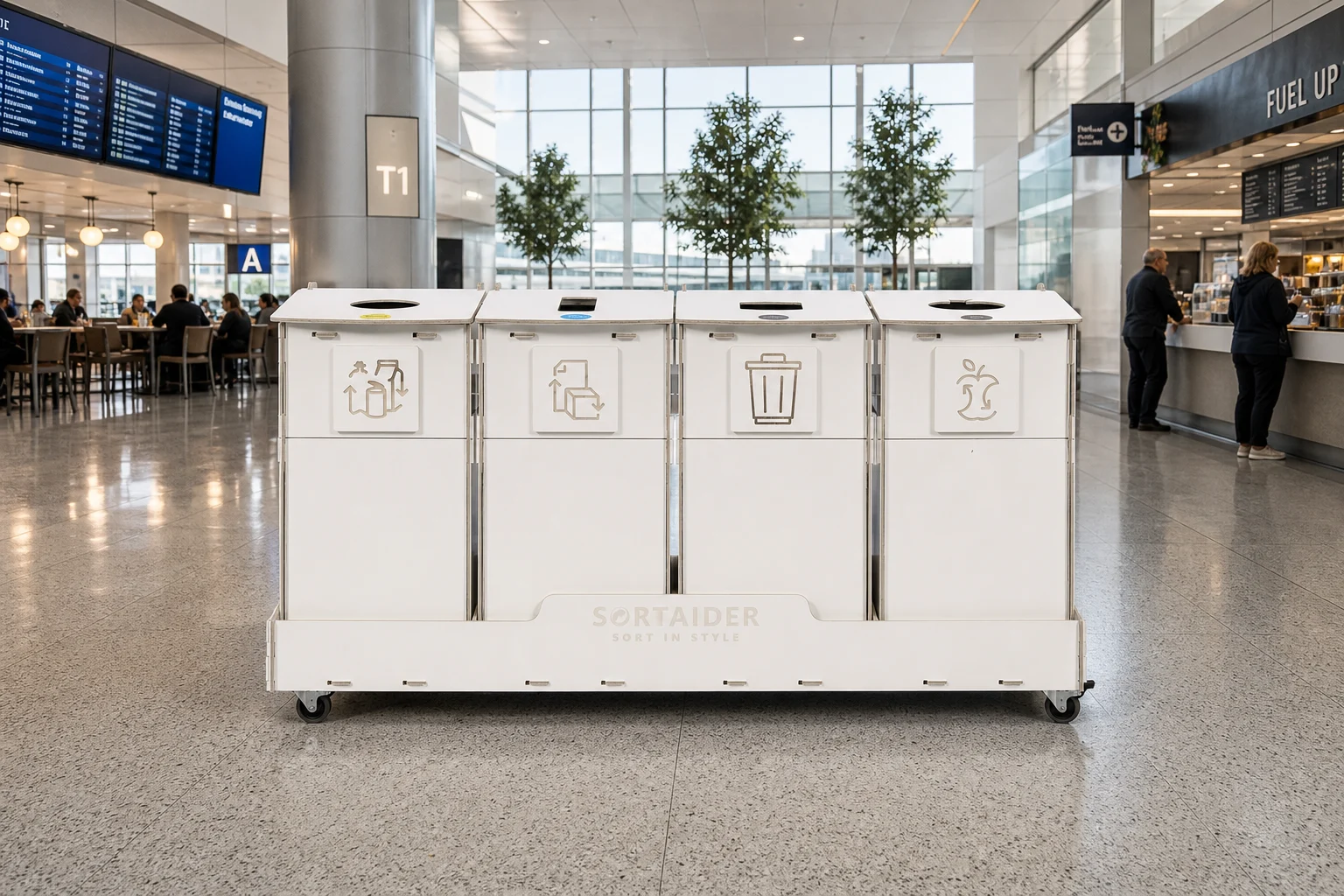
For larger canteens or high-traffic transport hubs, higher capacity units are more appropriate to prevent overflowing. Overfilled bins are a leading cause of recycling contamination, as users are more likely to toss waste into the wrong compartment when the correct one is full.
-
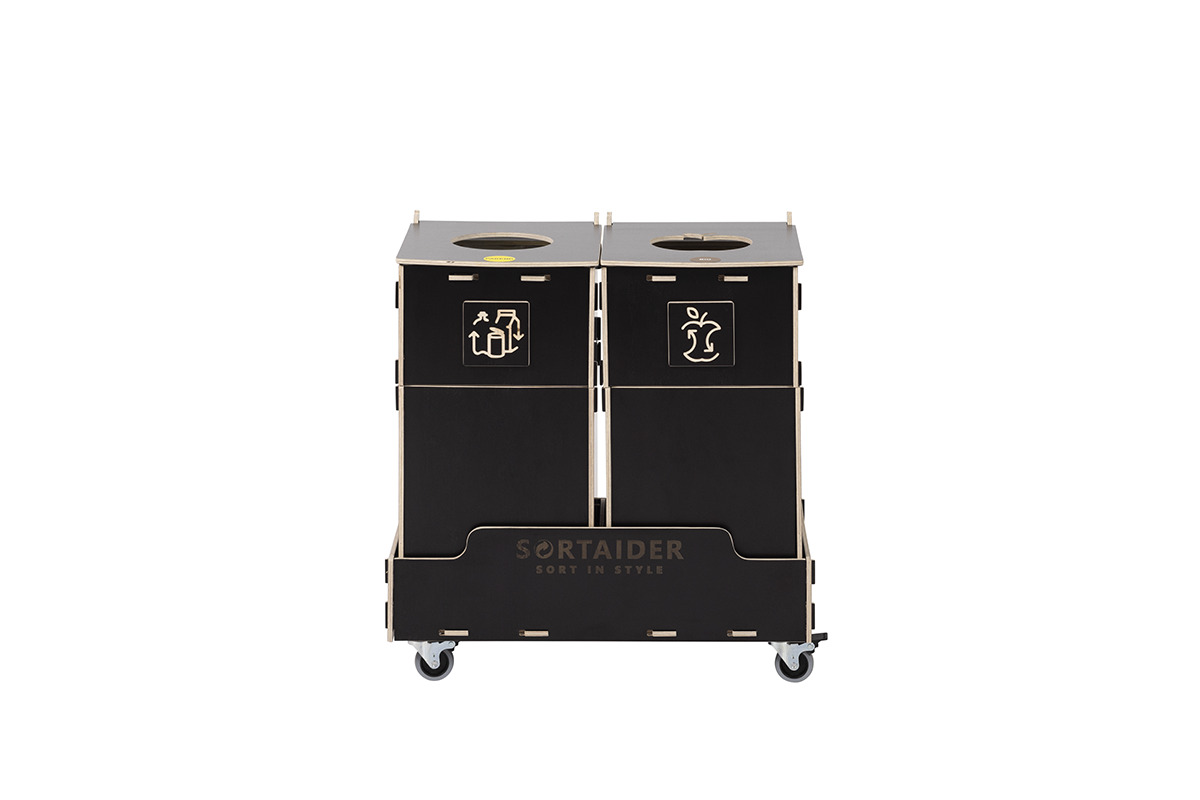
Recycling Bin Sorter 2 × 30 l brown
2 types of waste 2 x 30 l508,40 € (incl. 24% VAT)410 € (excl. VAT) -
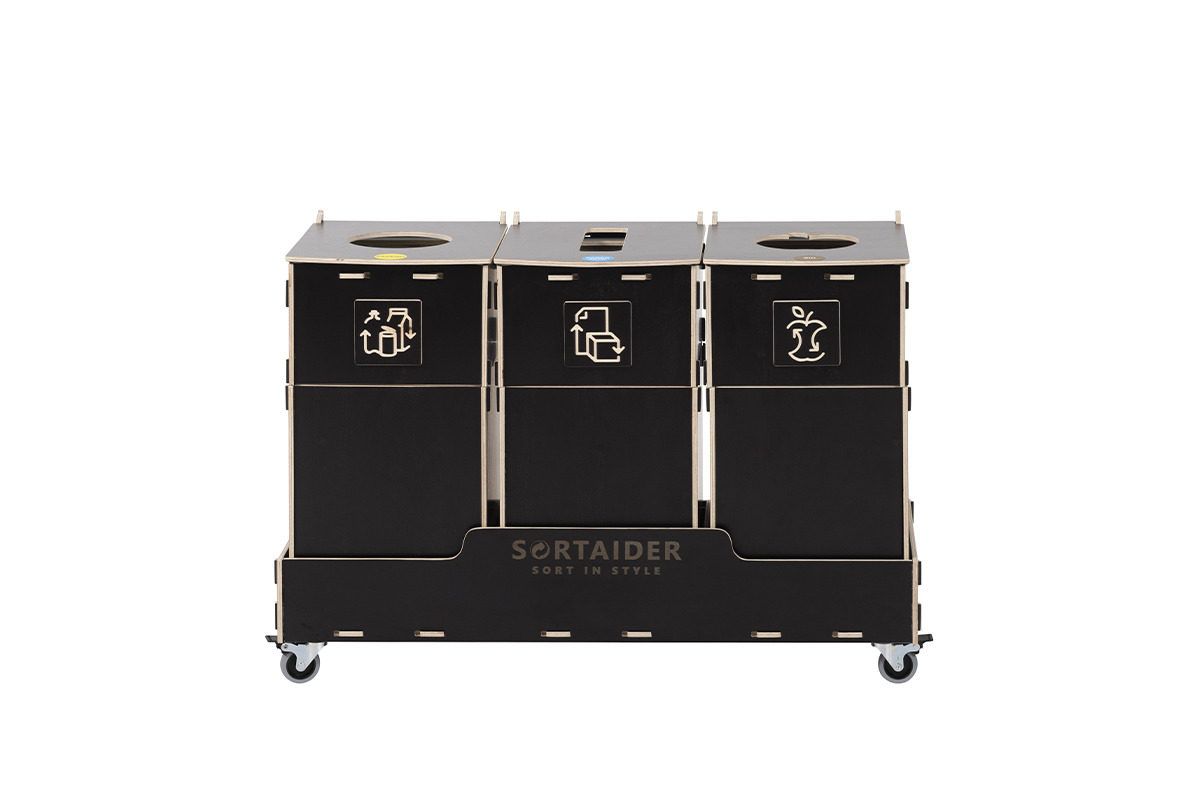
Recycling Bin Sorter 3 × 30 l brown
3 types of waste 3 x 30 l731,60 € (incl. 24% VAT)590 € (excl. VAT) -
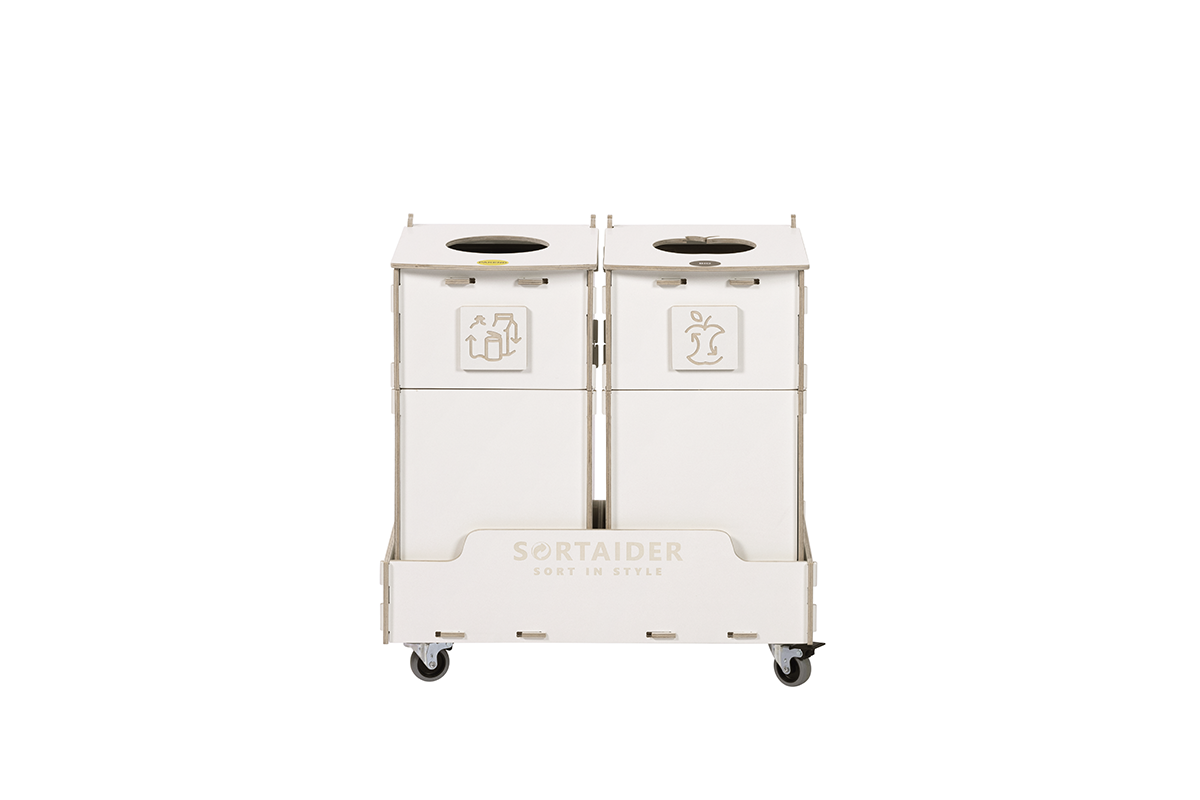
Recycling Bin Sorter 2 × 30 l white
2 types of waste 2 x 30 l508,40 € (incl. 24% VAT)410 € (excl. VAT) -
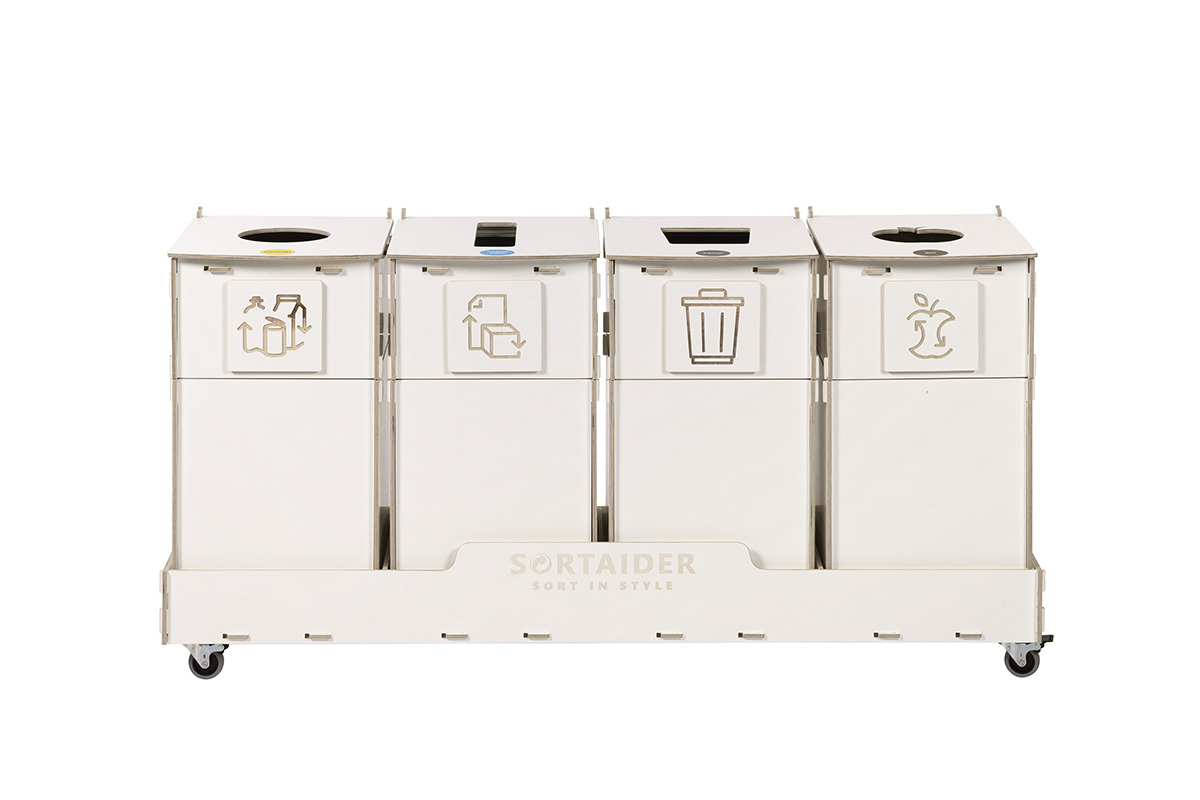
Recycling Bin Sorter 4 × 40 l white
4 types of waste 4 x 40 l1 289,60 € (incl. 24% VAT)1 040 € (excl. VAT)
Maintenance and Hygiene Standards
Managing food waste requires a higher level of janitorial attention than dry recyclables. In professional environments, bio-waste bins must be cleaned regularly to prevent bacteria buildup and lingering smells. Using moisture-resistant materials, like the laminated plywood found in the Sorta series, makes it easier for maintenance teams to wipe away residue and maintain a professional appearance.
To ensure your team stays on track, implement clear, image-based signage and bilingual instructions. Replacing text-heavy labels with visual icons can reduce sorting errors by up to 40%. You can find more strategies for long-term success in our article on how to improve recycling rates in the workplace. For detailed procedures on sanitizing your stations, refer to our guide on cleaning and sanitising recycling bins.
Implementing a food waste program is about creating a circular system that transforms scraps into renewable energy and high-quality compost. By auditing your current waste streams and selecting an intuitive recycling bin system, you can make legal compliance a seamless part of your daily office operations.