Your bins are only as good as what people put in them. These eight myths quietly turn clean paper, glass and plastic into residual waste. Below is what is actually true, backed by EU and industry sources, and how to fix each one in a shared workplace.
| Myth | Reality in one line |
|---|---|
| “It all gets sorted later anyway” | Mixing at the bin lowers quality and raises rejection rates |
| “Containers must be spotless” | Empty, scraped and quickly rinsed is enough |
| “The arrows symbol means recyclable” | The resin code names the plastic, not its recyclability |
| “Caps must come off” | Depends on the system, and in the EU many caps are now tethered |
| “Paper cups go in the paper bin” | The plastic lining needs separate collection |
| “Black plastic is never recycled” | Often not sorted, but detectable black pigments exist |
| “All glass is the same” | Only bottles and jars; Pyrex and ceramics ruin a batch |
| “Most recycling ends up in landfill” | The EU recycles close to half of its municipal waste |
Myth 1: “It all gets sorted later anyway”
Sometimes it is, but sorting later is a rescue operation, not a plan. Where recyclables are collected mixed, a sorting plant separates fibre (paper, card) from containers, yet sorting does not guarantee clean material when contamination is already present.
The European Commission’s study of separate collection in 28 capitals found that co-mingled collection tends to have more cross-contamination, lower quality recyclables and higher rejection rates. It also found that two-stream co-mingling, for example plastics and metals together, can cut costs while keeping good quality. A JRC study went further and recommended against collecting plastics mixed with paper, because each material then loses more to disposal.
The law points the same way. Under the EU Waste Framework Directive, waste must be collected separately where that is needed to improve recycling, and Member States must collect at least paper, metal, plastic and glass separately. For a workplace, this is the case for sorting at the point of disposal rather than relying on someone downstream. Our guide to workplace recycling regulations in Europe covers how this plays out in the Nordics and Baltics.
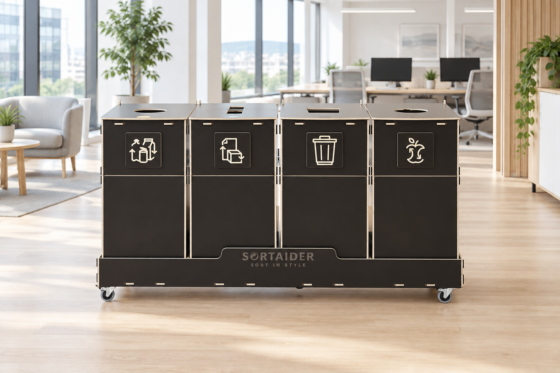
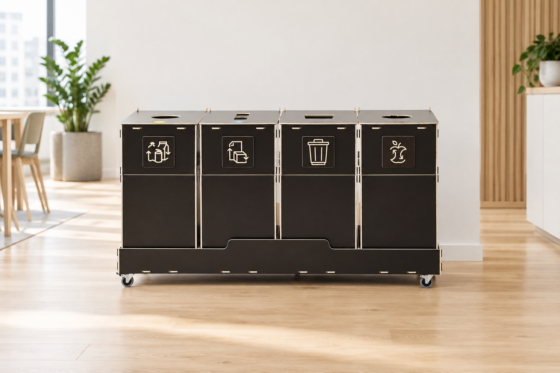
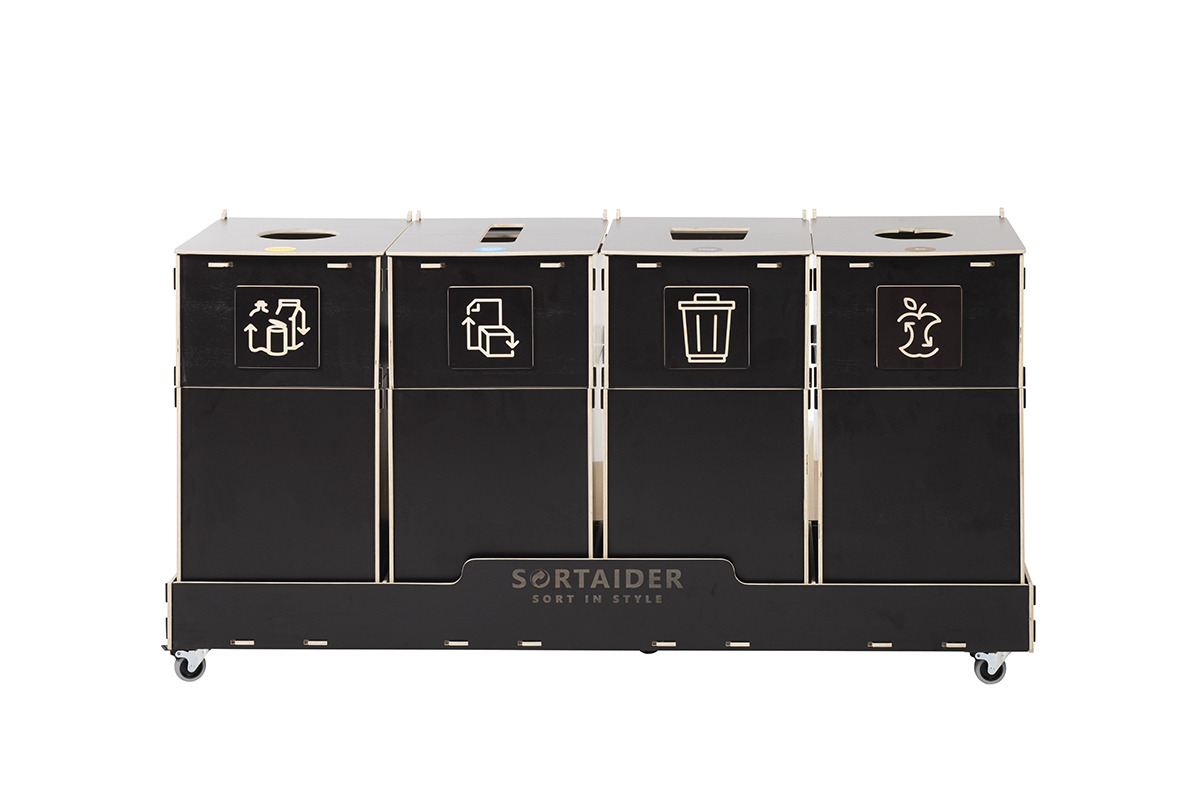
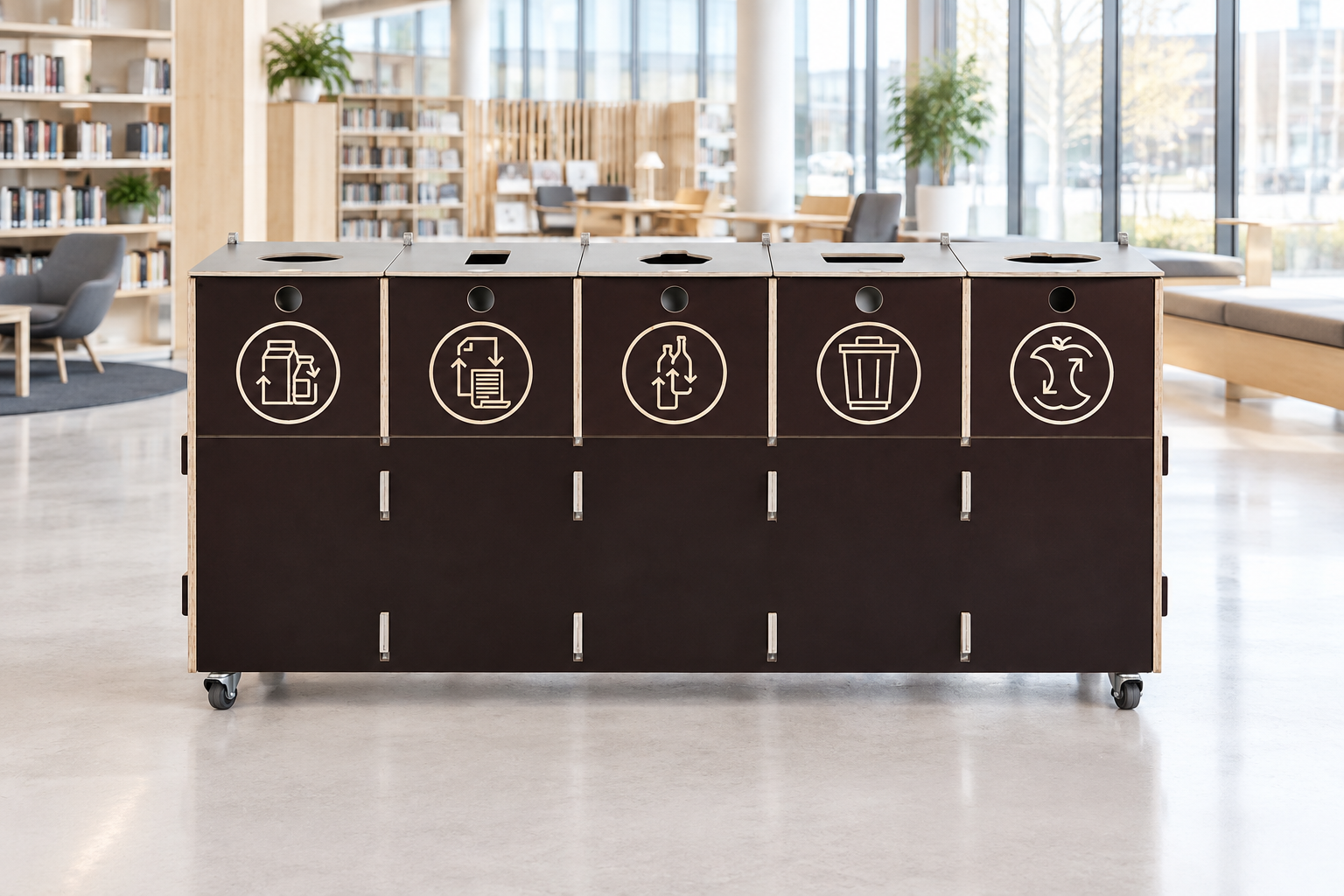
What to do: give each fraction its own opening, label and pictogram, so nobody has to think. A multi-compartment recycling bin for offices keeps the fractions side by side at one sorting point.

Myth 2: “Containers must be spotless”
You do not need a dishwasher. The practical standard is empty, scraped and quickly rinsed.
- UK scheme Recycle Now advises a quick rinse for jars and bottles, and notes that bottles still holding liquid may be rejected as too heavy by automated sorting.
- The US EPA uses a handy test for takeaway containers: “spatula-clean” is clean enough.
- Finnish waste authority HSY says carton packages do not need rinsing, though a cold-water rinse of milk cartons reduces odours.
- A Norwegian regional sorting guide (RfD) suggests a little cold water and a dish brush only when there is a lot of residue.
Why rinse at all? Recycle Now explains that residue can contaminate other materials, especially paper collected together with containers. So the rule of thumb is simple: if you can pour or scrape it out, bin it as recyclable. If grease or food is stuck on and will not come off with a quick rinse, it belongs in residual waste, because residue can contaminate the paper around it.
Odour is the other side of this. A bin that smells gets avoided, and people start dumping everything into one opening. Rinsing milk and juice cartons for a second is cheaper than the contamination that follows.
Myth 3: “The arrows symbol means it’s recyclable”
The triangle of arrows with a number inside is a resin identification code. It tells a recycler which plastic the item is made of. It does not promise anyone will collect it. The Association of Plastic Recyclers states plainly that the resin code is not a recycling code, and the US EPA says the code does not guarantee that the product is recyclable in your area.
The practical rule: trust your local or contractor’s accepted-items list, not the symbol. In the EU, the new packaging regulation (EU) 2025/40 is intended to bring clearer labelling on recyclability and where to discard packaging, so expect more reliable on-pack guidance over the coming years. Until then, post your own list at the bin. Our recycling bin colour coding guide shows how colours and pictograms vary across European systems.
Myth 4: “Caps and lids must come off”
The honest answer is that it depends on the system, and the trend is towards leaving them on.
Recycle Now explains why: caps and lids under 40 mm in diameter are too small to be captured, so they fall through the screens at the sorting facility. Putting the lid back on lets it travel with the bottle and be separated later. Coca-Cola’s recycling guidance says the same, noting that most recyclers use a float/sink process in which PET bottles sink while caps and labels float.
In the EU, since 3 July 2024 the Single-Use Plastics Directive (Article 6) requires plastic caps on single-use beverage containers of up to 3 litres to stay attached during use. Irish packaging body Repak advises householders not to remove tethered caps, but to remove metal closures because they can damage reprocessing equipment.
Two cautions. First, advice differs: the US EPA says metal caps should be recycled separately from glass bottles, while a north London waste authority says metal lids can be removed by magnets later. Second, drink cartons and glass jars follow their own local rules. When in doubt, follow your waste contractor’s instruction and print it on the bin.
Bottles with a deposit are a separate case: where a deposit scheme applies, they should go back through it rather than into the bin. See our deposit return scheme guide for businesses.
Myth 5: “Paper cups go in the paper bin”
A paper cup looks like paper, but it is not paper-bin material at most plants. Typically around 95% of the cup is paper and the rest is a thin polyethylene (PE) coating that keeps the drink in. According to the UK paper industry body CPI, most conventional packaging and newsprint mills struggle with cups, because the lined board does not break down properly in the pulper.
Cups are not hopeless. The CPI position paper describes them as a source of high-quality fibre, but only when collected and presented separately from other fibre. A European Commission reply to a parliamentary question puts it the same way: paper cups are good recycling material, but they have to be collected before they can be made into new paper products. For scale, a UNEP life-cycle study assumed that only 21% of PE-lined paper cups in Europe are recycled. That is a modelling assumption, not a measured EU rate.
What to do: check whether your contractor takes cups in a dedicated stream. If not, put cups in residual waste and push the real fix, reusable cups, instead. If you do run a cup stream, give it its own labelled opening, because cups that end up in the paper bin cause trouble for the mills that receive it.
Myth 6: “Black plastic can never be recycled”
Black plastic is recyclable in principle, but it often fails at the sorting step. Most sorting lines identify plastics with near-infrared (NIR) light. Carbon black, the common black pigment, absorbs that light, so the item returns no signal and cannot be identified, as France’s COTREP and the European Printing Ink Association both explain. Chemical-industry body Cefic notes that black items such as coffee-cup lids, pots and food trays often end up as residue.
Two things complicate the picture:
- Alternative dark colourants that sorting equipment can detect now exist. COTREP issues technical opinions on them, but it stresses that detectability is not the same as recyclability of the whole package.
- Your local plant may or may not accept black trays, whatever the pigment.
So the myth is half right. Do not assume a black tray is fine in the plastics bin, and do not assume it is hopeless either: check your contractor’s list. For public spaces, where visitors cannot read a manual, simple wording such as “plastic bottles and containers” on the pictogram beats a long list.
Myth 7: “All glass is the same”
Glass bottles and jars are among the best recyclables: glass can be melted again without loss of quality or purity, and recycled glass (cullet) makes up an average of around 54% of the raw material in new glass packaging in Europe, according to the European container glass federation FEVE. FEVE also reports that over 82% of glass packaging was collected for recycling in the EU in 2024.
That performance depends on a clean stream. Drinking glasses, Pyrex and other ovenware, ceramics and mirrors do not belong in the bottle bank. They have different chemical compositions and melting points. The University of Glasgow’s waste service warns that high-melting-point glass can make the whole batch it is mixed with unsuitable for recycling, and the problem may only show up once commercial processing begins.
In an office or school, the usual culprits are broken mugs and drinking glasses. Give them a different route (residual waste, or a local rule for ceramics), and say so on the sign.
Myth 8: “Most recycling ends up in landfill”
For the EU as a whole, the numbers do not support this one.
- In 2023 the EU recycled 48.0% of its municipal waste, up from 37.2% in 2013 (Eurostat).
- The packaging waste recycling rate was 67.5% in 2023, against a 2030 target of 70% (Eurostat, EEA).
- The weak spot is plastic packaging, at 42.1% in 2023 (Eurostat). Latvia was second-highest at 59.2%.
- The EEA reports that 24% of EU municipal waste is still landfilled, and that more than 90% of EU waste is treated domestically, with exports mostly going to recycling.
- Eight Member States, including Denmark, Estonia, Finland and Sweden, landfilled less than 5% of their residual municipal waste in 2023, according to a Zero Waste Europe analysis. Most of it was incinerated instead.
The fair version of the myth is this: contaminated loads are the ones that get downgraded or rejected. Your sorting at the bin decides which side of the statistics your waste lands on. EU law sets the direction, with municipal-waste targets of 55% by 2025, 60% by 2030 and 65% by 2035, as laid out in our EU recycling legislation overview.
Turn the myths into a bin that corrects itself
Most contamination is a design problem, not a character flaw. People sort wrongly when the choice is unclear, the opening is wrong, or the sign is out of date. Three fixes remove most of the myths above:
- Match the sign to your contractor’s list. Rules on caps, cups, black plastic and bagged waste differ by region, so write the local answer on the bin.
- Show the item, not the category. A picture of a milk carton settles the rinse question faster than a paragraph.
- Place bins in pairs and close to where waste is created. Our recycling bin placement guide explains proximity rules and visual nudges.
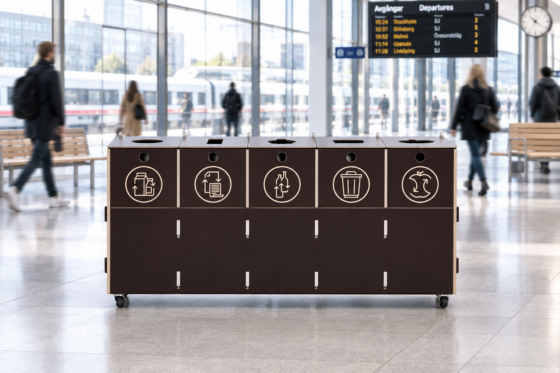
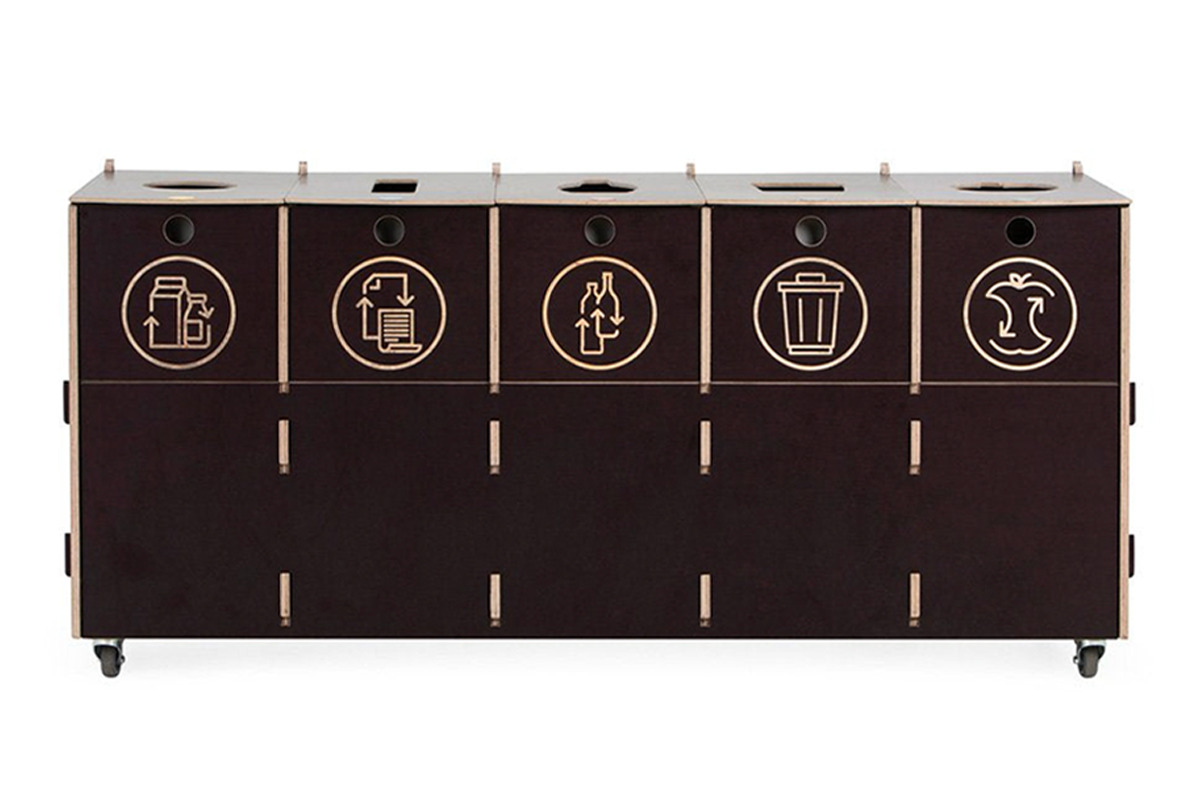
Where footfall is high and visitors are unfamiliar with the system, a public space recycling bin with five clearly pictogrammed fractions keeps the choices obvious.
Start with one audit: tip out a week of one bin, count what does not belong, and match each item to a myth above. Then compare your result with our guide to what goes in each recycling bin and fix the signs first.