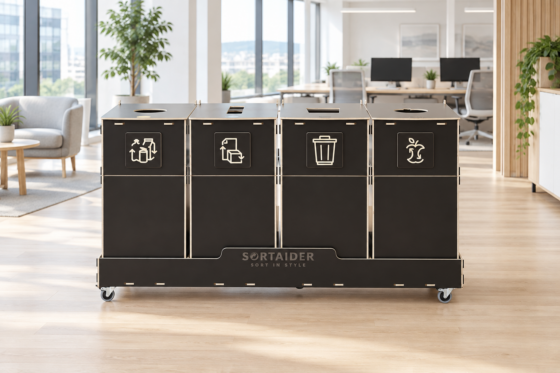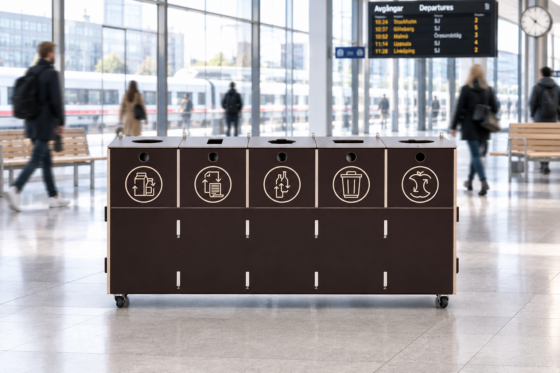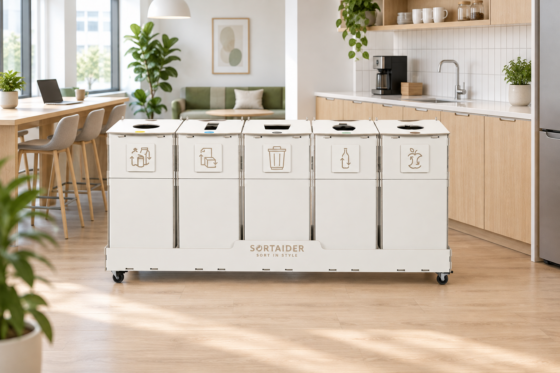
Are misplaced bins quietly ruining your facility’s waste diversion targets? Placing recycling containers just a few meters off-target leads directly to cross-contamination, overflow, and rising disposal costs. Strategic station placement transforms sorting accuracy across shared spaces.
The Proximity Principle and 1:1 Twinning Rule
Convenience is the single greatest driver of user compliance in waste separation. When occupants must search for a recycling container, they default to discarding all items into the nearest standard trash bin. Moving recycling containers directly into immediate user workspaces can increase paper recycling rates from 28% to over 85%.
To achieve high diversion rates, enforce a strict 1:1 twinning ratio: never place a general waste bin without an adjacent recycling stream. In shared collection areas, multi-compartment stations paired alongside general waste units significantly reduce contamination compared to standalone trash bins.
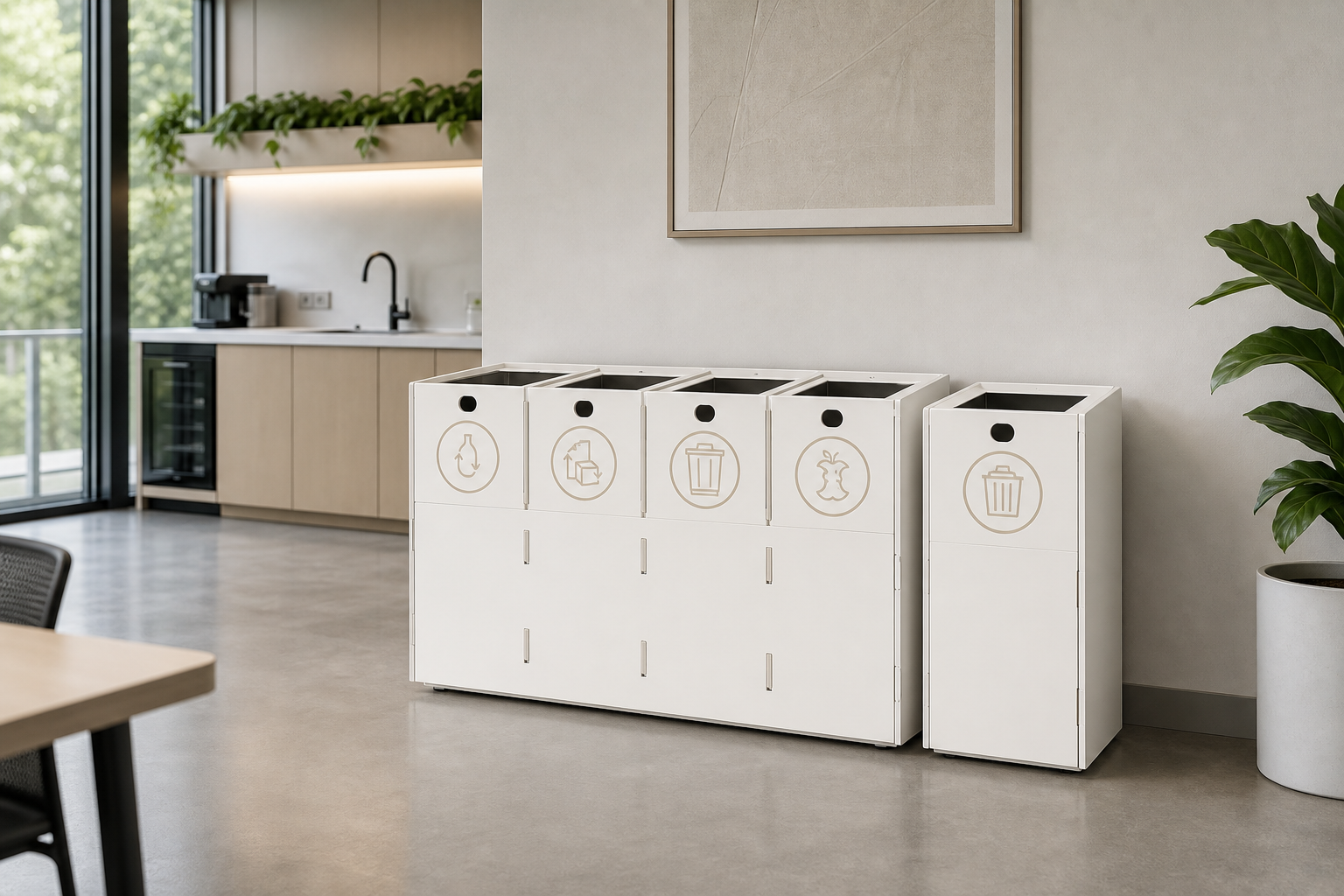
When choosing between centralized hubs and decentralized collection, evaluate your facility’s layout. While decentralized bins drive high capture rates in individual offices or classrooms, centralized multi-compartment hubs reduce custodial collection times and encourage intentional sorting decisions. Review our detailed guide on commingled vs. source-separated recycling to determine the right sorting structure for your building operations.
High-Traffic Hotspots and Zone-Based Layouts
Effective placement requires mapping your facility into functional zones based on foot traffic, dwell times, and the specific materials generated in each area.
Workplace & Corporate Facilities
- Kitchens & Breakrooms: Position multi-stream hubs as primary collection points for organic bio-waste, packaging, beverage cans, and PET bottles.
- Printing & Copy Hubs: Dedicate multi-stream stations primarily to high-volume paper and cardboard collection.
- Corridors & Lobbies: High-traffic transition zones require intuitive multi-stream hubs designed for on-the-go waste like coffee cups and plastic bottles. For full spatial strategies, consult our guide on workplace recycling bin placement.
Educational Institutions & Campuses
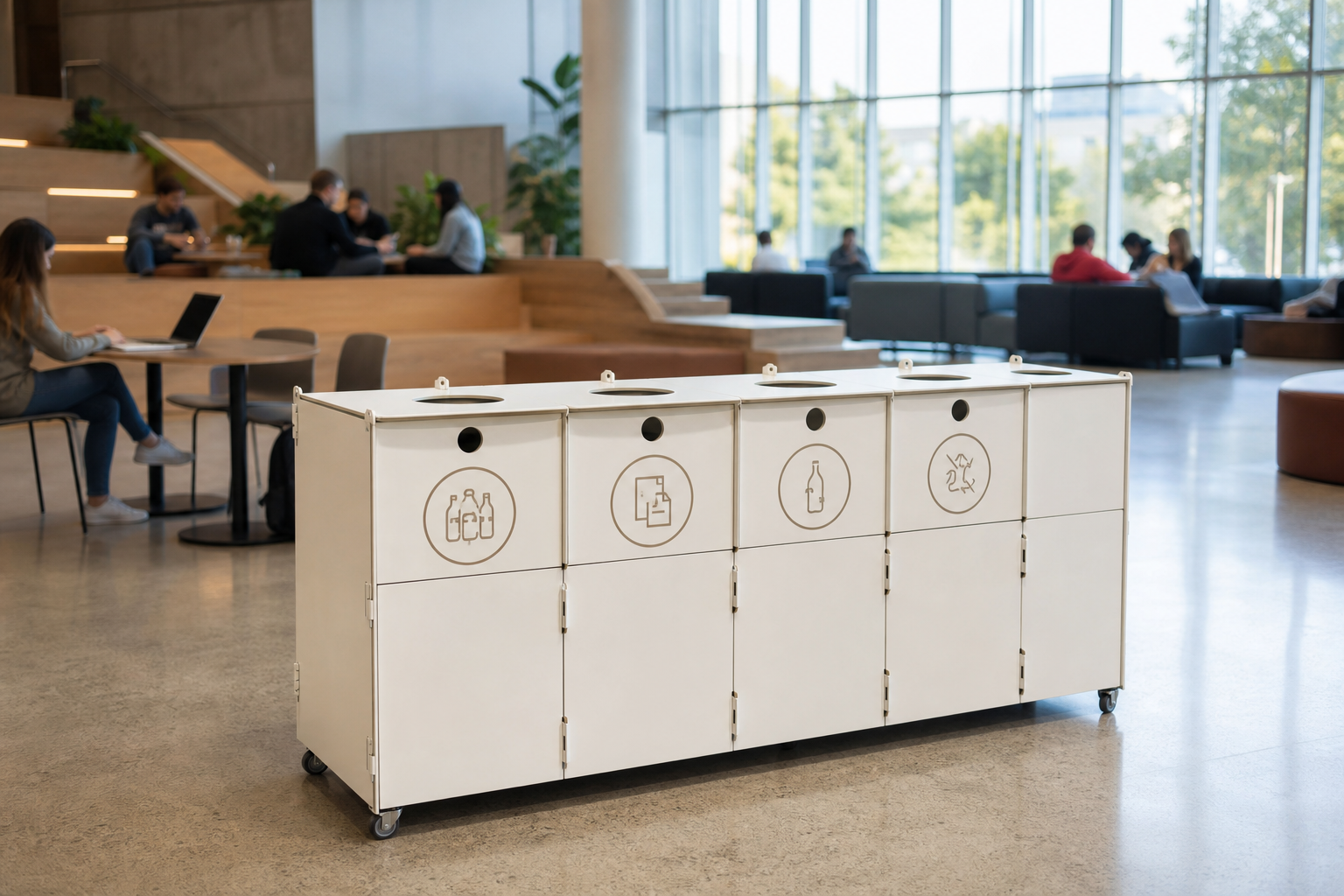
High-volume environments like schools and universities require durable sorting stations situated in student gathering areas. Research in university settings demonstrates that placing plastic recycling containers directly inside classrooms yields significantly higher capture rates than simply placing extra bins in common hallways. In high-capacity dining halls and cafeterias, install multi-compartment furniture units that handle high organic and packaging turnover. Learn more about campus site planning in our guide to waste management for university campuses.
-
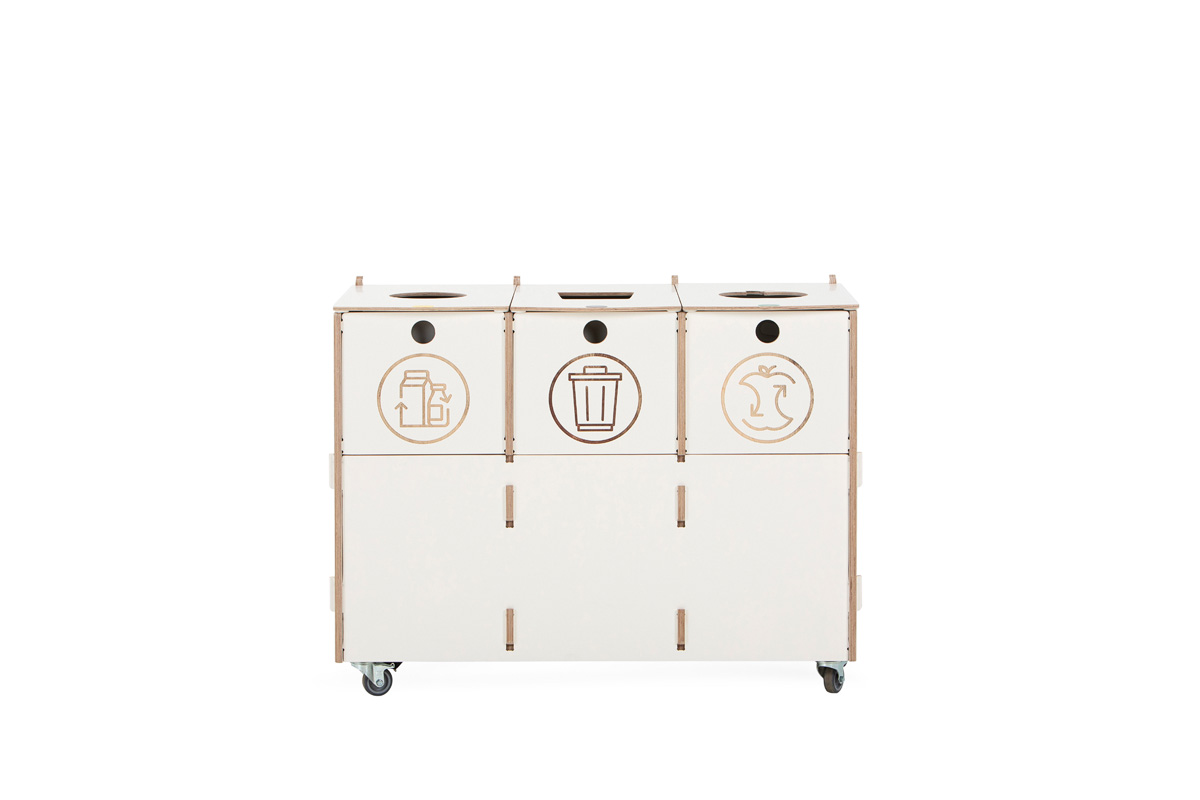
Recycling Bin Container 3 × 40 l white
3 types of waste 3 x 40 l1 215,20 € (incl. 24% VAT)980 € (excl. VAT) -

Recycling Bin Container 4 × 40 l white
4 types of waste 4 x 40 l1 612 € (incl. 24% VAT)1 300 € (excl. VAT) -
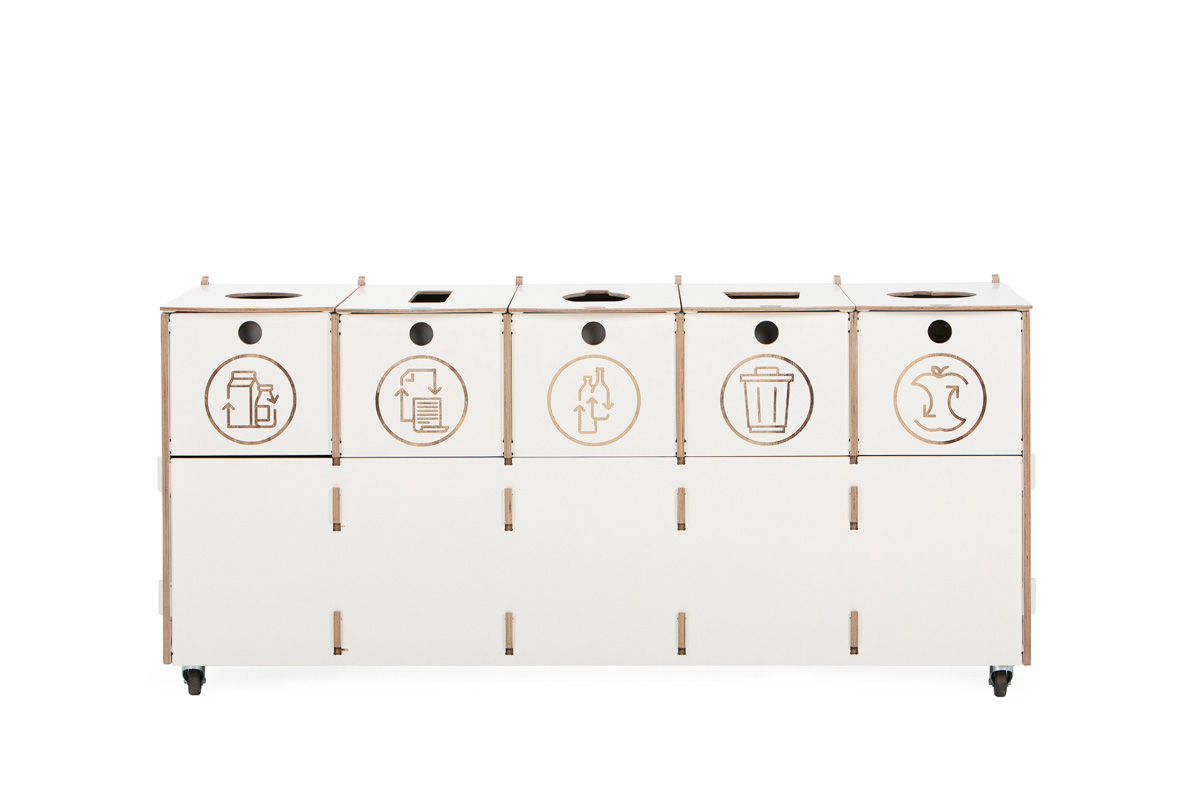
Recycling Bin Container 5 × 40 l white
5 types of waste 5 x 40 l1 798 € (incl. 24% VAT)1 450 € (excl. VAT)
Public Venues & Transit Hubs
In high-throughput public spaces, place recycling stations along main pedestrian flow lines, near entrance and exit portals, and within 10 to 15 meters of food vendors or seating areas. For open-air facilities or outdoor precincts, follow our specialized outdoor waste bin placement standards to safeguard stations against weather and wildlife. When managing short-term events, refer to our operational playbook for event venue waste management.
Designing Out Contamination: Visual and Physical Nudges
Physical placement works hand-in-hand with behavioral design cues. Information signage alone rarely changes user behavior; visual prompts positioned directly at the point of disposal yield up to a 54% increase in correct sorting accuracy over baseline setups.
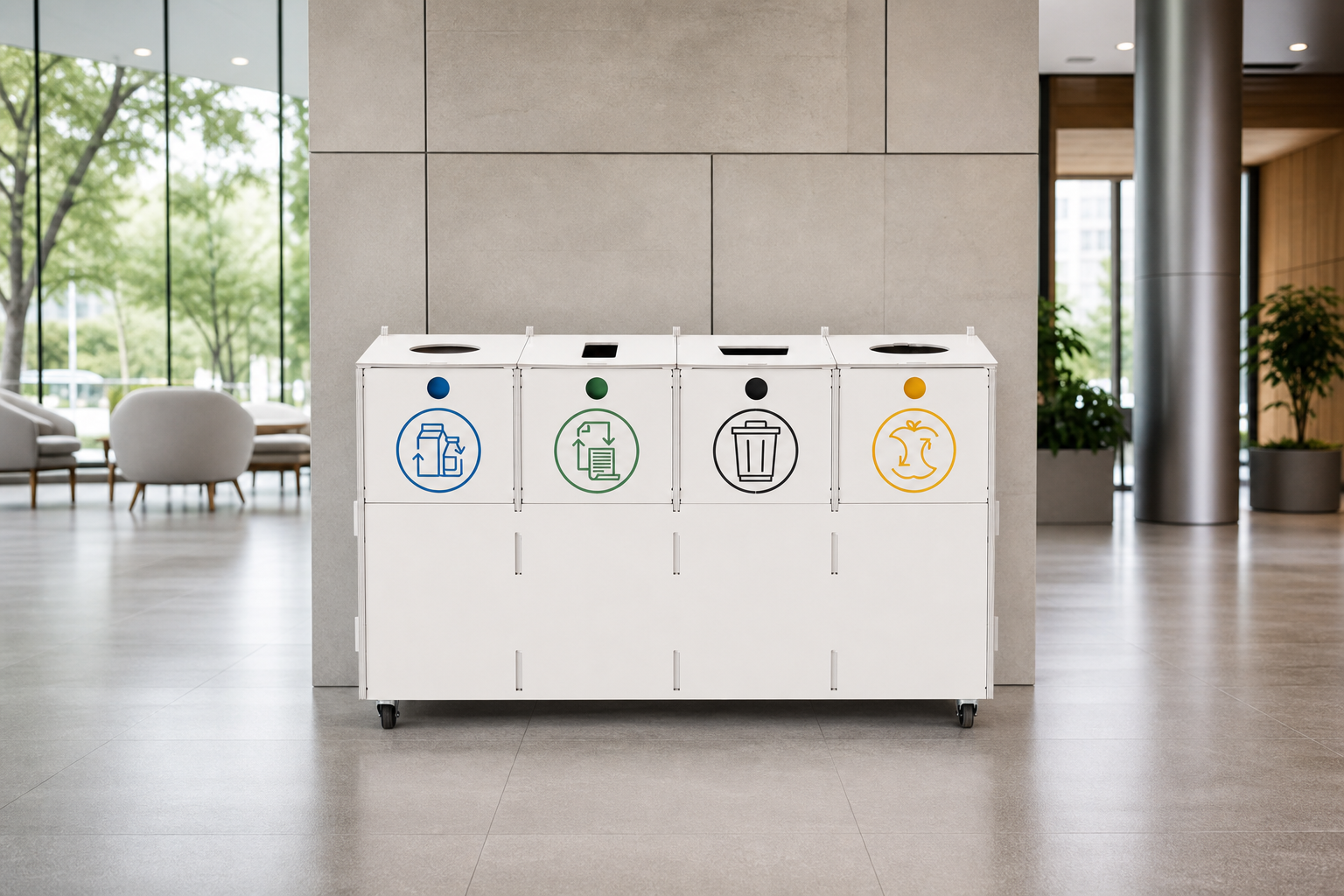
To minimize cross-contamination, implement these physical nudges across your sorting infrastructure:
- Shaped Lid Openings: Use narrow paper slits for paper streams and small circular openings for bottles and cans to force users to pause and select the correct compartment.
- High-Contrast Pictograms: In multilingual European environments, rely on clear visual icons and bilingual labels rather than text-heavy instructions to instantly communicate target waste streams.
- Standardized Color Coding: Align your bins with national standards and European frameworks such as EN 14092. Follow our comprehensive recycling bin color coding guide to ensure your color choices match regional mandates across target European markets.
To assist facility users with proper waste segregation, review our operational guide detailing what materials belong in each recycling bin. To explore modular stations designed with intuitive iconography and custom aperture options, visit our complete recycling bins collection.
Accessibility, Fire Safety, and Legal Compliance
Strategic bin placement must respect legal safety codes, accessibility laws, and regional environmental mandates.
Regulatory and Egress Standards
- OSHA & Egress Routes: Under safety regulations, collection bins must never obstruct emergency exit routes, corridors, or stairwells. Maintain clear passageways free of hazards at all times.
- ADA & Universal Design: Ensure stations do not narrow walking paths below 36 inches (91 cm) of clear width. Objects projecting into walkways between 27 and 80 inches above the floor must not extend more than 4 inches horizontally. Operable mechanisms, lids, and access handles must be positioned between 15 and 48 inches (38–122 cm) above the finished floor to allow forward or parallel approach for wheelchair users.
- European Environmental Mandates: Most workplace recycling rules stem from the EU Waste Framework Directive, which mandates strict source separation for paper, metal, plastic, glass, and bio-waste, setting a target of 65% municipal recycling by 2035.
-
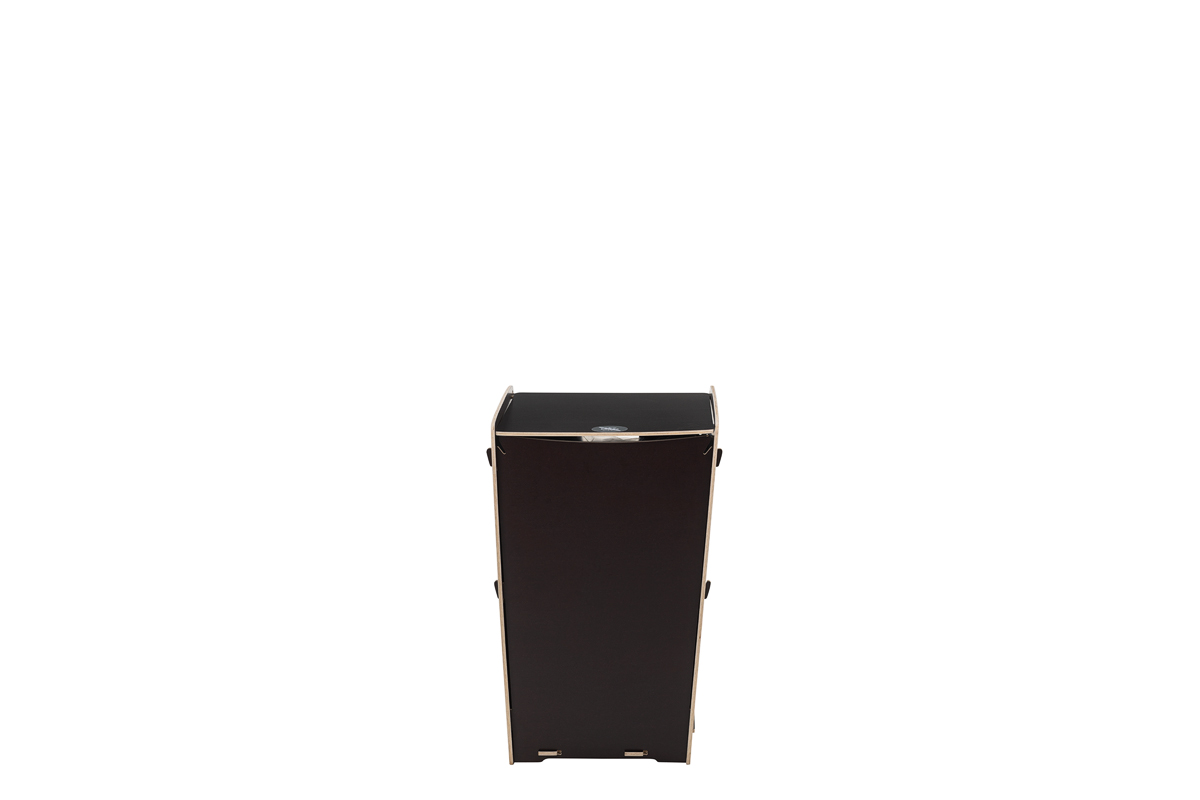
Waste Bin Sorta 1 × 60 l brown
1 type of waste 1 x 60 l173,60 € (incl. 24% VAT)140 € (excl. VAT) -
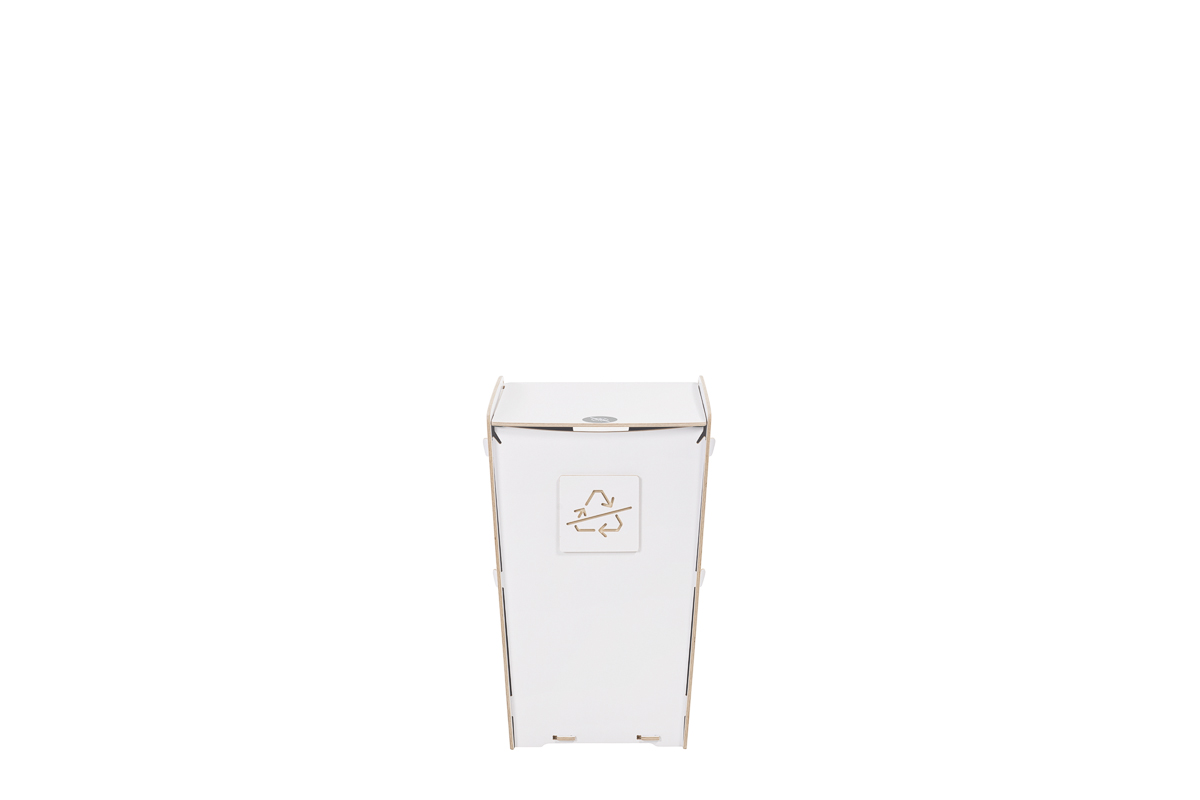
Waste Bin Sorta 1 × 60 l white
1 type of waste 1 x 60 l173,60 € (incl. 24% VAT)140 € (excl. VAT) -
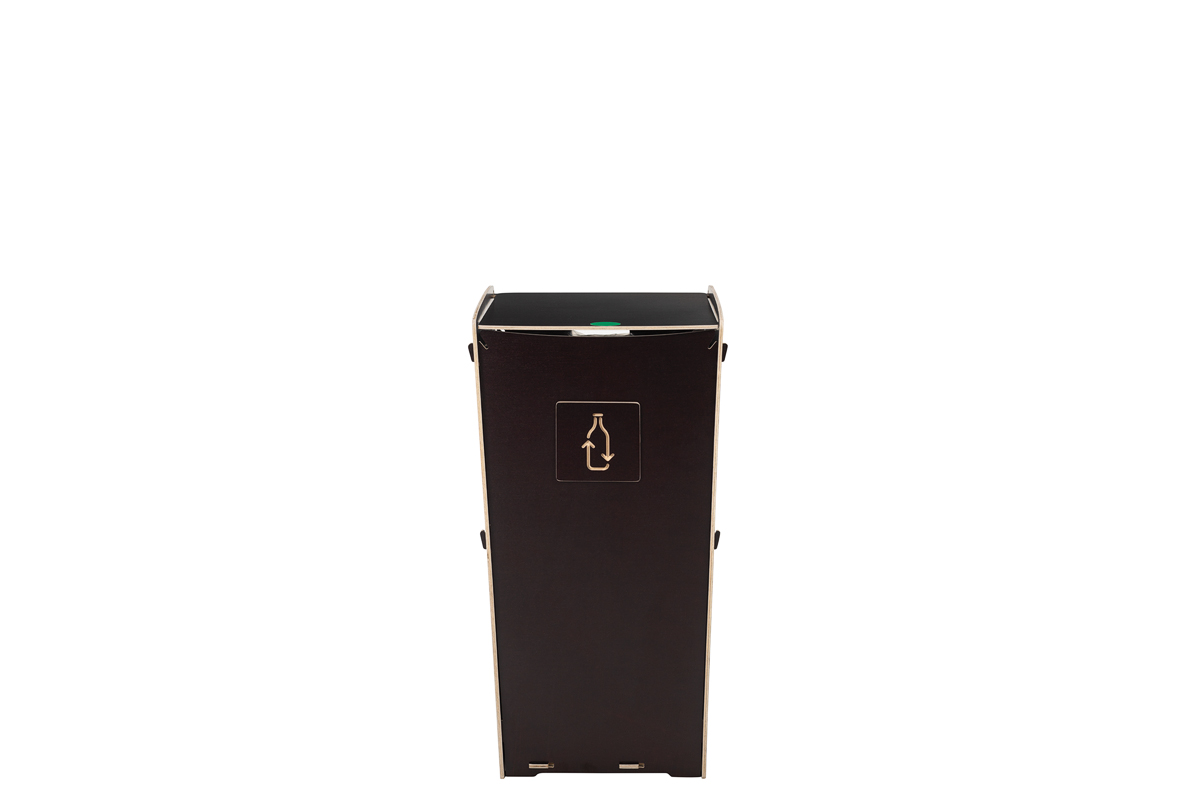
Waste Bin Sorta 1 × 90 l brown
1 type of waste 1 x 90 l223,20 € (incl. 24% VAT)180 € (excl. VAT) -
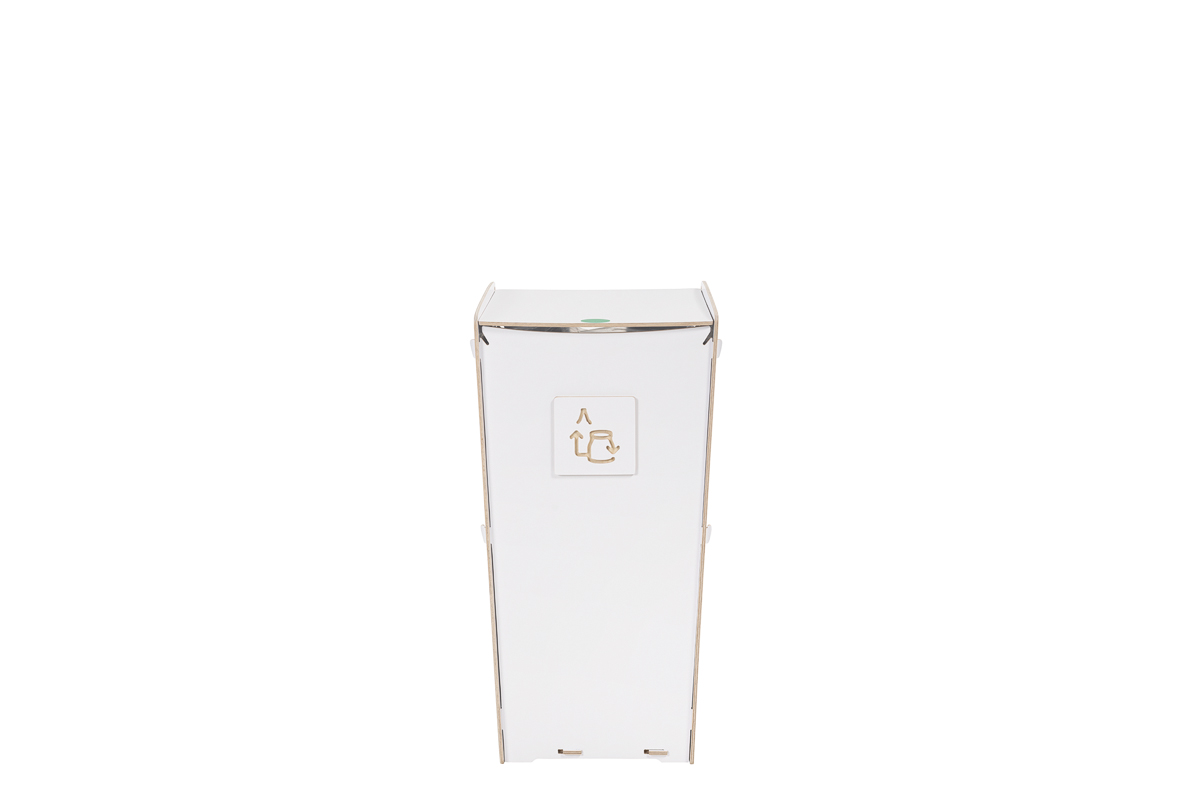
Waste Bin Sorta 1 × 90 l white
1 type of waste 1 x 90 l223,20 € (incl. 24% VAT)180 € (excl. VAT)
In corporate or public spaces where flexible re-positioning is required, choose mobile stations equipped with lockable wheels. For durable indoor and protected outdoor environments, explore our full range of Sorta waste bins.
Optimizing Facility Waste Workflows
Optimizing recycling outcomes is an ongoing operational strategy. Pairing every general waste receptacle with a corresponding recycling stream, positioning multi-compartment hubs in high-traffic hotspots, and incorporating physical design nudges prevents contamination before it starts.
Ready to upgrade your facility’s waste sorting performance? Explore our award-winning Container series recycling bins or contact our team to design a customized waste infrastructure tailored to your floor plans.