Is your business prepared for mandatory beverage container collection across Europe? As Regulation (EU) 2025/40 enforces strict recycling targets, understanding deposit return schemes helps you avoid costly non-compliance fines while optimizing facility waste management.
How Deposit Return Schemes Work
A deposit return scheme (DRS) is a closed-loop collection framework designed to capture single-use beverage containers for high-grade recycling or re-use. When a consumer purchases a deposit-bearing beverage, a fixed deposit fee is added to the retail sale price. This fee is reimbursed in full when the empty, undamaged container is returned to an authorized collection point.
The operational lifecycle connects producers, distributors, retailers, and consumers through a clear financial and logistical flow:
- Central System Operator: A licensed, non-profit entity governed jointly by producers and retailers. The operator coordinates regional logistics, processes data, redistributes collected deposit fees, and distributes handling compensation to collection points.
- Standardized Labeling: Eligible packaging must display recognized deposit symbols and scannable barcodes. Reverse vending machines (RVMs) or manual scanning devices validate these marks before issuing cash refunds or retail store credit.
- Financial Reconciliation: Deposit funds move downstream from beverage producers to distributors, retailers, and final consumers. When containers return to the system, the central operator reimburses retailers for the refunded deposits along with a handling fee to cover labor and equipment costs.
Any unredeemed deposits remain within the system’s central reserve to maintain collection infrastructure, upgrade sorting facilities, and fund public awareness campaigns.
Legal Obligations Under European Directives
European packaging compliance is dictated by Regulation (EU) 2025/40, also known as the Packaging and Packaging Waste Regulation (PPWR). Entering into force in February 2025, the regulation applies broadly across Member States from August 2026, with mandatory deposit return provisions coming into effect on 1 January 2029. To understand how these rules fit into broader European mandates, review our breakdown of EU recycling legislation.
The 90% Separate Collection Target
Under Article 50 of the PPWR, Member States must achieve separate collection of at least 90% per year by weight for target packaging formats placed on the market. This mandate covers two main single-use categories with capacities up to three liters:
- Single-use plastic beverage bottles made from materials like PET.
- Single-use metal beverage containers, including aluminum and steel cans.
Member States retain the statutory authority to include single-use glass beverage bottles within their national deposit frameworks.
Producer vs. Retailer Responsibilities
Compliance obligations vary depending on your position in the commercial supply chain:
- Producers and Importers: Entities placing packaged beverages on national markets must register with state registries, such as PAKIS in Estonia, apply official deposit logos, and fund Extended Producer Responsibility (EPR) operational costs. Read more about these liabilities in our guide on packaging waste regulations for businesses.
- Retailers and Final Distributors: Businesses distributing covered beverages must charge deposits at the point of sale, accept returned containers of the formats they sell without requiring a purchase receipt, and refund deposits to end users immediately.
Scope and Statutory Exemptions
The PPWR defines specific product exclusions and conditions for national exemptions:
- Excluded Beverage Categories: Wine, spirit drinks, aromatized wine products, and milk or dairy beverages sit outside mandatory deposit obligations.
- Small Capacity Exemption: Member States may exempt beverage containers under 0.1 liters if collection is deemed technically unfeasible.
- HORECA Sector Exemption: Hotels, restaurants, and catering facilities may be exempted from charging deposits to customers, provided beverages are opened on-site, consumed on the premises, and empty packaging is collected directly inside the facility.
- High-Performing Member State Exemption: Member States that collect at least 80% of target packaging formats by weight in 2026 can apply for an exemption from setting up a mandatory DRS, provided they submit an action plan showing how they will reach the 90% target by 1 January 2028.
Operational Impact on Retailers and Commercial Facilities
Establishing take-back infrastructure requires operational adjustments, space allocation, and clear waste-stream segregation.
Retail Take-Back: RVMs vs. Manual Collection
Retailers can fulfill take-back obligations using two primary methods:
- Reverse Vending Machines (RVMs): Automated systems scan barcodes, compress empty containers, and issue digital or printed store vouchers. Automated validation minimizes fraud risks and increases efficiency, earning retailers a higher handling fee compensation.
- Manual Collection: Retail staff inspect containers manually, check for deposit logos, issue cash refunds, and store collected items in dedicated bags. Manual handling requires lower initial investment, making it suitable for smaller retail spaces.
The central operator compensates retailers through a standardized handling fee per unit to offset space usage, handling labor, and equipment leasing costs.
Floor Area Obligations Across Markets
Many European jurisdictions establish retailer take-back thresholds based on physical retail sales area:
- Estonia: Retailers selling deposit packaging with floor space over 200 m² must operate an on-site return point. Kiosks and vendors under 20 m² are exempt, while stores between 20 m² and 200 m² may arrange alternative local return points.
- Poland: Stores with a sales area of 200 m² or larger must collect deposit containers and issue cash refunds without requiring a purchase receipt. Smaller stores can join the network voluntarily.
- Latvia: Urban retail stores over 300 m² and rural stores over 60 m² are required by law to maintain dedicated container take-back locations.
In-House Waste Sorting for Commercial Workplaces
Offices, transport terminals, healthcare hubs, and educational facilities are not usually required to act as public return points, but they face clear internal sorting rules under workplace recycling regulations.
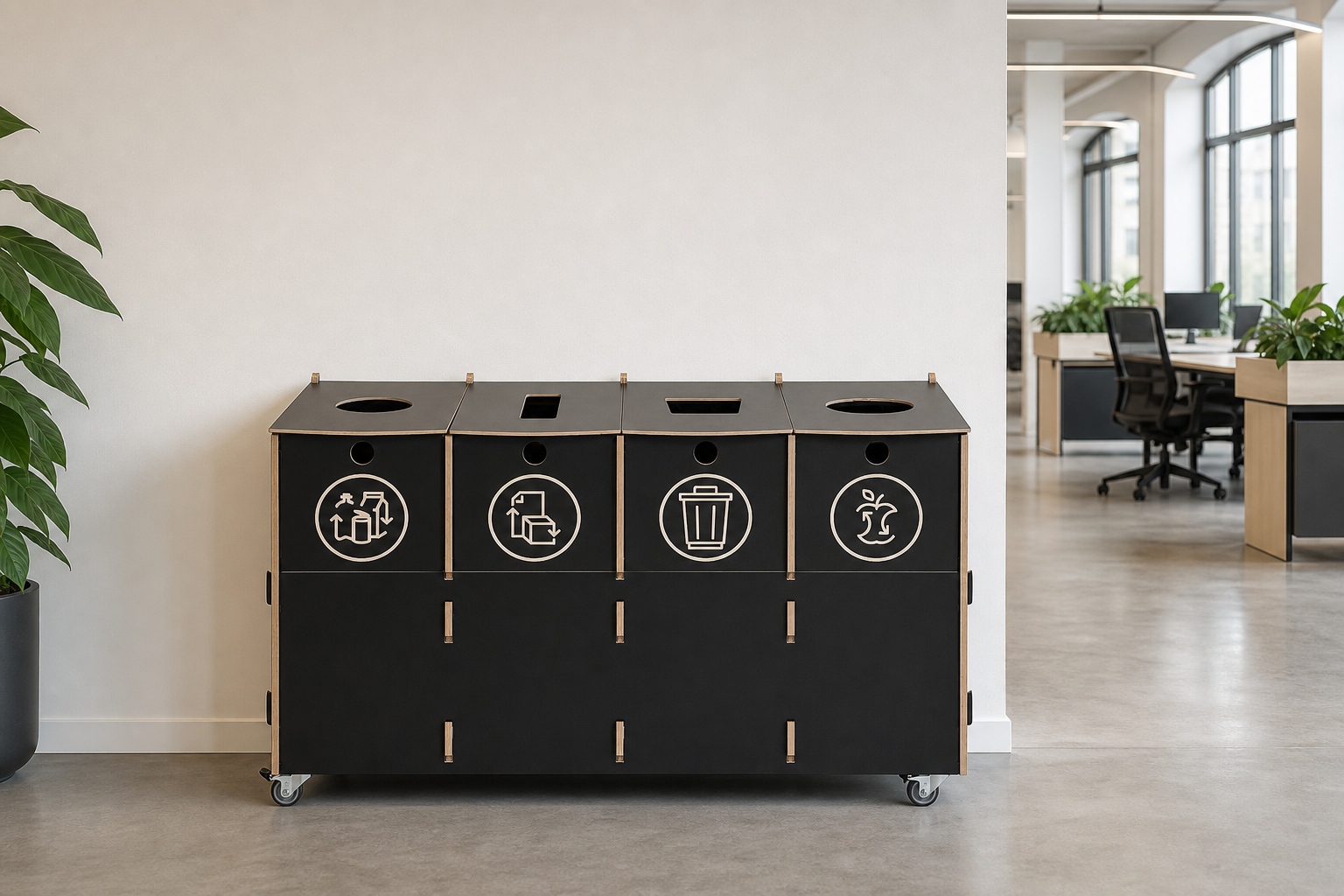
Disposing of deposit bottles and cans in general waste leads to lost deposit values and potential contamination surcharges from commercial waste handlers. Evaluating the operational trade-offs of commingled vs. source-separated recycling helps managers design practical collection points inside their facilities.
To prevent cross-contamination in commercial settings, dedicated container streams should sit alongside paper, bio-waste, and general packaging bins. Reviewing guidelines on what goes in each recycling bin ensures your staff and visitors sort waste correctly.
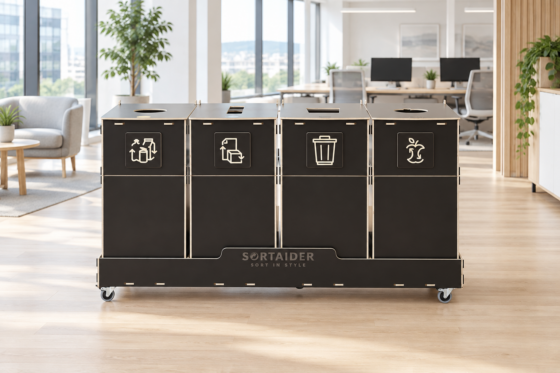
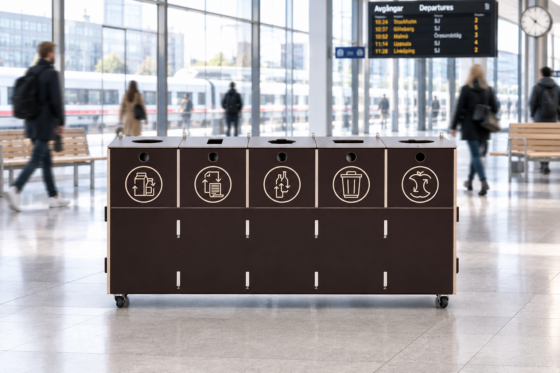
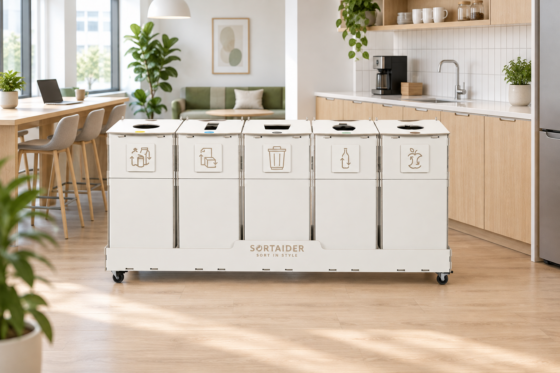
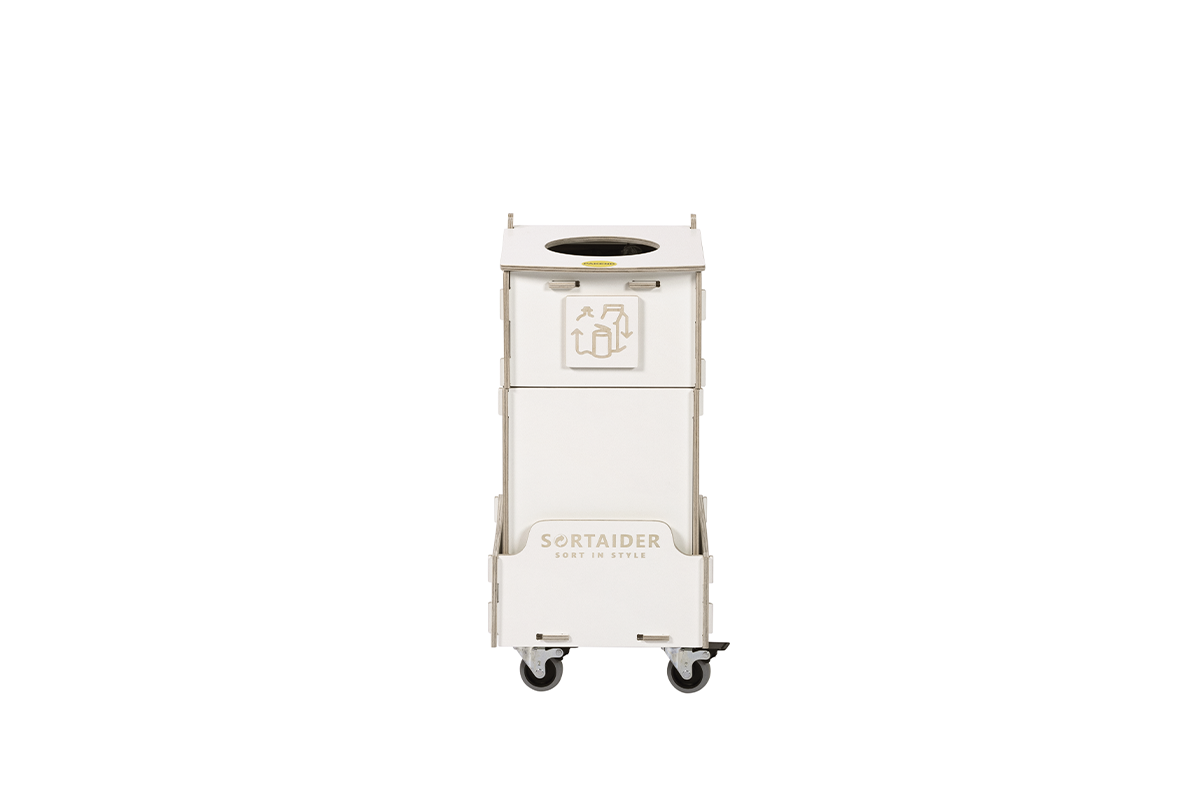
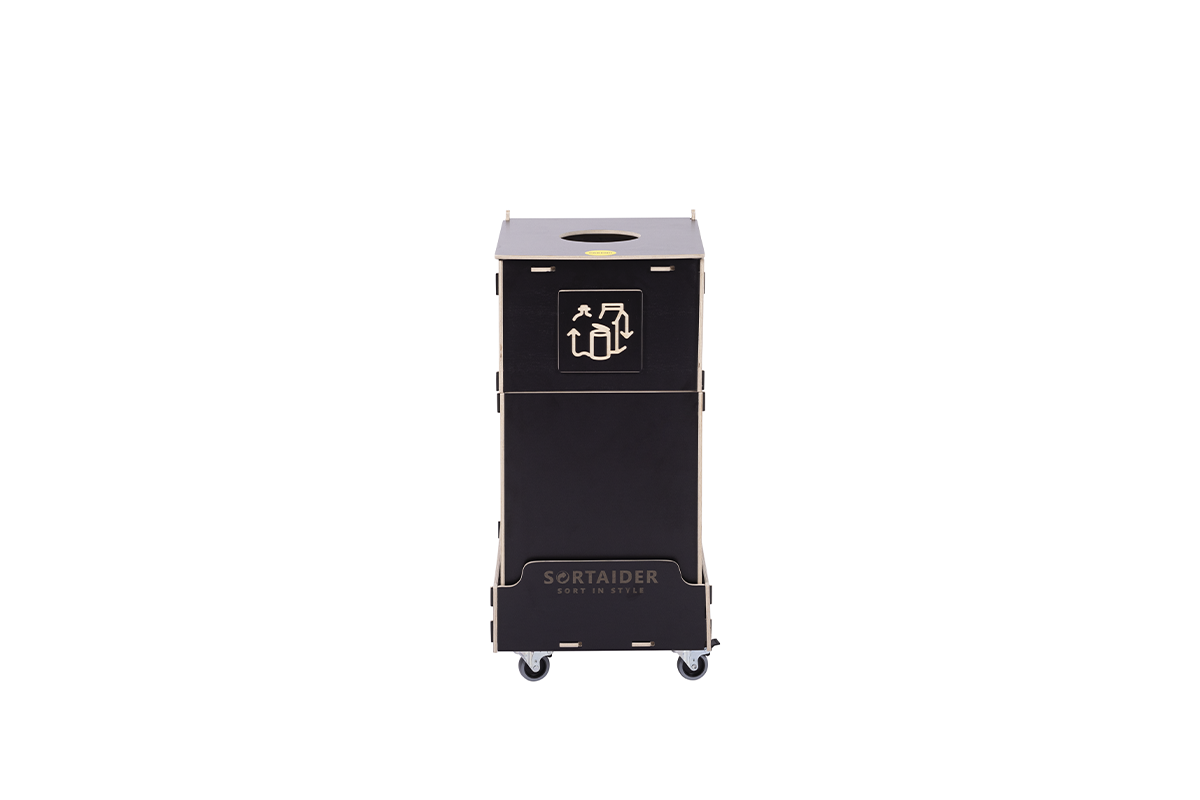
For complete workplace sorting setups, explore our range of modular recycling bins.
-
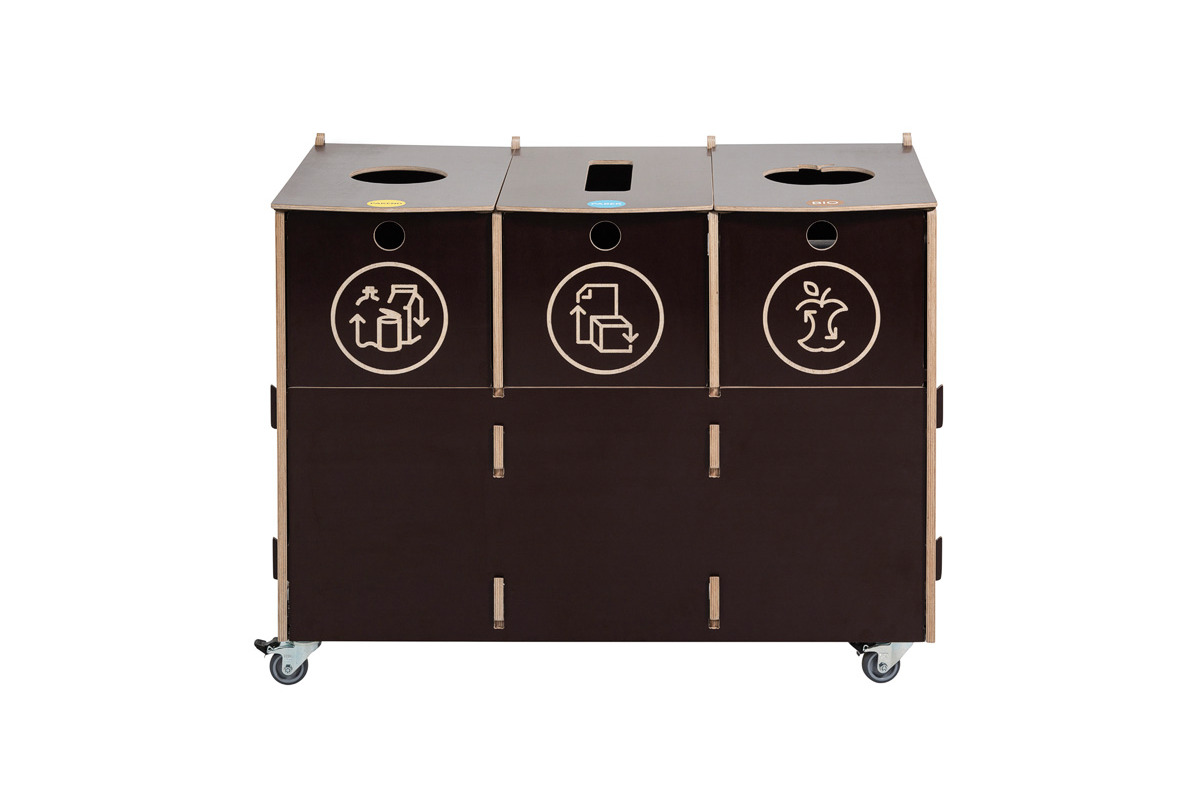
Recycling Bin Container 3 × 40 l brown
3 types of waste 3 x 40 l1 215,20 € (incl. 24% VAT)980 € (excl. VAT) -
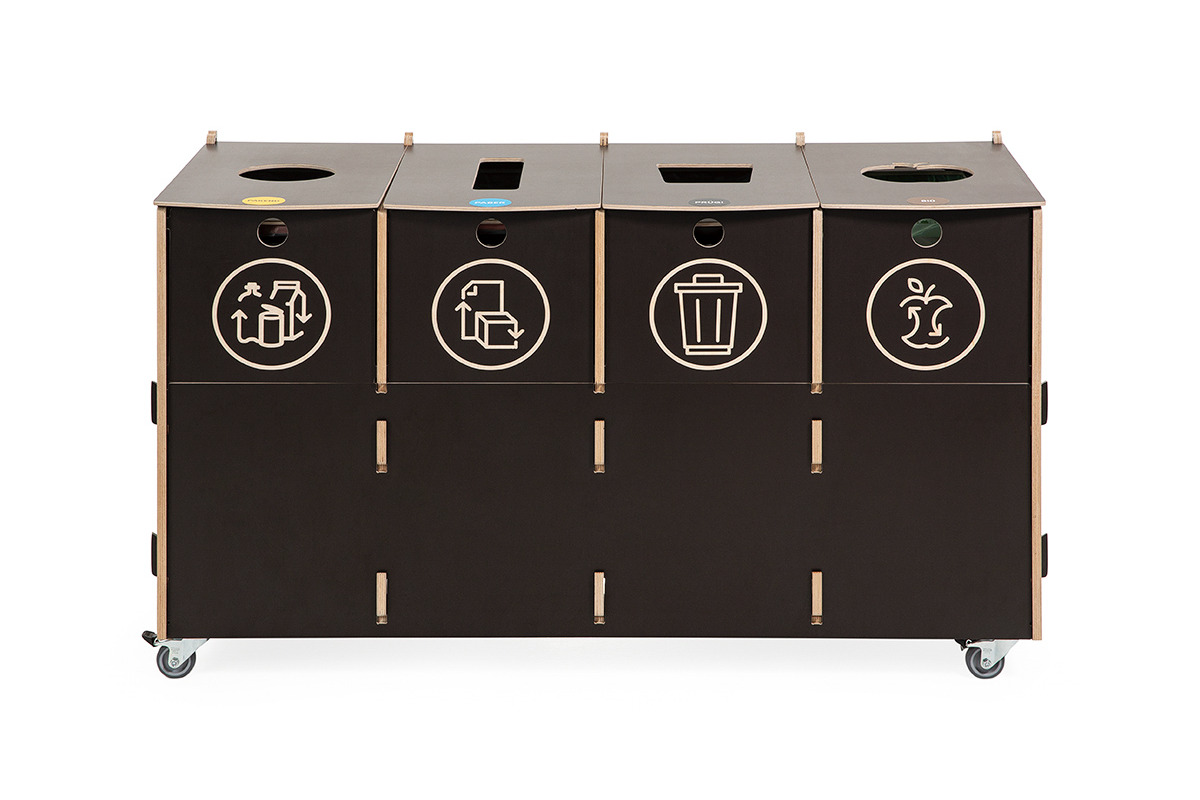
Recycling Bin Container 4 × 40 l brown
4 types of waste 4 x 40 l1 612 € (incl. 24% VAT)1 300 € (excl. VAT) -
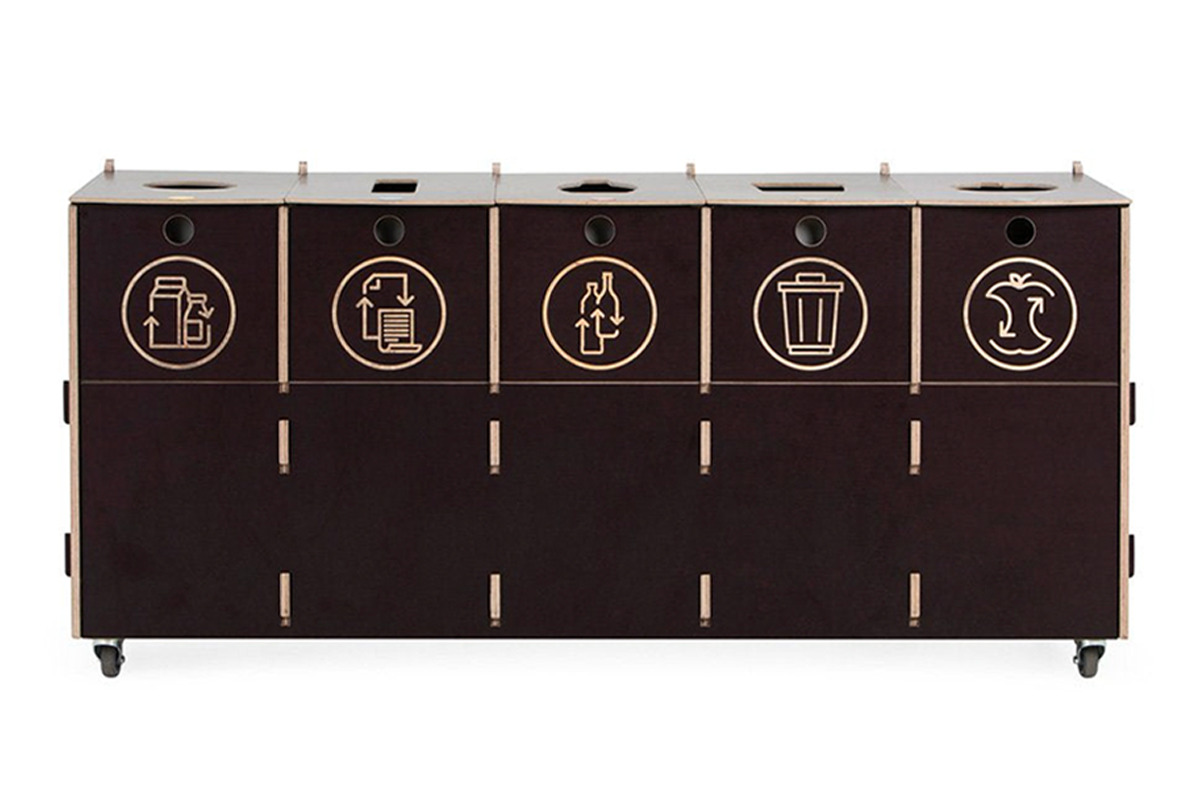
Recycling Bin Container 5 × 40 l brown
5 types of waste 5 x 40 l1 798 € (incl. 24% VAT)1 450 € (excl. VAT)
Country-by-Country Comparison Across Europe
European nations manage deposit systems through varying deposit fee tiers, floor space thresholds, and material scopes:
| Country | Covered Materials | Deposit Fee Tiers | Return Rate Performance | Key Retailer Obligations |
|---|---|---|---|---|
| Estonia | PET, Metal, Glass (0.1–3 l) | €0.10 flat rate | ~89% | Mandatory take-back for stores ≥200 m². |
| Latvia | PET, Metal, Glass | €0.10 flat rate | ~80% | Mandatory for stores >300 m² (urban) / >60 m² (rural). |
| Lithuania | PET, Metal, Glass | €0.10 flat rate | ~92% | Mandatory collection for urban retail hubs. |
| Finland | PET, Metal, Glass | Cans/Small PET: €0.10 PET 0.35–1l: €0.20 PET ≥1l: €0.40 |
>90% | Return-to-retail model with widespread RVM coverage. |
| Norway | PET, Metal | ≤0.5 l: 2 NOK (~€0.17) >0.5 l: 3 NOK (~€0.26) |
~92.3% | Producer-financed non-profit system (Infinitum). |
| Denmark | PET, Metal, Glass | Glass/Cans <1l: DKK 1.00 PET <1l: DKK 1.50 Containers 1–20l: DKK 3.00 |
>90% | Retailers manage transport logistics to processing centers. |
| Poland | PET, Metal, Glass | Uniform national deposit mark | System rollout | Mandatory collection for stores ≥200 m². |
Building a Compliant Waste Management Infrastructure
Meeting European deposit regulations requires clear visual communication and dedicated sorting stations in commercial facilities. Aligning bin setups with an established recycling bin color-coding guide prevents occupants from discarding deposit packaging into general waste or organic streams.
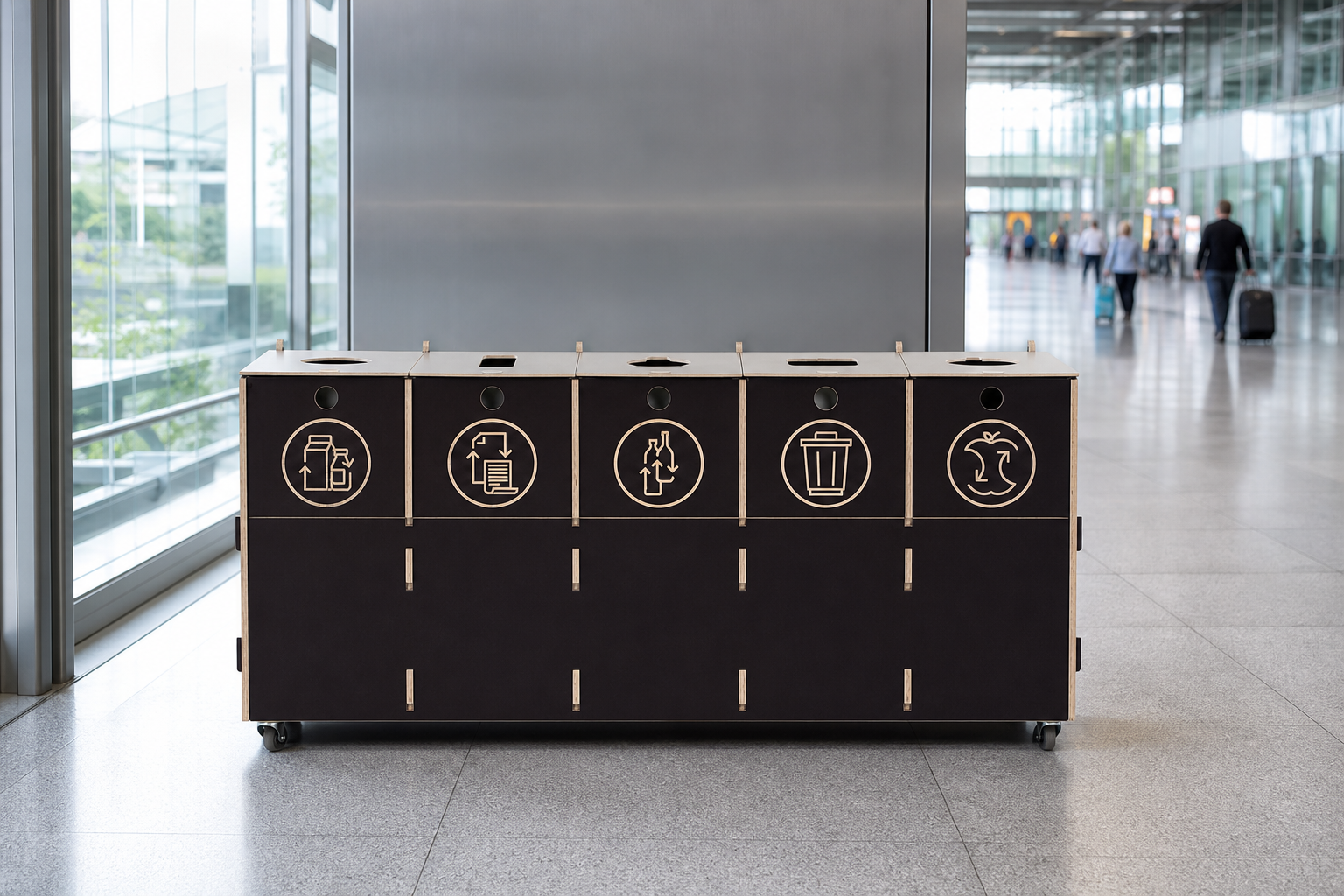
When choosing indoor sorting equipment for your organization, prioritize these features:
- Clear Visual Labels: Using recognized icons and multilingual text reduces workplace sorting errors by up to 40%.
- Stream Separation: Separate compartments for deposit packaging keep cans and bottles clean and ready for redemption.
- Durable Construction: Select long-lasting, sustainable materials designed for high-traffic environments like offices, schools, and transit hubs.
Discover flexible indoor collection solutions across our dedicated recycling bin sorter and recycling bin container series.
Preparing Your Business for European Deposit Obligations
Adapting your facility management practices to mandatory deposit return regulations protects your business from non-compliance risks while capturing value from recyclable packaging. Conducting a internal waste audit and updating your workplace collection points ensures seamless compliance before upcoming statutory deadlines.
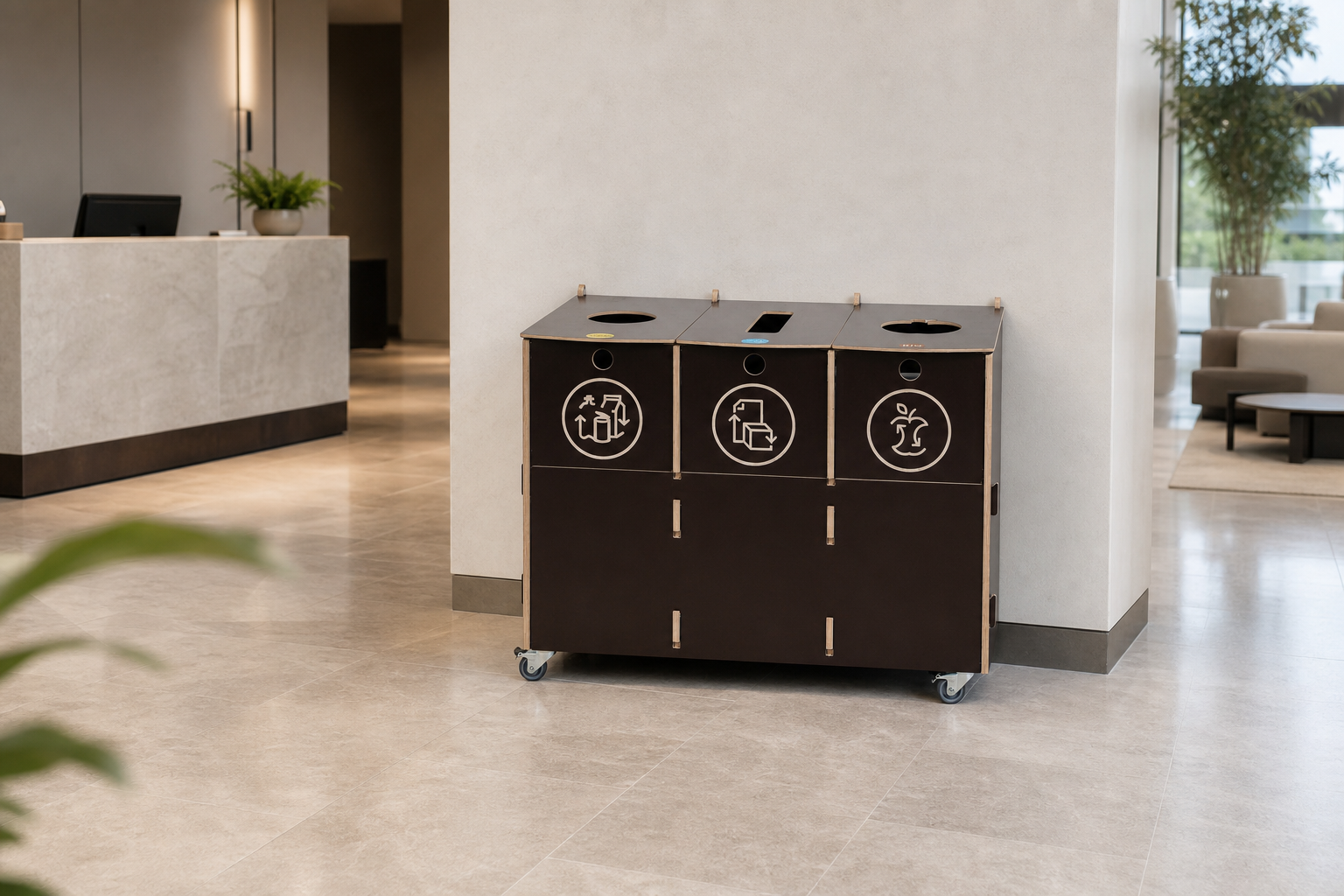
Review your current waste management setup, calculate your packaging volumes, and install designated source-separation stations to align your operations with European circular economy standards.