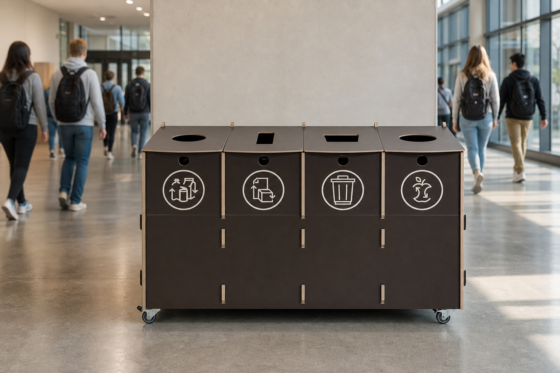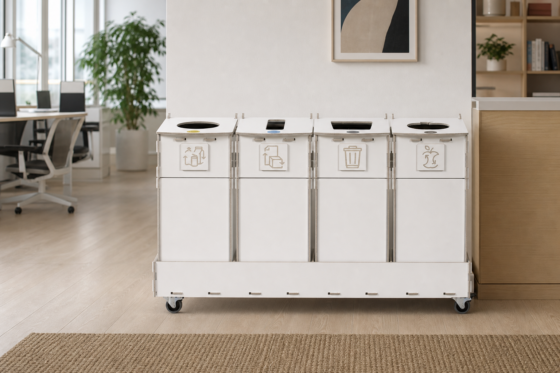
Did you know that waste prevention can save up to ten times the actual disposal cost? Discarded packaging, damaged pallets, and contaminated streams siphon profit from your operations. Implementing a structured waste sorting strategy stops raw material loss, simplifies compliance, and slashes handling overhead across your facility.
Conduct a Comprehensive Facility Waste Audit
Before deploying hardware or altering operational workflows, you must establish baseline metrics for your material streams. A systematic waste audit identifies exact volume fluctuations and reveals high-cost operational inefficiencies across your floor.
Begin by inspecting daily workflows across receiving docks, order-picking aisles, packing benches, and breakrooms. Review historical hauling invoices and disposal receipts to identify seasonal volume spikes. Next, conduct a targeted 1- to 7-day waste audit where teams collect, weigh, and record waste streams separately by department.
Categorize your waste into distinct material streams:
- Corrugated Cardboard (OCC): Bulk distribution boxes and discarded paper packaging.
- Thin-Film Plastics: Stretch wrap, pallet wrap, and poly bags.
- Wooden Pallets & Timber: Damaged pallets and wooden dunnage.
- General Waste & Organics: Canteen refuse and non-recyclable materials.
- Specialized or Hazardous Waste: Lithium batteries, aerosol cans, damaged lighting, and chemical rags.
Analyzing this audit data highlights specific contamination patterns. Because hidden costs like lost labor, energy, and handling time accumulate quickly, preventing waste at the source delivers far greater savings than paying for downstream disposal.
Design Source-Separated Waste Streams
When structuring internal sorting protocols, you must decide between single-stream commingled recycling and multi-stream source separation. While single-stream disposal seems simple, it leads to high contamination rates that degrade material quality. A single greasy food container can ruin an entire load of clean cardboard – an operational hazard known as the “pizza box” rule.
Implementing source-separated recycling systems protects feedstock quality, ensuring your recyclable commodities command high market value while avoiding costly haulage rejection fees.
For high-volume packing zones and back-of-house distribution areas, multi-compartment sorting stations allow workers to segregate clear stretch film from cardboard immediately at the point of generation.
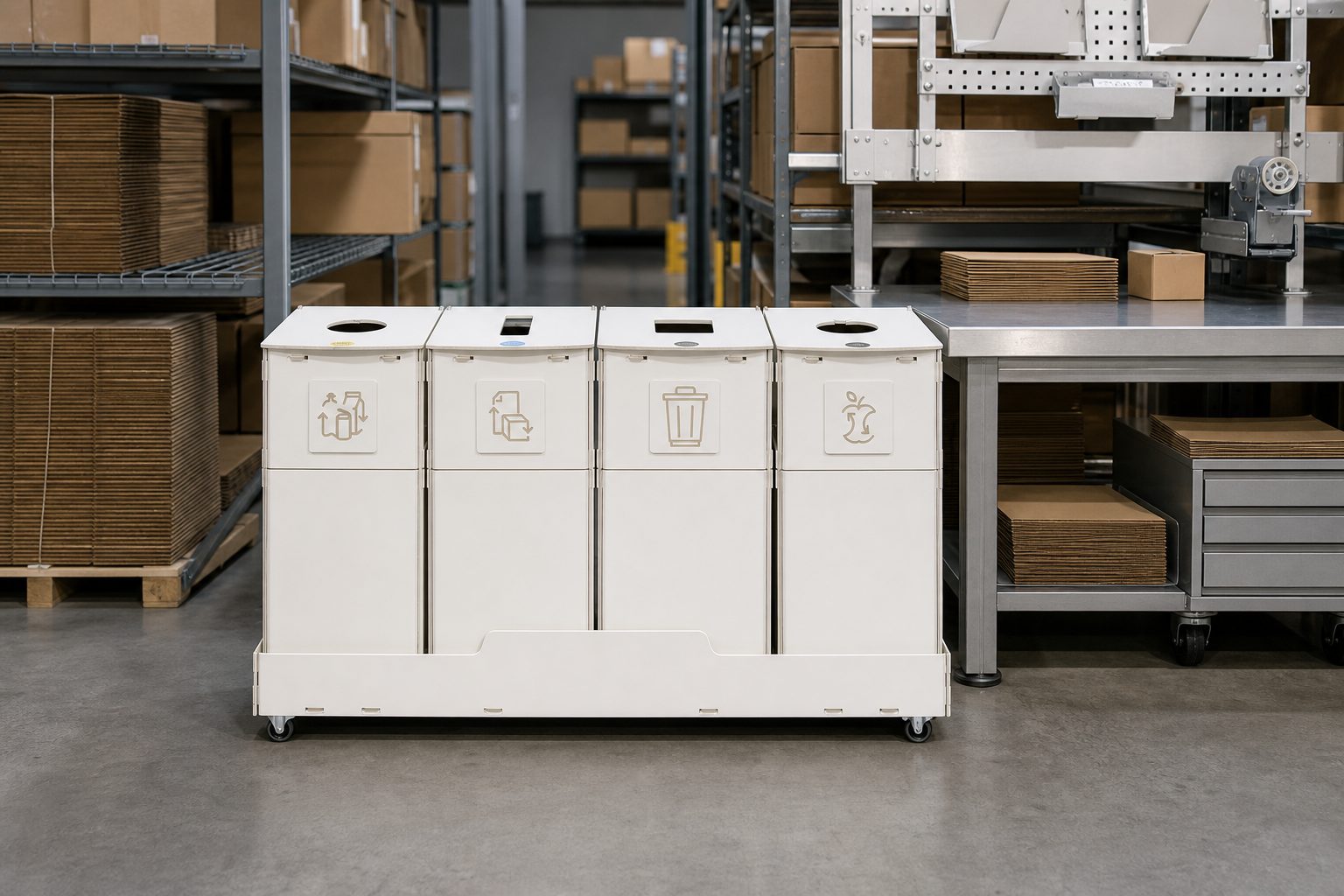
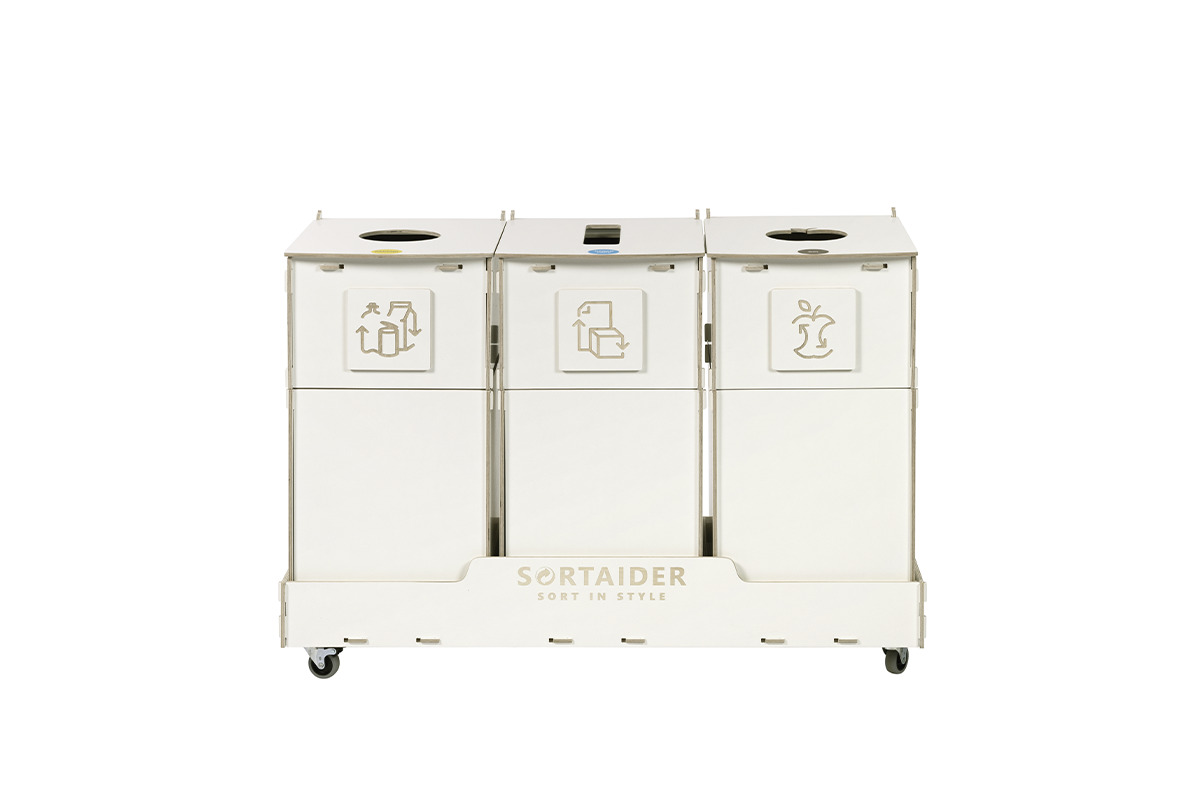
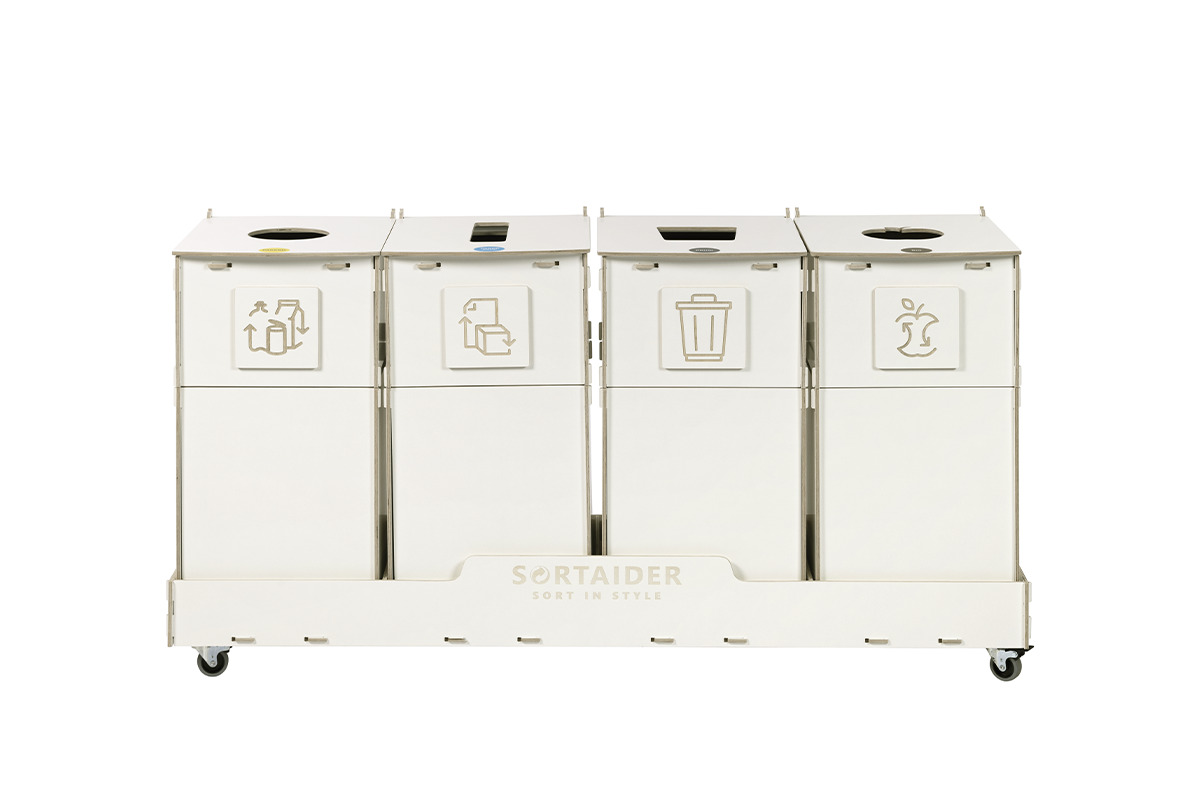
In sheltered loading bays or humid staging environments where standard indoor furniture fails, utilize weather-resistant single-stream units constructed from treated water-resistant birch plywood. Explore our dedicated range of heavy-duty waste bins built for demanding loading dock operations.
Optimize Station Placement, Zoning, and Ergonomics
Physical bin location directly controls worker compliance. The fundamental rule for facility managers is maintaining a 1:1 ratio between general waste and dedicated recycling streams. Placing a standalone general waste bin anywhere in your facility guarantees that valuable recyclables will end up in the trash out of convenience. Review our comprehensive recycling bin placement strategies for detailed spatial mapping techniques.
Map Operational Hotspots
- Packing & Shipping Areas: Position high-capacity stations right beside packing benches to collect void-fill scrap, backing tape, and strap trimmings instantly.
- Receiving Docks: Place mobile or large-format bins near unboxing areas for rapid disposal of bulk shrink film and carton scrap.
- Breakrooms & Canteens: Install dedicated bio-waste containers to keep food residue isolated from packaging streams.
Prioritize Ergonomics and Visual Interfaces
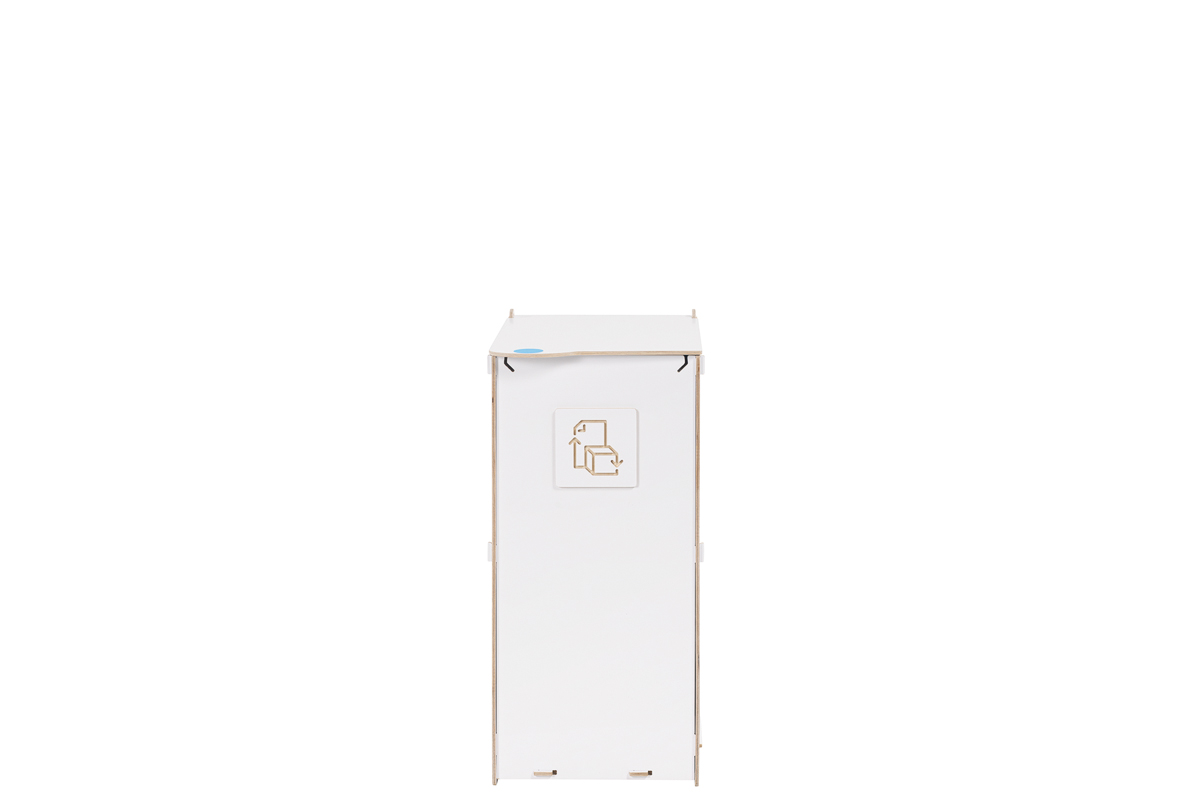
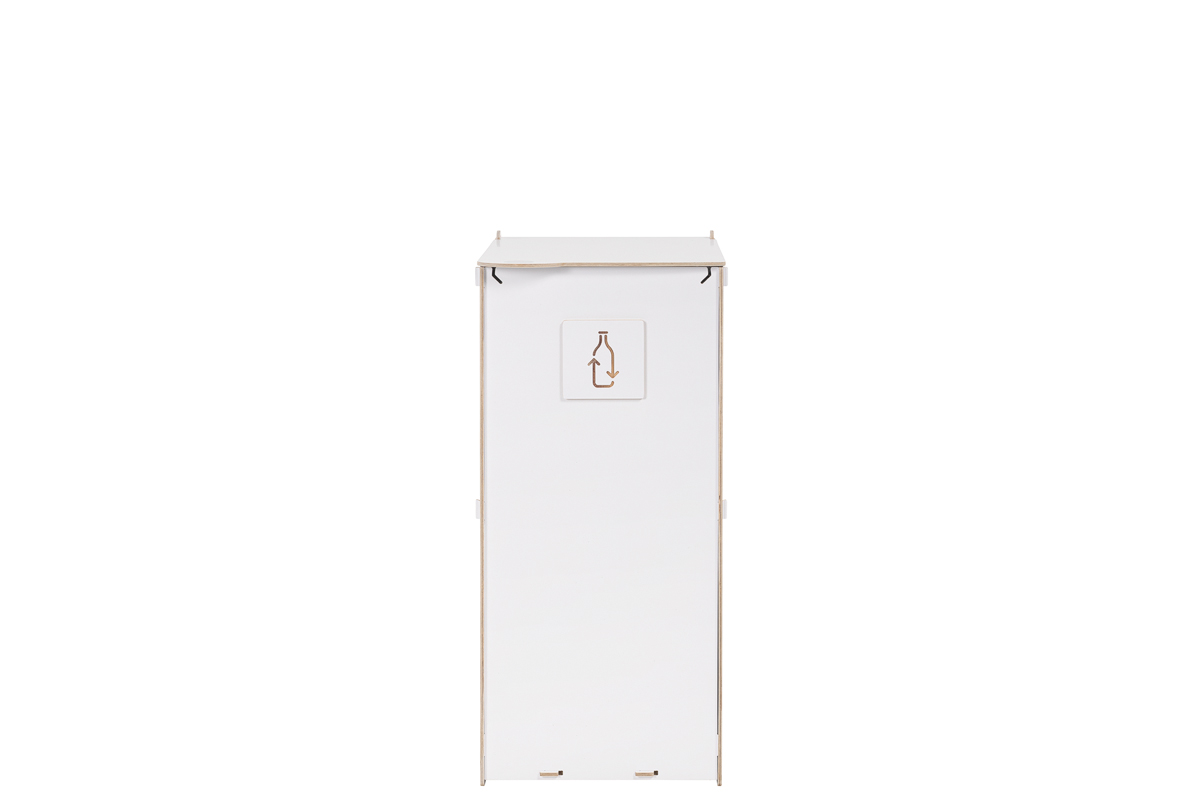
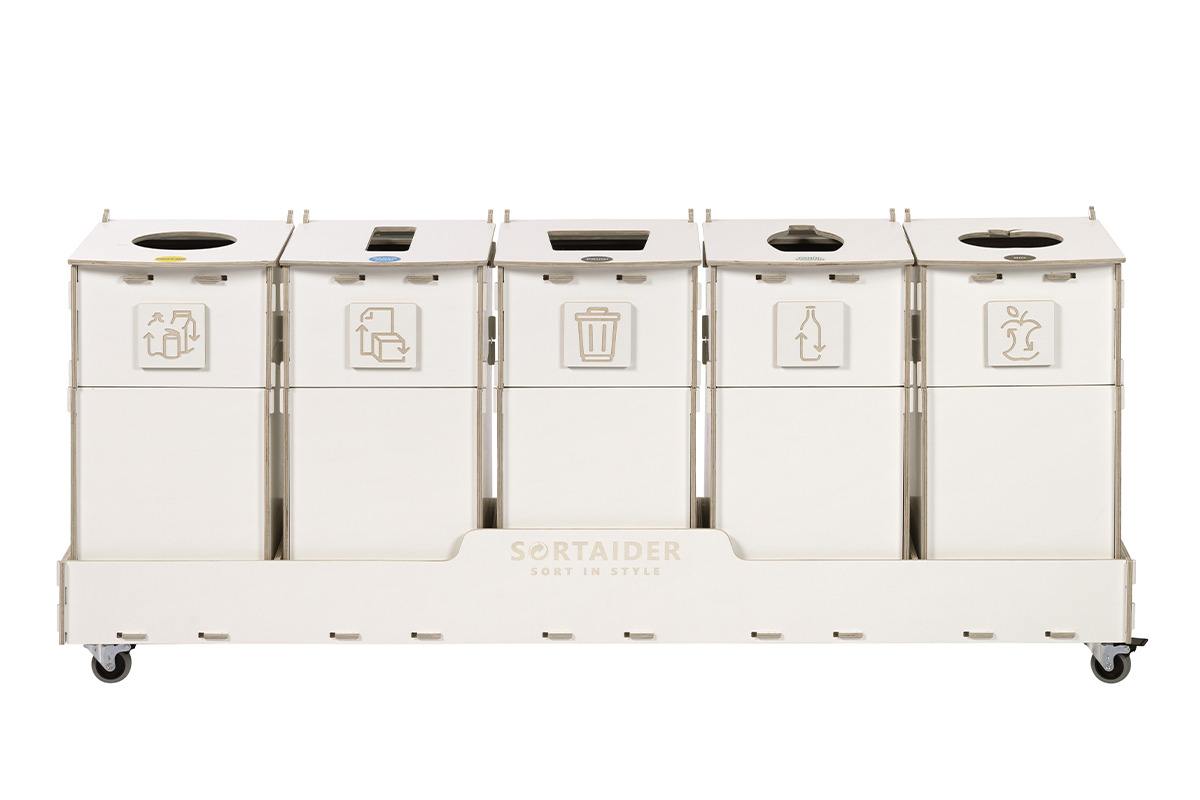
Manual waste handling presents real physical hazards. Logistics personnel frequently suffer injuries when lifting heavy trash bags from top-loading containers. Bins equipped with front-opening doors eliminate heavy overhead lifting, protecting staff safety and speeding up routine servicing.
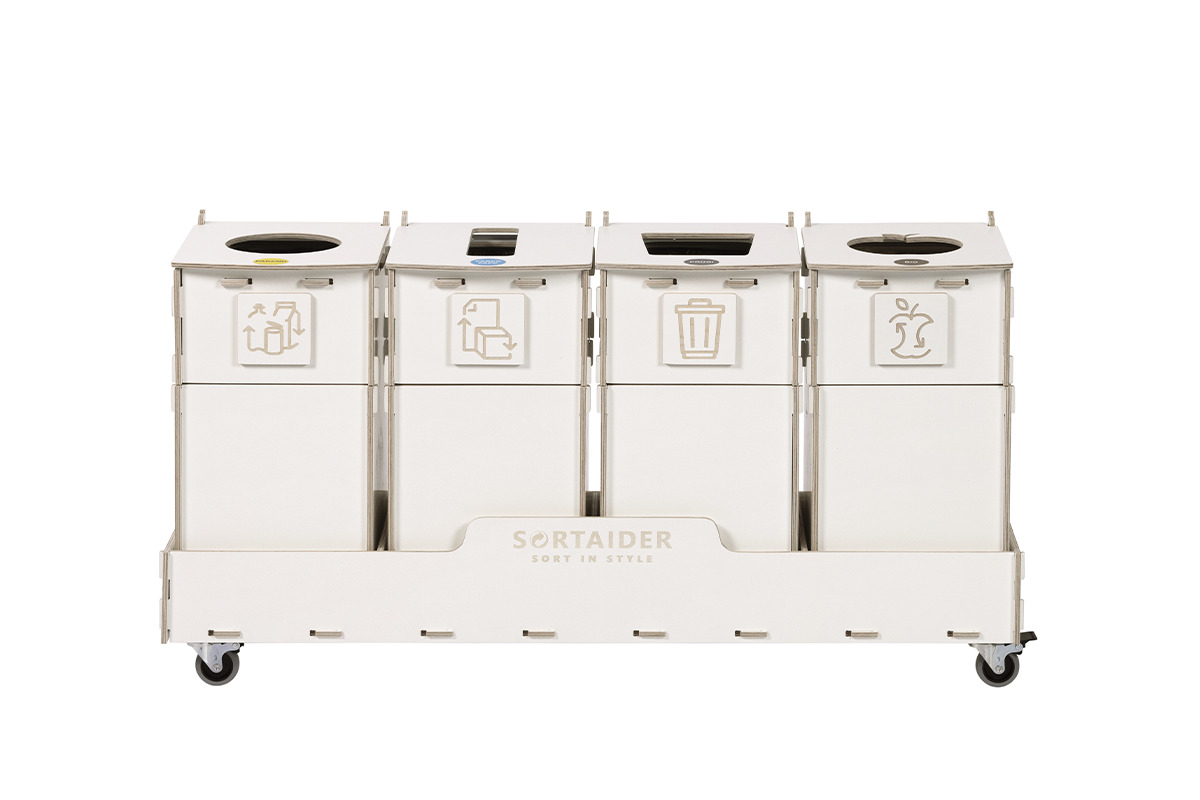
In multilingual warehouse environments, visual “nudges” drastically reduce sorting errors. Shaped aperture lids – such as narrow paper slots or round bottle cutouts – combined with clear pictograms guide workers intuitively. Aligning your internal visuals with standard recycling bin color-coding standards ensures instant recognition for permanent and temporary staff alike.
Ensure Regulatory Compliance and Workplace Safety
Navigating statutory workplace rules requires balancing environmental directives with strict occupational health and safety codes.
Master European Waste Directives
European facilities face stringent legal mandates. The EU Waste Framework Directive obligates businesses to separate paper, metal, plastic, glass, and bio-waste at the source wherever technically feasible. Additionally, upcoming obligations under the Packaging and Packaging Waste Regulation (PPWR) enforce rigorous targets for packaging reduction and recyclability.
Regional variations require specific operational focus across Europe:
- Nordic Region: Sweden mandates separate commercial food waste collection, while Denmark enforces digital consignment tracking for commercial waste shipments over one ton.
- Baltic Region: Estonia strictly enforces source separation for sites generating organic waste, and Latvia applies Extended Producer Responsibility (EPR) packaging rules.
Review specific statutory requirements in our detailed guides to workplace recycling regulations and overall commercial waste compliance guidelines.
Manage Hazardous Waste and Universal Standards
Occupational safety standards mandate that combustible debris, oily rags, and flammable residues be stored in covered metal or fire-rated receptacles and disposed of daily. Spills of flammable liquids must be cleaned promptly to maintain floor safety.
Universal hazardous materials – including batteries, aerosol cans, and fluorescent lamps – require structural containment under federal and state rules. Store these materials in closed, leak-proof containers marked clearly with phrases such as “Universal Waste – Batteries”. Maintain signed manifests and hazardous waste determination logs for at least three years to guarantee complete audit readiness.
Hygiene and Administrative Hubs
Bins in high-throughput zones collect dust, adhesive residue, and organic grime over time. Establishing routine sanitation protocols prevents bacterial growth and pest issues. Consult our operational guide on cleaning and sanitising recycling bins to extend hardware lifespan.
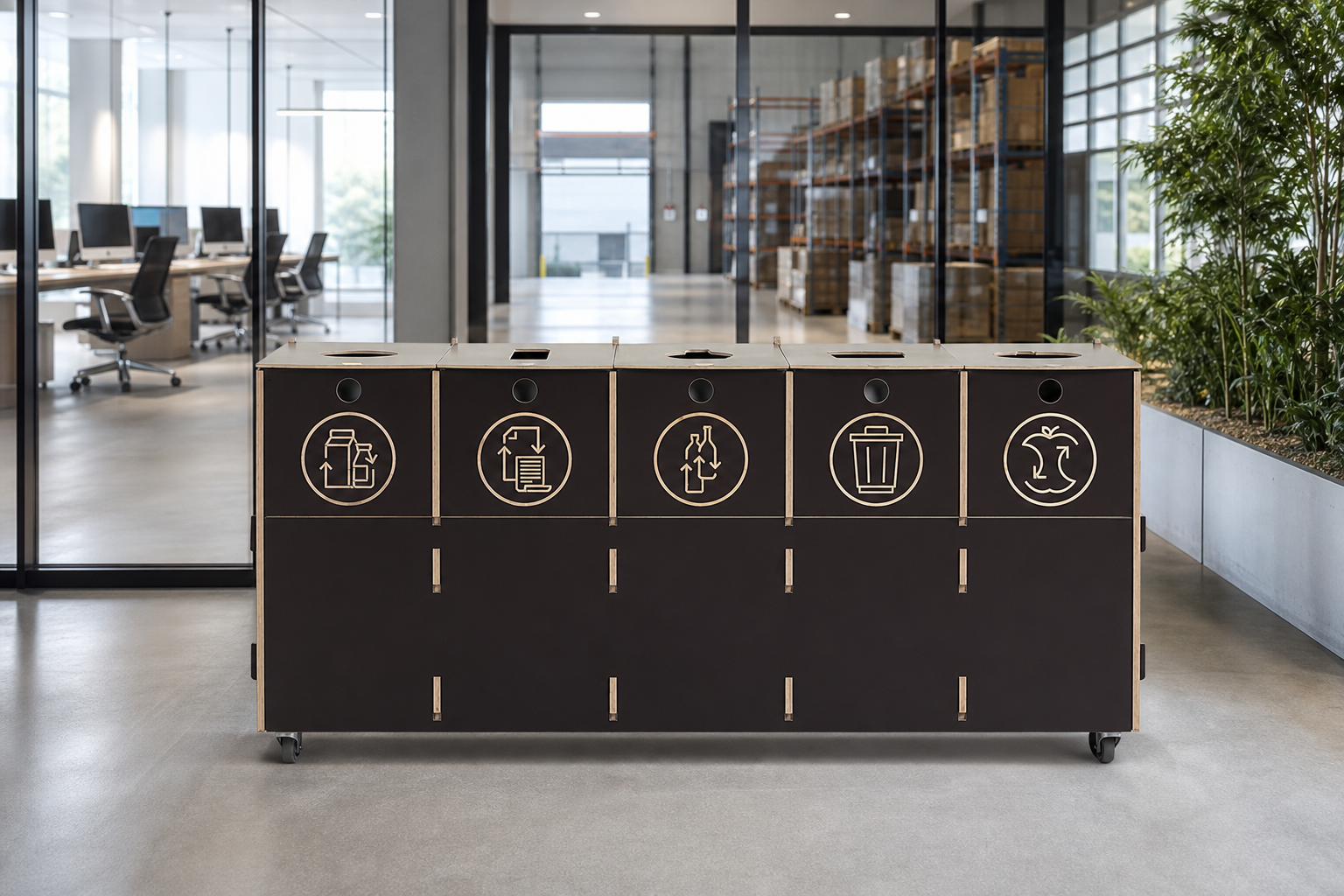
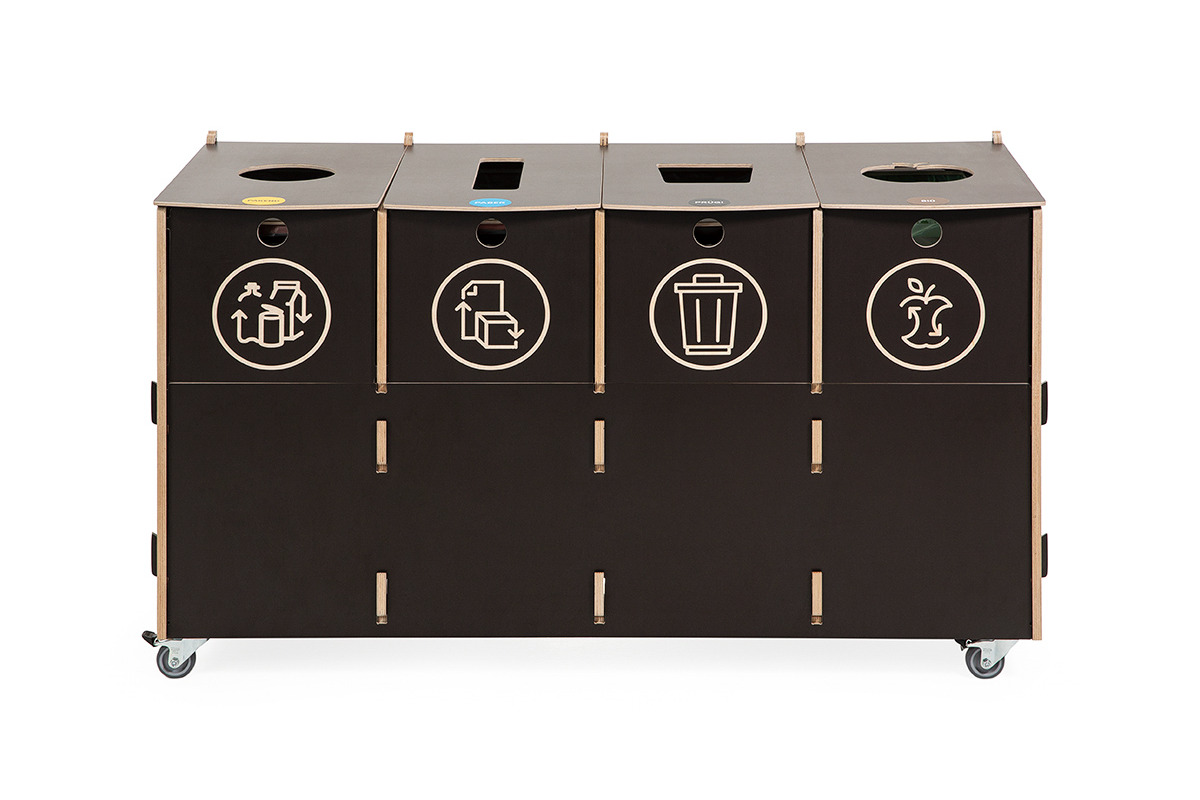
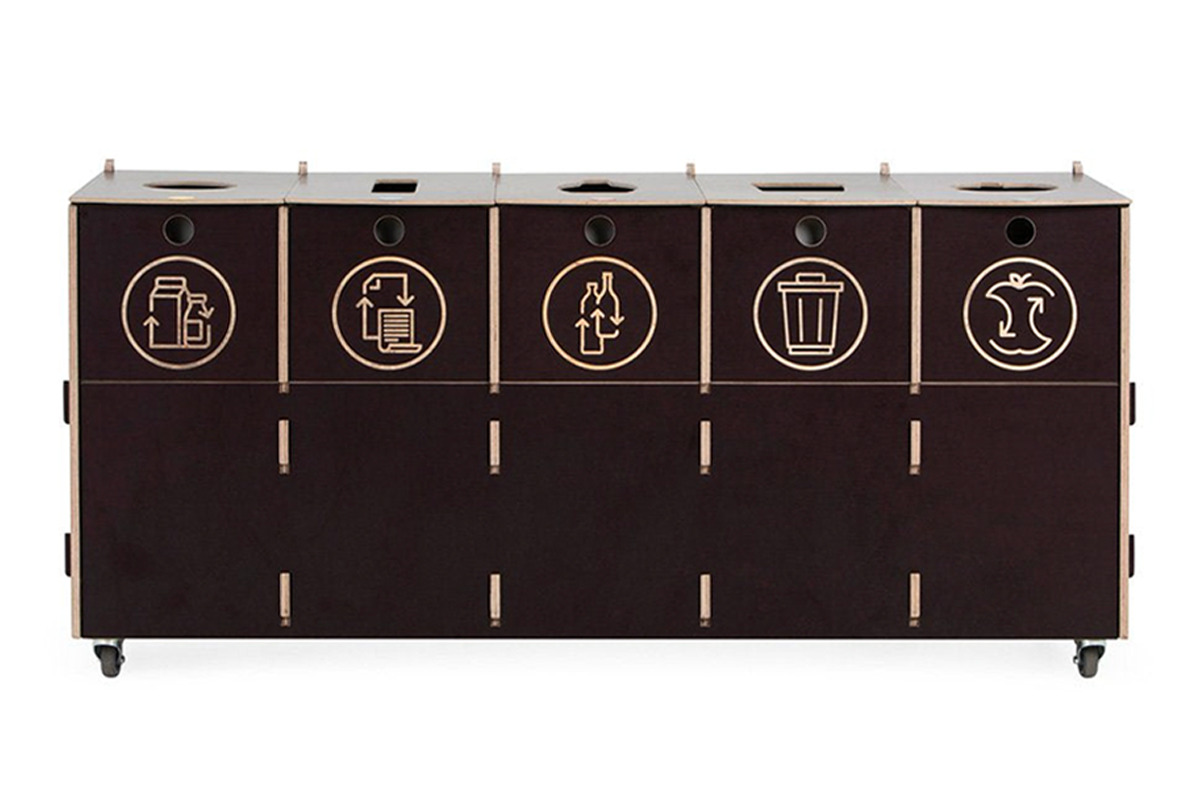
For corporate administrative spaces, executive offices, or cleanroom fulfillment hubs attached to your warehouse, choose high-end sorting systems that deliver regulatory compliance without compromising aesthetic design. Explore our modular recycling bin containers for client-facing facility areas.
Transform Waste Operations into Financial Savings
Building an efficient warehouse waste management system requires a clear operational framework: conduct rigorous waste audits, enforce source separation, deploy ergonomic hardware in key work zones, and maintain thorough compliance records. Preventing contamination preserves raw material value, reduces hauling fees, and advances your sustainability metrics.
Explore our full catalog of modular recycling bins and customizable recycling bin sorters to build a cleaner, safer, and more cost-effective warehouse today.