Are rising waste management costs and complex regulatory mandates straining your facility’s budget? Navigating the waste hierarchy framework allows you to lower operating expenses, maintain compliance, and systematically advance your organization’s environmental goals.
What Is the Waste Hierarchy?
The waste hierarchy is a foundational framework designed to prioritize waste management strategies according to their environmental impact. Recognized across international frameworks and codified under European recycling legislation in Europe, the hierarchy establishes a strict order of preference:
- Prevention (most preferred)
- Preparing for Re-use
- Recycling
- Other Recovery (e.g., energy recovery)
- Disposal (least preferred)
While some international models combine reduction and reuse into a single tier, European regulations explicitly separate prevention from preparing for re-use to emphasize stopping material generation before manufacturing or purchasing occurs.
Transitioning up this conceptual ladder shifts your facility away from a traditional “take-make-dispose” model and aligns daily operations with a broader circular economy for businesses.
Applying the Stages of the Waste Hierarchy
To drive meaningful operational improvements, facility managers must translate each step of the framework into actionable, site-specific policies.
Waste Prevention
Prevention occupies the top tier because stopping waste at the source delivers the greatest environmental and financial benefits. Eliminating materials before they enter your building removes hauling fees, purchasing overhead, and processing requirements.
- Procurement Audits: Review supply contracts to eliminate non-recyclable items, single-use catering supplies, and unnecessary packaging.
- Digital Workflows: Replace paper forms and printing with default digital processes across administrative departments.
- Bulk Purchasing: Transition chemical and cleaning product procurement to refillable bulk dispensers to eliminate single-use plastic containers.
Preparing for Re-use
Preparing for re-use involves checking, cleaning, or repairing surplus items so they can serve another functional cycle within your operations or be transferred to another organization without formal reprocessing.
- Internal Asset Registries: Track office furniture, IT equipment, and maintenance tools before issuing purchase orders for new supplies.
- Take-Back Programs: Partner with suppliers that utilize closed-loop return systems for shipping materials and pallets.
- Donation Networks: Direct functional surplus assets to local schools, non-profits, or community groups.
Recycling and Composting
When materials cannot be prevented or reused, recycling keeps valuable raw feedstock – such as fiber, metal, glass, and rigid plastics – in economic circulation. This tier also includes composting or anaerobic digestion of organic bio-waste streams.
Source separation is vital at this stage. Mixing food waste or liquids with dry paper can push contamination rates over 3% to 5%, causing entire batches to be rejected at processing facilities. You can review best practices on how to sort waste correctly to ensure maximum purity across your streams.
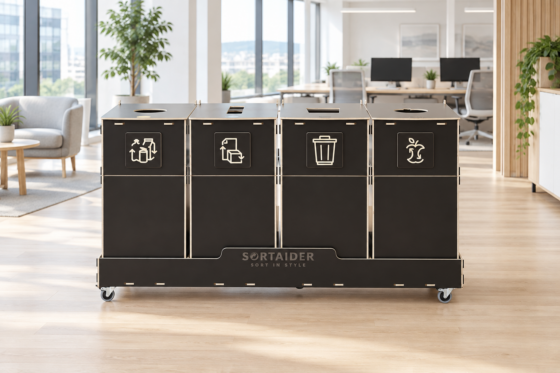
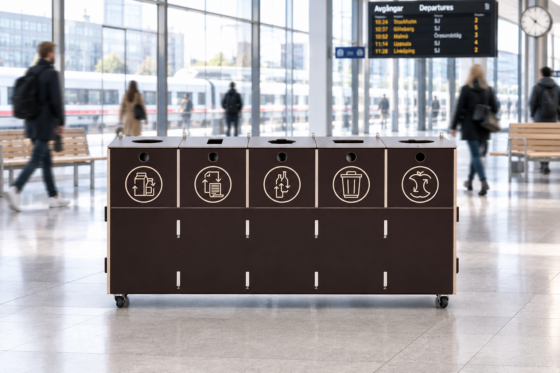
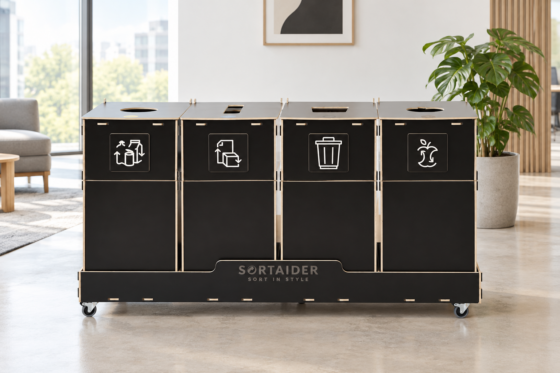
To maintain feedstock purity in busy commercial corridors, modern sites utilize modular recycling bin containers equipped with segregated compartments and clear visual guidance.
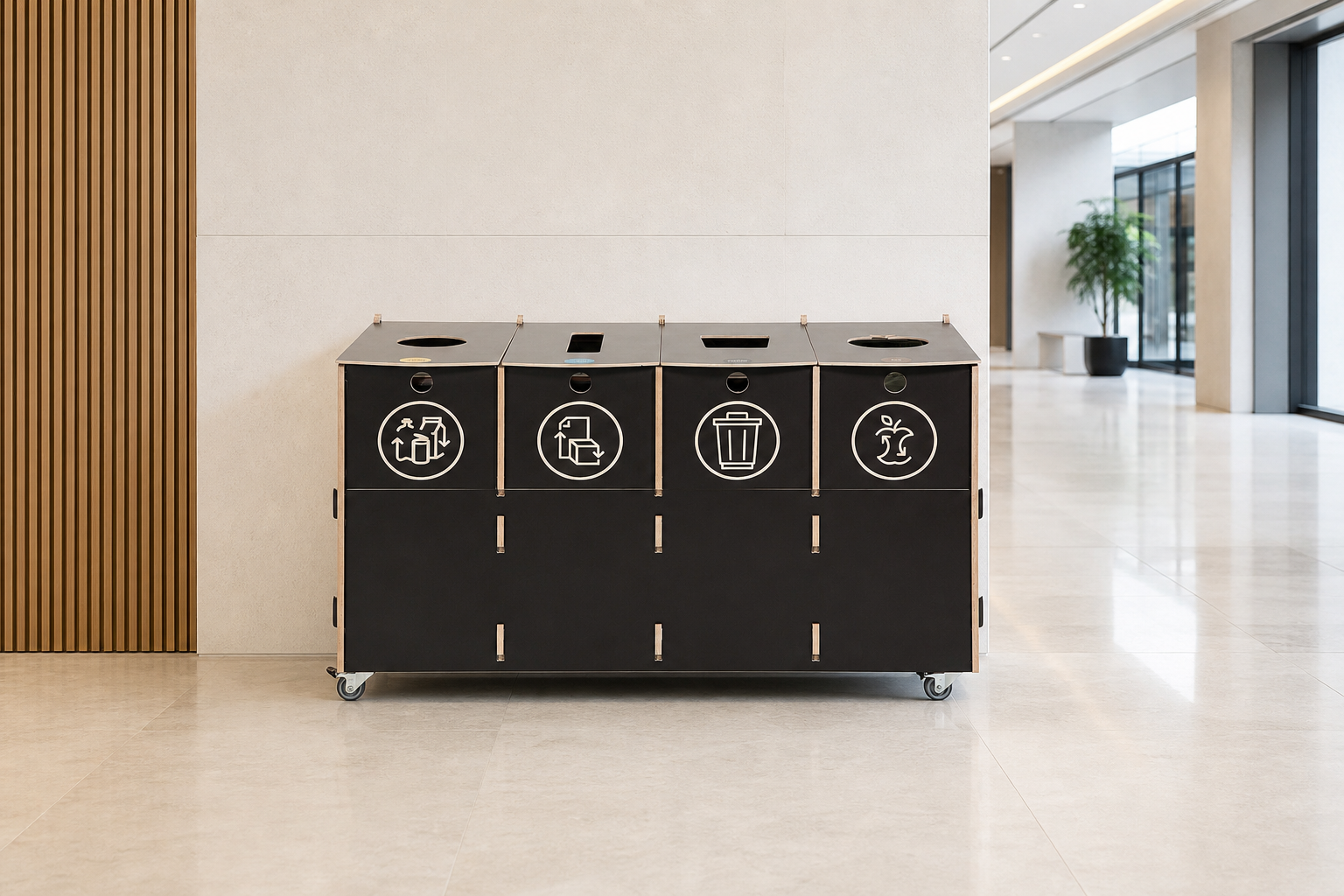
-
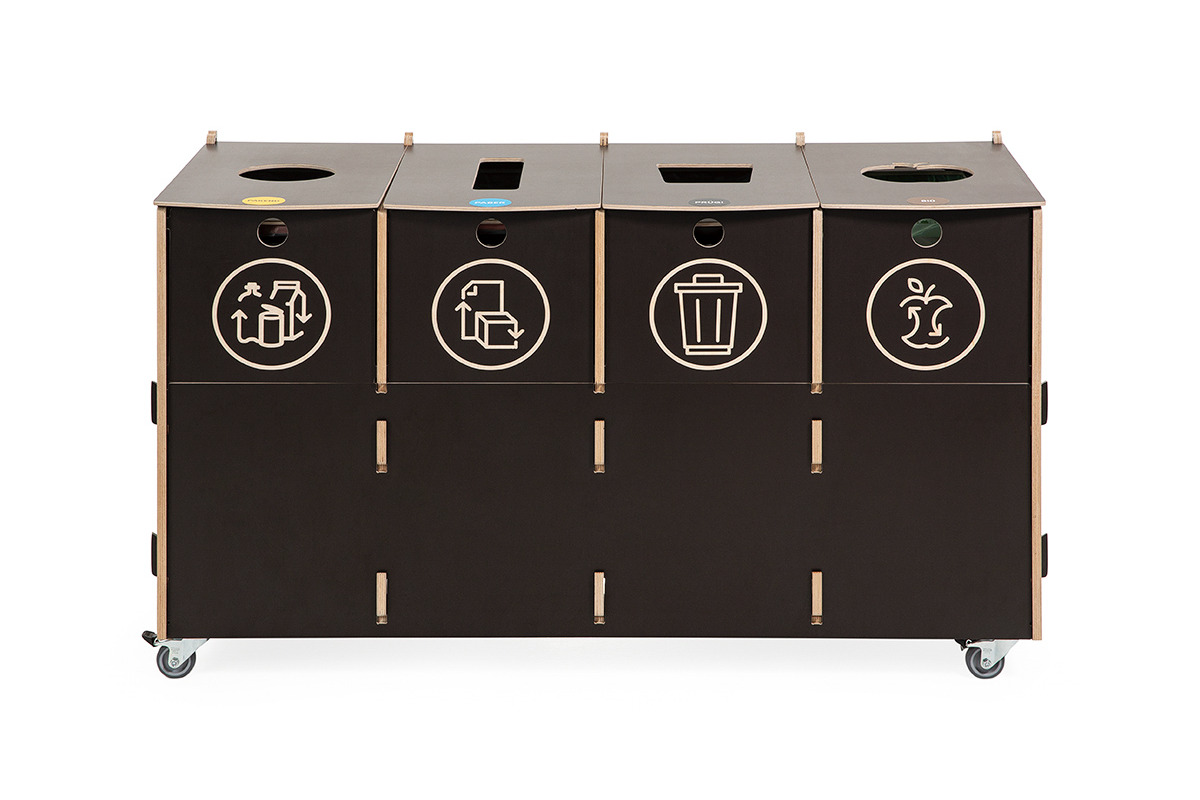
Recycling Bin Container 4 × 40 l brown
4 types of waste 4 x 40 l1 612 € (incl. 24% VAT)1 300 € (excl. VAT) -
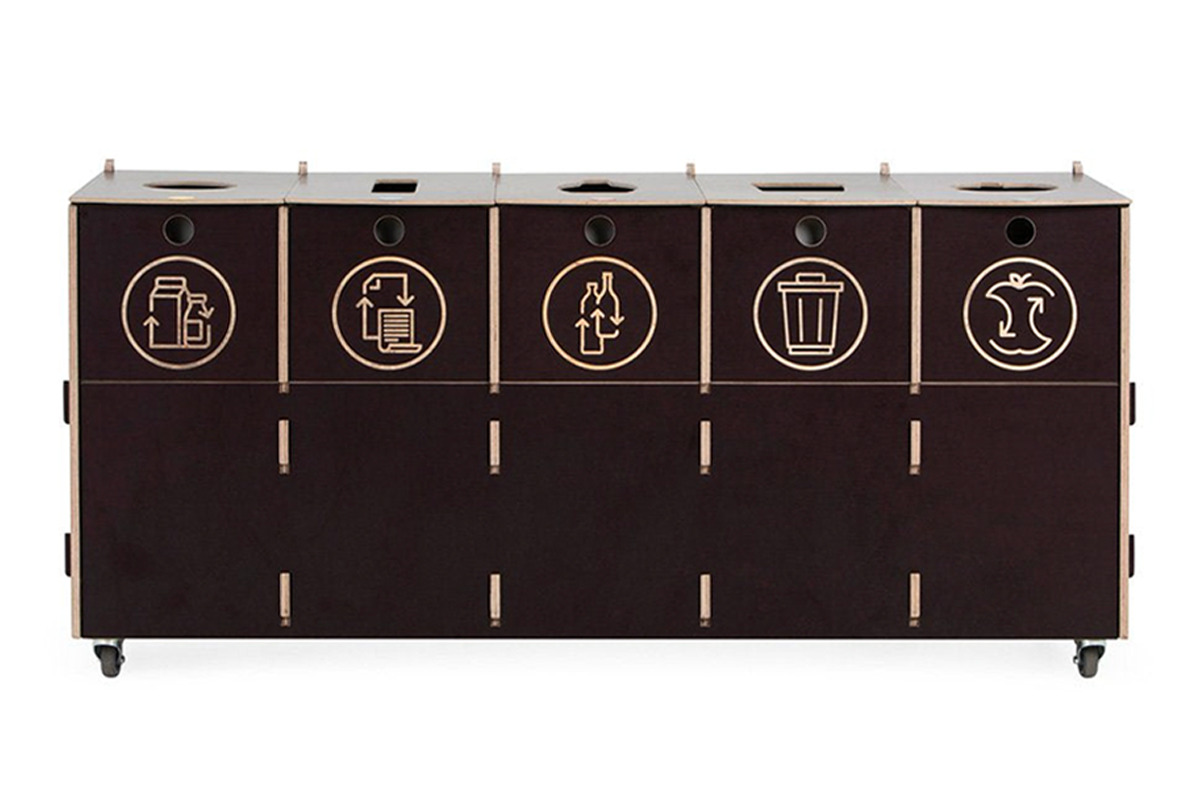
Recycling Bin Container 5 × 40 l brown
5 types of waste 5 x 40 l1 798 € (incl. 24% VAT)1 450 € (excl. VAT) -

Recycling Bin Container 4 × 40 l white
4 types of waste 4 x 40 l1 612 € (incl. 24% VAT)1 300 € (excl. VAT)
Energy Recovery
Recovery applies to residual materials that cannot be economically or technically recycled. Technologies such as direct combustion with energy recovery process non-recyclable waste to produce heat, electricity, or biofuels.
While energy recovery diverts solid waste from landfills and reclaims embodied energy, it sits lower on the hierarchy than recycling because the physical material is permanently removed from the manufacturing loop.
Final Disposal
Disposal – consisting of landfilling and incineration without energy recovery – represents the absolute last resort in facility management. Materials routed to disposal incur the highest municipal tipping fees, generate long-term environmental liabilities, and recover zero economic value.
Operationalizing the Hierarchy: Step-by-Step Implementation
Applying the waste hierarchy effectively requires a systematic operational process to track materials, modify user behaviors, and maintain compliance.
Step 1: Conduct a Waste Audit
You cannot manage what you do not measure. A baseline assessment identifies waste volumes, pinpointing contamination issues and highlighting opportunities for prevention.
By conducting a assessment using a structured guide on running a waste audit for offices, facility managers can evaluate primary material fractions and benchmark current performance.
Step 2: Establish KPIs and Data Tracking
To verify progress, track precise sustainability KPIs for facilities managers. Calculate your Waste Diversion Rate by dividing the total weight of diverted material (reused, recycled, or composted) by the total weight of all generated waste, expressed as a percentage.
Tracking these metrics simplifies mandatory disclosures and supports corporate carbon accounting, particularly for Category 5 operational reporting under Scope 3 emissions and waste guidelines.
Step 3: Optimize Collection Infrastructure
The success of on-site separation relies on human behavior. Designing intuitive collection points prevents sorting errors and encourages proper participation.
- Maintain a 1:1 Ratio: Always pair general waste receptacles directly with dedicated multi-compartment recycling bins. Leaving standalone general waste bins encourages unseparated disposal.
- Eliminate Deskside Bins: Replacing individual deskside trash cans with centralized recycling stations can boost workplace diversion rates by up to 40%.
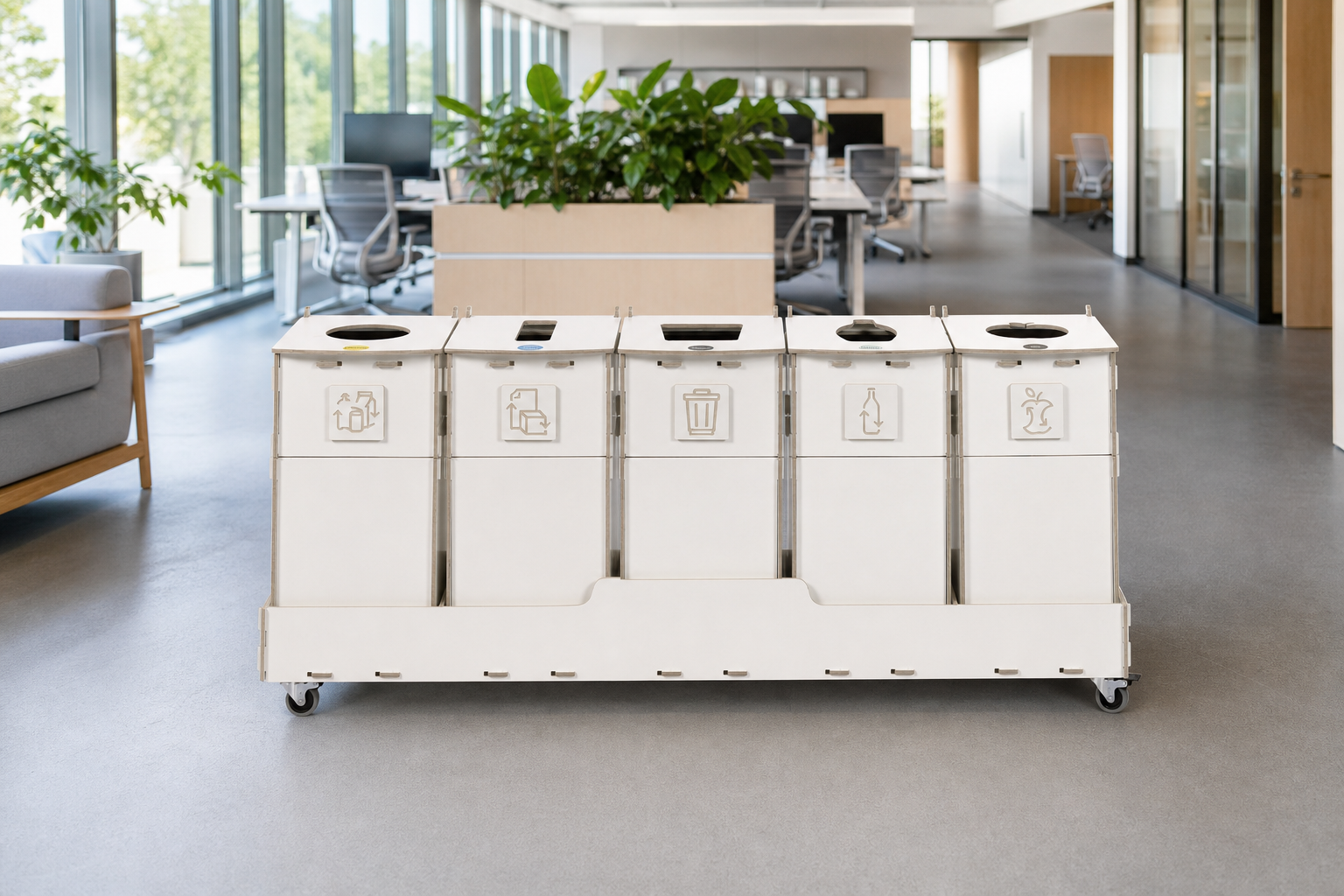
- Deploy Visual Nudges: Use standardized color codes, clear pictograms, and shaped lid openings to guide building occupants instantly.
Versatile stations like mobile recycling bin sorters maintain high separation standards while integrating smoothly into professional interiors.
-
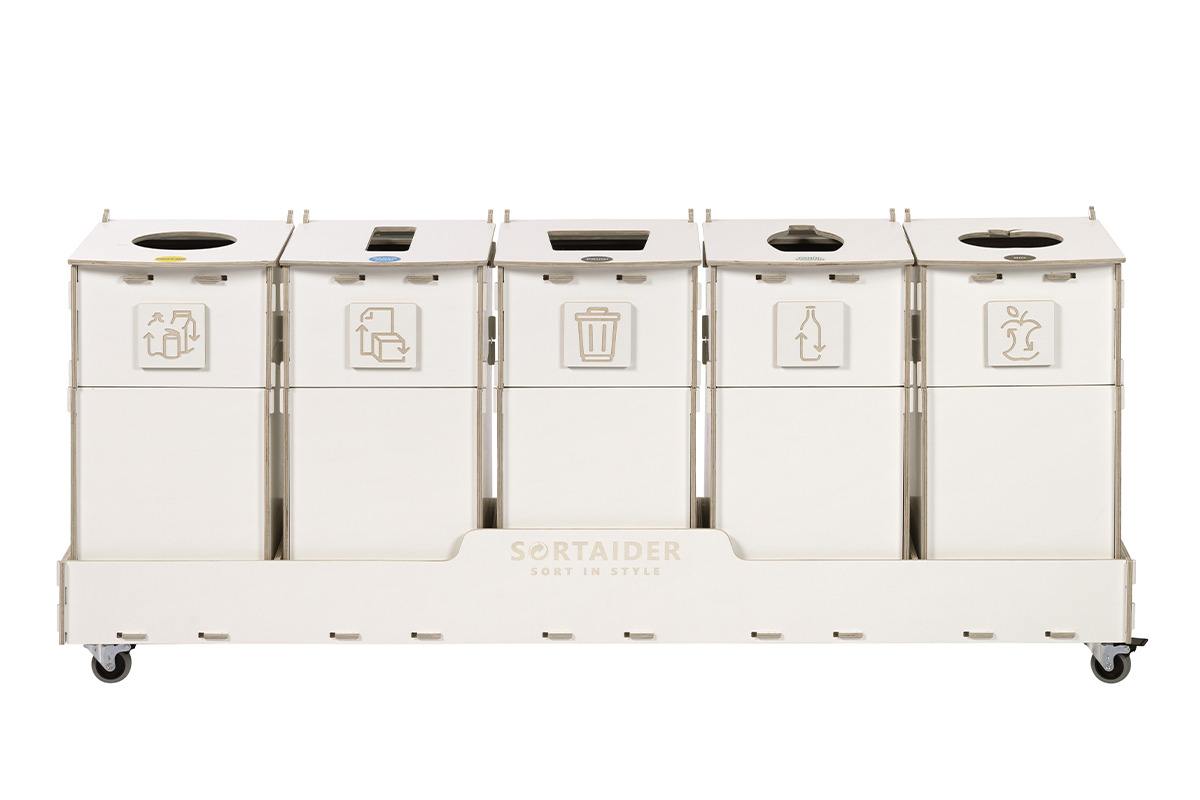
Recycling Bin Sorter 5 × 30 l white
5 types of waste 5 x 30 l1 165,60 € (incl. 24% VAT)940 € (excl. VAT) -
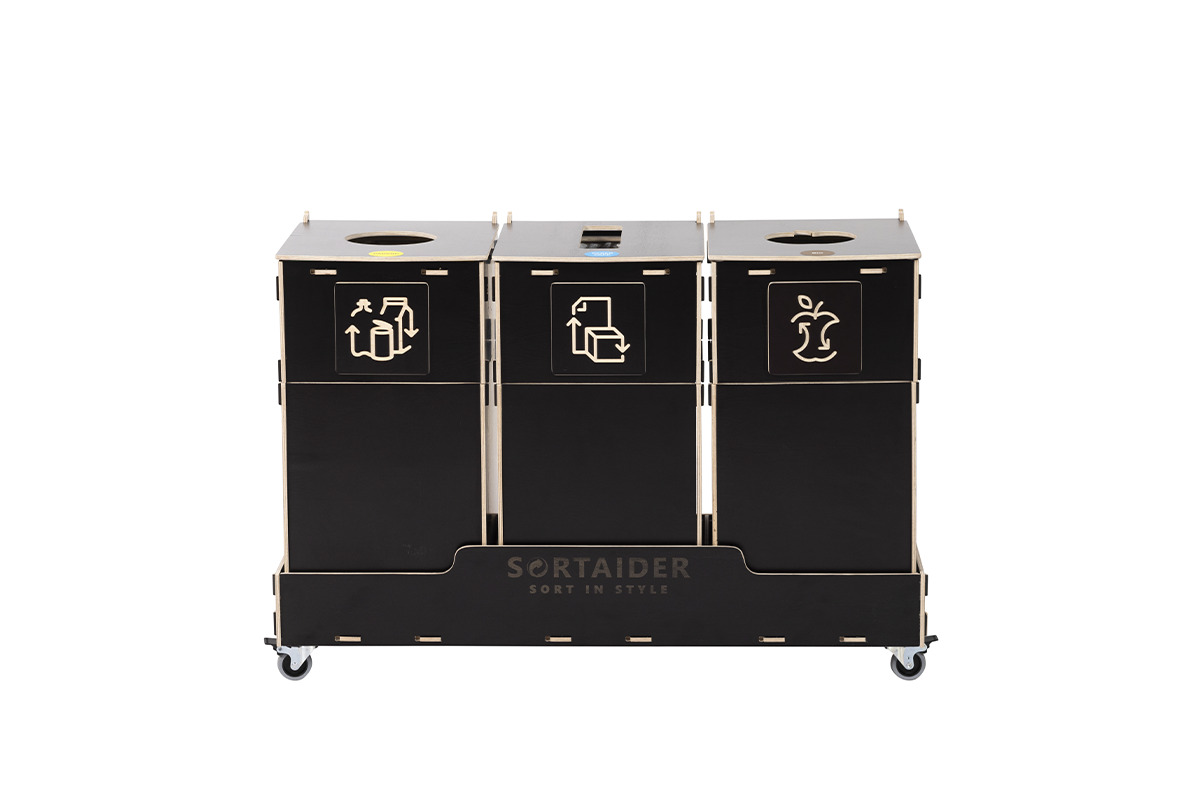
Recycling Bin Sorter 3 × 40 l brown
3 types of waste 3 x 40 l992 € (incl. 24% VAT)800 € (excl. VAT) -
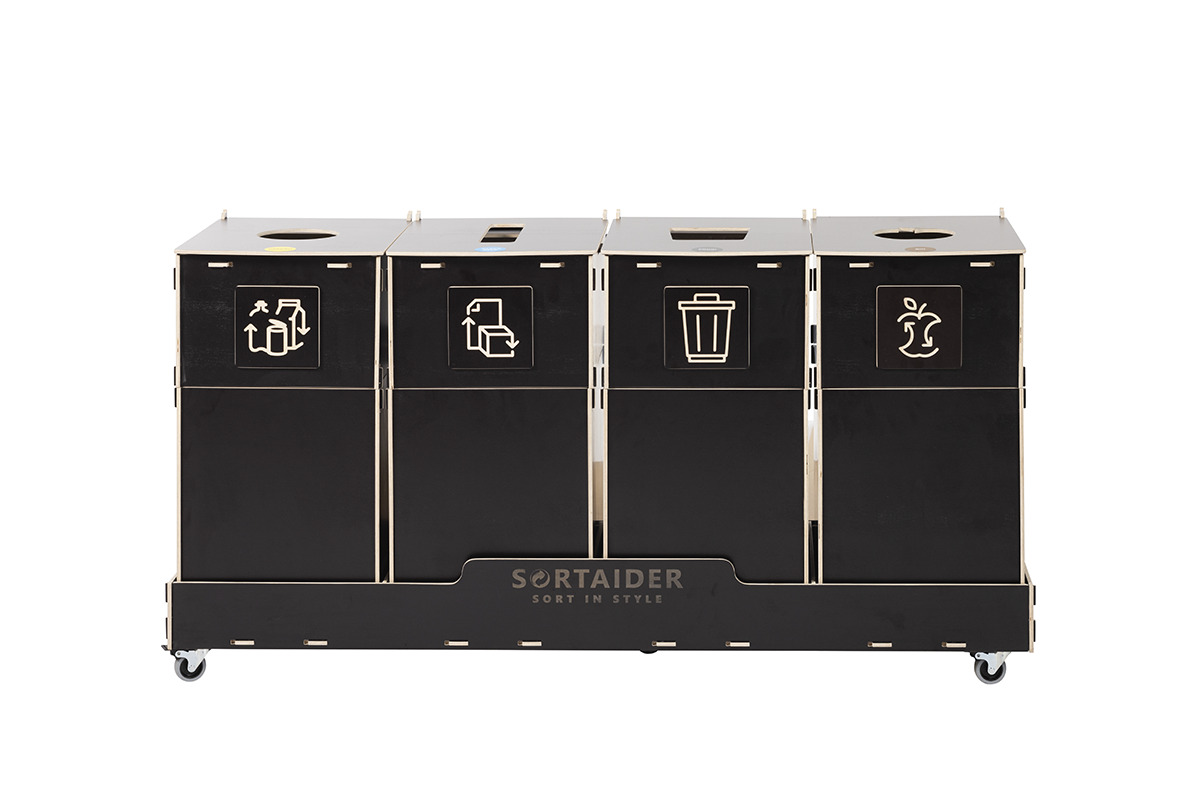
Recycling Bin Sorter 4 × 60 l brown
4 types of waste 4 x 60 l1 500,40 € (incl. 24% VAT)1 210 € (excl. VAT)
Step 4: Ensure Regional Regulatory Compliance
Commercial facilities across Europe face strict sorting mandates. Under current workplace recycling regulations, businesses must separate paper, plastics, glass, metals, bio-waste, and hazardous waste at the source.
National requirements vary across markets. For instance, Denmark enforces a minimum 4-stream separation rule for commercial sites, while Sweden mandates strict food waste segregation for all businesses. In the Baltic region, countries like Estonia enforce strict organic sorting thresholds for commercial properties. Aligning your internal infrastructure with these local baselines protects your organization from non-compliance penalties.
Building a Scalable Waste Hierarchy Strategy
Implementing the waste hierarchy is an ongoing operational commitment. By systematically reducing unnecessary inputs, facilitating asset re-use, and deploying clear sorting infrastructure, facility managers can lower operating costs while keeping their properties fully compliant.
To upgrade your facility’s waste operations, explore the modular solutions available in the Sorta series and establish a comprehensive office waste management plan today.