Is your kitchen losing up to 10% of its inventory directly to the bin? For hospitality managers, waste is more than an environmental concern; it is a direct drain on profitability and a significant regulatory compliance risk under evolving European directives.
Navigating European Waste Regulations
The regulatory landscape for hospitality is shifting from voluntary participation to mandatory enforcement. The workplace recycling regulations established by the EU Waste Framework Directive require businesses to separate paper, metal, plastic, glass, and bio-waste at the source wherever technically feasible. By 2030, the EU aims to reduce food waste by 30% in the consumption sector, placing the burden of proof on restaurant operators to show they are diverting organic material.
Local requirements often exceed these European baselines. In Denmark, workplaces are required to maintain at least four separate waste fractions. Sweden made separate food waste collection mandatory for all businesses in 2024, and Estonia mandates dedicated organic streams for any site generating more than 10kg of bio-waste daily. Failing to meet these standards can result in steep contamination fines or the rejection of entire waste loads at Material Recovery Facilities (MRFs), where a contamination threshold of just 3–5% can ruin a batch.
Auditing Your Waste Streams
You cannot manage what you do not measure. A successful hospitality waste reduction strategy begins with a comprehensive audit. By weighing and logging materials over a seven-day period, you can identify high-volume areas and right-size your collection services to avoid paying for half-empty bins. Effective audits typically categorize waste into three streams:
- Prep Waste: Peelings, off-cuts, and kitchen scraps that should be diverted to composting or anaerobic digestion.
- Plate Waste: Uneaten food returned by guests, which often signals a need for menu adjustments or portion control.
- Packaging Waste: Cardboard, films, and plastics from inventory shipments that require dry, clean separation.
Balancing Front-of-House and Back-of-House Needs
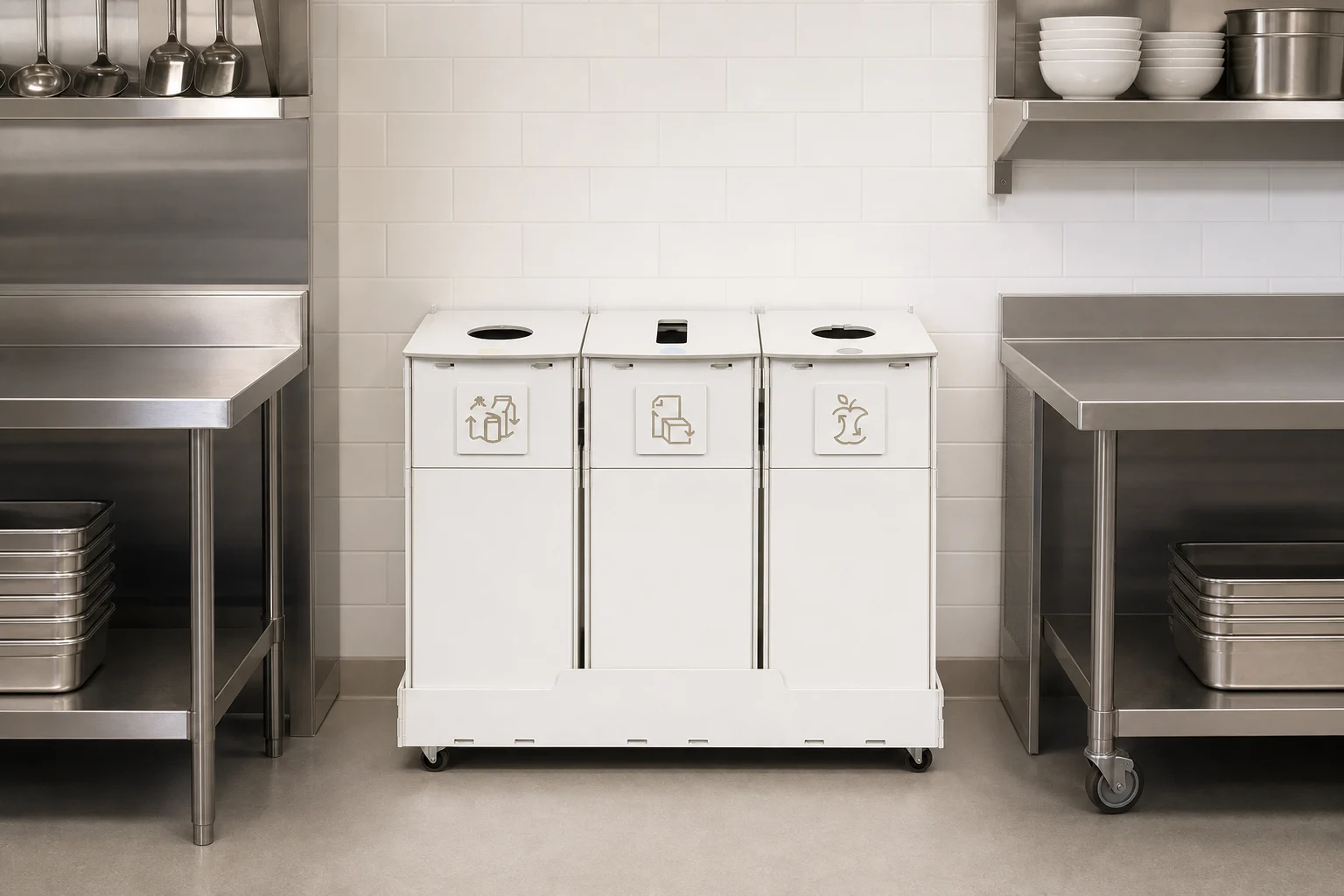
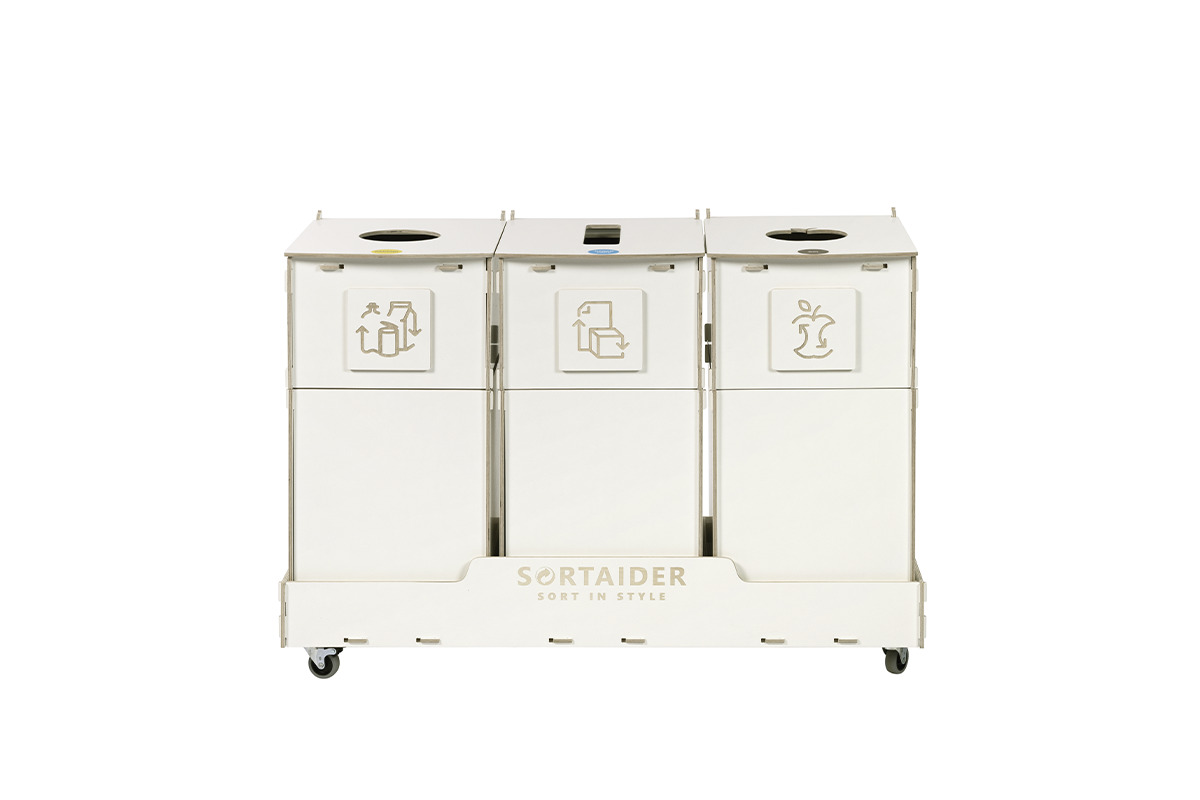
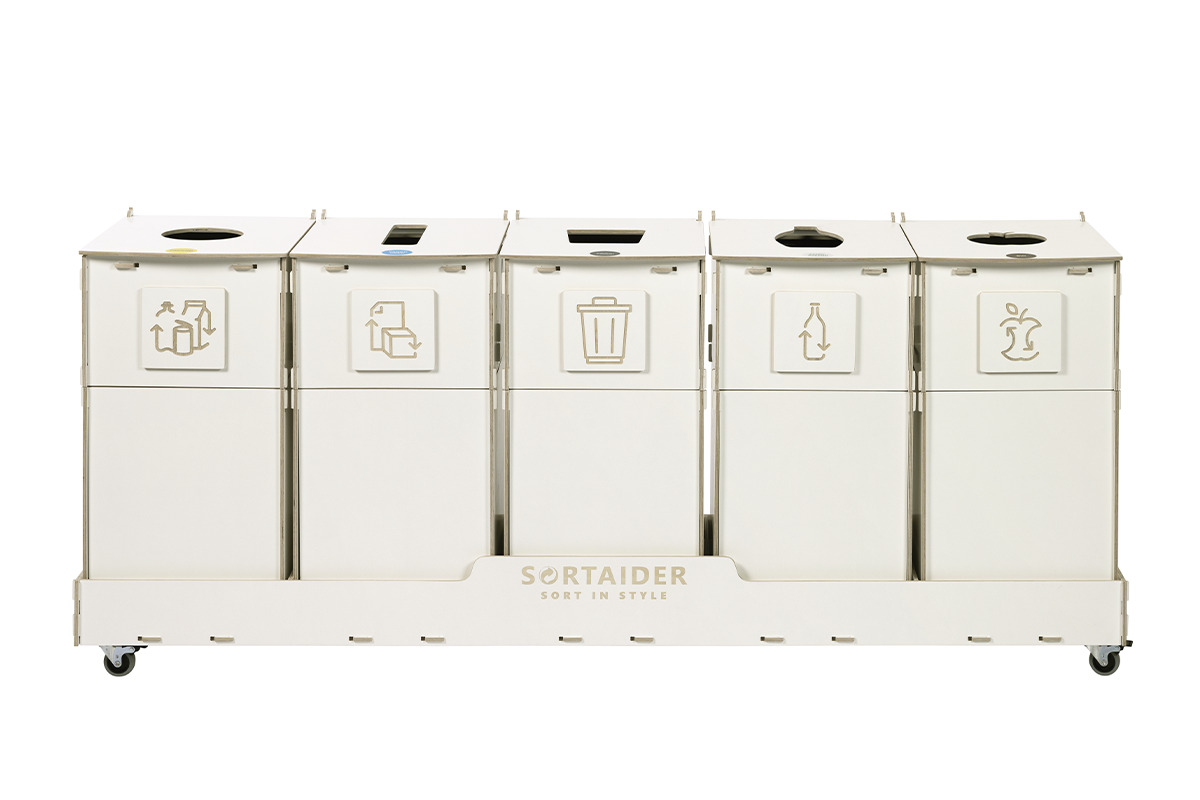
Your waste management system must balance the high-volume, moisture-heavy conditions of a commercial kitchen with the aesthetic requirements of guest-facing areas. In the kitchen, the focus is on durability, hygiene, and speed. Choosing bins made from moisture-resistant laminated plywood ensures the stations withstand humid environments while being easier to sanitize than standard plastic.
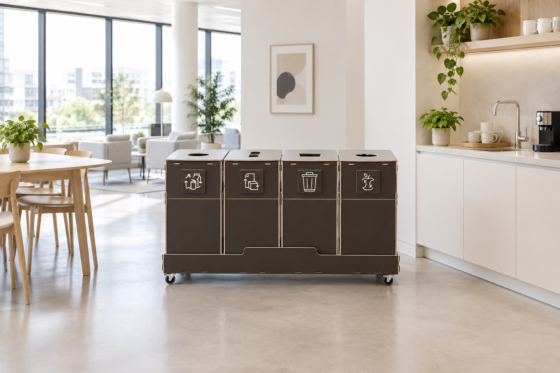
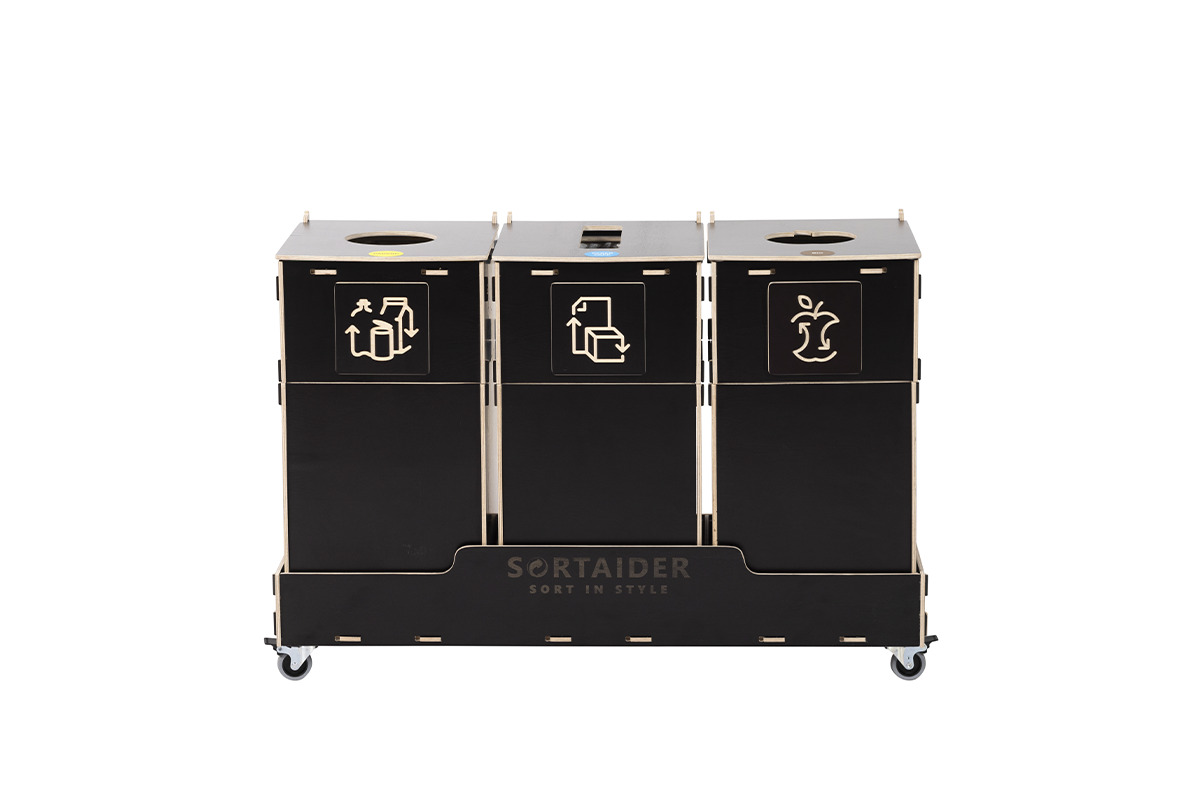
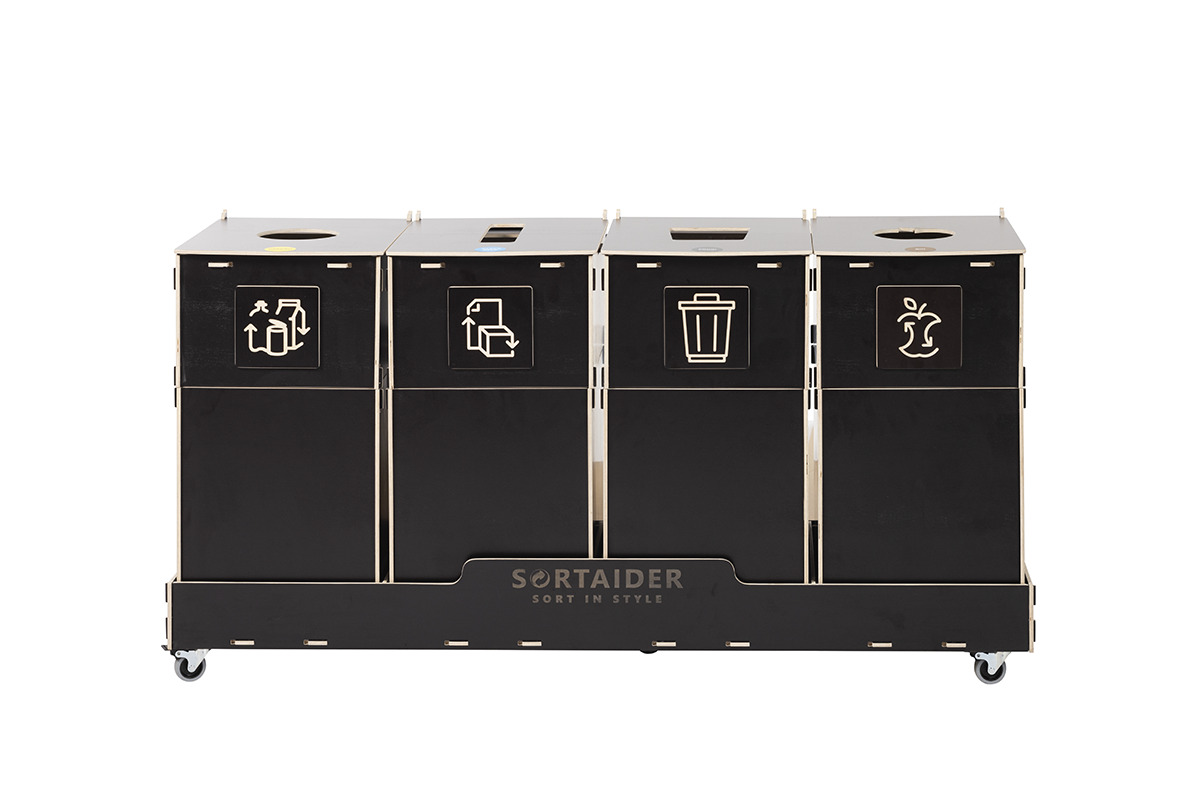
In guest areas, hotel waste management best practices suggest that participation rates increase by up to 40% when bins are visually integrated into the interior design. Using modular, award-winning designs helps transform a functional necessity into a branded element. When guests see clear, high-contrast pictograms on an attractive sorting station, they are significantly more likely to sort their waste correctly, reducing the labor burden on your staff.
-
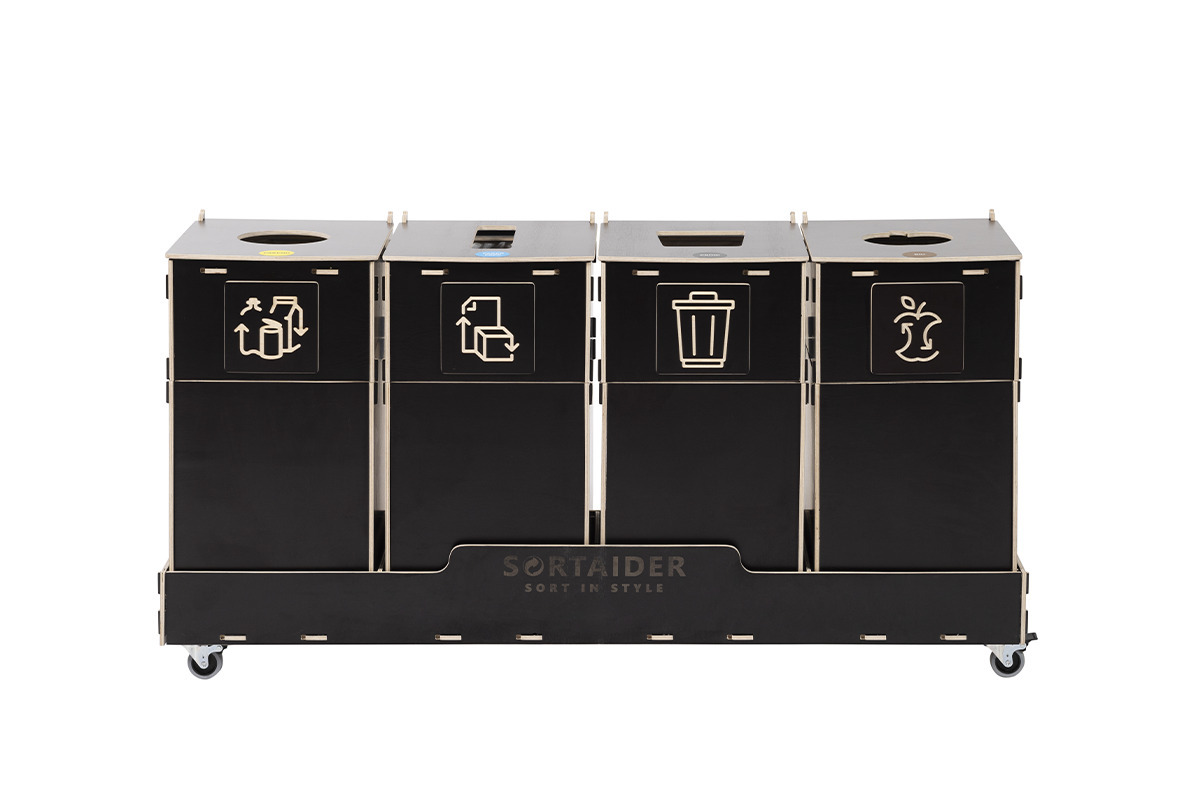
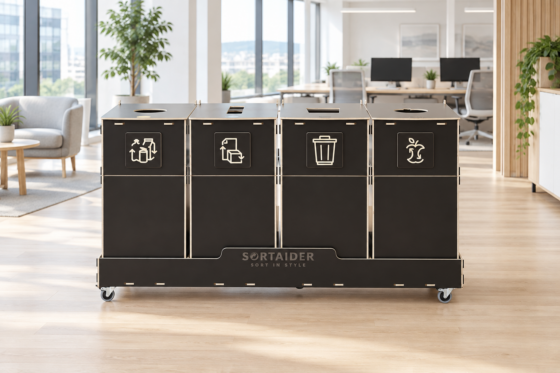
Recycling Bin Sorter 4 × 40 l brown
4 types of waste 4 x 40 l1 289,60 € (incl. 24% VAT)1 040 € (excl. VAT) -
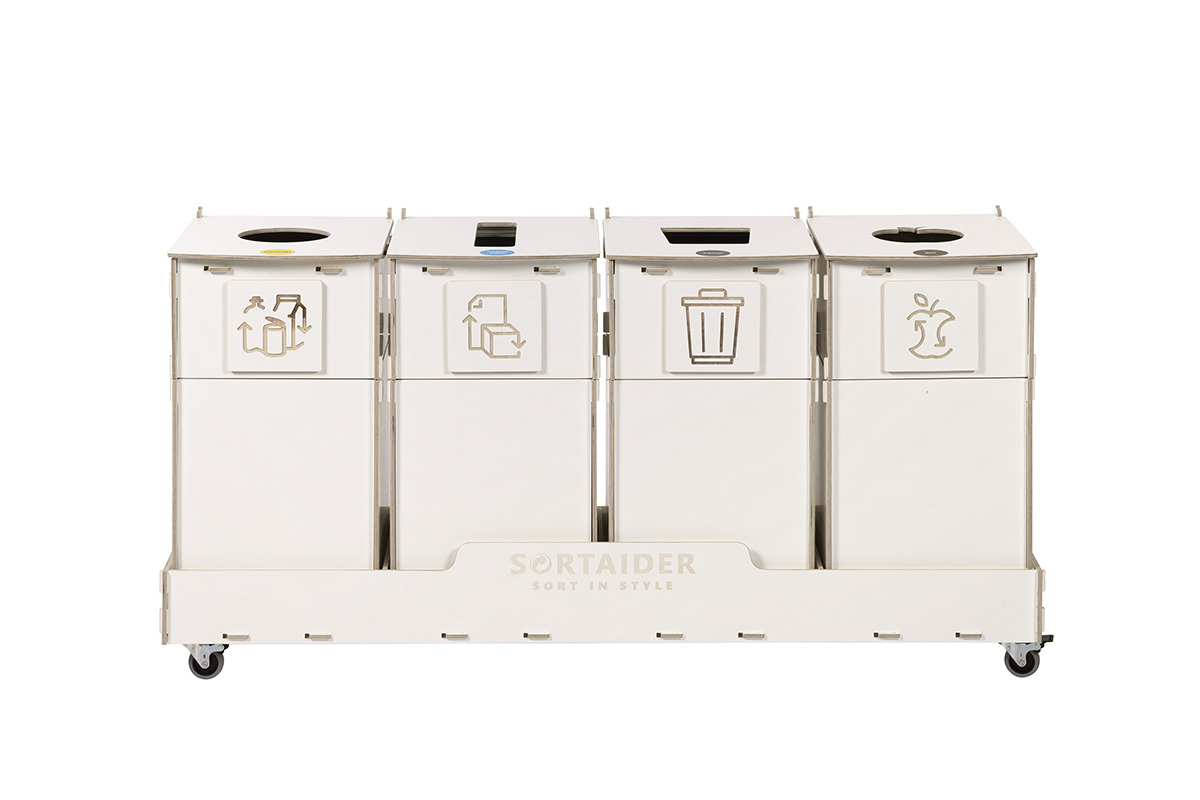
Recycling Bin Sorter 4 × 40 l white
4 types of waste 4 x 40 l1 289,60 € (incl. 24% VAT)1 040 € (excl. VAT) -
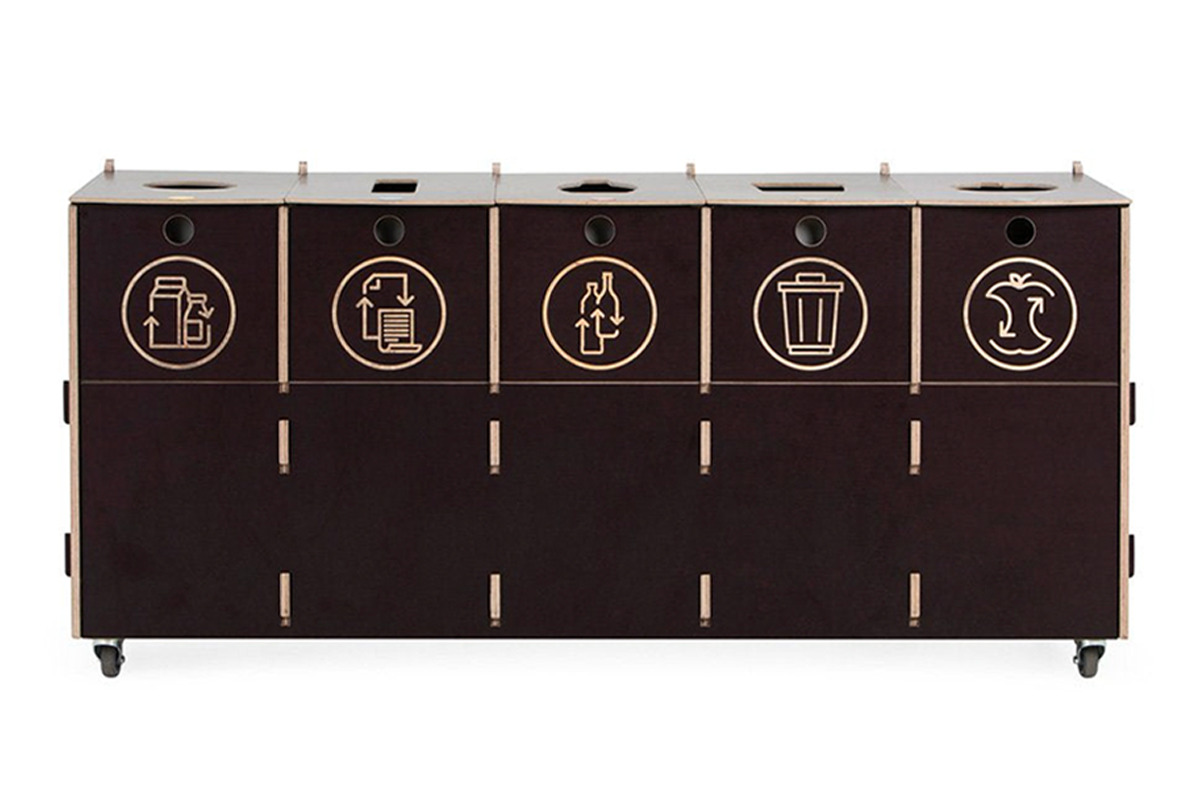
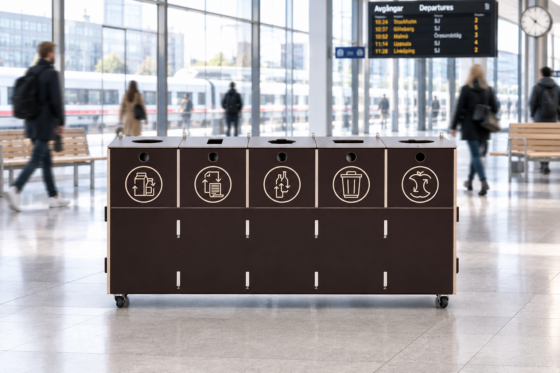
Recycling Bin Container 5 × 40 l brown
5 types of waste 5 x 40 l1 798 € (incl. 24% VAT)1 450 € (excl. VAT)
Reducing Contamination and Packaging Waste
Contamination is the primary reason why well-intentioned recycling programs fail. A single greasy pizza box can ruin an entire batch of paper recycling; the “Pizza Box Rule” dictates that while the clean lid is recyclable, the greasy bottom must be diverted to residual waste or composting. To prevent these errors, ensure your stations use clear pictograms and bilingual instructions to guide both staff and guests through common recycling contamination causes.
Under packaging waste regulations for businesses, many hospitality operators are now held to Extended Producer Responsibility (EPR). This means you are financially accountable for the lifecycle of the packaging you distribute. Reducing take-out waste by offering compostable alternatives or encouraging reusable containers can lower your “eco-contributions” and disposal fees.
Maintaining Professional Hygiene Standards
Maintaining professional standards requires a systematic approach to cleaning and sanitising recycling bins. Bio-waste and food-soiled packaging quickly attract pests and harbor bacteria if containers are not leakproof and maintained in a sanitary condition. OSHA and general health regulations require that waste containers be nonabsorbent and emptied daily to avoid creating health hazards.
Modern sorting stations facilitate this by offering accessible compartments and integrated bag rolls to streamline maintenance. Furthermore, choosing plywood constructions supports your broader ESG reporting for waste management. These units offer 2–4x lower CO₂ lifecycle emissions compared to metal or plastic, helping you hit sustainability targets while keeping your facility compliant and odor-free.
-
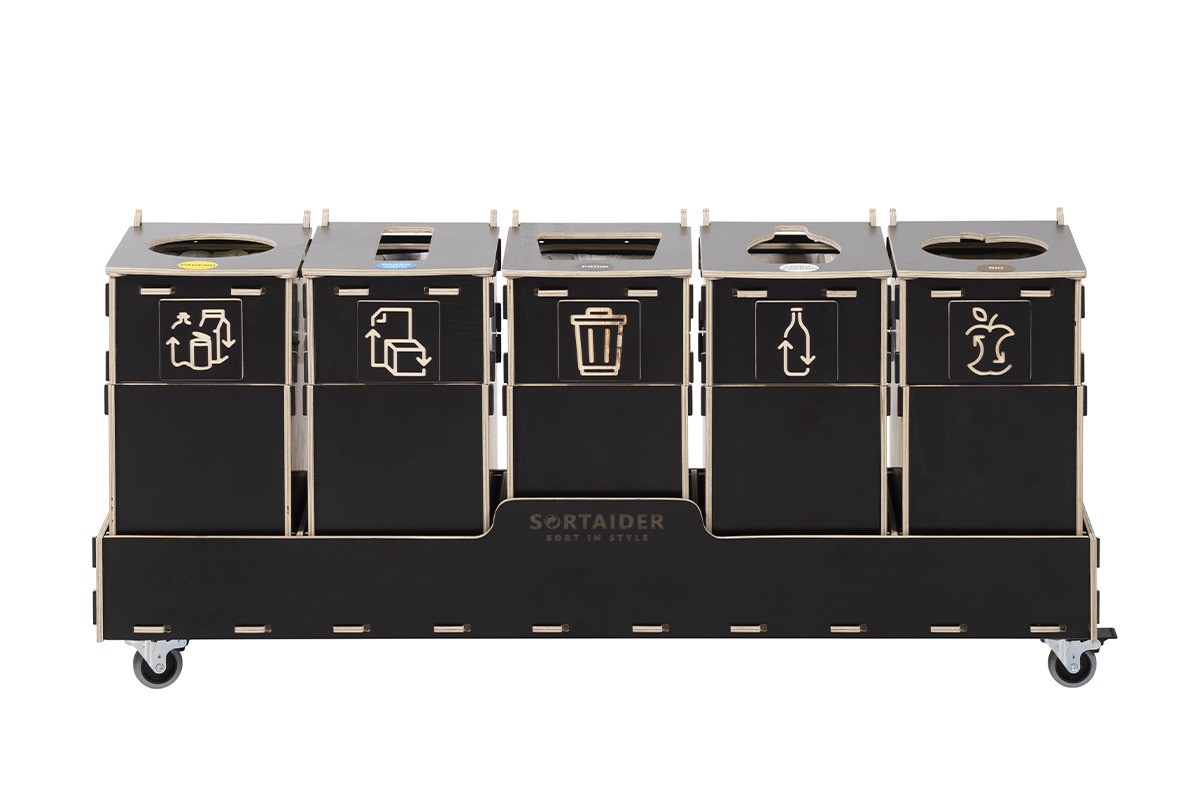
Recycling Bin Sorter 5 × 10 l brown
5 types of waste 5 x 10 l458,80 € (incl. 24% VAT)370 € (excl. VAT) -
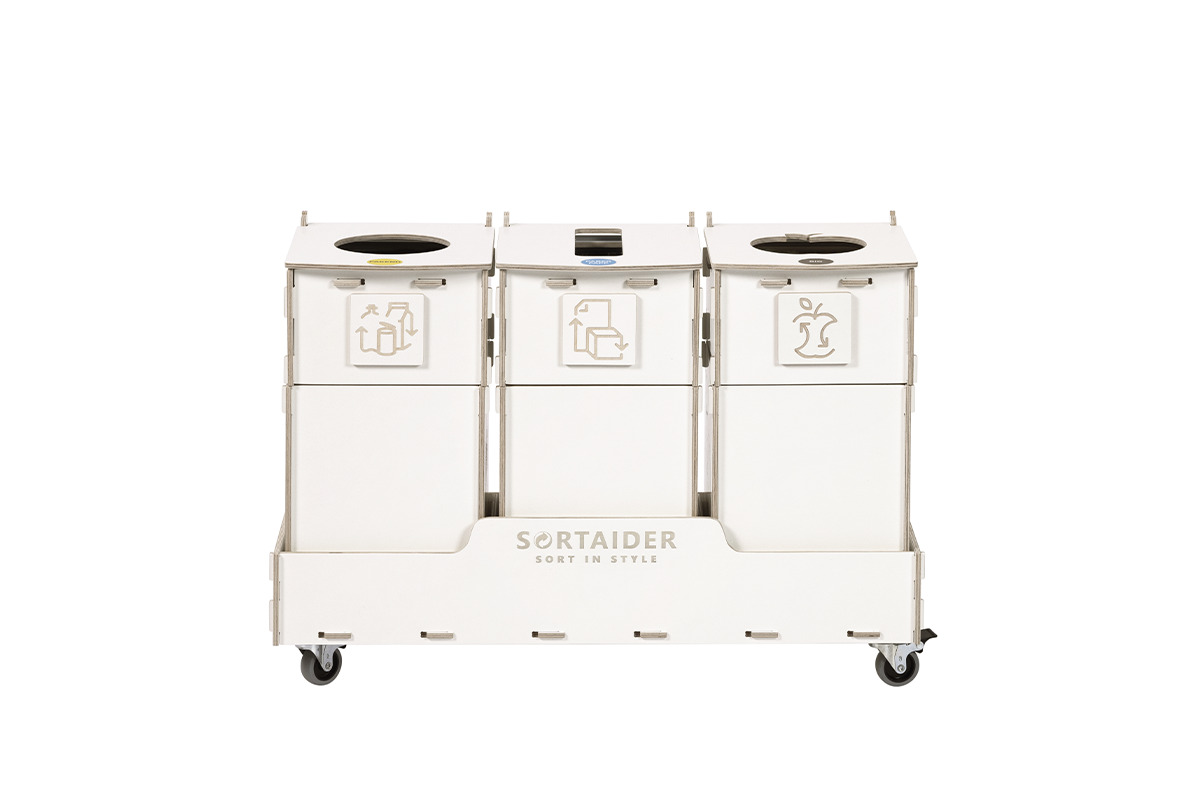
Recycling Bin Sorter 3 × 20 l white
3 types of waste 3 x 20 l471,20 € (incl. 24% VAT)380 € (excl. VAT) -
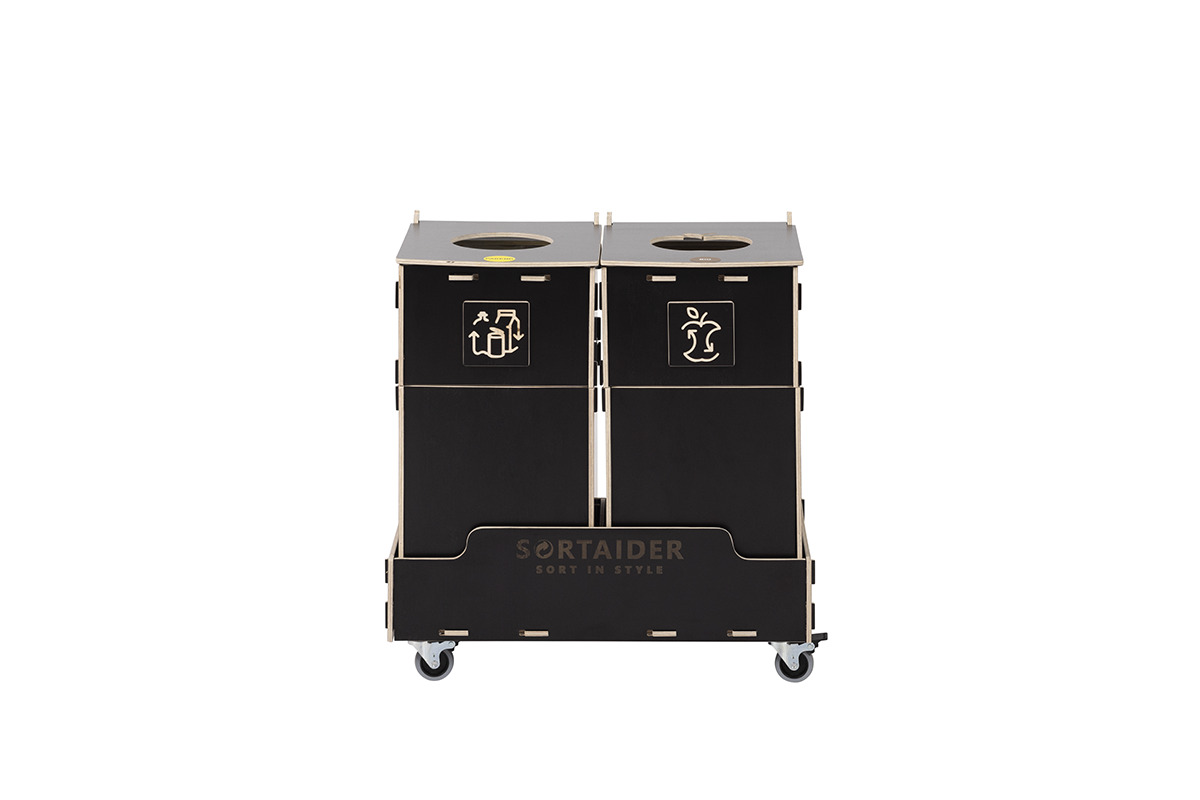
Recycling Bin Sorter 2 × 30 l brown
2 types of waste 2 x 30 l508,40 € (incl. 24% VAT)410 € (excl. VAT) -
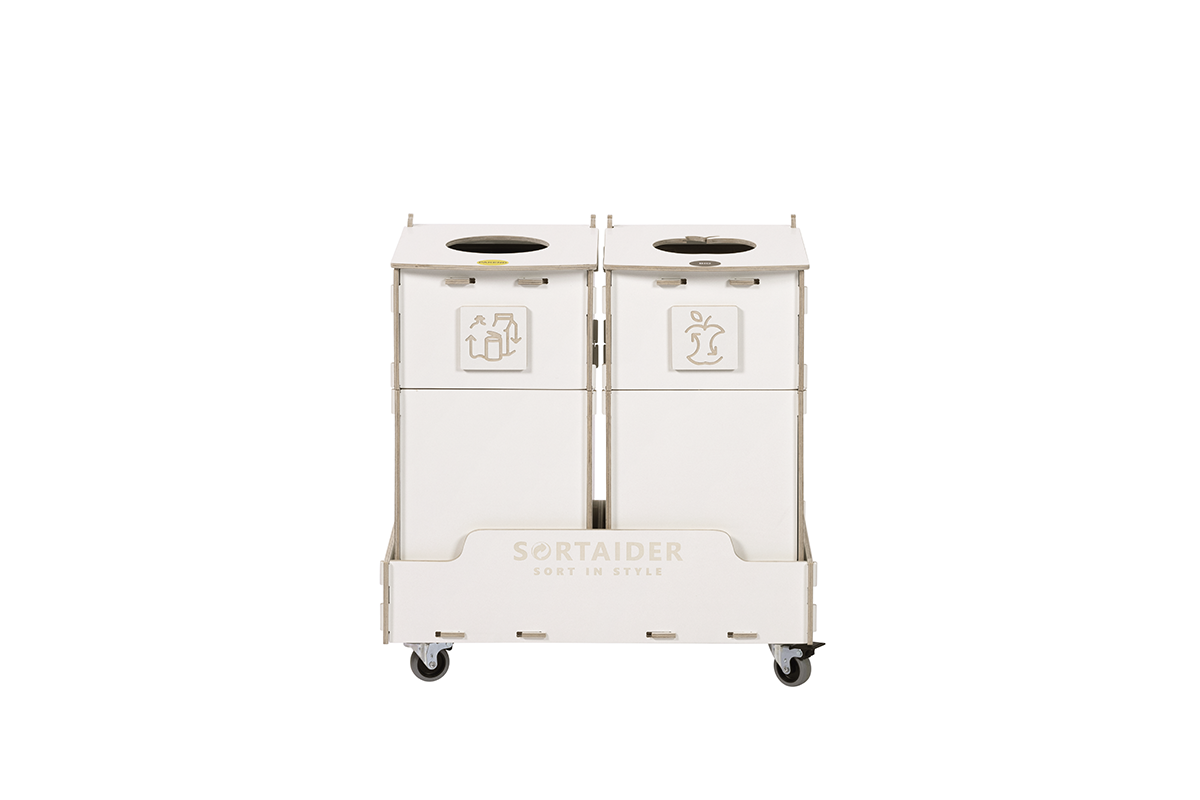
Recycling Bin Sorter 2 × 30 l white
2 types of waste 2 x 30 l508,40 € (incl. 24% VAT)410 € (excl. VAT) -
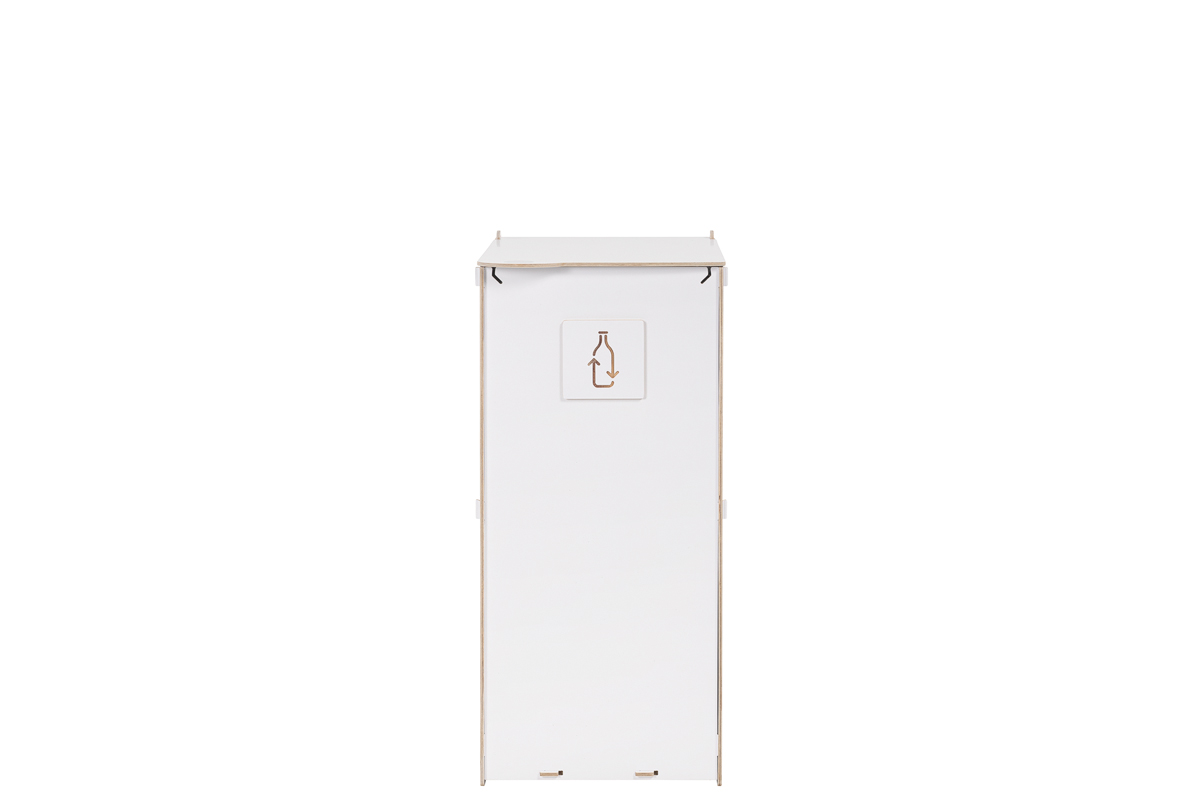
Waste Bin Sort 1 × 120 l white
1 type of waste 1 x 120 l297,60 € (incl. 24% VAT)240 € (excl. VAT)
Implementing a rigorous waste management process allows your restaurant to cut disposal fees by up to 50% while ensuring full compliance with European law.
Optimize your hospitality waste system today. Explore our full range of recycling bin sorters or waste bins to find the modular solution that fits your restaurant’s unique operational flow.