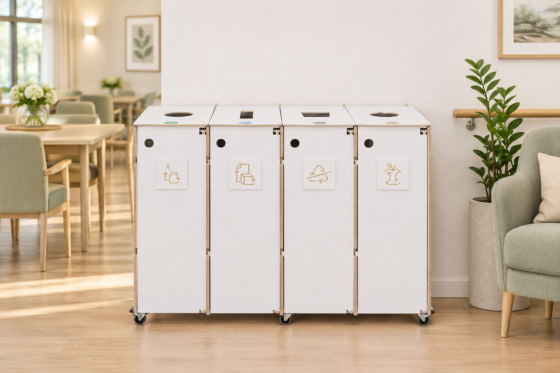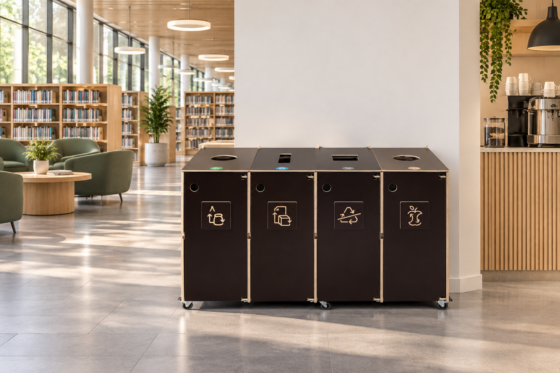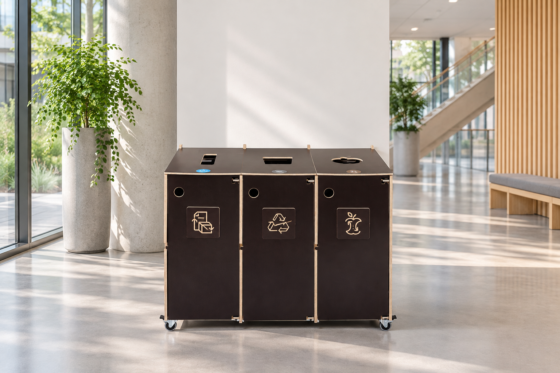
One greasy pizza box can spoil a bin of good office paper. This guide shows you how to separate clean from contaminated paper, and what to ask your local collector before you label a single bin.
Quick answer: the office paper sorting rules
| Goes in the paper bin | Stays out of the paper bin |
|---|---|
| Copy and printer paper, any colour | Food-soiled or greasy paper, tissues, paper towels |
| Letters, notepads, notebooks (spirals removed) | Laminated, wax-coated or plastic-coated paper |
| Envelopes, folders, brochures, flyers | Thermal receipts and carbonless copy paper (rules vary) |
| Dry, flattened cardboard (if your collector takes it together with paper) | Paper cups, sticky notes, loose shredded paper (check locally) |
The right-hand column is where local rules differ most, so treat it as a list of questions for your collector, not a final verdict.
What counts as clean office paper
Clean paper is dry, free of food and grease, and free of non-paper material. Most daily office output qualifies: printouts, copy paper, letters, envelopes and notepads. Germany’s federal waste-paper guidance and the German paper producer Steinbeis both list writing and photocopying paper and letters as waste paper. Staples can usually stay in. Norwegian municipalities such as Stavanger and Bærum say you do not need to remove them from sheets or envelopes.
Why does “clean” matter so much? Paper mills grade incoming material under the European standard EN 643. For most grades it caps non-paper components such as plastic, metal and glass at about 1.5% by weight. In practice that is 15 kg of non-paper material in a 1,000 kg bale. That figure is an illustration of the cap, not a price list. The more a bin collects spoiled paper, the more likely a load is downgraded or discarded.
Recycling clean paper pays off because the fibre keeps its value. The European Paper Recycling Council reports that 75.1% of paper products in Europe were recycled in 2024. The often-quoted limit of 5–7 recycling cycles is outdated: a 2023 industry review (NCASI) notes that studies have recycled fibres 25 times in laboratory conditions without significant strength loss. Real-world cycles are fewer, because mills remove fibre and add fresh fibre to keep quality.
Contaminated paper: what to keep out and why
Contamination means anything that stops paper from becoming fibre again: food, liquids, plastic films, coatings and chemicals. These are the items that cause most workplace sorting errors.
| Item | Problem | What to do |
|---|---|---|
| Greasy takeaway boxes, pizza box bases | Grease interferes with the fibres during pulping | Put the clean lid in paper if your collector allows it; the greasy base goes to residual or food waste |
| Tissues, paper towels, napkins | Soiled, low-grade fibre | Residual waste |
| Laminated or wax-coated paper | Plastic or wax layer does not pulp; many programmes refuse it | Residual waste unless your collector says otherwise |
| Thermal receipts (shiny, fade when scratched) | Coated with a developer chemical, often BPA or BPS | German guidance excludes them from waste paper. Italy’s Comieco allows phenol-free thermal paper in the paper stream. Check locally |
| Carbonless copy paper | German municipal guidance excludes it | Residual waste unless your collector says otherwise |
| Paper coffee cups | Plastic lining at most plants | Residual waste unless your collector has a dedicated cup stream; reusable cups are the better fix |
| Sticky notes | Accepted by some programmes, refused by others | Follow your collector’s list |
Two items deserve extra care.
Shredded paper. Shredding shortens fibres, and a 2021 study in Scientific Reports found that cutting paper into pieces under 25 mm² significantly changed fibre properties and makes high-quality paper harder to produce. Loose shreds also escape from containers and sorting lines. Some collectors accept them only in a closed paper envelope or bag. Others do not take them in the paper stream at all. If your office shreds routine paper, ask about shred size and packaging before you bin it.
Mixed bins. Where one bin collects everything, sorting plants separate the paper later. Even so, a 2025 survey by the US Recycled Materials Association found that 70% of North American mills buying fibre from mixed waste processing centres rated it worse than other recovered paper. A dedicated paper bin at the source is cleaner by design.
If your team often asks about paper cups, caps and other look-alike items, our guide to recycling myths that contaminate your bins covers them.
Check your local collector before you label the bins
Bin labels should match the list your collector actually works from. The EU Waste Framework Directive (Article 11) requires Member States to set up separate collection at least for paper, metal, plastic and glass. How that works for a workplace differs by country, and sometimes by municipality:
- Finland: office paper and envelopes fall under a producer-responsibility decree for paper products. Businesses generally order waste transport from private waste companies, and paper collection cannot be ordered from the HSY municipal authority in Helsinki.
- Sweden: producer responsibility for return paper was abolished in 2022. Office paper from professional businesses is excluded from municipal responsibility, so you may need to arrange handling yourself. Swedish guidance also treats envelopes differently from Finnish and German guidance.
- Denmark: businesses must sort paper and keep it clean and dry. You stay responsible for making sure it reaches an approved facility.
- Estonia, Latvia, Lithuania: paper and cardboard are among the waste types to be collected separately at business premises. In Lithuania, collection is arranged through contracts with waste-management companies, and Latvia also makes separate collection mandatory for business waste.
- Outside the Nordics and Baltics: in England, workplaces have had to separate recyclable waste, including paper, since 31 March 2025. Micro-firms (fewer than 10 full-time employees) have until 31 March 2027.
Rules change, so confirm current requirements with your contractor or municipality. Ask them these questions and write the answers on your sorting signs:
- Is paper collected alone, or together with cardboard?
- Are window envelopes, staples and glossy brochures accepted?
- How should shredded paper be packed, if it is accepted at all?
- Are thermal receipts, carbonless paper and sticky notes accepted?
- Are paper cups collected in a separate stream?
- What happens if a container is found contaminated, and who tells you?
- What bin or container sizes and emptying frequencies can they offer?
For help turning the answers into a bin plan, see our guide to how often commercial recycling bins should be emptied.
Set up the paper bins so people sort correctly
Most paper contamination is a habit and layout problem, not a knowledge problem. Four decisions help.
Put big paper capacity where paper is made. Print and copy rooms produce the most paper, so they need large dedicated paper containers. Pair every general waste bin with a recycling stream beside it, so nobody has to walk to sort.
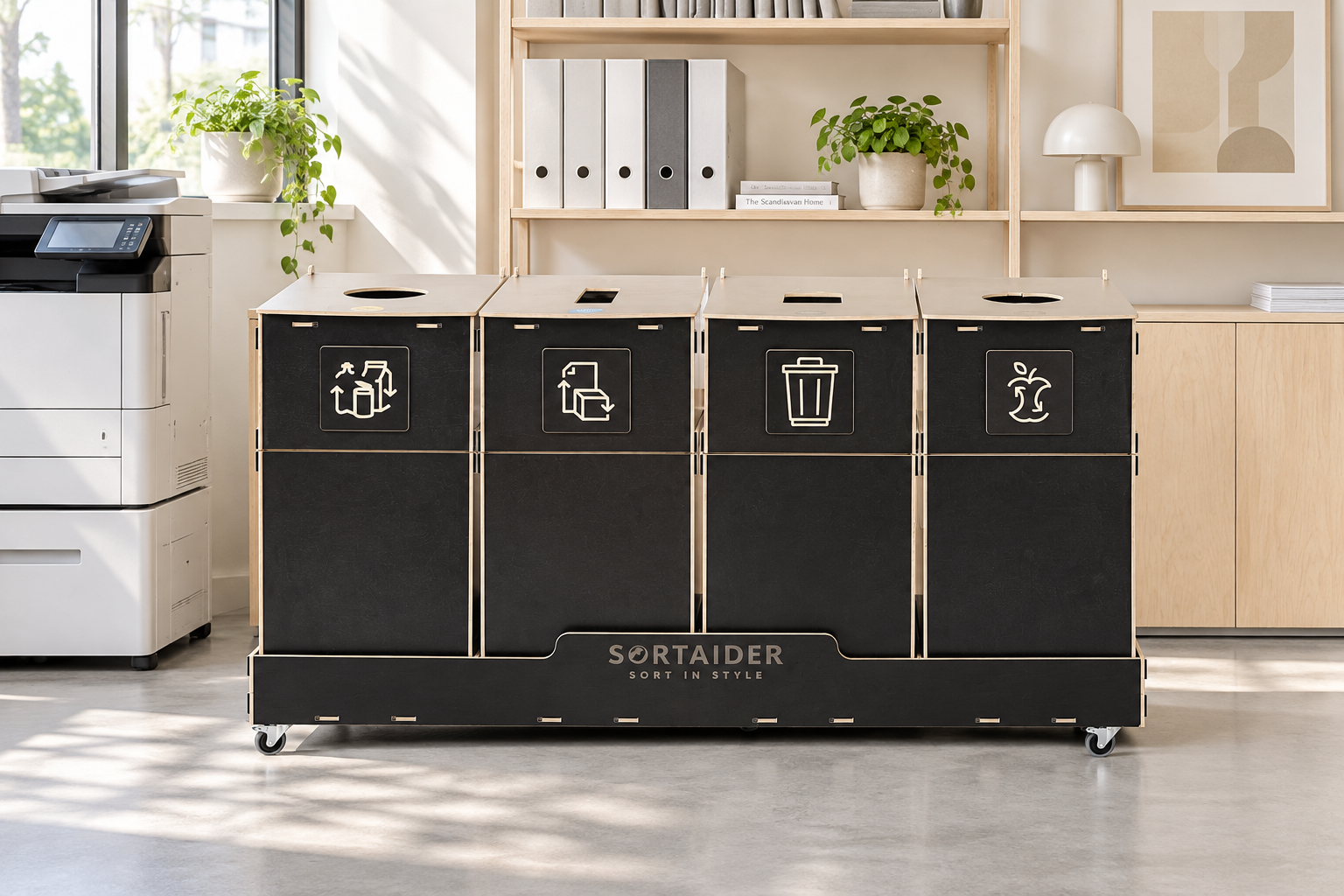
Size each fraction separately. Paper, biowaste and packaging fill at different speeds. The Sorter series comes in 10, 20, 30, 40, 60 and 90 litre sizes with one to five fractions. As a starting point, 10 or 20 l suits a workstation or a small group, while a print room usually needs your largest paper compartment.
Use shape and signs as a nudge. A thin slit for paper and a round opening for bottles guide users to the right compartment before they read anything. Add pictograms and instructions in the language your staff reads. Sorter bins ship with English sorting instructions, and you can add your company logo through free engraving.
Keep colours consistent with your country. Blue is the usual paper colour in Finland and Germany, but Nordic municipalities differ, and some use blue for glass. Our recycling bin colour guide covers regional conventions.
For a typical office, a four- or five-fraction Sorter covers paper, packaging, bio-waste, mixed waste and, if you need it, deposit packaging or glass:
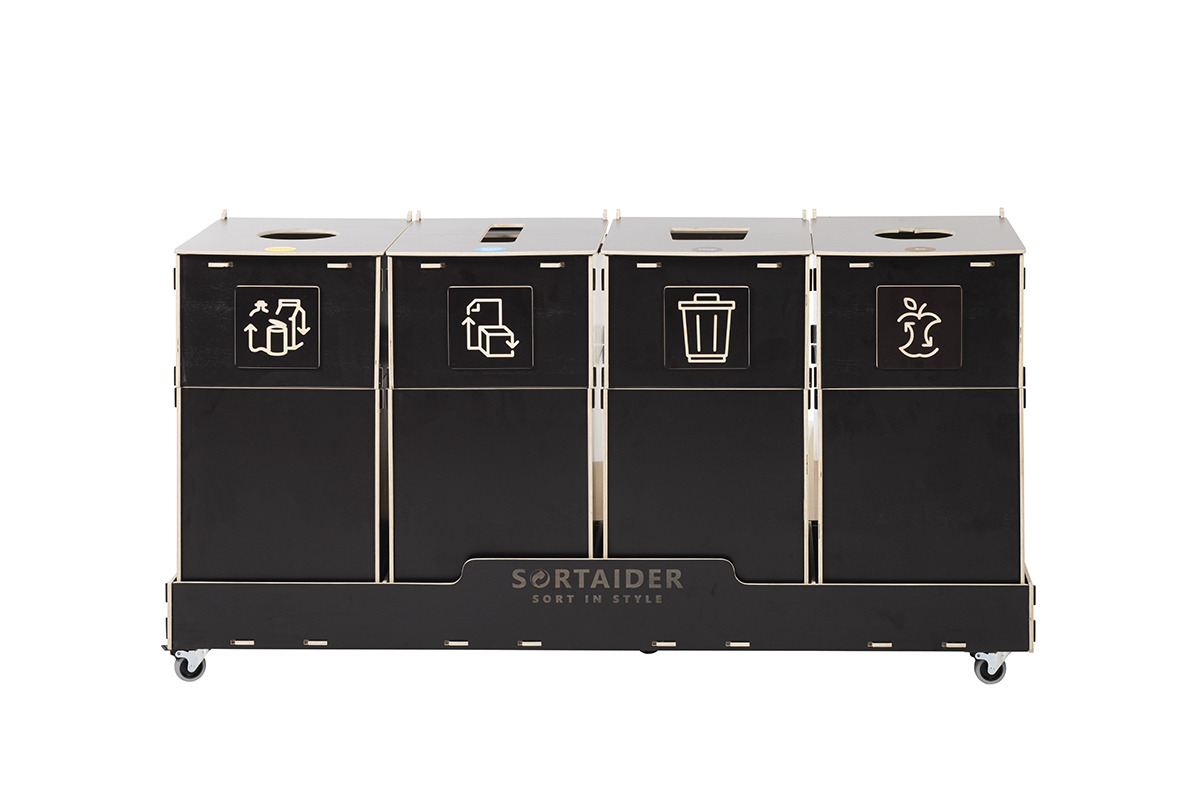
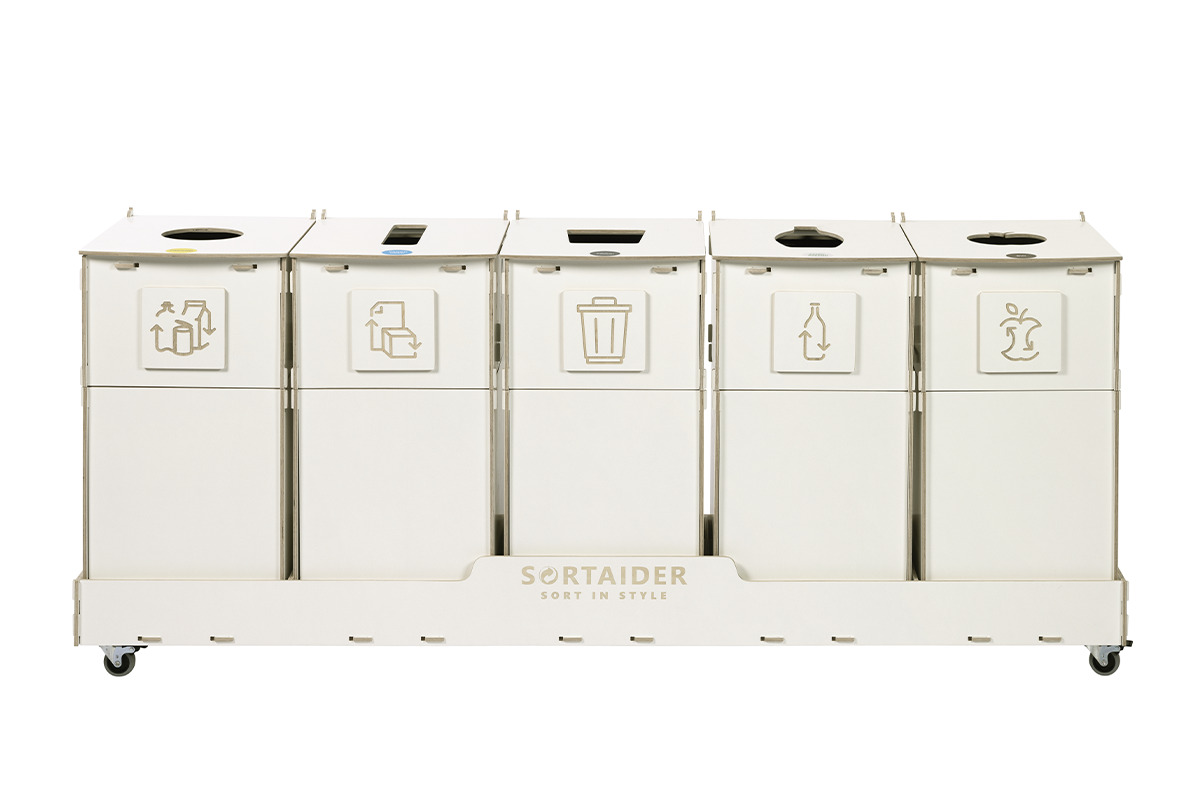
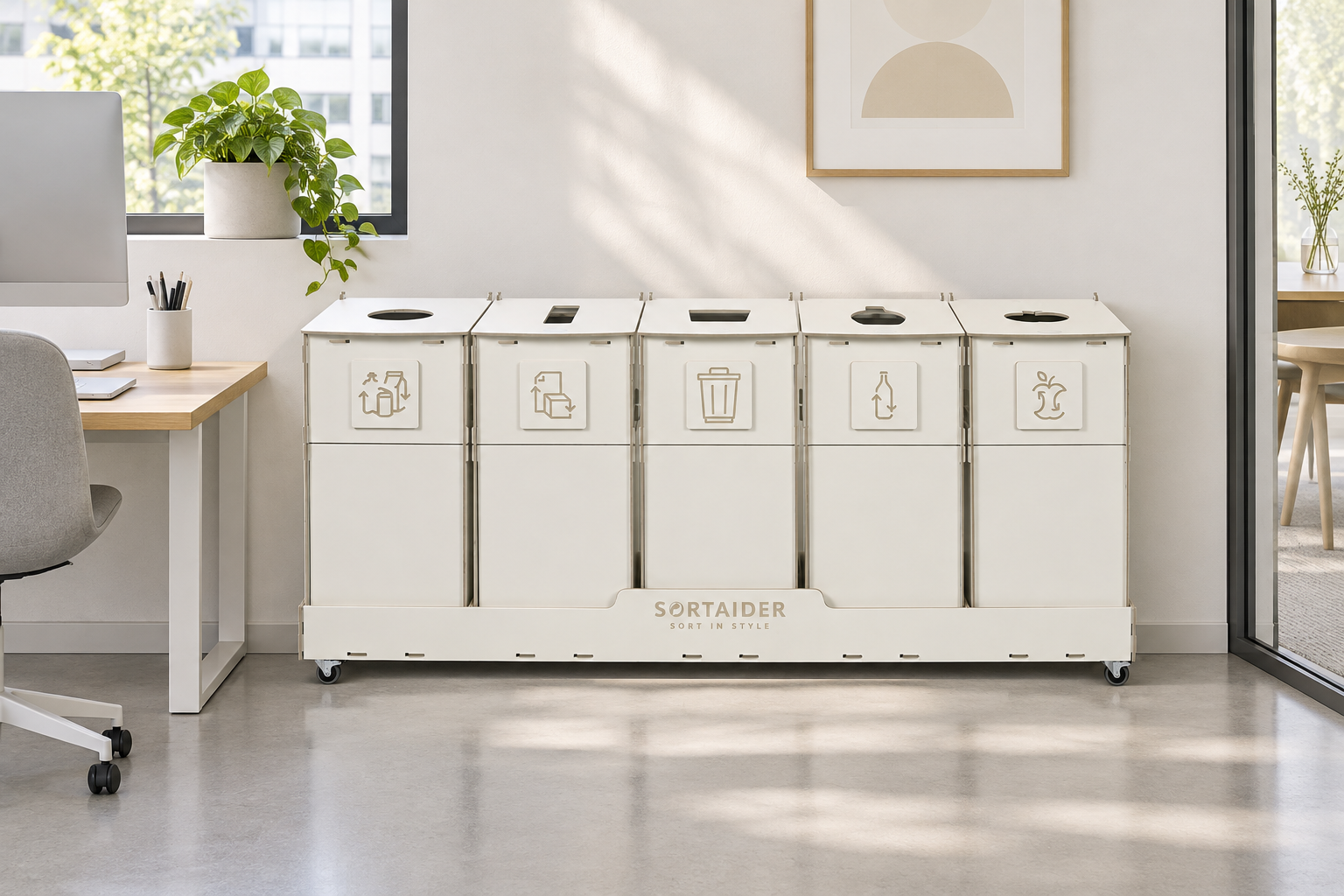
If you are unsure how many stations your floor needs, our guide on how many recycling bins an office needs explains the employee-to-station ratio. For the full set-up process, see how to build a workplace recycling program.
Confidential paper is a separate stream
Contracts, HR files and customer data should never enter an open paper bin. They need a documented process with a chain of custody, which we cover in our guide to secure confidential waste disposal in the office.
Your next step: audit one week of paper
Before you buy bins or print signs, open the paper container after a week and sort what you find into clean paper, borderline items and plain contamination. The borderline pile tells you which questions to put to your collector. Our office waste audit guide shows how to run it. When you know your volumes and your collector’s rules, browse the office recycling bins Sorter range and choose the compartments that match.