Can a standard indoor recycling bin survive on an outdoor terrace? Placing the wrong receptacle outdoors leads to water damage, pest attraction, and ruined recyclables. Choosing between indoor and outdoor waste systems requires understanding three core differences: durability, functional features, and strategic placement.
Material Durability and Weather Protection
Outdoor recycling receptacles face constant exposure to changing temperatures, rain, wind, and UV radiation. Standard indoor units feature furniture-grade finishes optimized for climate-controlled interiors. When placed outside without weatherproofing, indoor bins risk warping, surface degradation, and structural failure.
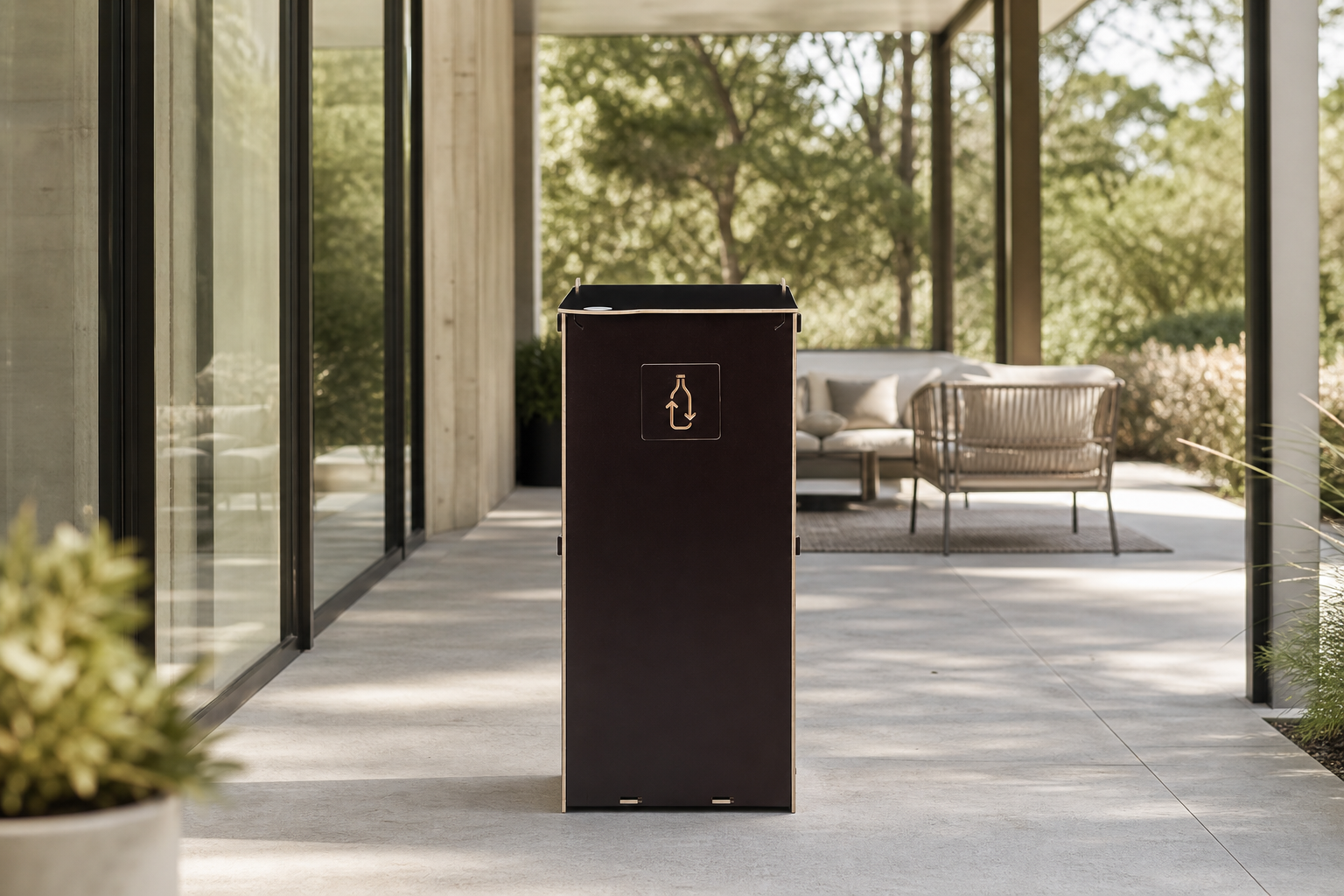
For outdoor spaces, summer terraces, and sheltered workshops, waste receptacles require weather-resistant construction. Water-resistant birch plywood provides long-term structural stability in humid or covered outdoor settings without sacrificing visual appeal. Compared to conventional metal or plastic containers, water-resistant wooden bins offer up to four times lower CO₂ lifecycle emissions while delivering robust durability. To prevent wind displacement or tampering in open public spaces, outdoor units also utilize heavier footprints or anchored bases. Explore our Sort waste-bin series for weather-resistant single-stream solutions.
Functional Features and Lid Configurations
Lid design and stream separation capabilities vary significantly depending on whether a bin serves an interior corridor or an exterior public space:
- Outdoor features: Rain-deflecting lids or closed-top openings minimize rainwater entry and deter birds, insects, and rodents. Specialized apertures guide specific waste streams, while internal bag support systems keep liners secure against strong wind gusts.
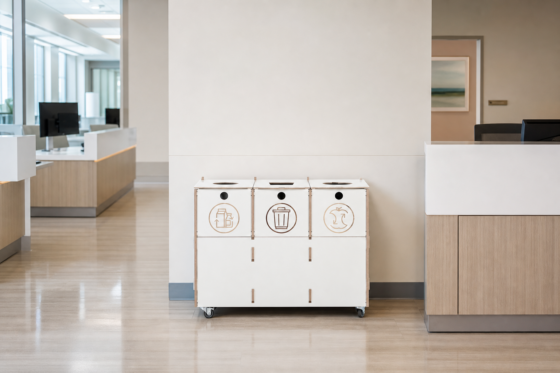
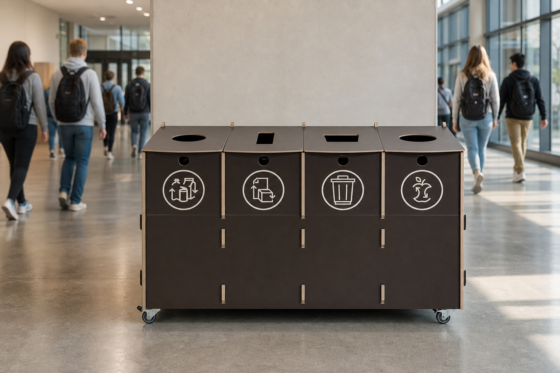
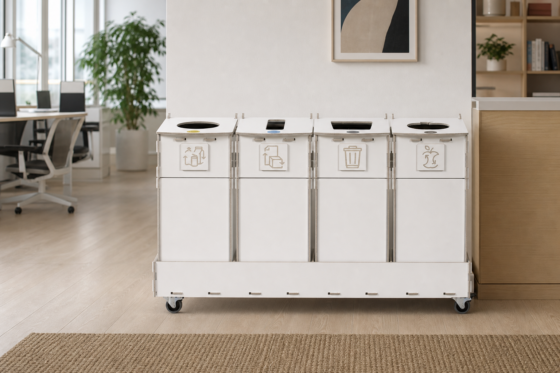
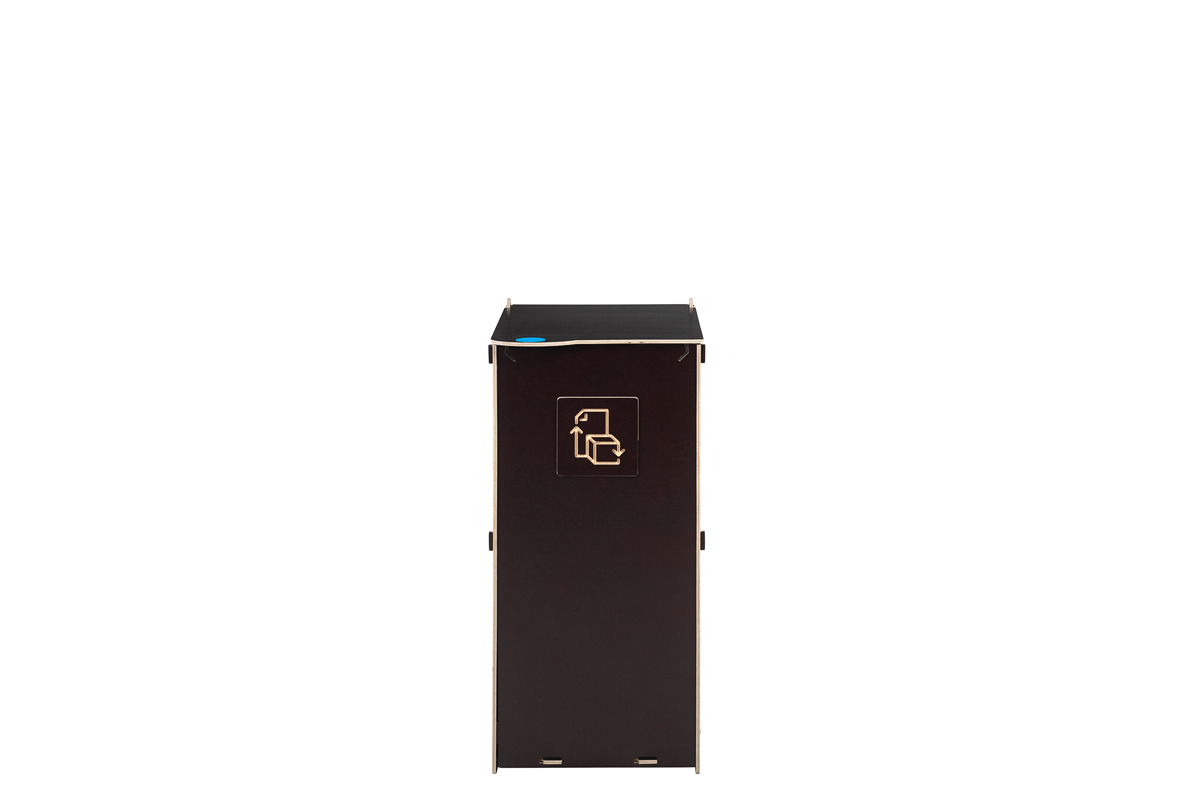
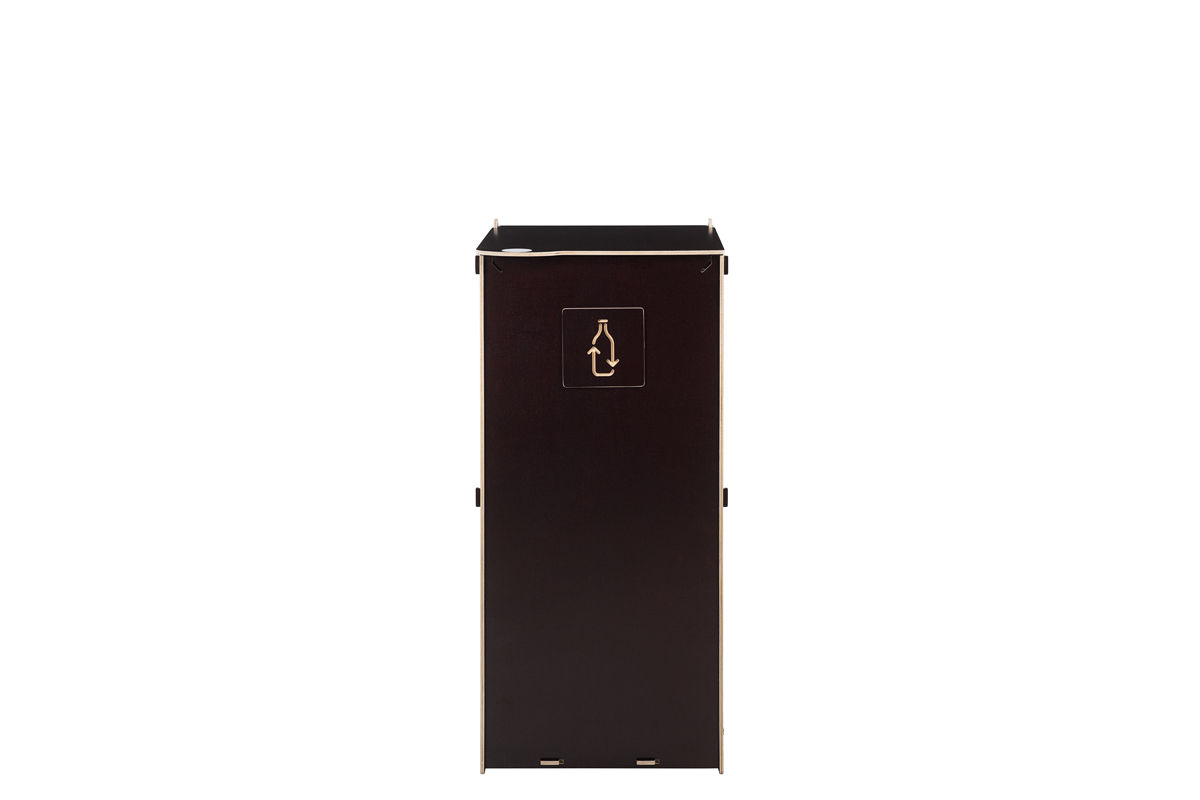
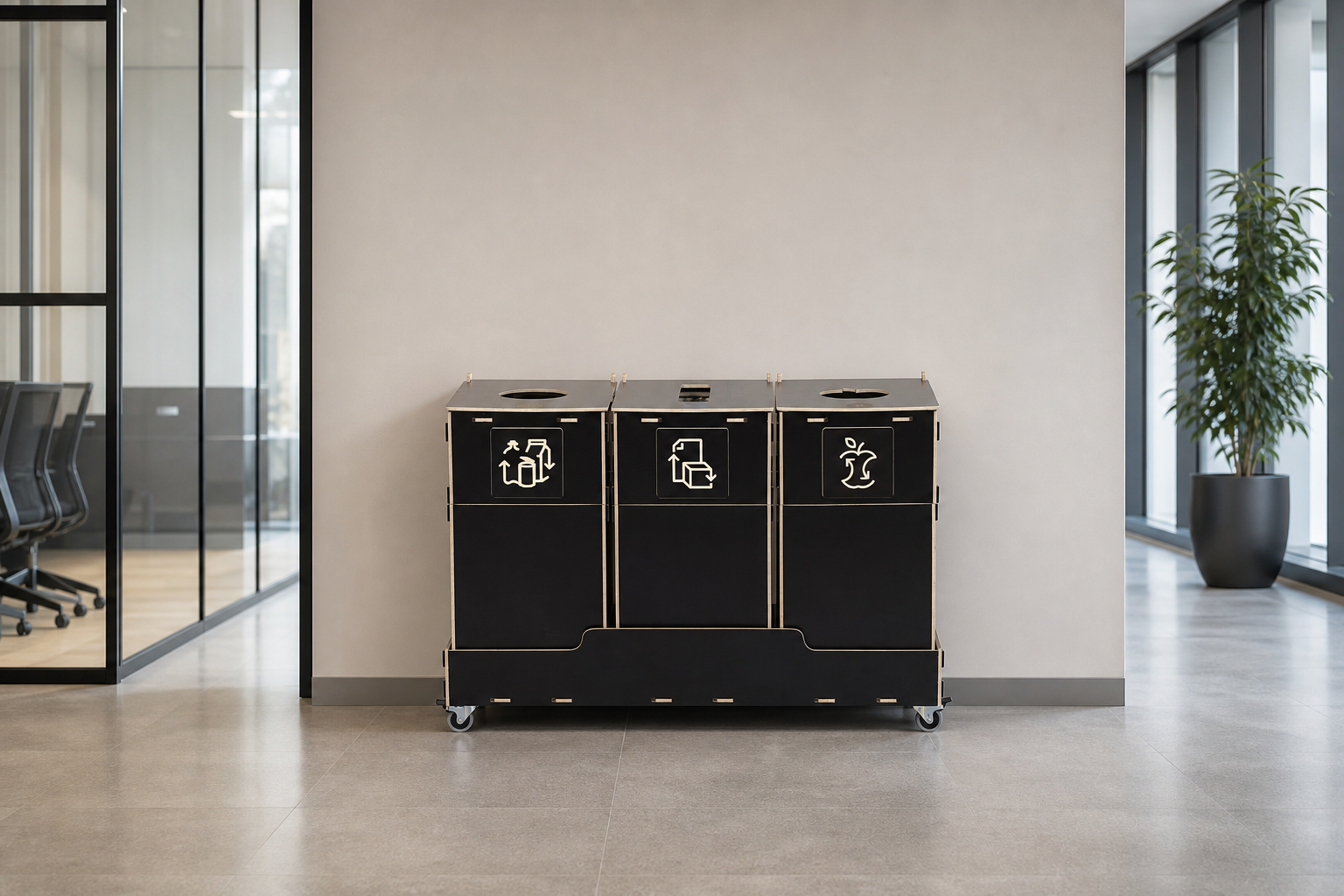
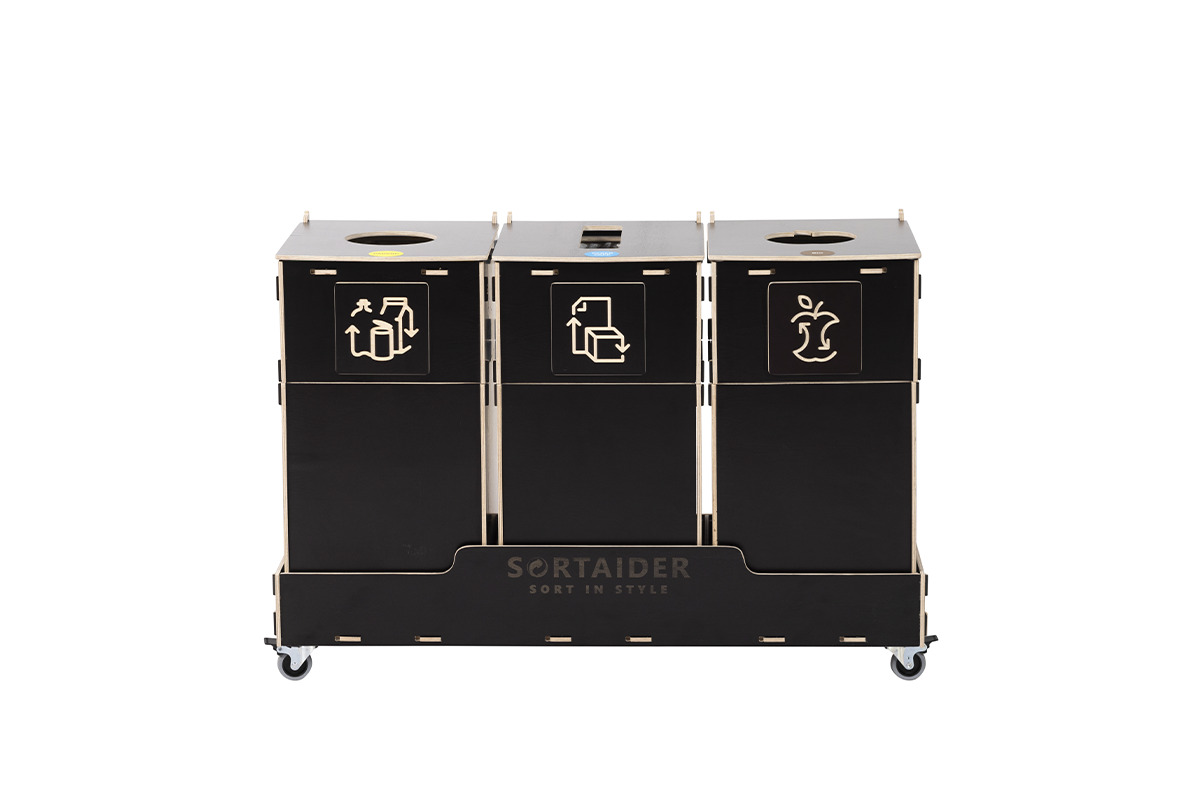
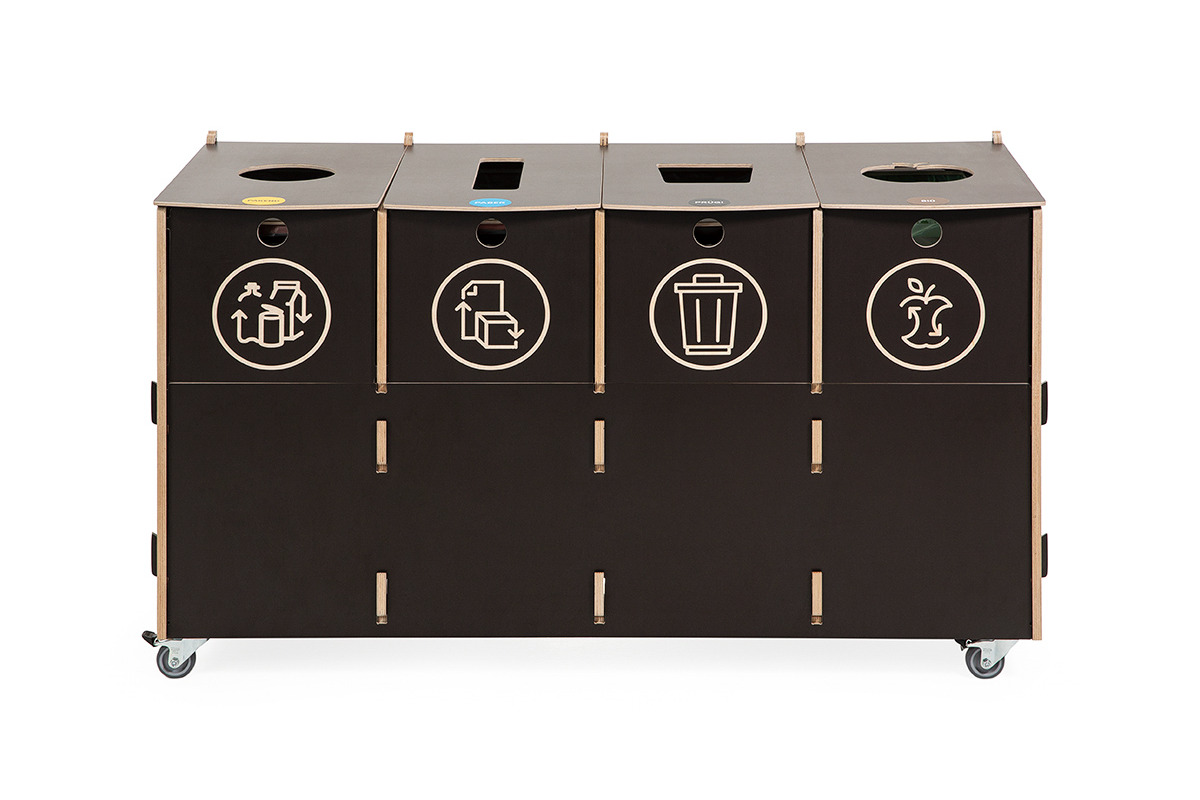
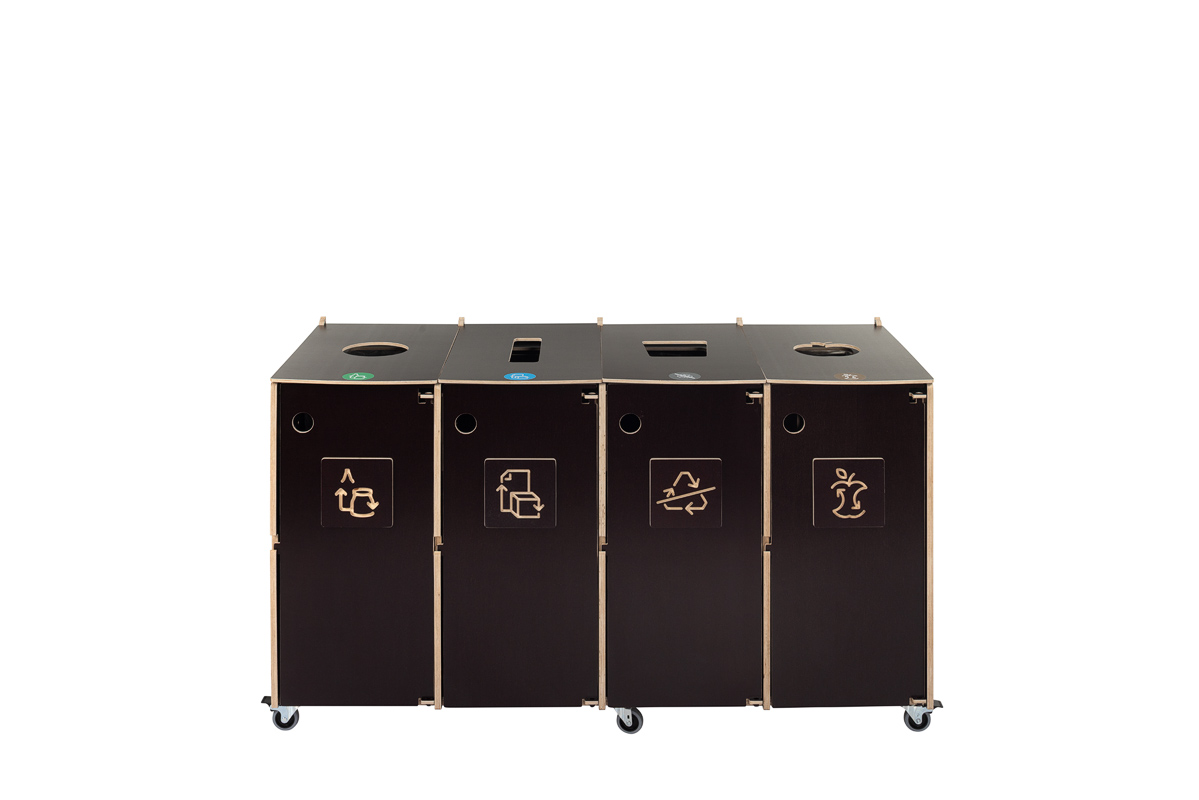
- Indoor features: Design focuses on multi-stream segregation within a single compact footprint. Indoor stations feature multi-compartment layouts, front-panel pictograms, and lid openings tailored for paper, plastics, or organic waste to support efficient source-separated recycling.
High-traffic modern interiors benefit from custom branding, such as precision laser-engraved corporate logos on the front panel. The Sorter recycling bin series and the Red Dot Award-winning Container series provide modular multi-compartment setups engineered for interior office architecture. For high-volume indoor environments like university halls or hospital foyers, the Ecolong series offers versatile continuous bag or multi-stream configurations.
Strategic Placement and Accessibility
The placement of a bin directly dictates how effectively building occupants sort their waste. Misplacing a container lowers user participation and increases cross-contamination rates.
Indoor Placement Strategy
Position indoor recycling stations near key waste-generation points, such as breakroom kitchenettes, printer stations, coffee hubs, and central corridor intersections. Maintain a strict 1:1 ratio between general waste and recycling streams so choosing to recycle requires no extra physical effort. Place bins along accessible routes with at least 30 by 48 inches (91 by 122 cm) of clear ground space and reach ranges that comply with accessibility guidelines and workplace safety standards to avoid obstructing emergency passageways.
Outdoor Placement Strategy
Locate outdoor bins near high-density gathering areas, building entrances, outdoor seating, and main transit pathways. Following established outdoor waste bin placement principles – such as maintaining a 10 to 15-meter distance between disposal points – keeps public outdoor spaces litter-free while helping organizations meet target recycling goals under frameworks like the EU Waste Framework Directive.
Pair clear visual icons with standardized color schemes to help international staff and visitors identify streams instantly. Switching from text-heavy labels to clear visual icons can reduce sorting errors by up to 40%. Consult our recycling bin color coding guide to align your facility’s visual signage with regional expectations across Europe.
Capacity, Hygiene, and Maintenance Protocols
Matching container capacity to localized foot traffic prevents overfilling, which is a primary driver of pest infestation and improper disposal. Indoor multi-compartment stations typically offer 30 L to 90 L per stream, balancing compact spatial footprints with regular daily cleaning schedules. Outdoor receptacles generally demand larger single capacities, ranging from 80 L to 120 L or more, to handle higher foot traffic between maintenance rounds.
Establishing a structured cleaning routine preserves hygiene across all facility zones:
- Wash interior compartments regularly with warm water and mild detergent, applying disinfectant to high-touch lids and handles. Review our guide on cleaning and sanitising recycling bins for detailed operational steps.
- Allow bin interiors to air dry completely before relining to prevent trapped moisture, mold, and persistent musty odors.
- Separate organic food waste at the source and keep indoor units away from direct heat sources or HVAC vents, following practical recycling bin smell prevention tips.
Selecting waste-sorting solutions tailored to the specific durability, functional, and placement requirements of your indoor and outdoor zones protects your infrastructure investment, reduces maintenance overhead, and improves material recovery rates. Explore our complete collection of recycling bins to configure the ideal sorting system for your facility today.