
Recycling Instruction - Biowaste
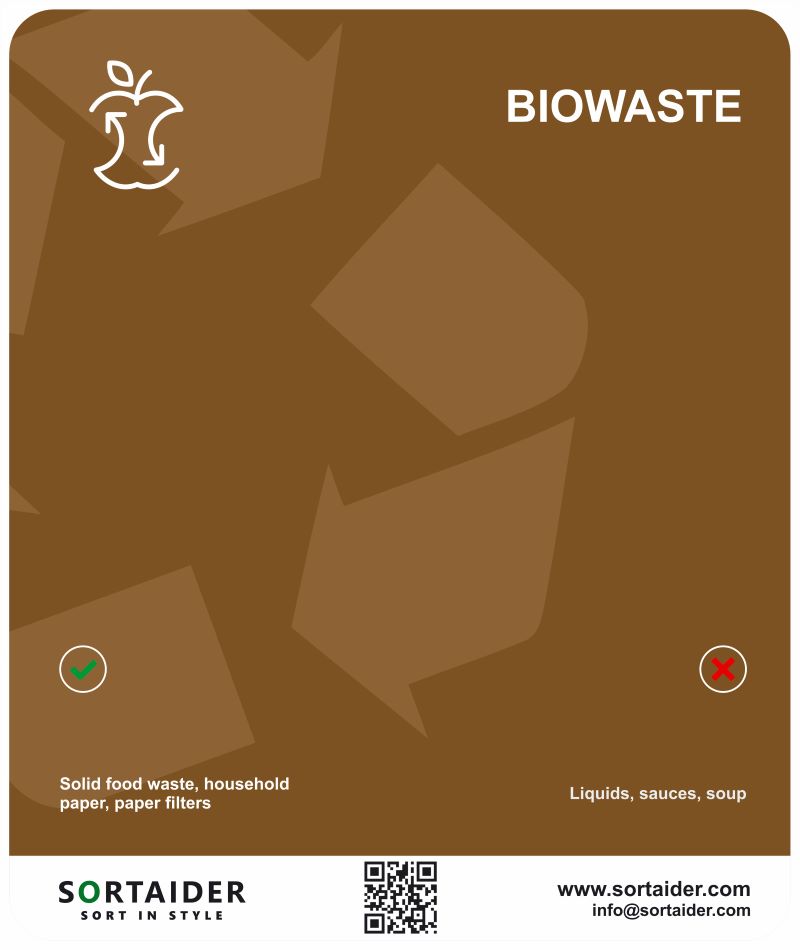
Recycling instruction – Biowaste and Food Waste for Sorting
This Recycling Instruction covers food and kitchen waste collected as biowaste in staff kitchens, canteens, hospitality areas and other workplace settings. Use it only where the local collection service provides a biowaste or food waste stream.
Accepted items vary between countries, municipalities, properties and treatment systems. Confirm the service used at the location before printing examples on a label. The Sortaider Recycling instructions help compare the six existing indoor collection themes, but the local collector decides the final acceptance rules.
What Goes Into Biowaste? (Allowed Items)
Place only food and kitchen waste accepted by the local biowaste service into this fraction. Depending on the local instruction, accepted items may include:
- fruit and vegetable peelings;
- meal leftovers and other solid food scraps;
- coffee grounds;
- tea bags and coffee filters where the service accepts their materials;
- bones, shells and similar kitchen waste where locally accepted;
- paper towels or napkins only where the collector explicitly permits them;
- a liner or collection bag only if its material is approved for that system.
Remove packaging before placing food waste in the bin unless the local service states otherwise. Empty packaging may follow the Recycling Instruction – Plastic, Metal and Carton Packaging where those materials are collected together. Material rejected from biowaste follows the locally approved route; it does not automatically belong in Recycling Instruction – Mixed Waste without checking.
What to Keep Out of Biowaste? (Prohibited Items)
Keep out items that the local biowaste service does not accept. This normally requires particular attention to:
- plastic, metal, glass and other packaging;
- conventional plastic bags and unapproved liners;
- large quantities of liquid, oil, sauce or soup that can leak from the indoor bin;
- chemicals, medicines and cleaning products;
- batteries, electrical equipment and other separately controlled waste;
- garden waste where the workplace food-waste service does not include it.
Do not promise that all collected material becomes compost or biogas. The treatment route and accepted inputs depend on the collection and processing system serving the property.
Why Choose Sortaider for Biowaste Management?
For one separately collected food or kitchen waste stream, compare Sortaider waste bins. Where biowaste is collected at the same indoor point as two to five other confirmed fractions, compare Sortaider recycling bins.
Choose a capacity, opening, lid, liner and emptying frequency suited to the amount of food waste and the conditions in the room. The bin should be easy to empty and clean, and its wording must match the final collection container.
Sorting guide: