
Recycling Instruction - Mixed Waste
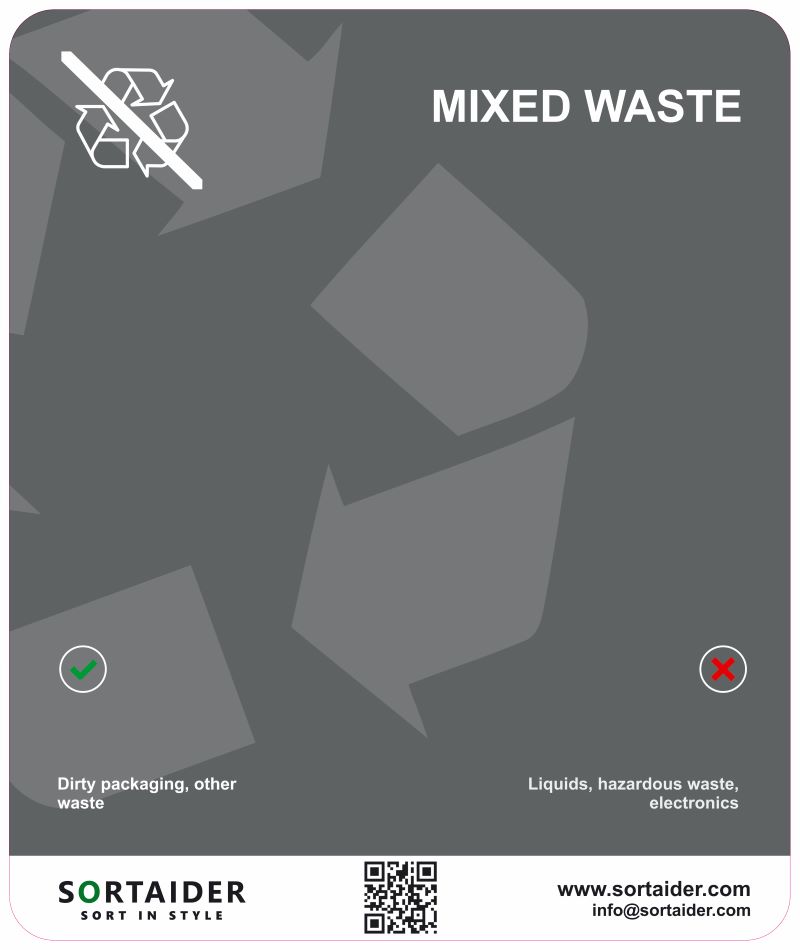
Recycling Instruction – Mixed Waste for Sorting
This Recycling Instruction explains how to use a mixed waste fraction at an indoor collection point. Mixed waste is the non-hazardous residual waste left after the materials collected separately at the property have been removed.
Collection rules vary by country, municipality, property and waste contractor. Check the local service before adding item examples to a label. A stained package, broken household item or rejected material does not automatically belong in mixed waste everywhere. See all six Sortaider Recycling instructions before choosing the fractions for a shared collection point.
What Goes Into Mixed Waste? (Allowed Items)
Use the mixed waste bin only for non-hazardous residual items accepted by the collection service used at the property. Depending on the local rules, this may include:
- ordinary residual waste that has no required separate collection route;
- hygiene waste accepted in the local mixed waste service;
- contaminated or composite items that the local collector does not accept in a material stream;
- small non-electrical household or workplace items accepted as residual waste.
Keep recyclable material in its dedicated stream where one is provided. Dry fibre material may belong under the Recycling Instruction – Paper and Cardboard, while food and kitchen waste may belong under the Recycling Instruction – Biowaste. Follow the property’s actual collection route when these general examples differ from local instructions.
What to Keep Out of Mixed Waste? (Prohibited Items)
Do not use the mixed waste bin for waste that has a designated collection or controlled handling route. Keep out:
- liquids that can leak from the indoor bin;
- batteries, accumulators and electrical or electronic equipment;
- chemicals, paints, solvents, oils, medicines and other hazardous waste;
- gas cylinders, pressurised containers and other fire-risk items;
- needles, sharps, infectious waste and other clinical waste;
- materials that the local service requires to be collected separately.
The correct destination for a particular item must come from the local authority, property manager, waste contractor or specialist collection service. Do not add a final “Yes/No” item list to the Sortaider image until that list has been checked for the location where it will be used.
Efficient Waste Management with Sortaider
Use a Sortaider waste bin for one waste fraction where only mixed waste is needed at that point. If the property collects mixed waste together with two to five confirmed separate streams, compare Sortaider recycling bins.
Choose the capacity, opening, lid and instruction placement according to the amount of residual waste, the emptying routine and the people using the space. The wording and symbol on the indoor bin must match the final collection container and the waste contract.
Sorting guide: