
Recycling Instruction - Paper and Cardboard packaging
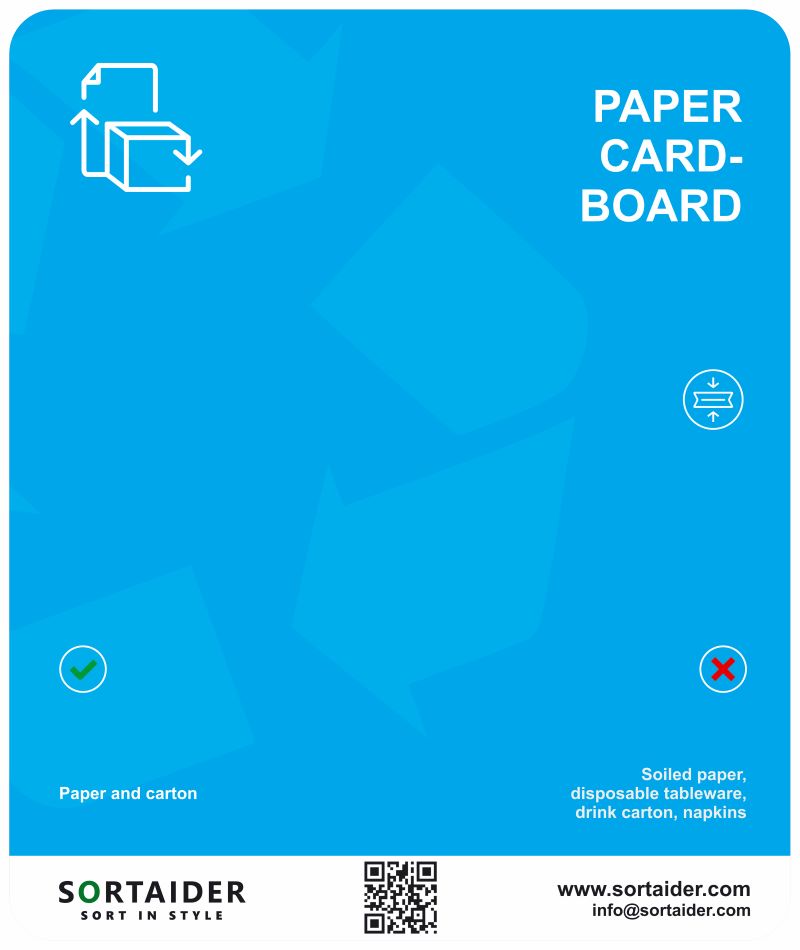
Recycling Instruction – Paper and Cardboard for Sorting
This Recycling Instruction covers paper and cardboard accepted by the collection service used at a workplace. Keep fibre materials dry and separate from liquids, food and other contamination that the local service does not accept.
Paper and cardboard may be collected together or in separate streams. The correct setup depends on the country, municipality, property and waste contract. Review the Sortaider Recycling instructions and match every indoor label to the final collection container.
What Goes Into Paper and Cardboard? (Allowed Items)
Place only paper and cardboard accepted by the local service into this fraction. Depending on the collection arrangement, accepted items may include:
- office paper, letters and envelopes;
- newspapers, magazines and catalogues;
- paper bags;
- clean cardboard boxes and shipping cartons;
- other dry paper or cardboard packaging listed by the collector.
Flatten boxes where the collection service and the indoor bin design require it. Remove non-paper contents and follow the local rule for tape, labels, windows, staples and other attached materials.
Drink cartons and composite packaging may belong under the Recycling Instruction – Plastic, Metal and Carton Packaging only where the local service collects those materials together. Confidential paper requires an approved secure-document process even when the fibre itself could be recycled.
What to Keep Out of Paper and Cardboard? (Prohibited Items)
Keep out materials that the paper or cardboard collection used at the property does not accept. Check the local rule for:
- wet or heavily food-stained paper and cardboard;
- coated, laminated, waxed or plastic-lined paper products;
- disposable cups and plates;
- receipts and thermal paper;
- napkins, tissues and paper towels;
- drink cartons and other composite packaging;
- confidential documents that have not completed the required secure process.
An item rejected from the paper stream does not automatically have the same destination everywhere. Use Recycling Instruction – Mixed Waste only if the local collection rules direct that specific non-hazardous item there.
Promote Sustainability with Sortaider
For one separately collected paper or cardboard stream, compare Sortaider waste bins. If paper or cardboard is collected at the same indoor point as two to five other confirmed fractions, compare Sortaider recycling bins.
Choose the opening and capacity so users can place the expected paper or flattened cardboard into the bin without blocking it. Keep the instruction visible and use the same stream name on the indoor station and final collection container.
Sorting guide: