How many kilograms of plastic bottles and protein shakers does your gym discard every week? Managing high-traffic waste streams while maintaining pristine hygiene standards is a major operational challenge for modern fitness facilities and sports clubs.
Navigating Complex Waste Streams in Fitness Hubs
Gyms and leisure centres are unique environments where high-volume recyclables, like PET water bottles and cardboard packaging, mix with moisture-heavy waste from locker rooms and bio-waste from onsite cafes. To remain compliant with the EU Waste Framework Directive, facilities must separate paper, metal, plastic, and glass at the source wherever technically feasible.
Failure to separate correctly leads to contamination that can ruin entire batches of recyclable material. For example, research into what goes in each recycling bin highlights the “Pizza Box” rule: just one greasy container can ruin a batch of clean paper. In a gym setting, this often translates to protein-shaker residue or food debris contaminating a bin full of dry cardboard. For high-traffic areas like entrance halls or juice bars, modular systems that handle multiple streams in a single footprint are the most efficient choice for maintaining material purity.
-
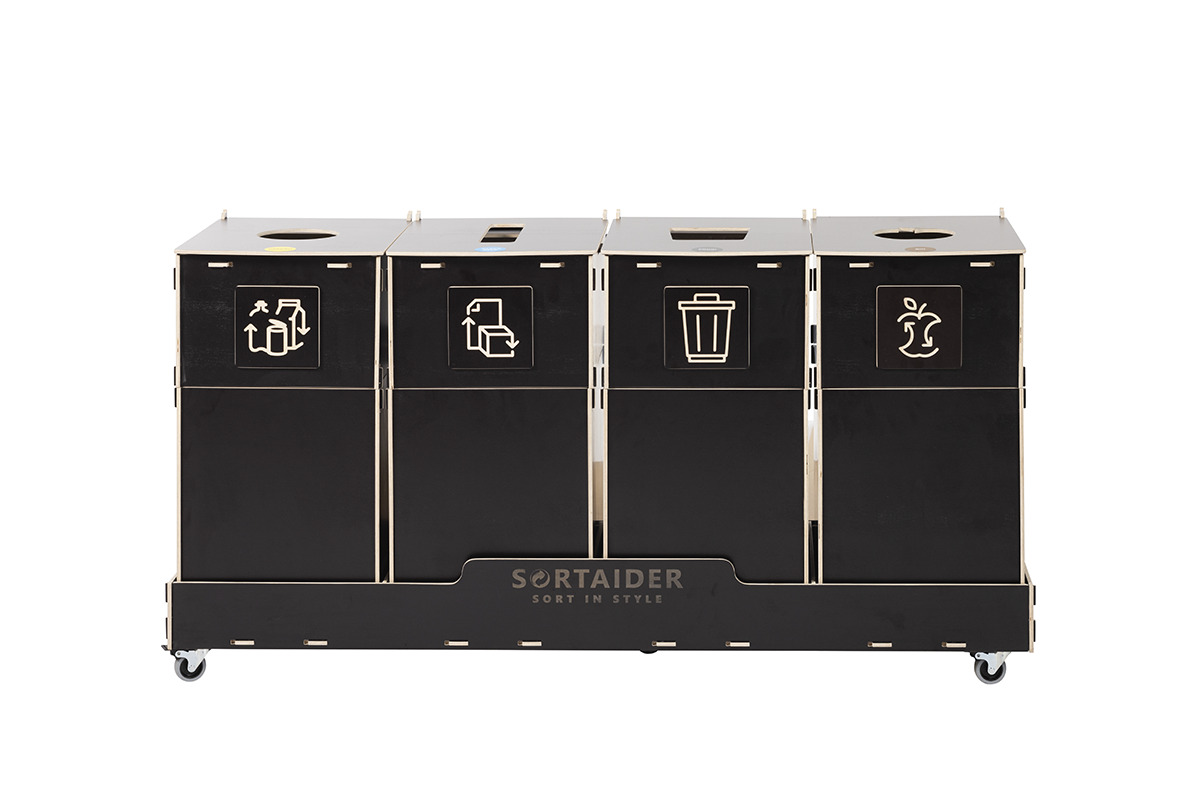
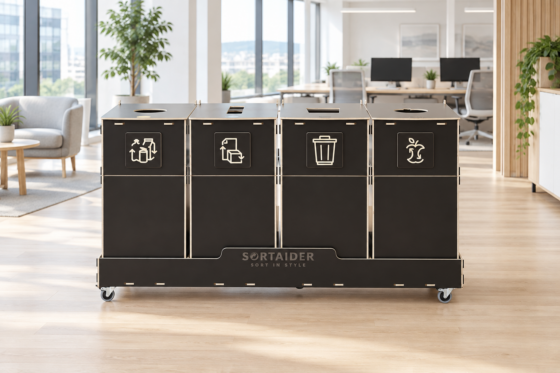
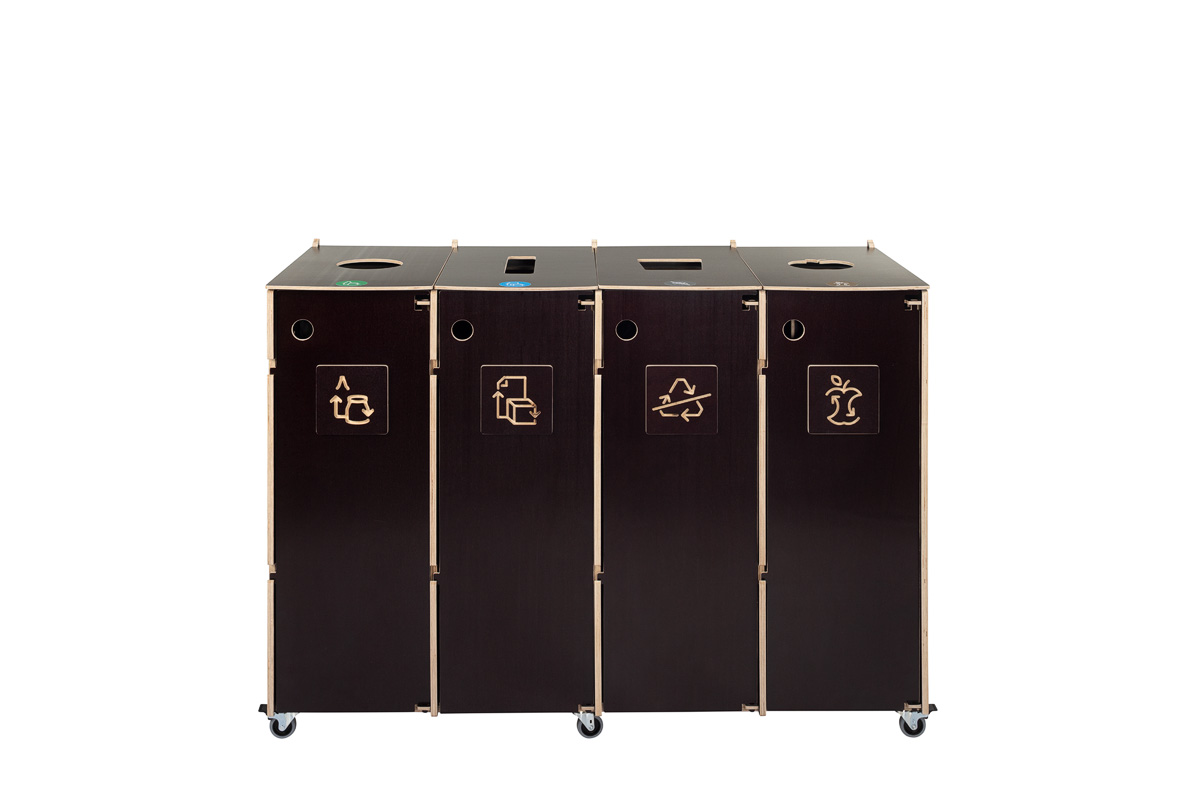
Recycling Bin Sorter 4 × 60 l brown
4 types of waste 4 x 60 l1 500,40 € (incl. 24% VAT)1 210 € (excl. VAT) -
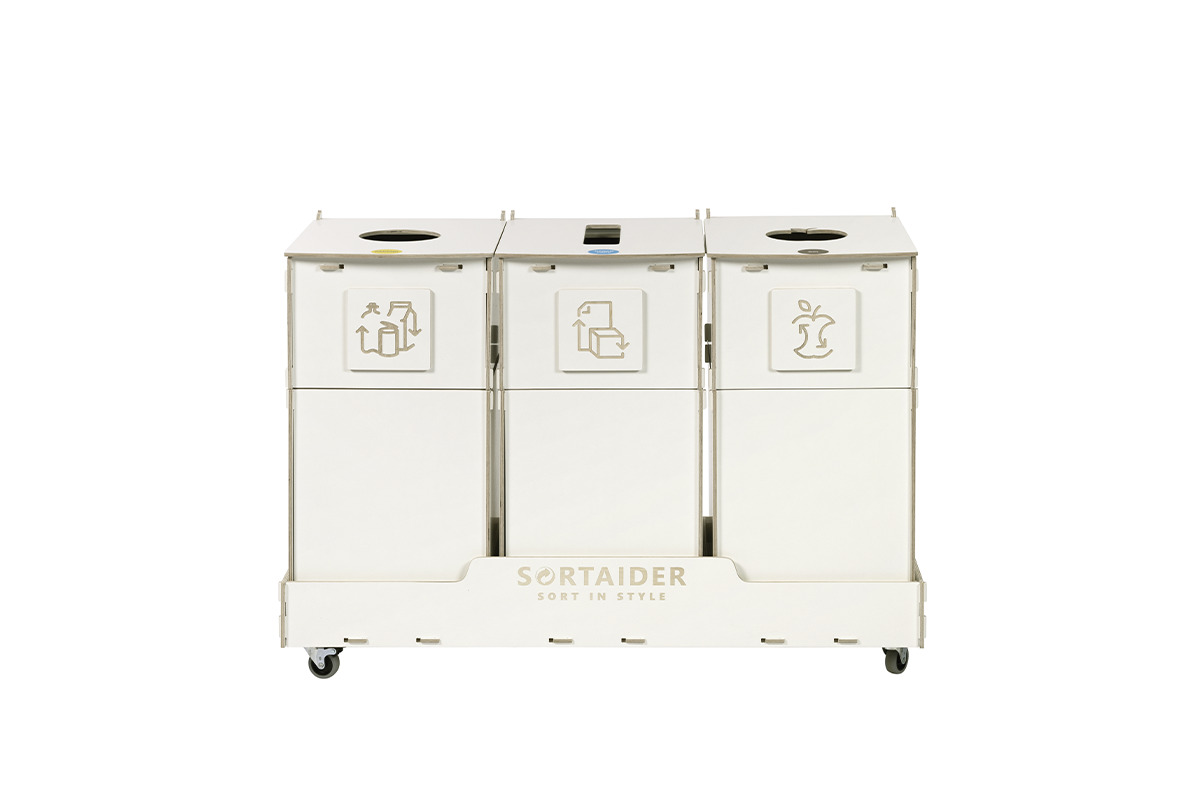
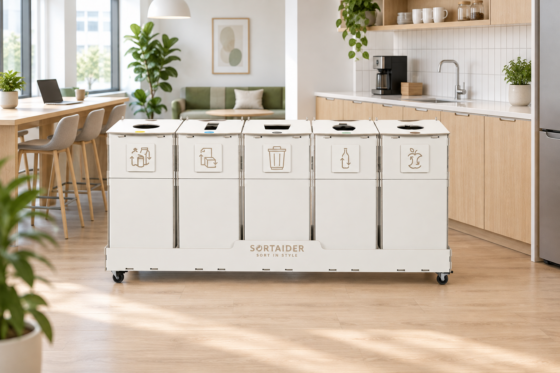
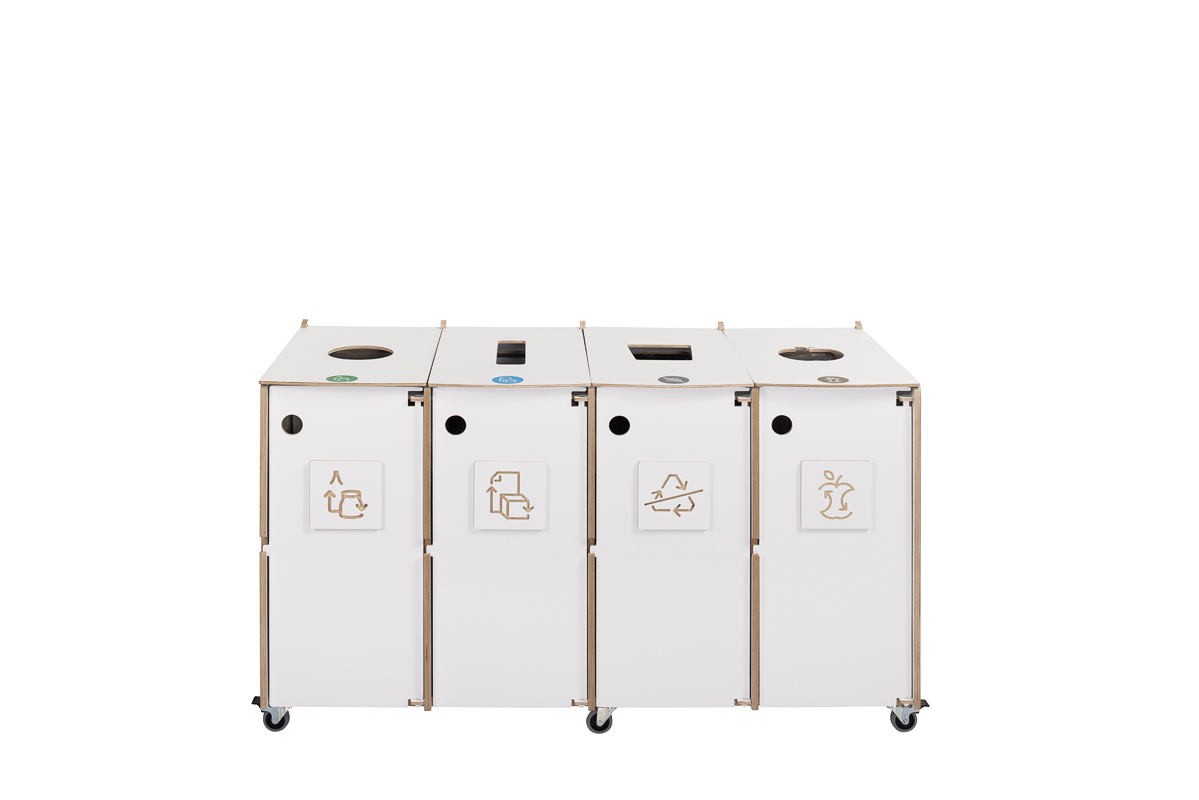
Recycling Bin Sorter 3 × 60 l white
3 types of waste 3 x 60 l1 140,80 € (incl. 24% VAT)920 € (excl. VAT) -
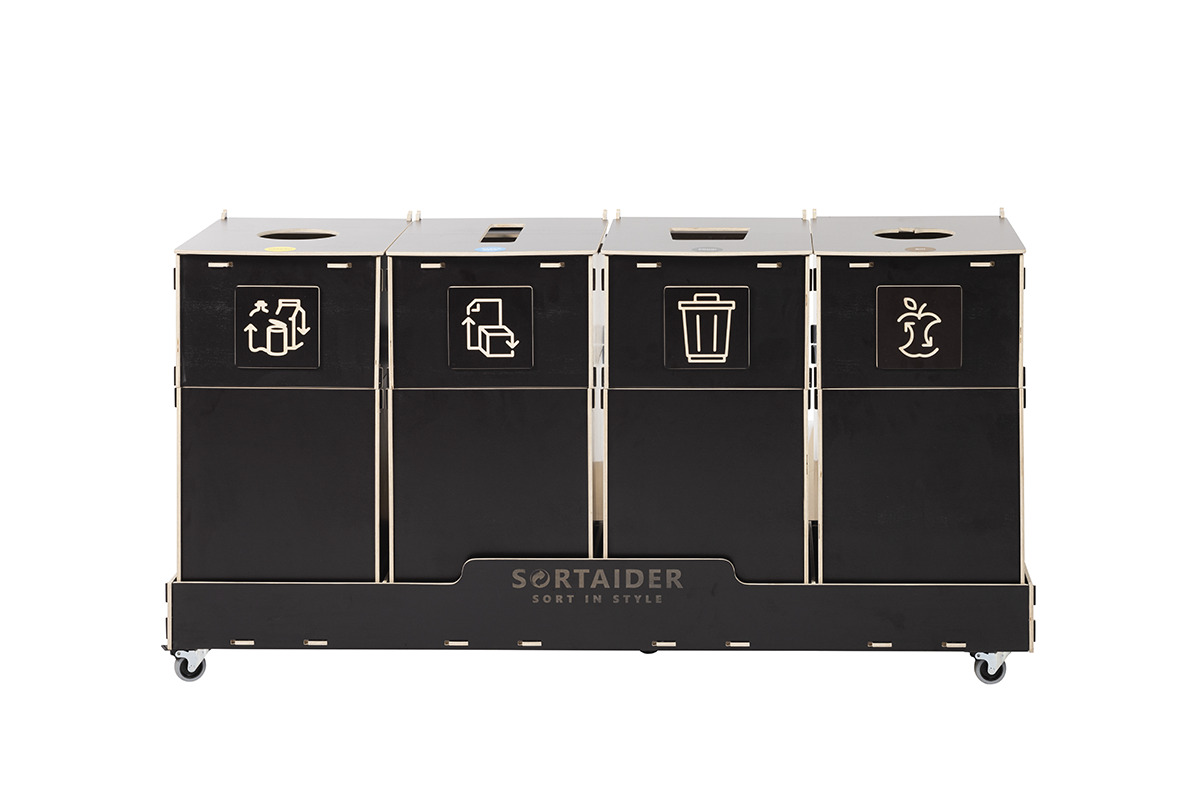
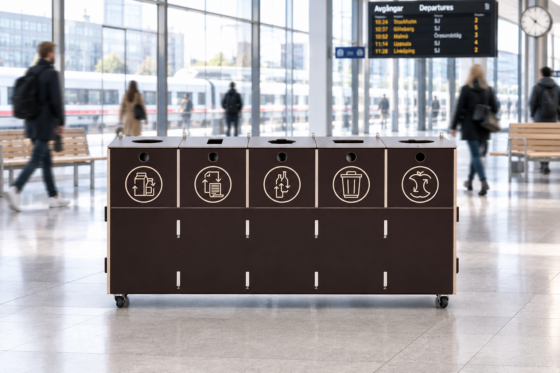
Recycling Bin Sorter 4 × 90 l brown
4 types of waste 4 x 90 l1 810,40 € (incl. 24% VAT)1 460 € (excl. VAT)
Meeting European Recycling Regulations
Regional variations across Europe mean your waste strategy must be adaptable to local laws. In Sweden, separate food waste collection became mandatory for all businesses in 2024, while Denmark requires digital tracking for every waste shipment leaving a premises if the facility produces more than one ton of waste annually. In Estonia, facilities generating more than 10kg of bio-waste per day are required to have dedicated sorting systems in place.
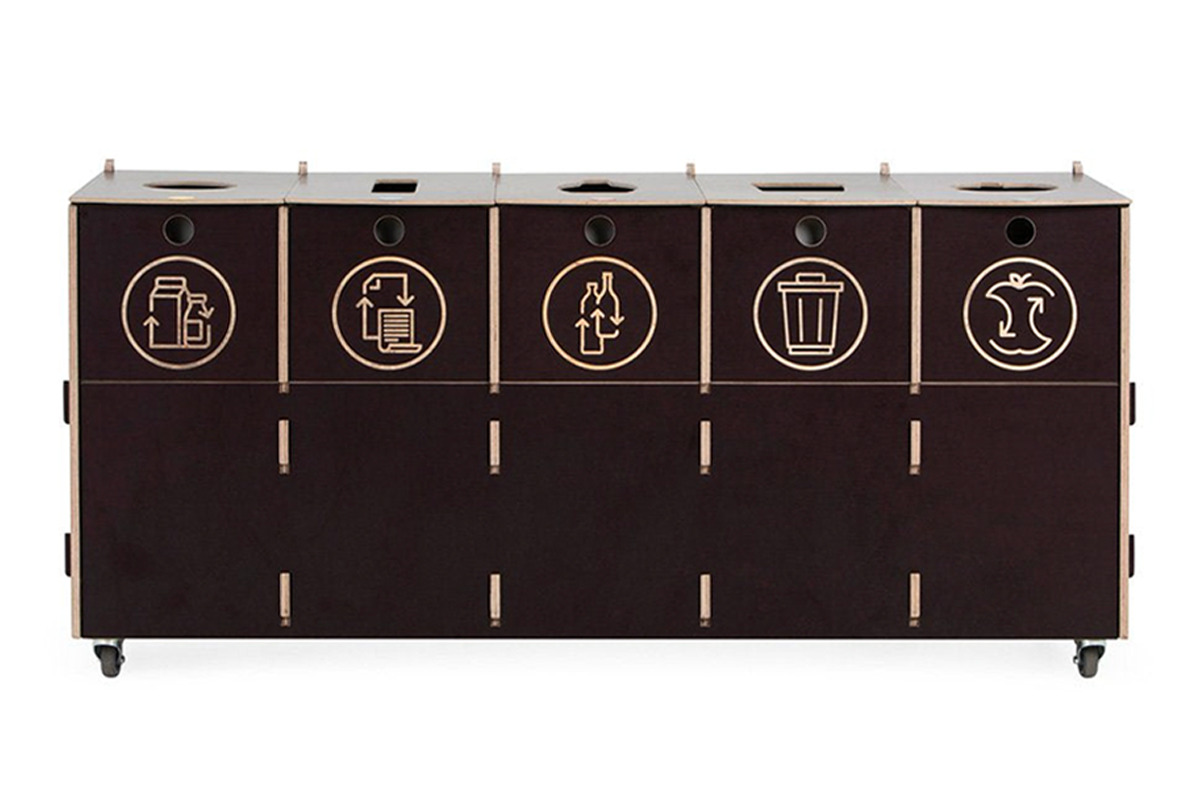
Implementing commercial waste recycling requirements involves more than just buying bins; you must ensure your waste carrier provides Waste Transfer Notes to prove legal handling and disposal. Utilizing a centralized recycling bin sorter with three to five separate compartments ensures you cover the mandatory streams – plastic, paper, bio-waste, and general waste – within a single compliant station.
Hygiene Standards and Bin Maintenance
In a leisure centre, moisture is the primary enemy of cleanliness. Humidity in locker rooms and sweat-soaked paper towels can quickly lead to bacteria buildup and unpleasant odors if waste is not managed correctly. Professional-grade recycling stations must be designed for cleaning and sanitising without degrading the material over time.
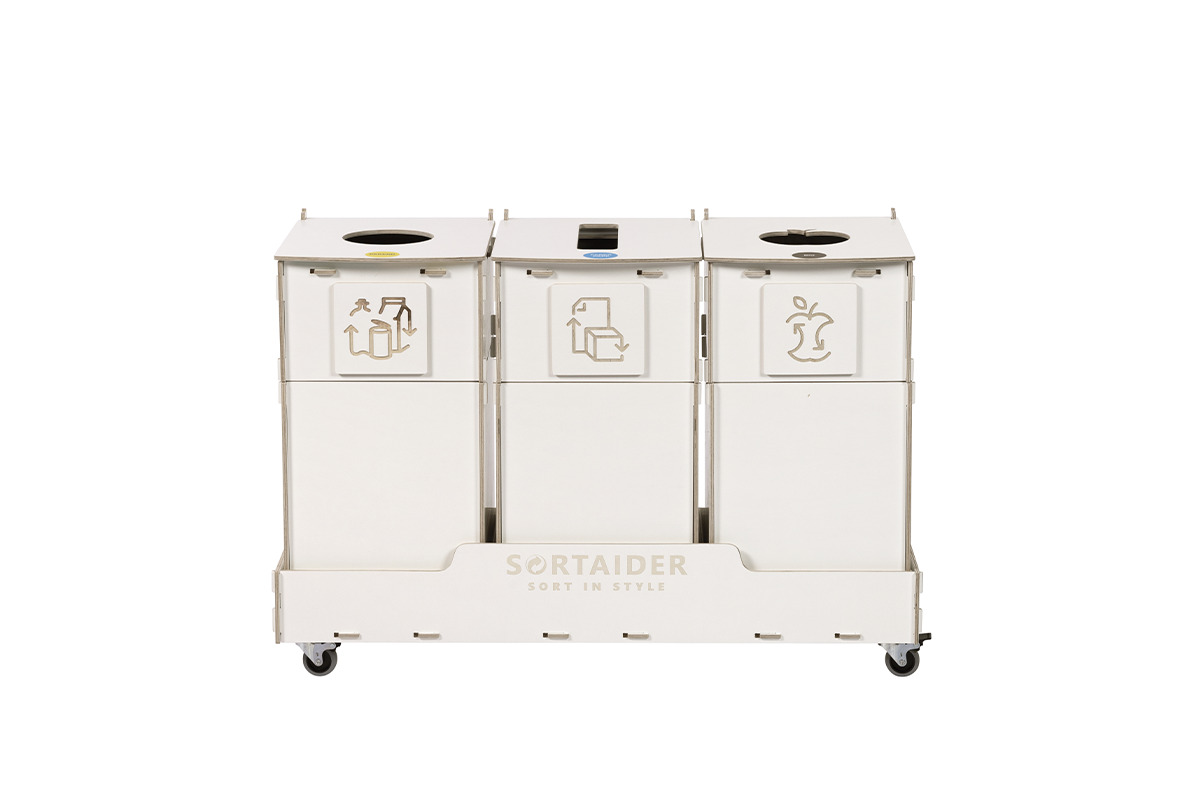
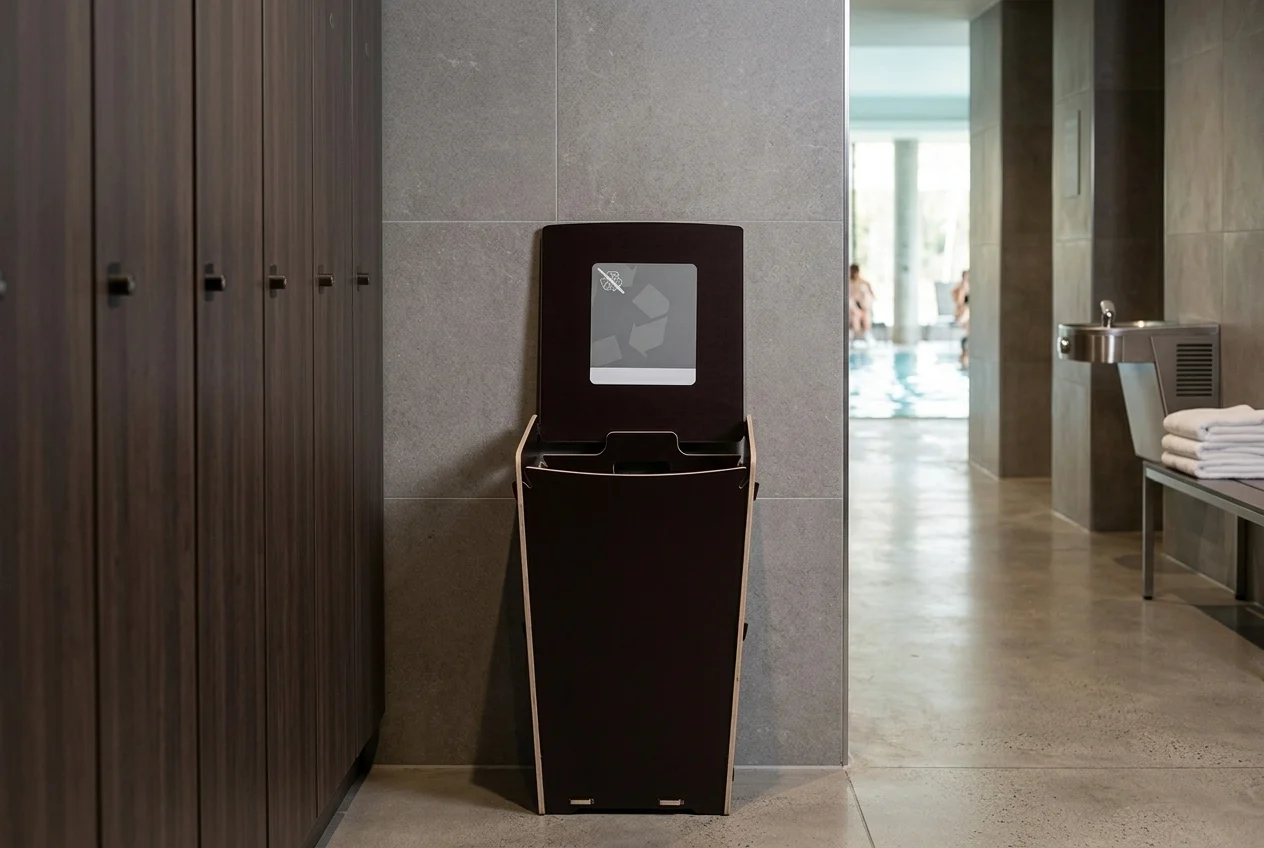
Sortaider’s plywood bins are treated with furniture-grade finishes that are lighter and more environmentally friendly than metal, yet durable enough to withstand daily professional cleaning. When setting up recycling at work, it is vital to choose bins that allow for quick bag changes and easy wiping of high-touch areas like lids and handles. For damp environments like pool-side areas or sheltered outdoor terraces, water-resistant variants are essential to prevent mold growth and maintain a premium aesthetic.
Reducing Errors Through Visual Nudges
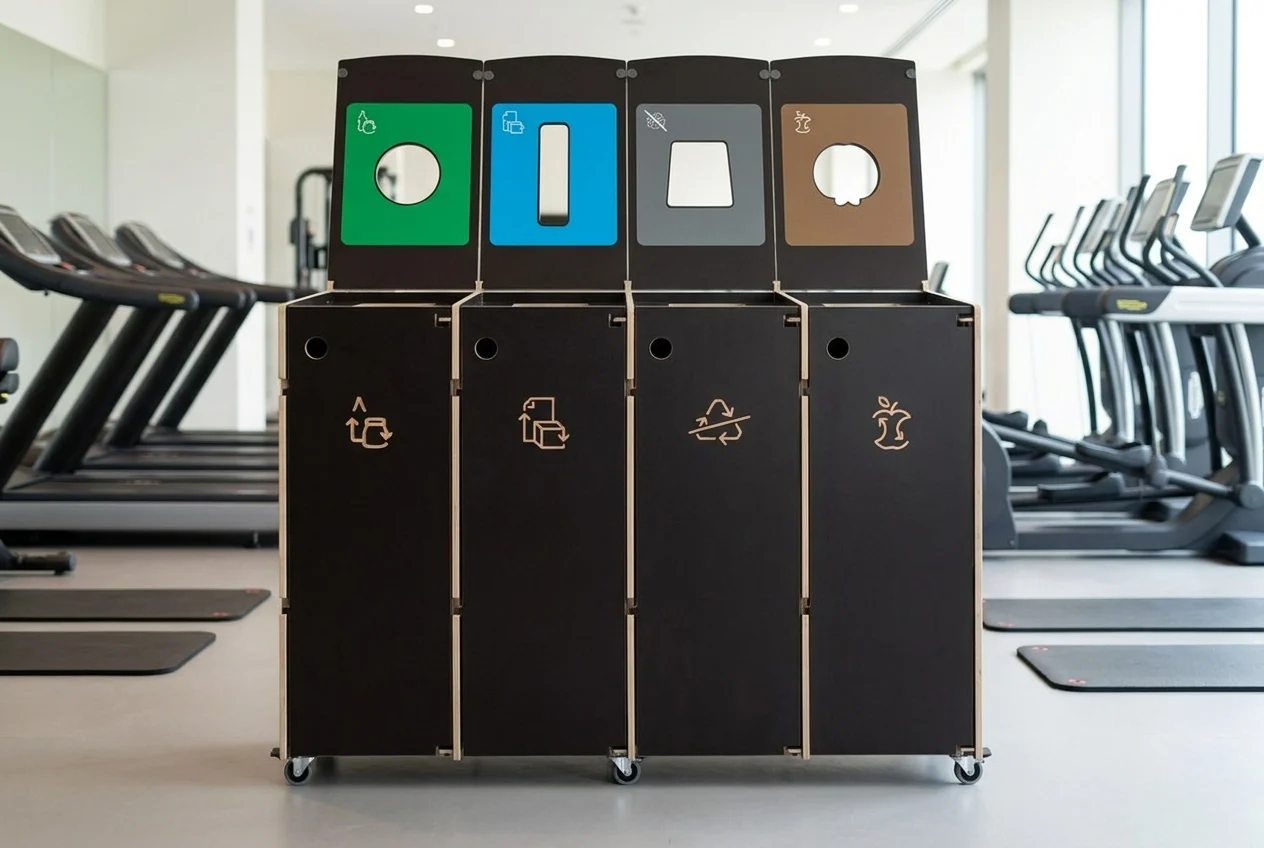
The secret to a 40% reduction in sorting errors lies in recycling signage best practices. In multilingual leisure centres, text-heavy labels are often ignored by busy members. Instead, you should use high-contrast visual icons and color-coded lids that follow the EN 14092 standard to guide choices intuitively.
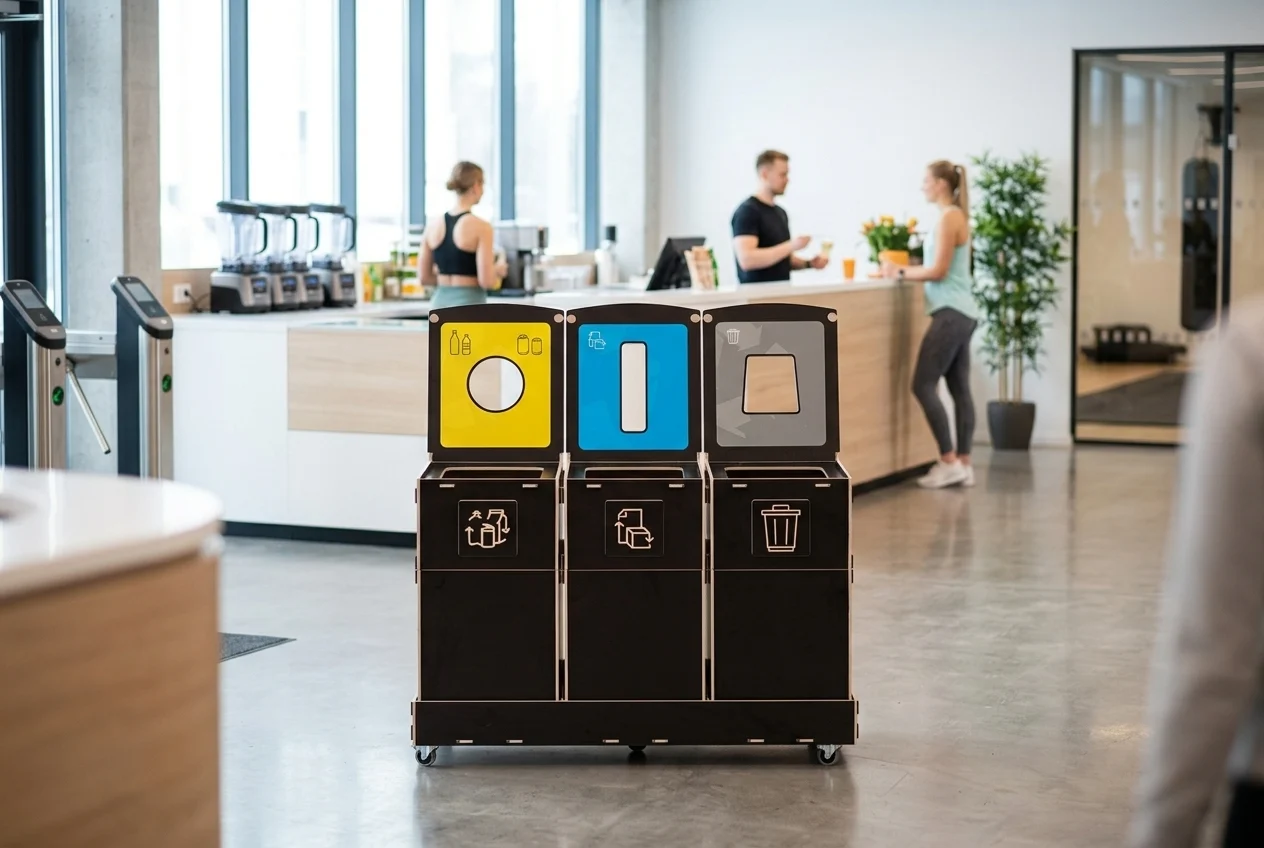
Strategic placement is equally important for success. Research suggests that creating centralized recycling hubs in high-visibility areas, such as main hallways or near cardio zones, can boost participation by 30–50%. When the lid design – such as a round hole for bottles or a thin slit for paper – physically complements the visual icon, it provides a “nudge” that reinforces the user’s choice. High-capacity configurations are particularly effective for high-volume gyms, providing a powerful recycling hub in a compact footprint.
Managing Hazardous and Special Waste
Leisure centres often handle materials that fall under universal waste or specific health-related safety regulations. Proper management includes:
- Aerosol Cans: Deodorant and cleaning sprays may qualify as hazardous waste if they are not fully emptied, requiring careful separation from general streams.
- Batteries: Commonly used in equipment monitors and remote controls, these must be collected in dedicated containers to prevent environmental contamination.
- Regulated Waste: If your facility offers physiotherapy or medical services, any items contaminated with blood or potentially infectious materials must be discarded in closable, leakproof, and labeled containers that are puncture-resistant.
By integrating professional waste stations into your facility’s design, you satisfy workplace recycling regulations while enhancing the user experience for members who value sustainability. If you are looking to upgrade your facility’s waste infrastructure with durable, Red Dot Award-winning designs, explore our full range of recycling bins to find a configuration that matches your unique operational requirements.