
Recycling instructions
Recycling Instructions for Waste Sorting
Clear recycling instructions make it easier to use the collection system provided at a workplace. This page brings together Sortaider’s six existing recycling instruction pages: mixed waste, biowaste, paper and cardboard packaging, glass packaging, plastic, metal and carton packaging, and deposit packaging.
Collection rules vary by country, municipality, property and waste contractor. Use these pages as general instructions for an indoor collection point. Before choosing labels or bins, confirm which materials the local collection service accepts, which materials are collected together and which require a separate route.
Tailored Sorting Solutions for Every Environment
Different spaces produce different combinations and amounts of waste. The indoor recycling point should therefore match both the place where waste is generated and the route used after the bins are emptied.
- Office and workplace: select the fractions that are included in the property’s collection service and place them where the relevant waste is produced.
- Education: use clear names, visible symbols and examples that have been checked against the local collection rules.
- Hospitality: choose capacities and openings that suit the waste generated in guest areas, staff rooms and food-service areas.
- Public and shared spaces: use simple instructions that can be understood before an item is discarded and that match the final collection containers.
- Healthcare workplaces: use these instructions only for ordinary workplace waste. Clinical, infectious, pharmaceutical, sharp and other hazardous waste requires its designated collection system.
The same waste fraction may be collected differently in different locations. The wording and examples on each Sortaider station must agree with the property’s actual waste contract and collection route.
Why Choose Sortaider?
Sortaider combines indoor recycling bins with clear visual recycling instructions. The stations are designed to make waste collection part of the interior instead of hiding it in a corner.
Choose the number of fractions, capacity, opening and instruction placement after confirming the waste streams used at the property. A single-fraction bin suits one separately collected stream, while a multi-fraction station brings several confirmed streams together at one collection point.
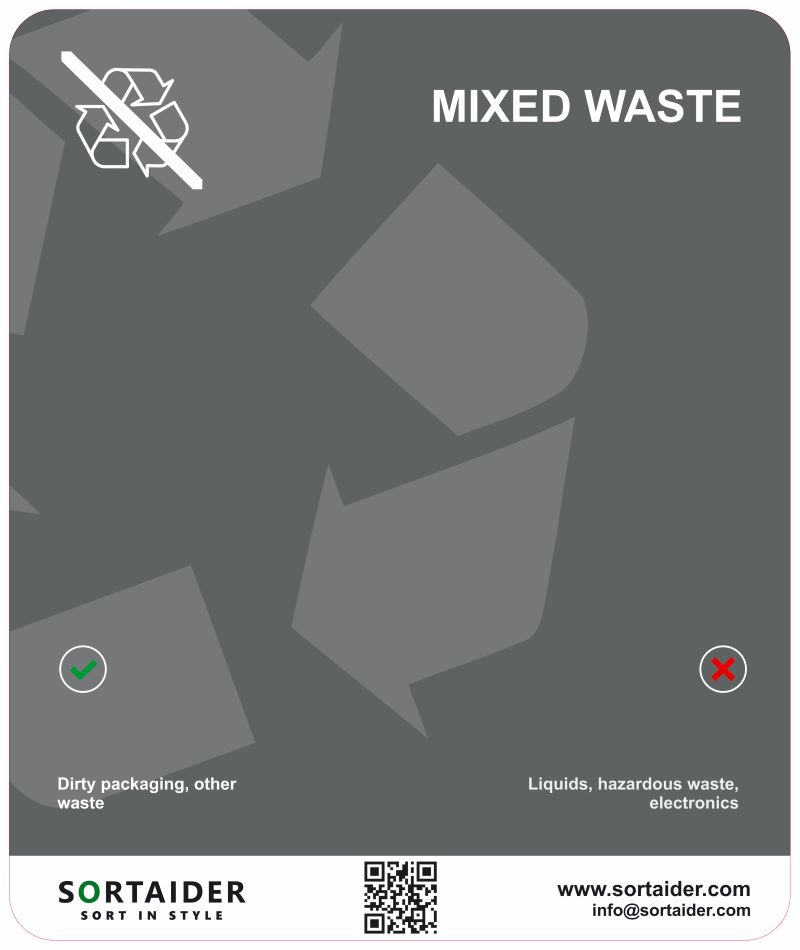
Mixed waste
Mixed waste is the non-hazardous waste left after the materials collected separately at the property have been removed. Local instructions determine whether a particular dirty package or other residual item belongs in mixed waste. Liquids, batteries, electrical equipment, chemicals and other separately controlled waste require their own collection route.
Sorting guide:
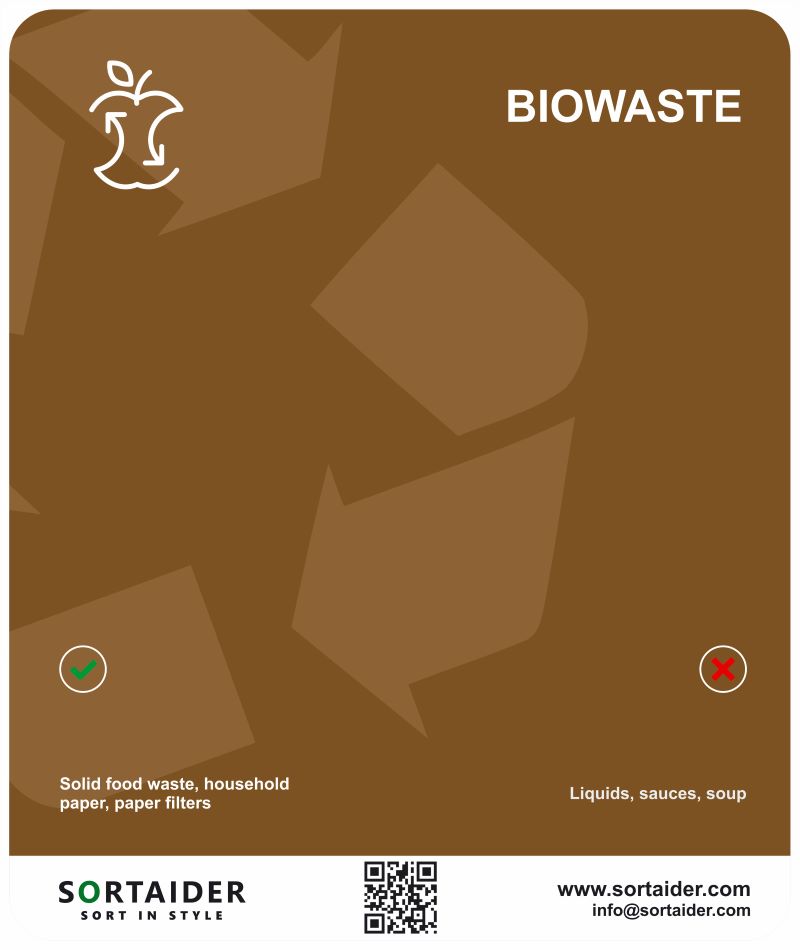
Biowaste
The biowaste instruction covers food and kitchen waste produced in staff kitchens, canteens and similar workplace areas. The local collection service determines whether liners, paper towels, tea bags, coffee filters, bones, shells or liquids are accepted. Packaging must be kept out unless the local instruction explicitly allows it.
Sorting guide:
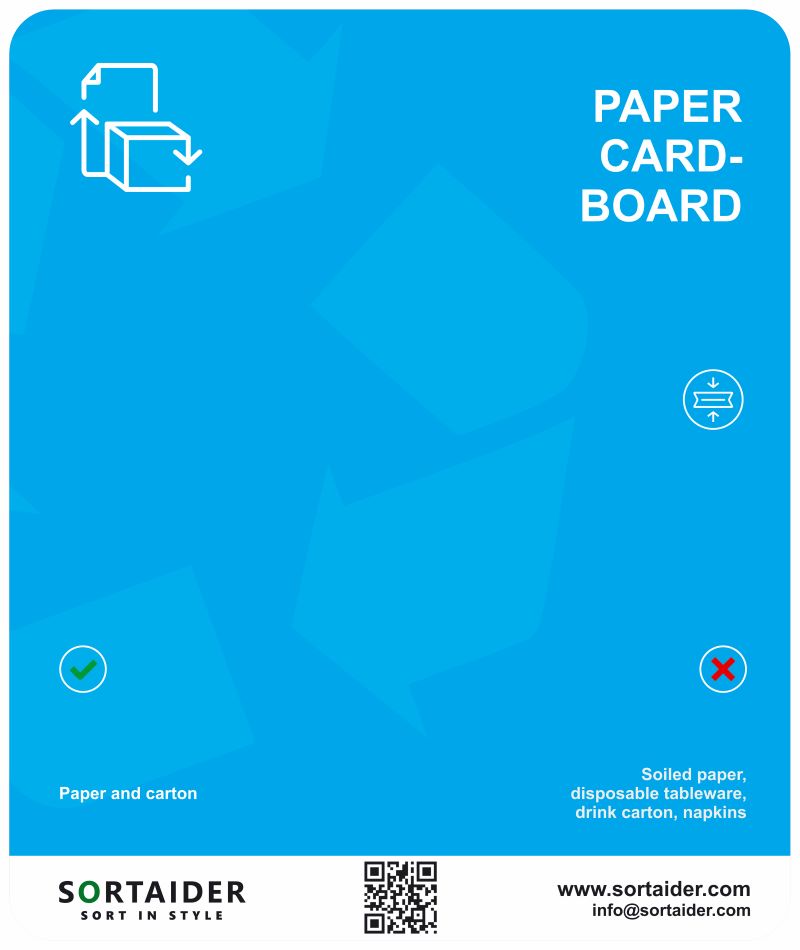
Paper and cardboard packaging
Paper and cardboard should be clean and dry enough for the collection service used at the property. They may be collected together or in separate streams. Local instructions determine the correct route for drink cartons, coated paper, receipts, disposable cups, shredded paper and food-stained cardboard.
Sorting guide:
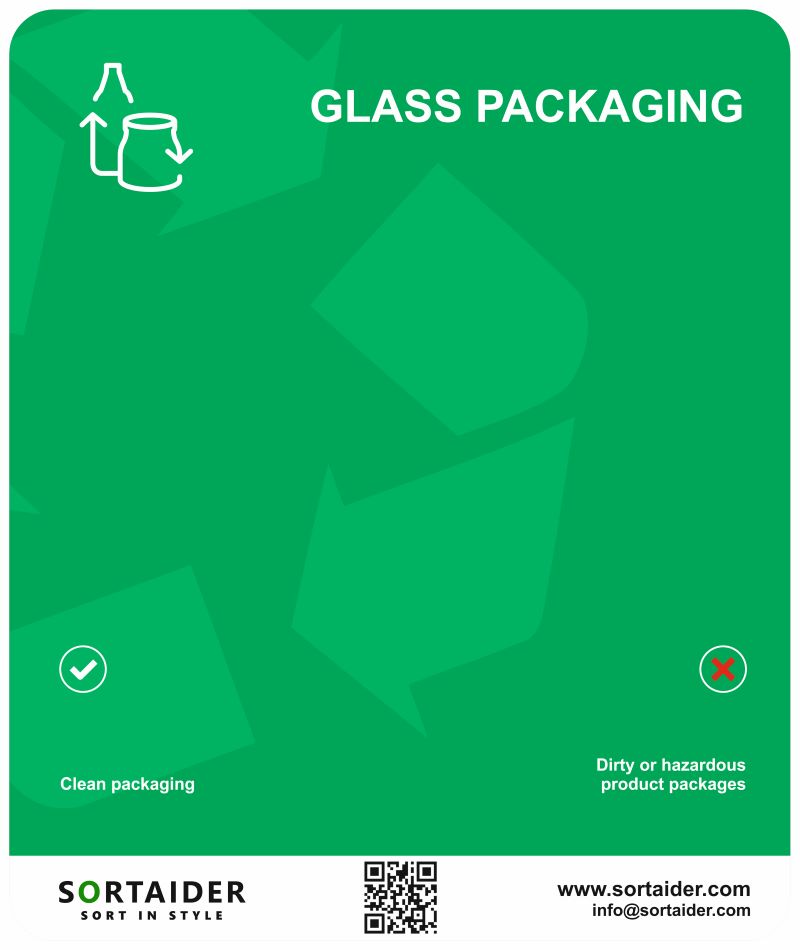
Glass packaging
Glass packaging generally means empty bottles and jars accepted by the local packaging-glass collection. Some systems collect clear and coloured glass together, while others separate them. Drinking glasses, ceramics, mirrors, window glass, heat-resistant glass and lamps are not automatically glass packaging.
Sorting guide:
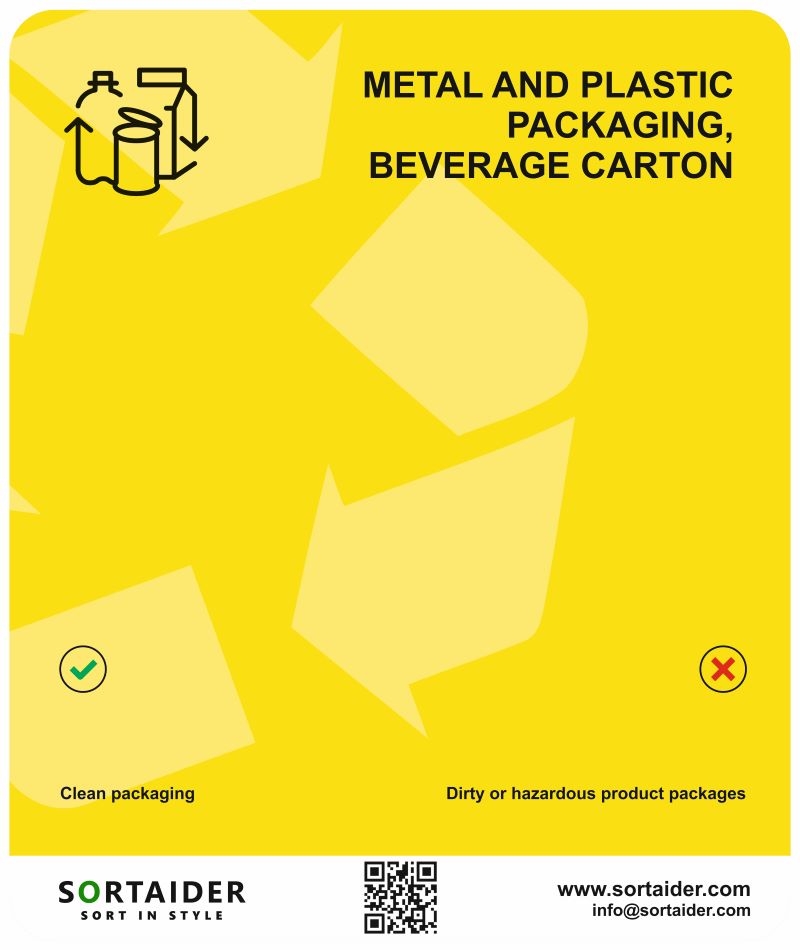
Packaging made of plastic, metal, and cardboard
Use a combined packaging fraction only where the local collection system accepts plastic, metal and carton packaging together. If these materials are collected separately, the indoor bins and labels must keep them separate as well. Empty packaging before collection and follow the local instruction for rinsing, caps, labels, films and composite materials.
Sorting guide:
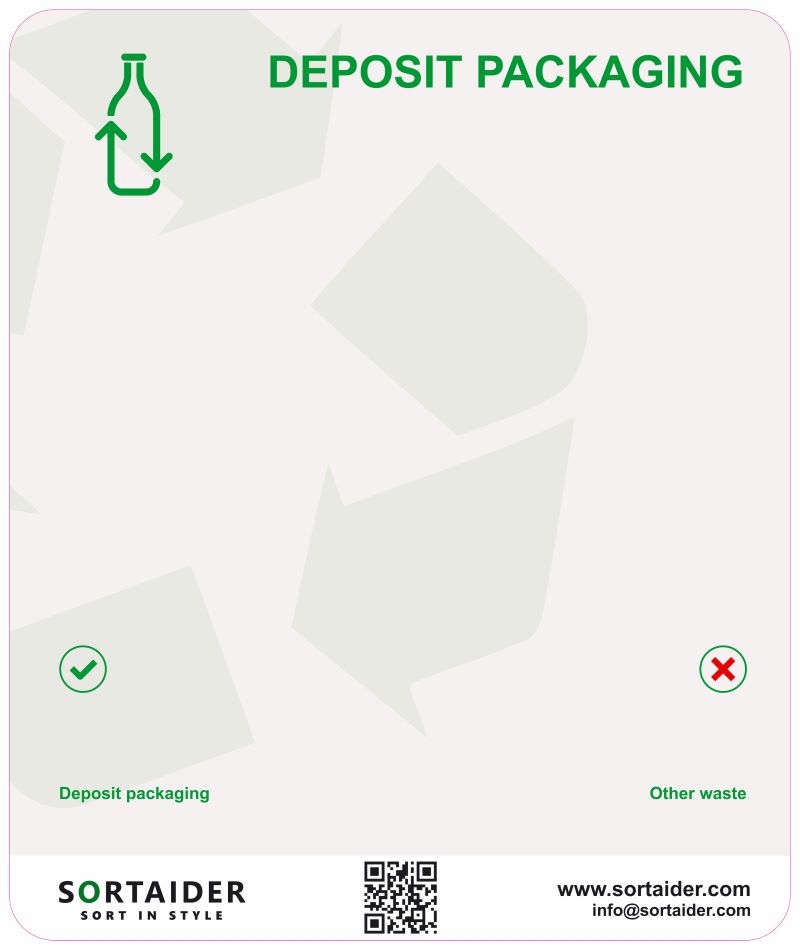
Deposit packaging
Deposit packaging includes only the beverage containers accepted by the return system used at the location. Accepted materials, drink categories, sizes, labels, deposit values and return requirements vary. Keep the containers empty and in the condition required by the local return operator.
Sorting guide:
Let's Take Care of Nature Together!
Clear instructions and a collection point matched to the property's actual waste service help people place waste in the intended stream. Review the labels whenever the waste contractor, property system or deposit return requirements change.
Choose your solution