
Recycling Instruction – Glass Packaging
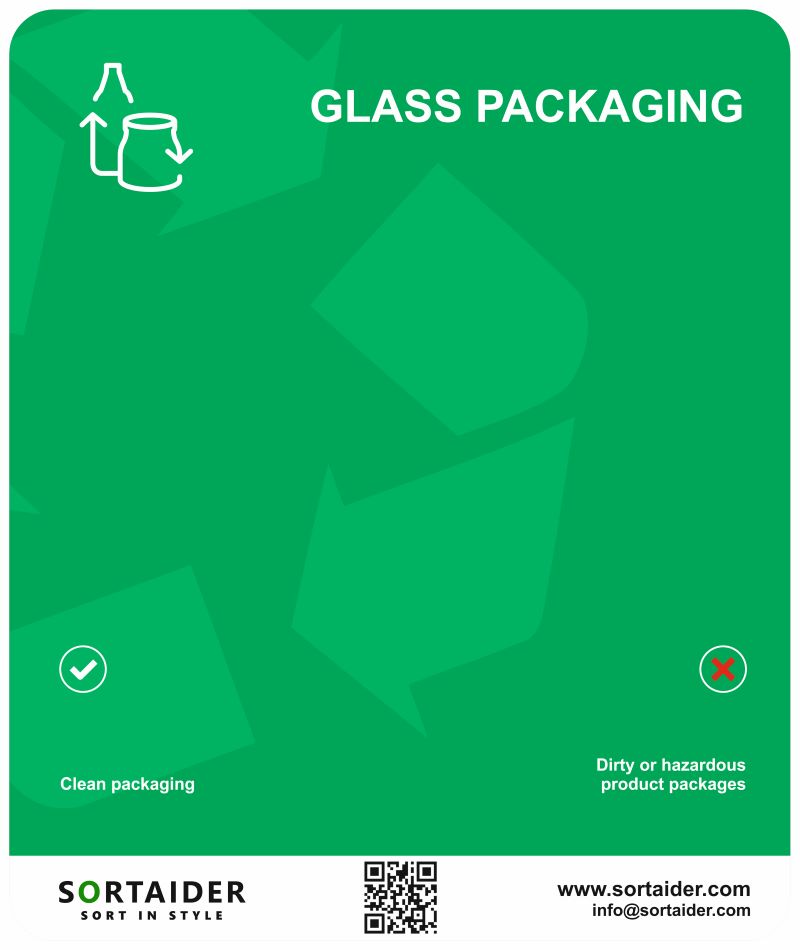
Recycling Instruction – Glass Packaging for Sorting
This Recycling Instruction covers glass bottles and jars accepted by the packaging-glass collection used at a workplace. It does not apply to every product made of glass.
Collection arrangements vary by country, municipality, property and waste contractor. Some systems collect clear and coloured packaging glass together, while others keep them separate. Check the local service before selecting labels, colours or item examples. The Sortaider Recycling instructions provide the general indoor collection structure.
What Goes Into Glass Packaging? (Allowed Items)
Place only empty glass packaging accepted by the local service into this fraction. Depending on the collection rules, accepted items may include:
- non-deposit glass bottles;
- food jars;
- other glass containers specifically listed as packaging glass;
- clear or coloured packaging glass in the combination required locally.
Empty the packaging before collection. Rinse it only where the local service requires this or where a small amount of cleaning is needed to prevent hygiene problems in the indoor bin. Do not treat rinsing as a method for making hazardous-product packaging acceptable.
Send beverage containers accepted by a return system to the Recycling Instruction – Deposit Packaging first. A lid, cap or other component may belong under the Recycling Instruction – Plastic, Metal and Carton Packaging only where the local service collects those materials together.
What to Keep Out of Glass Packaging? (Prohibited Items)
Keep out products that are not accepted as packaging glass by the local service. These commonly require another route:
- drinking glasses and tableware;
- ceramics, porcelain and stoneware;
- mirrors, window glass and flat glass;
- heat-resistant cookware and oven glass;
- lamps, light bulbs and fluorescent tubes;
- glass containing electronics or other components;
- containers holding hazardous substances or residues.
The correct route for these items may be a recycling centre, construction-waste service, electrical-waste collection or hazardous-waste service. Use the instruction issued for the location.
Smart Waste Management with Sortaider
For one separately collected glass-packaging stream, compare Sortaider waste bins. If glass packaging is collected at the same indoor point as two to five other confirmed fractions, compare Sortaider recycling bins.
Choose an opening that suits bottles and jars without inviting unrelated glass products. Capacity, liner, emptying frequency and placement should account for weight, breakage risk and the route used after the indoor bin is emptied.
Sorting guide:
Let's Take Care of Nature Together!
Clear instructions and a collection point matched to the property's actual waste service help people place waste in the intended stream. Review the labels whenever the waste contractor, property system or deposit return requirements change.
Choose your solution