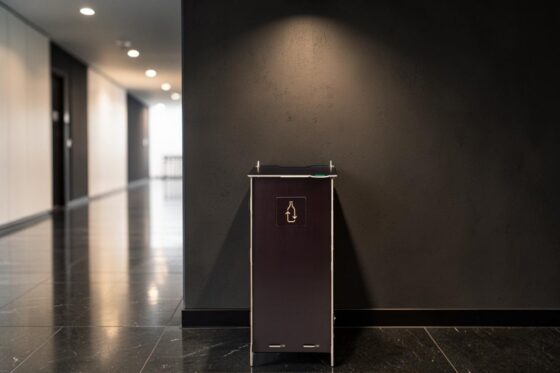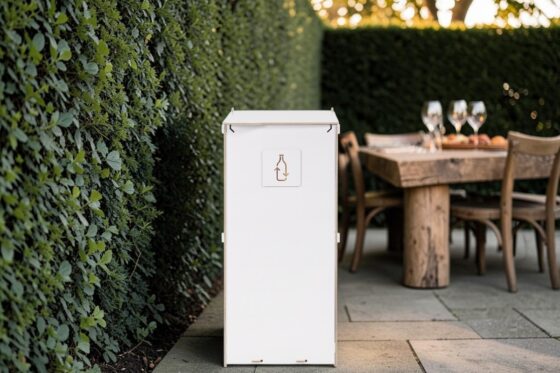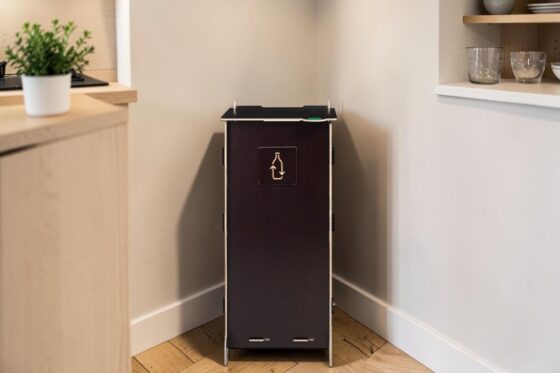
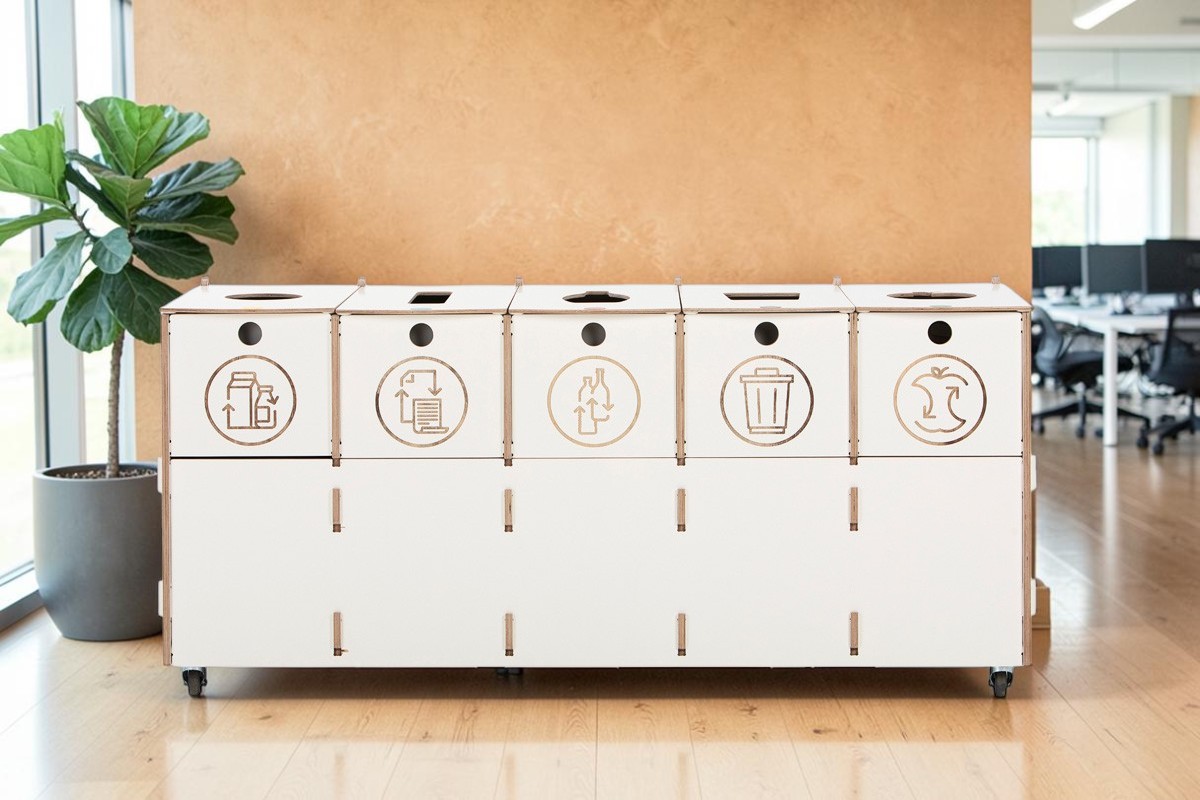
Recycling bins for offices, schools and indoor and public spaces
Recycling bins bring together at a single point the waste fractions that are collected separately, so that the user can sort waste where it is generated. A point for two, three, four or five waste fractions is planned according to the property’s own collection system, the number of users, the accumulation of waste and the emptying rhythm.
The Sortaider range includes four recycling bin series intended for different use environments. Sorter serves offices and business premises, Sorta schools, Ecolong indoor spaces with a high amount of use and Container public indoor spaces. This guide helps you determine the need before choosing an individual model.
The waste fractions of recycling bins are determined before choosing a model
Only the waste fractions that are generated in the space and that are collected separately in the property are chosen for the sorting point. The choice starts from the waste management instructions of the property, not from as many openings as possible. Common waste fractions can be, for example, mixed waste, biowaste and cardboard, plastic, metal and glass packaging.
A point for two waste fractions is enough when the user has to separate two collected fractions. A point for three, four or five waste fractions is chosen when several separately collected wastes are generated at the same place of use. If only one fraction is collected at the site, it is a single-fraction waste bin. A single Sorter module can, however, be combined with other modules of the same series into a sorting point for several waste fractions.
The names, colours and sorting instructions of the waste fractions are kept the same on the bins, on the signs and in the property’s own waste management instructions. This way the user meets the same guidance throughout the building.
The size of recycling bins is chosen according to the amount of use and the emptying rhythm
A suitable volume is determined for each waste fraction on the basis of its actual accumulation. The number of users, the type of waste, the space available and the agreed emptying rhythm have more influence than the total number of litres of the sorting point.
- The volumes of the Sorter series are 10–90 l.
- The volumes of the Sorta series are 20–90 l.
- The volumes of the Ecolong series are 60–90 l.
- The basic models of the Container series consist of three, four or five 40 l inner bins.
All waste fractions do not have to fill up at the same rate. If, for example, cardboard or packaging fills up faster than mixed waste, the dimensioning or the emptying rhythm of that waste fraction is checked separately. A larger whole is not automatically better if it takes up space unnecessarily or leaves some of the inner bins underused.
The product series of recycling bins is chosen according to the use environment
- Sorter for offices and business premises: modules of 10–90 l can be used to build a sorting point for two, three, four or five waste fractions. One module can also work as a separate bin or as part of a whole that is extended later.
- Sorta for schools: models of 20–90 l form points for 2–5 waste fractions in classrooms, corridors, dining areas and other shared indoor spaces.
- Ecolong for indoor spaces with a high amount of use: models of 60–90 l form points for 2–5 waste fractions. Within the same series it is possible to use the Longopac system, an ordinary waste sack or bag-free collection according to the chosen model and waste fraction.
- Container for public indoor spaces: models with three, four or five 40 l inner bins are suitable for lobbies, corridors, waiting areas and other public indoor spaces, for example.
The name of the series alone does not decide the choice. The final model is checked on the basis of the number of waste fractions, the volume, the location and the maintenance practice of the site.
The markings and maintenance of recycling bins are planned to be consistent
The sorting instruction is placed so that the user sees the name and the identifier of the waste fraction before leaving the waste. The same names, colours and symbols are used at the sorting points of the same building. Markings are not changed on the basis of the appearance of the bin alone if the collection system of the property uses a different name.
Space is left around the bin for use, cleaning and changing the inner bin or the waste sack. The emptying rhythm is recorded for each waste fraction, because one fraction can fill up faster than the others. Bags and other collection supplies are always chosen according to the series, the model and the waste fraction; the solution of one series is not assumed to fit another series.
Sortaider bins are delivered glued, fully assembled and packed. The first waste bags are included, so commissioning does not require assembling the product at the site.
Recycling bins from the Sortaider range
Once the waste fractions, the use environment, the volume and the emptying rhythm have been defined, the next step is to compare a suitable series and model. In the Recycling bins for 2–5 waste fractions category you can compare the models, colours, numbers of waste fractions, volumes and prices of the Sorter, Sorta, Ecolong and Container series.