Plywood compared with plastic and metal
Plywood, plastic and metal cannot be placed in a general order of merit on the basis of the material name alone. A comparison has to use the same intended use and comparison unit, and to state the dimensions, mass, structure, surface treatment, operating environment, maintenance, period under review and source of the data for the products.
This page therefore does not promise that plywood is always lighter than metal, stronger than plastic or better than both in environmental impact. A numerical comparison can be published only once the Sortaider product and the functionally equivalent plastic and metal products have been defined on the same grounds. The technical performance of a material and its environmental impact are different comparisons and they require different source material.
Plywood in Sortaider recycling bins and waste bins
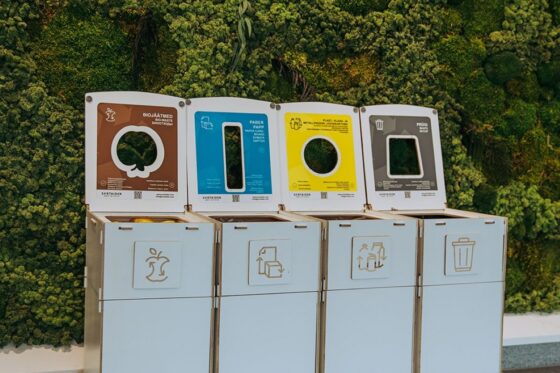
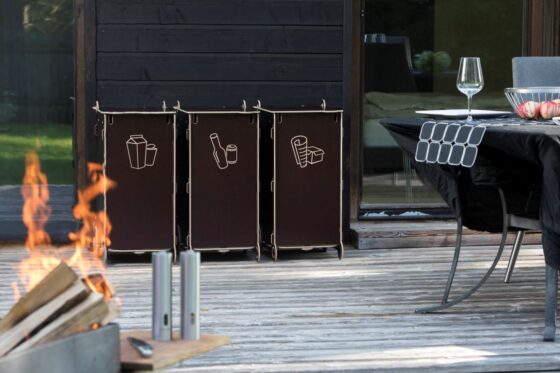
Sortaider uses plywood in the body, the lid or other model-specific parts of many recycling bins and waste bins. The material used is always checked from the technical data of the selected product, because the structure and the parts vary according to the product series, the size and the intended use.
This material page complements the product information but does not replace it. It does not confirm the same wood species, panel thickness, veneer structure, bonding class, surface treatment, edge protection or certificate for all models. If a piece of information is missing from the live product page, it is checked with Sortaider before a purchase or use decision.
Plywood is chosen according to the operating environment and the product model
First the number of waste fractions, the required volume, the location, the number of users and the emptying rhythm are determined. Solutions for two to five waste fractions are found in the Plywood recycling bins product group. Solutions for one waste fraction are found in the plywood waste bins product group.
Indoor or outdoor use is not deduced from the colour, the shape or the material name alone, but from the product data of the selected model. For outdoor use in particular, information is needed on the surface, the edges, the joints, moisture management and the maintenance instructions.
Plywood is assessed with data on structure and surface treatment
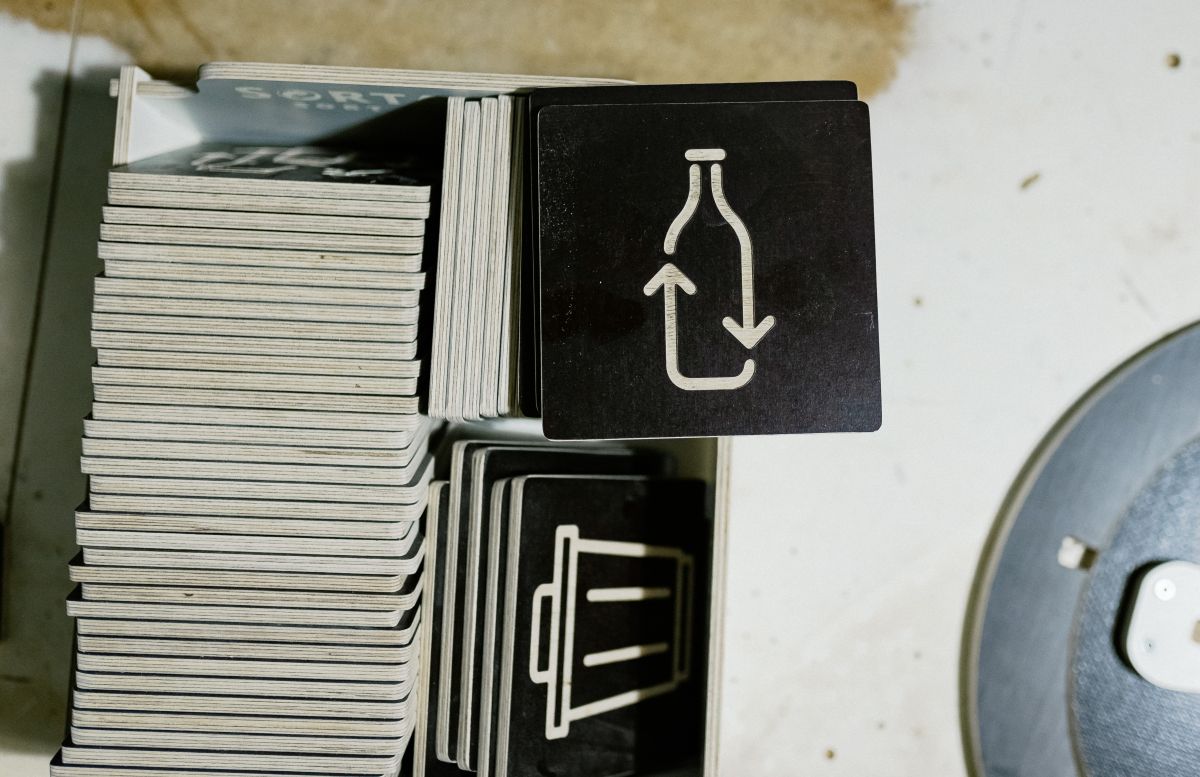
A plywood panel is made of veneer layers bonded together, but the properties of the panel cannot be deduced from the layered structure alone. The assessment requires at least the wood species or product grade, the panel thickness, the layer structure, the bonding class, the treatment of the surface and the edges, the intended use and the technical document of the manufacturer.
The same applies to cleanability, moisture, UV radiation, temperature, impacts and surface wear. A property of a single plywood product from one supplier is not transferred to another product without a match of the material code and the specification. The expressions waterproof, weatherproof, UV resistant, fire safe and food grade are left out unless the documentation of the selected model confirms them.
Plywood is checked for the surface, the edges and the joints
When the product is inspected, the visible surfaces, edges, corners and joints are taken into account according to the structure of that model. A change, scratch, chip, swelling, detachment of the surface or damage to a joint is documented before any cleaning or repair measure. An observation alone does not tell the cause of the damage nor whether the product can be repaired.
Cleaning, drying and any repair are carried out only according to the model-specific instructions of Sortaider. General handling instructions for plywood panels are not used as the maintenance instructions of a finished product, because the product may contain coatings, engravings, bonded joints, metal parts, plastic parts and other materials.
Plywood is linked to the model-specific material document
Before a technical or environmental claim is published, the material document identifies at least the product model, the part, the material code, the supplier, the version of the document and the period of validity. If the claim concerns strength, mass or outdoor use, the test method, the unit of measurement and the limit of use are recorded with it. If the claim concerns origin or a certificate, the number, the scope and the period of validity of the certificate are recorded with it.
Environmental impacts are not deduced from the fact that the product contains wood or plywood. The carbon footprint, energy consumption, recyclability and end of life are dealt with on a separate environmental impact page, only on the basis of comparable LCA or EPD material and a product-specific material list.