Materials, production and service life of recycling bins and waste bins
The environmental impact of a recycling bin or a waste bin cannot be deduced from a single material or a single CO₂ figure. The assessment is affected by the product model, the parts and their masses, the origin of the materials, manufacturing, transport, packaging, use, maintenance, any spare parts and end-of-life treatment.
A comparison also states the functional unit, the period under review, the geographical area, the date of the data, the calculation method and the system boundary. Without this information the expressions environmentally friendly, smaller carbon footprint or less waste are not used as a measured property of the product.
The environmental impacts of recycling bins and waste bins are defined by product model
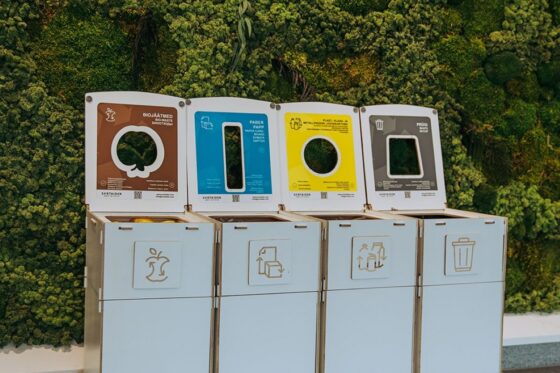
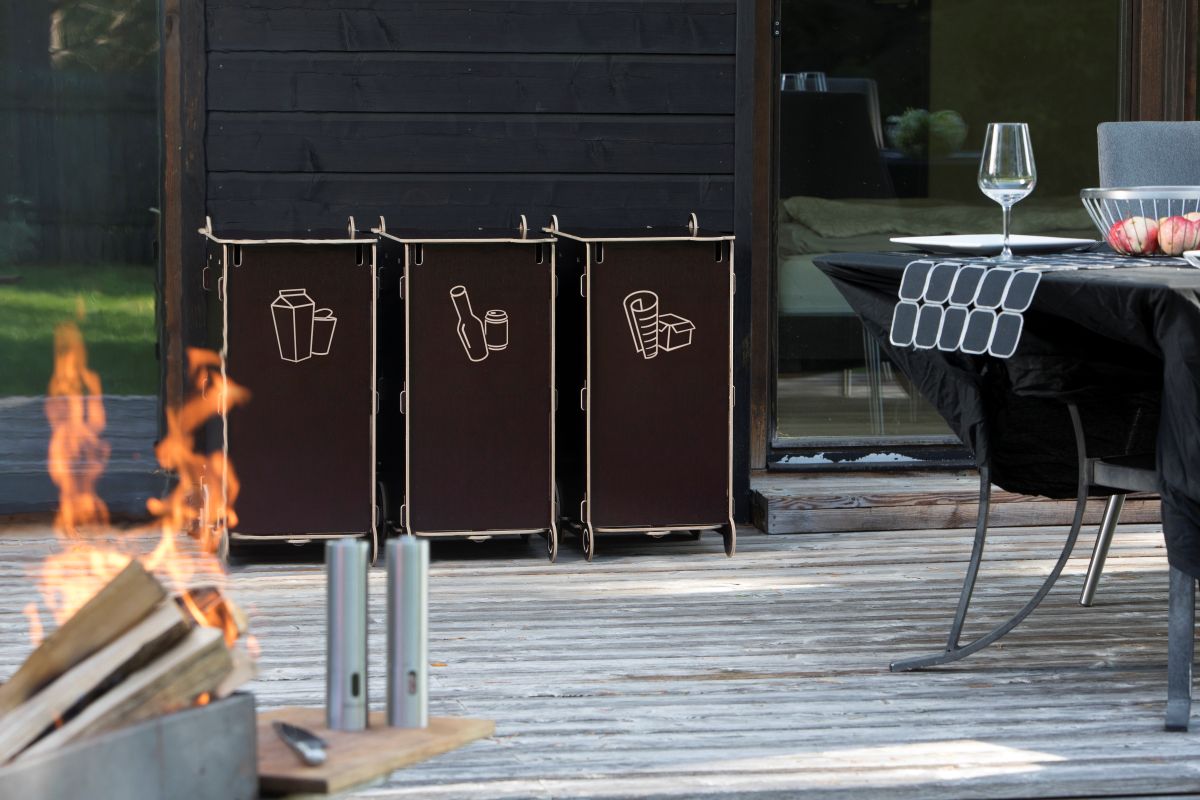
The assessment starts from the intended use and the chosen model. Solutions for two to five waste fractions are found in the Recycling bins for 2–5 waste fractions product group. Solutions for one waste fraction are found in the Waste bins for the collection of one waste fraction product group.
A model-specific assessment identifies at least the product code, the size, the number of waste fractions, the parts under review, the masses of the parts and the operating environment. The result of one product model is not transferred to another size, colour, structure or product series unless their materials and masses match the input data of the calculation.
The materials of recycling bins and waste bins are documented part by part
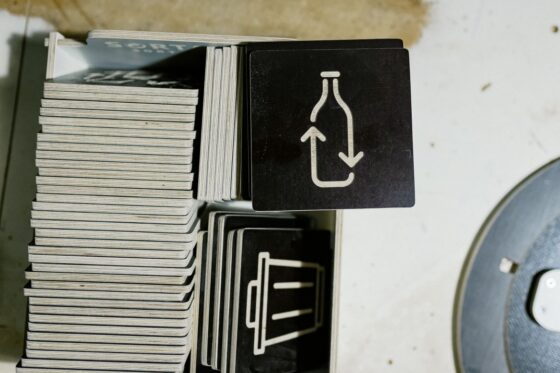
The material list separates plywood or wood, glues, surface treatments, edges, metal parts, plastic parts, fasteners, markings, bags and packaging materials. For every material used in the calculation the quantity or mass, the source, the version and the part of the product the information relates to are recorded.
The use of wood or plywood alone does not prove renewability, responsible origin, non-toxicity, biodegradability or the recyclability of the whole product. A claim about origin requires a valid certificate and a supply chain. Guidance on end of life requires the full material list, the actual separability of the parts and the local waste instructions used in the country.
The production of recycling bins and waste bins is described with measured data
For the environmental impact of production, the electricity and fuels of the manufacturing site, the material input, the production yield, the loss and waste streams, the period under review and the way shared costs are allocated to products are collected. The data is tied to the same period and production volume so that figures from different years or factories are not combined without an explanation.
By the decision of the owner, Sortaider products are delivered fully assembled, glued, packed and ready to use. The calculation of transport and packaging is therefore made with the actual volume, weight, packaging materials, transport route and delivery method of the assembled product. No assumption of flat packing or customer assembly is used.
The carbon footprint of recycling bins and waste bins is presented together with the boundaries of the calculation
The CO₂ calculator and carbon footprint comparison shows the estimate of the selected Sortaider model compared with the selected plastic or steel alternative. Before the result is used, the product model, the masses of the wooden parts and of the comparison product, the material-specific emission factors, the way carbon stored in wood is calculated, the system boundary, the geographical area, the year of the data and the version of the calculator are checked.
The result of the calculator is an estimate based on the model and the chosen assumptions. It is not the same as a third-party verified EPD, and a single saving figure is not used as such as evidence in an auditable ESG report. For reporting, the sources, input data, calculation version, limitations, date and responsible reviewer are kept together with the result.
The service life and end of life of recycling bins and waste bins are separated from assumptions
A service life estimate states the period under review, the operating environment, cleaning, maintenance, repairs, replaced parts and the functional condition of the product. The warranty period, the period used in the calculation and the actual service life are different pieces of information and are not presented as synonyms for one another.
At end of life, the wood, plywood, metal, plastic, glue, coating and packaging parts are treated according to material-specific guidance. The guidance is based on the actual separability of the parts and on local acceptance requirements. Claims such as returns safely to nature, all parts are recyclable or fully reusable are not published without a documented treatment route for the product model.