Did you know that the average European office worker generates 2 kg of waste every single day? For facility managers, managing food waste and recycling in communal kitchens is no longer just a matter of office hygiene; it is a critical requirement for regulatory compliance and operational cost reduction.
European Regulations and Local Compliance
Across Europe, the workplace recycling regulations are shifting toward a circular economy model. The EU Waste Framework Directive now mandates the separate source collection of paper, metal, plastic, glass, and bio-waste. Organizations must adapt quickly, as the EU target is to recycle 65% of municipal waste by 2035. This shift moves the burden of sorting from municipal facilities directly to the point of generation – your office kitchen.
Local mandates are becoming increasingly stringent and vary significantly by market. In Sweden, separate food waste collection became mandatory for all businesses in 2024. In Estonia, businesses generating more than 10 kg of bio-waste daily must provide separate collection. Denmark requires workplaces to maintain a minimum of four separate waste streams, and any facility producing more than one ton of waste annually must utilize digital tracking systems. Failure to comply does more than risk fines; it often results in contamination fees at processing facilities, which can increase disposal costs by up to 50%.
Best Practices for Commercial Kitchen Hygiene
Managing waste in a kitchen environment requires a more specialized strategy than standard office spaces due to the presence of moisture and organic matter. High-volume kitchens are the primary engines of waste generation, where food and organics often comprise 38% to 50% of the total volume. Maintaining a professional environment requires strict adherence to hygiene standards to prevent odors and pests.
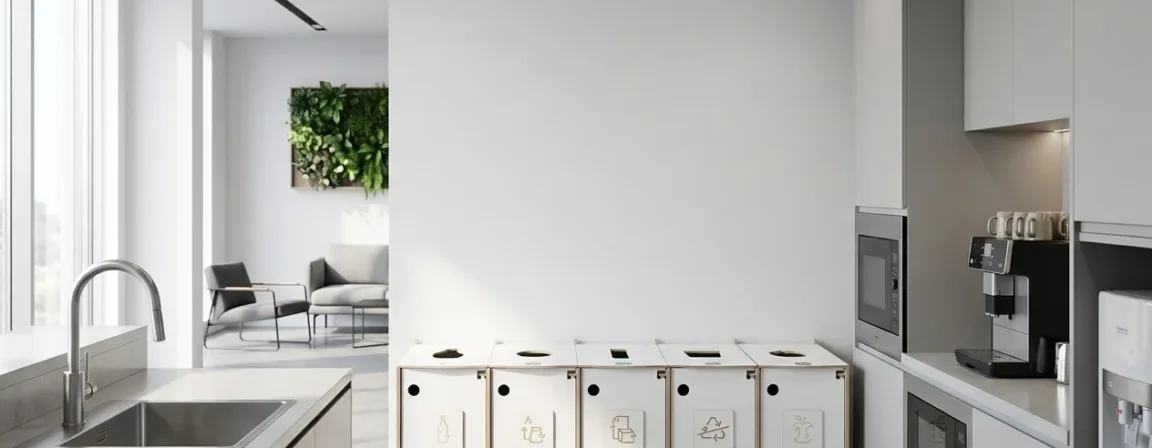
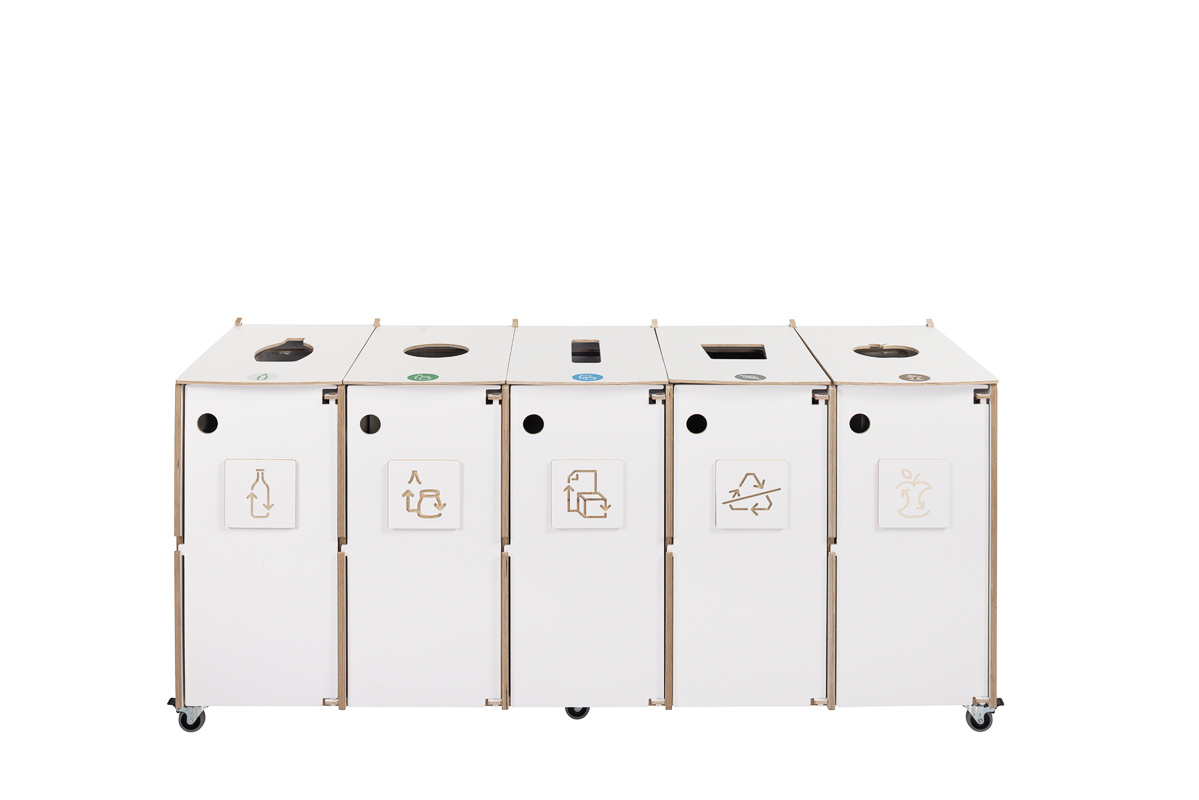
According to FDA standards, refuse and recyclables must be removed from the premises at a frequency that minimizes objectionable conditions. Storage areas must have sufficient capacity for peak volumes and be kept entirely separate from food preparation and clean utensil storage. Indoor receptacles containing food residue should remain covered when not in continuous use. To meet these demands, modern facilities often utilize moisture-resistant separate waste collection stations that can withstand humid conditions while offering enough capacity for multiple streams.
Strategic Placement and Centralized Hubs
Research indicates that proximity is the most significant driver of success in workplace recycling programs. Strategic bin placement can boost participation by 30% to 50% because users are significantly more likely to sort correctly when the station is intuitive and accessible. Transitioning from individual deskside bins to centralized recycling hubs in high-traffic areas like kitchenettes is one of the fastest ways to hit sustainability goals.
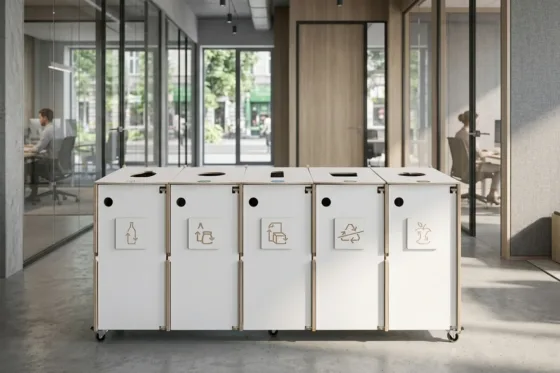
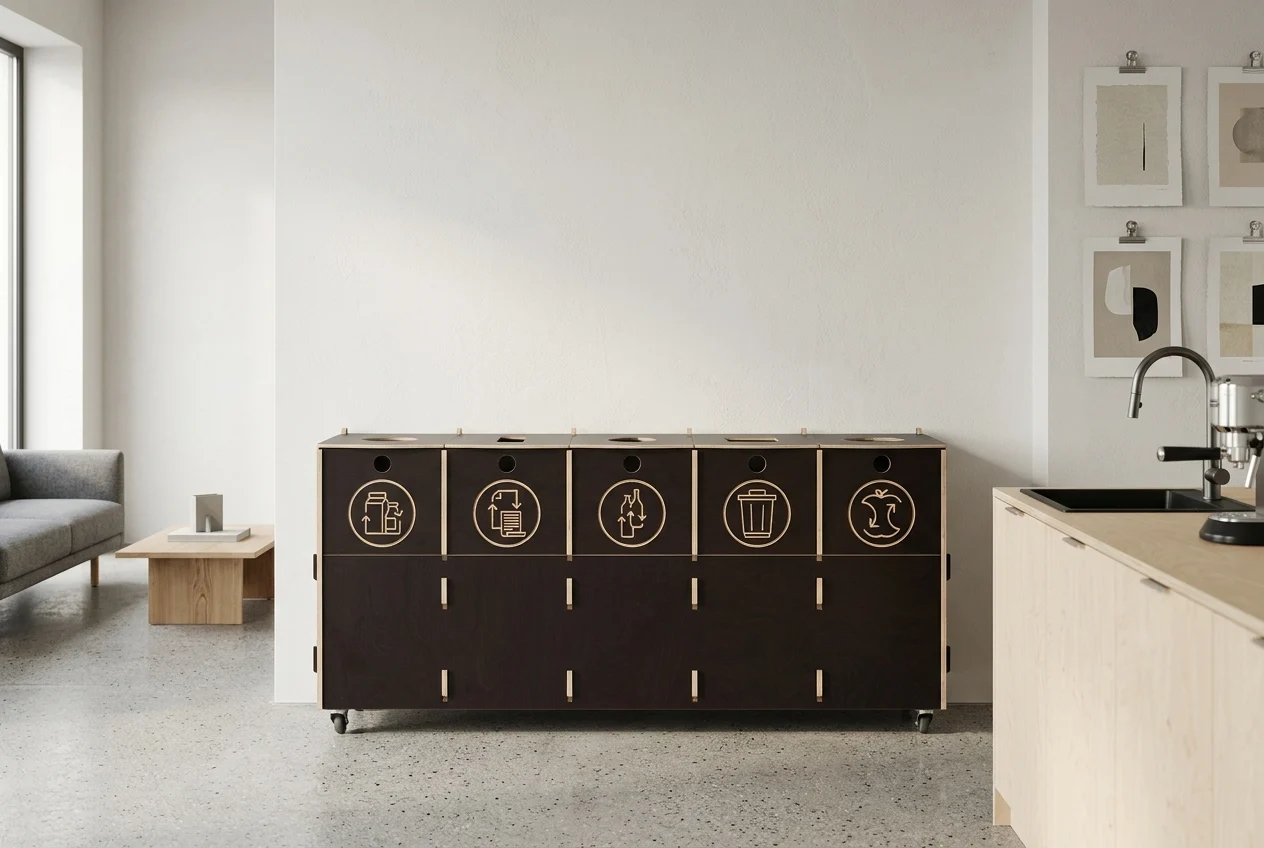
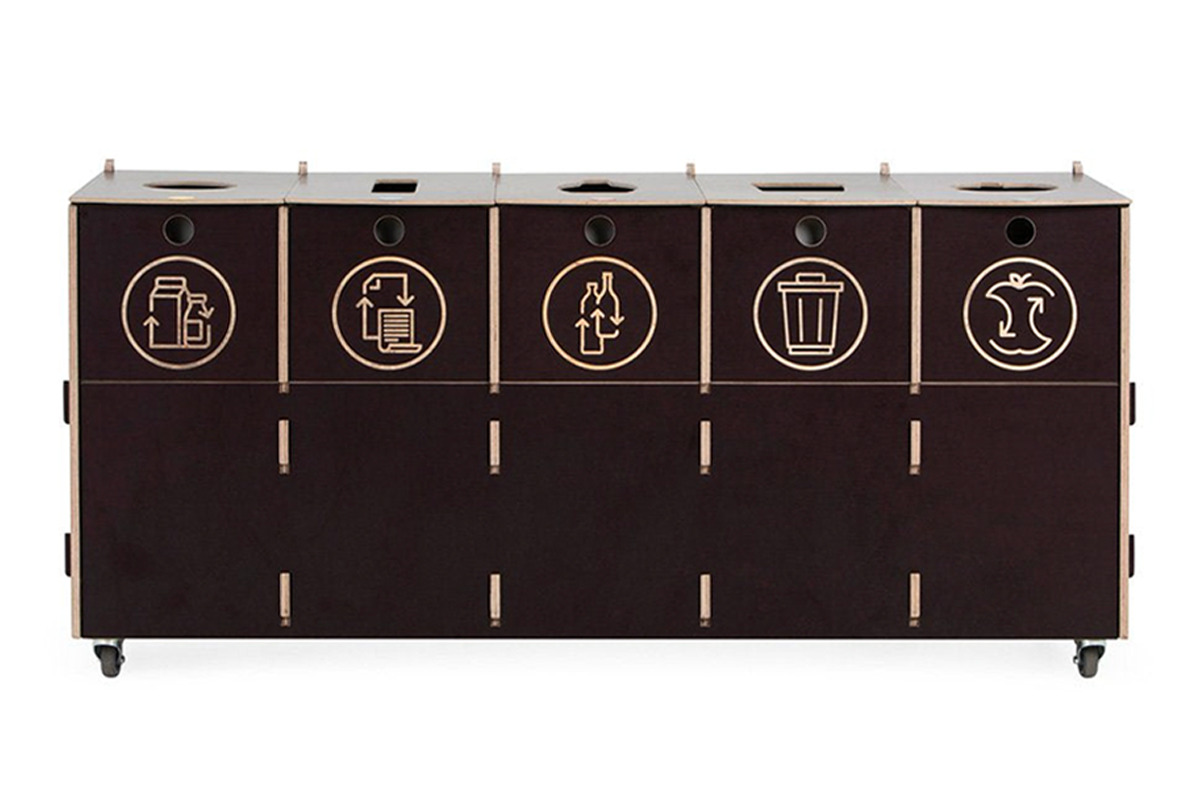
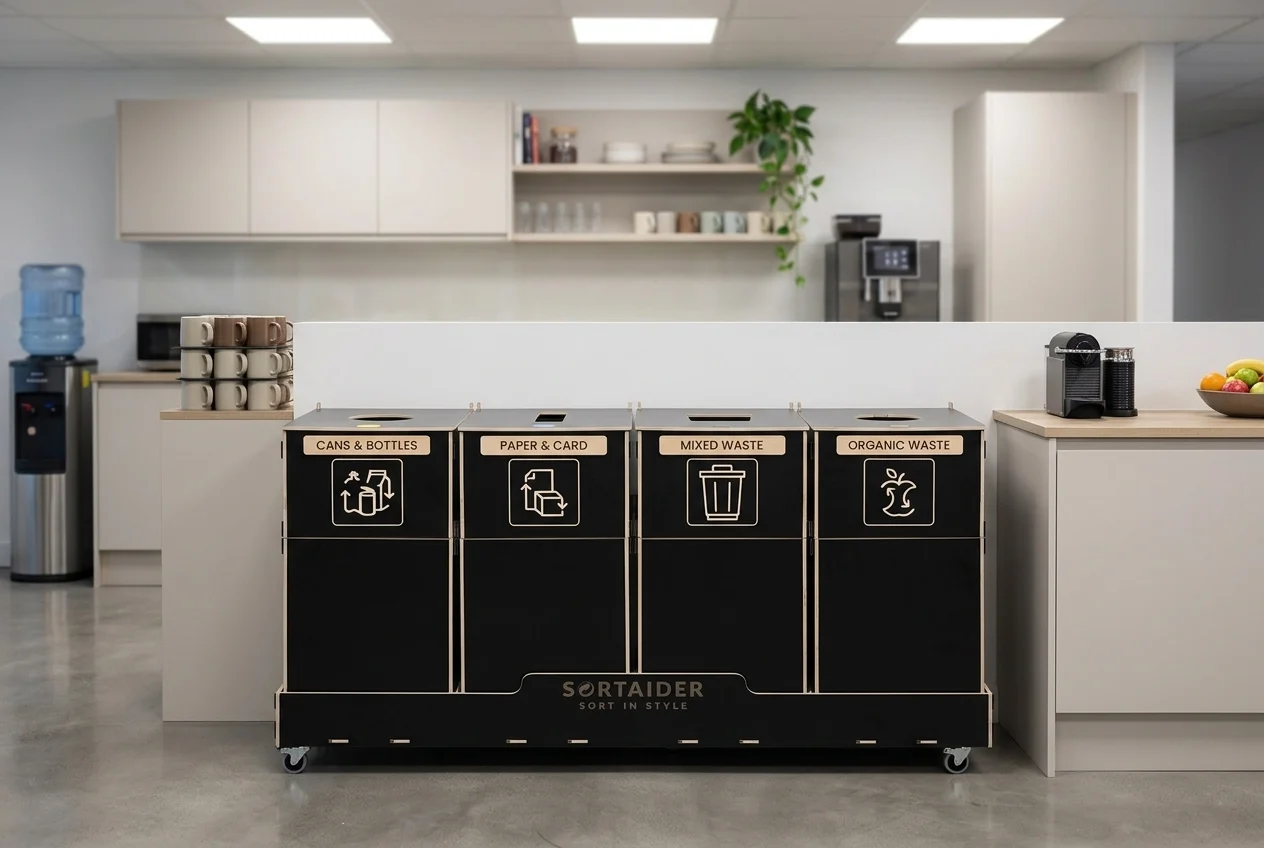
The transition to centralized sorting also supports organizational aesthetics. For premium environments like corporate offices or public galleries, modular stations such as the Red Dot Award-winning Container series offer a discreet and elegant solution. These units are crafted from durable birch plywood, which not only provides a high-end furniture finish but also emits up to four times less CO2 over its lifecycle compared to traditional plastic or metal alternatives.
Managing Bio-Waste and Contamination
Bio-waste is the most common point of failure in office recycling systems. A single conventional plastic bag or a greasy pizza box can contaminate an entire load, causing a facility to reject the shipment if contamination exceeds a weight threshold of 3% to 5%. Across Europe, these sorting errors lead to hundreds of millions in added labor and equipment repair costs at material recovery facilities.
- Implement a strict “food-only” rule for bio-waste bins, including only food scraps, fruit peels, and coffee grounds.
- Enforce the “Pizza Box” rule: only clean, ungreased cardboard is recyclable, while soiled portions must be diverted to residual waste.
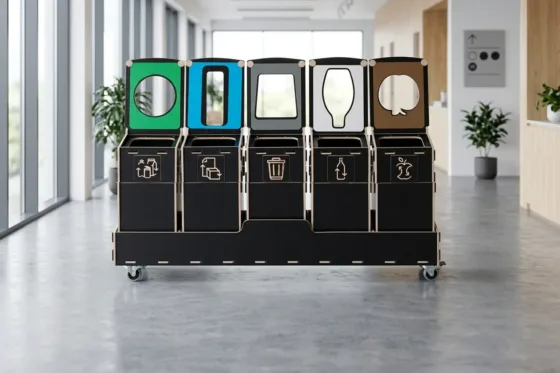
- Use high-contrast pictograms rather than text alone. Clear visual icons can reduce sorting errors by up to 40% in multilingual workplaces.
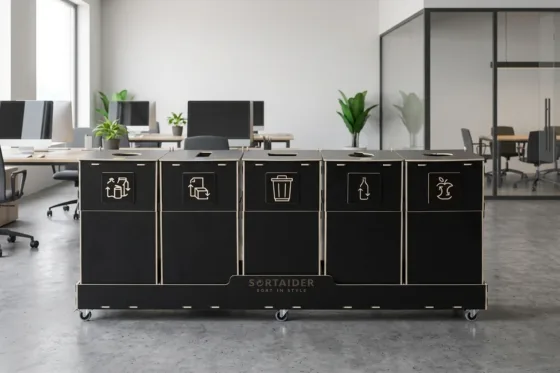
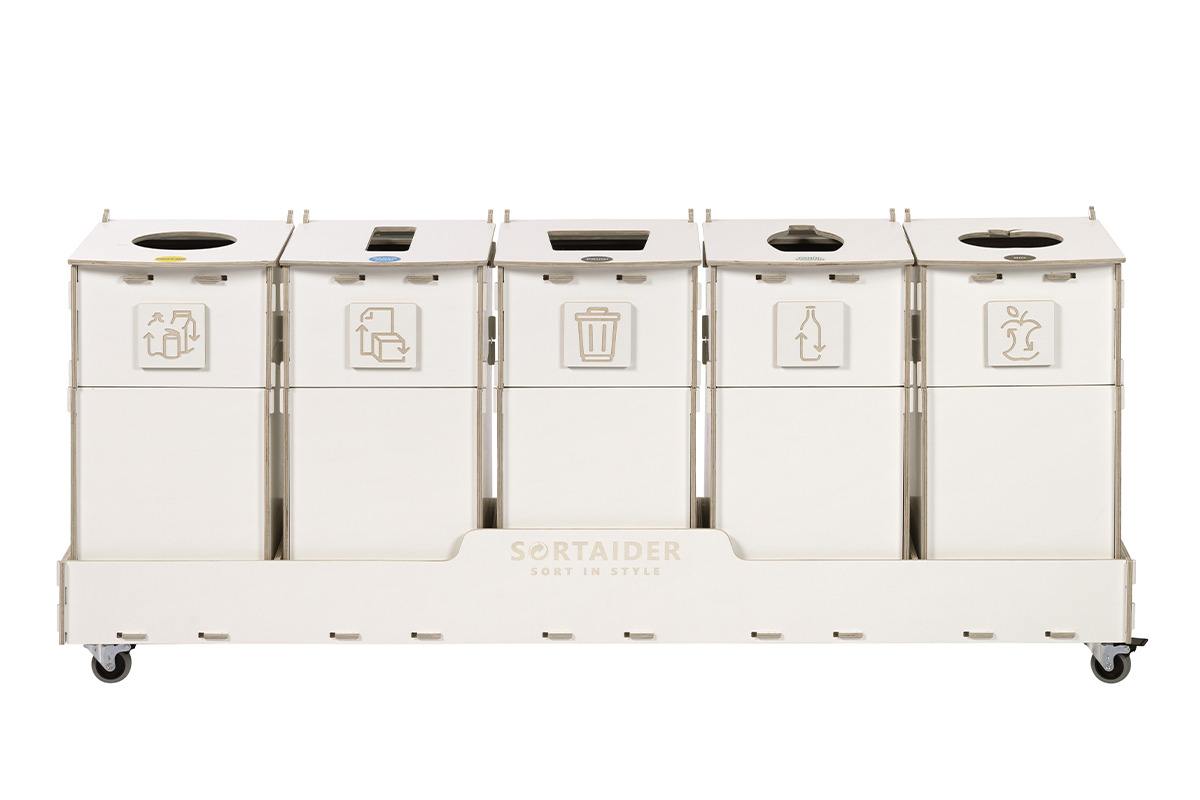
Customizable solutions like the Sorter series allow for clear labeling and custom brand engraving, ensuring that instructions are highly visible and aligned with your organization’s identity.
-
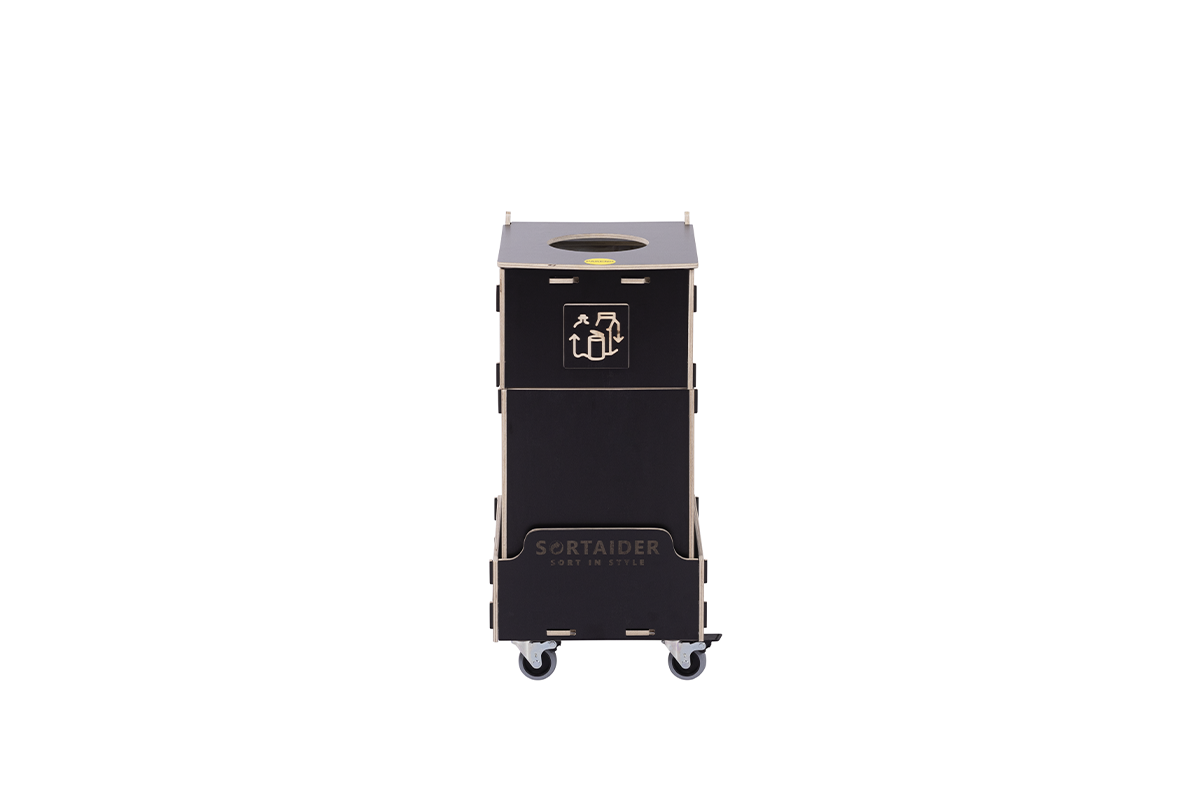
Recycling bin Sorter 10B1
1 type of waste 1 x 10L173,60 € (incl. 24% VAT)140 € (excl. VAT) -
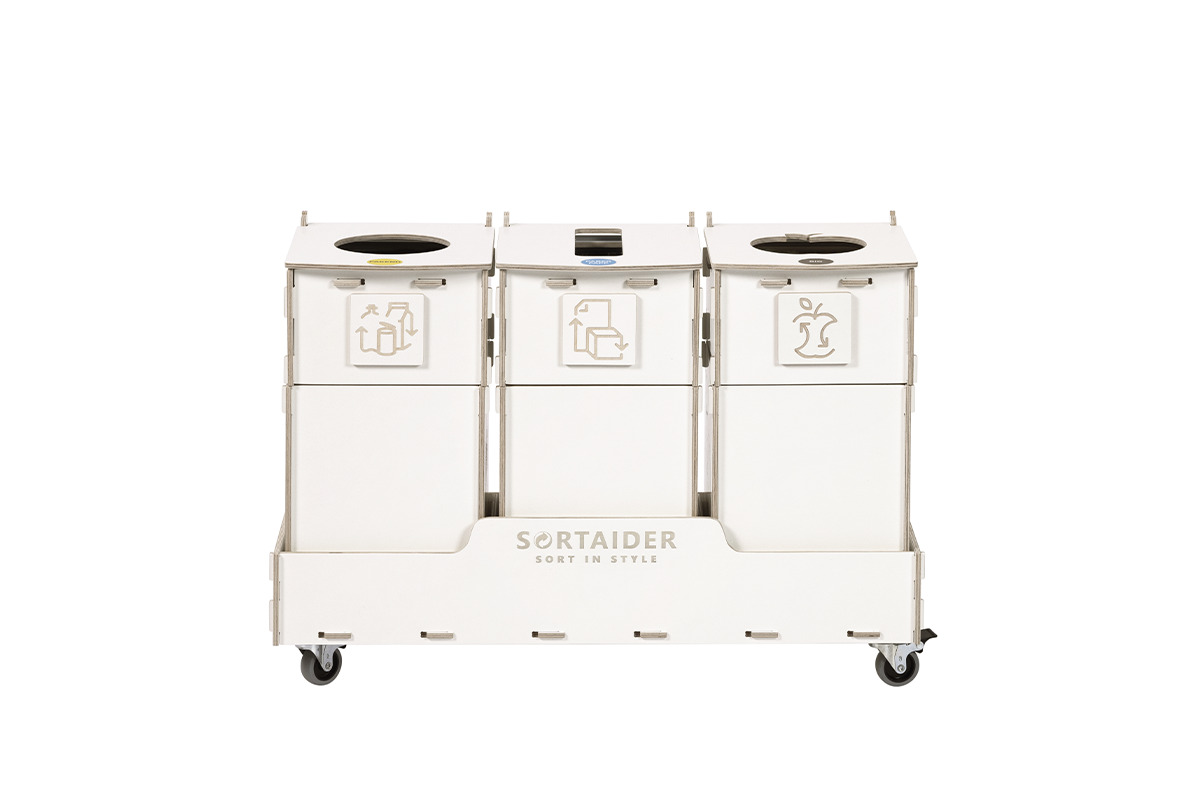
Recycling bin Sorter 20W3
3 types of waste 3 x 20 L471,20 € (incl. 24% VAT)380 € (excl. VAT) -
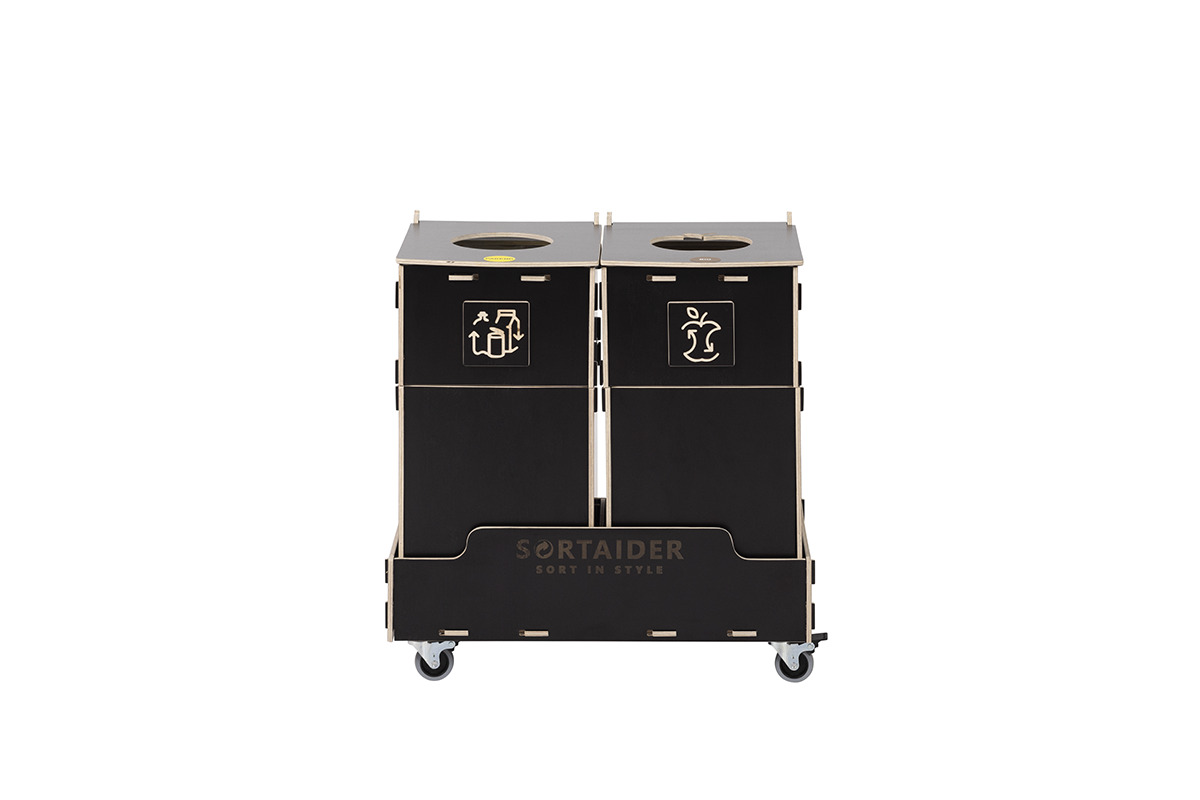
Recycling bin Sorter 30B2
2 types of waste 2 x 30 L508,40 € (incl. 24% VAT)410 € (excl. VAT) -
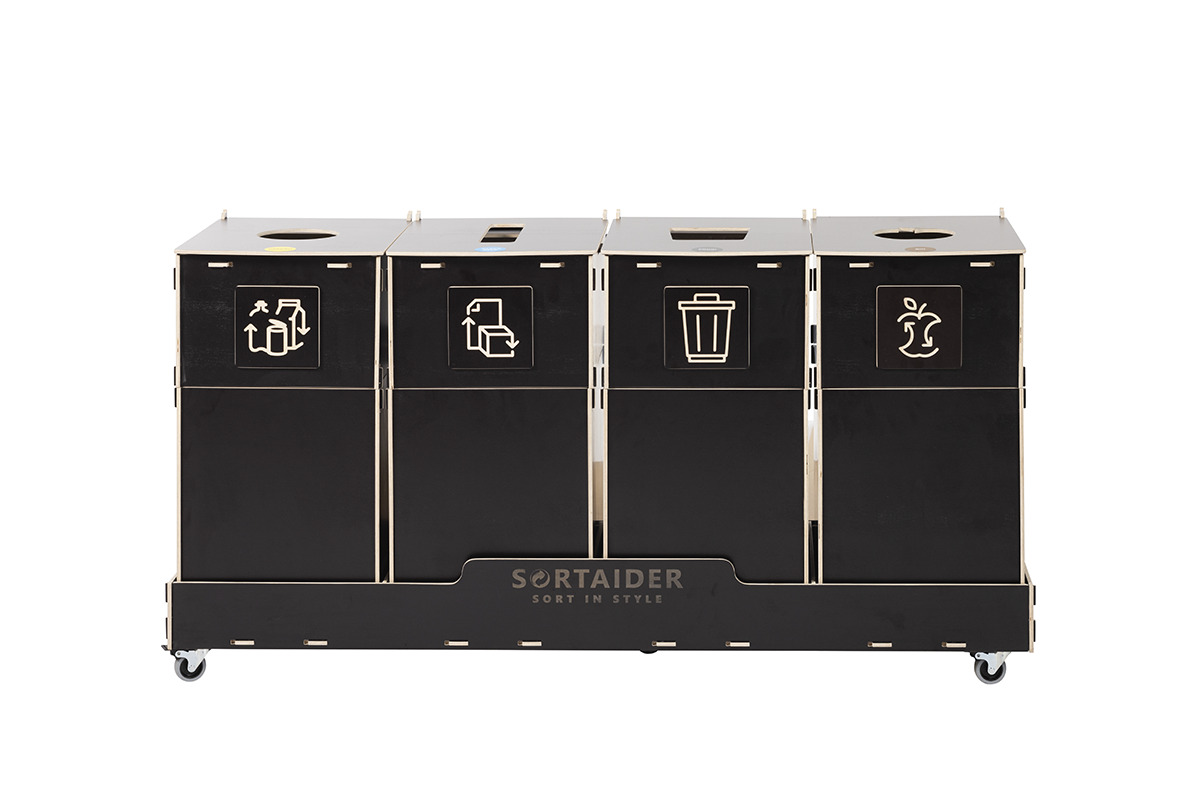
Recycling bin Sorter 60B4
4 types of waste 4 x 60 L1 500,40 € (incl. 24% VAT)1 210 € (excl. VAT) -
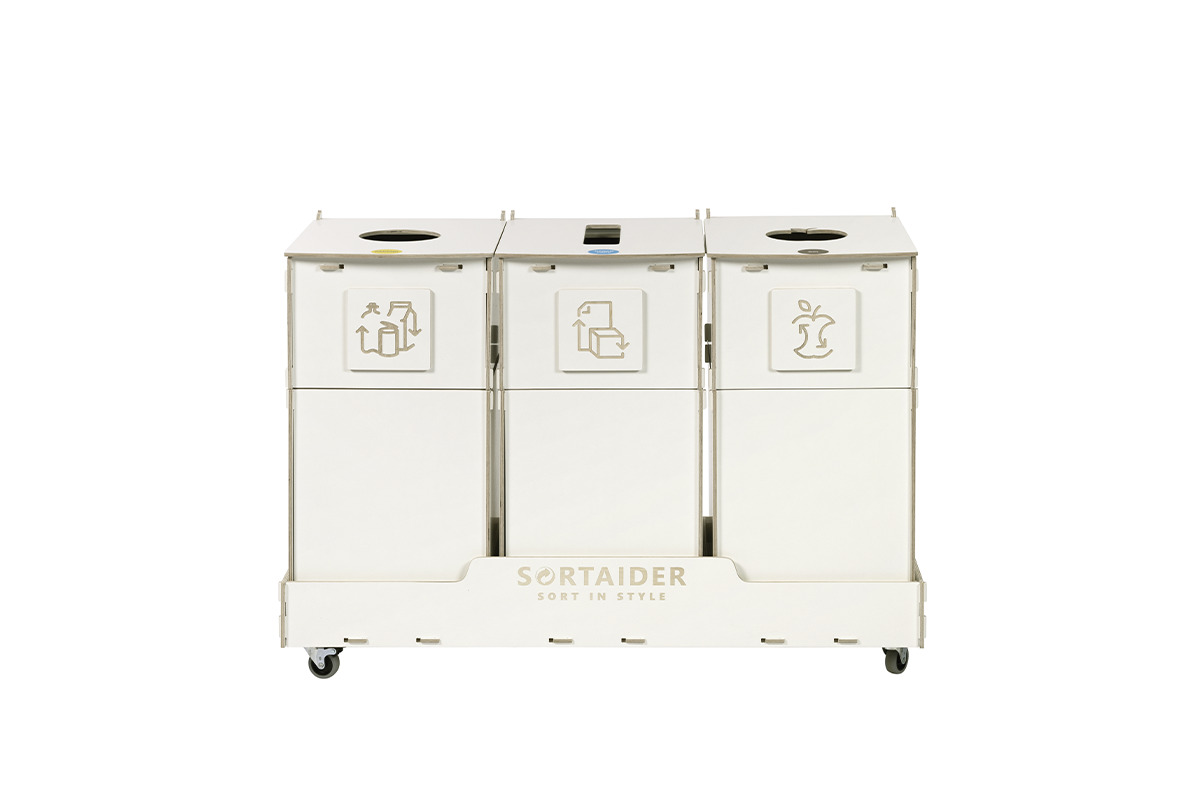
Recycling bin Sorter 60W3
3 types of waste 3 x 60 L1 140,80 € (incl. 24% VAT)920 € (excl. VAT)
Auditing for Efficiency and Cost Reduction
To right-size your waste services and ensure your office waste management plan is effective, you must start with a waste audit for offices. A systematic audit identifies exactly what your team is throwing away and allows you to calculate your Diversion Rate – the percentage of material successfully kept out of landfills.
By tracking waste by zone – specifically separating the data from kitchenettes and open-plan areas – you can identify specific problem areas. Many organizations find that right-sizing their collection frequency based on actual audit results reduces disposal fees by 30% to 50%. This data-driven approach allows you to replace high-cost general waste services with more efficient recycling and composting streams, ensuring long-term compliance and a cleaner workplace.
Ready to optimize your facility’s waste management? Explore our modular sorting solutions to design a custom recycling station tailored to your specific kitchen requirements.