University Library Recycling Bin

Rakvere Spordikeskus
January 2026
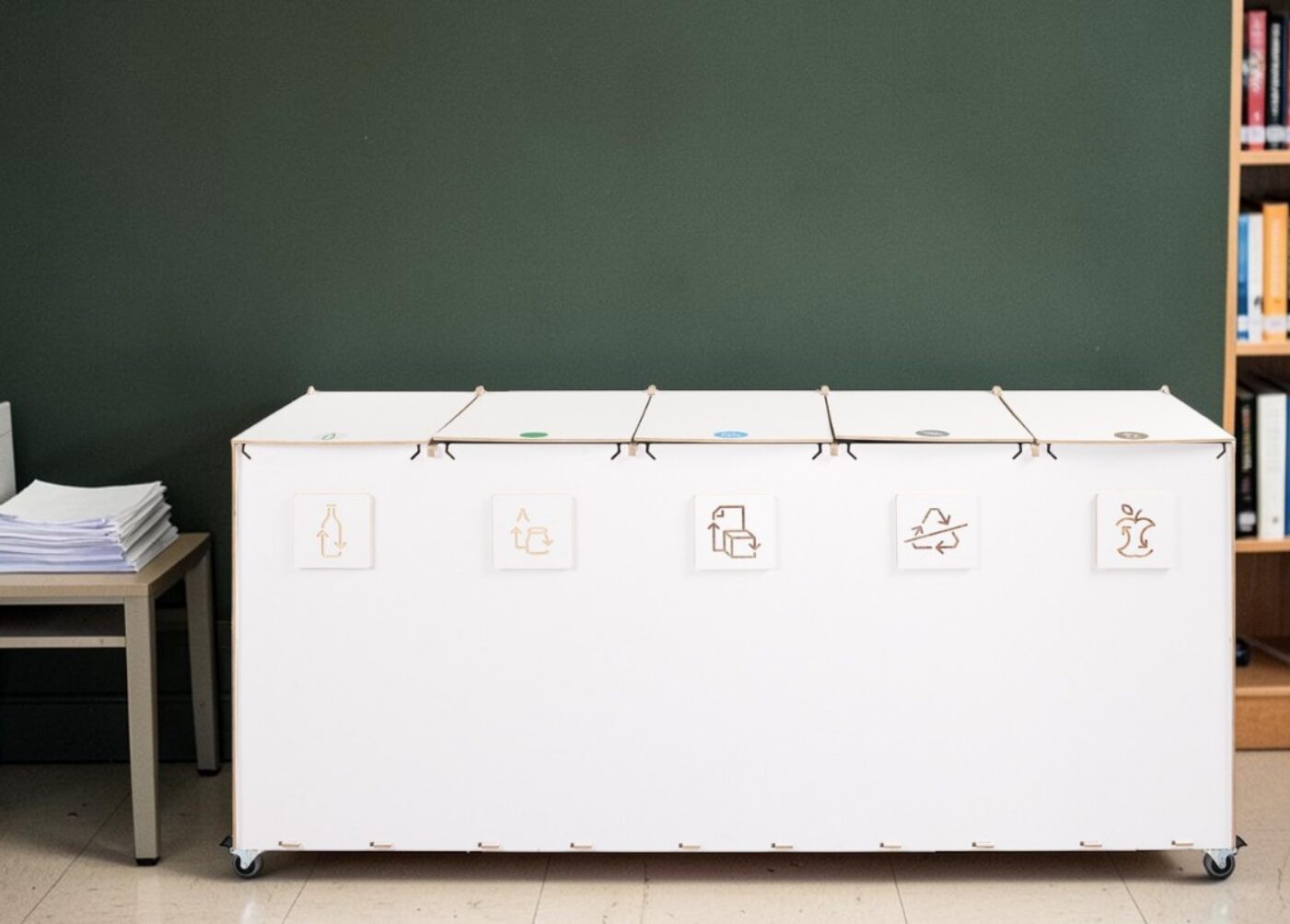
University Library Recycling Bin for Waste Sorting
The university library serves as a critical infrastructure for research, independent study, and academic collaboration. Operating as a quiet, high-focus environment, the library requires waste management solutions that function unobtrusively, ensuring that operational necessities do not disrupt the academic workflow. The space generates a consistent stream of high-value recyclables, primarily paper and printed materials, alongside standard beverage and takeaway packaging.
Operational Challenges
In our evaluation of library facilities, we identified that conventional waste disposal methods often failed to meet the specific requirements of an academic study environment:
Operational Disturbance: Inefficient waste collection, such as noisy bins or poorly placed stations, can disrupt the quiet, high-concentration environment essential for study.
Maintenance Bottlenecks: Without clear, intuitive sorting infrastructure at the source—particularly near high-use areas like printing stations and collaborative zones—recyclable paper and packaging are often intermixed, necessitating labor-intensive manual sorting.
Aesthetic Integration: Given that modern libraries represent a significant investment in architecture and student experience, industrial-style waste bins can detract from the intended professional and academic atmosphere.
Strategic Implementation
To optimize the library environment, we focused on silent, intuitive, and aesthetically compatible infrastructure:
Contextual Positioning: Recycling stations are integrated into specific study-support zones, including printing areas, exits, and collaborative lounges. This ensures that users can dispose of materials as a natural, silent conclusion to their study tasks.
Professional Aesthetic: The hardware is selected to complement the interior design of modern academic spaces. The units prioritize clean, professional lines that maintain the library’s refined atmosphere while offering the durability required for intensive, year-round use.
Streamlined Sorting: We prioritize clear, recognizable labeling to ensure that paper and packaging streams are separated instantly, maintaining the purity of the recyclable materials and minimizing the time spent by custodial staff on waste separation.
Institutional Benefits
Implementing a standardized, intuitive recycling system within the library offers direct operational advantages:
Workflow Efficiency: Intuitive, pre-sorted streams significantly reduce the time facilities staff spend on post-collection separation, allowing for more efficient cleaning rotations that respect the library’s quiet policy.
Sustainability Metrics: By facilitating the recovery of paper and card resources at the point of origin, the institution increases its waste-diversion rates and supports long-term sustainability initiatives.
Institutional Stewardship: A well-managed, tidy library environment reinforces the university’s commitment to academic excellence and professional standards, providing an organized space conducive to high-level research.
Effective waste management infrastructure in a university library is a fundamental component of institutional efficiency, ensuring that the environment remains optimized for productivity while maintaining the high aesthetic and operational standards of the academic community.
Client: Rakvere Spordikeskus
Product video: Recycling Bin Sorta 60W5