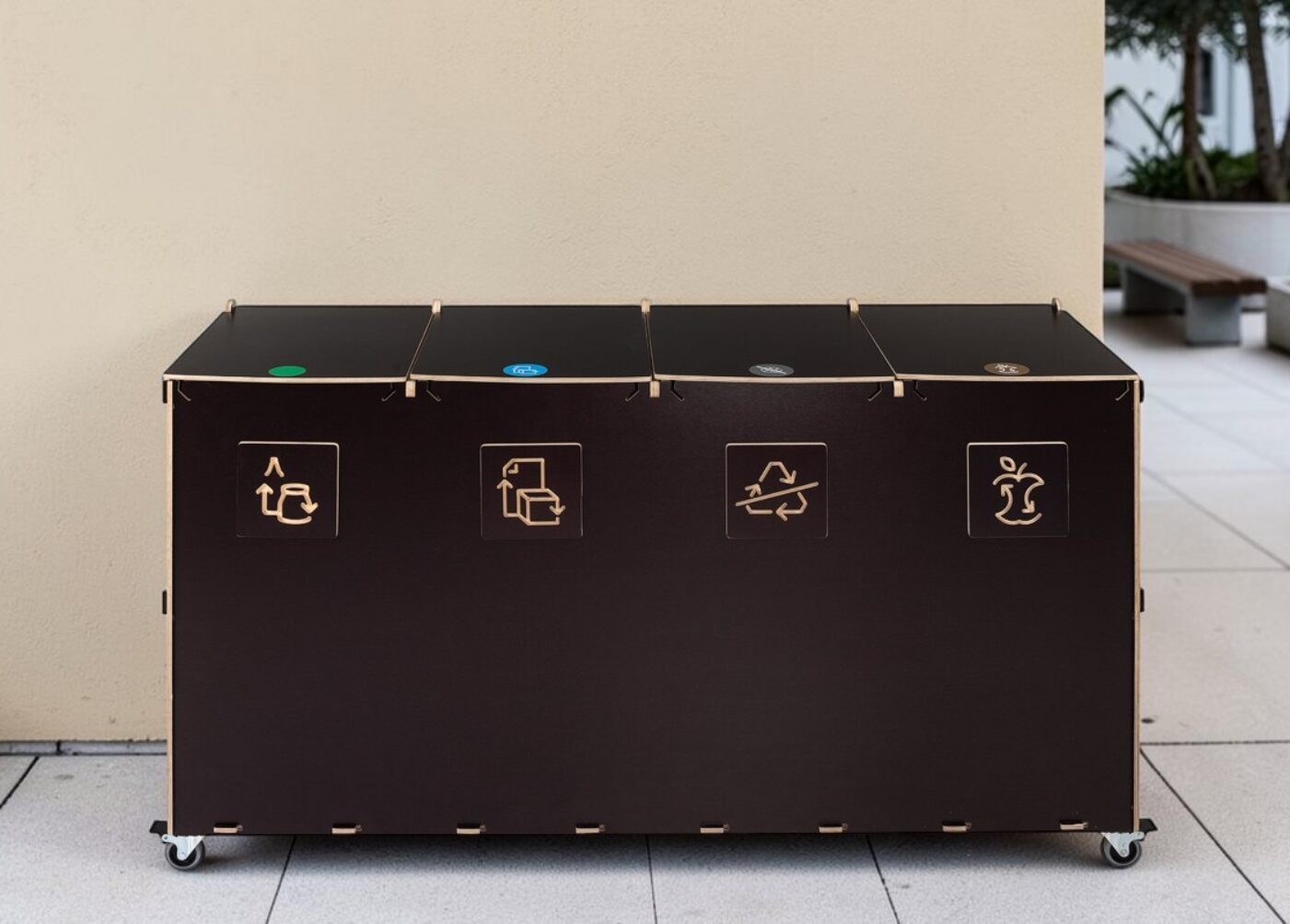
Courtyard Recycling Bin

Narva-Jõesuu Huvikeskus
May 2026
Courtyard Recycling Bin for Waste Sorting
The courtyard acts as a vital transition node within an educational campus, facilitating movement between buildings while serving as a secondary social and recreational space. Given its high-traffic, multi-functional nature, maintaining operational cleanliness in the courtyard is essential for supporting the institution’s overall aesthetic and functional standards.
Operational Challenges
During our assessment of outdoor campus infrastructure, we identified that conventional waste management methods were suboptimal for a high-traffic transition area:
Waste Accumulation Patterns: Courtyards generate a consistent stream of beverage containers, snack packaging, and event-related waste during high-density break periods. Without dedicated sorting points, this waste is frequently discarded as general litter or mixed-stream waste.
Efficiency Gaps: When recycling infrastructure is disconnected from natural pedestrian flow, participation drops, forcing maintenance staff to dedicate additional hours to manual waste separation and litter clearing.
Environmental Durability: Standard indoor waste solutions lack the structural integrity required for outdoor deployment. Equipment must be engineered to resist extreme weather while maintaining its professional appearance under year-round intensive use.
Strategic Implementation
To optimize the courtyard environment, we focused on behavioral integration and high-performance hardware:
Route-Based Positioning: Recycling stations are integrated along primary pedestrian arteries and near centralized seating areas. This placement ensures that waste sorting occurs as a seamless, instinctive step in the user’s transition between learning spaces.
Industrial-Grade Construction: The recycling units are constructed from weather-resistant, impact-tolerant materials. This ensures longevity and consistent performance regardless of seasonal conditions, minimizing the need for premature equipment replacement.
Streamlined Maintenance: The design prioritizes ease of access for groundskeeping and facilities teams, ensuring that collection and sanitization protocols can be executed rapidly without disrupting the campus environment.
Institutional Benefits
Implementing a standardized, intuitive recycling system within outdoor transition zones offers immediate operational and sustainable advantages:
Maintenance Optimization: By providing a clear and accessible sorting option at the point of origin, institutions significantly reduce the volume of litter on campus grounds and minimize post-collection manual sorting labor.
Sustainability Performance: Facilitating high-purity recycling in outdoor areas demonstrates a comprehensive commitment to sustainability, extending the institution’s waste-reduction infrastructure to all campus spaces.
Institutional Stewardship: A professional-grade, organized, and clean outdoor space reinforces the institution’s commitment to quality, ensuring the courtyard reflects the same high standards maintained within the indoor academic environment.
Effective waste management infrastructure in courtyard spaces is a fundamental component of institutional operational excellence, ensuring that transitional outdoor environments remain organized, clean, and professionally managed for students, faculty, and visitors.
Client: Narva-Jõesuu Huvikeskus
Product video: Recycling Bin Sorta 90B4