Did you know the average European office worker generates 2 kg of waste daily? With over half of that volume consisting of recyclable paper and packaging, an inefficient bin system is a costly missed opportunity. Implementing a compliant strategy is the fastest way to hit your organization’s sustainability goals.
Navigating European Recycling Regulations
Implementing a recycling program is no longer a matter of choice for European organizations. The EU Waste Framework Directive mandates the separate collection of paper, metal, plastic, and glass. By 2035, the EU aims to recycle 65% of all municipal waste, a goal that places direct responsibility on facility managers to optimize commercial waste streams.
While these directives provide a general framework, you must account for local variations across the continent. Denmark, for instance, requires a minimum of four separate bins for workplaces, while Finland utilizes specific color-coding, such as blue for paper and yellow for plastic. In the Baltics, countries like Estonia and Latvia have moved toward mandatory 4-stream separation, backed by high penalties for non-compliance in commercial sectors. Meanwhile, Sweden and Norway focus heavily on source separation and producer responsibility, frequently requiring detailed digital reporting of all waste fractions.
Designing an Effective Sorting Station
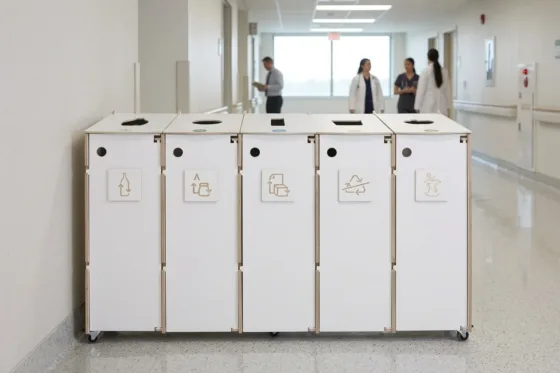
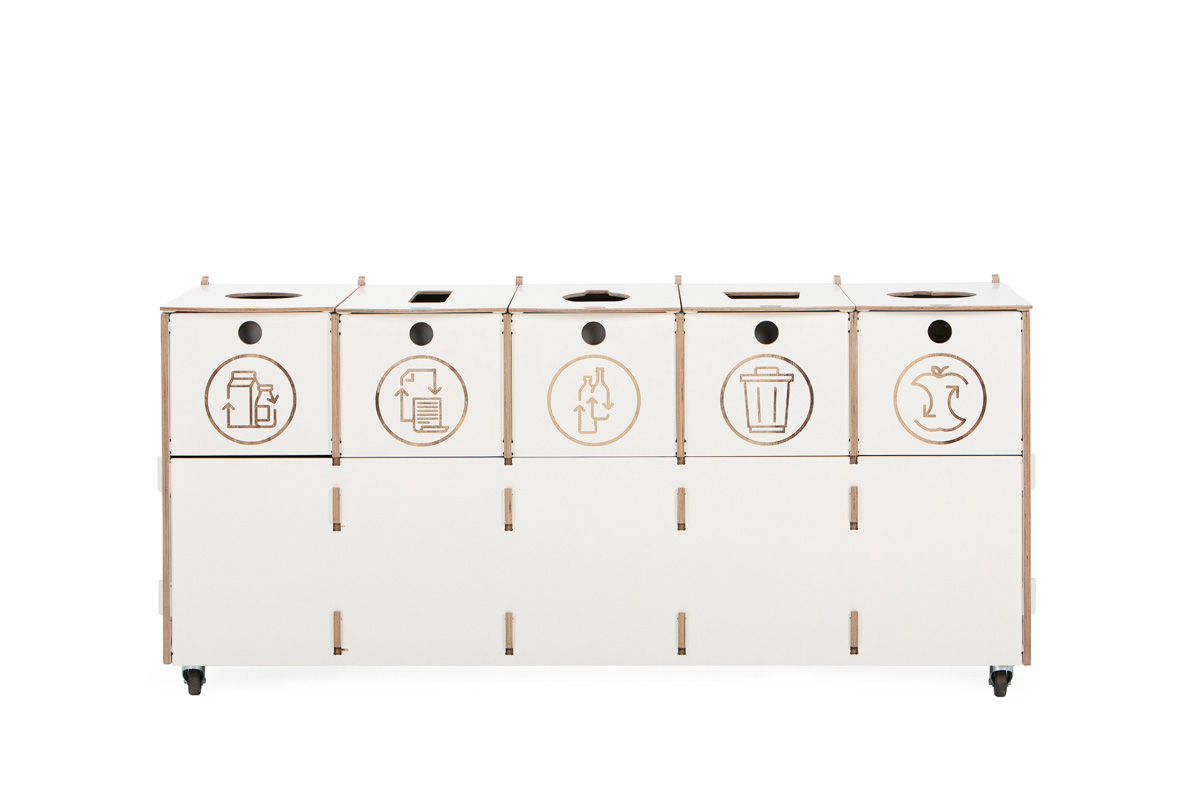
To meet these rigorous standards, your facility needs a system that goes beyond basic plastic bins. An effective station relies on the EN 14092 standard, which recommends specific color-coding and pictograms to reduce contamination. For high-traffic areas, the Ecolong series offers the necessary capacity for two to five waste streams. These modular units allow you to choose between continuous bag solutions or bag-free collection for paper, all within a compact footprint.
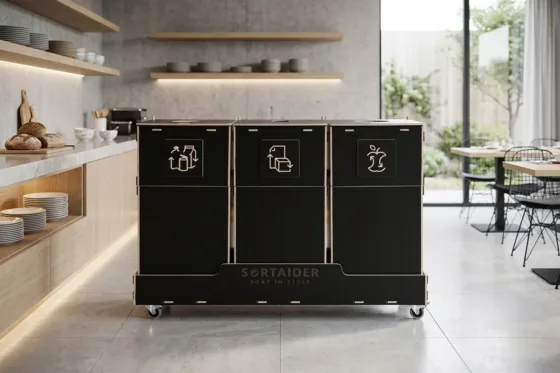
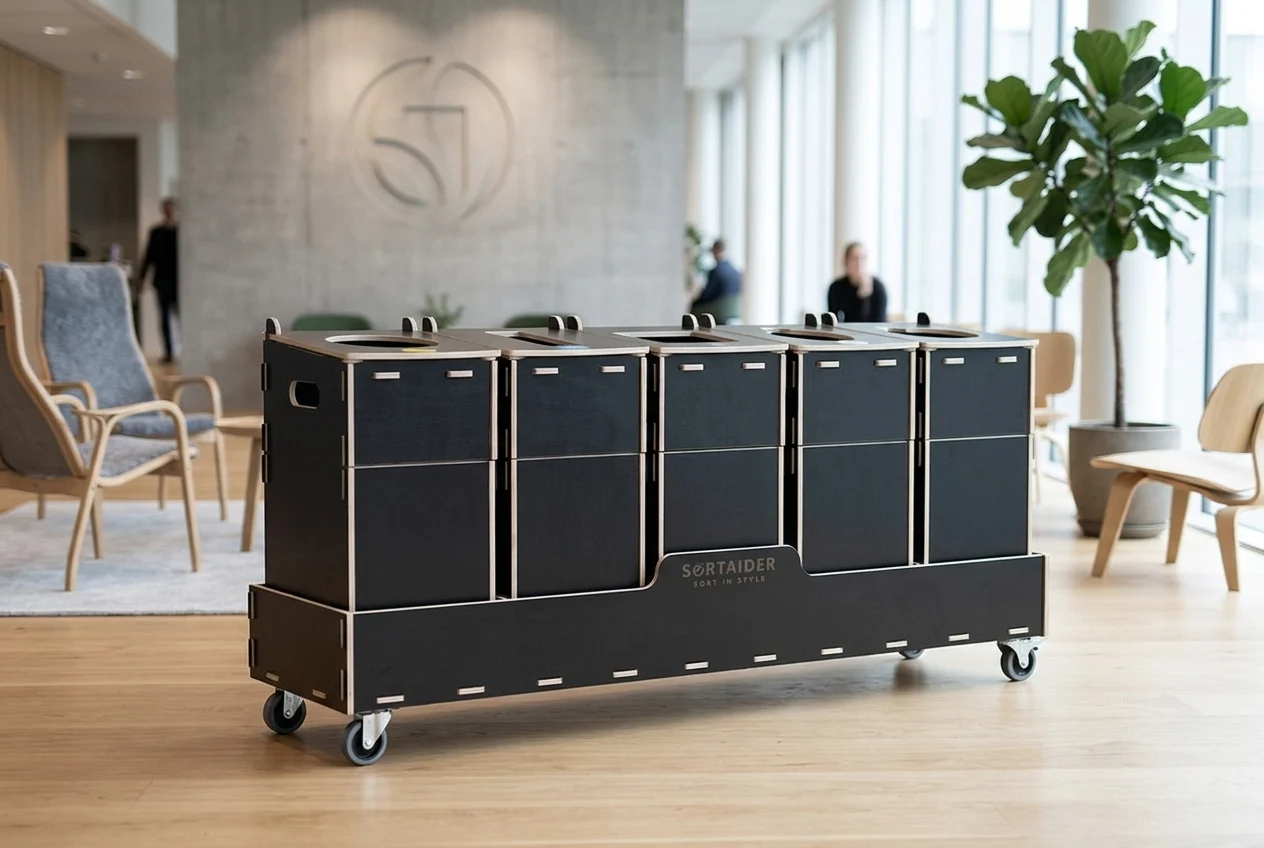
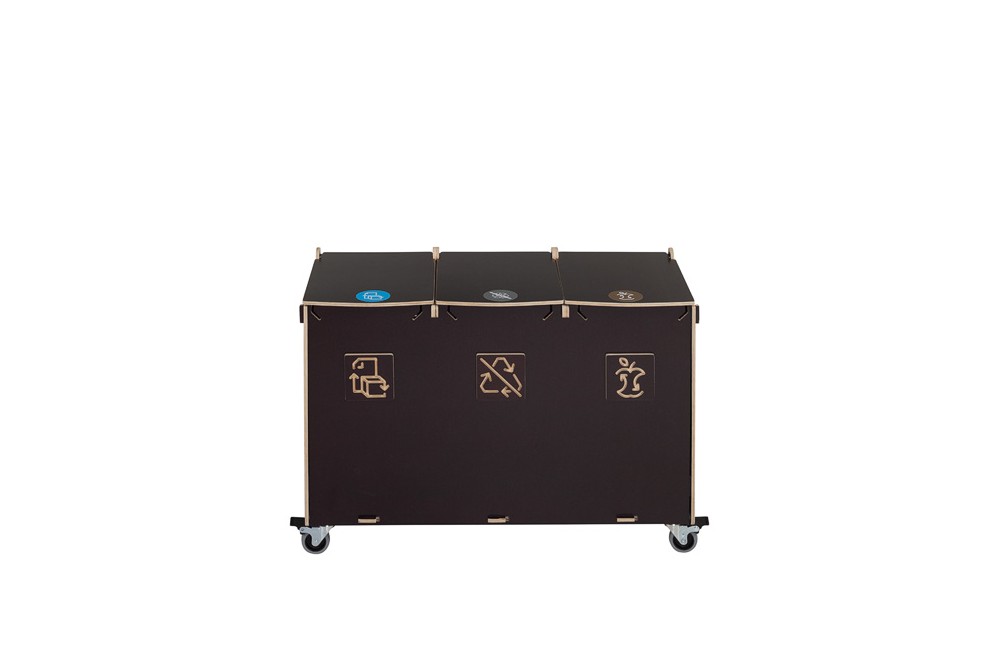
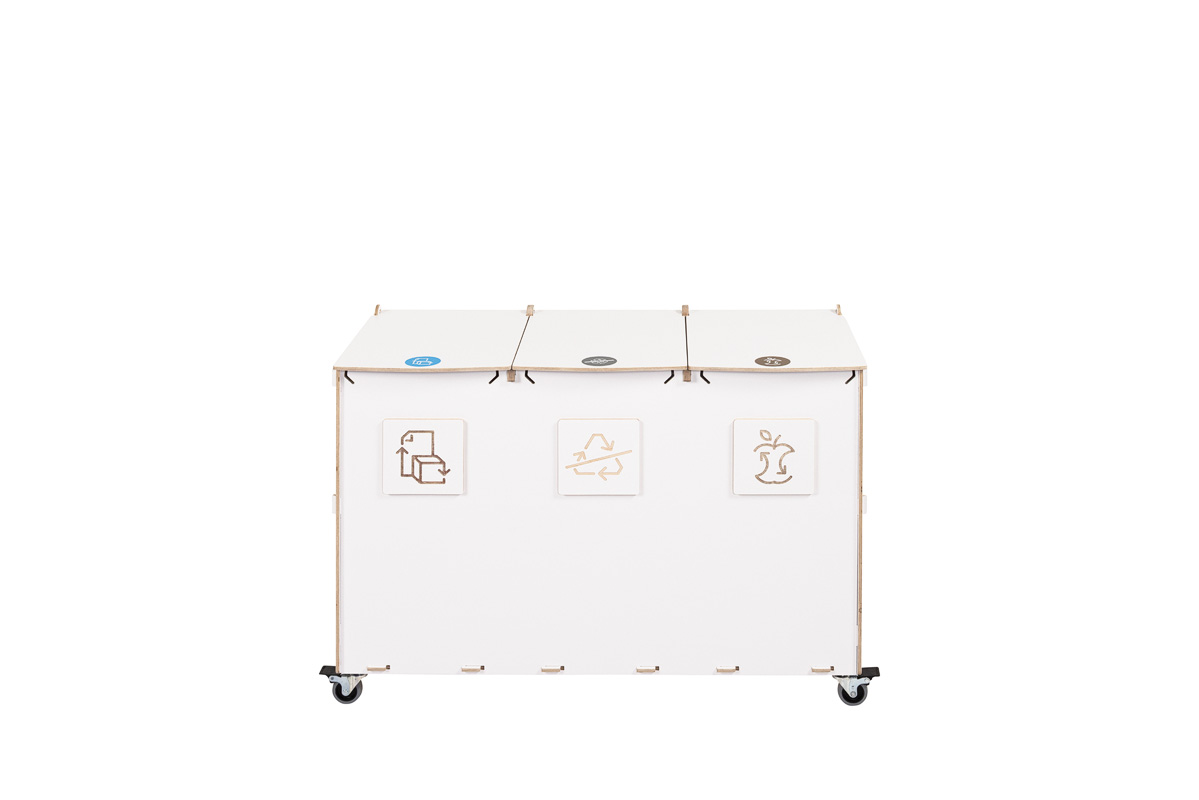
If your organization prioritizes aesthetics and brand identity, the Sorter series provides a sophisticated solution. These stations are crafted from durable birch plywood and allow for custom laser engraving of your corporate logo, transforming a functional necessity into a design element.
-
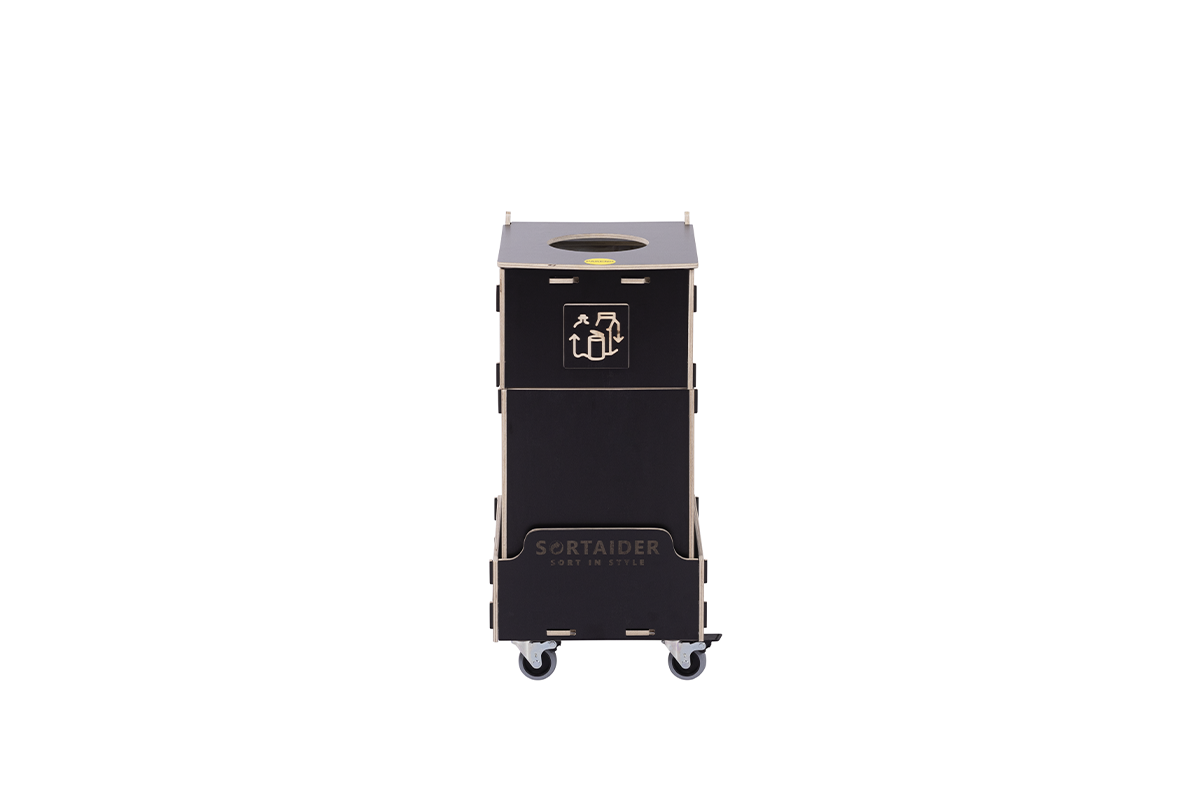
Recycling bin Sorter 10B1
1 type of waste 1 x 10L173,60 € (incl. 24% VAT)140 € (excl. VAT) -
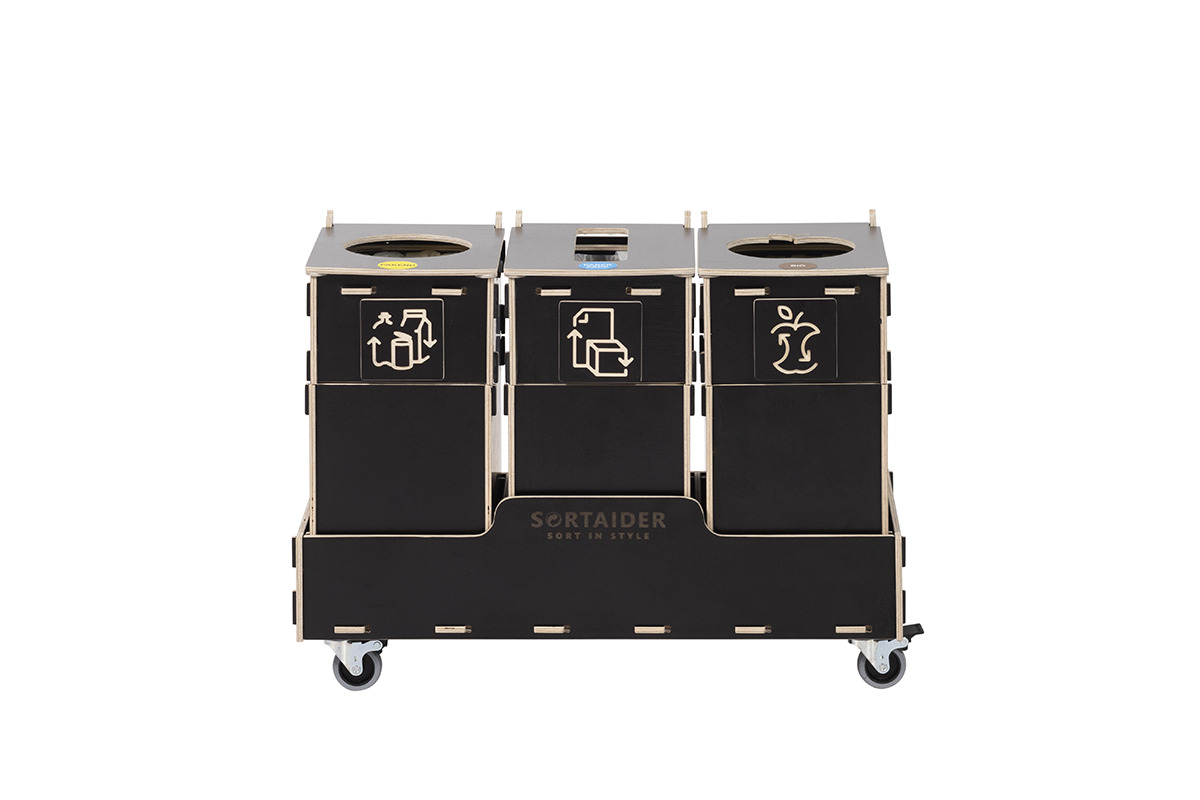
Recycling bin Sorter 10B3
3 types of waste 3 x 10 L297,60 € (incl. 24% VAT)240 € (excl. VAT) -
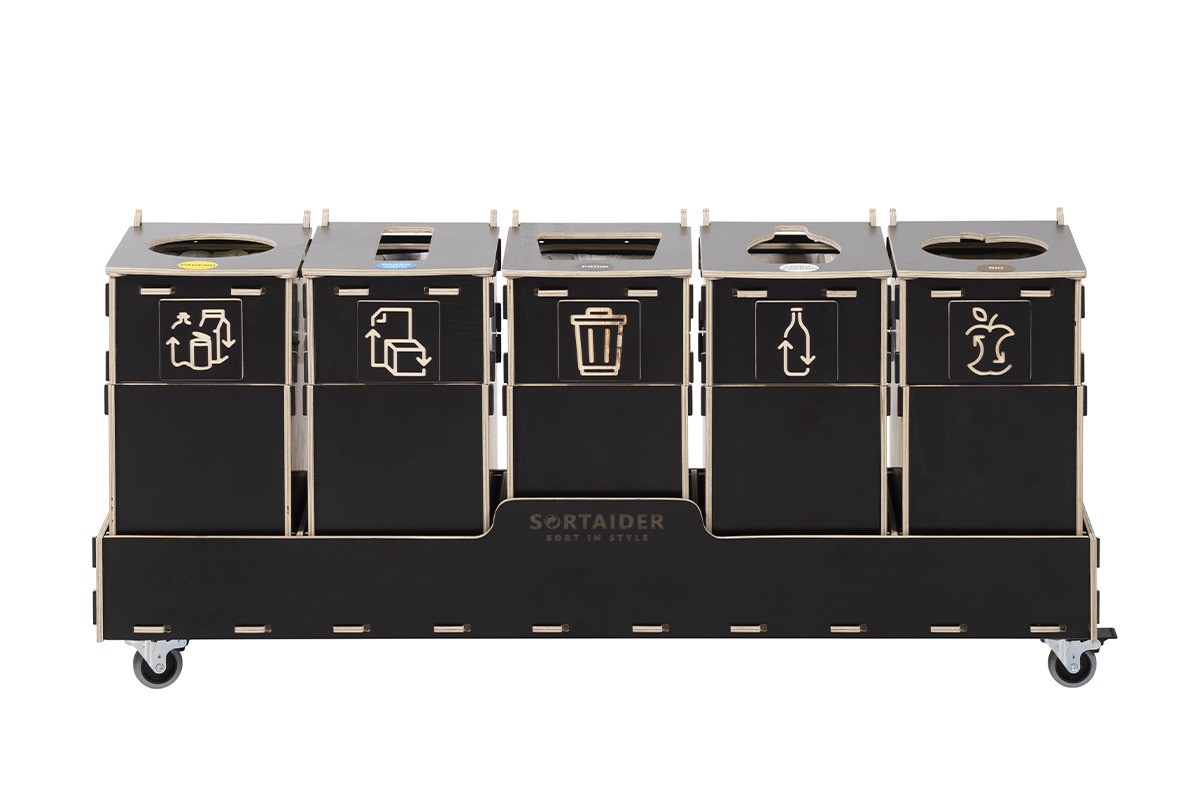
Recycling bin Sorter 10B5
5 types of waste 5 x 10 L458,80 € (incl. 24% VAT)370 € (excl. VAT) -
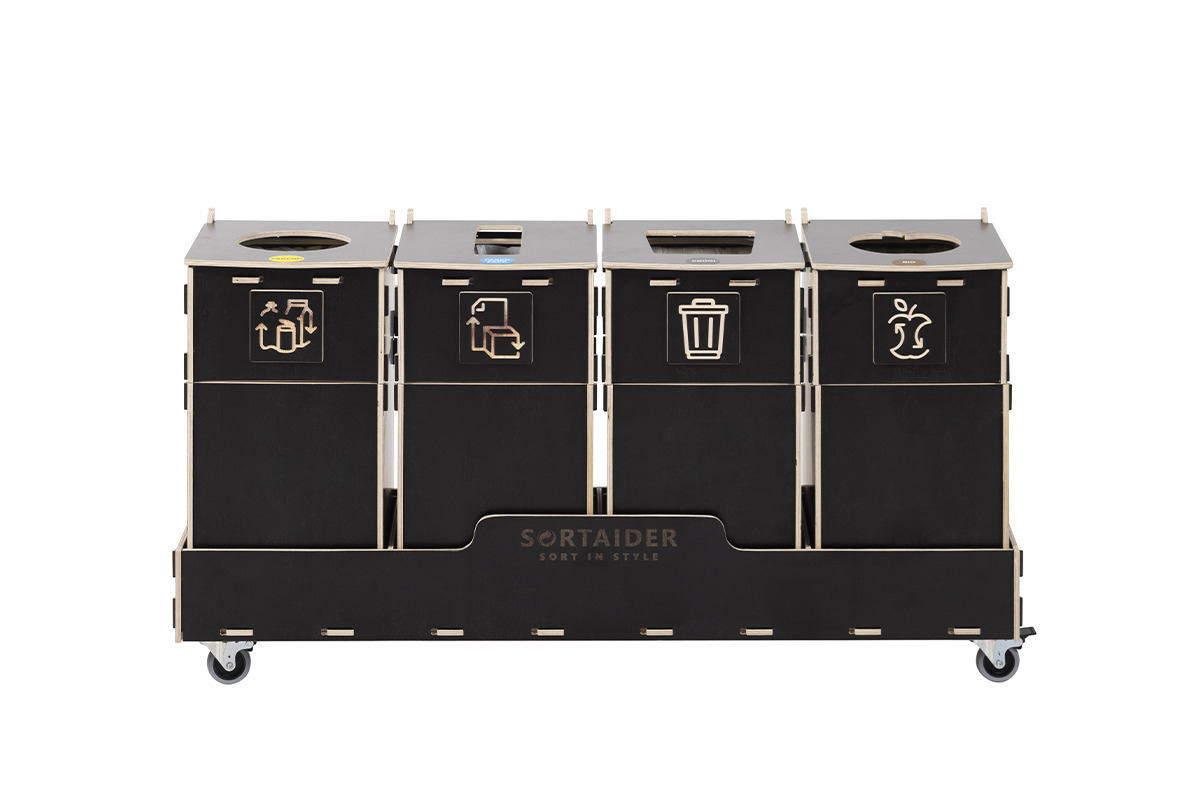
Recycling bin Sorter 20B4
4 types of waste 4 x 20 L607,60 € (incl. 24% VAT)490 € (excl. VAT) -
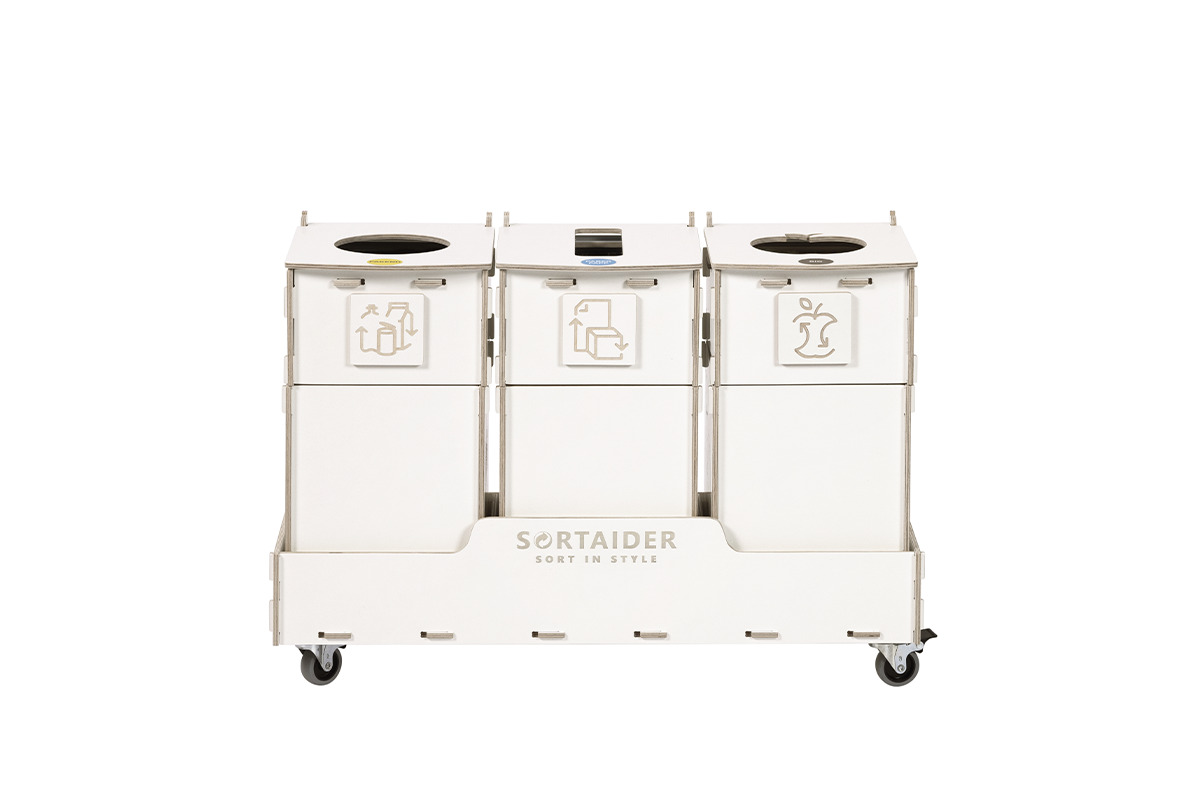
Recycling bin Sorter 20W3
3 types of waste 3 x 20 L471,20 € (incl. 24% VAT)380 € (excl. VAT) -
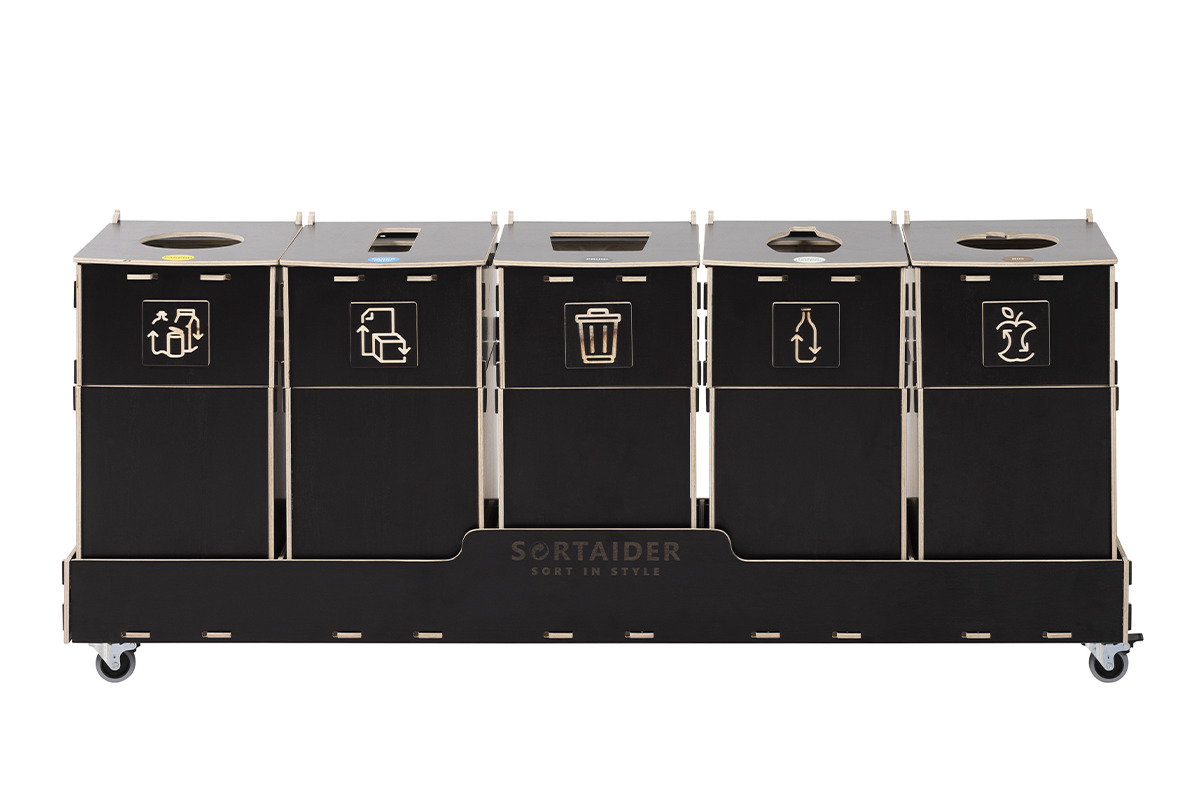
Recycling bin Sorter 30B5
5 types of waste 5 x 30 L1 165,60 € (incl. 24% VAT)940 € (excl. VAT) -
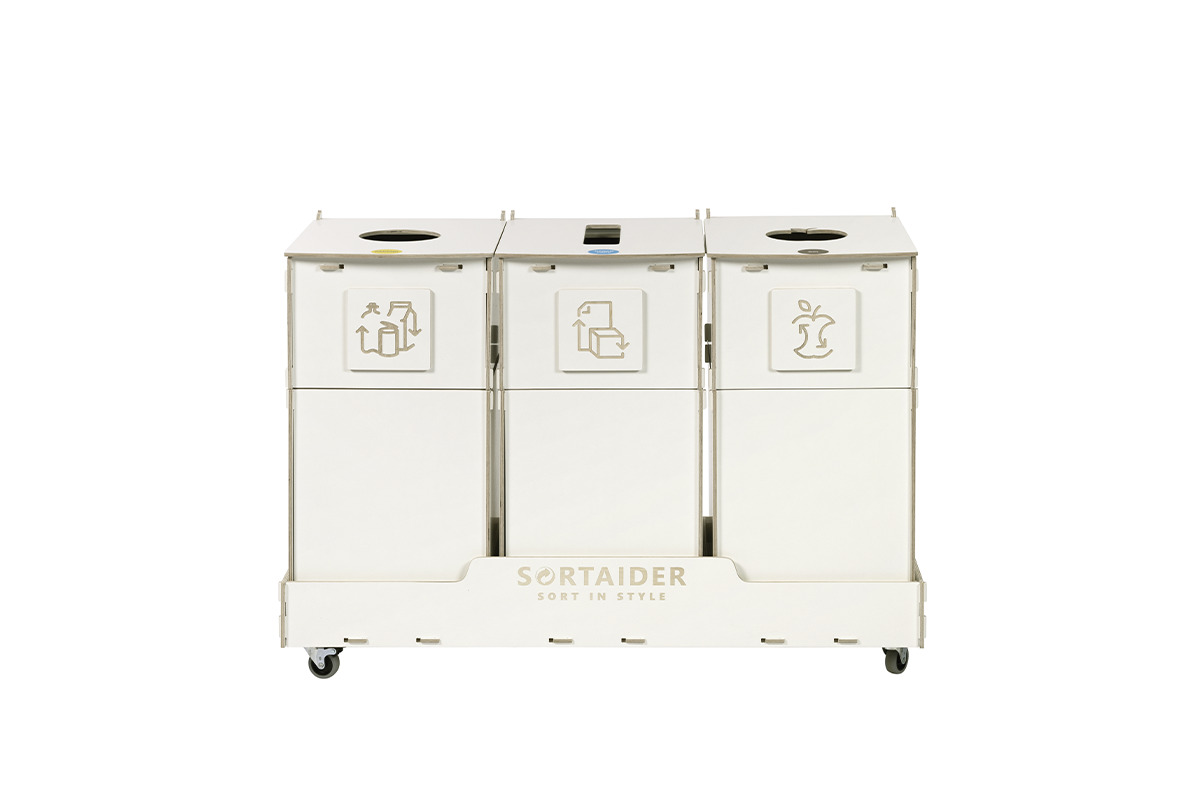
Recycling bin Sorter 60W3
3 types of waste 3 x 60 L1 140,80 € (incl. 24% VAT)920 € (excl. VAT)
Strategic Placement and Accessibility
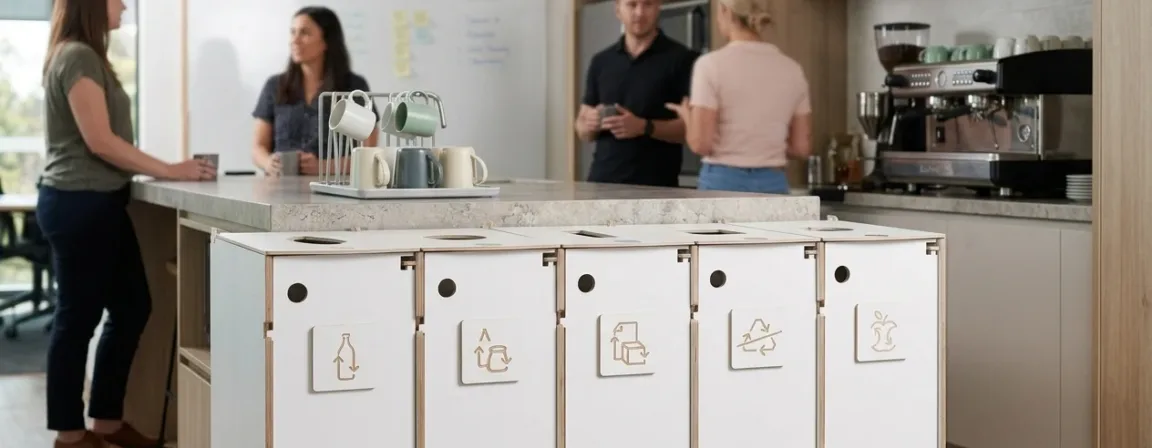
Proximity is the most significant driver of success in office waste management; research shows that strategic bin placement boosts participation by 30–50%. Instead of hiding bins in corners, you should create centralized recycling hubs in high-visibility areas like kitchenettes, printer rooms, and main hallways.
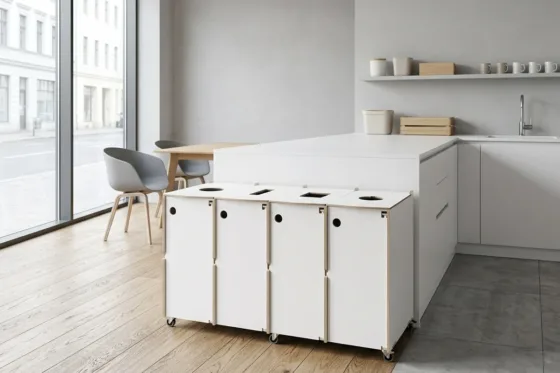
The Sorta series is specifically designed for these dynamic environments. Built from moisture-resistant plywood and equipped with lockable wheels, these bins allow for easy relocation during office events or deep cleaning. For premium environments such as executive suites or galleries, the Container series provides a Red Dot Award-winning design that blends into sophisticated architecture while maintaining multi-stream functionality.
Improving Participation and Reducing Contamination
Office waste typically consists of 40% paper and 20% packaging, but contamination rates – putting the wrong item in the wrong bin – often hover between 10% and 30%. To combat this and ensure your materials are actually processed, you can implement the following tactics:
- Prioritize Pictograms: Use clear visual icons rather than text alone. This simple change reduces sorting errors by up to 40% in multilingual European workplaces.
- Establish Feedback Loops: Conduct monthly audits of your waste streams and share the results with your team. Programs that include consistent employee feedback can improve recycling rates by 25%.
- Secure Leadership Endorsement: When management actively participates and promotes the program, employee engagement typically lifts by 15–35%.
Transitioning to an effective program is a vital investment in your organization’s ESG goals. By choosing recycling bins made from sustainable plywood, you also reduce the CO₂ footprint of your facility’s equipment. These products emit up to four times less CO₂ during their lifecycle compared to plastic or metal alternatives.
Ready to transform your workplace waste management? Explore our modular sorting solutions to find the right fit for your facility’s specific needs.